
How To Air Down Tires for Off Road on a Toyota Tacoma
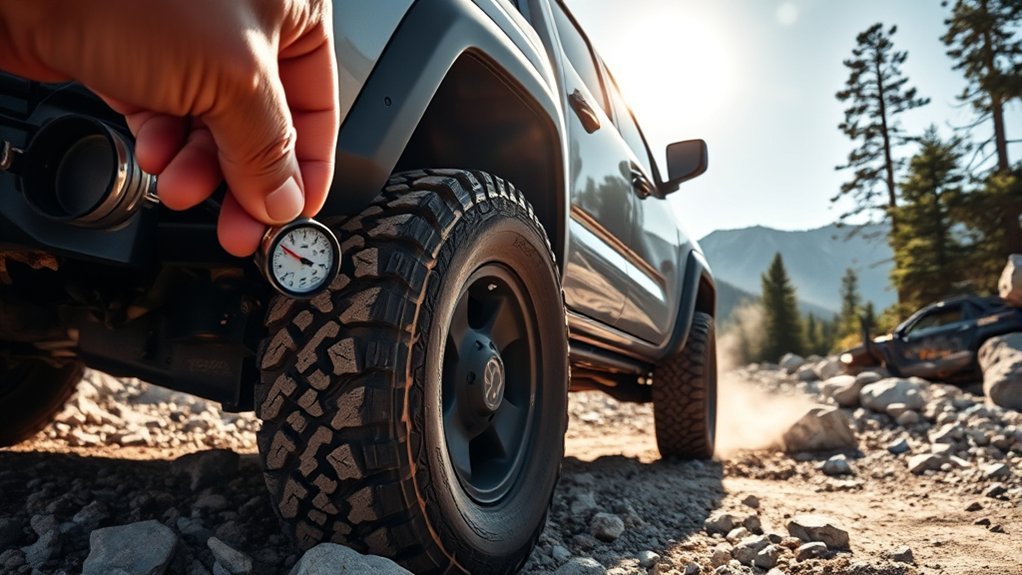
Airing down your Toyota Tacoma’s tires before off-roading can improve traction, smooth out washboard roads, and help the tires conform to rocks, roots, sand, and ruts. The key is to lower pressure only enough for the terrain, drive slowly while aired down, and reinflate to your Tacoma’s recommended street pressure before returning to pavement.
Quick Answer
To air down a Toyota Tacoma for off-roading, check your starting PSI, choose a safe trail target, deflate each tire with a gauge or deflator, and match all four tires. Most Tacomas do well starting around 18–24 PSI on general trails and 12–18 PSI in soft sand or mud, then reinflate before pavement.
Key Takeaways
- Use your Tacoma’s driver-door tire placard or owner’s manual for street pressure, not a universal number.
- Start conservative: 18–24 PSI works for many general trails, while deep sand or mud may need lower pressure at slow speeds.
- Avoid very low PSI on non-beadlock wheels because the tire bead can unseat from the rim.
- Always carry a tire gauge and a way to air back up before driving on pavement.
At a Glance
| Time Required | 5–15 minutes to air down; 10–25 minutes to air back up, depending on tools and tire size |
| Difficulty | Easy, but pressure choice matters for safety |
| Tools Needed | Tire pressure gauge, tire deflator, valve caps, portable compressor or CO₂ system, and tire repair kit |
| Cost | Free with a basic gauge and valve-stem method; higher with dedicated deflators and compressors |
Why Airing Down Tires Is Essential for Off-Roading
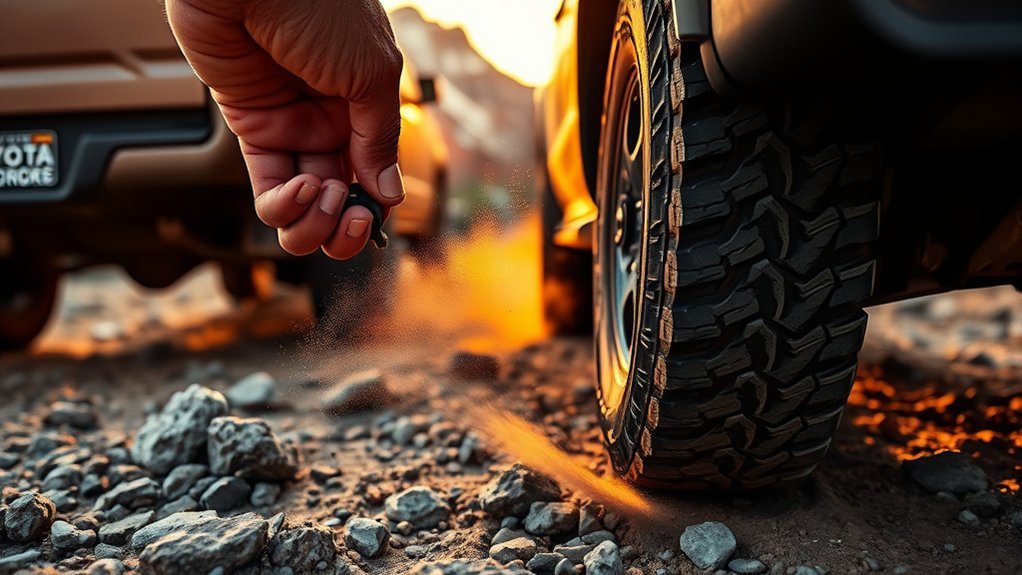
When you lower tire pressure, the tire’s footprint gets longer and more flexible. That extra contact helps your Tacoma float better on sand, grip uneven rocks, and ride more smoothly over washboard roads. It can also reduce sharp impacts because the tire can flex around obstacles instead of bouncing off them.
That does not mean lower is always better. Too little air can make steering vague, expose the sidewall to damage, overheat the tire at speed, or unseat the bead from a non-beadlock wheel. The best off-road PSI depends on your tire size, tire load range, wheel type, vehicle weight, payload, speed, and terrain.
Warning: Do not drive highway speeds on aired-down tires. Reinflating before pavement is a tire-safety step, not an optional convenience. Underinflated tires can handle poorly, wear unevenly, run hotter, and increase failure risk.
[Products Worth Considering]
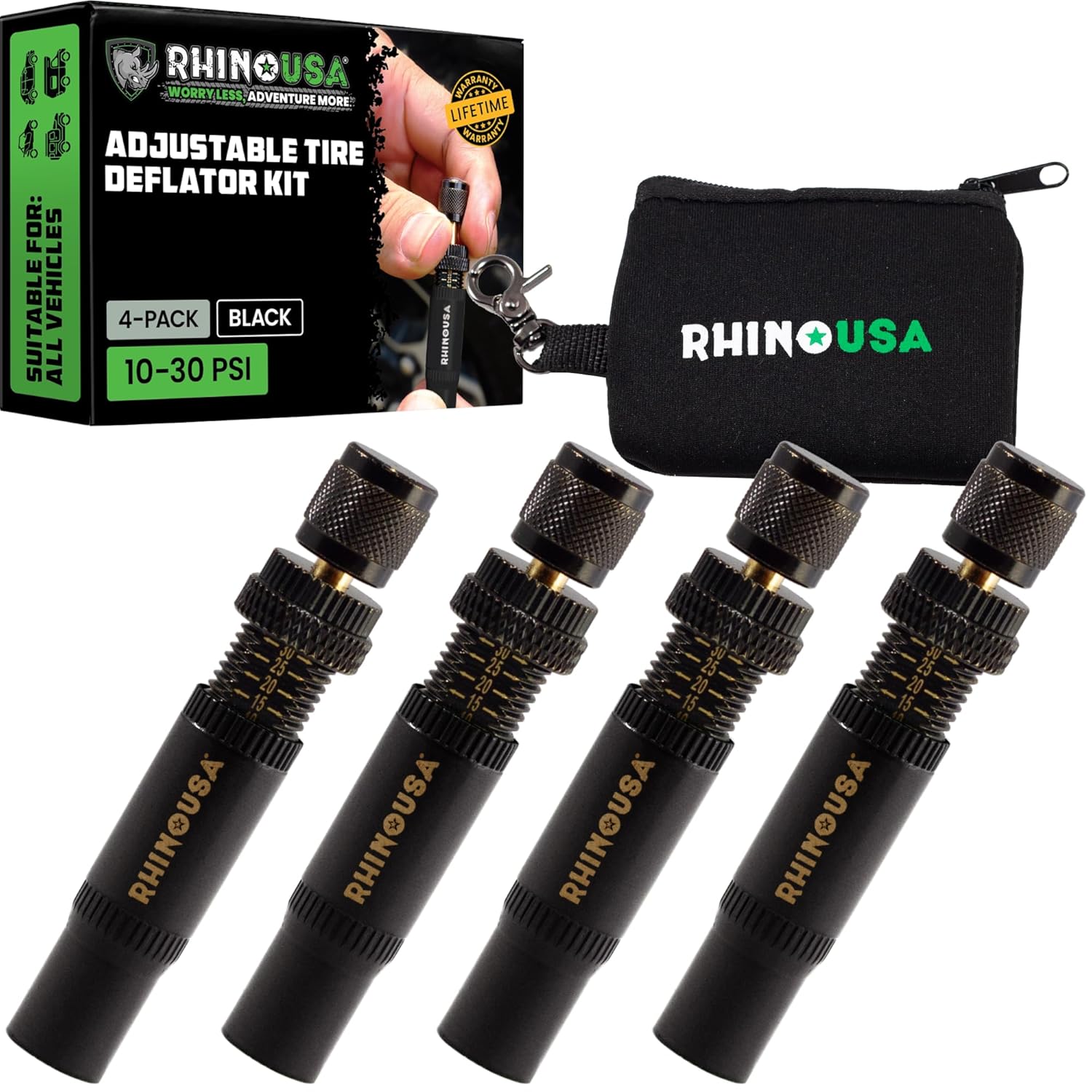
Use the Rhino USA adjustable tire deflators to air down all four tires at once by screwing one deflator onto each valve stem, letting you step away while the tires reach your preset pressure. Each deflator independently adjusts across a 10–30 PSI range with laser-etched indicators for quick setup and verification, making it ideal for beach, sand, and rocky off-road trails.

Secure your parked vehicle quickly with AFA Tooling 4T rubber wheel chocks in a 4-pack for two dual-wheel sets. The ribbed design and textured base grip fast without pounding, so you can chock tires on trailers, RVs, ATVs, and work vehicles with confidence. EZ rustproof handles with rope ties keep the pair together for easy placement and removal, while nylon-reinforced rubber stands up to dirt, ice, salt, and harsh weather.

The Dr.Roc spare tire tool kit helps you release, lower, or raise your spare tire with reliable extension tools and a lug nut wrench. It is made from rustproof automotive-grade steel and includes an organized carry case for convenient storage. Designed for compatibility with select GM models from the late 1990s through 2019, it uses upgraded extension components to install and remove spare tires with less hassle.
Finding the Right PSI for Different Terrains
Start with your Tacoma’s normal street pressure from the driver-door tire placard or owner’s manual. Many Tacomas are in the low-30 PSI range on factory-size tires, but the correct pressure varies by year, trim, tire size, and load. Use the placard for pavement and the table below only as a slow-speed off-road starting point.
| Terrain | Safe Starting PSI | Use More PSI When |
| Gravel roads / mild forest roads | 24–28 PSI | You are moving faster, carrying cargo, or the trail is mostly hardpack. |
| General trails | 18–24 PSI | You feel sidewall roll, rim contact, or sloppy steering. |
| Rocks / slow technical obstacles | 15–20 PSI | You have stock wheels, low-profile tires, heavy gear, or sharp rocks. |
| Soft sand | 12–18 PSI | You are not on beadlocks, the truck is loaded, or you need to turn sharply. |
| Mud / snow | 15–22 PSI | The surface has hidden rocks, ruts, roots, or hard edges. |
For stock wheels without beadlocks, be cautious below about 15 PSI. Some drivers go lower in sand or rock crawling, but that requires slow speed, good judgment, and a willingness to reseat a bead if things go wrong.
Note: Heavy payload, rooftop tents, bed racks, campers, towing, and LT tires with stiff sidewalls can change your ideal PSI. When loaded, start higher and drop 2 PSI at a time only if traction requires it.
Before You Air Down Your Tacoma
Before you touch the valve stems, make sure you can safely return to road pressure. Airing down without a way to air back up can leave you crawling on pavement with hot, unstable tires.
- Check the door placard: Write down your Tacoma’s recommended cold street pressure.
- Check your tires: Look for cuts, exposed cords, sidewall bulges, nails, or damaged valve stems.
- Confirm your wheel type: Standard wheels need more conservative PSI than beadlock wheels.
- Consider weight: Add pressure if your Tacoma is carrying camping gear, recovery gear, tools, passengers, or a trailer tongue load.
- Know the exit route: If you must drive pavement after the trail, plan where you will reinflate.
Tools You Need to Air Down Your Tacoma Efficiently
You can air down with nothing more than a tire gauge and the center pin of the valve stem, but dedicated tools make the job faster and more consistent.
Essential Airing Down Tools
- Reliable tire pressure gauge: A digital or dial gauge helps you hit the same PSI on all four tires.
- Valve-core deflator: Tools like the ARB E-Z Tire Deflator remove the valve core for faster air release while letting you monitor pressure.
- Preset screw-on deflators: These can be set ahead of time and moved from tire to tire, but you should still verify with a gauge.
- Portable compressor or CO₂ system: A compressor such as the VIAIR 300P or a higher-output four-tire setup such as the MORRFlate TenSix PSI Pro helps you reinflate before pavement.
- Tire repair kit: Carry plugs, valve cores, valve caps, pliers, and a way to reseat or repair a minor trail puncture.
Manual Deflation Methods
The simplest method is to remove the valve cap, press the valve core briefly, and check pressure often with a gauge. It works, but it is slow and easy to overshoot. A valve-core deflator speeds up the process by letting more air out at once, while still letting you read pressure during the job.
Preset and Four-Tire Deflation Solutions
Preset deflators are useful when you air down to the same pressure often. Four-tire hose systems are helpful because they equalize pressure across all four tires and save time. The tradeoff is more gear to store, more fittings to manage, and the need to keep everything clean so dirt does not enter the valve stems.
Pro Tip: Set your target slightly higher than you think you need, drive a few hundred yards, then drop 2 PSI at a time if traction is still poor. It is easier to let out more air than to add air repeatedly on the trail.
Step-by-Step Process for Airing Down Tires
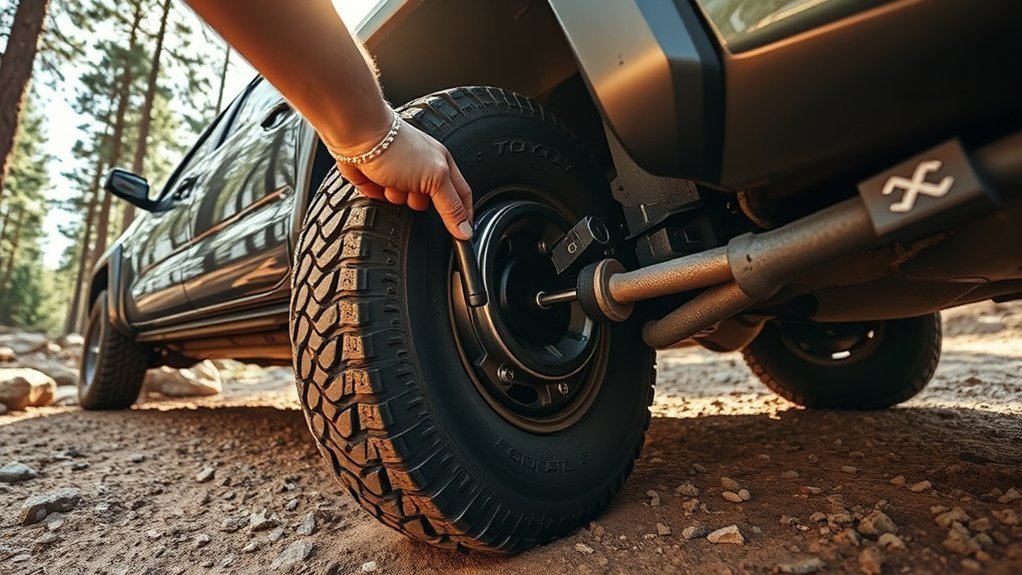
- Park on level ground. A flat spot gives more consistent pressure readings and keeps you away from traffic.
- Record your starting PSI. Use the same gauge for all four tires. Warm tires may read higher than cold tires.
- Choose a target pressure. For general Tacoma trail driving, start around 18–24 PSI. For deep sand, start around 15–18 PSI and go lower only if needed.
- Remove the valve caps. Put them in a pocket or cup holder so they do not disappear in the dirt.
- Deflate one tire at a time. Attach your deflator, release air slowly, and check often as you approach the target PSI.
- Match all four tires. Keep pressures within about 1 PSI of each other unless you have a specific reason to stagger them.
- Reinstall valve caps. Caps help keep grit and water out of the valve stem.
- Drive slowly and reassess. If the Tacoma still hops, digs, or loses traction, drop another 2 PSI. If steering feels sloppy or the sidewall looks folded, add air.
After airing down, avoid sudden steering inputs, high-speed turns, and hard braking. Lower pressure improves trail compliance, but it also makes the tire less stable on the wheel.
Common Mistakes When Airing Down Tires
[Products Worth Considering]

This portable cordless tire inflator delivers fast, efficient inflation for cars, motorcycles, bikes, and sports balls with a digital pressure gauge. Use the one-click PSI...
Over-Deflating Tires
Dropping too low can unseat the bead, especially on stock non-beadlock wheels. It can also expose the wheel lip to rocks and increase sidewall damage. If you are new to off-roading, stay conservative and learn how your Tacoma feels before trying very low pressures.
Ignoring Terrain Conditions
Sand, rock, mud, snow, and hardpack all need different pressure choices. A pressure that floats well in sand may feel unstable on a fast gravel road. A pressure that grips rocks may be too low for a loaded truck on sharp ledges.
Forgetting About Speed
Aired-down tires are for slow off-road use. If the route turns into a faster dirt road, add air. Speed builds heat, and heat is one of the main enemies of an underinflated tire.
Not Checking All Four Tires
Uneven tire pressure can make the truck pull, wander, or feel unstable. Check all four tires after deflating, then check again after a short drive if the trail is rough.
Airing Down Without a Compressor
Never assume there will be a gas station near the trail exit. Carry a compressor, CO₂ tank, or another reliable inflation method that can bring your tires back to road pressure.
Best Practices for Reinflating Tires After Off-Roading
Once the off-road section is over, reinflate to the cold tire pressure listed on your Tacoma’s door placard. If the tires are warm, inflate close to the recommended pressure, then recheck when they cool down. Do not use the tire sidewall’s maximum PSI as your normal street setting; that number is not the vehicle-specific recommended pressure.
- Park safely on firm, level ground. Stay away from traffic and avoid soft shoulders.
- Inspect each tire first. Look for punctures, sidewall cuts, rim damage, missing valve caps, or debris in the bead area.
- Inflate in stages. Bring each tire up evenly instead of fully inflating one tire while the others stay low.
- Use a gauge, not the compressor alone. Compressor gauges can be off, especially while air is flowing.
- Let hot compressors cool. Portable compressors can get hot during repeated fills. Follow the tool’s duty-cycle instructions.
- Reset your expectations for TPMS. The warning light may stay on briefly until the system sees stable road pressure again.
The safest off-road tire pressure is the lowest pressure that gives you traction without bead risk, sidewall fold, rim contact, or heat buildup.
Troubleshooting After Airing Down
The Tire Looks Too Flat
Add 2–4 PSI and reassess. Some sidewall bulge is normal, but a folded sidewall or rim contact means the pressure is too low for the tire, load, or terrain.
The Truck Feels Wobbly
You may be too low, driving too fast, or carrying too much weight for the chosen PSI. Slow down first. If the Tacoma still wanders, add air.
The TPMS Light Comes On
That is expected when pressure drops below the system’s threshold. Do not ignore the light after the trail. Reinflate to road pressure and verify with a gauge.
You Lose a Bead
Stop immediately and avoid spinning the tire. Jack up the vehicle only if the ground is stable, inspect for damage, and reseat the bead with proper equipment. If you are not equipped to do that safely, install the spare or call for recovery.
Frequently Asked Questions
What PSI should I air down to when off-roading a Tacoma?
For general Tacoma trail driving, start around 18–24 PSI. For slow technical rocks, 15–20 PSI is a common starting range. For deep sand or mud, 12–18 PSI may help, but stay higher if you have stock non-beadlock wheels, heavy cargo, sharp terrain, or higher speeds.
Is 35 PSI too high for a Tacoma off-road?
It depends on the terrain. Around 35 PSI may be normal for some pavement setups, but it is often too firm for slow sand, rocks, and washboard trails. If the truck feels harsh or loses traction off-road, air down gradually. For pavement, always return to the pressure listed on your door placard.
Can I air down stock Tacoma tires?
Yes, but stay conservative. Stock tires and wheels can benefit from airing down, but they usually should not be pushed as low as beadlock wheels with dedicated off-road tires. Start around 22–24 PSI on mild trails and reduce slowly only when you need more traction.
How fast can I drive with aired-down tires?
Drive slowly. Aired-down tires are meant for off-road traction and comfort, not speed. If the trail becomes fast gravel or pavement, add air before increasing speed.
Do I need beadlock wheels to air down?
No. You can air down on standard wheels, but beadlocks allow lower pressures with less bead-unseating risk. On standard Tacoma wheels, avoid very low PSI unless you understand the risks and have recovery equipment.
Should I air down all four tires to the same PSI?
For most Tacoma owners, yes. Matching all four tires keeps handling predictable. Advanced drivers may fine-tune front and rear pressures for load, but equal pressure is the safest simple approach.
Conclusion
Airing down your Tacoma is one of the simplest ways to improve off-road traction and comfort, but it works best when you treat PSI as a controlled adjustment instead of a guess. Start with your door-placard street pressure, drop to a conservative trail range, adjust in small steps, and watch how the truck responds. Most importantly, carry a gauge and compressor so you can reinflate before returning to pavement.
Sources
- Toyota Owners Manuals and Warranties — official owner manual source for vehicle-specific tire pressure guidance.
- NHTSA Tire Safety Brochure — tire placard, load-limit, pressure, and tire-failure safety guidance.
- BFGoodrich Off-Road Tire Guide — off-road air pressure principles and reinflation warning.
- Discount Tire: How to Air Down Tires — terrain-based PSI ranges, safety reminders, and deflation steps.
- ARB E-Z Tire Deflator — valve-core deflator tool features and pressure reading details.
- MORRFlate TenSix PSI Pro — compressor specifications, duty-cycle notes, and heat warning.

Related Articles
How Tire Weight Affects Toyota Tacoma Performance
How does tire weight influence your Toyota Tacoma's performance and efficiency? Discover the surprising effects that could change your driving experience.
Read More
Tire Noise Levels by Tire Type on a Toyota Tacoma
A comprehensive look at how tire types affect noise levels in your Toyota Tacoma reveals surprising insights that could enhance your driving experience.
Read More
How To Choose Tires for a Dual Use Toyota Tacoma
Unlock the secrets to selecting the perfect tires for your dual-use Toyota Tacoma, ensuring optimal performance and comfort on every adventure. Discover more inside!
Read More