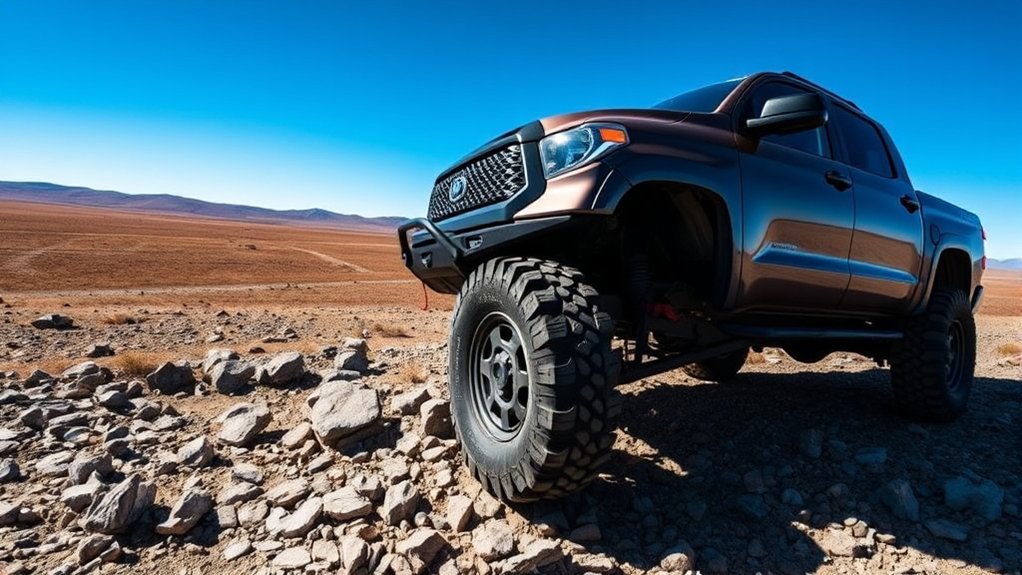
When you take a Toyota Tundra off-road, lowering tire pressure can improve traction, ride comfort, and control on sand, mud, rocks, gravel, and snow. The key is to treat off-road PSI as a temporary trail setting, not a road setting. Start with a conservative pressure, drive slowly, watch the sidewalls, and reinflate to the pressure on your Tundra’s doorjamb placard before returning to pavement.
Quick Answer
For most Toyota Tundra off-road driving, start around 18–22 psi on mixed trails, 15–20 psi for rocks or mud, and 12–16 psi for soft sand. Go lower only at low speed with the right tires and wheels. Always reinflate to the doorjamb placard pressure before highway driving.
Key Takeaways
- Use off-road PSI ranges as starting points, not fixed rules. Tire size, load, wheel width, terrain, and driving speed all matter.
- Aired-down tires are for slow trail use only. Before pavement or highway speeds, reinflate to the cold pressure listed on your Tundra’s Tire and Loading Information Label.
- Lower pressure improves the tire footprint and ride comfort, but too little pressure can unseat the bead, damage sidewalls, overheat the tire, or reduce steering control.
- A tire pressure gauge, deflator, portable compressor, valve caps, and tire repair kit should be part of your off-road kit.
At a Glance
| Time Required | 5–15 minutes to air down; 10–30 minutes to reinflate, depending on compressor size |
| Difficulty | Easy, but accuracy and reinflation discipline matter |
| Tools Needed | Tire pressure gauge, tire deflator, portable air compressor, valve caps, gloves, tire repair kit |
| Cost | About $20–$250, depending on gauge, deflator, and compressor quality |
Understanding the Impact of Tire Pressure on Off-Roading
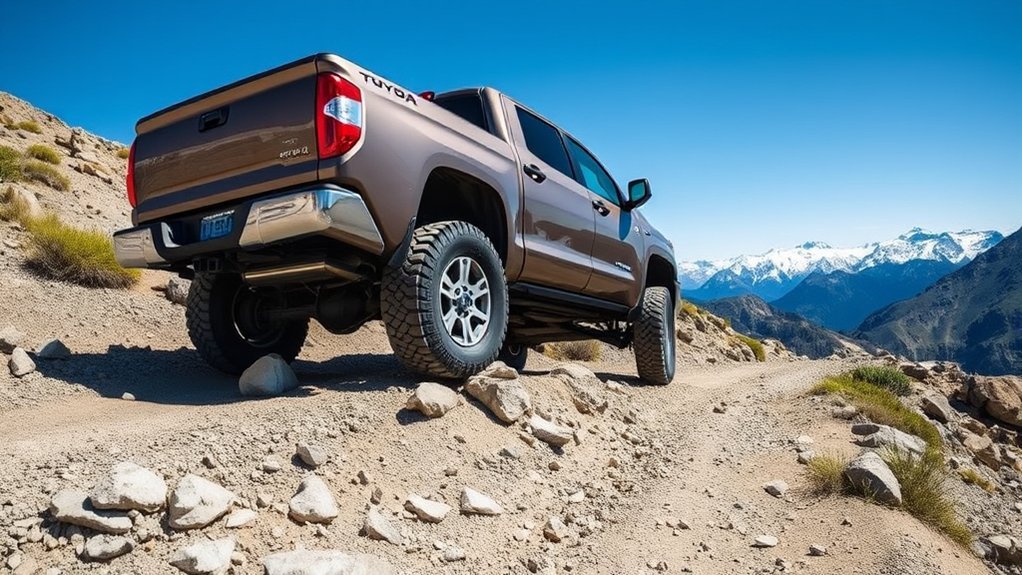
When you air down your tires for off-roading, you reduce tire stiffness and let the tread and sidewall conform better to uneven ground. That can improve grip on loose surfaces, soften impacts, and reduce wheel hop. On a heavy truck like a Tundra, this can make sand, rocks, washboard roads, and rutted trails easier to manage.
That does not mean lower is always better. Very low pressure can make the tire squirm, damage the sidewall, or let the bead slip away from the rim during sharp turns. It can also create heat if you drive too fast. For road use, use the cold tire pressure listed on your Tundra’s Tire and Loading Information Label or owner’s manual, not the pressure molded into the tire sidewall.
Warning: Do not drive at highway speed while aired down. Low trail pressures are temporary off-road settings. Reinflate to the placard pressure before pavement, towing, long-distance driving, or high-speed travel.
Tundra Off-Road Tire Pressure Chart
Use this chart as a safe starting point. Your final setting depends on tire size, load, wheel width, sidewall height, terrain, and how aggressively you drive.
| Terrain | Starting PSI | Best Use | Caution |
| Gravel and washboard roads | 22–28 psi | Comfort and vibration control | Keep speed moderate and reinflate before pavement |
| Mixed dirt trails | 18–22 psi | General Tundra trail driving | Avoid hard cornering and heavy throttle |
| Rocks | 15–20 psi | Grip and sidewall flex over ledges | Watch for sidewall cuts and bead movement |
| Mud | 15–20 psi | Flotation and tread cleanout | Too low can make steering vague |
| Soft sand | 12–16 psi | Floatation and reduced digging | Use low speed; 10–12 psi is advanced and raises bead risk |
| Snow | 14–20 psi | Floatation in deep snow | Ice needs traction, not just lower pressure |
| Pavement return | Doorjamb placard pressure | Road safety, tire life, handling | Never guess; check the label or manual |
Identifying Key Off-Road Conditions for Tire Deflation
Airing down your tires is not just about reducing pressure. It is about matching pressure to the surface in front of you. Soft surfaces need flotation, rocks need controlled sidewall flex, and fast gravel roads need enough pressure to keep the tire stable.
For sandy terrain, start near 12–16 psi so the tire spreads its footprint instead of digging. For rocky terrain, start around 15–20 psi to help the tread wrap around sharp edges while keeping enough pressure to protect the wheel. For mud, 15–20 psi often works well because it helps flotation without making the steering too loose. For snow, 14–20 psi can help in deep powder, but icy roads still require careful throttle, braking, and steering.
Heavier Tundras, loaded beds, rooftop tents, armor, trailers, and LT-rated tires may need more pressure than a lightly loaded truck. If the sidewall folds heavily or the truck feels unstable, add air.
Terrain-Specific Tire Pressure Recommendations
Use the pressure ranges below as trail-only settings. Start high, test traction, then drop 2 psi at a time if the truck still hops, digs, or struggles for grip.
[Products Worth Considering]

The JACO FlowPro Tire Inflator measures, inflates, and airs down tires up to 100 PSI with battery-free operation and ±2% accuracy after calibration. It features a glowing pressure dial for night visibility, a heavy-duty steel build with a hybrid hose, and a precision push-to-inflate thumb trigger. The patented Lightning Air Chuck locks on for a secure seal, and the kit includes quick-connect hardware for easy inline use with your air compressor.
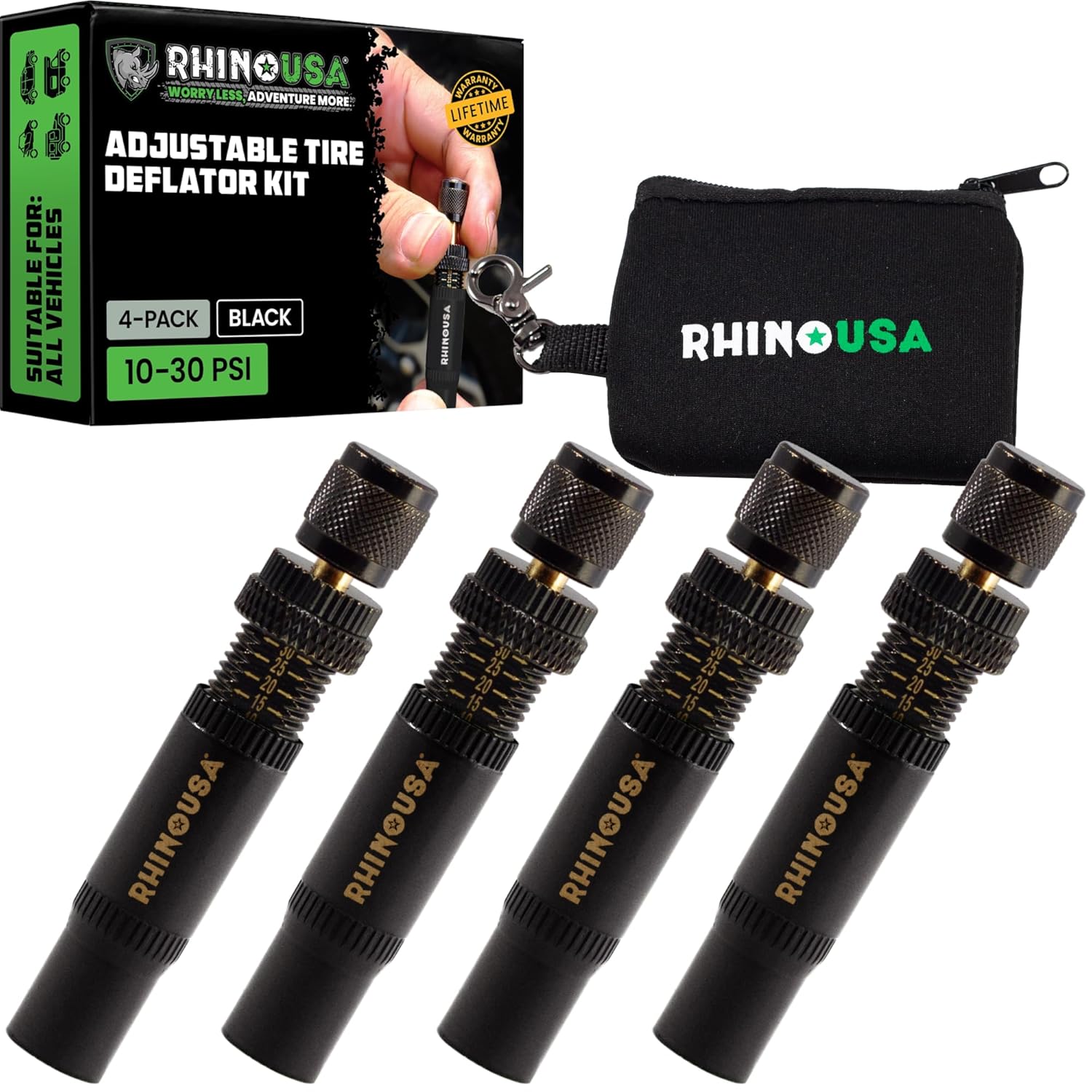
Use the Rhino USA adjustable tire deflators to air down all four tires at once by screwing one deflator onto each valve stem, letting you step away while the tires reach your preset pressure. Each deflator independently adjusts across a 10–30 PSI range with laser-etched indicators for quick setup and verification, making it ideal for beach, sand, and rocky off-road trails.

This ALL-TOP auto-stop tire deflator valve kit lets you air down off-road tires quickly without watching pressure, automatically stopping when your preset PSI is reached. Each valve is individually calibrated for reliable performance with an acceptable +/- 2 PSI tolerance. The adjustable deflator range covers 10 to 30 PSI and includes four valves plus valve caps and a zipper pouch for easy setup on trucks, SUVs, RVs, UTVs, and powersports.
Sand Terrain Guidelines
In sand, the goal is flotation. Lowering tire pressure increases the tire footprint so your Tundra rides on top of the sand instead of cutting into it. Start around 14–16 psi for normal beach or dune approaches. If the sand is very soft and you are moving slowly, you may try 12–14 psi.
Dropping to 10–12 psi is an advanced choice for very soft sand. Use it only at low speed, avoid sharp steering, and understand that standard wheels can unseat a tire bead more easily at that pressure. If you do not have a compressor with you, do not air down that far.
Rocky Terrain Considerations
On rocks, a lower pressure lets the tire flex over ledges and uneven surfaces. For many Tundra setups, 15–20 psi is a practical starting range. Heavier trucks, sharp rocks, and narrow wheels may need the upper end of that range.
Do not chase the lowest number. A tire that is too soft can pinch the sidewall, expose the wheel lip, or roll off the bead during a turn. Use steady throttle, pick smooth lines, and check your sidewalls after each difficult section.
Mud and Snow Guidelines
In mud, start around 15–20 psi. Lower pressure can help the tire float, but too little pressure can make the truck plow, reduce steering response, and increase the chance of debeading if you spin the tires and then catch traction suddenly.
In deep snow, 14–20 psi can help the tire stay on top of the surface. On packed snow or ice, however, airing down is not a cure. Smooth inputs, proper tires, and controlled speed matter more than chasing a low PSI number.
How to Air Down Tundra Tires Step by Step
- Park safely: Stop on level ground away from traffic. Set the parking brake and keep the valve stems easy to reach.
- Check your starting pressure: Use a reliable gauge before you release air. Do not rely only on the TPMS display.
- Choose a starting PSI: Pick a conservative pressure from the terrain chart. For mixed trails, 18–22 psi is a good first test for many Tundra setups.
- Deflate slowly: Use a tire deflator or press the valve stem in short bursts. Check each tire as you go.
- Match left and right: Keep pressures even side to side unless you have a specific reason not to.
- Drive a short test section: If the ride still feels harsh or the truck digs, drop 2 psi at a time. If steering feels sloppy or the sidewalls fold too much, add air.
- Record what works: Save notes for your tire size, terrain, load, and pressure so your next trip is faster and safer.
Pro Tip: Write your best trail pressures on a note in your glove box or phone. Track the terrain, tire size, load, and PSI. This gives you a real-world baseline for your own Tundra instead of relying on generic numbers.
[Products Worth Considering]
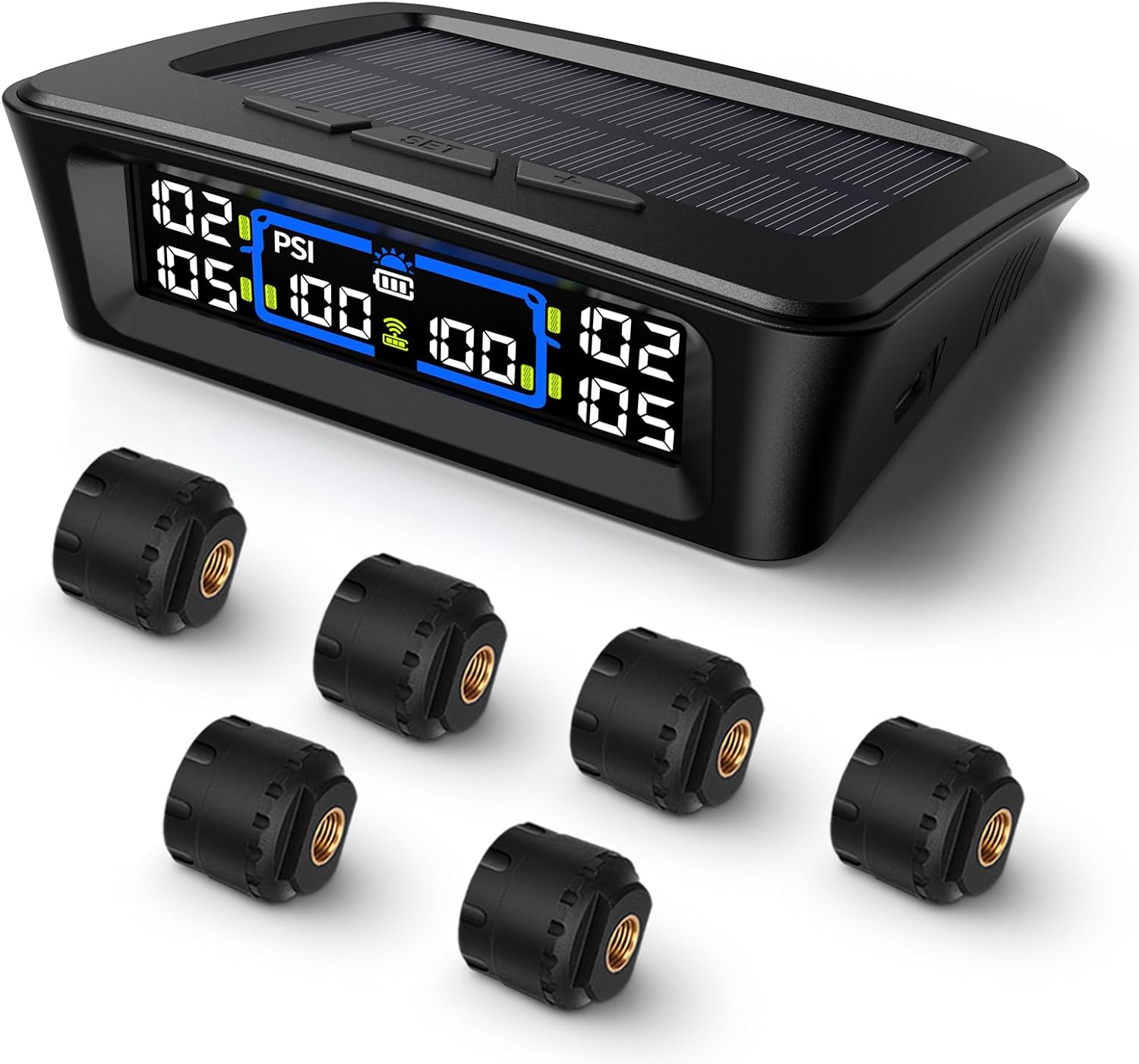
The Tymate TM12 RV TPMS delivers real-time tire pressure and temperature monitoring with a stable 433Hz display for safer long-distance driving. It supports simultaneous monitoring across vehicle and trailer zones, includes six alarm modes for pressure, temperature, leakage, battery, and signal loss, and features easy DIY installation with auto calibration. Power is supplied via USB-C charging or solar recharging, with a wide 0–144 PSI range and up to 50 ft signal coverage for RVs and towable trailers.
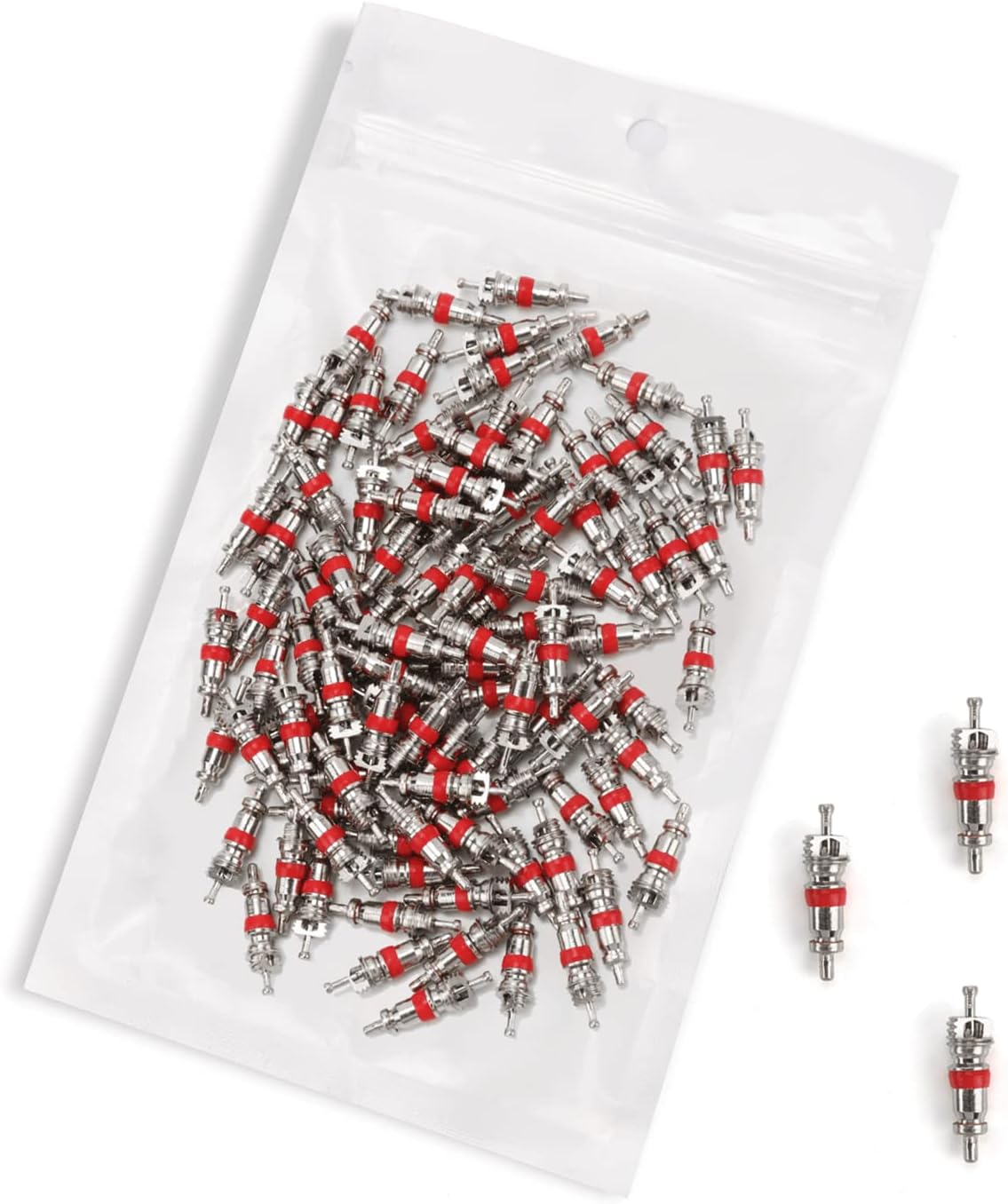
Replace worn Schrader valve cores with durable, nickel-plated replacements designed to resist rust and corrosion for a longer service life. Each core is 100% leakage tested and rated for up to 300 PSI, helping maintain a safe, reliable tire pressure system. Universal fit makes them suitable for cars, RVs, ATVs, motorcycles, bicycles, and many refrigeration/air conditioning applications.

This tire inflator with pressure gauge delivers long-lasting performance with a durable rubber-protected gauge and sturdy build. The longer hose and 360 swivel air chuck help you seal the valve securely and keep your hands free while measuring, inflating, or deflating. It’s battery-free for reliable use and provides ±2 PSI accuracy in the mid-range for most typical tires, with universal compatibility for 1/4 NPT compressor outputs.
Why Airing Down Enhances Off-Roading in Sand, Mud, and Rocks
Airing down helps because it changes how the tire meets the ground. A softer tire can spread the load, absorb small impacts, and conform to obstacles. That can improve traction and comfort, especially at low trail speeds.
Optimal Pressure Ranges
For general trail driving, start around 18–22 psi. For soft sand, try 12–16 psi. For mud and rocks, 15–20 psi is usually a safer starting range than going straight to very low numbers. If you run larger LT tires, carry extra payload, or tow off pavement, you may need more air to support the load.
Terrain-Specific Techniques
In sand, keep momentum smooth and avoid sudden steering. In mud, use steady throttle and avoid spinning the tires until they dig holes. On rocky trails, crawl slowly and let the tire flex over the obstacle instead of bouncing into it. On washboard roads, a mild drop can smooth the ride, but do not drive fast on very low pressures.
Impact on Traction
Reduced pressure can improve traction in three main ways:
- Larger footprint: The tire spreads more load over the surface, which helps on soft sand and snow.
- Better conformity: The tread can wrap around rocks, roots, and ruts instead of skipping over them.
- Smoother ride: The tire absorbs some impact, which helps keep the tread connected to the trail.
Determining Optimal Tire Pressure: How Low Should You Go?
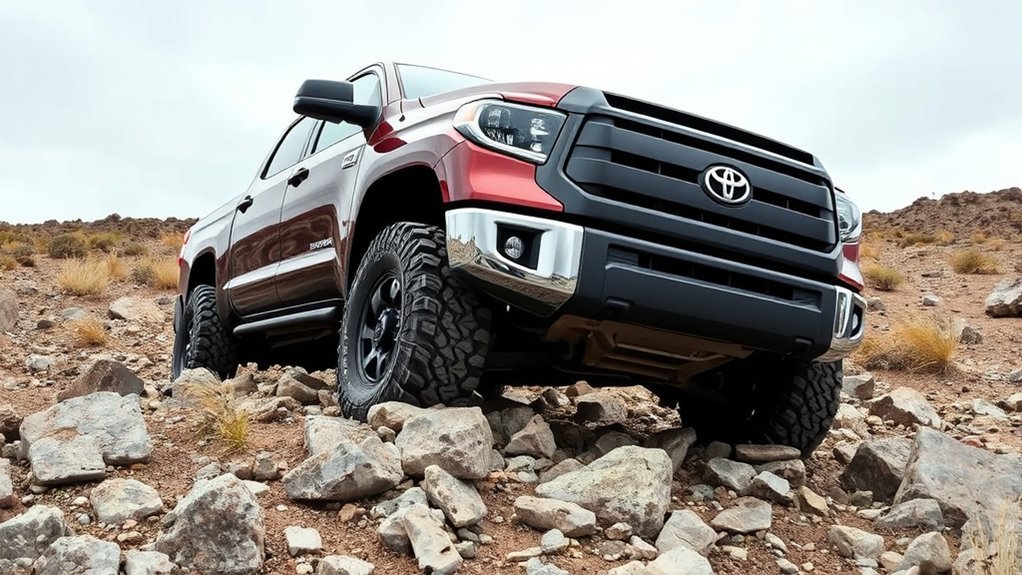
The right tire pressure is the highest pressure that gives you the traction and comfort you need for the terrain. That approach protects the tire better than dropping as low as possible.
Start with your normal road pressure from the placard, then reduce pressure only for trail use. If you are on mild dirt or gravel, a small drop may be enough. If you are in soft sand, deep snow, mud, or rocks, you may need a larger drop. Always adjust in small steps and check how the truck feels.
Use these signs to guide your decision:
- Too much pressure: harsh ride, bouncing, wheel hop, poor grip, digging in sand.
- Good pressure: smoother ride, better grip, controlled steering, sidewall flex without folding.
- Too little pressure: vague steering, heavy sidewall bulge, wheel lip close to rocks, bead movement, tire squirm, or heat buildup.
Note: A TPMS warning does not tell you the best off-road pressure. Federal TPMS rules are designed to warn about significant under-inflation for road safety, not to tune trail traction. Use a gauge every time.
What Risks Come With Over-Deflating Your Tires?
Finding the right tire pressure is important for off-road performance, but over-deflating your tires can create serious problems. Lower pressure helps only when it still supports the truck, keeps the tire seated, and allows safe steering.
The best off-road pressure is not the lowest pressure. It is the lowest safe pressure that improves traction without sacrificing bead security, sidewall protection, or control.
- Tire bead unseating: Very low PSI can let the tire pop off the wheel during sharp turns, side loads, or sudden traction changes.
- Sidewall damage: Extra sidewall flex can expose the tire to rocks, roots, and wheel-lip pinch damage.
- Heat buildup: Driving too fast while under-inflated can overheat the tire and lead to failure.
- Sloppy handling: Steering response can become vague, especially in a heavy truck.
- Wheel damage: Low pressure leaves less cushion between the wheel and rocks or potholes.
The federal TPMS standard also warns that significantly under-inflated tires can overheat, reduce tread life, and affect handling and stopping ability. That is why you should treat off-road pressure as temporary and reinflate before road speed.
Essential Tools for Airing Down Tires Effectively
A successful off-road adventure depends on having the right tire tools before you leave pavement. At minimum, carry a good tire pressure gauge, a tire deflator, and a compressor strong enough to refill all four Tundra tires.
- Tire pressure gauge: Use a gauge you trust. Pencil gauges are compact, but a quality digital or dial gauge is easier to read accurately.
- Automatic tire deflators: Preset deflators can stop near your chosen PSI and save time when airing down all four tires.
- Valve-core deflator: This removes air quickly, but it can lose the valve core if you are careless. Use it only if you know how it works.
- Portable compressor: Choose one with enough duty cycle for truck tires. Small emergency inflators can overheat before all four tires are full.
- Tire repair kit: Carry plugs, reamer, insertion tool, spare valve cores, valve caps, and pliers.
- Gloves and light: These make valve work easier in mud, cold, or darkness.
[Products Worth Considering]
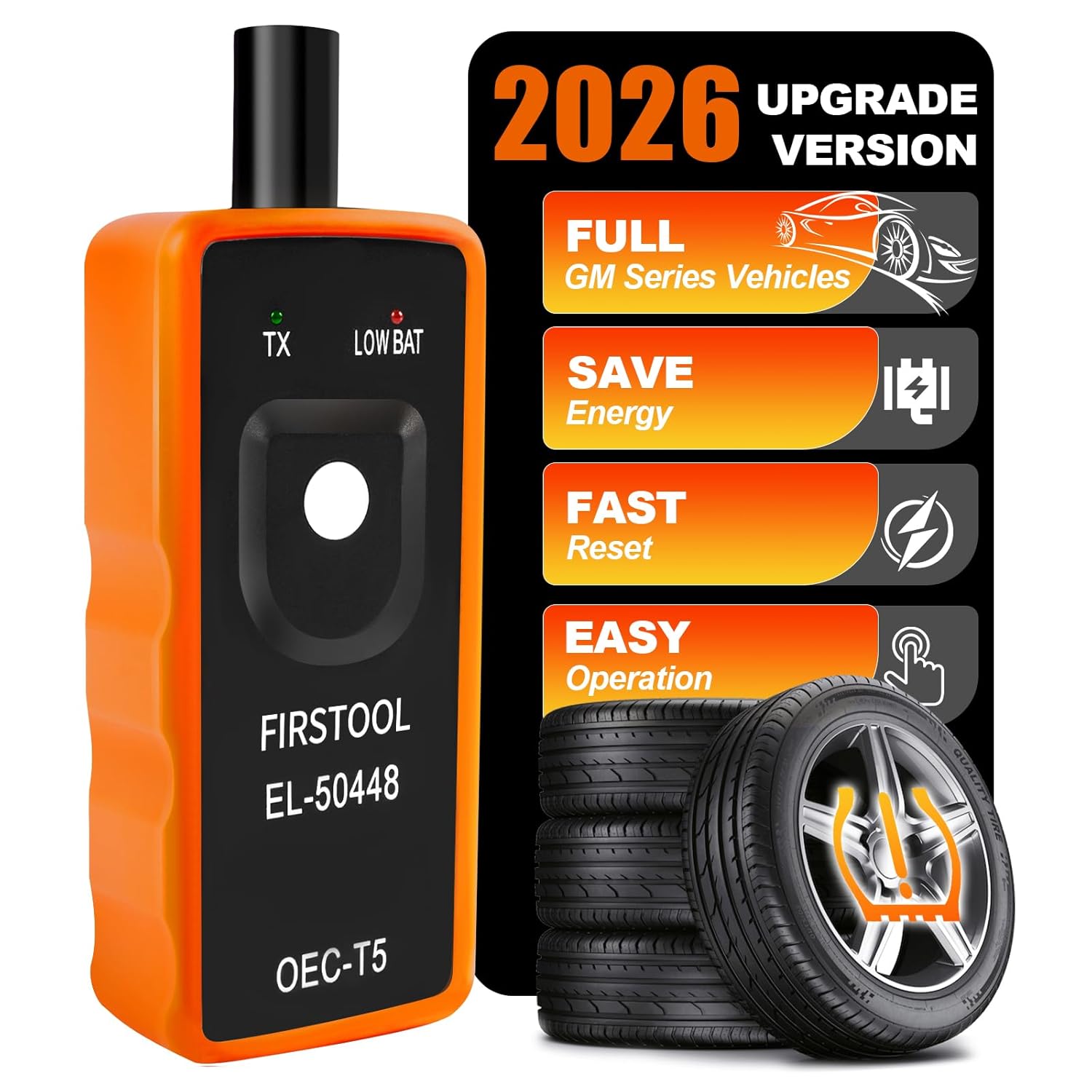
This TPMS relearn tool helps you quickly activate, match, and reset GM tire pressure sensors to keep the vehicle monitoring system working properly. It clears tire pressure alarms and dashboard warning lights after sensor replacement or tire rotation, and supports learning for common 315/433 MHz TPMS sensors. Designed for simple one-button operation, it can help you avoid unnecessary trips to repair shops.

This digital tire pressure gauge with built-in inflator helps you accurately check and adjust tire pressure for safer driving and better fuel efficiency. It supports multiple units (PSI, KPA, BAR, KG/CM²) and reads within 1% for reliable results. The 3-in-1 design inflates, deflates, and measures, with a quick-connect air chuck and compatible hose setup for cars, trucks, SUVs, RVs, and motorcycles.
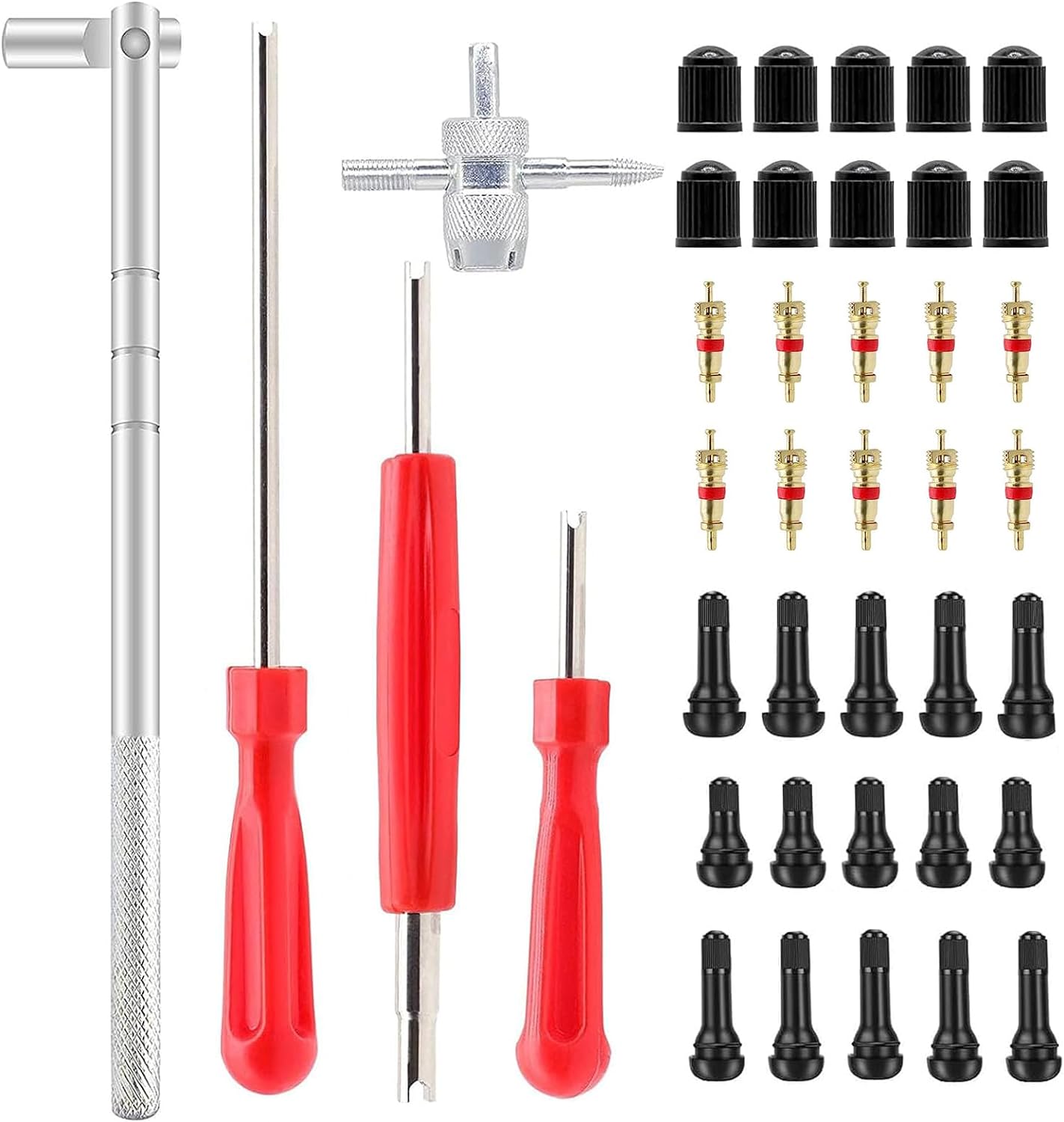
This ZHSMS valve stem puller and installer tool set makes it easy to remove and install tire valve stems without damaging wheels or valves. It uses a leverage design to save effort and includes valve stem tools plus removable valve core functionality for quick tire repairs. Compatible with tubeless tires for passenger cars, motorcycles, ATVs, off-road vehicles, and trucks.
Tundra-Specific Factors That Change Your PSI
A Toyota Tundra is heavy, and many off-road builds add even more weight. Skid plates, sliders, bumpers, winches, bed racks, rooftop tents, drawer systems, campers, and recovery gear all change how much pressure the tire needs.
Use higher pressure when your Tundra is heavily loaded, when you are towing off pavement, or when the trail includes sharp rocks. Use lower pressure only when traction or flotation demands it and you can keep speed low. If you changed tire size or load range, ask a qualified tire shop to help you set a safe road pressure for the new tire and load.
Toyota provides owner manual access through its Manuals and Warranties page. For road driving, use your exact model’s label and manual, not a generic PSI from another truck.
Reinflating Tires After Off-Roading: Key Tips
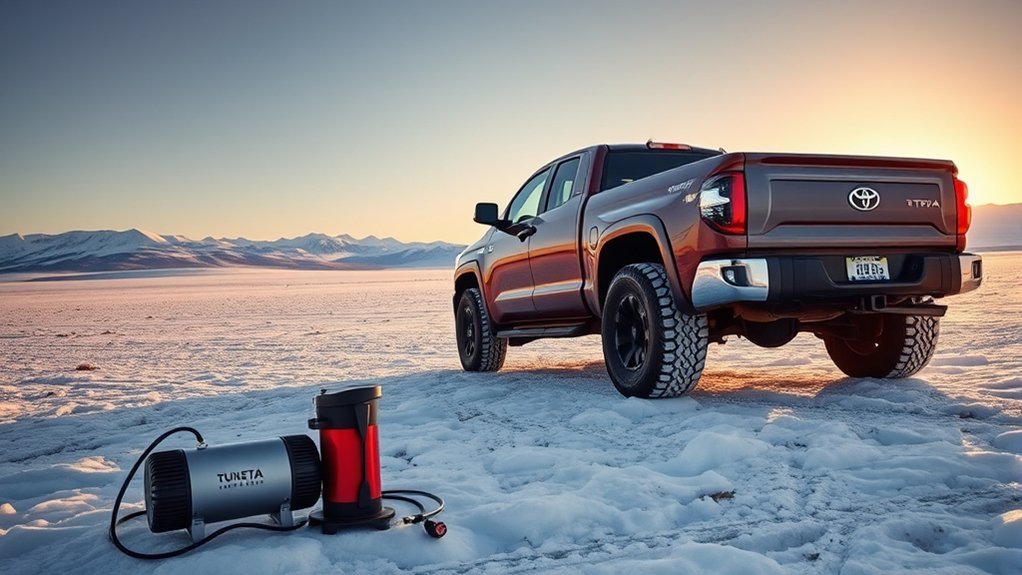
After off-roading, reinflate your tires before you drive at normal road speeds. Use the cold pressure on the Tundra’s Tire and Loading Information Label or the pressure recommended for your aftermarket tire setup. NHTSA advises drivers to check tire pressure when tires are cold and to use the vehicle manufacturer’s recommended inflation pressure, not the number molded into the tire sidewall.
- Park in a safe spot: Pull off the trail before entering fast pavement.
- Inspect each tire: Look for sidewall cuts, tread punctures, missing valve caps, leaking valve stems, and debris in the bead area.
- Inflate gradually: Fill one tire at a time, checking pressure as you go. Let the compressor cool if required by its duty cycle.
- Match pressure side to side: Keep left and right tires even for stable handling.
- Recheck after driving: Warm tires read higher. If you need an exact cold reading, check again after the truck has been parked for at least three hours.
- Reset or confirm TPMS if needed: If the warning light stays on after proper inflation, follow the owner’s manual or have the system inspected.
Troubleshooting Common Airing-Down Problems
TPMS Light Stays On After Reinflating
Drive a short distance after reinflating so the system can update. If the light flashes, stays on, or returns, check pressure with a gauge and inspect for leaks. TPMS is helpful, but it is not a replacement for manual checks.
One Tire Keeps Losing Pressure
Spray soapy water around the valve stem, tread, and bead area. Bubbles can reveal a leak. If the leak is at the sidewall or bead, do not rely on a plug. Have the tire inspected.
The Truck Feels Wobbly
Your pressure may be too low for the load or speed. Add 2–4 psi and slow down. If the tire sidewall is folding heavily, reinflate more before continuing.
You Popped a Bead
Stop immediately. Do not keep driving on the tire. If you do not have the tools and experience to reseat it safely, use your spare or call recovery help.
Frequently Asked Questions
How can I tell when to air down my tires?
Air down when the trail is rough, loose, soft, or slippery enough that your Tundra bounces, digs, hops, or loses traction. Common examples include soft sand, rocks, mud, snow, and washboard roads. Do not air down for normal paved-road driving.
What tools do I need for airing down tires?
You need a tire pressure gauge, a deflator, and a portable air compressor. A tire repair kit, spare valve cores, valve caps, gloves, and a flashlight are also smart additions for off-road trips.
Can I air down tires with a standard pump?
A standard pump is for adding air, not removing it accurately. To air down, use a tire deflator or a gauge with a bleed valve. To reinflate a Tundra tire after the trail, use a compressor rated for truck tires.
How often should I check my tire pressure off-road?
Check pressure after airing down, after major terrain changes, after a hard rock hit, and before returning to pavement. On long trail days, check every few hours because temperature, leaks, and terrain impacts can change pressure.
What are the signs of over-deflated tires while driving?
Signs include vague steering, heavy sidewall bulge, tire squirm, wheel-lip contact, bead leaks, rapid heat buildup, and a wobbly feel. If you notice these signs, slow down and add air.
Can I drive home at 15 psi?
No. A pressure like 15 psi is for slow off-road use only. Reinflate before normal road speed. Driving fast while significantly under-inflated can overheat the tire, damage it, and reduce handling control.
Does my Tundra’s TPMS replace a tire gauge?
No. TPMS warns about significant under-inflation, but it is not meant to replace manual pressure checks. Use a tire gauge before airing down, during trail adjustments, and before returning to pavement.
Conclusion
Airing down your Toyota Tundra’s tires can make off-road driving smoother, safer, and more controlled when you do it correctly. Start with conservative PSI ranges, adjust in small steps, and pay attention to how the truck feels. For soft sand, you may need the lowest pressure. For rocks, mud, and mixed trails, a slightly higher pressure often gives better protection.
The most important rule is simple: trail pressure is temporary. Before you return to pavement, reinflate to the correct road pressure listed on your Tundra’s doorjamb label or owner’s manual. That habit protects your tires, your truck, and everyone riding with you.
Sources
- NHTSA TireWise: Tire Safety Ratings and Awareness — supports tire pressure, cold checks, tire placard guidance, TPMS limitations, and tire safety risks.
- 49 CFR § 571.138: Tire Pressure Monitoring Systems — supports TPMS warning thresholds and under-inflation safety language.
- Toyota Owners: Manuals and Warranties — supports using the correct Toyota owner manual for model-specific guidance.
- Extended Pacejka Tire Model for Enhanced Vehicle Stability Control — supports the broader point that inflation pressure affects tire force and vehicle dynamics.