
How Tire Pressure Affects Toyota Tacoma Off Road Traction
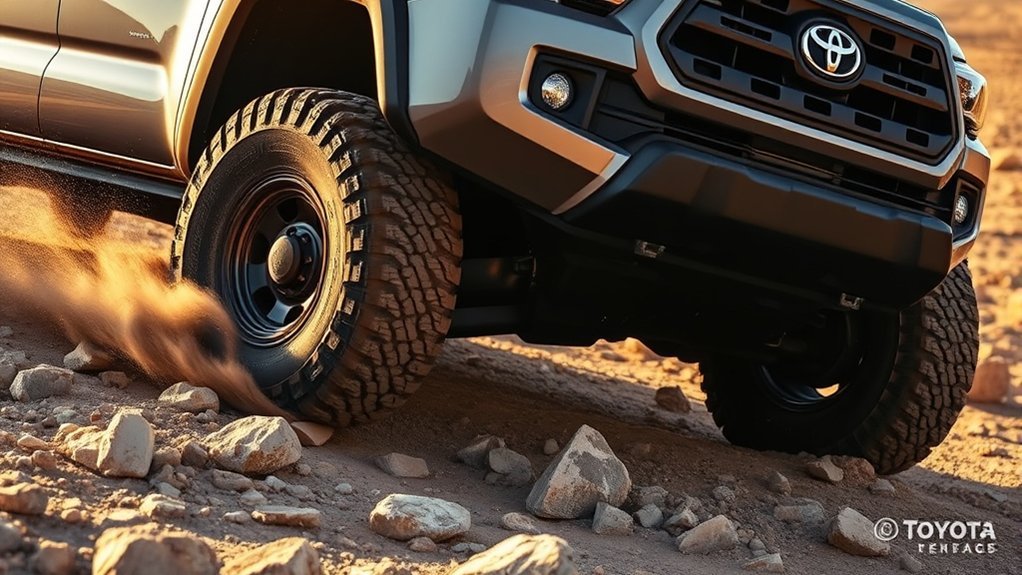
Proper tire pressure can make your Toyota Tacoma feel much more controlled off-road, but there is no single PSI that works for every truck, tire, load, and trail. The safest approach is to start with the Tacoma’s door-placard or owner-manual pressure for road driving, air down only for slow off-road use, test in small steps, and reinflate before returning to pavement.
Quick Answer
For many Toyota Tacoma trail setups, start around 18–24 PSI for mixed dirt and rocky trails, 15–20 PSI for slow rocks or mud, and 12–16 PSI for soft sand or deep snow at low speed. Use these as starting points only, then adjust for tire type, wheel size, payload, speed, and beadlock use.
Key Takeaways
- Lower tire pressure increases the tire’s footprint, which can improve grip, flotation, and ride comfort on loose or uneven terrain.
- Aired-down tires are for slow off-road driving only. Reinflate to the recommended road pressure before highway driving or sustained pavement use.
- Going too low can unseat the tire bead, reduce steering response, build heat, and damage the tire or wheel.
- Use the Tacoma’s placard pressure for pavement, then treat off-road PSI charts as starting points—not fixed rules.
- Carry a quality tire gauge, deflator, compressor, valve caps, spare valve cores, and a tire repair kit before you air down far from pavement.
At a Glance
| Time Required | 10–20 minutes to air down; 15–35 minutes to air back up, depending on compressor speed, tire size, and target PSI |
| Difficulty | Easy to moderate; the key is measuring accurately, driving slowly, and avoiding unsafe low-pressure pavement driving |
| Tools Needed | Tire pressure gauge, tire deflator, portable air compressor, valve caps, spare valve cores, tire repair kit, pliers, and a full-size spare if possible |
| Cost | About $15–$60 for a gauge/deflator; $80–$350+ for a portable compressor setup; more for dual compressors or onboard air |
How Lower Tire Pressure Enhances Off-Road Traction
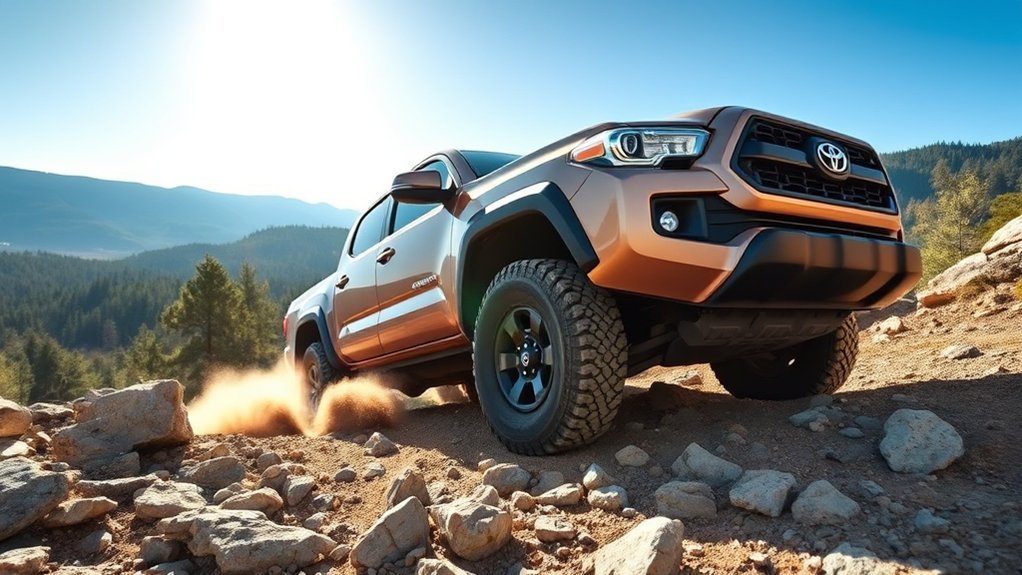
Lowering tire pressure lets the tire flex more. That creates a longer, wider contact patch, helping the tread conform to sand, gravel, roots, rocks, and uneven trail surfaces. BFGoodrich’s off-road tire guide explains that airing down can increase a tire’s footprint for better traction on soft or uneven terrain and smooth the ride over bumps and rocks. It also stresses that there is no universal air-down number.
For a Tacoma, the benefit is most noticeable when the trail is loose, soft, corrugated, or uneven. Lower pressure can help the tires float on sand, bite into loose dirt, and wrap around rocks instead of bouncing off them. It can also reduce harsh impacts through the suspension because the tire absorbs more of the small hits.
Note: Airing down does not create more ground clearance. In fact, the tire squats slightly, so your lowest points may sit a little closer to rocks. Drive accordingly.
[Products Worth Considering]
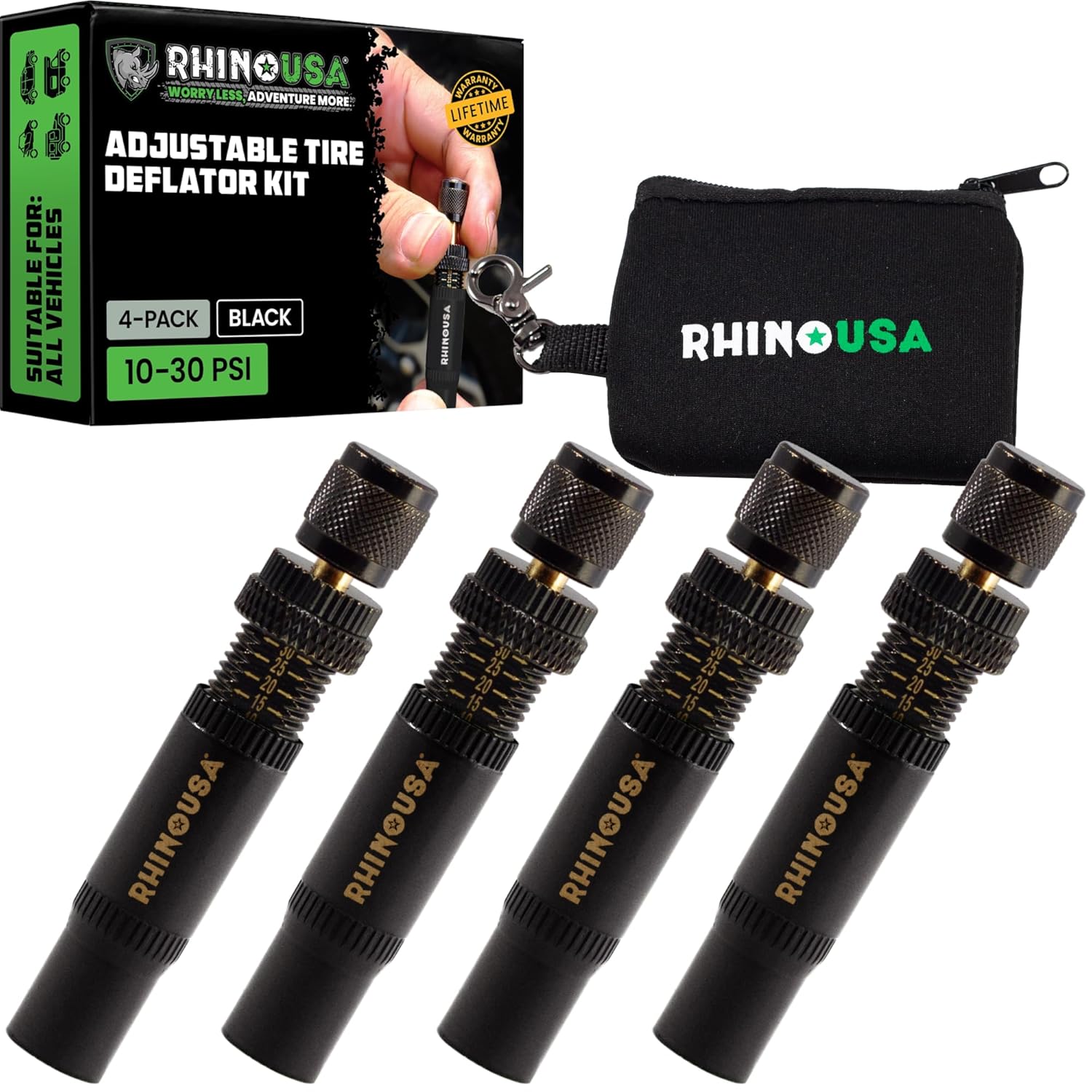
Use the Rhino USA adjustable tire deflators to air down all four tires at once by screwing one deflator onto each valve stem, letting you step away while the tires reach your preset pressure. Each deflator independently adjusts across a 10–30 PSI range with laser-etched indicators for quick setup and verification, making it ideal for beach, sand, and rocky off-road trails.

This portable cordless tire inflator delivers up to 160 PSI with fast 17 L/min airflow to help you quickly top up tires and get back on the road. It features dual power mode, running on a 21V rechargeable battery or a 12V DC adapter for convenient roadside use. An automatic shut-off with digital pressure gauge helps prevent overinflation, and a built-in LED light improves visibility in low-light conditions.

This tire repair kit provides fast emergency puncture repair without removing the tire from the rim, helping you get back on the road quickly. Its screw plug system is designed for punctures in both tread and sidewall and includes a complete patch plug tool set with essential accessories. A portable storage bag makes it easy to carry for cars, trucks, SUVs, motorcycles, and heavy-duty applications.
Recommended Toyota Tacoma Off-Road PSI by Terrain
Use this chart as a starting point for slow off-road driving, not as a fixed rule. Your best PSI depends on tire size, load range, sidewall height, wheel diameter, payload, trail speed, tire condition, and whether you are running standard wheels or beadlocks.
| Terrain | Starting PSI | Best Use | Watch For |
|---|---|---|---|
| Gravel, washboard, easy dirt roads | 24–28 PSI | Smoother ride and better control without going very low | Higher trail speeds generate heat, so do not treat this as a highway pressure |
| Mixed dirt and moderate trails | 18–24 PSI | General trail traction and ride comfort | Wheel size, tire load range, and payload can change the safe range |
| Rocky trails and slow rock crawling | 15–20 PSI | Tread flex around rocks and improved grip at low speed | Sidewall cuts, rim strikes, and bead unseating during sharp turns |
| Mud | 15–20 PSI | More footprint and flotation in soft mud | Too low can pack mud into wheels, make steering vague, and raise bead risk |
| Soft sand or deep snow | 12–16 PSI | Maximum flotation at low speed | High bead risk on standard wheels; avoid sudden steering inputs |
| Loaded truck, towing, or faster dirt | Stay closer to road pressure or make only a small drop | Maintaining load capacity, steering response, and tire temperature control | Do not combine low PSI, heavy load, and speed |
Discount Tire lists similar broad off-road ranges, including 12–15 PSI for sand, loose gravel, or snow and 15–20 PSI for rocks and mud. It also notes that terrain, tire construction, vehicle weight, wheel size, and speed affect the right setting. That is why these numbers should be treated as trail starting points, not universal Tacoma specs.
Note: If you are new to airing down, start at the higher end of the range. Drive a short test section, then drop 2 PSI at a time only if you need more grip and the tire still has enough sidewall support.
Adjusting PSI for Your Tacoma Setup
The same trail can require different PSI on two Tacomas. A stock truck on P-metric tires, an overland build on LT all-terrains, and a rock-crawling setup on beadlocks should not all run the same pressure.
Stock vs. Upgraded Tires
Stock-size all-season or P-metric tires usually should not be aired down as aggressively as stronger LT all-terrain or mud-terrain tires. Lower-profile tires on larger wheels also have less sidewall to flex, so they usually need higher trail pressure to protect the rim.
BFGoodrich warns that upgraded tire sizes can change the correct pressure calculation, so the placard pressure may no longer apply once tire size or load rating changes. Toyo Tires also recommends using the tire information placard or owner’s manual for original-equipment tire sizes and load/inflation guidance for optional sizes.
Wheel Size, Sidewall, and Load Range
A Tacoma on a smaller wheel with a taller sidewall can usually tolerate more flex than a Tacoma on a larger wheel with less sidewall. A stiff LT tire may also need a lower PSI than a softer passenger tire before it gives the same footprint, but that does not mean it is safe to go low at speed.
- More sidewall: More room for controlled flex, but still watch for bead movement and sidewall cuts.
- Less sidewall: Use higher trail pressure to reduce rim strikes.
- Heavier LT tires: Often tolerate trail abuse better, but still need enough pressure for the truck’s weight.
- P-metric tires: Be conservative. They are usually less forgiving off-road than LT all-terrain or mud-terrain tires.
Payload, Front/Rear Pressure, and Towing
An empty Tacoma may run the same trail PSI front and rear. A Tacoma carrying armor, tools, water, passengers, a bed rack, rooftop tent, recovery gear, or camping equipment may need more rear pressure because the rear tires are carrying more weight.
As a simple trail method, start even on all four tires if the truck is lightly loaded. If the rear sidewalls look much more folded than the front, or the truck feels loose in the rear, add 2–4 PSI to the rear tires. If you are towing or carrying a heavy payload, avoid aggressive airing down unless your tire load capacity and setup have been calculated for it.
Warning: Never use the tire’s sidewall maximum PSI as your normal road-pressure target. Use the Tacoma’s tire placard or the pressure calculated for your replacement tire size and load.
Understanding the Risks of Lowering Tire Pressure
Airing down is useful, but the tradeoffs become serious when pressure gets too low, speed gets too high, or the truck is carrying extra weight. Yokohama warns that reducing pressure for off-road flotation or traction can cause over-deflection, heat buildup, and tire failure if the tire is not operated carefully. Yokohama also says aired-down tires must be reinflated before highway or higher-speed driving.
Bead Unseating Risks
When pressure drops, the tire bead has less force holding it against the wheel. On standard Tacoma wheels, this can allow the tire to burp air or unseat completely, especially during side loads, sharp turns, off-camber climbs, or sudden steering corrections. BFGoodrich warns that too little pressure can unseat the tire from the rim and cause serious damage.
Warning: Do not run very low PSI on standard wheels unless you understand the risk and can reseat or change a tire on the trail. Pressures below about 15 PSI raise bead-risk quickly on many non-beadlock setups.
Heat Build-Up Concerns
Lower pressure makes the tire flex more. At low trail speeds, that flex can improve grip. At higher speeds, the same flex can create heat. NHTSA states that excessive speed, underinflation, and excessive loading can cause heat buildup and possible tire failure. That is why aired-down tires belong on slow trails, not the highway.
| Situation | Risk Level | What to Do |
|---|---|---|
| 12–16 PSI in soft sand at low speed | Moderate to high | Drive smoothly, avoid sharp turns, and watch the bead |
| 15–20 PSI on rocks at crawl speed | Moderate | Protect sidewalls and avoid hard rim hits |
| Aired down on pavement | High | Stop and reinflate before sustained road speed |
| Heavy payload or towing while aired down | High | Use higher pressure or avoid airing down until unloaded |
Control and Stability Issues
As PSI drops, steering can feel slower and the Tacoma may lean or wander more. That can be manageable at crawl speed, but it becomes unsafe as speed rises. Low pressure also lowers the tire’s load capacity, so a Tacoma carrying camping gear, armor, water, passengers, or a bed rack may need more PSI than an empty truck.
When Not to Air Down
Airing down is not always the right move. Stay at road pressure or make only a small pressure drop when you cannot keep speed low, when you do not have a working compressor, when a tire already has sidewall damage, or when the route includes long pavement connectors.
- Do not air down for highway driving. Reinflate before sustained pavement speed.
- Do not air down heavily while towing. Trailer tongue weight adds load to the rear tires.
- Do not chase a low number. Better traction is not worth a debeaded tire, damaged rim, or overheated casing.
- Do not air down a damaged tire. Cuts, bulges, exposed cords, or a leaking bead need inspection before trail use.
How to Determine the Best PSI for Your Tacoma Off-Road Adventures
Start with the tire information placard and owner’s manual for road driving. If you have the original-equipment tire size, follow the vehicle manufacturer’s listed cold pressure for pavement. If you changed tire size, load range, or wheel size, consult a tire professional or the tire maker’s load-and-inflation guidance instead of guessing.
Step-by-Step Air-Down Process
- Check your cold road pressure first. Write down the Tacoma’s current front and rear PSI before you leave pavement.
- Choose a conservative first drop. For easy dirt, start about 5–8 PSI below road pressure. For slower mixed trails, try 18–24 PSI if your tires and load allow it.
- Deflate evenly. Use a tire deflator and gauge so all four tires are close to the same pressure unless your load requires a different front/rear split.
- Drive a short test section. Listen for rim strikes, feel steering response, and watch sidewall bulge.
- Adjust in small steps. Drop 2 PSI at a time if you still need grip. Add air if steering gets vague, the sidewall folds too much, or you are hitting the rim.
- Recheck during the trail. Temperature and trail impacts can change readings, and a slow leak may not be obvious from the driver’s seat.
Pro Tip: Keep a note on your phone with the PSI that worked for each trail type, tire setup, and load. Over time, your own Tacoma, tires, and gear weight will give you a better guide than any generic chart.
Quick Pre-Trail Checklist
- Confirm your compressor works before leaving home.
- Check the spare tire, not just the four tires on the ground.
- Inspect sidewalls for cuts, bubbles, cracks, or exposed cords.
- Make sure valve caps are installed and spare valve cores are packed.
- Write down your road PSI, first trail PSI, and final air-up target.
- Plan where you will safely air back up before pavement.
Must-Have Tools for Managing Tire Pressure Off-Road
You do not need a complicated setup, but you do need a reliable way to remove air, measure PSI, and put air back in before pavement.
- Accurate tire pressure gauge: Use a gauge you trust. TPMS readings are helpful, but they do not replace manual checks.
- Tire deflator: A basic gauge-style deflator works. Valve-core deflators are faster but require care so you do not lose the valve core.
- Portable air compressor: Choose one rated for light-truck tires, especially if you run larger all-terrain or mud-terrain tires.
- Valve caps and spare valve cores: Small parts can ruin a trail day if you lose them.
- Tire repair kit: Carry plugs, a reamer, insertion tool, and pliers for tread punctures.
- Full-size spare: A matching spare is best for serious off-road travel.
Monitoring and Adjusting Tire Pressure
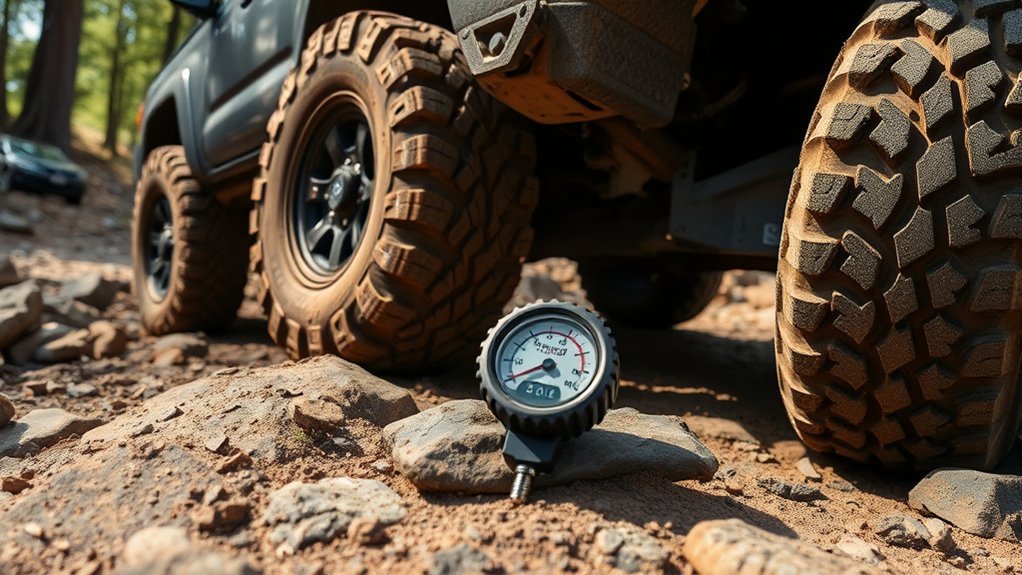
Check pressure before airing down, after airing down, mid-trail, and before returning to pavement. Do not rely only on appearance; modern tires can look acceptable while still being dangerously underinflated. Yokohama recommends checking tire pressure at least monthly and before long trips when tires are cold, using an accurate gauge.
TPMS can help you spot a major loss of pressure, but it is not a precision trail gauge. It may also complain when you intentionally air down. Use TPMS as a backup warning system and your handheld gauge as the main reference.
[Products Worth Considering]

The JACO FlowPro Tire Inflator measures, inflates, and airs down tires up to 100 PSI with battery-free operation and ±2% accuracy after calibration. It features a glowing pressure dial for night visibility, a heavy-duty steel build with a hybrid hose, and a precision push-to-inflate thumb trigger. The patented Lightning Air Chuck locks on for a secure seal, and the kit includes quick-connect hardware for easy inline use with your air compressor.

The Fanttik X10 Pro is a cordless portable tire inflator that reaches up to 150 PSI and can inflate an R15 tire in about 35 seconds for quick roadside or home top-ups. With AccuInFlate auto-stop and smart start/stop controls, it helps maintain accurate pressure and frees your hands once the target is reached. A high-visibility digital display and preset modes make it easy to set and monitor inflation for cars, motorcycles, bikes, and balls.
How to Air Back Up Safely
- Stop before sustained pavement speed. Air up at the trailhead, staging area, or nearest safe pullout.
- Use your road-pressure target. For OE-size tires, use the Tacoma’s tire placard or owner’s manual. For upgraded tires, use the pressure calculated for that size and load.
- Inflate all four tires evenly. Recheck after the compressor stops because hose and gauge readings can drift.
- Inspect each tire. Look for sidewall cuts, bulges, missing valve caps, embedded rocks, punctures, and bent wheels.
- Drive gently at first. If the Tacoma pulls, vibrates, or feels unstable, stop and inspect again.
Trail Troubleshooting Pressure Problems
| Problem | Likely Cause | Safe Fix |
|---|---|---|
| Steering feels vague or the truck wanders | Pressure is too low for speed, load, or tire setup | Slow down and add 2–4 PSI |
| You hear rim strikes on rocks | Too little sidewall support or too much speed | Add air, slow down, and choose smoother tire placement |
| Tire burps air or bead looks uneven | Bead is moving under side load | Stop, inspect, add air, and avoid sharp steering |
| One tire keeps losing PSI | Puncture, bead leak, valve-core issue, or wheel damage | Inspect carefully, repair if safe, or install the spare |
| TPMS warning comes on after airing down | System detects intentional low pressure | Use your gauge as the main reference and air back up before road speed |
| Compressor gets very hot or slows down | Duty cycle limit or oversized tires | Let it cool, inflate in stages, and follow the compressor manual |
The Impact of Terrain on Tire Pressure Choices
Different terrain asks the tire to do different work. Sand and snow reward flotation, rocks reward controlled sidewall flex, and gravel roads often need only a modest pressure drop for comfort. The more you lower pressure, the more you must reduce speed and increase attention.
Sand and Snow
Soft sand and deep snow often need the lowest pressure because the goal is flotation. A wider footprint helps the Tacoma stay on top instead of digging down. Start around 15–16 PSI before trying lower pressure, and only consider 12–14 PSI if you are moving slowly, the truck is not heavily loaded, and your wheel/tire setup can handle it.
Rocks
For rocks, the goal is grip and tire compliance without folding the sidewall into the wheel. Around 15–20 PSI is a common slow-speed range. Use the higher end if you have heavy armor, a bed load, stock wheels, low-profile tires, or sharp rocks.
Mud
Mud is tricky because too much pressure can make the tire dig, while too little can make steering sloppy and increase bead risk. Try 15–20 PSI first, then adjust based on whether the truck floats, digs, or slides.
Washboard and Faster Dirt
For washboard roads and faster dirt, avoid very low pressure. A modest drop can reduce vibration, but speed and heat are the limiting factors. If you plan to drive quickly, stay closer to road pressure and watch tire temperature, handling, and load.
The lower you air down, the slower you should drive. Low PSI, heavy load, and speed are the combination that turns a traction trick into a tire-failure risk.
Smart Safety Tips for Airing Down and Back Up
- Never air down without a way to air back up. A compressor should be part of the plan, not an optional accessory.
- Avoid sharp steering at very low PSI. Side load is one of the easiest ways to unseat a bead.
- Do not air down heavily when towing or overloaded. More weight needs more air pressure to support it.
- Do not drive highway speeds while aired down. Reinflate before pavement or higher-speed dirt roads.
- Check pressures cold when setting road pressure. Hot tires read higher, so do not bleed down hot road tires and then assume they are correct cold.
- Inspect after every trail run. Sidewall cuts, bulges, missing valve caps, and embedded debris can become road hazards later.
Warning: If you feel vibration, sudden pulling, a thumping tire, or unstable steering after airing back up, slow down safely and inspect the tires before continuing.
What Regular Tire Maintenance Should You Perform for Off-Roading?
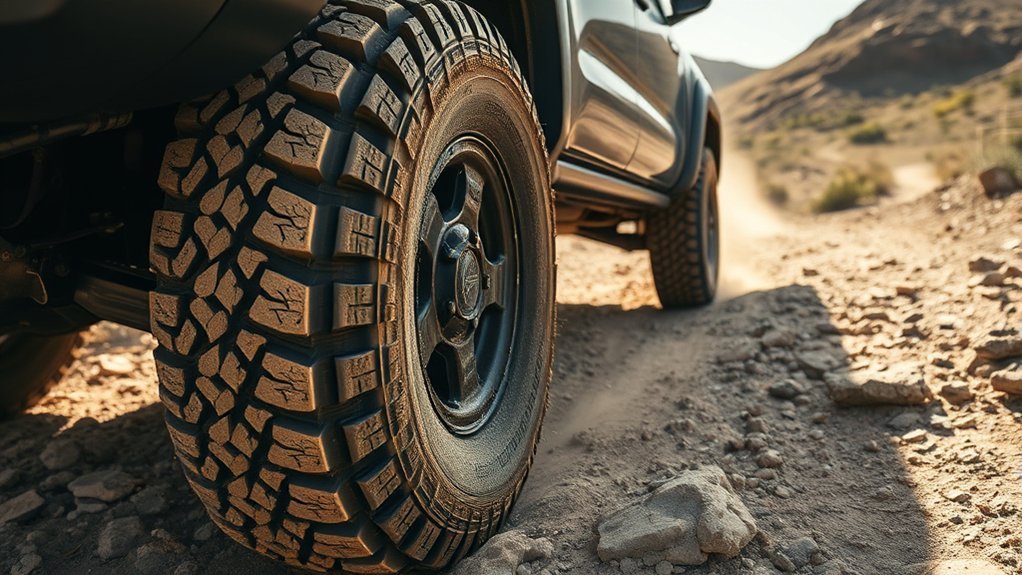
Off-road driving makes tire maintenance more important because rocks, roots, mud, and low pressure all add stress. Use your exact model-year Tacoma owner’s manual and maintenance guide as the final schedule. Toyota’s owners site lets you select your vehicle to access available manuals and warranties, and that is the best place to confirm the schedule for your year, trim, tire size, and drivetrain.
- Check tire pressure monthly and before trips. Include the spare.
- Rotate tires on schedule. Off-road use can speed up uneven wear.
- Measure tread depth. Tires are generally not safe at 2/32 inch, and mud, snow, and wet trail use need more tread than the legal minimum.
- Inspect sidewalls. Look for cuts, bubbles, cracks, and abrasion after rocky trails.
- Clean out tread blocks. Remove rocks, glass, nails, and other debris before highway driving.
- Check wheel damage. Bent rims and damaged bead seats can cause slow leaks.
- Recheck lug nuts after hard trail use. Follow Toyota’s torque specification for your wheel setup.
Frequently Asked Questions
What PSI should I air down to when off-roading in a Toyota Tacoma?
For many Tacoma setups, start around 18–24 PSI for mixed trails, 15–20 PSI for slow rocks or mud, and 12–16 PSI for soft sand or deep snow. Adjust based on tire size, load range, wheel size, payload, speed, tire condition, and beadlock use. Reinflate before pavement.
Is 40 PSI too high for 4WD?
Not always. For pavement, the correct pressure is whatever your vehicle placard, owner’s manual, or tire-size/load calculation requires. For slow off-road traction, 40 PSI is usually too firm because the tire will not flex much, but it may still be appropriate for heavy loads or certain LT tire setups on the road.
Is 35 PSI too high for a Tacoma?
For highway driving, 35 PSI may be correct if your Tacoma’s placard or tire setup calls for it. For slow off-road driving, 35 PSI is often higher than needed for sand, rocks, or mud. Air down only when you can drive slowly and air back up before returning to pavement.
Is 25 PSI good for off-road driving?
Yes, 25 PSI can be a good conservative setting for gravel, washboard roads, and mild trails. It is usually too high for deep sand or slow technical rock work, but it gives more sidewall support and less bead risk than very low pressures.
Can I air down on stock Tacoma wheels?
Yes, many Tacoma owners air down moderately on stock wheels. Stay conservative, avoid sharp steering at low PSI, and be careful below about 15 PSI because standard non-beadlock wheels have more bead-unseating risk.
Should front and rear tire pressure be the same off-road?
They can be the same on a lightly loaded Tacoma. If the bed is loaded with gear, water, tools, a rack, or a rooftop tent, the rear tires may need 2–4 PSI more than the front to maintain sidewall support and stability.
Can I drive on the highway after airing down?
No. Aired-down tires can overheat, wear unevenly, handle poorly, and fail at road speeds. Reinflate to the correct road pressure before highway driving or sustained pavement use.
Do I need beadlock wheels to air down?
No, not for moderate pressure drops. Many Tacoma owners air down on standard wheels. Beadlocks become more useful when you frequently run very low pressure, crawl rocks, drive in deep sand, or put heavy side loads on the tire.
Can I trust the Tacoma TPMS while off-road?
Use TPMS as a warning system, not as your only gauge. A handheld tire pressure gauge is more useful for setting exact trail pressures, and TPMS may show warnings when you intentionally air down.
Conclusion
Tire pressure is one of the simplest ways to improve a Toyota Tacoma’s off-road traction, but it needs to be managed with care. Start with the correct road pressure from the placard or your tire-size calculation, air down gradually for the terrain, keep speeds low, and never return to pavement until the tires are reinflated. The best PSI is not a single number—it is the safest pressure for your Tacoma, tires, load, speed, and trail conditions.
Sources
- Toyota Owners — Manuals and Warranties — supports using the exact model-year Tacoma owner’s manual and maintenance guide as the final reference.
- BFGoodrich USA — Off-Road Tire Selection and Tire Pressure — supports airing-down benefits, no universal PSI, bead-risk warnings, and reinflation guidance.
- Yokohama Tire — Tire Pressure — supports proper inflation, TPMS limitations, off-road low-pressure warnings, and highway reinflation.
- Discount Tire — How To Air Down Tires — supports general terrain-based off-road PSI starting ranges and air-down safety reminders.
- NHTSA Tire Safety Brochure — supports cold tire-pressure checks, underinflation/overloading heat warnings, tread-depth guidance, and tire safety checks.
- Toyo Tires — Load & Inflation Tables — supports using load/inflation guidance when tire size changes from original equipment.

Related Articles
How Tire Weight Affects Toyota Tacoma Performance
How does tire weight influence your Toyota Tacoma's performance and efficiency? Discover the surprising effects that could change your driving experience.
Read More
Tire Noise Levels by Tire Type on a Toyota Tacoma
A comprehensive look at how tire types affect noise levels in your Toyota Tacoma reveals surprising insights that could enhance your driving experience.
Read More
How To Choose Tires for a Dual Use Toyota Tacoma
Unlock the secrets to selecting the perfect tires for your dual-use Toyota Tacoma, ensuring optimal performance and comfort on every adventure. Discover more inside!
Read More