
Air down your 4Runner before driving into sand dunes, but do it with a plan instead of guessing. The right pressure depends on sand firmness, tire size, wheel type, vehicle weight, speed, and how aggressively you drive. For most 4Runners on standard wheels, a smart starting point is 18 PSI, then lowering in small steps if the sand gets softer.
Quick Answer
For a Toyota 4Runner on standard wheels, start around 18 PSI in sand dunes. Drop toward 15 PSI for loose sand, and only go near 12–14 PSI if you are moving slowly, avoiding sharp turns, and understand the risk of unseating a tire bead. Reinflate to the door-jamb placard pressure before pavement.
Key Takeaways
- Most 4Runners do well starting at 18 PSI on sand, then adjusting down for softer dunes or up for heavier loads.
- Standard wheels are usually fine around 15–20 PSI, but very low pressure increases the chance of debeading.
- Beadlocks can help at lower off-road pressures, but they are not required for most casual dune driving.
- Never drive highway speeds while aired down. Low tire pressure can hurt braking, steering, heat control, and bead retention.
- Carry a gauge, deflators, compressor, shovel, traction boards, and rated recovery gear every time you enter dunes.
At a Glance
| Time Required | 10–20 minutes to air down and check all four tires; 10–30 minutes to reinflate, depending on compressor speed. |
| Difficulty | Easy mechanically, but requires judgment because sand, load, speed, and wheel type change the safe PSI. |
| Tools Needed | Tire gauge, tire deflators, portable compressor, valve caps, shovel, traction boards, recovery strap or kinetic rope, soft shackles, and rated recovery points. |
| Cost | About $50–$300 for basic gauges, deflators, and a compressor; more if you add premium recovery gear or beadlock wheels. |
Start Here: How Low to Air Down Your 4Runner for Sand Dunes

For most Toyota 4Runners on standard wheels, start at 18 PSI. That gives the tire a longer contact patch, helps the truck float instead of dig, and still leaves a reasonable safety margin against bead loss. If the sand is loose, dry, and powdery, lower the pressure in 2 PSI steps until the truck moves smoothly without excessive wheelspin.
National Park Service beach-driving guidance supports the same basic idea: lower tire pressure for sand, lower it more when the sand gets softer, and reinflate as soon as you return to paved roads. Cape Hatteras recommends less than 20 PSI for most vehicles on ORV routes, while Cape Lookout recommends 20–25 pounds before driving onto sand. Use those as context, not a fixed rule, because dunes are usually softer and steeper than flat beach approaches.
Warning: Do not drive highway speeds while aired down. Low pressure can reduce braking and maneuverability, build heat, damage sidewalls, and increase the chance of a tire unseating from the wheel. Reinflate before pavement.
Quick PSI Chart for 4Runner Sand Driving
| Sand / Setup | Starting PSI | Use This When |
|---|---|---|
| Firm beach sand or packed access road | 20–25 PSI | Good first step for firm sand, short access routes, or a heavily loaded rig. |
| Mixed dunes on standard wheels | 16–18 PSI | Best starting range for most 4Runner owners. |
| Very soft, dry dune sand | 12–15 PSI | Use only with smooth steering, low speed, and careful bead-risk awareness. |
| Beadlock wheels, off-road only | Follow wheel/tire maker limits | Beadlocks can allow lower pressures, but the safe number is not universal. |
| Back to pavement | Door-jamb placard PSI | Use the Toyota tire placard or owner’s manual cold inflation pressure. |
How to Air Down Step by Step
- Stop before entering soft sand, not after the truck starts digging.
- Check your current cold or warm pressure with a real gauge, not only the TPMS display.
- Set all four tires to the same starting point, usually 18 PSI for mixed dunes.
- Drive a short test section with smooth throttle and wide turns.
- If the truck bogs or spins, drop 2 PSI and test again.
- Stop lowering once the 4Runner floats cleanly without excessive sidewall bulge or sloppy steering.
- Keep speeds low and avoid sudden steering while pressure is low.
Pro Tip: Write your chosen dune PSI on a note in your glove box after a successful trip. Record tire size, load, sand condition, and temperature so you have a better starting point next time.
First, Read the Dunes: What Your Terrain Tells You About Pressure
Sand changes by the hour. Dry heat can make it loose and deep. Moisture can pack it down. Wind can create razorbacks, bowls, slipfaces, and hidden ledges. Your tire pressure should respond to what the truck is doing, not just what a chart says.
- Dry powder: If the tires sink quickly and the engine works hard, lower pressure gradually for more flotation.
- Moist or packed sand: You can usually run slightly higher pressure and still keep traction.
- Steep dune faces: Use enough flotation to prevent digging, but keep enough pressure to protect the bead during steering corrections.
- Hot sand and long runs: Check pressure more often because heat can change readings and low pressure can build tire temperature.
- Heavy load: Camping gear, armor, roof racks, water, passengers, and larger tires may require a higher starting PSI.
The best sand pressure is the lowest pressure that gives clean flotation without sloppy handling, sidewall abuse, or bead-risk behavior.
Use momentum, not wheelspin. If the 4Runner is digging holes, more throttle is usually the wrong answer. Stop early, air down a little more, clear sand from the tires, and restart smoothly.
Beadlock vs. Standard Wheels: Do You Need Them for Sand?
You do not need beadlocks for most 4Runner sand trips. Standard wheels can work well when you stay in a sensible range, drive smoothly, and avoid sharp steering at low PSI. Beadlocks become more attractive for frequent dune use, heavy rigs, very low off-road pressures, or aggressive driving where bead retention matters more.
[Products Worth Considering]

The SAFELIFE dial tire tread depth gauge measures tread depth in 1/32 inch increments with clear, easy-to-read 2-inch dial face. Color zones using a traffic light system help you quickly judge whether tread is low, marginal, or ample for safer driving. Built with a durable zinc cast body and a metal detect probe for precise, comfortable use across cars, motorcycles, trucks, and buses.
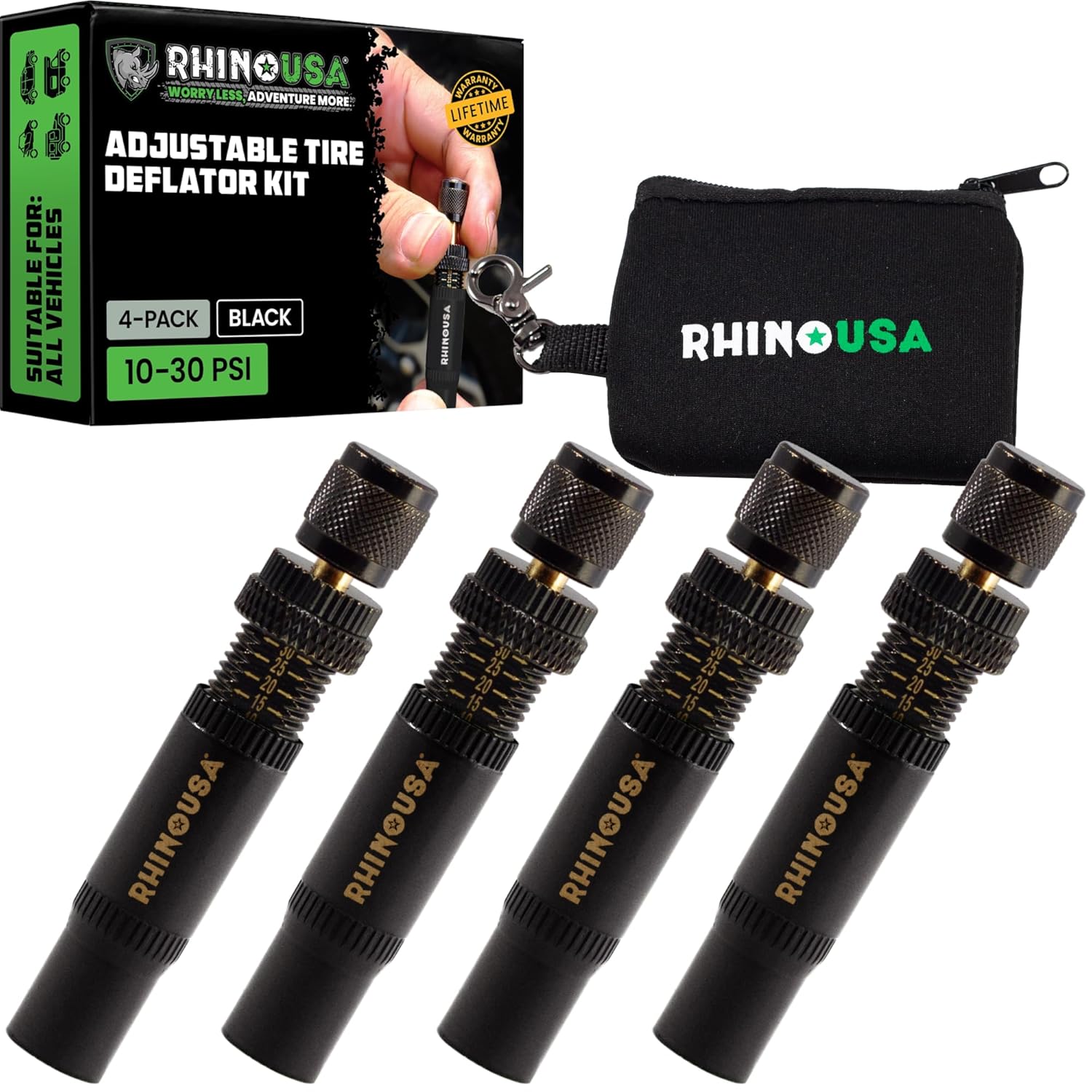
Use the Rhino USA adjustable tire deflators to air down all four tires at once by screwing one deflator onto each valve stem, letting you step away while the tires reach your preset pressure. Each deflator independently adjusts across a 10–30 PSI range with laser-etched indicators for quick setup and verification, making it ideal for beach, sand, and rocky off-road trails.

This tire inflator with pressure gauge delivers long-lasting performance with a durable rubber-protected gauge and sturdy build. The longer hose and 360 swivel air chuck help you seal the valve securely and keep your hands free while measuring, inflating, or deflating. It’s battery-free for reliable use and provides ±2 PSI accuracy in the mid-range for most typical tires, with universal compatibility for 1/4 NPT compressor outputs.
Beadlock Purpose Explained
A beadlock wheel mechanically clamps the tire bead to the wheel. That helps keep the tire seated at lower off-road pressures, especially when the sidewall flexes under load. The benefit is simple: more bead security when you want more flotation.
That does not mean every beadlock setup can safely run any pressure. Tire construction, wheel design, vehicle weight, speed, steering angle, and manufacturer instructions still matter. Many beadlock wheels also require regular bolt inspection and may have on-road restrictions, so check the wheel maker’s documentation before using them on pavement.
- Best use: frequent dunes, heavy off-road builds, very soft sand, or drivers who need extra bead retention.
- Main trade-offs: cost, weight, maintenance, balancing, and possible road-use limitations.
- Not magic: beadlocks help bead retention, but they do not protect you from sidewall cuts, heat damage, bad recovery points, or poor driving technique.
Standard Wheel Viability
Standard wheels are the practical choice for most 4Runner owners. Keep them around 15–20 PSI for typical dune driving, and treat 12–14 PSI as a cautious, slow-speed, soft-sand range rather than a casual default. Below that, the risk of unseating the bead rises quickly if you turn sharply, hit a rut, slide sideways, or carry a heavy load.
Note: If your steering feels vague, the sidewalls look folded, or the tire burps air during turns, you are too low for your setup. Add air before continuing.
Choose Treads That Float, Not Dig: A 4Runner Tire Guide
Sand rewards flotation. The best tire for dunes is not always the most aggressive tire. Deep mud-terrain lugs can claw downward, break the sand crust, and make the truck dig. A milder all-terrain or sand-friendly tread often works better because it spreads weight and rolls on top.
- Mild all-terrain tires: A strong everyday choice for 4Runners that split time between pavement, trails, and sand.
- Wide, stable footprint: Wider tires can help flotation, but only when matched to the correct wheel width and load rating.
- Moderate tread voids: Some void helps clean sand, but huge lugs can dig.
- Load rating: Heavier-duty tires may have stiffer sidewalls, which can require a slightly lower PSI to create the same footprint.
- Pavement pressure: Use the Toyota tire placard or owner’s manual pressure for road driving, not your dune pressure.
If you run LT tires, oversized tires, or aftermarket wheels, your best sand pressure may differ from a stock 4Runner. Start conservative, adjust slowly, and watch the sidewall shape.
[Products Worth Considering]

Monitor tire tread wear with a smart, color-coded depth gauge that shows clear condition ranges at a glance. The bar is range marked for fast, easy readings, helping you maintain safer traction and performance. Each gauge is portable with a pocket clip, and the set includes 20 units for daily use and sharing.

Accurately measure tire tread depth with a calibrated gauge marked from 0 to 1 inch in 1/32 inch increments. The color-coded bar helps you quickly identify tread condition ranges, supporting safe driving for trucks, motorcycles, automobiles, and passenger vehicles.

Slip the Powerbuilt tire step over your vehicle’s tire to reach roof racks, engine bays, truck boxes, and more without overreaching. Its adjustable, universal design fits tires with a cross tread width up to 13 inches, including car, truck, RV, and semi tires. The non-slip cheesegrater surface and anti-slip tape provide secure grip while the open design lets mud and debris pass through. Fold-flat storage with rubber bumpers helps keep your tire and the step protected between uses.
Paddle Tires on a 4Runner? When They’re Actually Practical
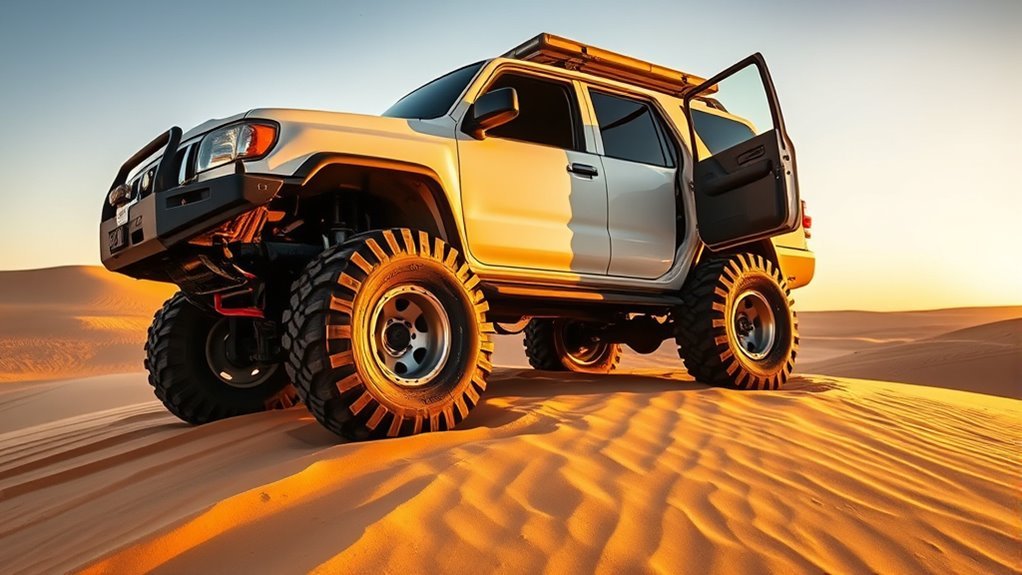
Paddle tires are specialized sand tires, not a normal upgrade for most 4Runner owners. They can provide huge forward bite in open dunes, but they are poor for mixed terrain, pavement, rocky access roads, and general trail use. For a full-size 4Runner, they are usually a dedicated trip setup rather than an everyday tire choice.
Rear-Wheel Applications Only
Paddle tires create thrust by scooping and throwing sand rearward. On many sand vehicles, paddles are used on the drive axle while front tires focus on steering. A 4Runner is heavier and less specialized than a sand rail or sport UTV, so a paddle setup should be treated as advanced equipment.
- Rear traction: Paddles can help forward drive in deep sand.
- Steering trade-off: Aggressive paddles up front can make steering heavy or unpredictable.
- Access-road problem: Paddles are not friendly to pavement, rocks, gravel, or hardpack.
- Practical choice: Most owners are better served by good all-terrain tires and correct pressure.
Low-Horsepower Benefits
A 4Runner does not need huge horsepower to move well in dunes. It needs flotation, smooth throttle, and the right gear selection. Lower tire pressure reduces the tendency to dig, and gentle momentum keeps the engine from fighting holes that the tires created.
If you do experiment with sand-specific tires, choose a setup that matches your engine, gearing, tire diameter, and driving style. Too much paddle can create drag that the truck cannot comfortably pull.
Steering Trade-Offs
Sand steering should feel smooth and predictable. If your tire setup makes the front end plow, skate, or resist turning, it is working against you. For most 4Runner dune trips, a mild all-terrain tire aired down correctly will be easier to control than a dramatic sand-only tire.
Drive It Right: Momentum, Turns, and When to Stop on Dunes
Pressure helps, but driving technique keeps you unstuck. Sand punishes sudden inputs. Use smooth throttle, wide turns, and steady momentum. Avoid spinning the tires because spinning digs holes and heats the tires.
| Terrain Feature | Risk Level | Response |
|---|---|---|
| Razorbacks | High | Scout first, avoid blind crests, and use a spotter when needed. |
| Steep faces | High | Climb straight, keep steady momentum, and turn around early if power fades. |
| Valley floors | Medium | Scan for soft bowls, hidden tracks, and drop-offs before accelerating. |
| Side slopes | High | Minimize side-hilling. Low PSI plus lateral load can unseat a bead. |
| Soft bowls | Medium | Keep momentum smooth and avoid stopping in the bottom. |
4WD Settings for Sand
Use the setting that keeps the engine in its power band without jerky throttle. Many drivers use 4H for open, flowing sand and 4L for slow recovery, tight maneuvers, or crawling out after getting stuck. If traction control cuts power in deep sand, use the vehicle’s appropriate off-road mode or traction setting for the conditions. Check your owner’s manual for your exact model year and trim.
When to Stop
Do not stop in the softest section if you can avoid it. Stop on firmer sand, a gentle downhill, or a crest with a clear view. Before shutting down, roll a few inches backward or forward to avoid leaving the tires buried in a hard ridge.
Stuck in Soft Sand? The Recovery Gear That Actually Works
Even careful drivers get stuck. Sand shifts, crests collapse, and a loaded 4Runner can settle fast. The goal is to recover slowly and safely, not to shock the vehicle or bury it deeper.
- Shovel: Clear sand from in front of all four tires, under the frame, and around the differentials.
- Traction boards: Give the tires a firm ramp instead of loose sand.
- Portable air compressor: Lets you lower pressure for recovery and reinflate for pavement.
- Tire gauge and deflators: Keep all four tires even and repeatable.
- Rated recovery strap or kinetic rope: Use only with proper rated recovery points.
- Soft shackles: Lighter and safer than metal shackles when used correctly.
- Water and communication: Dunes can be hot, remote, and disorienting.
Warning: Never recover from a tow ball, bumper trim, hitch ball, or unrated tie-down point. Use rated recovery points and stand clear of the recovery line.
[Products Worth Considering]

This ALL-TOP auto-stop tire deflator valve kit lets you air down off-road tires quickly without watching pressure, automatically stopping when your preset PSI is reached. Each valve is individually calibrated for reliable performance with an acceptable +/- 2 PSI tolerance. The adjustable deflator range covers 10 to 30 PSI and includes four valves plus valve caps and a zipper pouch for easy setup on trucks, SUVs, RVs, UTVs, and powersports.

Measure tire tread depth quickly and accurately with this LUMITECO dial gauge that reads in 1/32" increments up to 14/32". The color-coded green/yellow/red zones make it easy to judge tire wear and know when replacement is needed. A rugged, compact design with a protective pouch helps keep the gauge ready for use on cars, trucks, motorcycles, and more.

Keep your tires properly inflated with this analog VONDIOR tire pressure gauge, designed for fast, easy readings without batteries. The swiveling, two-axis hose and large glow dial help you measure at any tire angle with instant visibility. Built with a protective rubber shield, it supports durable, low-maintenance use for cars and trucks.
Simple Self-Recovery Sequence
- Stop spinning as soon as forward motion is gone.
- Clear sand from the tires, frame, skid plates, and differentials.
- Lower tire pressure a little more if you still have safe bead margin.
- Place traction boards in the direction of travel.
- Select the correct 4WD mode and pull away gently.
- If using another vehicle, connect only to rated recovery points and communicate before anyone moves.
Back to Pavement: How to Re-Inflate Without Damaging Beads
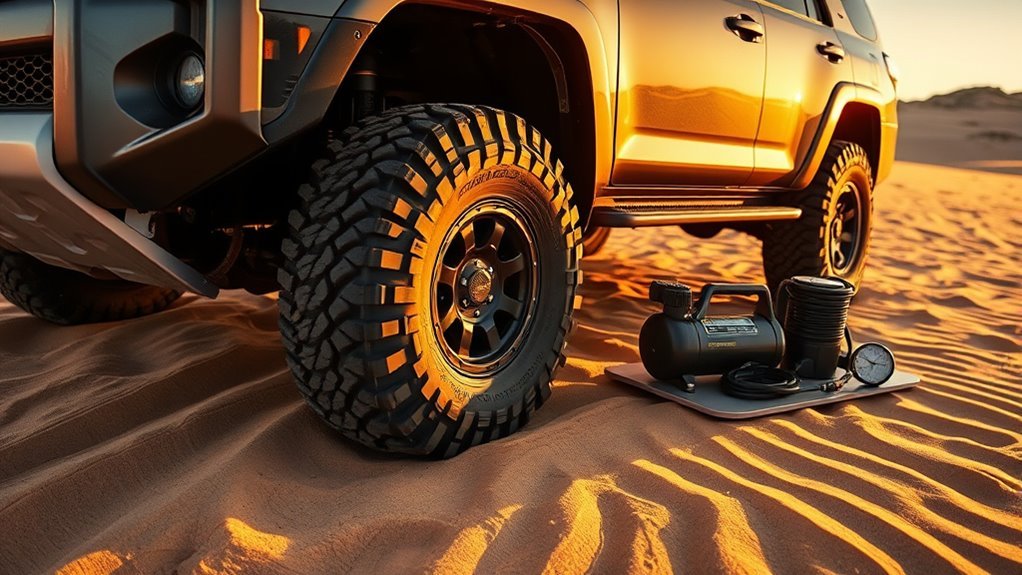
Before pavement, reinflate every tire to the pressure listed on your Toyota tire information placard or in your owner’s manual. Do not assume the right road pressure is always 30–35 PSI. Different tires, trims, loads, and model years can vary.
Use this reinflation routine:
- Inspect each bead area for sand, sticks, or debris.
- Look for sidewall cuts, bulges, missing valve caps, or leaks.
- Inflate each tire gradually and evenly.
- Check pressure with a gauge, not only the dashboard display.
- Match left and right pressures carefully for stable handling.
- After a short pavement drive, recheck pressure and listen for slow leaks.
The National Highway Traffic Safety Administration recommends measuring tire pressure when tires are cold or accounting for warm-tire readings, then using the vehicle manufacturer’s recommended cold inflation pressure from the placard or certification label. Toyota also directs owners to the tire placard or Owner’s Manual for the recommended pressure.
Heavier 4Runner? Why You Might Need More Pressure (Not Less)
A heavy 4Runner does not always need the lowest pressure. Extra weight from armor, drawers, camping gear, fuel, water, passengers, roof racks, and oversized tires increases sidewall flex and heat. That can make very low PSI riskier, especially on standard wheels.
For a loaded 4Runner, start closer to 20–22 PSI on firm sand and 16–18 PSI in mixed dunes. Lower only if the truck is still digging and the sidewalls remain controlled. The heavier the rig, the more carefully you should watch bead retention, tire temperature, and steering response.
- Bead retention: More weight puts more force on the tire bead during turns.
- Heat control: Low pressure creates more sidewall flex, especially during long runs.
- Load rating: Stiffer LT tires may need different pressure than stock passenger-rated tires.
- Roof weight: A high center of gravity makes side slopes and sudden steering more dangerous.
Local Rules, Permits, and Dune Safety
Before you drive, confirm that the dune area is open to full-size vehicles. Some public lands allow OHVs only in certain zones, require permits, close areas seasonally, or restrict travel to marked routes. The Bureau of Land Management reminds off-highway users to know state laws and land-use rules, and Tread Lightly! recommends traveling only in areas open to OHVs, watching for ravines and slipfaces, using landmarks or GPS, and riding with a group.
- Stay in open, legal travel areas.
- Respect closures, barriers, wildlife zones, and vegetation.
- Use a spotter before blind crests or jumps.
- Carry navigation and a way to communicate if separated.
- Do not mix dune driving with alcohol or drugs.
- Reduce speed near people, camps, and low-visibility areas.
Note: The best tire pressure will not fix illegal access, poor visibility, or unsafe cresting. Scout first and keep the trip inside designated routes and open dune areas.
Frequently Asked Questions
What is the best tire pressure for sand dunes in a 4Runner?
Start around 18 PSI on standard wheels. Use 16–18 PSI for mixed dunes, 12–15 PSI for very soft sand with caution, and 20–25 PSI for firmer beach sand or loaded rigs. Adjust in small steps based on how the truck floats and steers.
How low can I air down on standard 4Runner wheels?
Most drivers should stay around 15–20 PSI on standard wheels. Going near 12–14 PSI can help in very soft sand, but it raises the risk of unseating a bead, especially with sharp turns, side loads, higher speed, or a heavy vehicle.
Do I need beadlocks for sand dunes?
No, not for most casual 4Runner dune driving. Beadlocks help keep the tire seated at lower off-road pressures, but they add cost, weight, and maintenance. Standard wheels work well when you keep pressure sensible and drive smoothly.
What tire tread is best for sand?
A mild all-terrain or sand-friendly tread usually works best for a 4Runner. Broad, stable tread blocks help flotation. Very aggressive mud-terrain lugs can dig down in loose sand instead of letting the tire roll on top.
What air pressure should stock Can-Am tires run in dunes?
Do not copy 4Runner pressures onto a Can-Am or other UTV. UTV tires, vehicle weight, bead design, and manufacturer recommendations are different. Check the Can-Am owner’s manual, tire sidewall, and wheel setup, then adjust for sand with the same rule: start conservative and lower only as needed.
What pressure should I use when I leave the dunes?
Reinflate to the cold tire pressure listed on your Toyota tire information placard or in your owner’s manual. If the tires are warm, check them again later when cold. Do not drive highway speeds at dune pressure.
Conclusion
The best 4Runner tire pressure for sand dunes is not one magic number. Start around 18 PSI, read the sand, and adjust in small steps. Softer dunes usually need less pressure; heavier rigs, firmer sand, and standard wheels may need more. Keep your inputs smooth, carry a compressor and recovery gear, follow local rules, and always reinflate to the placard pressure before pavement.
Sources
- National Park Service — Cape Hatteras ORV FAQ — supports lowering tire pressure for sand, softer-sand adjustment, and reinflating after pavement return.
- National Park Service — Cape Lookout Beach Driving Tips — supports 20–25 PSI beach-driving guidance, recovery gear, and low-pressure pavement warning.
- Toyota Support — Recommended Tire Pressure — supports using the tire information placard or Owner’s Manual for correct road pressure.
- NHTSA TireWise — Tire Safety Ratings and Awareness — supports cold-pressure checks and use of the vehicle placard pressure.
- Tread Lightly! — Sand Duning Tips — supports responsible dune travel, watching for changing dunes, using GPS/landmarks, and scouting hazards.
- Bureau of Land Management — Off-Highway Vehicles — supports checking laws, restrictions, land-use rules, and public-land responsibilities.