Flotation tire sizing can look confusing at first, but it is actually one of the easiest tire-size formats to read. Instead of starting with millimeters like a metric size, a flotation size tells you the tire’s approximate overall height, section width, and wheel diameter in inches. For a Toyota Tundra, that makes it useful when comparing 33-inch, 35-inch, and larger off-road tire setups.
Quick Answer
A flotation tire size uses the format height × width × rim diameter, such as 35×12.50R18. To convert a metric size, calculate the tire’s overall diameter, convert the section width from millimeters to inches, then choose the closest real tire size from a manufacturer’s spec sheet.
Key Takeaways
- Flotation sizing is shown in inches: overall tire height, tire width, and wheel diameter.
- A metric size such as 275/70R18 calculates to about 33.2 inches tall and 10.8 inches wide, so it is closer to 33×11.00R18 than a true 33×12.50.
- Conversion charts are only a starting point because actual mounted tire dimensions vary by brand, model, wheel width, and load range.
- For a Toyota Tundra, always confirm clearance, wheel width, offset, load index, speed rating, tire pressure, and towing needs before buying larger flotation tires.
At a Glance
| Time Required | 5–15 minutes for size conversion; 30–60 minutes if you also check physical clearance and manufacturer specs |
| Difficulty | Easy for reading sizes; moderate when choosing a larger Tundra fitment |
| Tools Needed | Calculator, tape measure, tire manufacturer spec sheet, Tundra tire placard, and wheel-size information |
| Cost | Free to calculate; tire, wheel, lift, trimming, alignment, TPMS, and recalibration costs vary by setup |
What Are Flotation Tires and Why Should You Consider Them for Off-Roading?
Flotation tires are wide light-truck or off-road tires designed to spread the vehicle’s weight over a larger contact patch. That wider footprint can help a truck stay on top of loose surfaces such as sand, mud, snow, gravel, and soft soil instead of digging in as quickly.
For a Toyota Tundra, flotation-style sizes are common in all-terrain, hybrid-terrain, and mud-terrain tires. You will see sizes such as 33×12.50R17, 35×12.50R18, or 35×12.50R20. The benefit is not just the taller size; it is the combination of diameter, width, tread design, sidewall construction, and proper pressure for the driving surface.
Warning: A wider or taller tire does not automatically make a Tundra safer or more capable. The tire must fit the wheel, clear the suspension and body, and meet or exceed the load and speed ratings listed by Toyota or the tire manufacturer. For road driving, use the recommended cold tire pressure on the vehicle placard or a load/inflation chart for the specific replacement tire.
How to Read a Flotation Tire Size
A flotation size is usually written like this:
35×12.50R18 means the tire is about 35 inches tall, about 12.50 inches wide, has radial construction, and fits an 18-inch wheel.
| Part of Size | Example | Meaning |
|---|---|---|
| First number | 35 | Approximate overall tire diameter in inches |
| Second number | 12.50 | Approximate section width in inches |
| R | R | Radial construction |
| Last number | 18 | Wheel diameter in inches |
This format is different from a metric size like 275/70R18. In that metric example, 275 is the section width in millimeters, 70 is the sidewall height as a percentage of the width, R means radial, and 18 is the wheel diameter in inches.
Benefits of Upgrading to Flotation Tires for Off-Roading
The biggest benefit of flotation tires is a larger footprint. On soft surfaces, that wider patch can improve grip and reduce how quickly the tire sinks. The taller diameter can also increase ground clearance under the axle and help the tire roll over ruts, rocks, and uneven ground more smoothly.
Improved Traction Performance
Flotation tires often pair wider sizing with deeper tread blocks, stronger shoulders, and more aggressive voids than many highway tires. That can help your Tundra find traction in mud, sand, snow, and loose dirt. The exact gain depends on the tire model, tread pattern, compound, and how much weight the truck is carrying.
Enhanced Stability Control
A wider tire can feel more planted on loose terrain, especially when aired correctly for off-road use. However, wider does not always mean better on pavement. A heavy LT tire can add unsprung weight, reduce fuel economy, change steering feel, and create more road noise. For towing or highway use, load rating and pressure setup matter more than appearance.
How Flotation Tires Differ From Metric Tires
Flotation and metric tires can describe similar physical tire sizes, but they use different naming systems. A flotation tire puts the approximate tire height first. A metric tire puts width first, then aspect ratio, then wheel diameter.
| Sizing Type | Example | What It Tells You First | Best Use |
|---|---|---|---|
| Flotation | 35×12.50R18 | Overall height in inches | Quickly comparing off-road tire height and width |
| Metric / LT-metric | 275/70R18 | Section width in millimeters | Matching factory sizes, load ratings, and spec sheets |
Neither system is automatically more accurate. Both are nominal labels. Actual mounted tire height and width can vary by brand, tread, measuring wheel width, load range, and inflation pressure. That is why the final check should always be the tire maker’s published specifications.
Flotation Tire Sizes: What You Need to Know
Understanding flotation tire sizes is vital for fitment because the numbers affect more than appearance. Tire height changes ground clearance, gearing, speedometer readings, and wheel-well clearance. Tire width affects wheel choice, fender clearance, mud-flap clearance, upper-control-arm clearance, and steering feel.
To help you compare sizes, here is a safer quick-reference table. These are approximate dimensional comparisons, not guaranteed one-for-one replacements.
| Flotation Size | Approximate Metric Comparison | Fitment Note |
|---|---|---|
| 33×11.50R17 | 285/70R17 or similar, depending on brand | Common “33-inch” comparison; check actual diameter and width. |
| 33×12.50R17 | 315/70R17 is close in width but usually taller than some 33-inch tires | Width often drives rubbing and wheel-offset needs. |
| 35×12.50R18 | 325/65R18 or 295/70R18 may be near in height, but width differs | Often needs careful clearance checks on a Tundra. |
| 35×12.50R20 | 295/65R20 or 315/60R20 may be close, depending on actual specs | Check wheel width, offset, load rating, and speedometer change. |
| 37×12.50R20 | 315/70R20 is a common rough comparison by math | Usually requires major fitment planning, not just a tire swap. |
Note: Do not treat a conversion chart as a purchase approval. Use it to narrow your options, then confirm the exact tire’s measured diameter, section width, approved rim-width range, load rating, and maximum pressure from the tire manufacturer.
Steps to Convert Metric Tire Sizes to Flotation Sizes
Use this process when converting a metric tire size such as 275/70R18 into a flotation-style size.
Step 1: Identify the Three Metric Size Parts
- 275 = section width in millimeters
- 70 = sidewall height as a percentage of width
- 18 = wheel diameter in inches
Step 2: Calculate Sidewall Height
Multiply the section width by the aspect ratio:
275 × 0.70 = 192.5 mm
Convert that to inches:
192.5 ÷ 25.4 = 7.58 inches
Step 3: Calculate Overall Diameter
A tire has one sidewall above the wheel and one below it, so multiply sidewall height by two, then add the wheel diameter:
(7.58 × 2) + 18 = 33.16 inches
Step 4: Convert Width to Inches
Convert the metric section width into inches:
275 ÷ 25.4 = 10.83 inches
Step 5: Choose the Closest Real Tire Size
By math, 275/70R18 is about 33.2 inches tall and 10.8 inches wide. In flotation shorthand, that is closer to 33×11.00R18 than a true 33×12.50R18. If a tire brand lists a 275/70R18 at a slightly different measured diameter, use that brand’s published number instead of the theoretical calculation.
Pro Tip: When comparing Tundra tires, focus on actual diameter, section width, approved rim width, and revolutions per mile. Those numbers tell you more about real fitment and speedometer change than the size label alone.
Common Tundra Metric-to-Flotation Examples
The table below shows calculated dimensions for common Tundra-relevant metric sizes. Actual dimensions can vary by tire model.
| Metric Size | Calculated Diameter | Calculated Width | Flotation-Style Shorthand |
|---|---|---|---|
| 265/60R20 | About 32.5 in | About 10.4 in | 33×10.50R20 |
| 275/60R20 | About 33.0 in | About 10.8 in | 33×11.00R20 |
| 275/65R18 | About 32.1 in | About 10.8 in | 32×11.00R18 |
| 275/70R18 | About 33.2 in | About 10.8 in | 33×11.00R18 |
| 285/70R17 | About 32.7 in | About 11.2 in | 33×11.50R17 |
| 285/75R17 | About 33.8 in | About 11.2 in | 34×11.50R17 |
| 295/65R20 | About 35.1 in | About 11.6 in | 35×11.50R20 |
| 315/70R20 | About 37.4 in | About 12.4 in | 37×12.50R20 |
Popular Flotation Tire Sizes for the Toyota Tundra
Popular flotation sizes for modified Toyota Tundras often include 33-inch, 35-inch, and sometimes 37-inch tires. The right choice depends on your Tundra generation, factory wheel package, suspension height, wheel offset, intended terrain, and whether you tow or carry payload.
[Products Worth Considering]

These universal tire valve stem caps help protect valve cores from dust, debris, and moisture while helping maintain stable tire pressure. The corrosion-resistant metal construction and sealed design provide reliable protection in road grime, mud, and winter conditions. Twist-on installation makes them quick to fit on cars, SUVs, trucks, and motorcycles.

Replace worn or missing TPMS sensors with a pre-programmed 4-pack designed for compatible GM vehicles. These 315MHz sensors provide real-time tire pressure monitoring and alert you if pressure is too high, too low, or if a rapid air leak occurs. Most installations are ready with minimal relearn effort after mounting, helping improve safety and driving confidence.

The UYYE TPMS relearn tool helps activate and relearn tire pressure monitor sensors quickly, typically in minutes. It supports TPMS learn mode resetting using a simple three-step process: enter learn mode, position the tool near the valve stem, and press the learn button. Designed for specific GM models, it streamlines sensor programming and reduces trips to dealers or tire shops.
Common Flotation Sizes
- 33×11.50 or 33×12.50: A common upgrade range for drivers who want more sidewall and traction without jumping straight to a heavy 35-inch setup.
- 35×12.50: Popular for aggressive off-road builds, but it often needs more clearance planning, especially with factory wheels or low-offset aftermarket wheels.
- 37×12.50: A serious off-road size that usually requires suspension, body-clearance, gearing, and spare-tire planning. It is not a casual direct replacement for most Tundras.
Tundra Tire Compatibility
Before choosing a flotation tire, check these Tundra fitment points:
- Factory tire size: Compare against the tire size on the driver-side Tire and Loading Information Label.
- Wheel diameter: A tire ending in R17 needs a 17-inch wheel; R18 needs an 18-inch wheel; R20 needs a 20-inch wheel.
- Wheel width: Make sure the tire’s approved rim-width range includes your wheel width.
- Offset and backspacing: Wider tires may rub the upper control arm, fender liner, bumper tab, mud flap, or body mount depending on wheel position.
- Suspension and trim: Lift height, aftermarket control arms, leveling kits, and fender trimming can change what fits.
- Spare tire: Confirm the larger tire fits in the spare location or plan an alternate spare setup.
- TPMS and alignment: Larger tires may require TPMS service, road-force balancing, and alignment after installation.
Key Factors to Consider When Selecting Flotation Tires
The right flotation tire is not just the biggest tire that fits. Use the checklist below to avoid common buying mistakes.
[Products Worth Considering]

This TPMS relearn tool helps you quickly activate, match, and reset GM tire pressure sensors to keep the vehicle monitoring system working properly. It clears tire pressure alarms and dashboard warning lights after sensor replacement or tire rotation, and supports learning for common 315/433 MHz TPMS sensors. Designed for simple one-button operation, it can help you avoid unnecessary trips to repair shops.

This ALL-TOP auto-stop tire deflator valve kit lets you air down off-road tires quickly without watching pressure, automatically stopping when your preset PSI is reached. Each valve is individually calibrated for reliable performance with an acceptable +/- 2 PSI tolerance. The adjustable deflator range covers 10 to 30 PSI and includes four valves plus valve caps and a zipper pouch for easy setup on trucks, SUVs, RVs, UTVs, and powersports.

These aluminum alloy tire valve stem caps with an O-ring seal help protect valve stems from corrosion while adding a clean, stylish look to your vehicle. The universal fit works across cars, trucks, motorcycles, bicycles, and more, making them an easy upgrade for everyday driving and off-road use. Installation is quick, and the included four-pack keeps all your tires dressed and protected.
Load Index and Speed Rating
Load index tells you how much weight a tire can support when properly inflated. Speed rating tells you the tire’s tested speed capability under specified conditions. Replacement tires should meet or exceed the load and speed ratings required for your Tundra. A higher tire load rating does not increase your truck’s GVWR, GAWR, payload rating, or towing rating.
LT vs. SL and XL Tires
Many flotation tires are LT tires. LT tires can be stronger for off-road use and towing, but they are often heavier and may require different pressure than a factory passenger-metric or SL tire. If you change from SL/XL to LT, use a tire load/inflation chart or ask a qualified tire professional to set road pressure correctly.
Tire Pressure and Airing Down
For normal road driving, start with the Tundra’s tire placard or the tire maker’s load/inflation data for your exact replacement tire. Airing down can improve ride and traction off-road, but you should air back up before highway driving. Driving too fast or too far at low pressure can build heat, damage sidewalls, unseat a bead, or reduce control.
Speedometer, Gearing, and Fuel Economy
A taller tire travels farther per revolution. That can make your speedometer read low, reduce effective gearing, and make the truck feel slower from a stop. Heavier flotation tires can also reduce fuel economy and braking response. For large jumps such as 35s or 37s, consider recalibration and gearing implications.
Rim Width and Actual Measurements
Section width changes with wheel width. A 12.50-inch tire may measure differently on an 8.5-inch wheel than on a 10-inch wheel. Always compare the tire maker’s measuring rim, approved rim-width range, section width, tread width, and overall diameter.
How to Troubleshoot Common Issues With Flotation Tires?
Flotation tires can solve traction problems, but they can also create new issues if the size, pressure, wheel, or alignment is wrong. Use this troubleshooting table as a starting point.
| Common Issue | Likely Cause | Solution |
|---|---|---|
| Rubbing while turning | Tire too wide, wrong offset, tight fender liner, mud flap, bumper tab, or body mount clearance | Check the exact rub point, then address wheel offset, liner position, trimming, alignment, or tire size. |
| Vibration at highway speed | Poor balance, heavy tire, wheel issue, or tire uniformity problem | Request road-force balancing and inspect wheels, lug torque, and tire runout. |
| Uneven tread wear | Incorrect pressure, alignment issue, worn suspension, or missed rotations | Set pressure correctly, align the truck, inspect suspension, and rotate on schedule. |
| Harsh ride | Overinflated LT tire or very stiff load range | Use a load/inflation table for the tire and truck weight; do not use sidewall max PSI as the daily target. |
| TPMS warning | Sensor issue, pressure mismatch, or sensor not transferred/programmed | Check cold pressure, inspect sensors, and have TPMS relearn/programming completed if needed. |
| Slower acceleration or worse MPG | Taller, heavier tire changes effective gearing and rolling resistance | Consider a lighter tire, smaller size, speedometer recalibration, or gearing changes for large builds. |
| Cuts, bulges, or sidewall damage | Trail impact, underinflation, overload, or road hazard damage | Stop using damaged tires and have them inspected or replaced. Do not repair sidewall damage. |
Resources for Finding the Right Flotation Tires for Your Tundra
Finding the right flotation tires for your Toyota Tundra starts with accurate data. Use these resources before ordering:
- Your Tundra tire placard and owner information: Start with the factory tire size, load capacity, and recommended cold pressure.
- Tire manufacturer spec sheets: Confirm actual diameter, section width, tread width, approved rim width, load index, speed rating, load range, and revolutions per mile.
- Wheel specifications: Know your wheel diameter, width, offset, backspacing, and load rating.
- Professional fitment support: A tire shop or off-road specialist can check rubbing points, alignment needs, TPMS compatibility, and safe pressure setup.
- Conversion calculators: Use them for estimates only, then verify against the exact tire’s published specs.
[Products Worth Considering]

Keep your tires properly inflated with this analog VONDIOR tire pressure gauge, designed for fast, easy readings without batteries. The swiveling, two-axis hose and large glow dial help you measure at any tire angle with instant visibility. Built with a protective rubber shield, it supports durable, low-maintenance use for cars and trucks.

Replace worn or malfunctioning GM TPMS sensors with this 433MHz pre-programmed sensor set designed for compatibility with many Chevrolet, Buick, GMC, and Cadillac models. It includes guidance for proper OBDII relearning/pairing after installation and supports reliable long-term operation with a high-performance CR2032 battery. Quality tested for durability and performance to help restore accurate tire pressure monitoring.
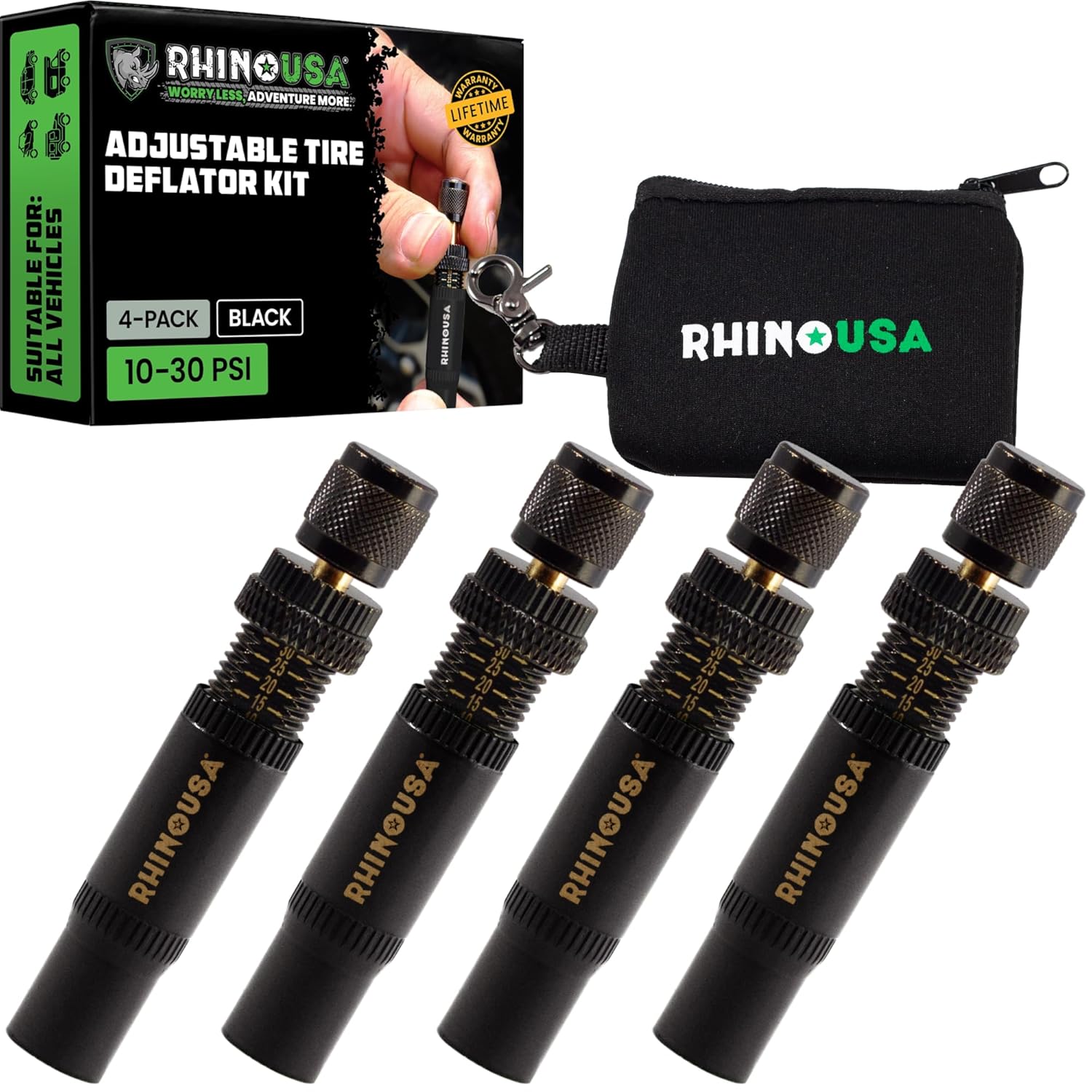
Use the Rhino USA adjustable tire deflators to air down all four tires at once by screwing one deflator onto each valve stem, letting you step away while the tires reach your preset pressure. Each deflator independently adjusts across a 10–30 PSI range with laser-etched indicators for quick setup and verification, making it ideal for beach, sand, and rocky off-road trails.
Frequently Asked Questions
Can I use flotation tires on paved roads?
Yes, many LT flotation tires are designed for highway and off-road use, but the exact tire must be road-legal, properly load-rated, properly speed-rated, and inflated correctly. Aggressive tread patterns may ride louder, wear faster, and reduce wet-road comfort compared with highway tires.
How do flotation tires affect fuel efficiency?
Flotation tires can reduce fuel efficiency because they are often wider, heavier, and more aggressive than factory highway tires. Taller tires can also change effective gearing, which may make the truck work harder during acceleration, towing, and stop-and-go driving.
What is the lifespan of flotation tires?
Lifespan depends on the tire model, tread compound, road use, off-road damage, alignment, rotation schedule, pressure, and driving style. A mild all-terrain tire used mostly on pavement may last much longer than a soft, aggressive mud-terrain tire used on rocks and trails.
Are flotation tires more expensive than standard tires?
Usually, yes. Larger flotation tires often cost more because they use more material and are commonly built with LT construction, stronger sidewalls, deeper tread, or specialty off-road designs. The total cost can also include wheels, lift parts, trimming, TPMS service, balancing, alignment, and recalibration.
Do flotation tires require special maintenance?
They do not need exotic maintenance, but they do need careful pressure checks, regular rotation, alignment monitoring, and damage inspection. Because many flotation tires are heavy and aggressive, balancing and rotation are especially important for smooth road manners and even tread wear.
Is 275/70R18 the same as 33×12.50R18?
No. A 275/70R18 calculates to about 33.2 inches tall and 10.8 inches wide. That is closer to a 33×11.00R18 shorthand size. A 33×12.50R18 is much wider, so it may need different wheel width, offset, and clearance.
Will 35×12.50 tires fit a Toyota Tundra?
They can fit some Tundra builds, but not every Tundra accepts them without rubbing or modification. Fitment depends on generation, trim, suspension height, wheel width, offset, upper-control-arm clearance, mud flaps, fender liners, bumper clearance, and alignment settings.
Conclusion
Flotation tire sizing is simple once you understand the format: height × width × rim diameter. For a Toyota Tundra, the hard part is not reading the number; it is choosing a tire that fits the truck safely. Use conversion math to compare sizes, then verify the exact tire’s manufacturer specs, Tundra clearance, wheel compatibility, load index, speed rating, and pressure needs before buying. That approach gives you better off-road traction without guessing on fitment or safety.
Sources
- NHTSA TireWise — tire size, placard, pressure, maintenance, and tire-safety guidance
- Toyota Owners: 2025 Tundra Tire Inflation Pressure — Toyota tire-pressure and tire-label guidance for Tundra owners
- Tire Rack: How Do I Calculate Tire Dimensions? — metric tire formula and nominal-dimension caveats
- Michelin: Tire Load Rating and Speed Rating — load index, speed rating, and replacement-rating guidance
- The Tire & Rim Association — U.S. tire, rim, valve, and interchangeability standards organization
- Tire Rack: Falken WildPeak A/T4W Specifications — example of manufacturer-specific measured dimensions and tire specifications