
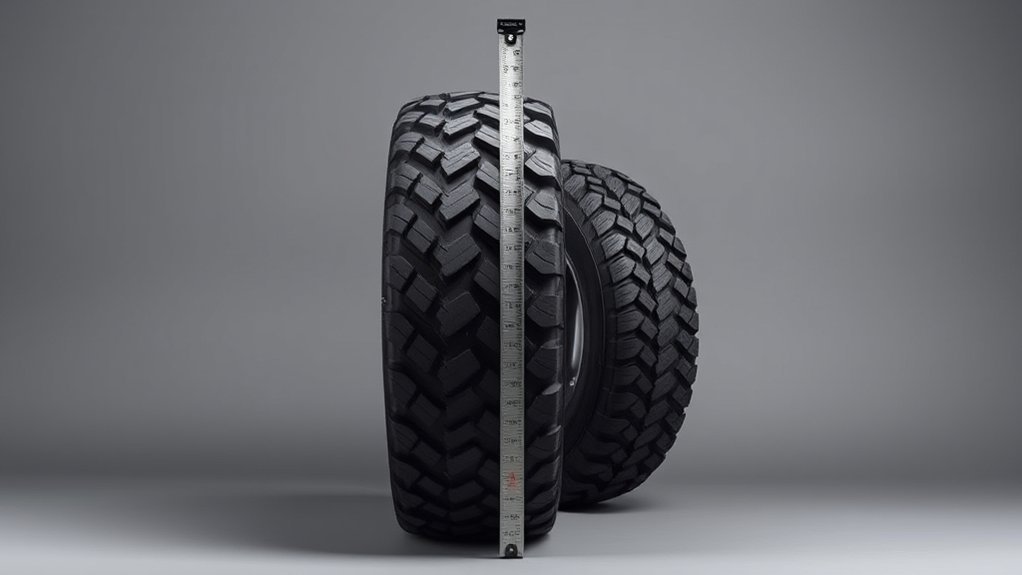
A 35-inch tire is usually a nominal size, not a promise that the tire will measure exactly 35.00 inches in every real-world situation. Many popular 35-inch truck and off-road tires publish an overall diameter around 34.4 to 35.0 inches, and the installed height can change with tire pressure, vehicle load, rim width, tread design, and brand-specific construction.
Quick Answer
A 35-inch tire is usually about 34.4 to 35.0 inches tall by published spec, depending on the brand, model, and load range. Common widths run from about 11.5 to 13.5 inches. For accurate fitment, check the exact tire’s spec sheet and measure it at the pressure you plan to run.
Key Takeaways
- A “35-inch” tire is a size class, so the actual listed diameter may be slightly under or right at 35 inches.
- Common 35-inch flotation sizes include 35×11.50R17, 35×12.50R17, 35×12.50R18, 35×12.50R20, and 35×12.50R22.
- Metric sizes near the 35-inch class include 315/75R16, 315/70R17, 285/75R18, 305/70R18, 325/60R20, and 295/55R22.
- A 285 or 295 tire is not automatically a 35-inch tire because those numbers describe width, not overall diameter.
- For close clearance, confirm rim width, offset, load rating, fender clearance, spare fitment, and speedometer impact before buying.
At a Glance
| Time Required | 5 to 10 minutes per tire |
| Difficulty | Easy |
| Tools Needed | Tape measure, tire pressure gauge, level surface, notepad or phone |
| Cost | $0 if you already have a tape measure and gauge; about $10 to $20 for a basic tire pressure gauge |
How Tall Is a 35-Inch Tire?
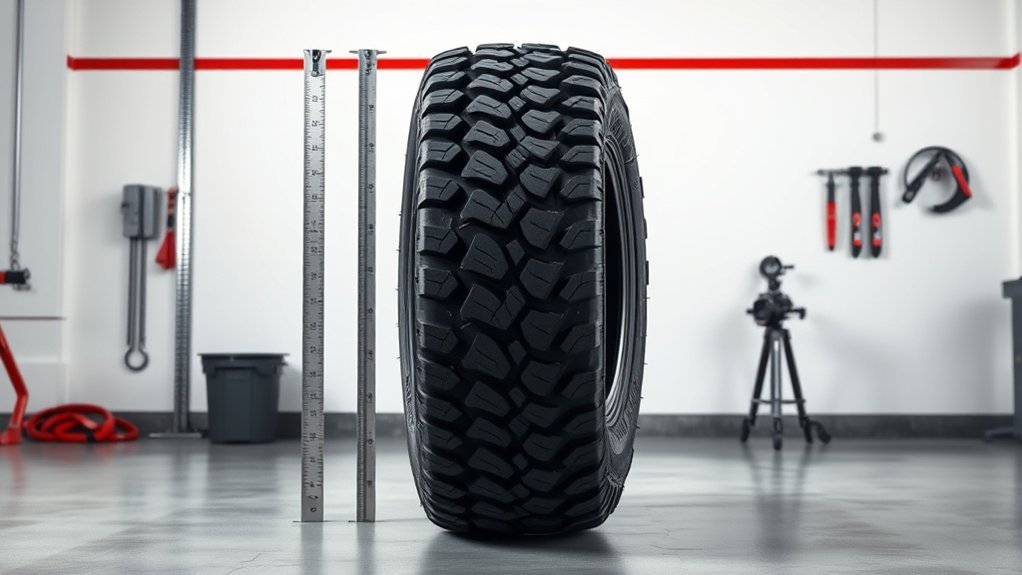
A 35-inch tire is typically listed near 35 inches in overall diameter, but many real tire specs fall slightly below that. For example, a Nitto Ridge Grappler 35X12.50R17 is listed at 34.76 inches, a Toyo Open Country M/T 35X12.50R17 is listed at 34.8 inches, and some BFGoodrich All-Terrain T/A KO3 35-inch-class metric sizes list around 34.4 to 34.6 inches.
That does not mean the tire is defective. It means the “35-inch” label is a class name. Tire makers publish dimensions based on specific measuring conditions, rim widths, and inflation standards. Tire Rack also notes that calculated tire dimensions are nominal estimates and can differ from a tire’s actual physical size, so manufacturer specs matter when clearance is tight.
A 35-inch tire is best understood as a fitment class. The tire’s actual spec sheet, mounted pressure, rim width, and vehicle load tell you the real size you are working with.
How Wide Is a 35-Inch Tire?
A 35-inch tire is commonly 11.5 to 13.5 inches wide, but the exact section width depends on the size code and the tire model. A 35×11.50R17 is narrower than a 35×12.50R17, and a 35×13.50R20 is wider again. Some tire families also run wider or narrower than the sidewall label suggests.
Width matters because it affects steering feel, contact patch, rubbing risk, wheel offset needs, and fender clearance. A wider tire may add traction in sand, mud, and rocks, but it can also rub control arms, sway bars, fender liners, or body mounts if the wheel offset and suspension setup are not right.
Note: Section width is measured sidewall to sidewall, not just tread width. The same tire can measure slightly different when mounted on a narrower or wider rim.
Why Don’t 35-Inch Tires Measure Exactly 35 Inches?
Most 35-inch tires do not measure exactly 35 inches because tire sizing is partly nominal. Tread depth, casing shape, load range, rim width, inflation pressure, and measuring method all affect the final number. Even within one tire model, different load ranges may have different published diameters.
This is why a spec sheet is more useful than the sidewall label alone. The sidewall tells you the tire’s size family, but the manufacturer’s or retailer’s specification table gives the practical details: overall diameter, section width, tread depth, approved rim width range, load range, max load, and revolutions per mile.
- Nominal label: The class name, such as 35×12.50R17.
- Published overall diameter: The manufacturer-listed diameter under specified measuring conditions.
- Installed height: What you measure on your vehicle at your chosen pressure and load.
- Loaded radius: The distance from the wheel center to the ground under vehicle weight, which is always less than half the unloaded diameter.
How to Read 35-Inch Tire Sizes
There are two common ways you will see 35-inch tires labeled: flotation sizing and metric LT sizing.
Flotation Size Example: 35×12.50R17
In a flotation size such as 35×12.50R17, the numbers are more direct:
- 35 = nominal overall tire diameter in inches
- 12.50 = nominal section width in inches
- R = radial construction
- 17 = wheel diameter in inches
This format is common on off-road and light truck tires because it quickly tells you the tire class, width, and wheel size.
Metric Size Example: 315/70R17
In a metric LT size such as 315/70R17, the first number is width in millimeters, the second is the sidewall height as a percentage of that width, and the last number is wheel diameter in inches. To estimate overall diameter, use this formula:
Overall diameter = wheel diameter + 2 × sidewall height
For a 315/70R17:
- 315 mm × 0.70 = 220.5 mm sidewall height
- 220.5 mm ÷ 25.4 = 8.68 inches
- 17 + 8.68 + 8.68 = about 34.36 inches
That is why 315/70R17 is commonly treated as a 35-inch-class tire, even though its calculated diameter is closer to 34.4 inches.
35-Inch Tire Size Chart by Wheel Diameter
Use this chart as a starting point, not a final fitment guarantee. Always confirm the exact tire model’s spec sheet before buying.
| Wheel Diameter | Common 35-Inch-Class Sizes | Typical Notes |
| 16-inch | 315/75R16, 35×12.50R16 | Tall sidewall, strong rim protection, common on older trucks and off-road builds. |
| 17-inch | 315/70R17, 35×11.50R17, 35×12.50R17 | Very common for Jeep, Bronco, Tacoma, 4Runner, Gladiator, and full-size truck builds. |
| 18-inch | 285/75R18, 305/70R18, 35×12.50R18 | Good balance of sidewall, brake clearance, and modern truck fitment. |
| 20-inch | 325/60R20, 35×11.50R20, 35×12.50R20, 35×13.50R20 | Shorter sidewall than 17s or 18s; check ride quality and wheel protection. |
| 22-inch | 295/55R22, 35×12.50R22 | More wheel, less sidewall. Best for stance-focused builds that still have enough clearance. |
16-Inch Wheel Fitments
On 16-inch wheels, 315/75R16 is one of the best-known metric sizes near the 35-inch class. It calculates to about 34.6 inches and gives you a tall sidewall for off-road flex and rim protection. You may also see flotation sizes such as 35×12.50R16, depending on the tire model.
This setup can work well on older trucks and trail builds, but it still needs clearance checks. Larger sidewalls can flex more, and wide 35s may rub at full steering lock or suspension compression.
17-Inch Wheel Fitments
Seventeen-inch wheels are one of the most popular choices for 35-inch off-road tires. Common options include 315/70R17, 35×11.50R17, and 35×12.50R17. A 315/70R17 often lists around 34.4 inches, while a 35×12.50R17 may list closer to 34.5 to 34.8 inches depending on brand and model.
Do not assume 295/70R17 is a 35-inch tire. Many 295/70R17 tires are closer to the 33-inch class. If you want the look, clearance, and gearing effect of a 35, verify the tire’s actual overall diameter before ordering.
18-To-22-Inch Fitments
From 18-inch to 22-inch wheels, 35-inch tires usually move toward a shorter sidewall and a wider stance. Popular examples include 285/75R18, 305/70R18, 35×12.50R18, 35×12.50R20, and 35×12.50R22.
A 20-inch or 22-inch wheel can look sharp, but the shorter sidewall leaves less rubber between the wheel and the trail. If you care most about off-road comfort and sidewall flex, 17s and 18s often make more sense. If you care more about stance and brake clearance, 20s and 22s may fit your build better.
Warning: Do not choose tire pressure by tire size alone. For road use, follow the vehicle placard, owner’s manual, or tire/vehicle manufacturer guidance. Airing down for trails is a separate off-road decision and should be adjusted back before highway driving.
LT vs. Flotation 35-Inch Tire Sizes
LT-metric and flotation tire sizes can both describe 35-inch-class tires, but they do it differently.
An LT-metric size, such as LT315/70R17, starts with section width in millimeters and uses an aspect ratio to calculate sidewall height. A flotation size, such as 35×12.50R17LT, gives the nominal diameter and width in inches. Tire Rack explains that an “LT” prefix identifies light-truck metric sizing, while an “LT” suffix can identify flotation light-truck sizing.
Both systems can work, but you should compare the full spec sheet, not just the size label. Load range, max load, tread depth, approved rim width range, and actual diameter can all change from one tire to another.
[Products Worth Considering]
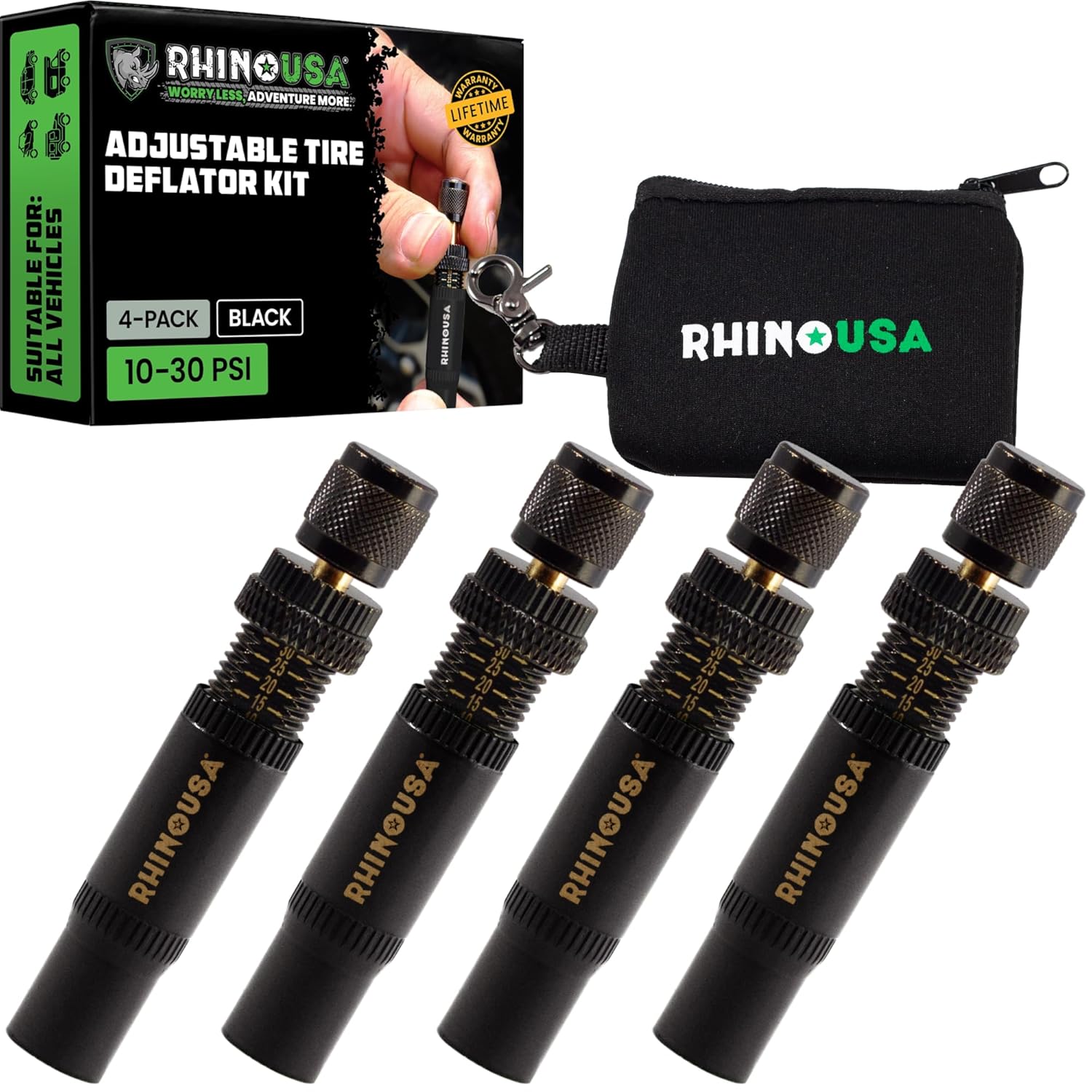
Use the Rhino USA adjustable tire deflators to air down all four tires at once by screwing one deflator onto each valve stem, letting you step away while the tires reach your preset pressure. Each deflator independently adjusts across a 10–30 PSI range with laser-etched indicators for quick setup and verification, making it ideal for beach, sand, and rocky off-road trails.

ETENWOLF T300 is a calibrated digital tire pressure gauge for accurate readings from 3 to 200 PSI across light and heavy-duty vehicles. It includes thermal compensation for reliable performance in extreme cold or heat, with an auto shut-off to extend battery life and an LED for easier reading. The sturdy design supports rugged everyday use, making it ideal for pickups, RVs, and industrial applications.

The Topeak SmartGauge D2 delivers precise digital tire pressure readings for bikes, motorcycles, and sports equipment up to 250 psi (17 bar). Its rotating SmartHead works with both Presta and Schrader valves, so you can check pressure quickly without adapters. The LCD display makes it easy to read results in psi, bar, or kg/cm² with an included CR2032 battery for immediate use.
How Tire Pressure Affects Tire Height
Tire pressure changes how much the tire casing deflects under load. Lower pressure can increase sidewall bulge and reduce loaded radius, while higher pressure can reduce deflection. That does not mean higher pressure is automatically better. Too much or too little pressure can hurt handling, braking, ride quality, tread wear, and safety.
Pressure And Tire Height
When comparing tire height, write down the pressure first. A cold tire measured at 28 psi will not match the same tire measured at 40 psi, and neither reading should be treated as universal for every vehicle. The most useful measurement is the one taken at the pressure you actually plan to run.
For normal road driving, start with the vehicle’s placard or owner’s manual. For aftermarket 35-inch tires, especially LT tires on trucks and SUVs, you may also need guidance from the tire installer or manufacturer so load capacity and handling remain appropriate.
Load Compression Effects
Vehicle weight compresses the tire at the contact patch. That is why an installed tire can appear shorter than the manufacturer’s listed overall diameter. Added cargo, towing tongue weight, armor, bumpers, roof tents, and camping gear can increase compression.
If you are checking clearance, measure with the vehicle loaded the way you actually use it. A tire that clears when the truck is empty can still rub with passengers, gear, or a trailer attached.
Measuring At Proper PSI
Measure the tire at a known cold pressure. “Cold” means before driving, not after the tire has warmed up on the road. If you are comparing street fitment, use your intended street pressure. If you are checking trail clearance, you can also measure again at your off-road pressure and record both numbers.
- Check pressure before measuring.
- Measure on a level surface.
- Record whether the tire is mounted, unmounted, loaded, or unloaded.
- Compare your number with the tire’s published spec.
- Recheck after pressure or suspension changes.
Popular 35-Inch Tire Models and Actual Measurements
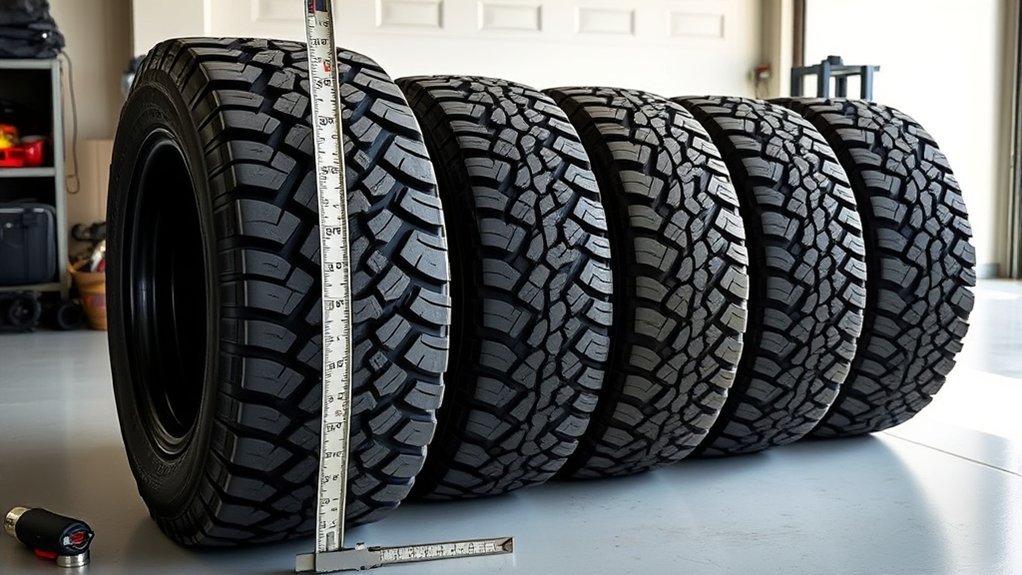
Popular 35-inch tires do not all share one exact height. The examples below show why checking the model-specific spec matters.
| Tire Example | Listed Size | Published Overall Diameter | Why It Matters |
| Nitto Ridge Grappler | 35X12.50R17 | 34.76 inches | A common hybrid-terrain tire that shows a 35-inch label can list under 35 inches. |
| Toyo Open Country M/T | 35X12.50R17 | 34.8 inches | A mud-terrain example with a wide section width and aggressive tread. |
| BFGoodrich All-Terrain T/A KO3 | LT315/70R17 | 34.4 inches | A metric 35-inch-class fitment that is closer to 34.4 inches by published spec. |
The main lesson is simple: do not buy by nickname alone. Compare the exact size, load range, diameter, section width, rim width range, and revolutions per mile before choosing a tire.
[Products Worth Considering]

The 22800 wheel stud installer makes replacing wheel studs quick and secure, saving time and effort during tire service. It uses a ratchet or impact wrench to pull new studs firmly into place, helping when existing studs are too long. Compatible with most automotive wheels and light-duty truck wheel studs, it’s designed for easy, tool-assisted installation.

Protect your spare wheel with a waterproof, dustproof tire cover made to resist sun and harsh weather. The elastic band design makes it easy to install and remove without tools, while reinforced stitching helps it keep its shape. Available in multiple sizes, it fits common RV, trailer, Jeep, SUV, and truck spare tires.

Measure tire tread depth quickly and accurately with this LUMITECO dial gauge that reads in 1/32" increments up to 14/32". The color-coded green/yellow/red zones make it easy to judge tire wear and know when replacement is needed. A rugged, compact design with a protective pouch helps keep the gauge ready for use on cars, trucks, motorcycles, and more.
How to Measure a 35-Inch Tire Correctly
To measure a 35-inch tire correctly, keep the conditions consistent. A loose, unmounted tire, a mounted tire off the vehicle, and an installed tire under vehicle weight can all produce different numbers.
- Check cold tire pressure. Record the PSI before measuring.
- Use level ground. Park on a flat surface or stand the tire upright on a flat floor.
- Measure height. For an installed tire, measure from the ground to the highest point of the tread. For a loose tire, measure straight across the full diameter.
- Measure width. Measure sidewall to sidewall, not just the tread blocks.
- Record the setup. Note wheel size, rim width, pressure, load, and whether the tire was mounted or unmounted.
- Compare with the spec sheet. If your measurement is very different, check pressure, measuring method, rim width, and tire load.
Pro Tip: If you are checking for rubbing, measure and test with the steering turned both ways and the suspension compressed. Static height alone does not prove the tire will clear on the road or trail.
Fitment Checks Before Buying 35-Inch Tires
A 35-inch tire can change more than ground clearance. Before buying, check the whole setup:
- Wheel width: Make sure your wheel falls within the tire’s approved rim width range.
- Offset and backspacing: These affect inner suspension clearance and outer fender poke.
- Lift height: Some vehicles need a lift, trimming, or body-mount clearance for 35s.
- Load rating: Match or exceed the load capacity your vehicle needs.
- Speedometer: A taller tire can make the speedometer and odometer read differently.
- Gearing: Larger tires can reduce acceleration and change transmission behavior.
- Spare tire: Confirm the spare location can hold a full-size 35 if you plan to carry one.
[Products Worth Considering]

These aluminum alloy tire valve stem caps with an O-ring seal help protect valve stems from corrosion while adding a clean, stylish look to your vehicle. The universal fit works across cars, trucks, motorcycles, bicycles, and more, making them an easy upgrade for everyday driving and off-road use. Installation is quick, and the included four-pack keeps all your tires dressed and protected.

Monitor tire tread wear with a smart, color-coded depth gauge that shows clear condition ranges at a glance. The bar is range marked for fast, easy readings, helping you maintain safer traction and performance. Each gauge is portable with a pocket clip, and the set includes 20 units for daily use and sharing.
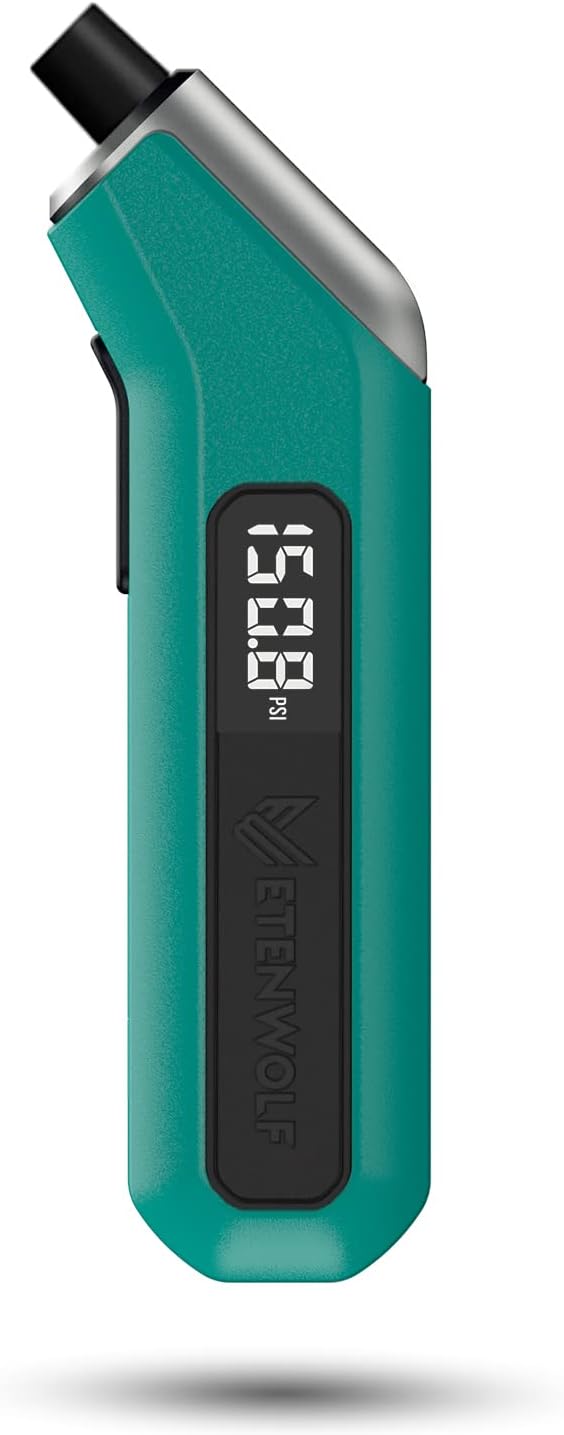
ETENWOLF T300 is a calibrated digital tire pressure gauge designed for reliable readings across low and high pressure ranges. It includes thermal compensation for stable performance in extreme cold or heat, an LED light for visibility, and an auto shut-off to help preserve battery life. Ideal for pickups, RVs, and heavy-duty vehicles, it delivers accurate PSI measurements with sturdy durability.
Frequently Asked Questions
Is 285 a 35-inch tire?
No, 285 is not automatically a 35-inch tire. In metric tire sizing, 285 is the section width in millimeters. You also need the aspect ratio and wheel diameter to estimate height. For example, 285/70R17 is usually closer to a 33-inch tire, while 285/75R18 is much closer to the 35-inch class.
How tall is a 35×12.50 tire?
A 35×12.50 tire is nominally 35 inches tall and 12.50 inches wide, but many real examples list slightly under 35 inches. Depending on the tire model and load range, published diameters commonly fall around 34.5 to 35.0 inches.
Is a 295 tire the same as a 35?
No. A 295 tire is not automatically the same as a 35. The number 295 describes width in millimeters. A 295/70R17 is often around 33.3 inches tall, while a 295/55R22 can be closer to the 35-inch class. Always calculate or check the spec sheet.
How much taller is a 35 tire than a 33?
A 35-inch tire is nominally 2 inches taller than a 33-inch tire, but the real difference may be closer to 1.5 to 2 inches depending on the two tire models. Ground clearance at the axle usually increases by about half the diameter difference, so the practical lift may be around 0.75 to 1 inch.
Is 315/70R17 a 35-inch tire?
315/70R17 is commonly treated as a 35-inch-class size, but its calculated diameter is about 34.4 inches. Published specs vary by tire model, so check the exact tire before buying.
Do 35-inch tires need a lift?
Many vehicles need a lift, trimming, different wheel offset, or other clearance changes to run 35-inch tires without rubbing. The answer depends on the vehicle, tire width, wheel specs, suspension travel, and how aggressively you drive off-road.
Conclusion
A 35-inch tire is usually close to 35 inches tall, but the number on the sidewall is not the final measurement. Real size depends on the tire model, load range, rim width, pressure, and whether you measure it loose, mounted, or loaded on the vehicle. For accurate fitment, use the exact tire’s published specs, measure your installed setup, and check clearance before you drive.
Sources
- Tire Rack — How Do I Calculate Tire Dimensions? — supports the metric tire diameter formula and the warning that calculated dimensions are nominal.
- Tire Rack — How Do I Read My Tire Size On My Sidewall? — supports sidewall code meanings, LT-metric, and flotation LT sizing.
- Tire Rack — BFGoodrich All-Terrain T/A KO3 Specifications — supports example diameters for LT315/70R17 and other 35-inch-class KO3 sizes.
- Nitto Tire — Ridge Grappler — supports Ridge Grappler tire model context and hybrid-terrain positioning.
- Toyo Tires — Open Country M/T — supports Open Country M/T tire model context and off-road use.
- NHTSA TireWise — supports tire-pressure and load-limit safety guidance.

