
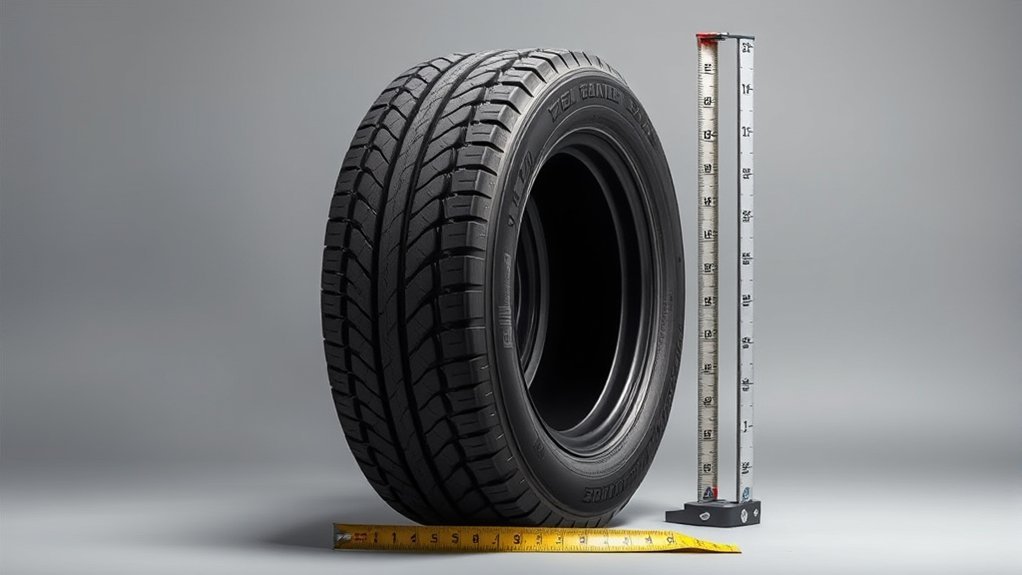
A 275/70R18 tire is a near-33-inch tire, not a 35-inch tire. Its nominal calculated size is about 33.16 inches tall, 10.83 inches wide, and 7.58 inches of sidewall. It also has about 104.17 inches of circumference and turns roughly 608 to 609 revolutions per mile, depending on rounding. Use those numbers for comparison, then verify the exact tire maker’s spec sheet because mounted diameter, section width, approved rim width, load rating, and weight can vary by brand, tread design, wheel width, inflation, and load.
Reviewed for accuracy by: TubeTyre Editorial Team · Last updated: July 7, 2026
Quick Answer
A 275/70R18 tire is about 33.2 inches tall, 10.8 inches wide, and has a 7.6-inch sidewall. That makes it effectively a 33-inch tire, not a 35-inch tire. Compared with smaller stock sizes, it can change speedometer readings, gearing feel, clearance, spare-tire fit, and rubbing risk at full steering lock.
Key Takeaways
- A 275/70R18 tire has a nominal calculated diameter of about 33.16 inches, usually rounded to 33.2 inches.
- The 275 number is the tire’s nominal section width, not the tread width. It equals about 10.83 inches.
- The 70 aspect ratio creates a sidewall height of about 7.58 inches, or about 192.5 mm.
- The tire’s nominal circumference is about 104.17 inches, with roughly 608 to 609 revolutions per mile depending on rounding.
- Compared with a 265/65R18, it is about 1.59 inches taller and about 0.39 inches wider.
- Before buying, check clearance, load rating, approved rim-width range, tire pressure guidance, spare-tire space, and speedometer calibration.
275/70R18 At a Glance
| Overall Diameter | About 33.16 inches, usually rounded to 33.2 inches |
| Section Width | 275 mm, or about 10.83 inches |
| Sidewall Height | 192.5 mm, or about 7.58 inches |
| Circumference | About 104.17 inches |
| Revolutions Per Mile | About 608 to 609 nominal revolutions per mile, depending on rounding |
What Does 275/70R18 Mean?
The size code 275/70R18 tells you the tire’s nominal width, sidewall ratio, construction, and wheel size. The 275 means the tire is about 275 mm wide from sidewall to sidewall. The 70 means the sidewall height is 70% of that width. The R means radial construction, and 18 means the tire fits an 18-inch wheel.
- 275: nominal section width in millimeters
- 70: sidewall height as a percentage of width
- R: radial construction
- 18: wheel diameter in inches
This code gives you a reliable paper calculation, but it is not a complete fitment guarantee. Two tires with the same printed size can still differ in tread width, shoulder shape, casing width, weight, approved rim width, and actual mounted diameter.
What Is the Height of a 275/70R18 Tire?
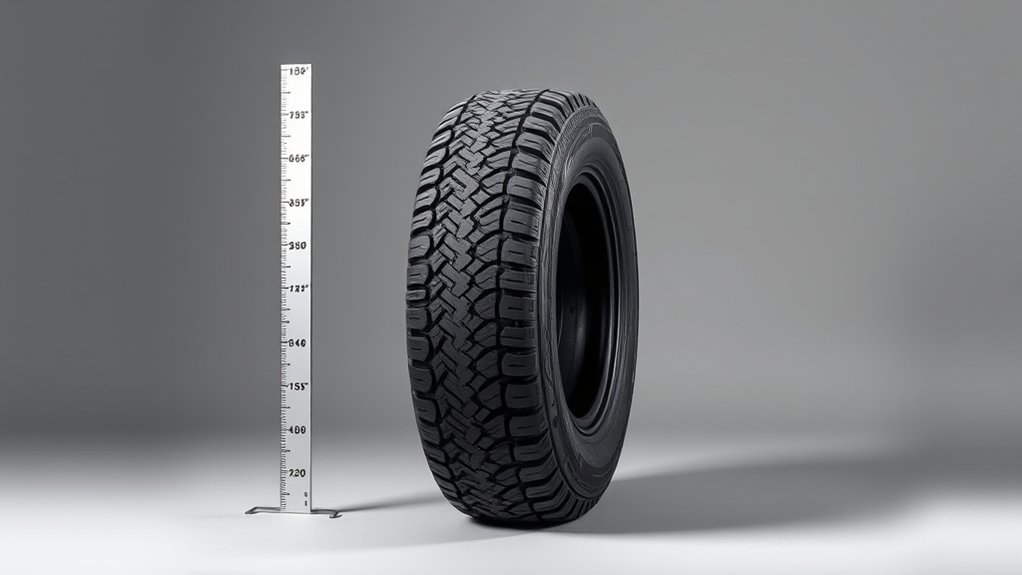
A 275/70R18 tire has a nominal calculated height of about 33.16 inches, or about 842 mm. In everyday tire-size talk, most people round that to 33.2 inches. That height is also the tire’s overall diameter when you compare tire sizes on paper.
The number comes from the tire-size code. According to Bridgestone’s tire-size guide, the first number is tire width in millimeters, the number after the slash is the aspect ratio, and the final number is the wheel diameter in inches. For 275/70R18, that means a 275 mm section width, a sidewall that is 70% of that width, and an 18-inch wheel.
Nominal formula: 275 × 0.70 = 192.5 mm sidewall. 192.5 ÷ 25.4 = 7.58 inches. Then 18 + 7.58 + 7.58 = 33.16 inches.
Note: Tire-size math gives you a nominal estimate. Actual mounted height can vary by tire model, tread depth, wheel width, inflation pressure, and load. If clearance is tight, use the tire manufacturer’s published specs before you buy.
275/70R18 Tire Width, Sidewall, and Diameter
You can break a 275/70R18 into three core measurements: section width, sidewall height, and overall diameter. The section width is 275 mm, or about 10.83 inches. The sidewall height is about 192.5 mm, or 7.58 inches. The overall diameter is about 33.16 inches.
Those numbers matter because they affect clearance, gearing, speedometer readings, ride feel, and how much room the tire needs inside the wheel well. A taller sidewall can add cushion over rough pavement, while the larger overall diameter changes how far the vehicle travels with each wheel rotation.
Tire Width Basics
For a 275/70R18 tire, the “275” refers to the tire’s nominal section width in millimeters. That is the approximate width from sidewall to sidewall, not the exact tread width. Yokohama notes that actual tire dimensions may not match the size code perfectly, so you should treat this number as a sizing reference.
- Section width: 275 mm
- Approximate width: 10.83 inches
- Not the same as: exact tread width
- Why it matters: fender clearance, wheel offset, sidewall bulge, and stance
The tread width is usually narrower than the section width and varies by tire line. Two 275/70R18 tires from different brands can have different tread widths, weights, shoulder shapes, and real-world clearance needs.
Sidewall Height Breakdown
The “70” in 275/70R18 is the aspect ratio. It means the sidewall height equals 70% of the tire’s nominal section width. So the math is simple: 275 mm × 0.70 = 192.5 mm. Converted to inches, that is about 7.58 inches.
A taller sidewall usually gives the tire a more cushioned feel than a lower-profile tire on the same wheel diameter. It can also help off-road traction because the tire has more sidewall to flex when aired down for trail use. Keep that in context, though. Load range, construction, tread design, inflation pressure, and vehicle weight also affect ride comfort and traction.
Overall Diameter Explained
The overall diameter is the tire’s full calculated height from the bottom of the tire to the top. For a 275/70R18, the nominal diameter is about 33.16 inches. You get that by adding two sidewalls to the 18-inch wheel diameter.
- One sidewall: about 7.58 inches
- Two sidewalls: about 15.16 inches
- Wheel diameter: 18 inches
- Total diameter: about 33.16 inches
This diameter affects ground clearance, speedometer readings, final-drive feel, and wheel-well clearance. If you move from a smaller stock tire to 275/70R18, the tire may sit closer to the fender liner, mud flap, upper control arm, or bumper edge.
How 275/70R18 Converts to Inches
The cleanest way to convert a 275/70R18 to inches is to calculate the sidewall first, then add the wheel diameter. Tire Rack uses the same basic method: multiply section width by aspect ratio, convert to inches, double the sidewall, and add the wheel diameter.
- Find the section width: 275 mm.
- Apply the aspect ratio: 275 × 0.70 = 192.5 mm.
- Convert sidewall to inches: 192.5 ÷ 25.4 = 7.58 inches.
- Add two sidewalls and wheel size: 7.58 + 7.58 + 18 = 33.16 inches.
- Calculate circumference: 33.16 × 3.1416 = about 104.17 inches.
- Estimate revolutions per mile: 63,360 ÷ 104.17 = about 608 revs per mile.
These values are best for comparison. They help you estimate how the tire differs from another size, but they do not replace a manufacturer spec sheet when clearance, towing, or load capacity matters.
Is a 275/70R18 a True 33-Inch Tire?
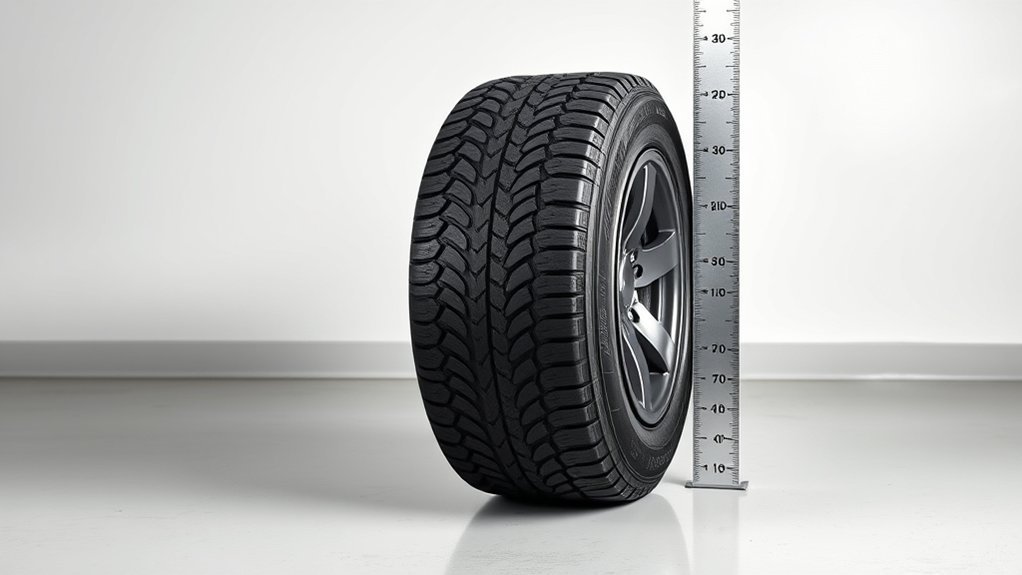
Yes, a 275/70R18 is commonly treated as a 33-inch tire because its nominal diameter is about 33.16 inches. It is slightly taller than a flat 33.0-inch measurement on paper, but close enough that most fitment discussions place it in the 33-inch category.
It is not a 35-inch tire. A true 35-inch tire is roughly two inches taller overall, which can create much larger clearance, gearing, braking, and calibration changes. If your truck or SUV barely clears a 33-inch tire, do not assume it will clear a 35-inch tire without trimming, lift, different wheel offset, or other changes.
Pro Tip: When people say “33s,” ask whether they mean the printed size category or the tire maker’s actual mounted diameter. Some tires labeled as 33-inch sizes measure slightly under or over 33 inches in the real world.
275/70R18 Speedometer and RPM Changes
A 275/70R18 can make your speedometer read slow if it is taller than the tire size your vehicle was calibrated for. A taller tire travels farther per revolution, so your actual road speed can be higher than the number shown on the dash.
Use this formula to estimate the change:
Percentage change = (new tire diameter ÷ old tire diameter – 1) × 100
For example, if your vehicle was calibrated for 265/65R18, moving to 275/70R18 is about a 5.1% increase in nominal diameter. If your speedometer shows 60 mph, your actual speed may be close to 63 mph. If your original size was 275/65R18, the change is about 3.4%, so 60 mph indicated may be about 62 mph actual. These are nominal estimates, so use your original tire’s published loaded radius or revolutions-per-mile data when precision matters.
Warning: Do not rely on a fixed speedometer-error percentage without knowing your original tire size. Check your stock size, compare diameters, and recalibrate the vehicle if the change is large enough to affect speed, shift behavior, ABS, traction control, or odometer readings.
A taller tire can also lower cruising RPM because the tire turns fewer times per mile. That may feel calmer on the highway, but it can soften acceleration if your gearing is already tall. Fuel economy can improve, stay similar, or drop depending on the tire’s weight, tread pattern, rolling resistance, inflation pressure, and your driving conditions.
275/70R18 Vs 265/65R18
A 275/70R18 is much taller than a 265/65R18. The 275/70R18 measures about 33.16 inches in nominal diameter, while a 265/65R18 measures about 31.56 inches. That makes the 275/70R18 about 1.59 inches taller.
The width change is smaller than many people expect. A 275 mm tire is only 10 mm wider than a 265 mm tire, which equals about 0.39 inches. The bigger fitment change comes from height and sidewall, not width alone.
| Size | Diameter | Width | Sidewall |
| 265/65R18 | 31.56 in | 10.43 in | 6.78 in |
| 275/70R18 | 33.16 in | 10.83 in | 7.58 in |
The 275/70R18 gives you more sidewall, more ground clearance, and a fuller wheel-well look. The tradeoff is that it may rub where a 265/65R18 does not, especially near the mud flap, fender liner, bumper edge, or upper control arm. It can also affect acceleration, braking feel, and speedometer accuracy.
275/70R18 Vs 285/70R18 and 285/75R18
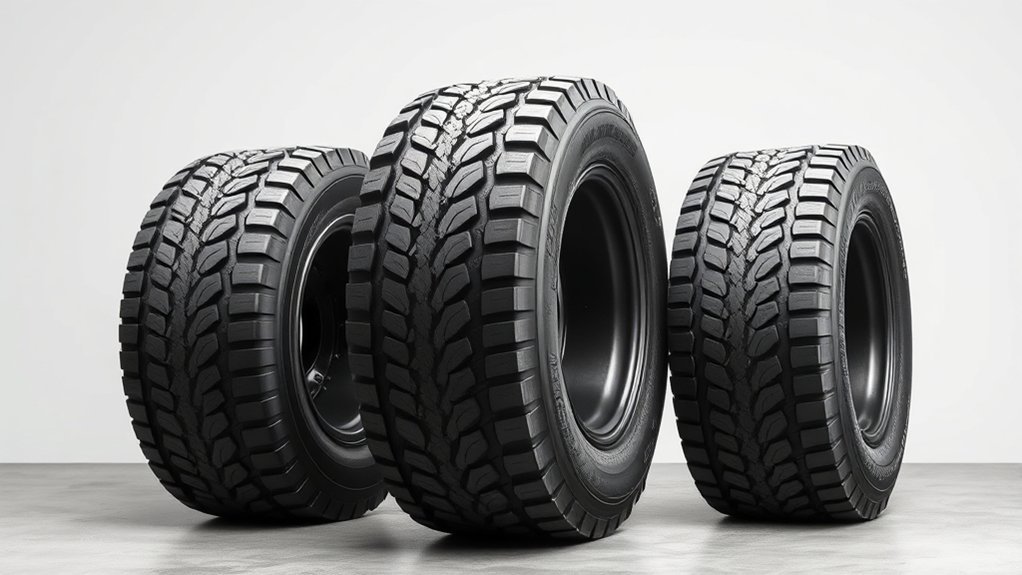
A 275/70R18 is smaller than both a 285/70R18 and a 285/75R18. The 285/70R18 is a modest step up because it is wider and about half an inch taller. The 285/75R18 is a bigger jump because the 75 aspect ratio adds much more sidewall.
| Size | Nominal Diameter | Nominal Width | Change vs 275/70R18 |
| 275/70R18 | 33.16 in | 10.83 in | Baseline |
| 285/70R18 | 33.71 in | 11.22 in | About 0.55 in taller |
| 285/75R18 | 34.83 in | 11.22 in | About 1.67 in taller |
The 285/70R18 is the more moderate upgrade from 275/70R18. The 285/75R18 moves closer to a 35-inch class size and is more likely to need extra clearance. That may mean trimming, a lift, a different wheel offset, or a spare-tire solution.
Will 275/70R18 Fit Your Truck or SUV?
A 275/70R18 is commonly considered for full-size trucks and some body-on-frame SUVs, but fitment depends on the exact year, trim, suspension, wheel width, wheel offset, and tire model. Do not treat a vehicle-name list as a fitment guarantee.
This size may be considered on vehicles such as:
- Toyota Tundra: often considered for towing, highway use, and light off-road setups.
- Ford F-150: commonly compared by owners who want a taller stance than smaller 18-inch stock sizes.
- Chevrolet Silverado: often considered when moving toward a 33-inch tire setup.
- Ram 1500: possible on some setups, but clearance and trim package matter.
- Jeep Grand Cherokee: requires extra caution because many trims have tighter wheel-well clearance than full-size pickups.
Warning: Before changing tire size, check the vehicle placard, owner’s manual, tire load rating, wheel-width range, and clearance at full steering lock and suspension compression. NHTSA recommends using the original tire size or another size recommended by the vehicle manufacturer, and checking with a tire dealer when you are unsure.
[Products Worth Considering]

Measure tyre tread depth precisely with a digital gauge that reads in both MM and inches, helping you monitor safe driving conditions. The large LCD screen is easy to operate, and the compact tool fits for cars, trucks, and motorcycles. It provides high accuracy with a 0-25.4mm range and includes a 1-year warranty for added peace of mind.

Keep your tires properly inflated with this analog VONDIOR tire pressure gauge, designed for fast, easy readings without batteries. The swiveling, two-axis hose and large glow dial help you measure at any tire angle with instant visibility. Built with a protective rubber shield, it supports durable, low-maintenance use for cars and trucks.

Secure your vehicle during transport with this 4-pack of heavy-duty tire tie down straps designed for trailers and hauling. The ratchet system with flat hooks and D-rings helps you tension the straps quickly, while the wheel-friendly design protects tires. With high break strength and corrosion-resistant hardware, these straps provide reliable, confidence-inspiring tie-down security for cars, trucks, and UTVs.
How to Compare 275/70R18 to Other Sizes
To compare a 275/70R18 with another tire size, look at more than one number. Overall diameter affects clearance, speedometer readings, and gearing. Section width affects inner and outer clearance. Sidewall height affects ride feel and wheel protection. Load index and load range affect whether the tire can safely carry the vehicle’s weight.
Size Difference Basics
Here are the most useful nominal comparisons:
- 275/70R18 vs 265/65R18: about 1.59 inches taller and 0.39 inches wider.
- 275/70R18 vs 275/65R18: about 1.08 inches taller with the same nominal section width.
- 275/70R18 vs 285/70R18: about 0.55 inches shorter and 0.39 inches narrower.
- 275/70R18 vs 285/75R18: about 1.67 inches shorter and 0.39 inches narrower.
When the size change is small, a vehicle may only need calibration or minor clearance checks. When the change is large, you may also need suspension changes, trimming, different wheels, or gearing adjustments.
Performance Tradeoffs
The main benefit of a 275/70R18 is its taller stance and larger rolling diameter. You can gain a little ground clearance and a more cushioned sidewall compared with smaller 18-inch sizes. That can help on gravel, dirt roads, potholes, and mild trail use.
The tradeoffs can include slower acceleration, heavier steering feel, reduced clearance at full lock, more road noise with aggressive tread patterns, and speedometer error. A heavier all-terrain or mud-terrain tire can also affect braking feel and fuel use more than a lighter highway-terrain tire in the same size.
How to Check Real 275/70R18 Specs Before Buying
Use the size math to narrow your options, then check the tire maker’s published data for the exact model you want. For close clearances, the most useful specs are overall diameter, section width on the measuring rim, approved rim-width range, tread depth, tire weight, load index or load range, and revolutions per mile.
Spec Sheet Check
- Overall diameter: confirms the real height of that exact tire line.
- Section width: helps you judge upper-control-arm and fender clearance.
- Approved rim-width range: confirms whether your wheel is within the tire maker’s limits.
- Load index or load range: confirms the tire can carry your vehicle, passengers, cargo, and trailer tongue weight.
- Revolutions per mile: gives a cleaner calibration number than rounded diameter alone.
- Tire weight and tread type: help you estimate steering feel, braking feel, road noise, and fuel-use changes.
If the manufacturer’s spec sheet disagrees with a generic tire-size calculator, trust the manufacturer’s data for that tire model. Tire-size calculators are useful for comparison, but actual mounted dimensions depend on the casing, tread, rim width, pressure, and load.
[Products Worth Considering]

Protect your spare wheel with a waterproof, dustproof tire cover made to resist sun and harsh weather. The elastic band design makes it easy to install and remove without tools, while reinforced stitching helps it keep its shape. Available in multiple sizes, it fits common RV, trailer, Jeep, SUV, and truck spare tires.

The SAFELIFE dial tire tread depth gauge measures tread depth in 1/32 inch increments with clear, easy-to-read 2-inch dial face. Color zones using a traffic light system help you quickly judge whether tread is low, marginal, or ample for safer driving. Built with a durable zinc cast body and a metal detect probe for precise, comfortable use across cars, motorcycles, trucks, and buses.

ETENWOLF T300 is a calibrated digital tire pressure gauge for accurate readings from 3 to 200 PSI across light and heavy-duty vehicles. It includes thermal compensation for reliable performance in extreme cold or heat, with an auto shut-off to extend battery life and an LED for easier reading. The sturdy design supports rugged everyday use, making it ideal for pickups, RVs, and industrial applications.
Fitment Checklist Before Buying 275/70R18 Tires
Use this checklist before you order a 275/70R18 tire:
- Check the stock tire size: Compare the new diameter with the size listed on your door placard or owner’s manual.
- Confirm load index or load range: The new tire must meet or exceed what your vehicle needs for passengers, cargo, and towing.
- Check approved rim width: Tire makers publish rim-width ranges for each tire model, and LT and passenger versions may differ.
- Inspect inner clearance: Look near the upper control arm, strut, sway bar, and brake components.
- Inspect outer clearance: Check the fender liner, mud flap, bumper edge, and pinch weld area.
- Turn the wheel fully both ways: A tire can clear straight ahead but rub at full steering lock.
- Consider suspension compression: Clearance can shrink when the vehicle hits bumps or carries weight.
- Plan for the spare: A larger tire may not fit in the factory spare location or underbody hoist.
- Recalibrate if needed: Larger tire diameter can affect the speedometer, odometer, transmission shift logic, ABS, and traction control.
- Use correct cold pressure: Follow the vehicle manufacturer’s guidance or a qualified tire professional’s recommendation, not the sidewall maximum pressure as your everyday setting.
[Products Worth Considering]

Measure tire tread depth quickly and accurately with this LUMITECO dial gauge that reads in 1/32" increments up to 14/32". The color-coded green/yellow/red zones make it easy to judge tire wear and know when replacement is needed. A rugged, compact design with a protective pouch helps keep the gauge ready for use on cars, trucks, motorcycles, and more.

Universal magnetic jack pad with aluminum grooved design to protect vehicle pinch welds during lifting. Durable nylon pad inserts are upgraded and secured with screws to resist damage and keep in place. Designed to fit most single vehicle pinpoint welds for safer, stable jacking when changing tires, repairs, or performing oil changes.
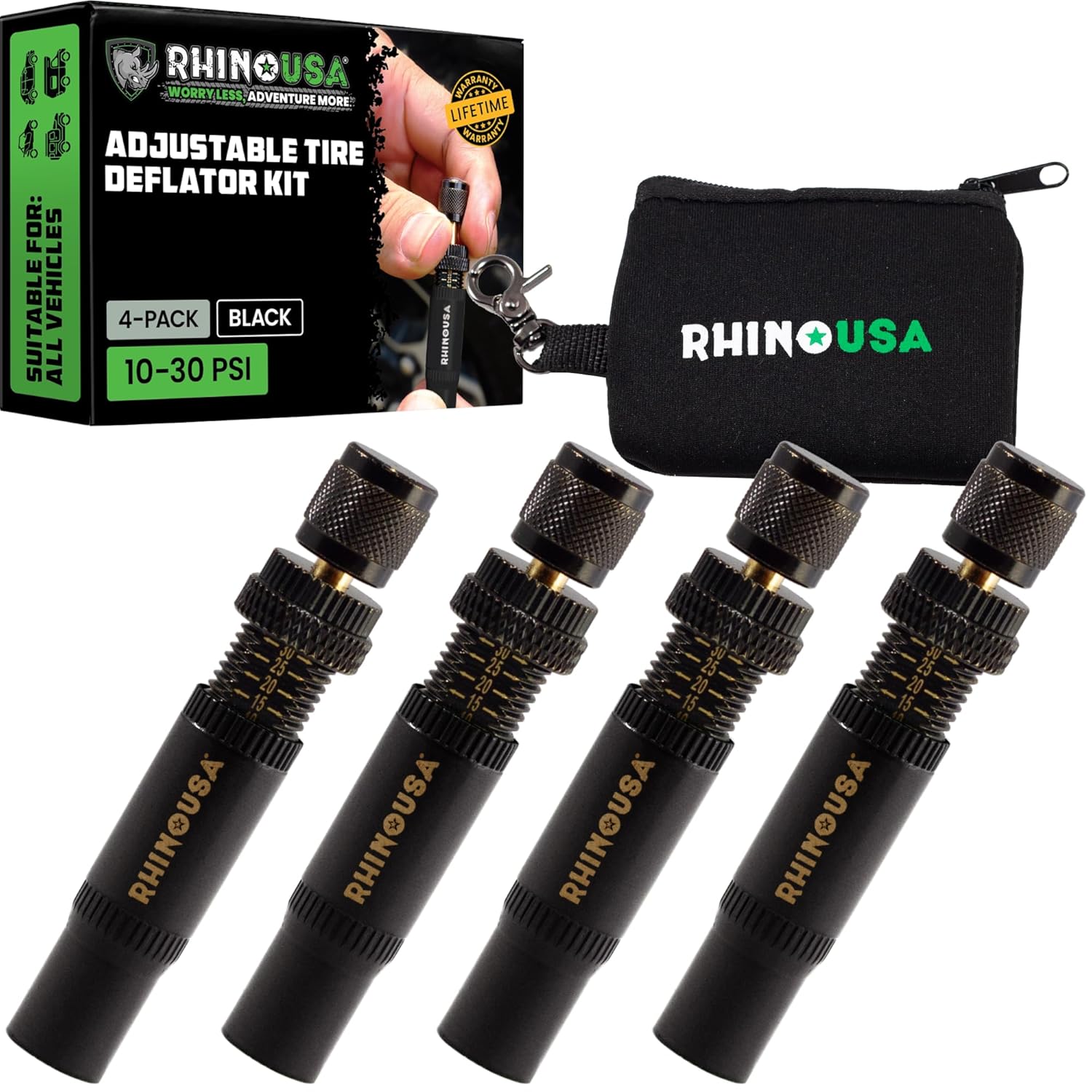
Use the Rhino USA adjustable tire deflators to air down all four tires at once by screwing one deflator onto each valve stem, letting you step away while the tires reach your preset pressure. Each deflator independently adjusts across a 10–30 PSI range with laser-etched indicators for quick setup and verification, making it ideal for beach, sand, and rocky off-road trails.
Frequently Asked Questions
What is the actual height of 275/70R18 tires?
A 275/70R18 tire has a nominal calculated height of about 33.16 inches, usually rounded to 33.2 inches. Actual mounted height can vary slightly by brand, tread design, wheel width, inflation pressure, and load.
Is a 275/70R18 the same as a 33-inch tire?
Yes, it is effectively a 33-inch tire. Its nominal diameter is about 33.16 inches, so most owners and tire shops treat it as a 33-inch class tire.
Is a 275/70R18 a 35-inch tire?
No. A 275/70R18 is about 33.2 inches tall on paper, so it is not a 35-inch tire. If you want a true 35-inch setup, you need a taller size and should expect larger clearance and calibration changes.
How much bigger is a 275/70R18 than a 265/65R18?
A 275/70R18 is about 1.59 inches taller and about 10 mm wider than a 265/65R18. That 10 mm width increase equals about 0.39 inches, so the biggest change is height, not width.
What does 275/70R18 mean?
The 275 means the tire has a nominal section width of 275 mm. The 70 means the sidewall height is 70% of that width. The R means radial construction, and the 18 means the tire fits an 18-inch wheel.
Will 275/70R18 tires affect my speedometer?
They can if they are taller than your original tire size. Compared with 265/65R18, a 275/70R18 is about 5.1% taller, so your actual speed may be higher than indicated. Recalibration may be needed.
Can I replace 265/65R18 with 275/70R18?
Maybe, but do not assume it will fit. A 275/70R18 is about 1.59 inches taller than a 265/65R18, so you need to check inner clearance, fender clearance, spare-tire space, load rating, and speedometer calibration.
Will 275/70R18 fit on stock 18-inch wheels?
It depends on your wheel width, offset, tire model, and vehicle clearance. Check the tire maker’s approved rim-width range for the exact 275/70R18 you want, then test clearance at full steering lock and under suspension compression.
Conclusion
A 275/70R18 tire is a practical near-33-inch size for many truck and SUV owners who want more sidewall, more stance, and a taller rolling diameter. The key numbers are simple: about 33.16 inches tall, 10.83 inches wide, and 7.58 inches of sidewall.
Still, the math is only the starting point. Before you buy, compare the size with your stock tires, check real manufacturer specs, confirm load rating and rim-width range, inspect clearance, and plan for recalibration if the diameter change is large. That gives you a cleaner upgrade and helps you avoid rubbing, inaccurate speed readings, spare-tire problems, or unsafe fitment.
Sources
- Tire Rack: How Do I Calculate Tire Dimensions? — supports the tire-diameter calculation method and nominal-size caveat.
- Bridgestone: How to Read & Determine Tire Size — supports section width, aspect ratio, radial construction, and rim-diameter definitions.
- Yokohama: Sizing Information — supports tire sizing terminology, aspect ratio, load index, and actual-dimension variation.
- NHTSA TireWise: Tire Safety Ratings and Awareness — supports tire placard, owner’s manual, inflation, tread, and replacement-size guidance.
- TireSize.com: 275/70R18 Tires — supports common rounded values and rim-width ranges as a calculator-style cross-check; verify final specs with the tire manufacturer.

