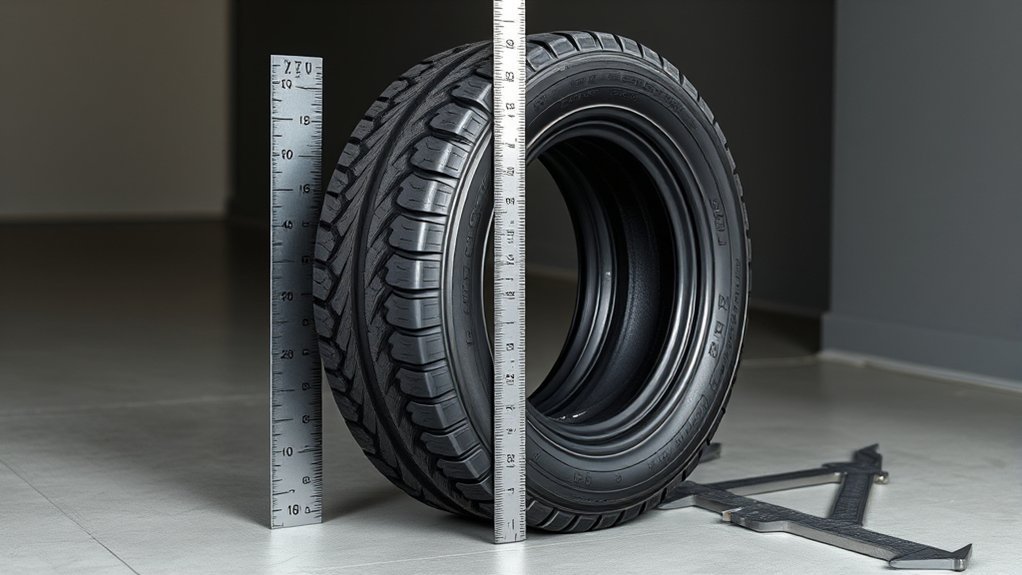
A 275/70R18 tire is a tall truck and SUV tire size that works out to about 33.2 inches in overall diameter. It is also about 10.8 inches wide, with a sidewall height close to 7.6 inches. Those numbers make it a common “33-inch class” tire, but fitment still depends on your wheel width, suspension clearance, load rating, and the specific tire model you choose.
Quick Answer
A 275/70R18 tire is about 33.2 inches tall, 10.8 inches wide, and has a 7.6-inch sidewall. It is close enough to be called a 33-inch tire in normal shopping terms, but actual mounted dimensions can vary slightly by brand, tread design, load range, and wheel width.
Key Takeaways
- A 275/70R18 is about 33.2 inches tall, so it sits in the 33-inch tire class.
- The section width is 275 mm, which equals about 10.8 inches.
- The sidewall height is about 7.6 inches, because the 70 aspect ratio means the sidewall is 70% of the tire width.
- Circumference is about 104.1–104.2 inches, or roughly 608–609 revolutions per mile.
- Fitment should be checked against your vehicle placard, wheel width, load index, speed rating, fender clearance, and manufacturer specifications.
How Tall Is a 275/70R18 Tire?
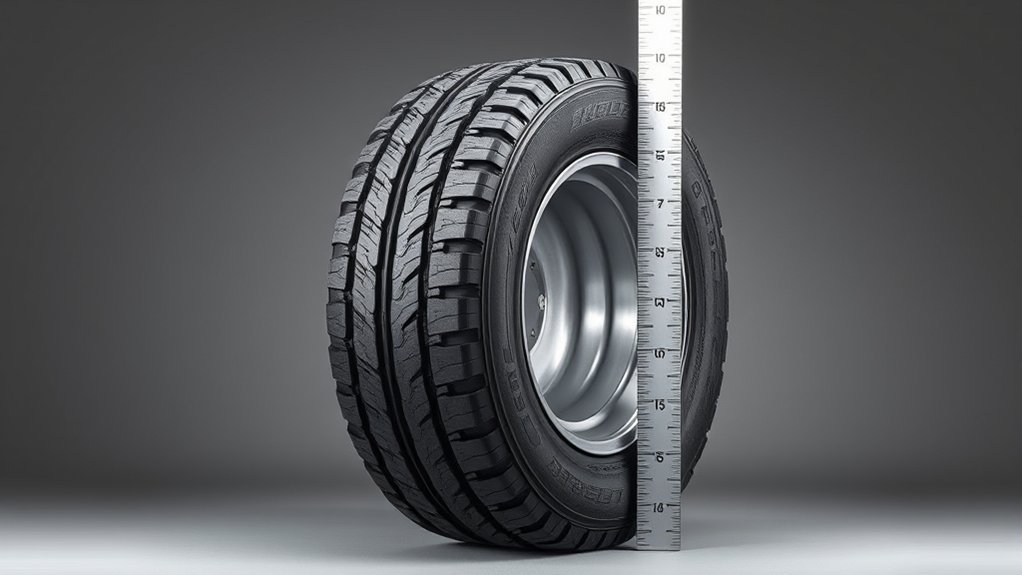
A 275/70R18 tire has a nominal calculated diameter of about 33.2 inches, or about 842 mm. That makes it taller than many factory half-ton truck and SUV tire sizes, and it can add stance, sidewall cushion, and a small amount of ground clearance.
The word nominal matters. Tire-size math gives you a very useful estimate, but the actual mounted tire can vary by manufacturer, tread depth, load range, measuring rim width, and inflation pressure. If you are close to rubbing a fender liner, control arm, bumper, or mud flap, check the tire maker’s published spec sheet before buying.
Note: Tire makers and retailers often round this size to “33 inches,” but the calculated size is closer to 33.2 inches. That small difference can still matter when clearance is tight.
275/70R18 Size in Inches: Width, Sidewall, Circumference, and Revs Per Mile
The numbers in 275/70R18 follow standard tire-size logic. The first number is the tire’s section width in millimeters, the second number is the aspect ratio, and the final number is the wheel diameter in inches. Goodyear explains that tire width is measured in millimeters, the aspect ratio compares sidewall height to width, and the rim diameter tells you the wheel size the tire fits.
| Overall Diameter | About 33.2 inches / 842 mm |
| Section Width | 275 mm / about 10.8 inches |
| Sidewall Height | About 7.6 inches / 193 mm |
| Wheel Diameter | 18 inches |
| Circumference | About 104.1–104.2 inches |
| Revolutions Per Mile | About 608–609 revs per mile |
| Common Rim Width Range | Often around 7.0–9.0 inches, but LT tires may differ; check the specific tire’s spec sheet. |
How to Calculate 275/70R18 Tire Height
You can calculate the approximate height with a simple formula. Tire Rack’s tire-dimension guide explains that sidewall height is based on section width and aspect ratio, then total diameter is found by adding two sidewalls plus the wheel diameter.
Step 1: Convert the sidewall height.
275 mm × 0.70 = 192.5 mm
192.5 mm ÷ 25.4 = 7.58 inches
Step 2: Add two sidewalls and the 18-inch wheel.
7.58 + 7.58 + 18 = 33.16 inches
Rounded for real-world shopping, a 275/70R18 is usually listed as about 33.2 inches tall.
Pro Tip: Use calculated dimensions for planning, but use the manufacturer’s published diameter, width, approved rim width, load index, and revolutions per mile when you are making a final purchase.
Is a 275/70R18 the Same as a 33-Inch Tire?
Yes, a 275/70R18 is generally considered a 33-inch tire, but it is not exactly 33.0 inches tall. The calculated diameter is about 33.16 inches, and many charts round it to 33.2 inches. That puts it squarely in the 33-inch tire class.
Still, “33-inch tire” is a broad shopping label. A flotation-size tire such as 33×12.50R18 may be much wider than a 275/70R18. A different 33-inch metric size may also have a different tread width, load range, or approved rim width. If your vehicle can fit “33s,” that does not automatically mean every 33-inch tire will fit without rubbing.
Warning: Do not choose a tire only because the diameter is close. Confirm load index, speed rating, rim width, brake clearance, fender clearance, and the vehicle manufacturer’s approved tire sizes before installing a different size.
[Products Worth Considering]

Keep your tires properly inflated with this analog VONDIOR tire pressure gauge, designed for fast, easy readings without batteries. The swiveling, two-axis hose and large glow dial help you measure at any tire angle with instant visibility. Built with a protective rubber shield, it supports durable, low-maintenance use for cars and trucks.

Protect your spare wheel with a waterproof, dustproof tire cover made to resist sun and harsh weather. The elastic band design makes it easy to install and remove without tools, while reinforced stitching helps it keep its shape. Available in multiple sizes, it fits common RV, trailer, Jeep, SUV, and truck spare tires.

This digital tire pressure gauge with built-in inflator helps you accurately check and adjust tire pressure for safer driving and better fuel efficiency. It supports multiple units (PSI, KPA, BAR, KG/CM²) and reads within 1% for reliable results. The 3-in-1 design inflates, deflates, and measures, with a quick-connect air chuck and compatible hose setup for cars, trucks, SUVs, RVs, and motorcycles.
275/70R18 vs. 285/70R18 and Other Sizes
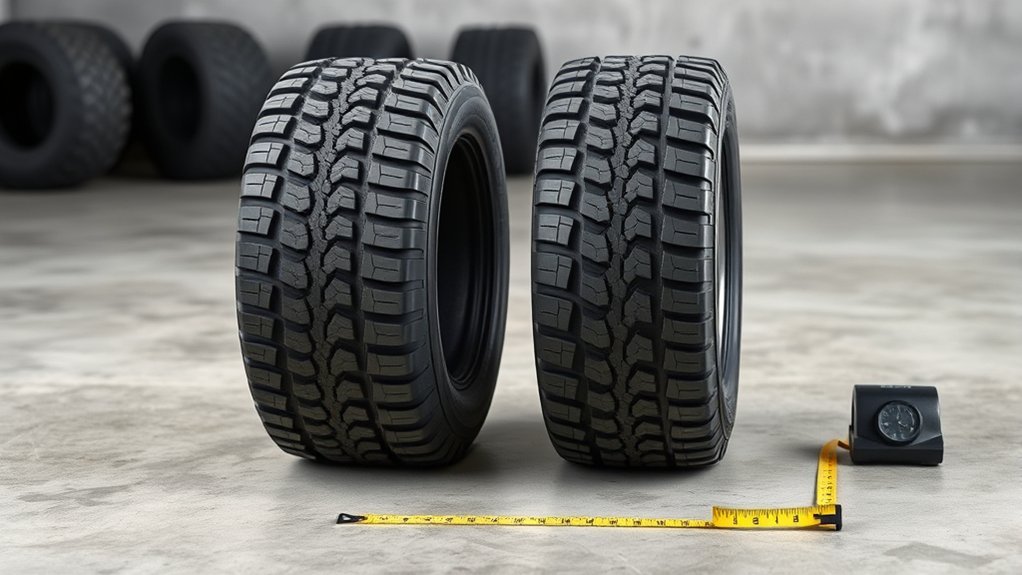
Compared with a 285/70R18, a 275/70R18 is slightly narrower and slightly shorter. The 285/70R18 is about 10 mm wider and roughly 0.55 inches taller in calculated diameter. That gives the 285 a little more ground clearance and tire width, but it can also increase the chance of rubbing on stock wheels or suspension.
| Size | Approx. Diameter | Approx. Width | Compared With 275/70R18 |
| 265/65R18 | 31.6 inches | 10.4 inches | 275/70R18 is about 1.6 inches taller and 10 mm wider. |
| 275/65R18 | 32.1 inches | 10.8 inches | 275/70R18 is about 1.1 inches taller with the same nominal width. |
| 275/70R18 | 33.2 inches | 10.8 inches | Baseline size. |
| 285/70R18 | 33.7 inches | 11.2 inches | About 0.55 inches taller and 10 mm wider. |
| 33×12.50R18 | About 33 inches | About 12.5 inches | Similar height, much wider; often needs more clearance. |
If you want a clean, factory-like upgrade, the 275/70R18 is often easier to fit than a wider 285/70R18 or 33×12.50R18. If you want maximum stance and traction, the wider options may look better, but they are also more likely to need wheel offset changes, trimming, leveling kits, or suspension clearance checks.
[Products Worth Considering]

The TYAMATE TM8 solar-powered wireless TPMS delivers real-time tire pressure and temperature monitoring with six alarm modes for safer driving. A vibrant color LCD display shows readings clearly while windshield mounting keeps it hands-free and easy to read. With a wide 0–87 PSI range, strong 433.92 MHz signal transmission, and quick sensor pairing, it’s ideal for RV, sedan, SUV, MPV, and truck use.

The SAFELIFE dial tire tread depth gauge measures tread depth in 1/32 inch increments with clear, easy-to-read 2-inch dial face. Color zones using a traffic light system help you quickly judge whether tread is low, marginal, or ample for safer driving. Built with a durable zinc cast body and a metal detect probe for precise, comfortable use across cars, motorcycles, trucks, and buses.

AUTOWN’s 68-piece tire repair kit helps you fix punctures and plug flats quickly and effectively. It includes a T-handle and spiral probe tool for easy insertion, while the steel patch and plug materials are designed for strong adhesion and long-lasting airtight performance. The compact case makes it convenient for roadside repairs across a wide range of vehicles.
How Does a 275/70R18 Change Speedometer and MPG?
A 275/70R18 can change your speedometer reading if it is taller than your factory tire. A taller tire travels farther with each rotation, so the vehicle may move faster than the speedometer shows unless the speedometer is recalibrated.
Use this simple formula:
Actual speed = indicated speed × new tire diameter ÷ old tire diameter
For example, if your original tire was a 265/65R18 at about 31.6 inches tall and you switch to a 275/70R18 at about 33.2 inches tall, your new tire is about 5% taller. When the speedometer shows 60 mph, your actual speed may be close to 63 mph.
Fuel economy can also change, but there is no single guaranteed MPG loss. A taller, heavier, or more aggressive tire can affect acceleration, braking feel, rolling resistance, and shift points. A mild all-terrain tire may have a smaller effect than a heavy mud-terrain tire in the same size.
Note: Michelin warns that changing tire or wheel diameter can affect gearing, traction and stability control systems, braking, and speedometer reading. Recalibration may be needed after a significant size change.
Fitment Checklist Before Buying 275/70R18 Tires
Before you buy a 275/70R18 tire, check more than height alone. Tire fitment is a full system: tire size, wheel width, offset, suspension clearance, load rating, and vehicle electronics all matter.
- Vehicle placard: Check the tire information placard and owner’s manual for the original tire size, load index, speed rating, and recommended cold pressure.
- Load index: Do not install a tire with a lower load index than the original equipment tire.
- Rim width: Confirm the approved rim-width range for the exact tire model, especially if it is an LT tire.
- Clearance: Check fenders, mud flaps, upper control arms, sway bars, bumper corners, and inner liners at full steering lock and suspension compression.
- Spare tire fit: Make sure a full-size spare fits under the vehicle or in the spare location.
- Calibration: After a large size change, check speedometer accuracy and recalibrate if needed.
- Air pressure: Use the correct cold inflation pressure for your vehicle and tire setup, not just the maximum pressure molded on the tire sidewall.
[Products Worth Considering]

ETENWOLF T300 is a calibrated digital tire pressure gauge for accurate readings from 3 to 200 PSI across light and heavy-duty vehicles. It includes thermal compensation for reliable performance in extreme cold or heat, with an auto shut-off to extend battery life and an LED for easier reading. The sturdy design supports rugged everyday use, making it ideal for pickups, RVs, and industrial applications.

AZUNO’s digital tire inflator delivers stable, accurate pressure readings with a bright LCD and a 0.1 resolution display for confident inflation. It supports one-handed operation for inflating and quick deflating, and it’s built with rugged steel and brass components for reliable shop or garage use. With multi-unit pressure display and compatibility across cars, SUVs, motorcycles, and trucks, it’s a convenient accessory for everyday tire maintenance.

This 3-ton scissor car jack tire changing kit helps you lift cars and SUVs with a wide range to reach low sedans or higher vehicles. The set includes a ratchet wrench, multi-size lug wrench, gloves, a tire pressure gauge, and a storage bag for quick emergency repairs. Built for stable, secure lifting and universal compatibility, it’s ready for flat tires and roadside wheel changes.
Frequently Asked Questions
What is the difference between 285/70R18 and 275/70R18?
A 285/70R18 is 10 mm wider and about 0.55 inches taller than a 275/70R18. The 285 can add a little more clearance and width, but it is also more likely to rub on stock wheels, mud flaps, fender liners, or suspension parts.
Is a 275/70R18 the same as a 33-inch tire?
It is close enough to be called a 33-inch tire for normal shopping. The calculated diameter is about 33.16 inches, usually rounded to 33.2 inches. It is not identical to every tire labeled 33 inches, because width, tread shape, and actual mounted size can vary.
What size is a 33-inch tire on an 18-inch rim?
One of the most common metric sizes close to a 33-inch tire on an 18-inch rim is 275/70R18. Another close option is 285/70R18, which is slightly taller and wider. A flotation size such as 33×12.50R18 is also a 33-inch class tire, but it is much wider than a 275/70R18.
How much bigger is a 275/70R18 than a 265/65R18?
A 275/70R18 is about 1.6 inches taller and 10 mm wider than a 265/65R18. That size jump can add roughly 0.8 inches of ground clearance, but it can also create speedometer error and possible rubbing, depending on the vehicle.
Will 275/70R18 tires fit on stock wheels?
They may fit many stock 18-inch truck wheels, but you need to confirm the approved rim-width range for the tire and check vehicle clearance. Stock wheel offset, suspension height, fender shape, and mud flaps can all affect fitment.
Do 275/70R18 tires affect towing or load capacity?
They can, depending on the tire’s load index and load range. The size alone does not tell the full story. Always choose a tire with a load index that meets or exceeds the original equipment requirement, and use the correct inflation pressure for the load you carry.
Conclusion
A 275/70R18 tire is about 33.2 inches tall, 10.8 inches wide, and has a 7.6-inch sidewall. That makes it a practical 33-inch class option for many trucks and SUVs. The size can improve stance and ground clearance, but it can also affect speedometer accuracy, gearing feel, rubbing clearance, and fuel economy. For the best result, compare the calculated size with the tire manufacturer’s actual specs and confirm that your vehicle, wheels, load rating, and clearances can safely support the change.
Sources
- Goodyear — How to Find Tire Size — supports tire width, aspect ratio, and rim-diameter definitions.
- Tire Rack — How Do I Calculate Tire Dimensions? — supports tire-diameter and sidewall-height calculation method.
- Michelin — Changing Tire Size or Specifications — supports manufacturer-approved replacement-size guidance.
- Michelin — Performance Upgrade / Plus-Sizing Guidance — supports warnings about gearing, stability control, braking, and speedometer effects.
- NHTSA TireWise — Tire Safety Ratings and Awareness — supports tire pressure and vehicle placard guidance.
- Tire Industry Association — Tire Replacement — supports load index, placard, and replacement-tire safety guidance.