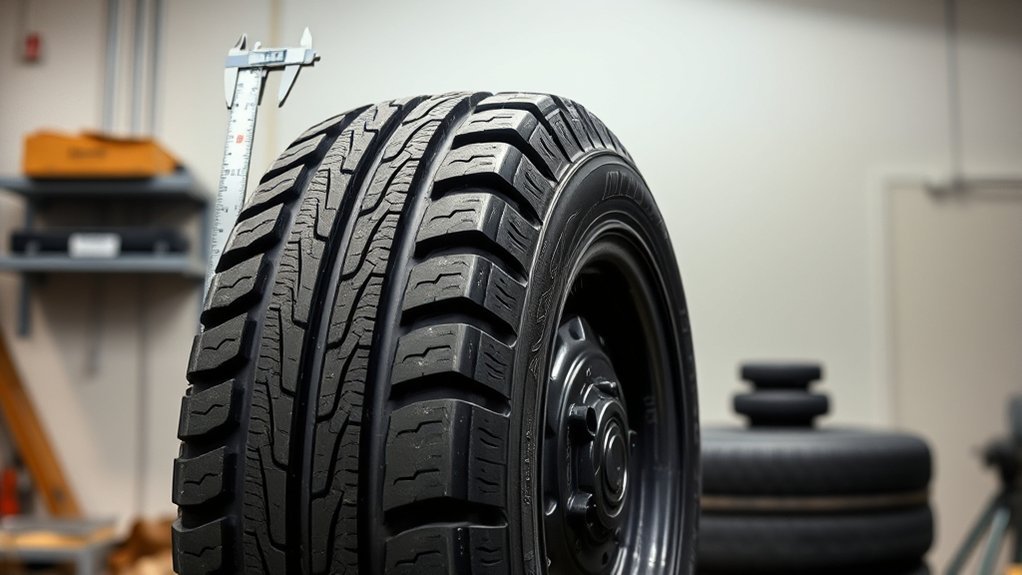
A 265/70R17 tire is a popular truck and SUV size that measures about 31.6 inches tall, 10.4 inches wide, and 7.3 inches from rim to tread on each sidewall. Those numbers make it useful for comparing clearance, gearing, wheel fitment, and tire choices before you buy.
Quick Answer
A 265/70R17 tire is about 31.6 inches tall, 10.4 inches wide, and has a 7.3-inch sidewall. Its circumference is about 99.2 inches, with roughly 638 revolutions per mile. It fits a 17-inch wheel, but exact fitment depends on rim width, load rating, offset, suspension clearance, and your vehicle’s tire placard.
Key Takeaways
- A 265/70R17 tire is about 31.6 inches tall, or about 80.3 cm in overall diameter.
- The section width is 265 mm, which equals about 10.4 inches.
- The sidewall height is 185.5 mm, or about 7.3 inches, because the aspect ratio is 70% of 265 mm.
- Most 265/70R17 passenger versions use a 7- to 9-inch rim range; many LT versions list a narrower 7- to 8.5-inch range, so check the tire maker’s spec sheet.
- Before changing to this size, verify clearance, load index, speed rating, tire pressure, and speedometer change against your vehicle placard and owner’s manual.
What Does 265/70R17 Mean?
The size code 265/70R17 tells you the tire’s width, sidewall ratio, construction, and wheel diameter. According to Michelin’s tire-marking guide, the first number is the nominal section width in millimeters, the second number is the aspect ratio, “R” means radial construction, and the final number is the wheel diameter in inches.
| Code | Meaning | For 265/70R17 |
|---|---|---|
| 265 | Nominal section width | 265 mm, or about 10.4 inches |
| 70 | Aspect ratio | Sidewall height is 70% of 265 mm |
| R | Radial construction | The tire is built for a radial tire casing |
| 17 | Wheel diameter | Fits a 17-inch wheel only |
What Is the Height of a 265/70R17 Tire?
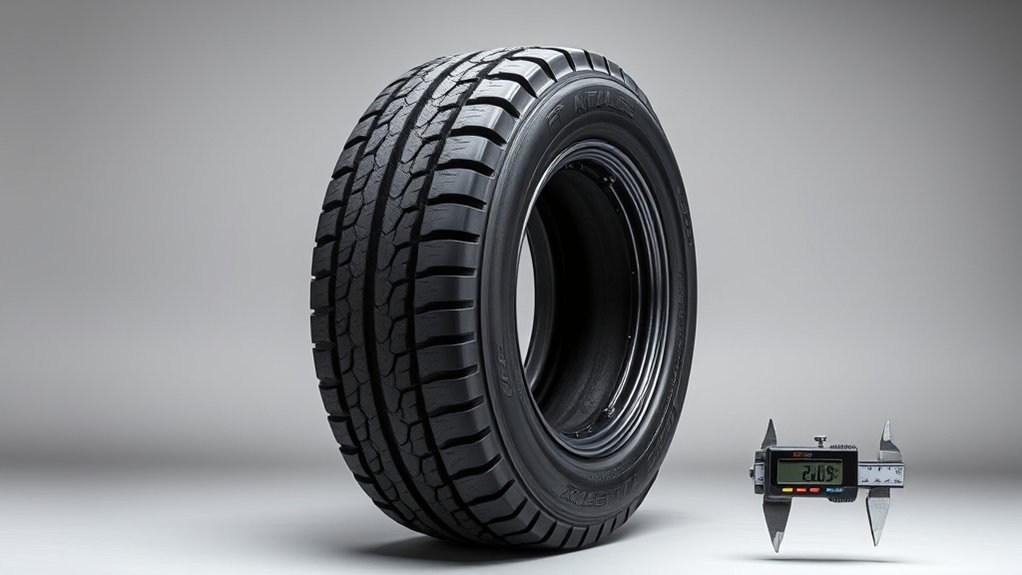
A 265/70R17 tire is approximately 31.6 inches tall, or 802.8 mm, when calculated from the standard metric tire-size formula. You get that number by doubling the sidewall height and adding the 17-inch wheel diameter.
Here is the math:
- Sidewall height: 265 mm × 0.70 = 185.5 mm
- Wheel diameter: 17 in × 25.4 = 431.8 mm
- Overall diameter: 185.5 mm + 431.8 mm + 185.5 mm = 802.8 mm
- Overall diameter in inches: 802.8 mm ÷ 25.4 = 31.6 in
Note: Published tire dimensions are nominal. Real mounted height can vary slightly by brand, tread depth, load, inflation pressure, measuring rim width, and whether the tire is P-metric, SL, XL, or LT.
How Wide Is a 265/70R17 Tire?
The 265/70R17 tire is about 10.43 inches wide, based on its 265 mm section width. Section width is the tire’s nominal sidewall-to-sidewall width, not the tread width. Tread width is usually narrower and varies by tire model and tread design.
| Measure | Metric | Imperial |
|---|---|---|
| Section width | 265 mm | 10.43 in |
| Sidewall height | 185.5 mm | 7.30 in |
| Overall diameter | 802.8 mm | 31.6 in |
| Circumference | about 2,522 mm | about 99.2 in |
| Revolutions per mile | about 396.5 rev/km | about 638 rev/mile |
What Rim Width Fits a 265/70R17 Tire?
A 265/70R17 tire fits a 17-inch wheel. The common approved rim-width range is usually 7 to 9 inches for many passenger/SUV versions, while many LT265/70R17 tires list 7 to 8.5 inches. Because rim approval can vary by tire line, always confirm the specific tire manufacturer’s spec sheet before mounting.
Warning: Do not choose a replacement tire by size alone. Match or exceed the load index and speed rating listed on your vehicle placard or owner’s manual, and use the vehicle manufacturer’s recommended cold tire pressure rather than the maximum pressure molded on the tire sidewall.
How Does 265/70R17 Affect Ride and Clearance?
With a 31.6-inch diameter, a 265/70R17 tire can increase ground clearance if it replaces a smaller tire. The actual gain is half the diameter difference, because only the radius raises the axle and body. For example, moving from a 30.6-inch tire to a 31.6-inch tire adds about 0.5 inch of ground clearance before real-world compression and tread-wear differences.
The taller 7.3-inch sidewall can also improve impact absorption compared with a lower-profile tire. That can help ride comfort on rough roads, gravel, and trails. The tradeoff is that a taller, heavier tire may slightly dull steering response, add rotational weight, reduce fuel economy, and change effective gearing.
Speedometer change matters too. If the new tire has a larger diameter than your original tire, your vehicle may travel faster than the indicated speed. The percent change is:
New tire diameter ÷ old tire diameter − 1 = speedometer difference
For example, changing from a 255/65R17 tire at about 30.1 inches tall to a 265/70R17 at about 31.6 inches tall is roughly a 5.2% increase. When the speedometer shows 60 mph, actual speed may be about 63 mph unless the vehicle is recalibrated.
Pro Tip: Before buying, turn the steering wheel fully left and right, check front and rear fender clearance, inspect upper control arm clearance, and confirm the spare tire location can hold the same overall diameter.
What Vehicles Fit 265/70R17 Tires?
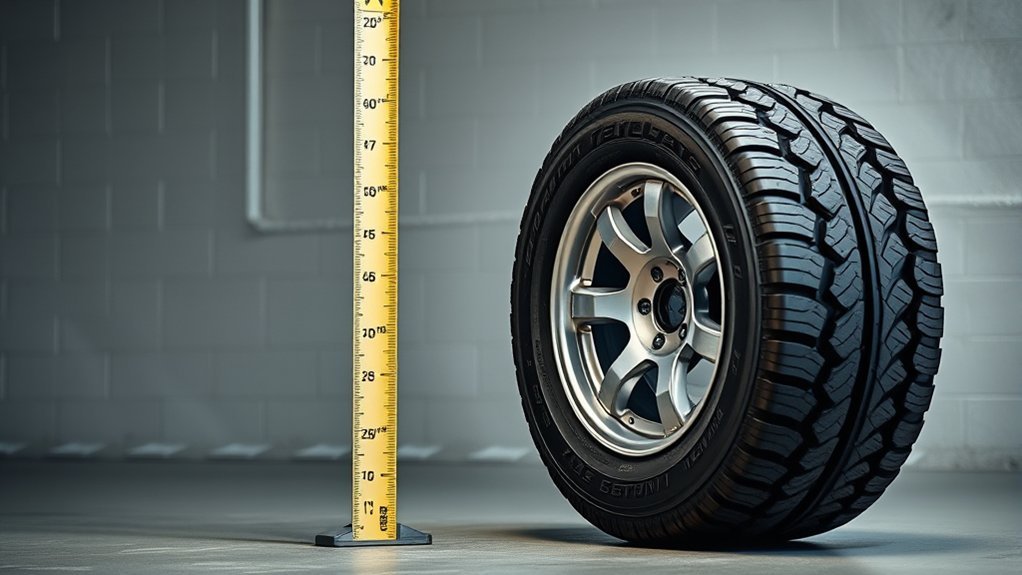
265/70R17 tires are common on trucks, body-on-frame SUVs, off-road builds, and light-duty haulers that use 17-inch wheels. You may see this size on certain trims or model years of vehicles such as the Chevrolet Silverado 1500, Ford F-150, Jeep Wrangler, Toyota 4Runner, Toyota Tacoma, GMC Sierra, Nissan Frontier, and similar truck/SUV platforms. Fitment is not universal, so treat vehicle examples as a starting point, not a guarantee.
Use this checklist before mounting 265/70R17 tires:
- Door placard: Check the original tire size, cold pressure, load rating, and speed rating.
- Owner’s manual: Confirm approved tire and wheel sizes for your trim.
- Wheel width: Verify that your 17-inch wheel falls inside the tire maker’s approved rim-width range.
- Wheel offset: Check inner clearance to control arms, sway bars, brake lines, and fender liners.
- Suspension height: Stock, leveled, and lifted vehicles can have different clearance limits.
- Rubbing: Test full steering lock, compression, reverse, and driveway angles.
- Spare tire: Make sure the spare location fits a tire close to the same diameter.
- Electronics: Large diameter changes may affect ABS, stability control, TPMS behavior, gearing, and speedometer accuracy.
[Products Worth Considering]

Protect your spare wheel with a waterproof, dustproof tire cover made to resist sun and harsh weather. The elastic band design makes it easy to install and remove without tools, while reinforced stitching helps it keep its shape. Available in multiple sizes, it fits common RV, trailer, Jeep, SUV, and truck spare tires.

This spare tire tool kit is designed for the 2004 to 2018 Ford F-150 to help you loosen and tighten wheel lug nuts and manage the spare tire and provided jack functions from underneath the vehicle. It includes the lug nut wrench and extension pieces plus a convenient storage carrying case for organized transport. The jack itself is not included.

Replace worn or malfunctioning GM TPMS sensors with this 433MHz pre-programmed sensor set designed for compatibility with many Chevrolet, Buick, GMC, and Cadillac models. It includes guidance for proper OBDII relearning/pairing after installation and supports reliable long-term operation with a high-performance CR2032 battery. Quality tested for durability and performance to help restore accurate tire pressure monitoring.
How Does 265/70R17 Compare to Other Sizes?
Comparing nearby tire sizes helps you see what changes when you adjust width or aspect ratio. The table below uses standard calculated dimensions, so actual tire-model specs can vary slightly.
| Tire Size | Approx. Diameter | Approx. Width | Difference vs 265/70R17 |
|---|---|---|---|
| 265/65R17 | 30.6 in | 10.4 in | About 1.0 in shorter |
| 255/70R17 | 31.1 in | 10.0 in | Slightly shorter and narrower |
| 265/70R17 | 31.6 in | 10.4 in | Baseline size |
| 285/70R17 | 32.7 in | 11.2 in | About 1.1 in taller and 0.8 in wider |
[Products Worth Considering]

Keep your tires properly inflated with this analog VONDIOR tire pressure gauge, designed for fast, easy readings without batteries. The swiveling, two-axis hose and large glow dial help you measure at any tire angle with instant visibility. Built with a protective rubber shield, it supports durable, low-maintenance use for cars and trucks.

This manual duck head tire changer kit makes tire installation and removal simpler by letting you embed the duck head into the tire with applied pressure. The integrated design and durable steel construction help reduce friction and improve efficiency and safety during use. Suitable for 16–21 inch wheels, it’s convenient for cars, trucks, SUVs, and ATV tires, with 24-hour after-sales support.

These aluminum alloy tire valve stem caps with an O-ring seal help protect valve stems from corrosion while adding a clean, stylish look to your vehicle. The universal fit works across cars, trucks, motorcycles, bicycles, and more, making them an easy upgrade for everyday driving and off-road use. Installation is quick, and the included four-pack keeps all your tires dressed and protected.
Which 265/70R17 Tires Are Best for You?
The best 265/70R17 tire depends on how you drive, how much weight you carry, and what weather you face. Start with the required load index and speed rating, then choose the tread type.
- Highway and daily driving: Choose a highway-terrain or touring all-season tire if quiet ride, wet braking, comfort, and tread life matter most. The Pirelli Scorpion All Season Plus 3 is one example of a touring all-season option sold in 265/70R17.
- Mixed road and trail use: Choose an all-terrain tire if you split time between pavement, gravel, dirt, snow, and light trails. The Falken Wildpeak A/T4W is one current all-terrain example with severe-snow rating and mileage warranty coverage listed by Falken.
- Mud and harsher trails: Choose a mud-terrain tire only if you need deeper voids and stronger trail bite. Expect more road noise, more weight, and usually shorter tread life on pavement.
- Towing or payload: Consider LT-rated versions only when your vehicle and use case call for the added load capability. LT tires can ride firmer and may require different inflation pressures.
[Products Worth Considering]

This digital tire pressure gauge with built-in inflator helps you accurately check and adjust tire pressure for safer driving and better fuel efficiency. It supports multiple units (PSI, KPA, BAR, KG/CM²) and reads within 1% for reliable results. The 3-in-1 design inflates, deflates, and measures, with a quick-connect air chuck and compatible hose setup for cars, trucks, SUVs, RVs, and motorcycles.

AZUNO’s digital tire inflator delivers stable, accurate pressure readings with a bright LCD and a 0.1 resolution display for confident inflation. It supports one-handed operation for inflating and quick deflating, and it’s built with rugged steel and brass components for reliable shop or garage use. With multi-unit pressure display and compatibility across cars, SUVs, motorcycles, and trucks, it’s a convenient accessory for everyday tire maintenance.

These M14x1.5 closed-end chrome lug nuts are a one-piece replacement designed for secure fitment on compatible GM, Ford, and select Chrysler/Dodge models. Featuring a 60-degree conical seat and anti-rust chrome plating, they help resist corrosion and maintain a bright look for everyday driving. Built for long-term durability, they include OEM-style part references and are backed by 12 months of support.
Frequently Asked Questions
How tall is a 265/70R17 tire in inches?
A 265/70R17 tire is about 31.6 inches tall. The calculated diameter is 802.8 mm, or 31.6 inches. Real mounted height can vary slightly by brand, tread depth, load, and inflation pressure.
How wide is a 265/70R17 tire?
A 265/70R17 tire has a nominal section width of 265 mm, or about 10.43 inches. That is sidewall-to-sidewall section width, not necessarily tread width.
How much taller is a 70 tire than a 65?
For the same 265 mm width, a 70-series sidewall is about 0.52 inch taller per side than a 65-series sidewall. That makes the full tire diameter about 1.04 inches taller. The exact difference changes if the width changes.
Is a 285/70R17 taller than a 265/70R17?
Yes. A 285/70R17 is about 32.7 inches tall, while a 265/70R17 is about 31.6 inches tall. The 285/70R17 is also wider, at about 11.2 inches instead of 10.4 inches, so rubbing and wheel-offset checks become more important.
Will 265/70R17 tires fit my truck or SUV?
They may fit if your vehicle uses 17-inch wheels with the correct rim width, load rating, speed rating, offset, and clearance. Check the door placard, owner’s manual, tire manufacturer’s rim-width range, and physical clearance before buying.
Do 265/70R17 tires affect speedometer accuracy?
They can. If 265/70R17 tires are taller than your original tires, the vehicle may travel faster than the speedometer shows. The larger the diameter difference, the larger the speedometer and gearing change.
Conclusion
A 265/70R17 tire gives you a practical truck and SUV size: about 31.6 inches tall, 10.4 inches wide, with a 7.3-inch sidewall and about 638 revolutions per mile. It can improve clearance when replacing a smaller tire, but the right fit depends on more than diameter. Check wheel width, offset, load index, speed rating, pressure, rubbing clearance, and speedometer change before making the switch.
Sources
- Michelin USA: How to Read Tire Markings and Sidewall Codes — backs up tire size code meanings, width, aspect ratio, radial construction, rim diameter, load rating, speed rating, and pressure-marking guidance.
- TireSize.com: 265/70R17 Tires — backs up nominal diameter, width, circumference, revolutions per mile, sidewall, and common rim-width ranges.
- U.S. Tire Manufacturers Association: Replacing Tires — backs up checking proper tire specifications, placard information, and owner’s manual guidance.
- Tire Industry Association: Tire Replacement — backs up load index, speed rating, tire placard, and professional consultation guidance for custom tire and wheel packages.
- Pirelli: Scorpion All Season Plus 3 265/70R17 — backs up the highway/touring all-season tire example.
- Falken: Wildpeak A/T4W — backs up the all-terrain tire example, severe-snow rating, and warranty positioning.