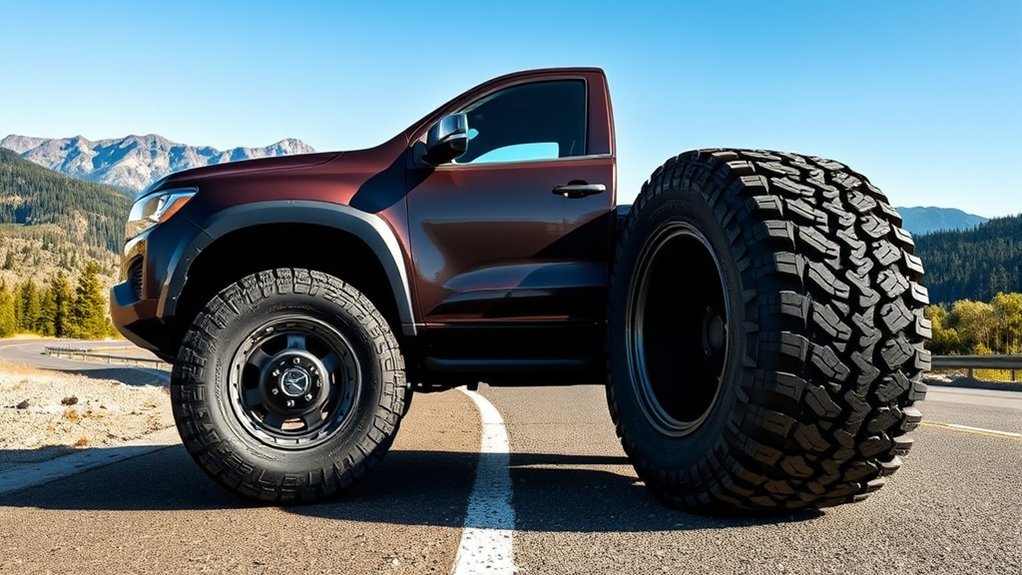
Choosing between highway tires and all-terrain tires comes down to where your truck or SUV spends most of its miles. Highway tires are usually the better daily-driving choice for pavement, commuting, towing on roads, and long trips. All-terrain tires make more sense when gravel, dirt roads, job sites, campsites, trails, or snowy rural roads are part of your normal routine.
Quick Answer
For daily driving, choose highway tires if you spend most of your time on paved roads and want a quieter ride, better fuel economy, and longer tread life. Choose all-terrain tires if you regularly drive on gravel, dirt, light mud, job sites, or rural winter roads and can accept more noise and fuel use.
Key Takeaways
- Highway tires are usually best for commuters, road trips, city driving, and mostly paved truck use.
- All-terrain tires add grip and durability on dirt, gravel, loose surfaces, campsites, and work sites.
- All-terrain tires often bring trade-offs: more tread noise, more rolling resistance, and a firmer ride.
- For winter driving, do not rely on the words “all-terrain” alone. Look for the 3PMSF symbol if you need tested severe-snow traction.
- Before buying, match the tire size, load rating, and speed rating to your vehicle placard or owner’s manual.
What You Need to Know About Highway Tires
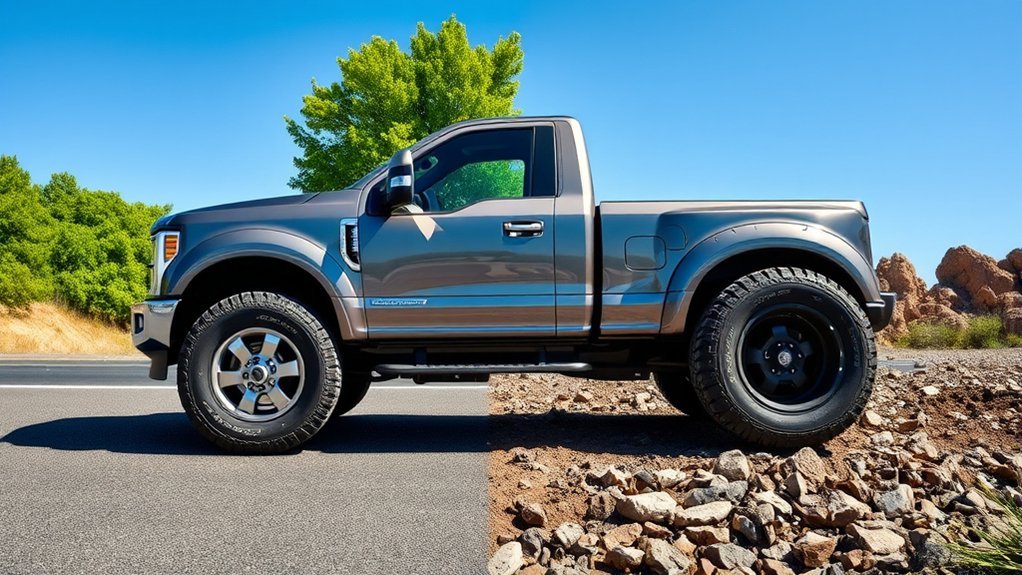
Highway tires, often labeled H/T or highway all-season tires, are built for paved roads. Their tread blocks are usually closer together and less aggressive than all-terrain tires, which helps reduce road noise and rolling resistance. For daily commuting, highway driving, errands, and long road trips, that smoother design can make the vehicle feel quieter and easier to live with.
Highway tires also tend to be the more practical option if you rarely leave pavement. Many models are designed for stable handling, wet-road braking, even wear, and comfort. The National Highway Traffic Safety Administration explains that tire design, including materials, construction, and tread design, can affect fuel efficiency, durability, wet and dry traction, ride comfort, and rolling resistance.
That does not mean every highway tire is better than every all-terrain tire. Compare the exact tire’s treadwear rating, wet traction grade, temperature grade, mileage warranty, owner reviews, and independent tests. A premium all-terrain tire may outperform a cheap highway tire in some conditions, but for mostly paved daily driving, highway tires usually make the most sense.
Pro Tip: If your truck spends 80% to 90% of its time on pavement, start your search with highway tires. You can still handle maintained dirt roads and gravel driveways without accepting the extra noise and fuel-use trade-offs of a more aggressive tire.
All-Terrain Tires: What to Know Before You Buy
All-terrain tires, often labeled A/T, are designed to balance paved-road use with off-road traction. They use more open tread patterns, stronger shoulder blocks, and deeper grooves to bite into loose surfaces like gravel, dirt, sand, and light mud. That design makes them popular for trucks, SUVs, overlanding builds, rural roads, hunting trips, camping, and job-site driving.
The trade-off is that all-terrain tires are not as pavement-focused as highway tires. Their tread can create more road noise, more rolling resistance, and a heavier steering feel. Depending on the model, they may also ride firmer, especially if you switch from a P-metric tire to a heavier LT tire with a higher load range.
[Products Worth Considering]

The Airmoto portable tire inflator quickly and accurately fills car, truck, SUV, motorcycle, and bicycle tires up to 120 PSI with auto shut-off when your target pressure is reached. Its large LCD, multi-unit pressure display, and digital gauge make it easy to dial in settings and verify readings, while the built-in LED flashlight helps in low light. The included polyurethane hard carrying case and storage mesh pocket keep the inflator and accessories protected and organized.
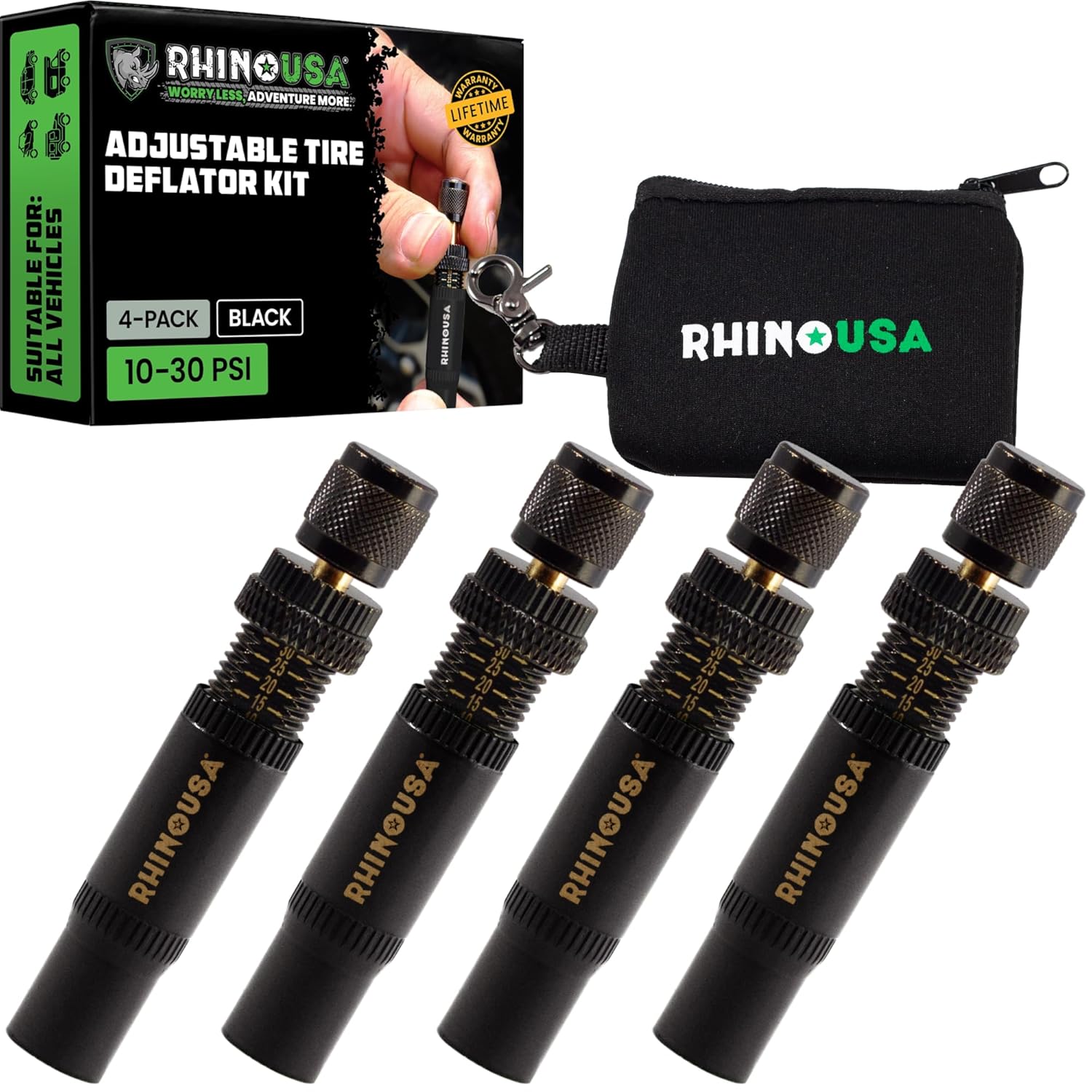
Use the Rhino USA adjustable tire deflators to air down all four tires at once by screwing one deflator onto each valve stem, letting you step away while the tires reach your preset pressure. Each deflator independently adjusts across a 10–30 PSI range with laser-etched indicators for quick setup and verification, making it ideal for beach, sand, and rocky off-road trails.

Check tire pressure with the Milton S-925 pencil gauge built for trucks, RVs, and bicycles. It features a single-head chuck with a built-in deflator valve, and it displays readings in both PSI and kPa for convenient use. The gauge is designed for accurate, repeatable pressure checks within its working range.
Key Features of All-Terrain Tires
- Deeper tread blocks: Help the tire grab loose dirt, gravel, and light mud.
- Open shoulder design: Helps clear debris from the tread instead of packing it in.
- Stronger sidewalls on many models: Useful around rocks, ruts, construction sites, and uneven trails.
- More aggressive appearance: Many truck owners prefer the rugged look.
- Possible 3PMSF rating: Some all-terrain tires meet severe-snow testing standards, but not all of them do.
A good all-terrain tire should still drive safely on pavement, but the category is broad. Some A/T tires are mild and quiet. Others are much closer to off-road tires and can be louder on the highway. Before buying, decide whether you need a mild all-terrain for mixed driving or a more aggressive all-terrain for regular trail and work-site use.
Performance on Varied Surfaces
All-terrain tires perform best when your week includes more than smooth asphalt. They are useful on gravel roads, rutted driveways, forest roads, boat ramps, construction lots, farms, and dry trails. On those surfaces, the extra void space and shoulder bite can give you more confidence than a highway tire.
On the other hand, pavement exposes the compromises. In a paved-road comparison between a highway all-season tire and an on-/off-road all-terrain tire, Tire Rack found the highway tire had superior on-road manners and quieter tread noise, while the all-terrain tire produced an audible growl and gave up some wet-pavement performance.
Cost Considerations and Value
All-terrain tires often cost more up front than comparable highway tires, but price alone should not decide the purchase. If an A/T tire prevents punctures, improves traction on your job site, or helps you reach campsites safely, the extra cost may be worth it. If you drive almost entirely on highways and city streets, the extra tread aggressiveness may only add noise, fuel use, and faster pavement wear.
Also compare warranties. Some highway tires offer long mileage warranties because they are optimized for road use. Some all-terrain tires also offer strong warranties, but aggressive tread, heavy loads, poor alignment, and underinflation can shorten any tire’s life.
Highway vs. All-Terrain: Which Is Right for You?
Use your real driving mix as the deciding factor. A tire that looks great in a parking lot may be annoying on a daily commute if it hums, rides stiffly, or reduces fuel economy. A quiet highway tire may be frustrating if your normal routes include washed-out gravel, muddy job sites, or rocky access roads.
| Driving Priority | Better Choice | Why |
| Daily commuting on paved roads | Highway tires | Quieter, smoother, and usually more efficient. |
| Long highway trips | Highway tires | Less tread noise and better comfort over many miles. |
| Gravel roads and dirt access roads | Mild all-terrain tires | Adds loose-surface grip without going too aggressive. |
| Job sites, farms, campsites, and trails | All-terrain tires | Better tread bite and more durability on rough surfaces. |
| Severe winter driving | 3PMSF-rated tire or winter tire | The symbol matters more than the tire category name. |
Warning: Do not buy tires only because they fit the wheel diameter. Match the tire size, load rating, and speed rating to your vehicle placard or owner’s manual. If you tow or haul, confirm the tire’s load capacity before switching tire types.
[Products Worth Considering]

Upgrade your 2024-2026 Tesla Model 3 Highland with REEVAA all-weather mud flaps designed for seamless fit along the original body lines. The set of four delivers strong splash protection against mud, gravel, and road debris while using OEM-grade durable materials. Installation is non-destructive with original hole positions and snap-in clips, and the aerodynamic design helps minimize impact on efficiency.

Upgrade your ride with a 2-pack set of 26x1.95 folding mountain bike tires built for dependable traction on mud, rocks, and trail surfaces. A reinforced puncture-resistant layer helps protect against sharp debris, while included butyl inner tubes provide strong sealing and shock absorption. Ready for fast swaps with included tire levers and universal sizing for most bikes.

Keep your tires properly inflated with this analog VONDIOR tire pressure gauge, designed for fast, easy readings without batteries. The swiveling, two-axis hose and large glow dial help you measure at any tire angle with instant visibility. Built with a protective rubber shield, it supports durable, low-maintenance use for cars and trucks.
How Terrain Affects Tire Performance
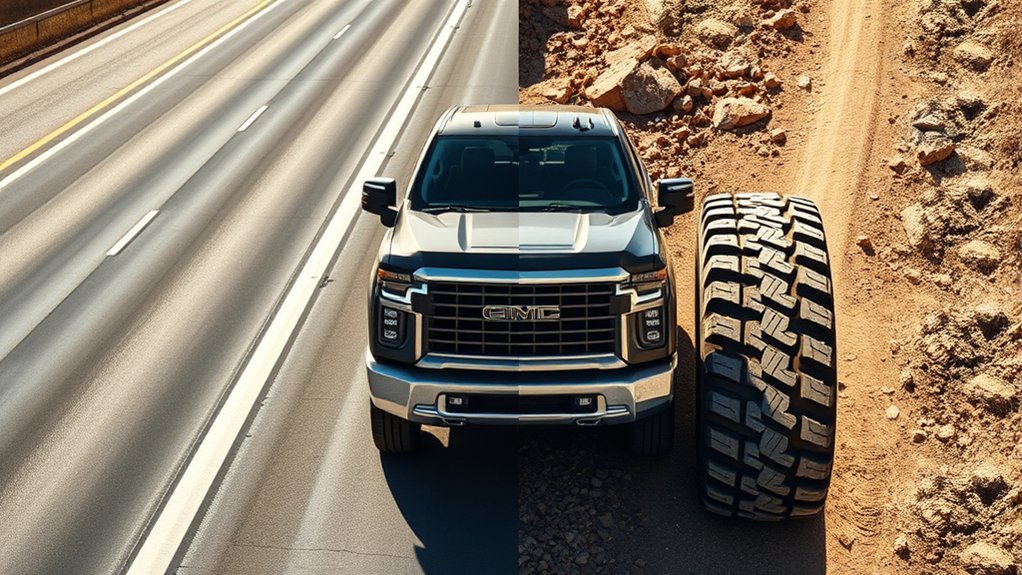
Terrain changes what your tire needs to do. On smooth pavement, a tire needs stable contact, low noise, wet braking, heat resistance, and predictable handling. On gravel or dirt, it needs open tread blocks that can dig in and release loose material. On rocks, ruts, and job sites, sidewall strength and puncture resistance become more important.
Terrain Impact on Traction
- Pavement: Highway tires usually feel smoother and quieter because their tread pattern is less aggressive.
- Wet roads: Compare the tire’s wet traction performance and independent test results. Tread design and compound matter more than category name.
- Gravel and dirt: All-terrain tires generally offer better bite and stability on loose surfaces.
- Light mud: All-terrain tires can help, but deep mud usually requires a more aggressive mud-terrain tire.
- Rocks and ruts: Look for stronger sidewalls and appropriate load range if rough terrain is normal for you.
Off-Road Performance Considerations
If you regularly leave pavement, all-terrain tires give you a wider margin of traction and durability. Their tread blocks can grab loose ground better than a highway tire, and many models use reinforced construction for rough surfaces. That makes them a smart upgrade for outdoor activities, rural driving, hunting, towing through unpaved lots, and light trail use.
Still, all-terrain does not mean unstoppable. Tire pressure, vehicle weight, ground clearance, four-wheel drive, driver skill, and the type of mud or rock all matter. If you only drive across a maintained dirt road a few times per year, a highway tire may be enough. If you regularly air down, crawl over rocks, or drive deep mud, a more specialized tire may be needed.
Comparing Tread Life: Highway vs. All-Terrain Tires
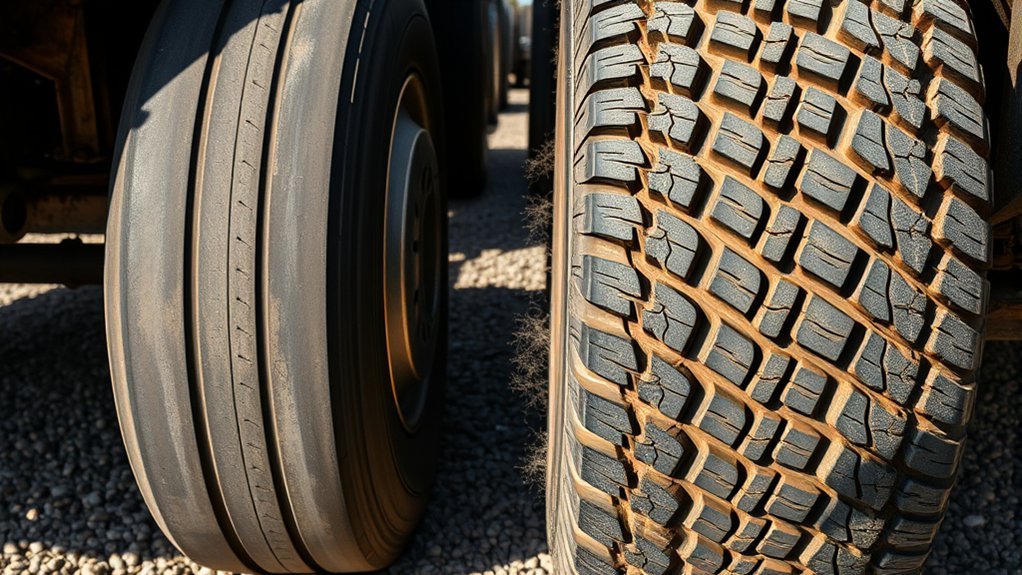
Highway tires often last longer on paved roads because their tread is designed for smooth, even contact. All-terrain tires may wear faster on pavement when the tread blocks are tall, widely spaced, or made for chip resistance. But tread life is not guaranteed by category alone.
Use these checks before choosing:
- Treadwear grade: The NHTSA tire rating system lets shoppers compare treadwear, traction, and temperature resistance on many passenger tires.
- Mileage warranty: A longer warranty can signal the manufacturer’s expected use case, but read exclusions carefully.
- Rotation schedule: Rotating tires helps reduce irregular wear. NHTSA says some manufacturers recommend rotation every 5,000 to 8,000 miles, or sooner if uneven wear appears.
- Alignment and balance: Poor alignment can destroy any tire quickly, highway or all-terrain.
- Inflation pressure: Underinflation increases heat, wear, and rolling resistance.
Replace tires when tread is worn to 2/32 inch, when treadwear indicators are flush, or when you see cracks, bulges, cuts, vibration, or other damage. For wet roads, many drivers prefer replacing before the legal minimum because shallow tread increases hydroplaning risk.
Fuel Efficiency: Comparing Highway and All-Terrain Tires
Fuel economy is one of the biggest daily-driving differences between highway and all-terrain tires. Highway tires are usually designed with lower rolling resistance, while all-terrain tires often use deeper tread, heavier construction, and more open blocks. Those features help off-road, but they can require more energy to roll on pavement.
Continental defines rolling resistance as the energy a tire uses over distance and notes that tire design, tread, sidewall, inflation pressure, vehicle load, road conditions, and weather all affect it. NHTSA also notes that a 10% reduction in tire rolling resistance is estimated to improve vehicle fuel economy by 1% to 2%.
The more pavement miles you drive, the more fuel economy, tread noise, and ride comfort should influence your tire choice.
If you drive an electric truck or SUV, rolling resistance can also affect range. A heavier or more aggressive all-terrain tire may reduce range more noticeably than it would affect a gas vehicle’s MPG readout.
Tire Noise Levels: Comfort vs. Performance
Tire noise matters most when you drive at highway speeds for long periods. Highway tires are typically quieter because their tread blocks are arranged to reduce pattern noise. All-terrain tires, especially aggressive ones, can create a hum or growl that becomes tiring on long drives.
Noise varies by tire model. A mild all-terrain tire may be quiet enough for daily use, while a more aggressive A/T tire can sound loud on coarse pavement. If comfort is a priority, read owner feedback after 10,000 miles, not only first-drive impressions. Some tires get louder as they wear.
Tire Performance in Rain and Snow
Rain and snow are where shoppers need to look beyond the words “highway” and “all-terrain.” Tread design, compound, siping, water evacuation, UTQG traction grade, and severe-snow markings all matter.
Rain Performance
On wet pavement, highway tires often have an advantage because they are tuned for road contact and water evacuation. Tire Rack’s test found the highway all-season tire stopped shorter and handled better on wet pavement than the tested all-terrain tire. That does not mean every highway tire beats every A/T tire in rain, but it does show why independent wet-braking tests are worth checking.
Snow, M+S, and 3PMSF
The M+S marking means the tread design meets a mud-and-snow definition based on features such as pockets, slots, and void area. It does not mean the tire has passed a severe-snow traction test. The U.S. Tire Manufacturers Association M+S definition is mainly about tread geometry.
The Three-Peak Mountain Snowflake symbol, often written as 3PMSF, is stronger evidence for winter use. Under the USTMA severe-snow definition, tires that meet the required snow grip index can carry the mountain/snowflake pictograph. Some all-terrain tires have it; many do not.
Note: If you drive in frequent ice, deep snow, or mountain winter conditions, a dedicated winter tire may still be safer than an all-terrain tire, even if the A/T tire is marked M+S. For mixed winter roads, look for 3PMSF and compare real winter test results.
Cost Comparison of Highway and All-Terrain Tires
The cheapest tire is not always the lowest-cost tire. A tire that wears quickly, hurts fuel economy, rides poorly, or does not match your driving conditions can cost more over time.
[Products Worth Considering]

Accurately measure tire tread depth with a calibrated gauge marked from 0 to 1 inch in 1/32 inch increments. The color-coded bar helps you quickly identify tread condition ranges, supporting safe driving for trucks, motorcycles, automobiles, and passenger vehicles.

This ALL-TOP auto-stop tire deflator valve kit lets you air down off-road tires quickly without watching pressure, automatically stopping when your preset PSI is reached. Each valve is individually calibrated for reliable performance with an acceptable +/- 2 PSI tolerance. The adjustable deflator range covers 10 to 30 PSI and includes four valves plus valve caps and a zipper pouch for easy setup on trucks, SUVs, RVs, UTVs, and powersports.

The Dr.Roc spare tire tool kit helps you release, lower, or raise your spare tire with reliable extension tools and a lug nut wrench. It is made from rustproof automotive-grade steel and includes an organized carry case for convenient storage. Designed for compatibility with select GM models from the late 1990s through 2019, it uses upgraded extension components to install and remove spare tires with less hassle.
Initial Investment Differences
Highway tires are often less expensive than comparable all-terrain tires because they do not need the same level of off-road tread depth, sidewall protection, or rugged construction. All-terrain tires may cost more, especially in LT sizes or higher load ranges.
Long-Term Cost Analysis
For mostly paved use, highway tires usually win on long-term value because they can offer better fuel economy, lower noise, and more even wear. For mixed terrain, all-terrain tires may be a better value because they reduce the chance of getting stuck or damaging a road-focused tire on rough surfaces.
Think about total cost in five areas:
- Purchase price
- Expected tread life
- Fuel economy or EV range impact
- Repair or replacement risk from punctures
- Whether you need separate winter tires
Maintenance Expenses Overview
Maintenance can matter as much as tire category. Check pressure monthly when tires are cold, rotate on schedule, inspect for uneven wear, and fix alignment problems early. NHTSA says proper tire pressure affects safety, durability, and fuel consumption, and tread should be checked at least monthly.
Who Should Choose All-Terrain Tires?
Choose all-terrain tires if your truck or SUV regularly sees unpaved use. They are a strong fit for drivers who travel on gravel roads, dirt roads, ranch roads, job sites, campsites, boat ramps, snowy rural roads, or mild trails. They are also useful if you need more sidewall toughness than a standard highway tire offers.
All-terrain tires are probably worth it if:
- You drive on gravel or dirt every week.
- You visit campsites, trailheads, farms, hunting land, or job sites.
- You need extra puncture resistance for rough access roads.
- You want a tire that can handle both weekday driving and weekend exploring.
- You are willing to accept more road noise and possible fuel-economy loss.
Stick with highway tires if your off-pavement use is rare, your commute is long, or your priorities are quiet comfort, fuel efficiency, and long tread life.
How to Decide Before You Buy
Use this simple rule:
- 90% pavement / 10% dirt: Choose highway tires unless the dirt roads are rough or frequent.
- 70% pavement / 30% gravel or dirt: Choose a mild all-terrain tire.
- 50% pavement / 50% rough terrain: Choose a stronger all-terrain tire and expect more noise.
- Heavy mud, rocks, or trails: Consider mud-terrain or specialty off-road tires instead of a mild A/T.
Before finalizing your choice, check these items:
- Size: Match the vehicle placard or owner’s manual unless a tire professional confirms another size is safe.
- Load rating: Important for towing, hauling, work trucks, and heavy SUVs.
- Speed rating: Do not downgrade below what your vehicle requires.
- LT vs P-metric: LT tires can carry heavier loads but may ride firmer and weigh more.
- 3PMSF: Look for it if winter traction is part of the reason you are buying.
- Spare tire: If changing tire diameter, make sure your spare and drivetrain setup remain compatible.
- Clearance: Larger or wider tires can rub suspension, fenders, or mud flaps.
Frequently Asked Questions
Are all-terrain tires good for freeway driving?
Yes, many all-terrain tires are safe and stable on the freeway, but they are usually louder and less efficient than highway tires. If most of your driving is freeway commuting, a highway tire or mild all-terrain tire is usually a better choice than an aggressive A/T tire.
Do all-terrain tires wear faster than highway tires?
They can wear faster on pavement, especially if the tread is deep and aggressive. However, tread life depends on the exact tire, alignment, rotation, inflation, vehicle weight, driving style, and load. Always compare the mileage warranty and treadwear rating.
Are highway tires bad on gravel roads?
Highway tires can handle maintained gravel roads at sensible speeds, but they are not ideal for sharp rocks, deep ruts, mud, or repeated rough-road use. If gravel is part of your weekly driving, a mild all-terrain tire is usually a better fit.
Is M+S the same as 3PMSF?
No. M+S is a mud-and-snow tread-design marking. 3PMSF means the tire meets a severe-snow traction standard. If winter performance is important, look for the three-peak mountain snowflake symbol and compare winter test results.
Should I get LT all-terrain tires for towing?
Maybe. LT tires can offer higher load capacity and stronger construction, but they may ride firmer and weigh more. Use the load rating required for your vehicle, trailer tongue weight, and payload. When in doubt, follow the vehicle placard and ask a qualified tire professional.
Conclusion
For most daily drivers, highway tires are the better choice because they are quieter, smoother, more efficient, and designed for paved-road comfort. All-terrain tires are better when your normal driving includes gravel, dirt, job sites, campsites, light trails, or rural winter roads. The best tire is not the most aggressive one; it is the one that matches your real driving mix, vehicle requirements, and weather conditions.
If you are still torn, be honest about your mileage. Mostly pavement points to highway tires. Regular rough roads point to all-terrain tires. Frequent snow should push you to check for 3PMSF or consider dedicated winter tires.
Sources
- NHTSA TireWise — tire ratings, tire size, tread depth, pressure, maintenance, and fuel-efficiency guidance.
- USTMA TISB Vol. 37: Severe Snow Conditions — 3PMSF severe-snow tire definition.
- USTMA TISB Vol. 10: Snow Tire Definition — M+S tread-design definition.
- Tire Rack Highway All-Season vs. All-Terrain Test — paved-road noise, ride, and wet-performance comparison.
- Continental: Why Rolling Resistance Matters — rolling resistance and fuel-consumption explanation.