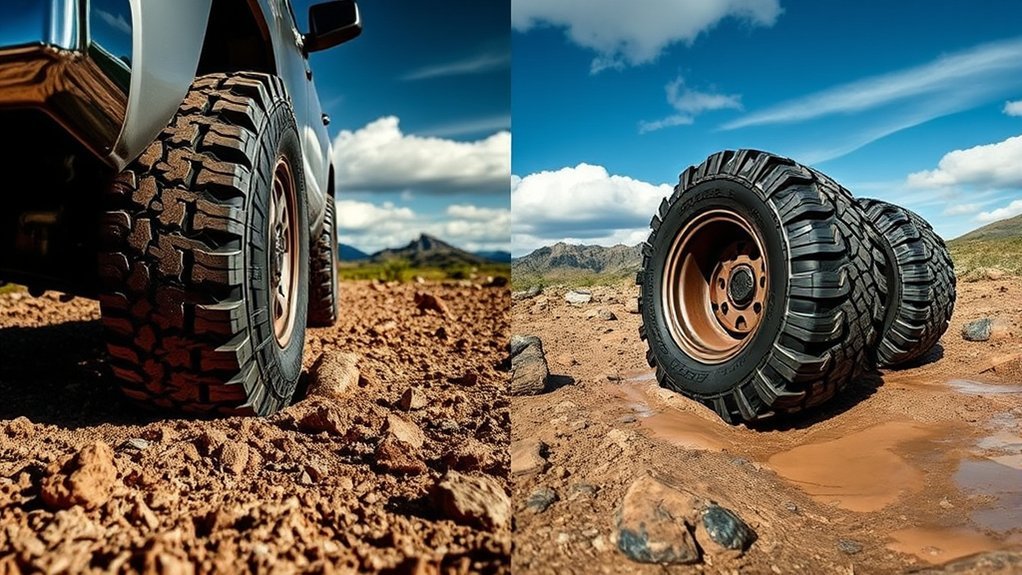
Choosing between rugged-terrain tires and all-terrain tires for a Toyota Tundra comes down to how you actually use the truck. A daily-driven Tundra that sees highways, rain, towing, and weekend trails usually needs a different tire than a Tundra built for rocks, ruts, mud, sand, and remote job sites.
Quick Answer
Choose all-terrain tires if your Tundra spends most of its time on pavement with occasional dirt, gravel, snow, or camping trails. Choose rugged-terrain tires if you regularly drive rough trails, mud, rocks, sand, or job sites and can accept more road noise, weight, and possible fuel-economy loss.
Key Takeaways
- All-terrain tires are usually the better match for mixed Tundra use: commuting, towing, highway trips, gravel roads, and light-to-moderate trails.
- Rugged-terrain tires sit between all-terrain and mud-terrain tires, giving stronger off-road bite than most A/T tires while staying more livable than full mud tires.
- For snow, do not shop by tire category alone. Look for the Three-Peak Mountain Snowflake (3PMSF) symbol and check the tire’s actual winter rating.
- Before buying, match the tire size, load index, load range, speed rating, rim width, and inflation guidance to your Tundra’s door placard, owner’s manual, and real-world payload needs.
Basics of Rugged vs. All-Terrain Tires
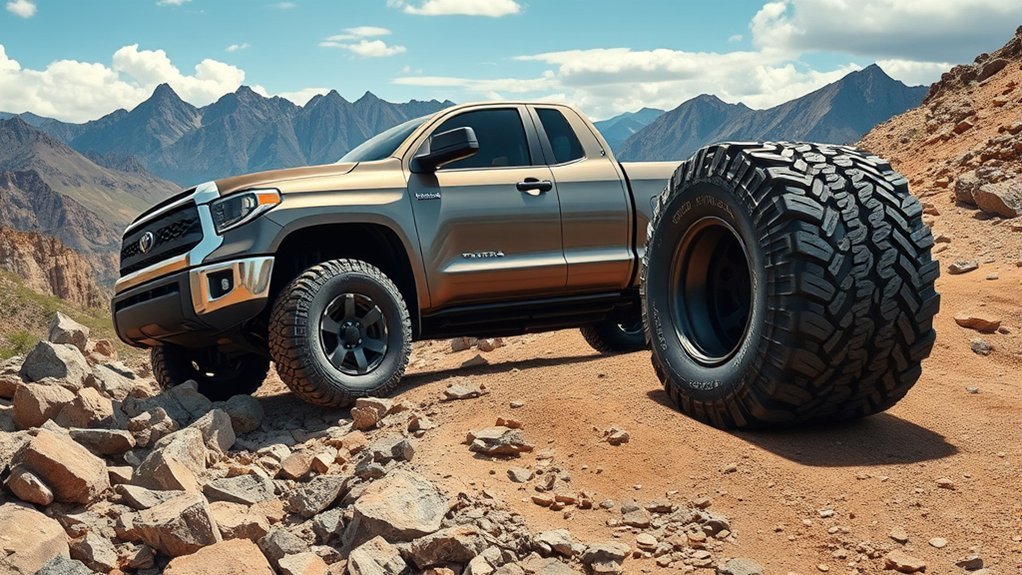
All-terrain tires are designed to balance on-road comfort with off-road traction. They usually have smaller, more closely spaced tread blocks than rugged-terrain tires, plus siping and tread patterns intended to work on pavement, gravel, dirt, rain, and light snow. Tire Rack describes all-terrain tires as tires that try to balance dirt, gravel, and mud capability with moderate highway noise and, in some cases, long tread life. Tire Rack’s all-terrain tire guide is a useful reference for understanding the category.
Rugged-terrain tires, often labeled R/T or rugged all-terrain, are more aggressive. They typically use larger tread blocks, wider voids, stronger shoulders, and tougher sidewall designs. They are best understood as a middle ground between all-terrain tires and mud-terrain tires. Tire Rack describes rugged all-terrain tires as a hybrid option between mud-terrain and all-terrain tires for drivers who want stronger off-road capability while keeping some pavement comfort. Tire Rack’s rugged-terrain tire overview explains this category well.
For a Toyota Tundra, the right choice depends on your driving mix. A Tundra used for commuting, towing a trailer, family trips, and dirt roads usually benefits from a quality all-terrain tire. A Tundra used for overlanding, ranch roads, rocky trails, construction sites, mud, or sand may justify the extra bite of a rugged-terrain tire.
Rugged-Terrain vs. All-Terrain Tires at a Glance
| Category | All-Terrain Tires | Rugged-Terrain Tires |
| Best for | Daily driving, towing, highway trips, gravel roads, camping trails, light mud, and mixed weather. | Rocks, ruts, mud, sand, job sites, overlanding, and rougher off-road use. |
| Road noise | Usually quieter, depending on tread design and wear. | Often louder than A/T tires, especially as tread wears. |
| Ride comfort | Usually smoother for commuting and long highway drives. | Usually firmer, especially in LT sizes and heavier load ranges. |
| Off-road traction | Good for dirt, gravel, mild trails, and general adventure use. | Better bite in loose, rocky, muddy, or deeply rutted terrain. |
| Snow choice | Choose a 3PMSF-rated model for serious winter use. | Can work well in deep snow if properly rated, but aggressive tread alone does not guarantee ice traction. |
| Main trade-off | Less grip than R/T tires in harsher off-road conditions. | More noise, weight, rolling resistance, and possible treadwear trade-offs on pavement. |
Key Differences in All-Terrain vs. Rugged-Terrain Tread Design
The biggest difference is tread aggression. All-terrain tires usually have a more balanced tread pattern with smaller blocks, more siping, and a tighter pattern that helps road stability. Rugged-terrain tires usually use larger blocks, wider voids, and stronger shoulder lugs to dig into loose or uneven surfaces.
- Tread block size: All-terrain tires use a more moderate block layout. Rugged-terrain tires use chunkier tread blocks for stronger off-road bite.
- Void space: Rugged-terrain tires usually have wider spaces between blocks, helping them clear mud, gravel, and loose soil better than many A/T designs.
- Shoulder design: Rugged-terrain tires often have more aggressive shoulder lugs, which help when the tire is leaned into ruts or aired down off-road.
- Siping: Many all-terrain tires use more siping for wet pavement and snow. Rugged-terrain tires may have less fine siping, so winter and wet-road performance must be checked by model.
- Sidewall protection: Rugged-terrain tires often use tougher sidewall styling and protection, which can help on rocks and job sites but may add weight.
Note: “Rugged-terrain” is a retail tire category, not a guarantee that every R/T tire will outperform every A/T tire. Always compare the exact tire model, size, load range, warranty, snow rating, and test results.
Evaluating Off-Roading Capabilities
If your Tundra sees serious off-road use, rugged-terrain tires have a clear advantage in many loose and uneven conditions. Their wider voids and more aggressive shoulders help the tire claw through mud, loose dirt, sand, and rocky terrain. This makes them a strong choice for overlanding, hunting roads, ranch use, construction sites, and trail driving where puncture resistance and grip matter more than quiet highway manners.
All-terrain tires are still very capable for many Tundra owners. A quality A/T tire can handle forest roads, gravel, beach access roads, mild trails, snow-covered streets, and weekend camping trips while staying more comfortable during the workweek. If your “off-road” driving is mostly gravel, packed dirt, and occasional mud holes, an all-terrain tire is usually the smarter everyday choice.
Rugged-terrain tires make the most sense when you need more traction than a standard all-terrain tire but do not want the harsh road noise and faster pavement compromise of a full mud-terrain tire.
How Do All-Terrain Tires Perform on the Road?
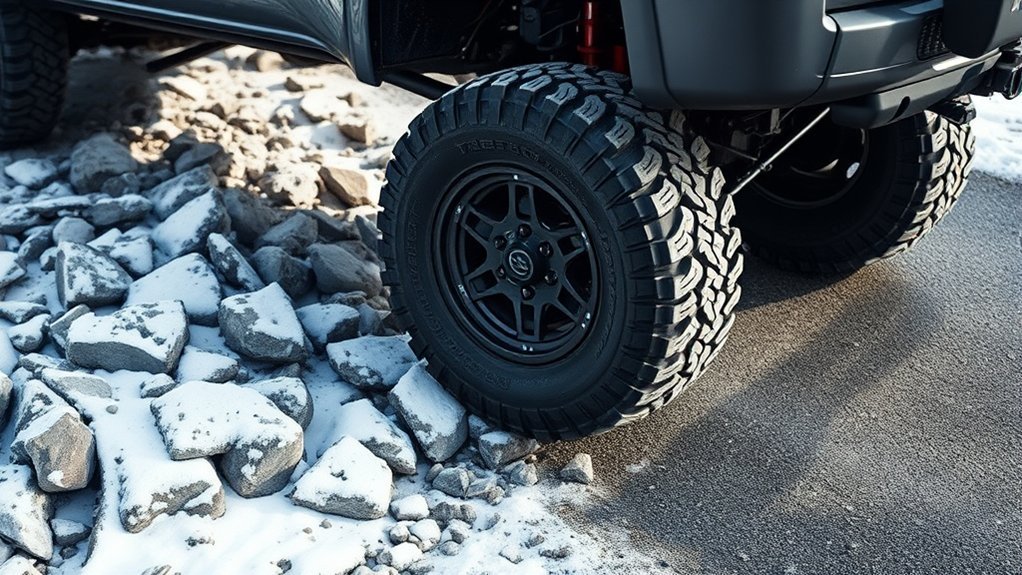
On pavement, all-terrain tires are usually easier to live with than rugged-terrain tires. They tend to be quieter, smoother, lighter, and more predictable in normal commuting. That matters on a Toyota Tundra because the truck is heavy, often used for towing, and may spend a lot of time on highways.
On-Road Comfort Levels
All-terrain tires generally provide better daily comfort because their tread blocks are usually less aggressive than R/T tires. They also tend to have tread patterns designed to reduce vibration and highway hum. Yokohama, for example, describes the GEOLANDAR A/T G015’s multi-pitch tread variation as a feature that reduces road noise for a quieter ride. Yokohama’s GEOLANDAR A/T G015 page also lists treadwear warranty details by tire type.
Rugged-terrain tires can still be comfortable, especially newer premium models, but they are usually firmer and louder than mild all-terrain tires. If your Tundra is a daily driver or family road-trip truck, road comfort should be a top factor.
Noise Levels Compared
All-terrain tires usually produce less highway noise because the tread blocks are smaller and more evenly arranged. Rugged-terrain tires often create more hum because the tread blocks are larger and the voids are wider. That noise can increase as the tire wears, especially if the tires are not rotated regularly.
NHTSA’s TireWise guidance highlights tire pressure checks, rotation, and tread inspection as part of basic tire care. NHTSA TireWise is a good safety resource for maintenance basics.
Tread Wear Considerations
Do not assume every all-terrain tire lasts longer than every rugged-terrain tire, or the other way around. Tread life depends on compound, alignment, rotation schedule, tire pressure, driving style, towing load, and whether the tire is P-metric, LT-metric, or flotation-size.
For example, Falken lists the Wildpeak A/T4W with up to a 65,000-mile limited tread life warranty for non-LT sizes and 60,000 miles for LT sizes. Firestone lists the Destination A/T2 with a 55,000-mile limited mileage warranty. Yokohama lists the GEOLANDAR A/T G015 with up to 60,000 miles for P-metric and Euro-metric sizes, or 50,000 miles for LT-metric and high-flotation sizes. Those examples show why checking the exact tire and size matters before buying.
Weather Impact on Tire Performance
Weather performance is not just about whether the tire says A/T or R/T on the sidewall. The compound, siping, tread depth, water evacuation, temperature range, and winter certification all matter. A mild all-terrain tire with strong wet-road engineering may be safer in rain than a very aggressive rugged tire. A 3PMSF-rated all-terrain tire may be better in winter than a rugged tire without severe-snow certification.
Snow and Ice Performance
For snow, look for the Three-Peak Mountain Snowflake (3PMSF) symbol. USTMA’s severe-snow tire definition is based on tires meeting snow-traction performance requirements, not just having an aggressive tread pattern. USTMA’s TISB 37 severe-snow resource explains the standard.
Rugged-terrain tires can work well in deep snow because the open tread can dig and clear loose snow. However, ice is different. Ice traction depends heavily on rubber compound, siping, and temperature behavior. If you regularly drive on ice, hard-packed snow, or mountain passes, a 3PMSF-rated tire is the minimum filter to consider, and a dedicated winter tire may still be better.
Warning: Do not assume a chunky tread equals safe winter performance. For snow and ice, verify the 3PMSF symbol, current manufacturer specs, and tire size availability for your Tundra.
Wet Weather Handling
Wet-road performance is where aggressive tires can become a trade-off. Wider voids help clear mud and loose material, but pavement wet braking and hydroplaning resistance depend on tread pattern, siping, compound, tread depth, and inflation pressure. Many all-terrain tires are designed to be more predictable on wet pavement than very aggressive R/T tires.
If your Tundra is a highway commuter in a rainy climate, do not choose only by off-road appearance. Look for current wet-traction test results, owner feedback from similar trucks, and a tread pattern with enough siping and water channels for paved-road use.
Dry Road Stability
On dry pavement, all-terrain tires usually feel more stable and refined because they have less tread squirm. Rugged-terrain tires can feel heavier or less precise, especially at highway speeds or with larger upsized tires. This can affect steering feel, braking distance, and ride comfort.
Dry-road performance also depends on inflation pressure and alignment. Underinflated tires can overheat, wear unevenly, and reduce handling. Overinflated tires can reduce ride comfort and may cause uneven center wear. Use the tire pressure listed for your specific Tundra setup, not a guess from another truck online.
Cost and Longevity Considerations for Tundra Tires
Rugged-terrain tires often cost more than standard all-terrain tires because they use more aggressive tread designs, stronger construction, heavier casings, and larger sizes. They may also reduce fuel economy because heavier, more aggressive tires increase rolling resistance. Installation costs can rise too if you need new wheels, recalibrated TPMS sensors, trimming for clearance, or an alignment.
All-terrain tires are often more cost-effective for Tundra owners who drive mostly on pavement. They can provide a better balance of purchase price, comfort, mileage warranty, fuel economy, and year-round usability. Firestone’s Destination A/T2, for example, is listed with a 55,000-mile limited mileage warranty, while Falken’s Wildpeak A/T4W lists up to 65,000 miles for non-LT sizes and 60,000 miles for LT sizes. Actual service life still depends on rotation, alignment, inflation, load, and driving conditions.
The cheapest tire is not always the lowest-cost tire. For a Tundra, the better value is the tire that matches your load, terrain, weather, and mileage needs without creating daily-driving problems.
Choosing the Right Tire for Your Needs
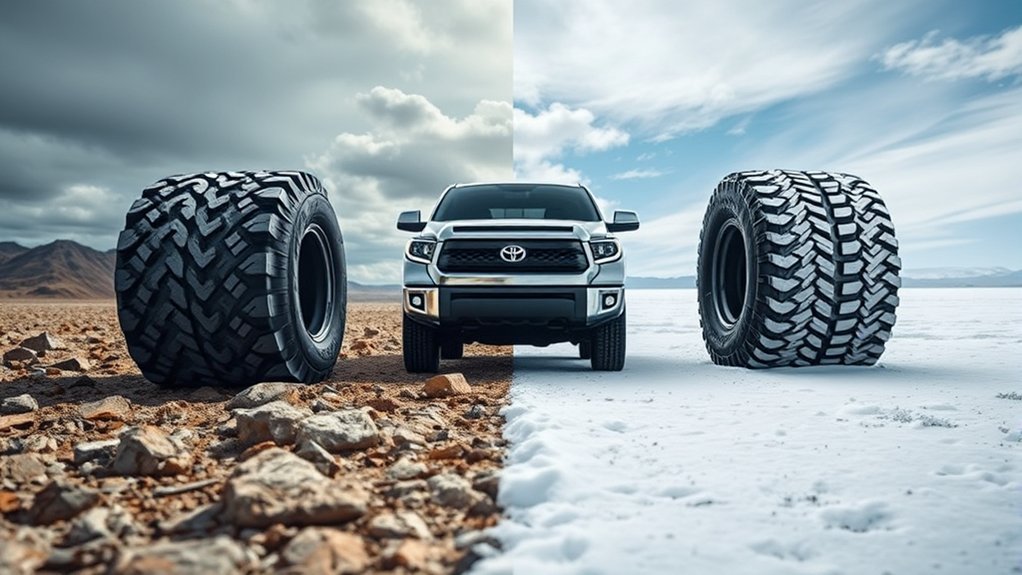
Start with your real driving pattern. If your Tundra is on pavement 80% of the time or more, choose a high-quality all-terrain tire unless you have a specific off-road reason to go more aggressive. If your Tundra regularly sees rutted trails, mud, rocks, sand, remote work sites, or overlanding routes, a rugged-terrain tire may be worth the trade-off.
- Daily driving: Choose all-terrain for a quieter ride, better comfort, and easier highway manners.
- Weekend trails: Choose all-terrain for light-to-moderate trails; choose rugged-terrain if trails are rocky, muddy, or deeply rutted.
- Towing and hauling: Check load index and load range carefully. Do not buy a tire that is under-rated for your truck and trailer use.
- Snow and mountain driving: Prioritize 3PMSF-rated tires and real winter performance over aggressive looks.
- Overlanding: Consider rugged-terrain tires if you need tougher sidewalls, better loose-surface grip, and more puncture resistance.
- Fuel economy: Choose a lighter, less aggressive all-terrain if MPG and ride comfort matter.
[Products Worth Considering]

Accurately measure tire tread depth with a calibrated gauge marked from 0 to 1 inch in 1/32 inch increments. The color-coded bar helps you quickly identify tread condition ranges, supporting safe driving for trucks, motorcycles, automobiles, and passenger vehicles.

These universal tire valve stem caps help protect valve cores from dust, debris, and moisture while helping maintain stable tire pressure. The corrosion-resistant metal construction and sealed design provide reliable protection in road grime, mud, and winter conditions. Twist-on installation makes them quick to fit on cars, SUVs, trucks, and motorcycles.
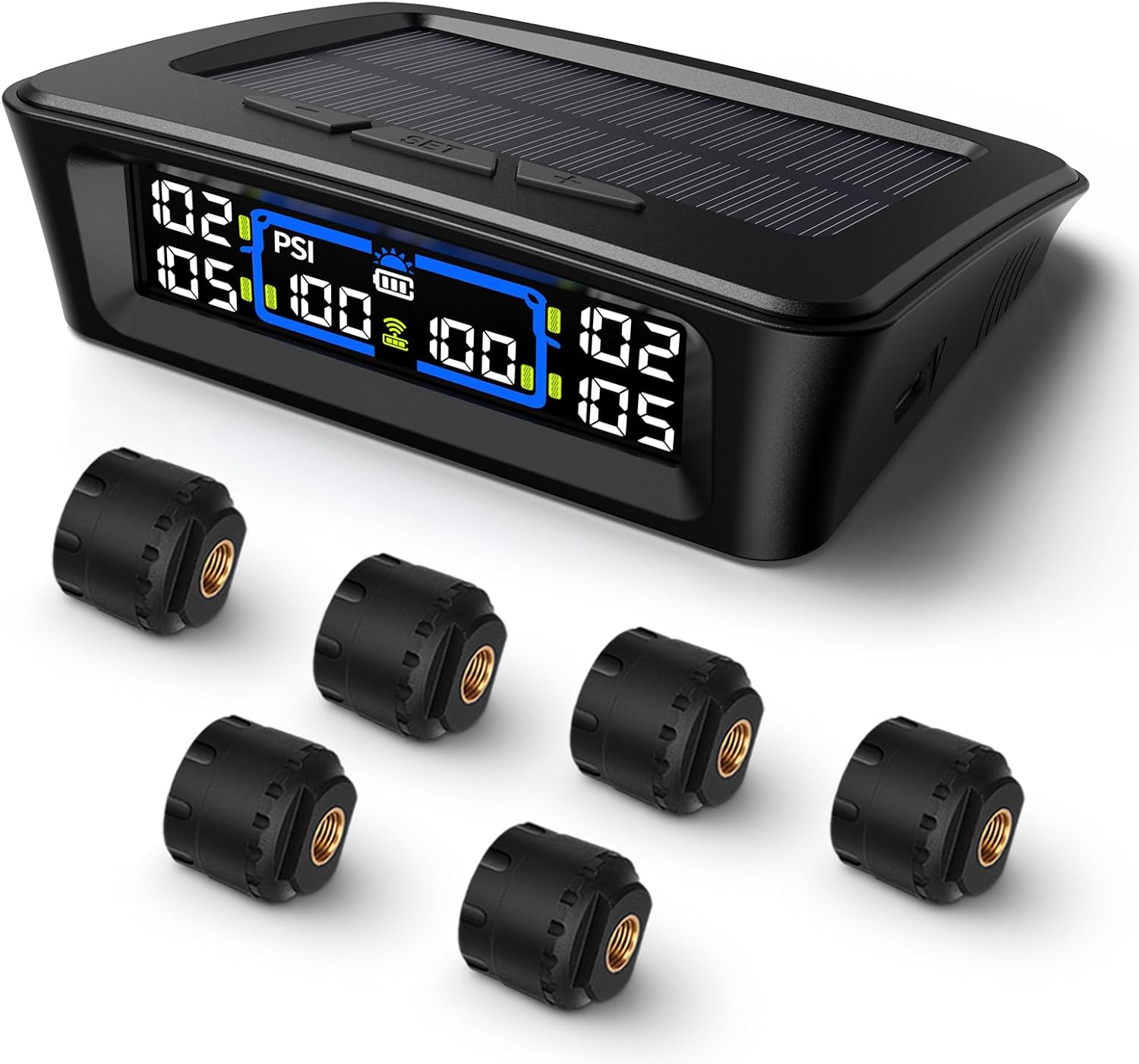
The Tymate TM12 RV TPMS delivers real-time tire pressure and temperature monitoring with a stable 433Hz display for safer long-distance driving. It supports simultaneous monitoring across vehicle and trailer zones, includes six alarm modes for pressure, temperature, leakage, battery, and signal loss, and features easy DIY installation with auto calibration. Power is supplied via USB-C charging or solar recharging, with a wide 0–144 PSI range and up to 50 ft signal coverage for RVs and towable trailers.
Tundra Tire Fitment Checklist Before You Buy
The Toyota Tundra is a heavy full-size pickup, so fitment matters. Before ordering any tire, verify the tire against the driver-side door placard, the owner’s manual, and the wheel specs. Toyota’s official owner resources provide access to manuals and warranty information for Tundra owners. Toyota’s Tundra manuals and warranties page is the safest place to start.
- Tire size: Match OEM size or confirm that an upsized tire clears the fenders, mud flaps, suspension, and body mount area.
- Load index: The tire must support your truck’s weight, passengers, cargo, tongue weight, and towing use.
- Load range: LT tires may be better for towing, hauling, and off-road durability, but they can ride firmer than P-metric tires.
- Speed rating: Do not install a lower speed rating than appropriate for your truck and driving needs.
- Rim width: Confirm the tire is approved for your wheel width.
- TPMS compatibility: Make sure the tire and wheel setup works with your tire pressure monitoring system.
- Spare tire: If you upsize, consider whether your spare tire still matches closely enough for safe temporary use.
- Inflation pressure: Use the correct cold tire pressure for your tire and load, not the maximum pressure printed on the sidewall unless a tire professional confirms it is appropriate.
Pro Tip: If you tow, haul, or upsize tires, ask a tire professional to confirm load capacity and inflation pressure. Bigger tires can look better but still be the wrong choice if the load rating, wheel width, or clearance is wrong.
[Products Worth Considering]
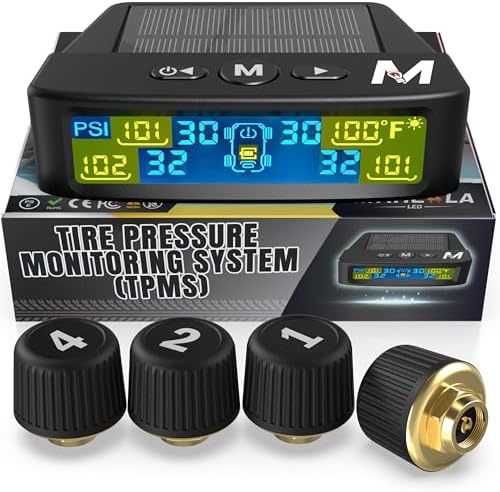
Marcala’s TPMS set of four sensors helps you monitor tire pressure and temperature in real time while driving, with updates every second. The bright color LCD uses auto-dimming for easy viewing, powered by dual solar and USB charging, and offers six alarm modes. Built for trailers, RVs, campers, trucks, and towing setups, the sensors support monitoring 1-4 wheels up to 98 PSI with IP67 waterproof protection.
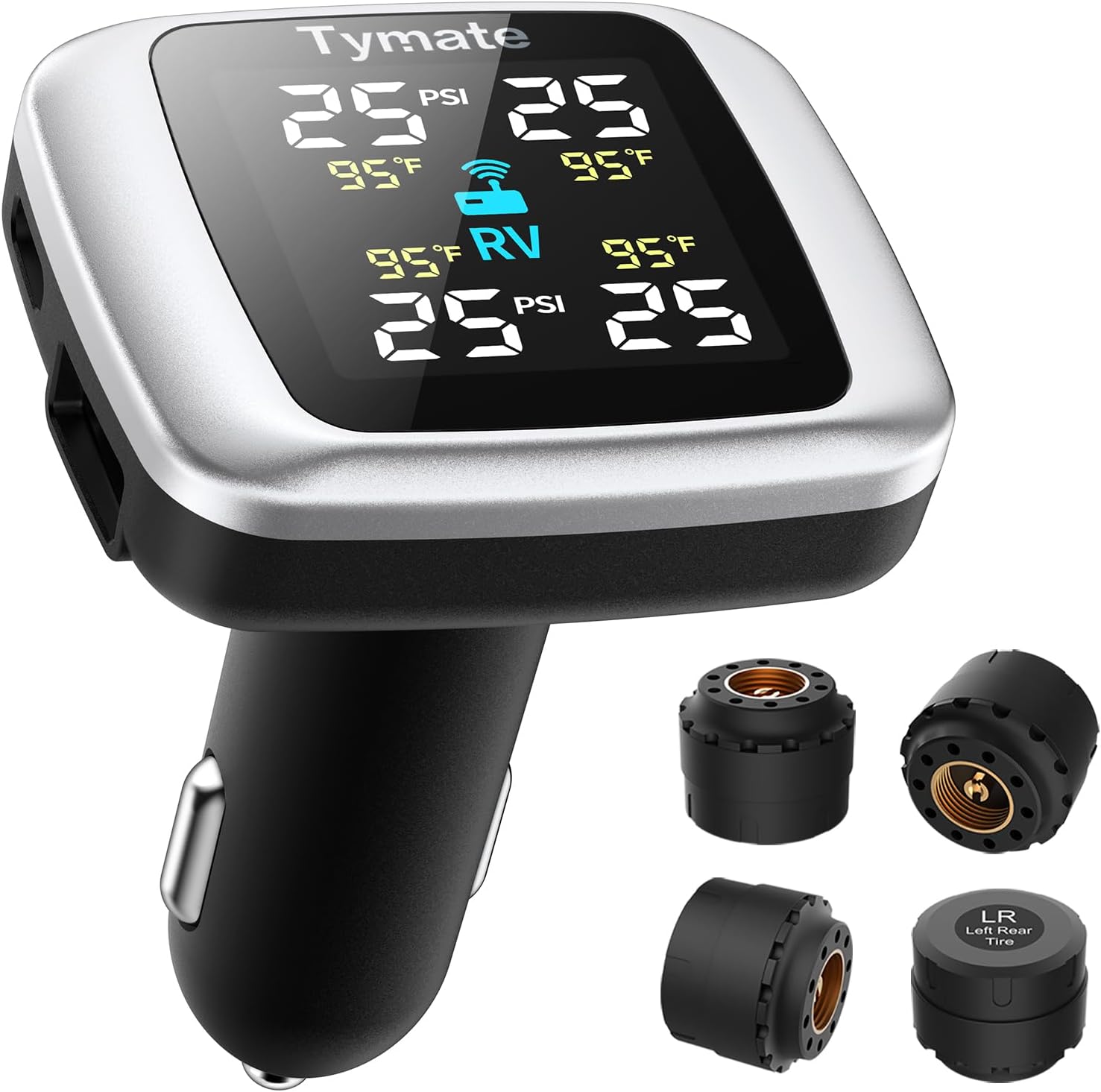
Tymate TM7 is a wireless tire pressure monitoring system that delivers real-time pressure and temperature readings for safer driving. It includes four external sensors, a bright color LCD display with adjustable backlight, and six alarm modes for high/low pressure, fast leakage, high temperature, and sensor signal or battery issues. The system covers a wide 0–144 PSI range and plugs into your vehicle’s cigarette lighter socket for quick DIY setup.

The TYAMATE TM8 solar-powered wireless TPMS delivers real-time tire pressure and temperature monitoring with six alarm modes for safer driving. A vibrant color LCD display shows readings clearly while windshield mounting keeps it hands-free and easy to read. With a wide 0–87 PSI range, strong 433.92 MHz signal transmission, and quick sensor pairing, it’s ideal for RV, sedan, SUV, MPV, and truck use.
Best Use Cases: Which Tire Type Should You Pick?
[Products Worth Considering]

Measure tire tread depth quickly and accurately with this LUMITECO dial gauge that reads in 1/32" increments up to 14/32". The color-coded green/yellow/red zones make it easy to judge tire wear and know when replacement is needed. A rugged, compact design with a protective pouch helps keep the gauge ready for use on cars, trucks, motorcycles, and more.

Keep your tires properly inflated with this analog VONDIOR tire pressure gauge, designed for fast, easy readings without batteries. The swiveling, two-axis hose and large glow dial help you measure at any tire angle with instant visibility. Built with a protective rubber shield, it supports durable, low-maintenance use for cars and trucks.

Replace worn or malfunctioning GM TPMS sensors with this 433MHz pre-programmed sensor set designed for compatibility with many Chevrolet, Buick, GMC, and Cadillac models. It includes guidance for proper OBDII relearning/pairing after installation and supports reliable long-term operation with a high-performance CR2032 battery. Quality tested for durability and performance to help restore accurate tire pressure monitoring.
Choose All-Terrain Tires If…
- Your Tundra is a daily driver.
- You tow or road-trip often.
- You want better pavement comfort and lower noise.
- You drive mostly on highways, city streets, gravel roads, and mild trails.
- You need year-round performance and can choose a 3PMSF-rated model for winter.
- You care about treadwear warranty, fuel economy, and predictable wet-road handling.
Choose Rugged-Terrain Tires If…
- You regularly drive rocky, muddy, sandy, or deeply rutted terrain.
- You want stronger off-road bite than a standard all-terrain tire.
- You value sidewall toughness and puncture resistance.
- You use your Tundra for overlanding, hunting, ranch work, or rough job sites.
- You are willing to accept more road noise, weight, and possible MPG loss.
- You want a more aggressive look without going all the way to mud-terrain tires.
Frequently Asked Questions
Are rugged-terrain tires better than all-terrain tires?
Rugged-terrain tires are better for harder off-road use, including mud, rocks, sand, ruts, and rough job sites. All-terrain tires are usually better for mixed daily driving because they tend to be quieter, smoother, lighter, and more predictable on pavement. The best choice depends on your driving mix.
What are the best tires to put on a Toyota Tundra?
For most Tundra owners, a quality all-terrain tire is the best overall choice. Look for the correct size, load index, load range, speed rating, wet-road performance, and 3PMSF rating if you drive in snow. If your Tundra is used heavily off-road, consider a rugged-terrain tire with stronger sidewalls and more aggressive tread.
Are rugged-terrain tires good in snow?
Some rugged-terrain tires perform well in deep snow because their open tread can dig and clear loose snow. However, aggressive tread alone does not guarantee safe winter performance. For snow and ice, look for the Three-Peak Mountain Snowflake symbol and check the tire’s actual winter rating.
Do rugged-terrain tires last as long as all-terrain tires?
Not always. Tread life depends on the exact tire, size, compound, alignment, rotation schedule, inflation pressure, load, and driving style. Many all-terrain tires are built for longer highway use, while many rugged-terrain tires trade some pavement refinement for stronger off-road traction.
Should I choose LT tires for my Tundra?
LT tires can be a smart choice if you tow, haul heavy loads, drive rough roads, or need stronger construction. The trade-off is that LT tires are often heavier and firmer than P-metric tires. Always confirm the correct load rating, inflation pressure, and fitment before switching.
Conclusion
If your Toyota Tundra is mostly a daily driver with occasional off-road use, all-terrain tires are usually the best fit. They give you the most balanced mix of comfort, road manners, wet-weather stability, tread life, and trail capability. If your Tundra regularly works or plays in mud, rocks, sand, ruts, or remote terrain, rugged-terrain tires can be worth the extra noise, weight, and cost.
The safest decision is not based on appearance alone. Compare the exact tire model, size, load index, load range, speed rating, treadwear warranty, wet-road behavior, and 3PMSF winter rating. Match those specs to your Tundra’s real use, and you will end up with a tire that performs well instead of just looking aggressive.
Sources
- Tire Rack — All-Terrain Tires — supports the definition of all-terrain tires and their balanced on-road/off-road purpose.
- Tire Rack — Rugged All-Terrain Tires — supports the definition of rugged-terrain tires as a hybrid between all-terrain and mud-terrain tires.
- NHTSA TireWise — supports tire pressure, rotation, tread inspection, labeling, and tire safety guidance.
- USTMA TISB 37 — supports the Three-Peak Mountain Snowflake severe-snow tire definition.
- Toyota Tundra Manuals and Warranties — supports checking official Toyota owner resources for tire and vehicle guidance.
- Falken Wildpeak A/T4W — supports current warranty and 3PMSF information for one popular all-terrain tire example.