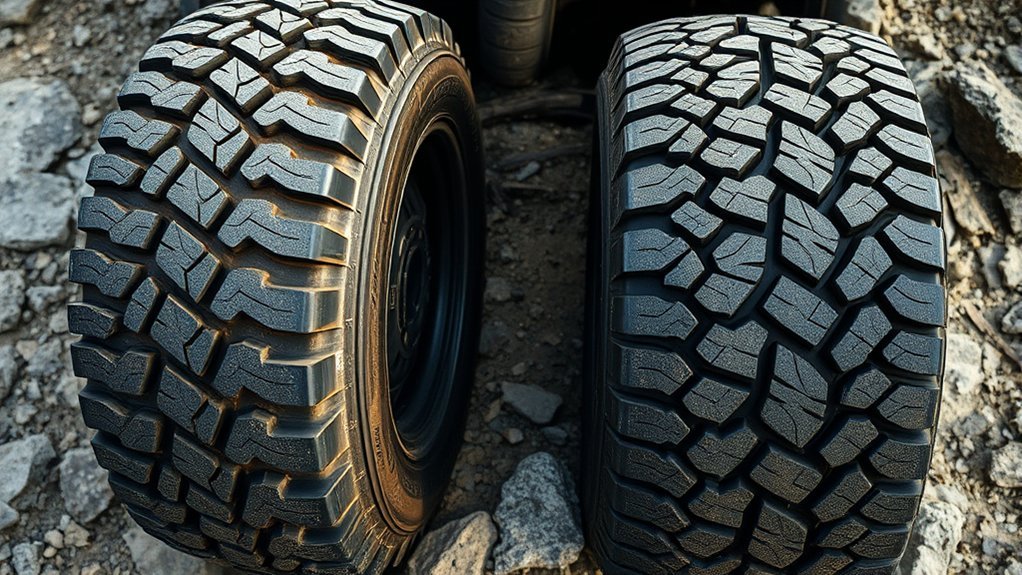
Choosing between mud-terrain and hybrid-terrain tires comes down to how much pavement, mud, rock, gravel, and daily driving your vehicle really sees. Mud-terrain tires are built for aggressive off-road traction, while hybrid-terrain tires, often called rugged-terrain or R/T tires, aim to balance trail grip with highway comfort.
Quick Answer
Choose mud-terrain tires if deep mud, loose rock, ruts, and technical trails matter more than road noise, fuel economy, and tread life. Choose hybrid-terrain tires if your truck or SUV is a daily driver that also sees weekend trails, gravel, sand, job sites, or moderate mud.
Key Takeaways
- Mud-terrain tires deliver the strongest grip in deep mud, loose soil, and rocky trail conditions, but they usually create more highway noise and may wear faster on pavement.
- Hybrid-terrain or rugged-terrain tires sit between all-terrain and mud-terrain tires, giving you better off-road bite than many all-terrains with better road manners than most mud-terrains.
- Tread life and warranty vary by brand, model, size, load rating, and maintenance. Always check the tire maker’s warranty, not just a general category estimate.
- For safety, match the tire size, load rating, speed rating, and inflation pressure to your vehicle’s placard, owner’s manual, and real driving load.
Mud-Terrain vs Hybrid-Terrain Tires: Understanding Key Features
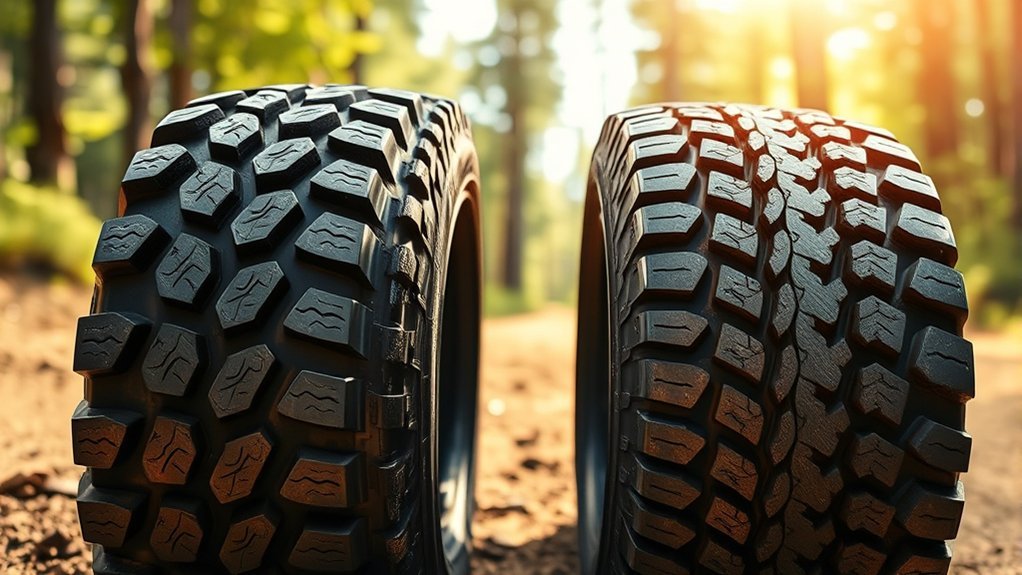
When comparing mud-terrain and hybrid-terrain tires, start with the tread pattern. Mud-terrain tires use large tread blocks, wide voids, and aggressive shoulder lugs to help the tire dig, clear debris, and keep moving in mud, loose dirt, and rock. A tire like the BFGoodrich Mud-Terrain T/A KM3, for example, is built for extreme traction and uses mud-release features to help clear compacted mud from the tread.
Hybrid-terrain tires, also called rugged-terrain tires or R/T tires, are the middle ground between all-terrain and mud-terrain designs. Tire Rack describes rugged all-terrain tires as a hybrid option that keeps off-road confidence while maintaining more comfort and stability on pavement.
Note: Avoid using “H/T” as shorthand for hybrid-terrain. In tire shopping, H/T often means highway-terrain. For hybrid-terrain tires, R/T or rugged-terrain is clearer.
The Benefits of Hybrid-Terrain Tires
Hybrid-terrain tires are best for drivers who want one tire to handle weekday pavement and weekend dirt. They typically use a tighter center tread than mud-terrain tires for better highway stability, then add larger shoulder lugs and sidewall features for added grip off-road.
The Nitto Ridge Grappler is a good example of this category. Nitto describes it as a hybrid-terrain tire that combines mud-terrain and all-terrain design ideas, with a variable-pitch tread pattern for a quieter highway ride and aggressive shoulder/lateral grooves for mud clearing and traction.
The Toyo Open Country R/T is another example. Toyo calls it an on-/off-road rugged-terrain hybrid M/T tire and lists features such as optimized tread arrangement for reduced noise, stone and mud ejectors, open shoulder blocks, and a 45,000-mile treadwear warranty for the model.
Pro Tip: If your truck spends most of its time on pavement but still sees muddy job sites, forest roads, sand, or rocky trails, start your search with hybrid-terrain tires before jumping straight to mud-terrains.
How Mud-Terrain and Hybrid Tires Differ in Design and Performance
Mud-terrain and hybrid-terrain tires may look similar from a distance, but their tread spacing, shoulder design, rubber compound, weight, and casing construction can change how they feel on the road and how they perform off it.
[Products Worth Considering]

The SAFELIFE dial tire tread depth gauge measures tread depth in 1/32 inch increments with clear, easy-to-read 2-inch dial face. Color zones using a traffic light system help you quickly judge whether tread is low, marginal, or ample for safer driving. Built with a durable zinc cast body and a metal detect probe for precise, comfortable use across cars, motorcycles, trucks, and buses.

Measure tire tread depth quickly and accurately with this LUMITECO dial gauge that reads in 1/32" increments up to 14/32". The color-coded green/yellow/red zones make it easy to judge tire wear and know when replacement is needed. A rugged, compact design with a protective pouch helps keep the gauge ready for use on cars, trucks, motorcycles, and more.

Monitor tire tread wear with a smart, color-coded depth gauge that shows clear condition ranges at a glance. The bar is range marked for fast, easy readings, helping you maintain safer traction and performance. Each gauge is portable with a pocket clip, and the set includes 20 units for daily use and sharing.
Tread Design Features
Mud-terrain tires usually have larger tread voids and more aggressive lugs. That open design helps the tire eject mud and loose debris, but it also creates more tread movement and road noise on pavement.
Hybrid-terrain tires usually tighten the center tread pattern and use staggered shoulder blocks for extra bite. This gives them a calmer ride on highways while still providing more off-road traction than many traditional all-terrain tires.
| Feature | Mud-Terrain Tires | Hybrid/Rugged-Terrain Tires |
|---|---|---|
| Best use | Deep mud, rocks, ruts, soft soil, technical trails | Daily driving, gravel, sand, moderate mud, job sites, weekend trails |
| Tread pattern | Large blocks and wide voids | Tighter center tread with aggressive shoulders |
| Road noise | Usually louder | Usually quieter than mud-terrain tires |
| Tread life | Often shorter on pavement; many models have no mileage warranty | Often better for mixed use; warranty depends on the model |
| Fuel economy | Can reduce efficiency due to weight, size, and rolling resistance | Often more efficient than a comparable mud-terrain, but not always |
Off-Road Performance Comparison
For serious mud and technical trails, mud-terrain tires are the stronger choice. Their open voids, aggressive shoulder lugs, and sidewall traction features are designed to help the tire bite and clean itself when the trail gets sloppy.
Hybrid-terrain tires still perform well off-road, especially on gravel, dry dirt, sand, forest roads, rocky access roads, and moderate mud. They are not usually as strong as a dedicated mud-terrain in deep sticky mud, but they are easier to live with when the trail ends and the pavement starts.
On-Road Comfort Levels
On pavement, hybrid-terrain tires usually win for daily comfort. The tighter tread spacing helps reduce pattern noise, and the tire tends to feel more stable during commuting, towing, and highway driving. Mud-terrain tires can still be used on the road, but they often hum more, ride firmer, and may wear faster if most of your miles are on asphalt.
Performance Comparison: On-Road vs Off-Road Capabilities
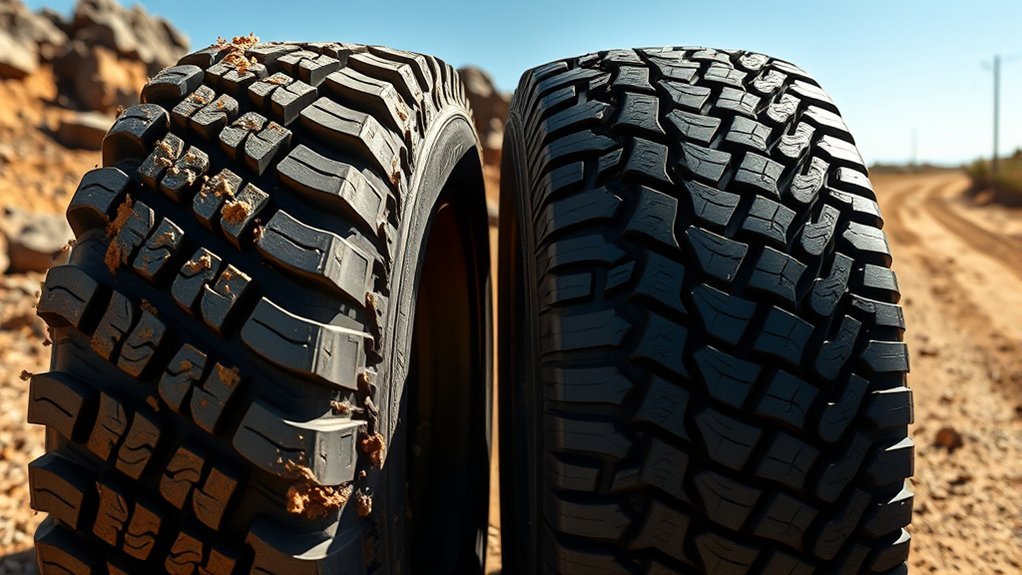
On-road and off-road performance are always a trade-off. The more open and aggressive the tread, the better it usually works in loose terrain, but the more noise, vibration, and wear you may notice on pavement. The smoother and tighter the tread, the better it usually feels on the road, but the easier it can clog in deep mud.
For daily driving with occasional trail use, hybrid-terrain tires are usually the smarter fit. For dedicated off-road rigs, trail trucks, hunting rigs, and vehicles that often face deep mud, mud-terrain tires make more sense.
Warning: Do not choose a tire by tread pattern alone. Match the tire size, load index, speed rating, wheel size, and inflation pressure to your vehicle placard and owner’s manual. If you are upsizing, check clearance, rubbing, gearing, braking, and spare-tire fitment with a qualified tire professional.
[Products Worth Considering]

Accurately measure tire tread depth with a calibrated gauge marked from 0 to 1 inch in 1/32 inch increments. The color-coded bar helps you quickly identify tread condition ranges, supporting safe driving for trucks, motorcycles, automobiles, and passenger vehicles.
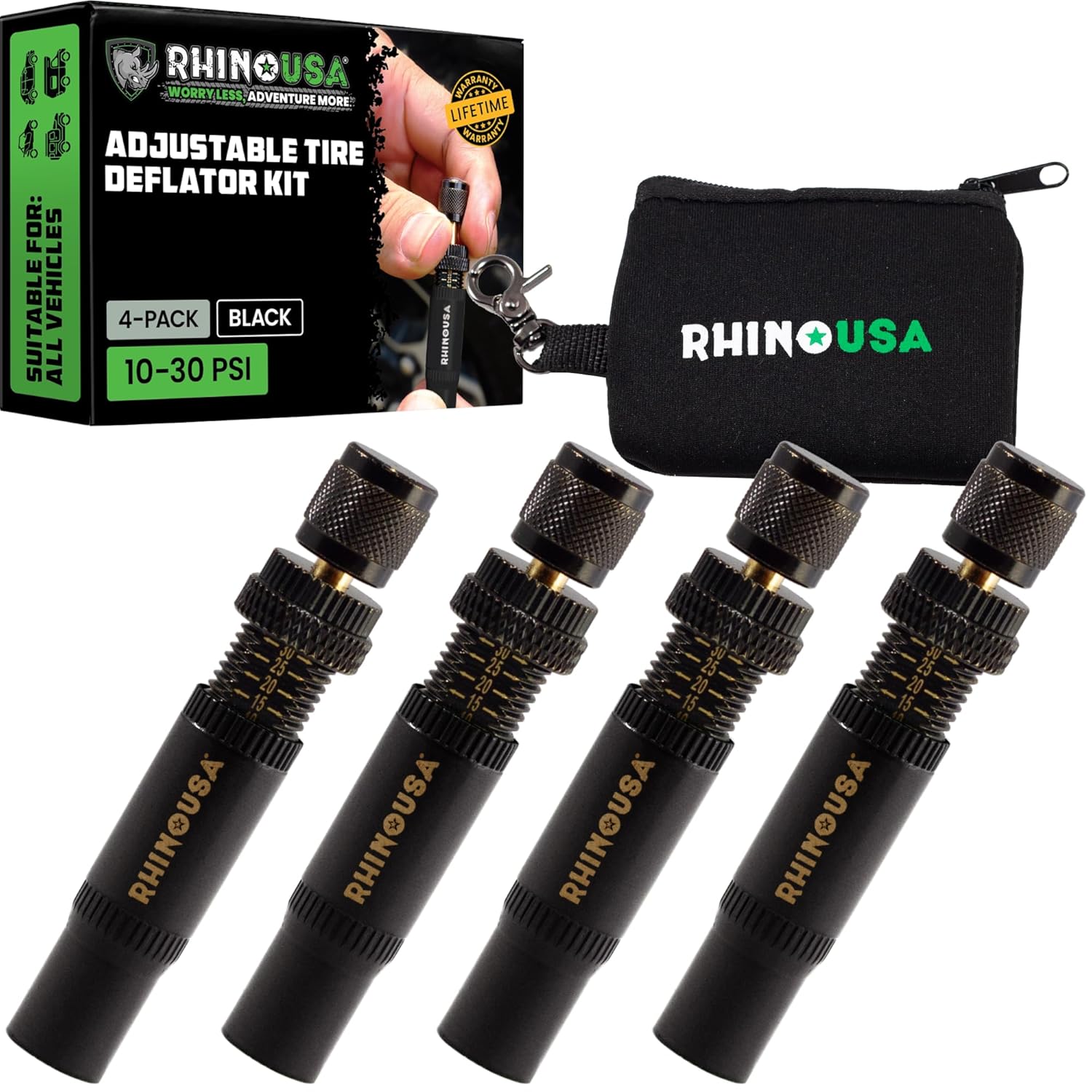
Use the Rhino USA adjustable tire deflators to air down all four tires at once by screwing one deflator onto each valve stem, letting you step away while the tires reach your preset pressure. Each deflator independently adjusts across a 10–30 PSI range with laser-etched indicators for quick setup and verification, making it ideal for beach, sand, and rocky off-road trails.

Keep your tires properly inflated with this analog VONDIOR tire pressure gauge, designed for fast, easy readings without batteries. The swiveling, two-axis hose and large glow dial help you measure at any tire angle with instant visibility. Built with a protective rubber shield, it supports durable, low-maintenance use for cars and trucks.
Tread Life: Which Tire Lasts Longer?
Hybrid-terrain tires often last longer than mud-terrain tires in mixed driving, but there is no single mileage number that applies to every tire. Tread life depends on the specific model, rubber compound, vehicle weight, road surface, load, alignment, rotation schedule, tire pressure, and driving style.
For example, Toyo lists a 45,000-mile warranty for the Open Country R/T, while BFGoodrich lists a standard limited warranty for the Mud-Terrain T/A KM3 rather than a treadwear mileage warranty. That does not mean one tire is automatically better for every driver; it means you should compare actual model warranties before buying.
Tread Wear Comparison
Mud-terrain tires can wear faster when used mostly on pavement because the tread blocks are larger, more open, and more prone to movement on hard surfaces. Hybrid-terrain tires usually spread the contact patch more evenly during highway driving, which can help treadwear when the tire is properly inflated, rotated, and aligned.
Longevity Factors Explained
To extend the life of either tire type, check pressure when the tires are cold, rotate when recommended, inspect for uneven wear, and keep the vehicle aligned. NHTSA recommends checking tire pressure and tread at least monthly, replacing tires when tread reaches 2/32 inch, and rotating tires every 5,000 to 8,000 miles if recommended by the vehicle manufacturer.
Fuel Economy: How Each Tire Affects Your Wallet
Tire choice can affect fuel economy, but not every mud-terrain tire will cost the same amount at the pump. Bigger diameter, heavier construction, aggressive tread, lower inflation, and higher rolling resistance can all make the engine work harder.
NHTSA explains that tire design, tread design, and rolling resistance influence fuel efficiency, and that a 10% reduction in rolling resistance is estimated to improve vehicle fuel economy by 1–2%. USTMA also notes that proper inflation helps maximize fuel economy and reduces damaging heat buildup.
If fuel cost matters, compare actual tire weight, size, tread depth, and warranty before buying. A mild hybrid-terrain tire in the factory size will usually be easier on fuel than an oversized mud-terrain tire, but the exact result depends on your vehicle and setup.
Wet, Snow, and Winter Driving Considerations
Mud traction does not automatically mean wet-road or winter traction. A mud-terrain tire can clear mud well but still feel less secure on wet pavement than a tire with more siping and a tighter contact patch. Hybrid-terrain tires often perform better in rain than aggressive mud-terrains, but results vary by model.
If you drive in real winter conditions, look beyond the words “mud” or “all-season.” Check whether the tire carries the three-peak mountain snowflake symbol, and remember that even 3PMSF-rated all-terrain or rugged-terrain tires are not the same as dedicated winter tires for ice and severe cold.
Selecting Between Mud-Terrain and Hybrid Tires for Your Driving Style
Use your real driving split as the deciding factor. If your truck spends 70% or more of its time on pavement, a hybrid-terrain tire is usually the better all-around choice. If your vehicle regularly sees deep mud, rutted trails, soft soil, and rock crawling, a mud-terrain tire is worth the extra noise and wear trade-off.
[Products Worth Considering]

Protect tire valves from water, dust, and sand to help prevent leaks and support safe driving. These universal stem caps install quickly by hand and feature durable aluminum alloy construction with an inner sealing ring for better air retention. Compatible with cars, SUVs, trucks, motorcycles, and bicycles for everyday convenience.
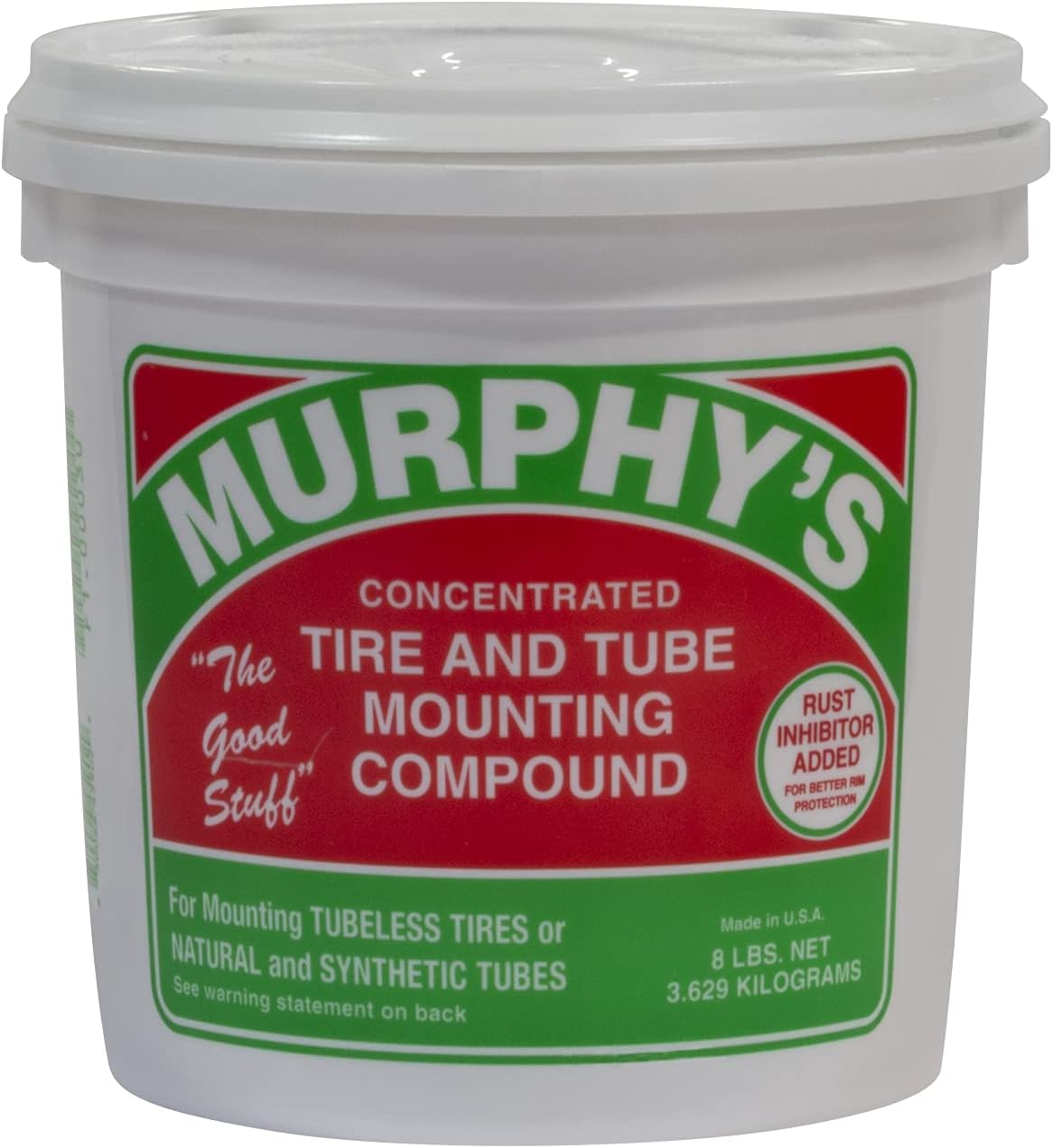
A concentrated tire and tube mounting compound designed to help simplify mounting rubber tires and tubes on passenger, semi truck, construction, and OTR applications. Its ultra-thick formula packs beads effectively and includes rust inhibitors to help protect against corrosion during use.

The Big Rig Defense Tire Thumper is a truck tire pressure checker that lets you quickly check multiple tires by giving them a firm whack. Listen for a reassuring thump and feel the stick bounce when a tire is fully inflated, helping you get back on the road safely. It features a comfortable, glove-friendly handle and a secure wrist strap for confident use on busy routes.
Choose Mud-Terrain Tires If:
- You regularly drive in deep mud, ruts, loose rock, or soft soil.
- Off-road traction matters more than road noise and treadwear.
- Your vehicle is a trail rig, hunting rig, farm truck, or weekend off-road build.
- You are comfortable with more frequent rotations, inspections, and possible replacement.
Choose Hybrid-Terrain Tires If:
- Your truck, Jeep, or SUV is also your daily driver.
- You want a quieter highway ride than most mud-terrain tires offer.
- You drive gravel, sand, light mud, forest roads, or job sites but not constant deep mud.
- You want stronger off-road styling and grip than many all-terrain tires without going full mud-terrain.
Maintenance Checklist for Longer Tire Life
- Check cold tire pressure monthly. Use the vehicle placard or owner’s manual, not the maximum pressure printed on the tire sidewall.
- Rotate regularly. Follow the vehicle and tire manufacturer’s schedule; NHTSA notes 5,000 to 8,000 miles if recommended.
- Watch for uneven wear. Cupping, feathering, and rapid shoulder wear can point to inflation, alignment, balance, or suspension issues.
- Inspect after off-road trips. Look for cuts, sidewall damage, lodged stones, punctures, missing chunks, and bead damage.
- Replace unsafe tread. Tires are not safe when worn to 2/32 inch, and off-road tires may lose useful trail bite before that point.
Frequently Asked Questions
Are hybrid tires good in mud?
Hybrid-terrain tires are good in light to moderate mud, especially compared with many highway or mild all-terrain tires. For deep, sticky mud or rutted trails, mud-terrain tires usually perform better because their larger voids and aggressive lugs clear mud more effectively.
Do all-terrain tires last longer than mud-terrain tires?
Often, yes. All-terrain and some hybrid-terrain tires usually last longer on pavement than mud-terrain tires because their tread patterns are less aggressive. Still, tread life depends on the exact tire model, alignment, inflation, rotation, vehicle weight, and driving conditions.
Are hybrid-terrain tires the same as all-terrain tires?
No. Hybrid-terrain or rugged-terrain tires are usually more aggressive than standard all-terrain tires but less extreme than mud-terrain tires. They are designed for drivers who want stronger off-road traction and styling while keeping acceptable road comfort.
Are mud-terrain tires bad for daily driving?
Mud-terrain tires are not “bad,” but they are a compromise for daily driving. Expect more road noise, a firmer feel, possible fuel-economy loss, and faster pavement wear compared with less aggressive tires. They make sense when off-road traction is the priority.
Which tire is better for towing: mud-terrain or hybrid-terrain?
For most towing on pavement, hybrid-terrain tires are usually more comfortable and stable. The most important factor is not the tread category but the correct load rating, tire pressure, size, and vehicle fitment for the trailer and payload.
Conclusion
Choosing between mud-terrain and hybrid-terrain tires is really about choosing your trade-off. If your adventures involve deep mud, loose rock, and technical trails, mud-terrain tires offer the most aggressive off-road traction. If you want a tire that can handle daily driving, highway miles, gravel, sand, moderate mud, and weekend exploring, hybrid-terrain tires are the more balanced choice.
Before buying, compare real model specs, warranty details, tire weight, load rating, and size—not just the tread pattern. The best tire is the one that fits your vehicle safely and matches the terrain you actually drive.
Sources
- Tire Rack: Rugged All-Terrain Tires — supports the definition of rugged-terrain tires as a hybrid option between mud-terrain and all-terrain tires.
- Nitto Ridge Grappler — supports hybrid-terrain tread design, quiet highway design, shoulder grooves, and off-road features.
- Toyo Open Country R/T — supports rugged-terrain hybrid M/T positioning, noise-reduction features, off-road shoulder blocks, and 45,000-mile warranty.
- BFGoodrich Mud-Terrain T/A KM3 — supports mud-terrain design features, mud traction, and standard limited warranty details.
- NHTSA TireWise — supports tire pressure, tread depth, rotation, fuel consumption, and safety guidance.
- U.S. Tire Manufacturers Association: Tire Care Essentials — supports proper inflation, tire wear, heat buildup, and fuel-economy maintenance guidance.