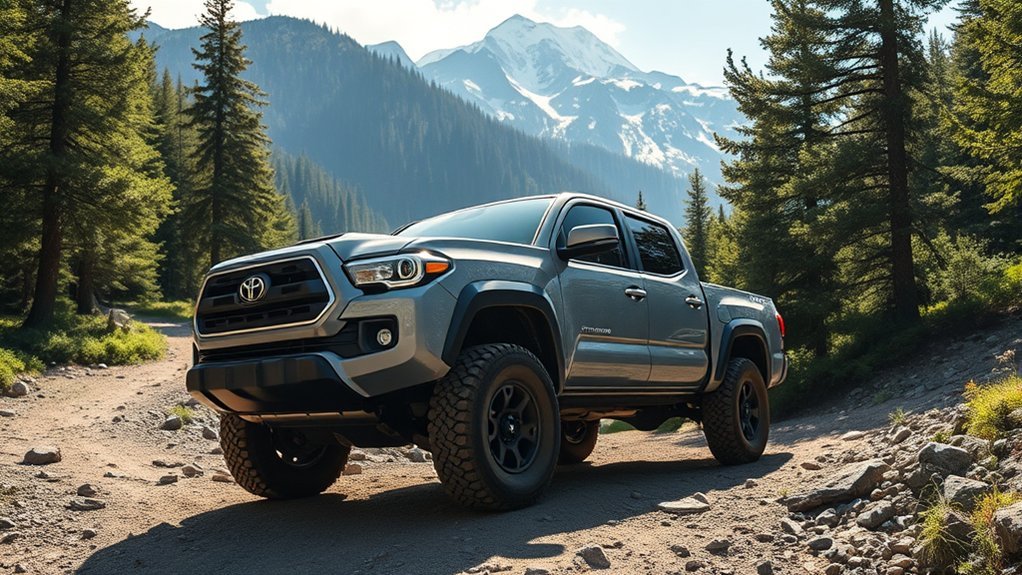
Yes, you can drive all-terrain tires year-round on a Toyota Tacoma, but the best answer depends on where you live, how much snow or ice you see, and which all-terrain tire you choose. A mild, highway-focused all-terrain tire is very different from a severe-snow-rated rugged all-terrain tire, so the sidewall rating and your local weather matter.
Quick Answer
You can run all-terrain tires year-round on a Toyota Tacoma if you want one tire for pavement, gravel, dirt, rain, and light to moderate snow. Choose a tire with the Three-Peak Mountain Snowflake (3PMSF) symbol for better snow traction, but use dedicated winter tires if you regularly drive on ice, deep snow, or steep winter roads.
Key Takeaways
- All-terrain tires are a practical year-round choice for many Tacoma owners who split time between streets, highways, gravel, trails, and light snow.
- Look for the 3PMSF symbol if winter traction matters; it is stronger than a basic M+S marking, but it is not the same as a dedicated winter tire.
- Expect trade-offs: more road noise, firmer ride quality, possible fuel-economy loss, and faster wear than a road-focused highway or all-season tire.
- Use the tire pressure listed on your Tacoma’s driver-door placard or owner’s manual, not the maximum PSI printed on the tire sidewall.
- Before buying, match the correct size, load rating, speed rating, spare-tire setup, and clearance for your exact Tacoma year and trim.
Can You Drive All-Terrain Tires Year-Round on a Toyota Tacoma?
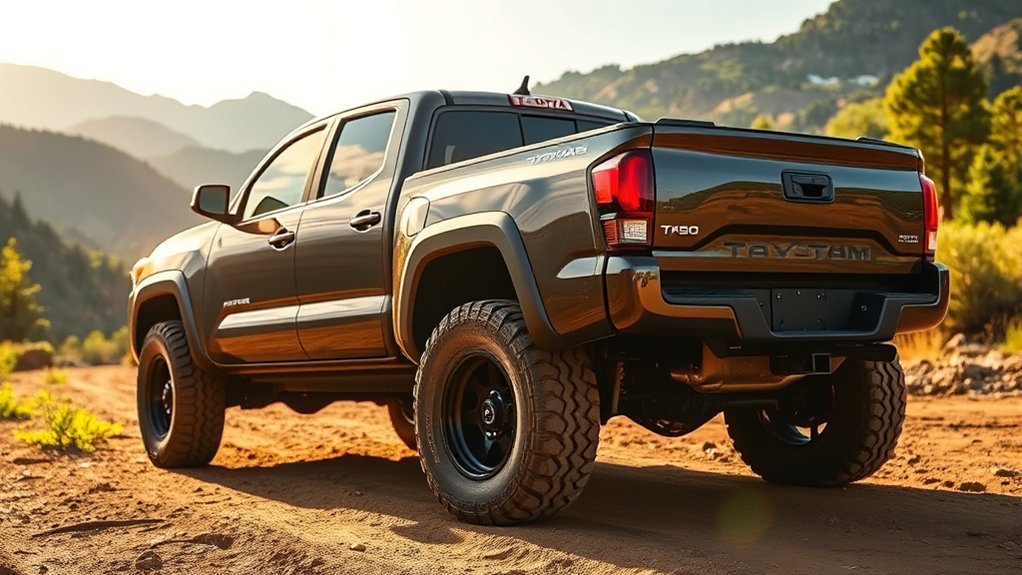
You can drive all-terrain tires year-round on a Toyota Tacoma if your driving conditions match what those tires are built to do. They are designed to balance paved-road manners with extra grip on dirt, gravel, mud, grass, rocky trails, and snow-covered roads. That makes them a strong fit for Tacoma drivers who use the truck for commuting during the week and trails, camping, job sites, or bad-weather driving on weekends.
The important detail is that not every all-terrain tire has the same winter ability. For year-round use in cold or snowy regions, choose a model that carries the Three-Peak Mountain Snowflake symbol. That mark shows the tire meets specific snow-traction performance requirements. However, it does not make the tire equal to a dedicated winter tire on ice or in the worst winter conditions.
Note: The 3PMSF rating is helpful, but it is mainly a snow-traction rating. It does not mean the tire has been optimized for ice braking, ice cornering, or every severe winter scenario.
If your Tacoma mostly sees warm pavement, highway miles, and occasional dirt roads, a road-biased all-terrain tire may be enough. If your winter includes regular ice, mountain passes, steep driveways, lake-effect snow, or long stretches below 45°F, a dedicated winter tire will still be the safer choice during the coldest months.
What’s Great About All-Terrain Tires?
All-terrain tires are popular on the Toyota Tacoma because they match the truck’s personality. They give you more bite than a basic highway tire without going as aggressive as a mud-terrain tire. That balance makes them useful for drivers who want one tire that can handle daily driving and weekend adventure.
The biggest benefit is versatility. A good all-terrain tire has larger tread blocks, wider grooves, reinforced shoulder areas, and tougher construction than many standard all-season tires. That helps when the road changes from pavement to gravel, wet grass, dirt, sand, mud, or loose rock.
They also look right on a Tacoma. The stronger sidewall design and more aggressive tread pattern give the truck a more capable stance. That appearance is not the main reason to buy them, but it is one reason many Tacoma owners prefer all-terrain tires over plain highway tires.
The trade-off is that all-terrain tires usually weigh more, create more rolling resistance, and make more tread noise than smoother road tires. If your Tacoma is mostly a commuter and never leaves pavement, a highway all-season or all-weather tire may be quieter and more efficient.
How Do All-Terrain Tires Perform in Snowy Conditions?
All-terrain tires can perform well in light to moderate snow, especially when they have full-depth siping, open tread channels, and the 3PMSF symbol. Their blocky tread can bite into snow better than many standard all-season tires, and the wider voids help move slush away from the contact patch.
Traction on Snowy Surfaces
On packed snow, a severe-snow-rated all-terrain tire can be a strong year-round option for a Tacoma. It can help you get moving, maintain traction on unplowed roads, and handle mixed winter conditions better than a mild highway tire.
Ice is the limitation. All-terrain tread blocks may help in snow, but ice traction depends heavily on rubber compound, siping, and winter-specific design. Dedicated winter tires use softer cold-weather compounds that stay more flexible in freezing temperatures. That is why winter tires remain the better choice for frequent ice, freezing rain, and severe cold.
| Tire Type | Best Use | Winter Limitation |
|---|---|---|
| Standard all-season | Pavement, rain, mild climates | Weak in deep snow and cold ice |
| 3PMSF all-terrain | Mixed pavement, trails, gravel, light to moderate snow | Not equal to a dedicated winter tire on ice |
| Dedicated winter tire | Ice, freezing temperatures, heavy snow, mountain winter driving | Wears faster in warm weather |
Why Tread Design Matters
All-terrain snow performance depends on tread design. Deep grooves help clear slush. Biting edges help grip packed snow. Shoulder blocks help the tire claw through loose surfaces. Full-depth siping can help maintain traction as the tire wears.
But aggressive tread alone does not guarantee great winter performance. A tire can look rugged and still lack the rubber compound needed for cold-weather grip. That is why the 3PMSF symbol matters more than appearance when you plan to drive year-round in snow.
Temperature Performance Variability
Temperature changes tire behavior. Below about 45°F, standard all-season and summer-oriented compounds can lose flexibility, which reduces grip. A severe-snow-rated all-terrain tire is usually more winter-capable than a basic all-season tire, but it still may not match a true winter tire in freezing rain, polished ice, or long cold snaps.
Warning: If your Tacoma regularly sees icy roads, mountain passes, steep winter grades, or emergency braking on frozen pavement, do not rely on tread appearance alone. Use dedicated winter tires or a tire specifically proven for those conditions.
Do All-Terrain Tires Affect On-Road Comfort?
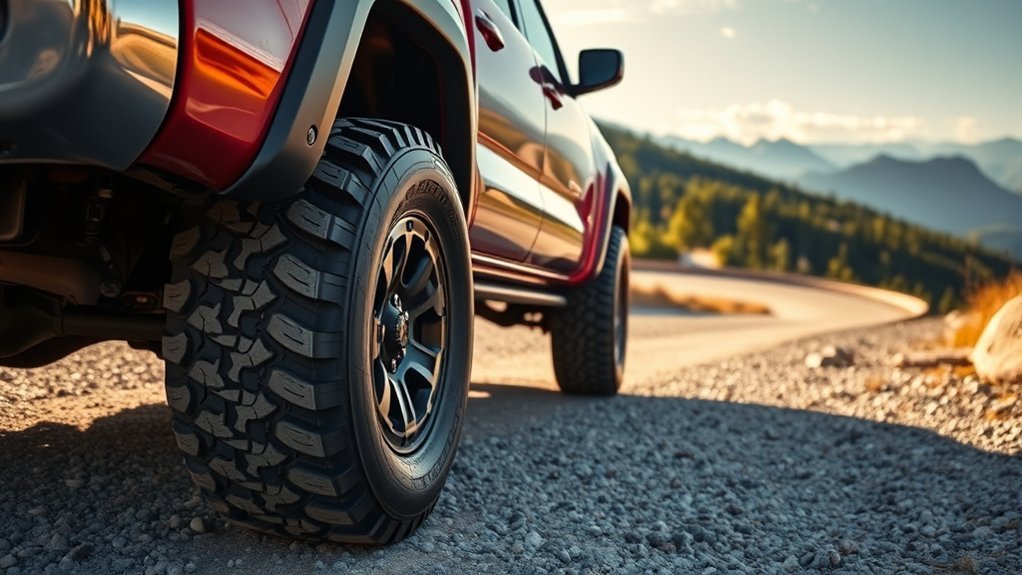
Yes, all-terrain tires can affect on-road comfort. Compared with highway all-season tires, they often feel firmer, sound louder, and reduce fuel economy slightly. The difference is usually most noticeable at highway speeds, especially on coarse pavement.
The ride change depends on the tire category. An on-road all-terrain tire is usually smoother and quieter, while a rugged all-terrain tire is more aggressive and may hum more. LT-rated tires can also ride firmer than P-metric or standard-load tires because they are built for higher loads and tougher use.
- Road noise: Larger tread blocks and wider voids can create a hum on the highway.
- Ride firmness: Stronger sidewalls and heavier construction can feel stiffer over bumps.
- Fuel economy: Extra weight and rolling resistance may reduce MPG.
- Steering feel: Aggressive tread can feel slower to respond than a road-focused tire.
- Wet braking: Performance varies by model, so do not assume every A/T tire is better in rain.
If comfort is your top priority, choose a milder all-terrain tire. If trail durability and snow traction matter more, accept that a tougher tire may ride and sound more rugged.
Key Considerations for All-Terrain Tires
Before buying all-terrain tires for your Tacoma, check more than the tread pattern. The right tire must match your truck, load, climate, and driving style.
Match the Correct Size and Load Rating
Start with the factory tire size and load rating listed for your exact Tacoma year, trim, and wheel size. A tire that is too large may rub the fenders, body mount, mud flaps, or upper control arms. A tire with too low of a load rating is unsafe for the truck’s weight, payload, and towing needs.
If you move to LT tires, understand the trade-off. LT tires can be tougher for towing, hauling, rocky trails, and aired-down off-road use, but they can also weigh more and ride firmer.
Check the 3PMSF Symbol if You Drive in Snow
If you want one tire for all four seasons, look for the 3PMSF symbol on the sidewall or in the manufacturer’s specs. Do not rely only on “M+S” branding. M+S is common on truck tires, but it does not prove the same snow-traction performance as 3PMSF.
Think About Your Real Driving Mix
A Tacoma that spends 90% of its time commuting needs a different tire than a Tacoma used for hunting roads, forest trails, ranch work, towing, or overlanding. Be honest about your use:
- Mostly pavement: Choose a quiet, road-biased all-terrain or highway tire.
- Pavement plus gravel and trails: Choose a balanced all-terrain with good wet traction.
- Frequent snow: Choose a 3PMSF all-terrain or use dedicated winter tires seasonally.
- Rocky off-road use or towing: Consider LT construction and stronger sidewalls.
- Heavy mud: A mud-terrain tire may work better off-road, but it will usually be louder and rougher on pavement.
Do Not Ignore the Spare Tire
If you upsize your tires, make sure the spare matches closely enough to use safely. A mismatched spare can create problems for four-wheel-drive systems, traction control, and emergency handling. If you run a larger-than-stock tire, confirm that the spare fits in the factory spare location or plan another mounting solution.
Comparing All-Terrain and All-Season Tires
All-terrain and all-season tires overlap, but they are not the same. All-season tires are usually built for quiet road manners, wet traction, tread life, and fuel economy. All-terrain tires add more off-road durability and loose-surface traction, but they usually give up some comfort and efficiency.
| Category | All-Terrain Tires | All-Season / Highway Tires |
|---|---|---|
| Best for | Mixed pavement, gravel, dirt, trails, light mud, snow-rated options | Daily commuting, highway comfort, rain, mild climates |
| Road noise | Usually moderate to noticeable | Usually quieter |
| Ride comfort | Can be firmer, especially in LT sizes | Usually smoother |
| Snow traction | Good if 3PMSF-rated; limited on ice | Varies widely; standard all-season tires are limited in real winter weather |
| Off-road durability | Better sidewall and tread protection | Limited on rocks, ruts, and sharp gravel |
| Fuel economy | May decrease slightly | Usually better |
[Products Worth Considering]

Accurately measure tire tread depth with a calibrated gauge marked from 0 to 1 inch in 1/32 inch increments. The color-coded bar helps you quickly identify tread condition ranges, supporting safe driving for trucks, motorcycles, automobiles, and passenger vehicles.

These aluminum alloy tire valve stem caps with an O-ring seal help protect valve stems from corrosion while adding a clean, stylish look to your vehicle. The universal fit works across cars, trucks, motorcycles, bicycles, and more, making them an easy upgrade for everyday driving and off-road use. Installation is quick, and the included four-pack keeps all your tires dressed and protected.

Keep your tires properly inflated with this analog VONDIOR tire pressure gauge, designed for fast, easy readings without batteries. The swiveling, two-axis hose and large glow dial help you measure at any tire angle with instant visibility. Built with a protective rubber shield, it supports durable, low-maintenance use for cars and trucks.
Top All-Terrain Tires for Your Tacoma
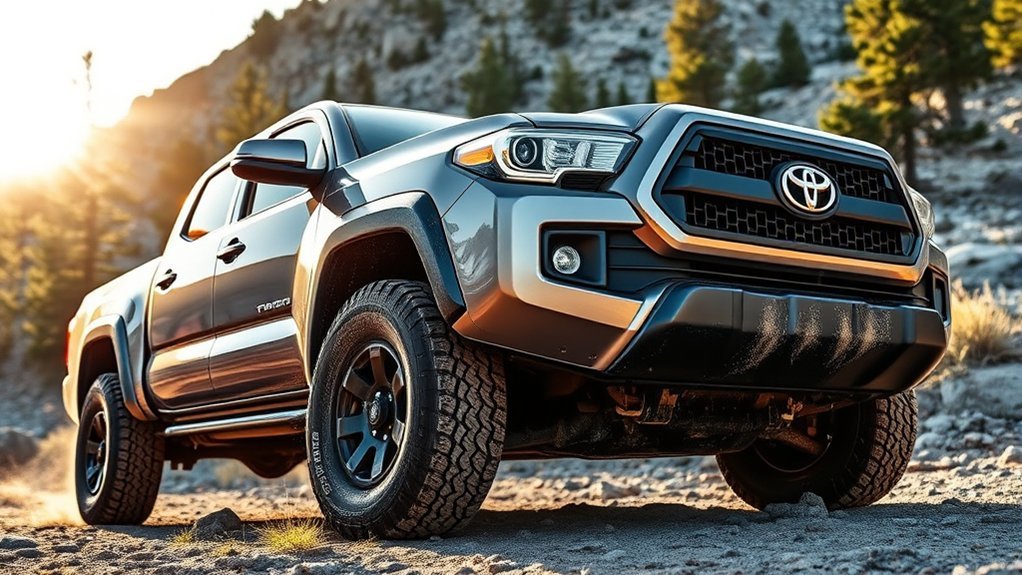
The best all-terrain tire for your Tacoma depends on your priorities. Some tires focus on trail toughness, while others focus on highway comfort. Always verify the exact size, load rating, speed rating, and 3PMSF status before buying because ratings can vary by size.
| Tire | Best For | What to Know |
|---|---|---|
| BFGoodrich All-Terrain T/A KO3 | Rugged off-road use, gravel, mud, snow, and classic Tacoma builds | The newer KO3 builds on the KO2 with updated treadwear, toughness, and traction goals. |
| Goodyear Wrangler DuraTrac RT | Drivers who want a tougher, more aggressive rugged-terrain feel | Strong sidewall and snow-focused features; verify your chosen size and rating before purchase. |
| Falken Wildpeak A/T4W | Balanced year-round traction, wet roads, snow-rated use, and mixed trail driving | The A/T4W is the current follow-up to the A/T3W and carries a strong mileage warranty. |
| Michelin LTX A/T2 | Tacoma owners who prioritize ride comfort, tread life, and light off-road use | A milder all-terrain option for daily driving; not the most aggressive snow or mud choice. |
Pro Tip: If you are choosing between two all-terrain tires, compare the actual weight, tread depth, load range, 3PMSF rating, and warranty for your exact Tacoma size. The same tire model can behave differently in different sizes.
[Products Worth Considering]

Measure tire tread depth quickly and accurately with this LUMITECO dial gauge that reads in 1/32" increments up to 14/32". The color-coded green/yellow/red zones make it easy to judge tire wear and know when replacement is needed. A rugged, compact design with a protective pouch helps keep the gauge ready for use on cars, trucks, motorcycles, and more.

These universal tire valve stem caps help protect valve cores from dust, debris, and moisture while helping maintain stable tire pressure. The corrosion-resistant metal construction and sealed design provide reliable protection in road grime, mud, and winter conditions. Twist-on installation makes them quick to fit on cars, SUVs, trucks, and motorcycles.

Monitor tire tread wear with a smart, color-coded depth gauge that shows clear condition ranges at a glance. The bar is range marked for fast, easy readings, helping you maintain safer traction and performance. Each gauge is portable with a pocket clip, and the set includes 20 units for daily use and sharing.
Maintaining All-Terrain Tires for Longevity
All-terrain tires can last a long time, but they need consistent maintenance. Their larger tread blocks can wear unevenly if the pressure, alignment, rotation schedule, or suspension condition is ignored.
Tire Rotation Schedule
Rotate your Tacoma’s tires according to the owner’s manual. If no specific interval is available, the U.S. Tire Manufacturers Association recommends rotation every 5,000 to 8,000 miles. Rotation helps reduce irregular wear and keeps all four tires closer in tread depth.
Use the correct pattern for your drivetrain, tire type, and wheel setup. Directional tires, staggered sizes, and full-size spare rotations may require a different pattern, so check the tire and vehicle guidance before rotating.
Proper Inflation Practices
Set tire pressure using the cold PSI listed on your Tacoma’s driver-door tire placard or in the owner’s manual. Toyota says the recommended tire pressure is found in the Specifications section of the owner’s manual or on the tire information placard usually attached to the driver’s side door post.
Do not inflate to the maximum PSI on the tire sidewall for normal driving unless a tire professional or load chart confirms that pressure is correct for your setup. Underinflation can cause heat buildup and shoulder wear. Overinflation can reduce ride comfort, shrink the contact patch, and create center wear.
Seasonal Tread Inspection
Check tread depth before each season, especially before winter or a long road trip. The legal minimum is commonly associated with 2/32 inch tread depth, but waiting that long is not ideal for wet roads, slush, or snow. If winter traction is important, replace tires earlier when grip noticeably drops or the tread can no longer evacuate water and slush well.
Inspect for uneven wear, cuts, punctures, cupping, sidewall bubbles, exposed cords, and embedded rocks. Uneven wear can point to alignment, pressure, suspension, or rotation issues. The National Highway Traffic Safety Administration recommends regular tire-pressure, rotation, and tread checks as part of tire safety.
Trade-Offs of Using All-Terrain Tires Year-Round
Using all-terrain tires year-round is convenient, but it is not perfect. The right choice depends on whether you value off-road ability and year-round versatility more than maximum comfort and fuel economy.
| Aspect | Benefit | Trade-Off |
|---|---|---|
| All-weather convenience | One tire can handle many conditions | Not ideal for every severe winter condition |
| Off-road grip | Better bite on dirt, gravel, mud, and trails | More noise and vibration on pavement |
| Durability | Stronger tread and sidewall options | Heavier tires can affect ride and MPG |
| Appearance | Rugged Tacoma stance | Aggressive looks do not always mean better traction |
| Tread life | Quality models can last well with maintenance | Poor alignment, wrong PSI, or heavy pavement use can cause uneven wear |
Where to Buy All-Terrain Tires for Your Tacoma
You can buy all-terrain tires for a Toyota Tacoma through tire retailers, local tire shops, Toyota dealers, manufacturer websites, and online retailers that ship to an installer. The best place depends on whether you need price comparison, expert fitment help, road-hazard coverage, or local installation.
Before ordering, confirm four details:
- Exact tire size: Match your wheels and clearance.
- Load rating: Choose a rating that supports your Tacoma, cargo, towing, and off-road use.
- 3PMSF status: Verify the snow rating for the exact size you are buying.
- Installation support: Confirm mounting, balancing, TPMS service, alignment availability, and spare-tire fitment.
If your Tacoma is lifted, leveled, or running aftermarket wheels, ask the installer about offset, backspacing, rubbing points, and whether trimming or alignment changes are needed.
[Products Worth Considering]

Upgrade your 2024-2026 Tesla Model 3 Highland with REEVAA all-weather mud flaps designed for seamless fit along the original body lines. The set of four delivers strong splash protection against mud, gravel, and road debris while using OEM-grade durable materials. Installation is non-destructive with original hole positions and snap-in clips, and the aerodynamic design helps minimize impact on efficiency.

Milton S-921 pencil tire pressure gauge helps you maintain optimal tire pressure for passenger cars with accurate readings in PSI and kPa. It features a built-in deflator valve for convenient pressure adjustments, plus a single chuck head and nylon indicator bar for easy use on the go. Built from durable plated brass and designed for reliable performance, it’s a practical road trip and cold-weather maintenance tool.

The SAFELIFE dial tire tread depth gauge measures tread depth in 1/32 inch increments with clear, easy-to-read 2-inch dial face. Color zones using a traffic light system help you quickly judge whether tread is low, marginal, or ample for safer driving. Built with a durable zinc cast body and a metal detect probe for precise, comfortable use across cars, motorcycles, trucks, and buses.
Frequently Asked Questions
Can all-terrain tires be used all year-round on a Toyota Tacoma?
Yes, all-terrain tires can be used year-round on a Toyota Tacoma if your climate and driving needs match the tire. They are a good one-tire solution for pavement, gravel, dirt, rain, and light to moderate snow. For frequent ice, deep snow, or mountain winter driving, dedicated winter tires are safer.
Is there a downside to all-terrain tires?
Yes. All-terrain tires can be louder, heavier, firmer, and less fuel-efficient than highway all-season tires. They may also wear unevenly if you skip rotations, use the wrong pressure, or drive mostly on pavement with an aggressive tread design.
How cold is too cold for all-season tires?
A common guideline is around 45°F or 7°C. Below that, many all-season and summer-oriented tire compounds start to lose flexibility, which can reduce traction. If you often drive below that temperature, especially with snow or ice, consider 3PMSF-rated all-terrain tires or dedicated winter tires.
Are 3PMSF all-terrain tires the same as winter tires?
No. A 3PMSF all-terrain tire meets a snow-traction standard, but it is not automatically equal to a dedicated winter tire. Winter tires are built with cold-weather compounds and siping patterns designed for better braking, cornering, and control in freezing conditions.
Should I choose LT tires for my Tacoma?
Choose LT tires if you need tougher construction for towing, hauling, rocks, airing down, or frequent off-road use. For daily driving and light trails, a P-metric or standard-load tire may ride smoother and weigh less. Always match the correct load rating for your Tacoma.
Conclusion
All-terrain tires can be a smart year-round choice for a Toyota Tacoma, especially if you want one tire that handles commuting, rain, gravel, dirt, trails, and occasional snow. The key is choosing the right tire for your climate and driving style.
For the best year-round setup, look for the correct Tacoma size and load rating, choose 3PMSF if winter traction matters, keep the tires rotated, and set pressure from the driver-door placard or owner’s manual. If your winters bring frequent ice, deep snow, or steep mountain roads, use dedicated winter tires instead of asking one all-terrain tire to do everything.
Sources
- Toyota Support: Recommended tire pressure — backs up using the owner’s manual or driver-door tire placard for Tacoma tire pressure.
- NHTSA TireWise — supports tire safety guidance for pressure, tread, rotation, and inspections.
- U.S. Tire Manufacturers Association: Tire Care Essentials — backs up rotation and tire-maintenance guidance.
- Transport Canada: Using winter tires — supports 3PMSF and cold-weather tire guidance.
- BFGoodrich All-Terrain T/A KO3 — supports current KO3 product information.
- Falken Wildpeak A/T4W — supports current A/T4W product information and warranty context.