
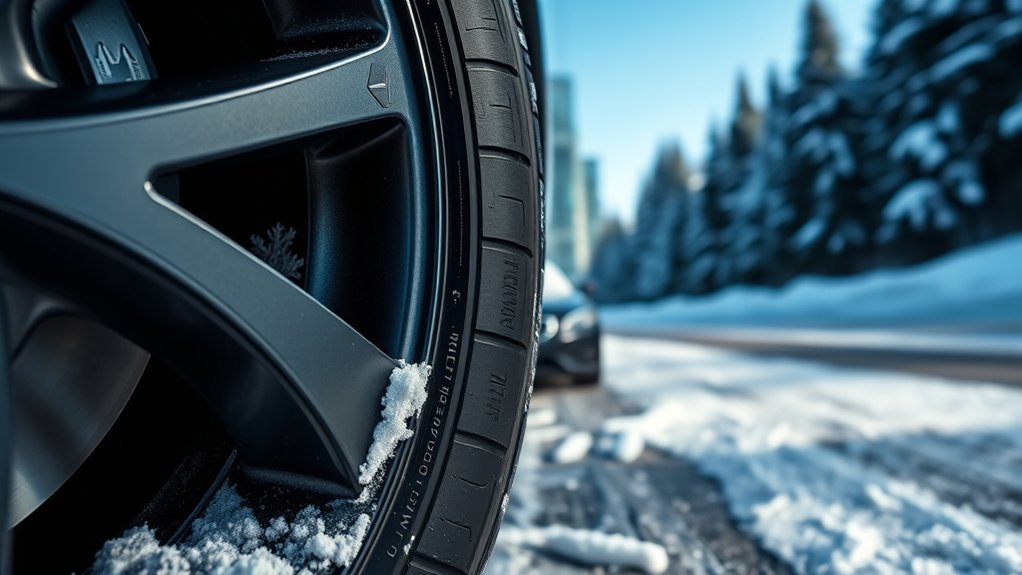
The 3PMSF symbol on a tire means it has met a defined performance standard for use in severe snow conditions. That makes it more meaningful than an M+S marking alone. However, the snowflake does not automatically prove excellent ice braking, cornering, wet grip, or summer performance, and not every 3PMSF tire is a dedicated winter tire.
Quick Answer
The 3PMSF (Three-Peak Mountain Snowflake) symbol means a tire meets a defined severe-snow performance standard. In the U.S., qualifying light-vehicle tires must reach a snow-traction index of at least 112 versus the standard reference tire. The mark does not, by itself, certify ice braking, wet grip, cornering, or year-round suitability.
Key Takeaways
- 3PMSF means Three-Peak Mountain Snowflake, also called the Alpine symbol.
- It is a performance-based severe-snow marking, unlike M+S alone.
- The current U.S. light-vehicle standard uses a traction index of at least 112 compared with a specified Standard Reference Test Tire.
- The symbol does not by itself certify ice braking, snow cornering, wet grip, hydroplaning resistance, or overall winter superiority.
- Dedicated winter, all-weather, and some other tire types can carry 3PMSF, so check the tire category as well as the symbol.
What Does 3PMSF Mean?
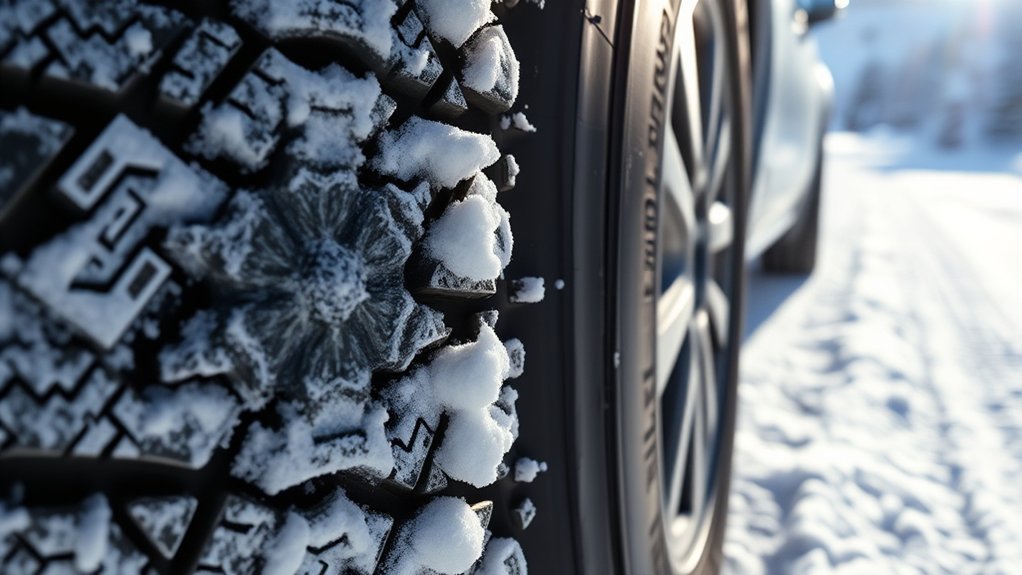
3PMSF means Three-Peak Mountain Snowflake. It is also commonly called the Alpine symbol. The mountain-and-snowflake mark appears on a tire sidewall after the tire meets the applicable severe-snow performance requirement.
In the United States, the current federal definition for qualifying light-vehicle snow tires uses a traction index of at least 112 compared with the ASTM F2493 Standard Reference Test Tire when tested on medium-pack snow under ASTM F1805-20. You can review the current requirement in 49 CFR 571.139.
The 3PMSF symbol proves that a tire cleared a severe-snow performance threshold. It does not prove that it is the best tire for every winter condition.
The mark is more useful than a simple design label because it is tied to measurable performance. Still, it is a minimum qualification threshold, not a ranking system. Two tires can both carry 3PMSF and perform very differently in snow braking, ice braking, cornering, wet roads, noise, wear, and summer handling.
Note: Do not read the snowflake as a guarantee of ice grip, short stopping distances, or safe driving at a particular speed. Tire condition, tread depth, inflation pressure, vehicle setup, road surface, temperature, and driving speed still matter.
Why Do Some Sources Say 10% and Others Say 12%?
You may see older explanations saying that a 3PMSF tire must provide “10% more traction.” That wording comes from an older reference-tire system. The U.S. Tire Manufacturers Association severe-snow bulletin lists a Snow Grip Index of 1.10 with the older ASTM E1136 SRTT14 reference tire and 1.12 with the newer ASTM F2493 SRTT16 reference tire.
The current U.S. federal definition uses the F2493 reference tire and a traction index of 112 or greater. For that reason, saying only “10% better than a baseline all-season tire” is both outdated and imprecise.
The more accurate takeaway is simple: 3PMSF is based on performance relative to a standardized reference tire under a defined snow test.
3PMSF vs. M+S: What’s the Difference?
If you are comparing winter tire markings, 3PMSF and M+S are not equivalent. M+S means Mud and Snow and is commonly based on tread-design criteria rather than the severe-snow performance threshold represented by 3PMSF.
| Marking | What It Tells You | Main Limitation |
|---|---|---|
| 3PMSF | The tire met an applicable severe-snow performance threshold. | It does not rank ice braking, snow cornering, wet grip, or summer performance. |
| M+S | The tire meets the manufacturer’s applicable mud-and-snow marking criteria. | M+S alone does not demonstrate the same severe-snow performance qualification as 3PMSF. |
For frequent snow, 3PMSF gives you more useful evidence of snow capability than M+S alone. For legal compliance, however, you still need to check the rules where you drive because some jurisdictions accept M+S while others require the mountain-and-snowflake pictogram or another approved winter setup.
How 3PMSF Tires Perform on Snow and Ice
The strongest conclusion you can draw from a 3PMSF mark is about qualified snow performance. You should be more cautious when making claims about ice, braking, or cornering because those characteristics are not all represented by the same North American qualification test.
Snow Traction Benefits
In North America, the severe-snow qualification is designed to distinguish tires that reach a defined level of longitudinal traction on prepared snow. That can make the mark especially useful when comparing a qualifying tire with an M+S-only product.
Many 3PMSF tires also use winter-oriented tread features such as numerous sipes, snow-catching edges, and compounds selected for colder conditions. Those features vary by model, however, and they are not identical on every tire carrying the symbol.
- Starts and acceleration: The North American qualification directly relates to longitudinal driving traction on snow.
- Braking: Check model-specific snow-braking test results instead of assuming the symbol guarantees a particular stopping distance.
- Cornering: Compare independent lateral-grip or handling tests when this is important for your route.
This distinction matters because a tire can meet the minimum 3PMSF threshold while another qualifying tire performs substantially better in a broader winter test.
What Does 3PMSF Tell You About Ice Grip?
3PMSF alone is not an ice-braking certification. Some tires carrying the mark provide excellent ice performance, especially dedicated winter models, but you cannot determine that level of performance from the snowflake alone.
ASTM F1805 states that its procedure addresses longitudinal driving traction; braking and lateral traction are separate properties. You can see that limitation in the ASTM F1805-20 description.
Europe provides a useful example of why the distinction matters. The European tyre-label system treats severe-snow and severe-ice capability as separate parameters. Certain qualifying passenger-car tires intended for extreme ice conditions can carry a separate Ice Grip pictogram after meeting an ice-braking requirement.
If black ice, polished intersections, or repeatedly frozen roads are a major part of your winter, compare ice-braking tests for the exact tire model rather than choosing on 3PMSF alone.
Warning: No tire symbol makes icy roads safe. Reduce speed, increase following distance, and drive for the actual road conditions even when all four tires are severe-snow rated.
When You Should Choose 3PMSF Tires
A 3PMSF tire makes the most sense when your driving includes regular snowfall, packed snow, mountain routes, ski-area travel, prolonged winter weather, or a jurisdiction that recognizes the severe-snow pictogram in its winter-tire rules.
You should also consider what type of 3PMSF tire fits your climate. A driver who sees heavy snow and prolonged freezing temperatures may benefit from a dedicated winter tire, while someone who needs one set for a milder four-season climate may prefer an all-weather tire carrying the same symbol.
[Products Worth Considering]

Measure tire tread depth quickly and accurately with this LUMITECO dial gauge that reads in 1/32" increments up to 14/32". The color-coded green/yellow/red zones make it easy to judge tire wear and know when replacement is needed. A rugged, compact design with a protective pouch helps keep the gauge ready for use on cars, trucks, motorcycles, and more.

The Naked Bee Foot Balm for Restoration Heel is an intensive foot treatment designed to penetrate and soften calloused, dry, and cracked feet. Honey, beeswax, and neem oil help deeply moisturize and soothe, while meadowfoam oil supports a protective barrier against moisture loss. Simply roll on to target tired feet and support visibly healthier-looking heels.

Monitor tire tread wear with a smart, color-coded depth gauge that shows clear condition ranges at a glance. The bar is range marked for fast, easy readings, helping you maintain safer traction and performance. Each gauge is portable with a pocket clip, and the set includes 20 units for daily use and sharing.
Severe Snow Conditions
For repeated travel on snow-covered roads, the 3PMSF mark gives you a useful minimum performance check that M+S alone does not provide.
- Prioritize it for frequent packed snow and mountain travel.
- Compare model-specific snow braking and handling results in addition to the symbol.
- Check local winter-tire and chain requirements before entering regulated routes.
- Keep adequate tread depth and correct cold inflation pressure throughout winter.
For the harshest conditions, do not assume that every 3PMSF all-weather or all-terrain tire equals a dedicated winter tire. The symbol establishes a threshold, while tire design and test performance tell you how far beyond that threshold a model goes.
Cold Temperatures and the 45°F (7°C) Rule of Thumb
You will often see about 45°F (7°C) used as a seasonal tire-change guideline. It is a useful rule of thumb in manufacturer guidance, but it is not the temperature threshold that defines 3PMSF certification.
Dedicated winter tires are designed with compounds and tread systems intended for cold-weather use. Standard all-season and summer tires have different design priorities, so their cold-weather performance can decline as temperatures fall.
Use sustained temperatures, expected snow or ice, your route, and the tire manufacturer’s intended season—not the 3PMSF pictogram alone—to decide when a seasonal change makes sense.
Winter Tires vs. All-Season Tires
A common mistake is to treat 3PMSF as another name for “winter tire.” It is better to think of it as a severe-snow performance marking that can appear on several tire categories.
| Tire Type | 3PMSF? | Typical Purpose |
|---|---|---|
| Standard all-season | Often no; check the sidewall | Year-round use in moderate climates, including light winter conditions depending on the model. |
| All-weather | Commonly yes | Year-round use with greater snow capability than a conventional all-season design. |
| Dedicated winter | Look for 3PMSF | Cold, snow, slush, and winter-focused operation, with model-specific differences in ice performance. |
| All-terrain | Some models | Mixed on-road/off-road use; a qualifying model may meet the severe-snow threshold without matching a dedicated winter tire in every winter test. |
If winter is consistently severe, compare dedicated winter products with 3PMSF all-weather alternatives using actual snow and ice test data. If winters are moderate and you do not want a seasonal change, a properly selected all-weather 3PMSF model may provide a better year-round compromise.
[Products Worth Considering]

Accurately measure tire tread depth with a calibrated gauge marked from 0 to 1 inch in 1/32 inch increments. The color-coded bar helps you quickly identify tread condition ranges, supporting safe driving for trucks, motorcycles, automobiles, and passenger vehicles.

Tiakia’s mini high-pressure frame pump delivers up to 260 PSI for faster, more efficient inflations with an optimized intake volume. It features a double-head valve design compatible with Schrader and Presta, plus a conversion for Donlop, making it versatile for bikes and many inflatables. The lightweight anodized aluminum build includes a mounting bracket for convenient carry, while the flexible high-pressure hose and IPX4 waterproof body support outdoor use.

A concentrated tire and tube mounting compound designed to help simplify mounting rubber tires and tubes on passenger, semi truck, construction, and OTR applications. Its ultra-thick formula packs beads effectively and includes rust inhibitors to help protect against corrosion during use.
Where to Find the 3PMSF Symbol on a Tire
You will find the 3PMSF symbol on the tire sidewall. It appears as the outline of a three-peaked mountain containing a snowflake.
Do not confuse it with M+S lettering, a decorative snowflake, or a brand-specific winter graphic. Look for the standardized mountain-and-snowflake pictogram.
Sidewall Symbol Location
The mark is molded into the sidewall, often near other tire identification and service information. Under the U.S. severe-snow definition, the Alpine symbol must appear on at least one sidewall of a qualifying snow tire.
- Inspect the visible tire sidewall.
- Look for the three-peaked mountain outline with a snowflake inside it.
- Check the exact tire model and size, because ratings can sometimes vary within a product family.
- Confirm that the size, load index, and speed rating are suitable for your vehicle.
The symbol confirms severe-snow qualification; the other sidewall markings confirm whether the tire is the correct specification for your vehicle.
Reading Tire Markings
Read the 3PMSF symbol together with the rest of the tire’s service information rather than in isolation.
| Marking | Meaning | What to Check |
|---|---|---|
| 3PMSF | Severe-snow performance qualification | Three-peak mountain and snowflake pictogram |
| M+S | Mud-and-snow marking | Do not treat it as equivalent to 3PMSF testing |
| Size code | Tire dimensions and construction | Match an approved vehicle fitment |
| Load index | Load-carrying rating | Meet the vehicle requirement |
| Speed rating | Rated speed capability under specified conditions | Follow vehicle and tire-manufacturer guidance |
Do 3PMSF Tires Meet Winter Tire Laws?
Often, but not automatically everywhere. Winter-tire laws vary by country, province, state, road, vehicle class, season, and current weather restrictions. A tire that is legal in one jurisdiction may not satisfy the rules somewhere else.
For example, the Government of Québec states that most motor vehicles registered in Québec must be winter-ready from December 1 through March 15. A compliant winter tire must carry the prescribed mountain-and-snowflake pictogram or be studded, subject to the government’s listed exceptions.
British Columbia is different. Current B.C. government winter-driving guidance states that both M+S and 3PMSF markings can meet the provincial minimum winter-tire requirement in applicable situations, although the province recommends the mountain-and-snowflake type for stronger winter performance.
Warning: Never assume that 3PMSF removes a chain requirement or satisfies every winter-road restriction. Check the transportation authority for the specific road and date before you travel.
European countries also have different national winter-tire rules even though the 3PMSF pictogram is widely used for severe-snow qualification. The European Commission tyre information identifies 3PMSF as the severe-snow pictogram but does not turn it into one universal winter law for every country.
How Tire Makers Test for 3PMSF Qualification
The exact test depends on the regulatory system and tire class, so it is misleading to describe every 3PMSF tire as passing one identical worldwide procedure.
In the United States, current FMVSS 139 refers to ASTM F1805-20 for the snow-traction test used in the light-vehicle snow-tire definition. The candidate tire is compared with a specified Standard Reference Test Tire on a medium-pack snow surface.
ASTM describes F1805 as a method for measuring straight-line longitudinal driving traction. It does not by itself measure braking or lateral cornering traction. That is why the 3PMSF mark should not be translated into a guaranteed snow stopping distance or ice-cornering claim.
European qualification works differently for some tire classes. The European Commission explains that passenger-car severe-snow testing under UNECE Regulation No. 117 uses braking performance on compacted snow, while truck qualification can use acceleration performance.
Test preparation can also include specified conditioning or break-in procedures. A roughly 100 km (62 mile) conditioning distance appears in some regulatory procedures, but the exact preparation depends on the standard being applied. It should not be presented as a universal rule for every 3PMSF test.
Once a tire meets the applicable threshold and marking requirements, the Alpine/3PMSF pictogram can identify its severe-snow qualification in that regulatory system.
Can You Use 3PMSF Tires All Year?
Sometimes. Whether you should use a 3PMSF tire all year depends on the type of tire, not merely the presence of the symbol.
An all-weather 3PMSF tire is specifically intended to provide year-round service while meeting a severe-snow requirement. A dedicated winter 3PMSF tire, by contrast, is optimized for winter and may wear more quickly or give up some warm-weather wet/dry performance when used through hot summer conditions.
- Check the category: Determine whether the model is all-weather, winter, all-terrain, or another type.
- Check warm-weather performance: The snowflake does not rate dry braking, wet grip, hydroplaning resistance, heat-related wear, or steering response.
- Check manufacturer guidance: Follow the tire maker’s intended seasonal use and your vehicle manufacturer’s fitment requirements.
Therefore, the answer is not “all 3PMSF tires are year-round tires” or “all 3PMSF tires must be removed in summer.” Some are designed for four-season service; others are not.
How to Choose the Right 3PMSF Tire
Start with the snowflake, but do not stop there. The best tire is one that meets your vehicle requirements and performs well in the specific winter conditions you actually face.
- Verify the real 3PMSF pictogram. Look for the three-peaked mountain with the snowflake molded into the sidewall.
- Choose the right tire category. Use dedicated winter tires for demanding winter-focused service or consider all-weather tires when you need a true year-round compromise.
- Match vehicle fitment. Confirm the approved size, load index, speed rating, and any vehicle-specific requirements.
- Compare snow braking and handling. Two qualifying tires may perform very differently beyond the minimum severe-snow threshold.
- Compare ice performance separately. This is especially important if freezing rain, black ice, or polished snow is common where you drive.
- Consider wet and dry performance. These characteristics matter if your winter includes rain, bare pavement, or frequent temperature swings.
- Check tread condition and pressure. Even a highly rated winter tire loses capability when badly worn, damaged, or incorrectly inflated.
Pro Tip: When two tires both have 3PMSF, do not assume they are equal. Use independent tests for snow braking, snow handling, ice braking, wet braking, and wear to identify which model fits your conditions best.
For balanced vehicle behavior, follow the vehicle and tire manufacturer’s recommendations for replacing and matching tires. Avoid creating a large traction difference between axles unless the manufacturer specifically approves that setup.
[Products Worth Considering]

The Continental Grand Prix 5000 is an allround road bike tire engineered for faster rolling, improved ride comfort, and enhanced puncture protection. It features a Vectran Breaker cut-protection layer, Lazer Grip micro-profile tread for confident cornering control, and Active Comfort Technology to damp vibration for smoother rides. BlackChili compound optimizes grip and speed for everyday performance and long-lasting confidence.

Measure tyre tread depth precisely with a digital gauge that reads in both MM and inches, helping you monitor safe driving conditions. The large LCD screen is easy to operate, and the compact tool fits for cars, trucks, and motorcycles. It provides high accuracy with a 0-25.4mm range and includes a 1-year warranty for added peace of mind.
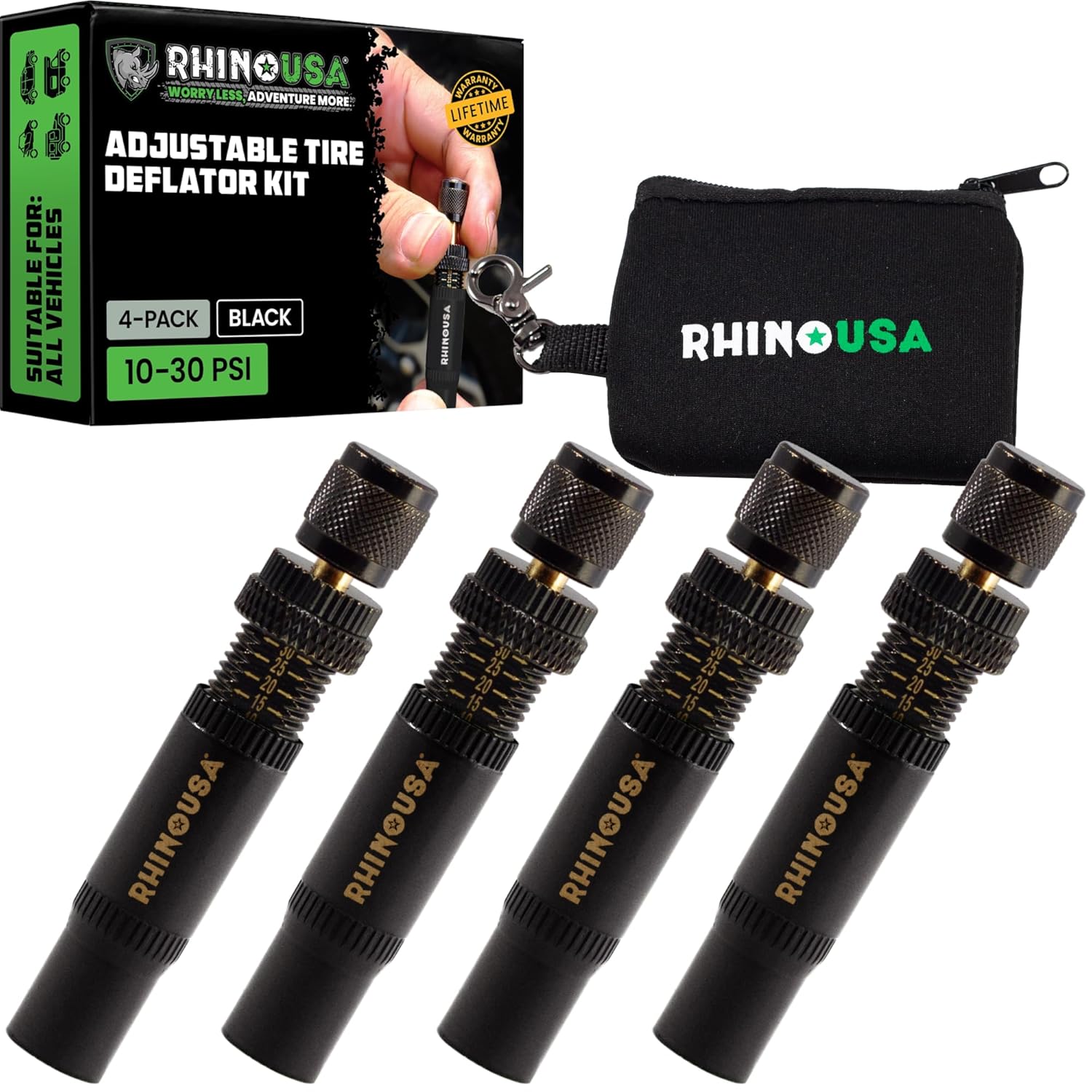
Use the Rhino USA adjustable tire deflators to air down all four tires at once by screwing one deflator onto each valve stem, letting you step away while the tires reach your preset pressure. Each deflator independently adjusts across a 10–30 PSI range with laser-etched indicators for quick setup and verification, making it ideal for beach, sand, and rocky off-road trails.
Frequently Asked Questions
What Does PMSF Mean for Tires?
PMSF usually refers to the Three-Peak Mountain Snowflake, or 3PMSF, tire symbol. The standardized mountain-and-snowflake pictogram identifies a tire that meets an applicable severe-snow performance requirement.
What Is the Symbol for Winter Snow Tires?
Look for the Three-Peak Mountain Snowflake or Alpine symbol: a snowflake inside a three-peaked mountain outline. It identifies severe-snow qualification. Do not confuse it with M+S lettering alone.
What Symbol Should I Look for When Buying Winter Tires?
Look for 3PMSF when severe-snow performance matters. Then compare the exact tire’s snow braking, ice braking, handling, wet grip, fitment, and intended seasonal use. The symbol is an important minimum qualification, not a complete tire-performance score.
Are M+S Tires OK for Winter Driving?
M+S tires may be adequate for some mild winter conditions and are legally accepted in some jurisdictions, including under certain British Columbia winter-tire rules. However, M+S alone does not show that the tire passed the severe-snow performance threshold represented by 3PMSF.
Is a 3PMSF Tire the Same as a Dedicated Winter Tire?
No. Dedicated winter tires commonly carry the symbol, but all-weather and some all-terrain tires can also qualify. Check the tire’s product category and intended seasonal use.
Does 3PMSF Mean a Tire Is Good on Ice?
Not necessarily. A particular 3PMSF tire may be excellent on ice, but the North American severe-snow qualification does not by itself certify ice braking. Check independent ice tests or an applicable separate ice-grip qualification.
Can an All-Weather Tire Have the 3PMSF Symbol?
Yes. Many all-weather tires are designed for year-round service while also meeting the severe-snow requirement. That is one reason the 3PMSF mark should not be treated as another name for a dedicated winter tire.
Sources
- 49 CFR 571.139 — Federal Motor Vehicle Safety Standard No. 139 — current U.S. snow-tire definition, reference tire, traction index, and Alpine symbol.
- U.S. Tire Manufacturers Association TISB 37 — severe-snow definition, reference-tire thresholds, and sidewall marking.
- ASTM F1805-20 — scope of the straight-line longitudinal driving-traction test and its limitations.
- Government of Québec — Requirements for Winter Tires — current seasonal requirement and compliant winter-tire marking.
- Province of British Columbia — Winter Tire Guidance — M+S and 3PMSF treatment under B.C. winter-driving rules.
- European Commission — Tyres — severe-snow testing, 3PMSF labeling, and separate ice-grip information.
Conclusion
When you see the 3PMSF symbol, you know the tire has met an applicable severe-snow performance threshold rather than relying on M+S lettering alone. That makes the mountain-and-snowflake mark valuable when winter roads are part of your driving.
Just remember what the symbol does not tell you. It is not a complete rating for ice braking, snow cornering, wet grip, hydroplaning resistance, summer use, or overall winter performance. Check the tire type, exact vehicle fitment, independent winter test results, tread condition, and local winter-tire rules before choosing. That gives you a much more reliable picture of how a tire will perform than the snowflake alone.

