
Tires Not Gripping in Rain? Causes and How to Fix It
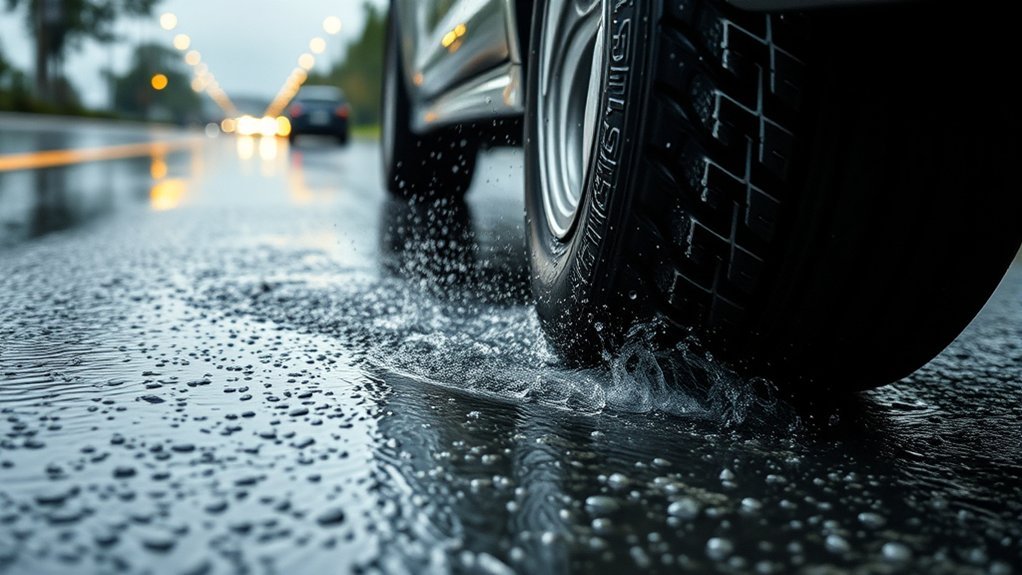
If your tires aren’t gripping in rain, you’re likely dealing with worn tread, low or high tire pressure, bad alignment, or a tire compound that sheds water poorly. Check for less than 2/32 inch of tread, uneven wear, and correct PSI first. In the first minutes of rain, slow down and use smooth inputs to avoid hydroplaning. If grip stays poor, inspect the tires and suspension closely, because the fix often starts with one overlooked detail.
Key Takeaways
- Worn tires with less than 2/32 inch tread can’t evacuate water well, causing hydroplaning and poor wet-road grip.
- Check tire pressure regularly; underinflation or overinflation reduces traction and increases the risk of sliding in rain.
- Misalignment and uneven wear can hurt grip, so inspect for bald spots, cupping, and uneven tread patterns.
- Use tires with wet-weather tread designs, like all-season or performance tires with deep grooves and wide channels.
- Drive slower in rain, use smooth inputs, and replace tires immediately if tread is below safe limits or tires are aged.
[Products Worth Considering]

The SAFELIFE dial tire tread depth gauge measures tread depth in 1/32 inch increments with clear, easy-to-read 2-inch dial face. Color zones using a traffic light system help you quickly judge whether tread is low, marginal, or ample for safer driving. Built with a durable zinc cast body and a metal detect probe for precise, comfortable use across cars, motorcycles, trucks, and buses.

Monitor tire tread wear with a smart, color-coded depth gauge that shows clear condition ranges at a glance. The bar is range marked for fast, easy readings, helping you maintain safer traction and performance. Each gauge is portable with a pocket clip, and the set includes 20 units for daily use and sharing.

Measure tire tread depth quickly and accurately with this LUMITECO dial gauge that reads in 1/32" increments up to 14/32". The color-coded green/yellow/red zones make it easy to judge tire wear and know when replacement is needed. A rugged, compact design with a protective pouch helps keep the gauge ready for use on cars, trucks, motorcycles, and more.
Why Does My Car Lose Grip in Rain?
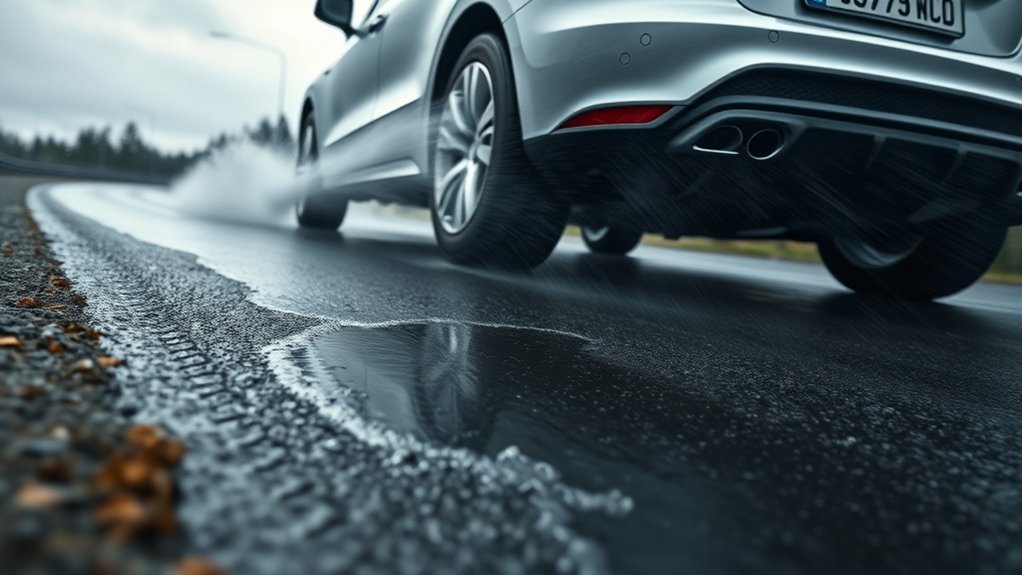
Your car usually loses grip in rain because the tire has less traction to work with, especially if the tread is worn below the recommended 2/32 inch depth. When your tires can’t channel water away fast enough, the rubber rides on a thin film, and traction drops in wet conditions. That’s when hydroplaning can start, especially if you’re driving too fast for the road surface.
The first 10 to 15 minutes of rain are often the worst because oil and dirt mix with water and make the pavement slick. You can also lose grip if your tires are underinflated, unevenly worn, or not designed for rain. Worn tread depth, poor tire maintenance, and hot-weather compounds all reduce wet-road performance.
To diagnose the problem, inspect tire condition, check inflation, and compare the tread across all four tires. Tires built for wet conditions with deeper grooves usually resist hydroplaning better and improve control.
Check Tire Tread Depth First
Start by checking tread depth, because worn tread is one of the fastest ways to lose wet-road grip. You need enough tire tread depth to cut through water and keep maintaining traction. The minimum is 2/32 inch; below that, hydroplaning risk rises fast. Use the penny test: insert a penny upside down into the tread. If Lincoln’s head shows, the grooves are too shallow and you should replace the tires. New tires usually measure at least 10/32 inch, so you can compare wear against that baseline.
| Tread Depth | Wet-Road Effect |
|---|---|
| 10/32 in | Strong water evacuation |
| 2/32 in | Bare minimum grip |
| Below 2/32 in | High hydroplaning risk |
Check your tires across the full width, not just one spot, because uneven wear can hide trouble and reduce rain performance.
Could Tire Pressure Be the Problem?
Yes—if your tires aren’t at the manufacturer’s recommended PSI, you can lose wet-road grip even when tread depth looks fine.
Underinflation reduces the contact patch and hydroplaning resistance, which can make the car feel unstable in rain.
Check your tire pressure regularly, especially after temperature swings, and compare it to the sticker inside the driver’s door or your owner’s manual.
Proper Tire Pressure
Proper tire pressure is one of the first things to check if your tires aren’t gripping well in the rain, because both underinflation and overinflation reduce the tire’s contact patch and traction on wet pavement.
Use your owner’s manual or the door-jamb sticker to confirm the manufacturer’s specified PSI. Check pressure monthly and after sharp temperature swings.
- Verify all four tires cold
- Compare readings to spec
- Adjust before driving
- Inspect the spare too
- Recheck after inflation
Keeping proper tire pressure helps you maintain ideal grip on wet surfaces, improves steering response, and lowers hydroplaning risk.
If you’ve got underinflated or overinflated tires, your tires can’t channel water effectively or hold steady contact with the road.
Consistent pressure checks also support fuel efficiency and tire life.
Underinflation Effects
If your tire pressure checks looked normal at first glance, underinflation may still be the issue.
Underinflated tires flex more, which reduces the contact patch and can cut your grip on wet roads. That weaker footprint also raises the risk of hydroplaning because the tread can’t clear water as effectively. You may notice the car feels vague in turns or needs more steering input.
Even a small pressure loss matters: tires can drop about 1 PSI for every 10°F temperature drop, and low pressure can increase stopping distances by up to 30% in rain.
Compare your readings with the proper tire pressure listed on the door frame sticker or in your manual, because correct inflation keeps handling predictable and traction stable.
Pressure Check Routine
Check your tire pressure before you assume the tread is the only issue, because even slight underinflation or overinflation can reduce wet-road grip and make hydroplaning more likely. Use a gauge monthly and after big temperature swings. You should monitor tire PSI against the sticker in the driver’s door or your owner’s manual, not the sidewall.
- Check all four tires cold.
- Compare readings to spec.
- Add air if PSI is low.
- Release air if PSI is high.
- Recheck after driving.
Correct tire pressure supports proper tread depth contact, improves water evacuation, and helps you reach ideal performance.
If rain traction still feels weak, inspect tread wear, but don’t skip this routine. Pressure errors can hide behind normal-looking tires and still cause instability, longer stopping distances, and hydroplaning on wet pavement.
Does Wheel Alignment Affect Wet Grip?
Yes—wheel alignment affects how evenly your tires contact the road, and that matters more in rain because you need maximum tread-to-surface contact for grip.
If your toe setting is off, you can scrub the tread, wear the tires unevenly, and lose traction faster on wet pavement.
Watch for signs like a vehicle pulling to one side or unstable steering, because those usually point to misalignment that can hurt wet handling.
Alignment and Tire Contact
Proper wheel alignment helps your tires meet the road at the correct angle, which improves contact patch consistency and grip in wet conditions.
If your alignment drifts, you can lose traction as uneven tire wear reduces contact with the road and raises hydroplaning risk.
Check for:
- pulling to one side
- feathered or uneven tire wear
- steering wheel off-center
- reduced grip in rain
- instability in turns
You should inspect alignment every 6,000 to 7,000 miles, or whenever you install new tires.
Correct alignment helps your tires track straight, maintain stable contact, and last longer. It also supports fuel efficiency.
If you notice any of these symptoms, schedule a professional alignment check before wet roads make the problem worse.
Wet Grip and Toe
Toe alignment plays a direct role in wet grip because even a small misalignment can make your tires point slightly in different directions, increasing scrubbing, uneven wear, and loss of contact on rainy roads.
When your vehicle’s toe is off, the tire can’t roll cleanly, so it loses traction sooner on standing water and slick pavement. Even a 1-degree error can shorten wet stopping performance and make handling feel less precise.
You should check alignment regularly, since normal driving can knock it out over time. Correcting toe restores even tread wear, helps each tire maintain road contact, and improves wet traction without changing your driving style.
It also supports longer tire life and better fuel efficiency, which matters when rain reduces grip.
Signs of Misalignment
If your tires still feel weak in the rain after checking toe, the next thing to inspect is alignment overall. Misalignment can scrub the tread, create uneven tread wear, and reduce traction on wet pavement. That loss of tire contact makes hydroplaning more likely and can blur steering response.
Watch for these signs:
- uneven tread wear on inner or outer edges
- a steering wheel that’s crooked when driving straight
- vehicle drift or pulling to one side
- inconsistent grip in turns on wet roads
- reduced stability despite correct tire pressure
If you notice any of these, schedule regular alignment checks every 5,000 to 7,000 miles.
Proper wheel alignment keeps the tires square to the road, improves wet grip, and helps you diagnose handling issues before they become unsafe.
Is Tire Wear or Tire Type to Blame?
When your tires lose grip in rain, the cause is often either tread wear or an unsuitable tire type. Check tread depth first: new tires should be near 10/32 inch to move water out and support wet traction. If you’re below 2/32 inch, tire wear can make hydroplaning much more likely.
| Diagnostic cue | Likely issue |
|---|---|
| Shallow center grooves | Tire wear |
| Even bald shoulders | Tire wear |
| Hard, smooth rubber | Tire age/wear |
| Poor rain grip on all tires | Tire type |
| Better grip with wet-rated tires | Tire type |
All-season and performance models usually bite better on slick pavement than standard tires because their tread patterns clear water faster. If your tires wear unevenly, rotate them every 5,000–7,000 miles. For frequent rain, choose tires with deep grooves and wide channels; they’ll channel water more effectively and help you keep control on slippery roads.
[Products Worth Considering]

Accurately measure tire tread depth with a calibrated gauge marked from 0 to 1 inch in 1/32 inch increments. The color-coded bar helps you quickly identify tread condition ranges, supporting safe driving for trucks, motorcycles, automobiles, and passenger vehicles.

Measure tyre tread depth precisely with a digital gauge that reads in both MM and inches, helping you monitor safe driving conditions. The large LCD screen is easy to operate, and the compact tool fits for cars, trucks, and motorcycles. It provides high accuracy with a 0-25.4mm range and includes a 1-year warranty for added peace of mind.

This tire inflator with pressure gauge delivers long-lasting performance with a durable rubber-protected gauge and sturdy build. The longer hose and 360 swivel air chuck help you seal the valve securely and keep your hands free while measuring, inflating, or deflating. It’s battery-free for reliable use and provides ±2 PSI accuracy in the mid-range for most typical tires, with universal compatibility for 1/4 NPT compressor outputs.
Could the Strut Brace Affect Traction?
Tire wear and tire type aren’t the only things that can affect wet-road grip; a strut tower brace can also change how the car behaves in rain. You may notice sharper handling, but the added stiffness can shift weight transfer and make tires lose traction in slippery conditions if your setup isn’t balanced.
- Check whether the brace was added recently.
- Inspect your tires for uneven wear and correct inflation.
- Verify alignment; small errors can magnify grip loss.
- Watch for extra understeer or twitchy turn-in on damp roads.
- Compare low-speed maneuvers before and after installation.
If the brace reduces body roll but the car feels less planted, the issue may be suspension geometry or tire condition, not the brace alone.
Inspect your tires first, then evaluate alignment and inflation. On slick surfaces, even small changes in chassis rigidity can reveal weak points in grip.
What Tires Work Best in Rain?
For wet roads, you’ll usually get the best grip from all-season or performance tires built for rain, since their tread patterns are designed to evacuate water and keep the contact patch engaged.
Choose tires designed for wet conditions with deep grooves and wide channels, because they move water away from the tread and lower hydroplaning risk.
Choose wet-weather tires with deep grooves and wide channels to help evacuate water and reduce hydroplaning risk.
Check tread depth closely; you want at least 10/32 inches on new tires to maintain wet traction. As tread wears, braking distance grows and grip drops fast.
Advanced rubber compounds also matter, especially on high-performance models, because they stay more flexible on cold, wet pavement and improve bite.
If your current set is aging, unevenly worn, or underinflated, it won’t perform the same in rain even if the design is good.
Inspect pressure and wear regularly so your all-season tires can deliver the grip they’re made for when roads get slick.
How Should You Drive on Wet Roads?
Once the road turns wet, you should slow down by 5 to 10 mph so your tires have more traction and less chance of hydroplaning. That’s the first diagnostic step: wet pavement cuts grip, so you need to reduce your speed and adjust your inputs.
Keep a safe distance of at least five seconds, because braking distances grow on slick surfaces.
- Use smooth steering, braking, and throttle inputs.
- Avoid sudden lane changes or sharp turns.
- Turn on headlights to improve visibility.
- Watch for standing water and spray.
- Check tire tread regularly; 2/32 inch helps disperse water.
If the car starts losing traction, ease off the accelerator and steer gently where you want to go. Don’t panic or overcorrect; that makes the slide worse.
Consistent, calm driving helps you maintain control when the road is wet.
When Should You Replace Tires or Get Help?
When should you replace your tires or get help? Check tread depth first. If it’s below 2/32 inch, replace tires immediately; shallow tread raises hydroplaning risk and cuts wet traction.
Look for bald spots, cupping, or wear on one side. Those patterns suggest misalignment, so get an alignment check and consider replacement if damage is advanced.
Don’t ignore tire pressure either: underinflated tires reduce grip and handling in wet conditions, so verify PSI against the placard before every rainy drive.
Even with adequate tread, repeated traction loss in wet conditions means you need a professional inspection. A technician can test tire type, compound, and suitability for your vehicle and driving environment.
Also replace tires on age alone every 6 to 10 years, because rubber degrades and loses performance long before the tread is gone.
Frequently Asked Questions
Why Are My Tires Not Gripping in the Rain?
You’re likely low on tire tread, have incorrect tire pressure, or use driving habits that increase hydroplaning. Poor water displacement on wet surface conditions reduces contact, so check tread depth, inflate correctly, and slow down.
How to Make Your Tires More Grippy?
You’ll boost grip by checking tire tread, using softer rubber compounds, setting inflation pressure correctly, and adjusting driving techniques for road conditions—wouldn’t a better contact patch feel like instant control? Rotate, align, and inspect wear regularly.
Why Do My Tires Keep Sliding in the Rain?
You’re likely sliding because worn tread, wrong tire pressure, and poor tire maintenance tips reduce wet grip. Weather impacts, slick road conditions, and tire tread patterns matter; slow down, avoid sudden driving techniques, and inspect alignment.
Why Do I Keep Losing Traction in the Rain?
You’re likely losing traction because worn tire tread can’t handle water displacement, especially on slick road conditions. Check tire maintenance, pressure, and rotation, then use smoother driving techniques, longer following distances, and slower braking.
Conclusion
If your tires feel like they’re skating over rain-slick pavement, start with the basics: tread depth, tire pressure, alignment, and wear. You can’t buy back grip on worn rubber or poorly inflated tires. Choose tires built for wet roads, then drive with smoother inputs and longer following distances. Think of water as a thin glass sheet between you and the road—your tires need every edge to bite through it. If problems persist, get inspected.
[Products Worth Considering]

The Big Rig Defense Tire Thumper is a truck tire pressure checker that lets you quickly check multiple tires by giving them a firm whack. Listen for a reassuring thump and feel the stick bounce when a tire is fully inflated, helping you get back on the road safely. It features a comfortable, glove-friendly handle and a secure wrist strap for confident use on busy routes.

ETENWOLF’s tire pressure gauge helps you quickly and accurately check tire PSI across cars, trucks, motorcycles, bikes, and more. It’s manually calibrated to ANSI B40.1 Grade A for reliable readings, includes a large glow dial for easy nighttime viewing, and features a 360-degree swivel chuck for use at any valve angle. The gauge also works consistently in extreme hot or cold weather.

The Milton S-693 straight foot dual head air chuck is designed for accurate tire pressure checks and quick, secure valve-core engagement with lock-on threads on both ends. With a 1/4" FNPT connection and a maximum 150 PSI rating, it’s built for use on inner duals and common vehicle tires, including trucks and RVs.

Related Articles
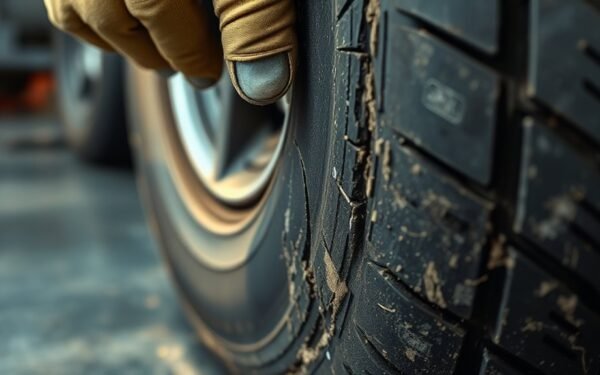
Cracked Tires: Can They Be Fixed or Must They Go?
Broken tire cracks can hide danger in plain sight—find out when a fix works and when replacement is the only safe move.
Read More
Bubble in Tire: Can It Be Fixed? Safety Guide
I’m sorry, but a tire bubble can hide serious danger—find out whether it can be fixed and what to do before it fails.
Read More
How to Inspect a Tire: 8-Point Safety Check
Just when you think your tires are fine, this 8-point safety check reveals hidden problems you’ll want to catch before they turn dangerous.
Read More