
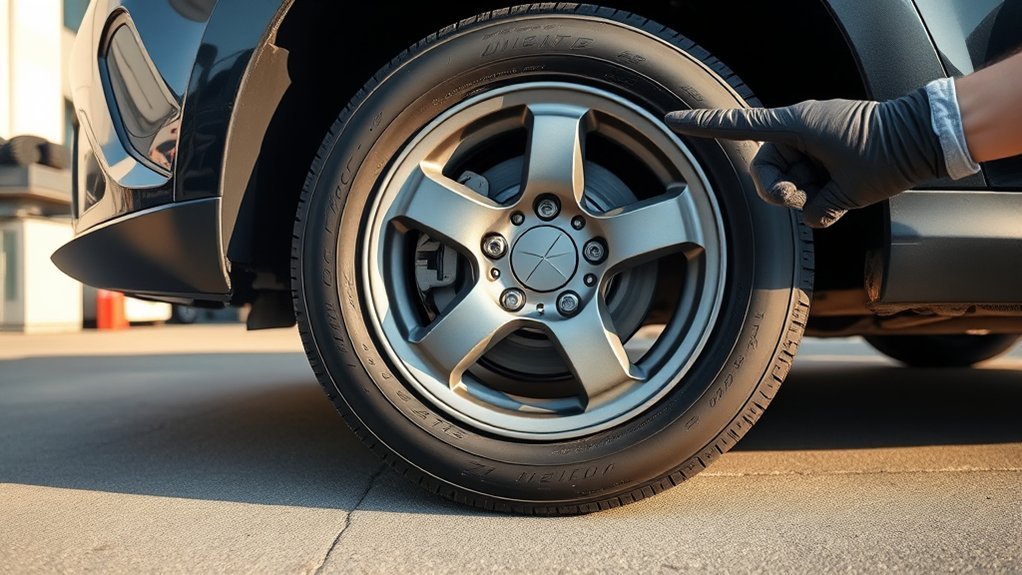
A bubble in your tire is a serious warning sign, not a cosmetic flaw. An outward bulge—especially on the sidewall—usually means the tire’s reinforcing cords or internal structure have been damaged. A confirmed bubble cannot be safely patched or plugged. Stop at a safe location, use a suitable spare or roadside assistance, and have the damaged tire replaced.
Quick Answer
No, a true tire bubble cannot be safely fixed. An outward bulge normally points to internal structural damage, often after a pothole or curb impact. Do not rely on a patch, plug, extra air, or a few more miles of driving. Move only as needed to stop safely, then use a spare or roadside assistance and replace the tire.
Key Takeaways
- A true outward tire bubble or bulge usually indicates internal structural damage and requires replacement.
- There is no reliable “safe number of miles” you can drive on a bubbled tire.
- Potholes, curb strikes, road hazards, underinflation, and overloading can increase the risk of internal tire damage.
- A normal inward sidewall indentation on a radial tire is different from an outward bubble.
- Replacement tires must meet your vehicle’s size, load, speed, and drivetrain requirements.
At a Glance
| Time Required | A few minutes to stop and inspect safely; replacement time depends on roadside or tire-shop service. |
| Difficulty | Easy to identify visually; tire removal and replacement should be handled safely with the proper equipment. |
| Tools Needed | Flashlight for inspection; a suitable spare, jack, and lug wrench only if you can change the tire safely. |
| Cost | Varies by tire size, vehicle, tire model, service fees, and whether additional tires must be replaced to maintain a matched set. |
What a Tire Bubble Means
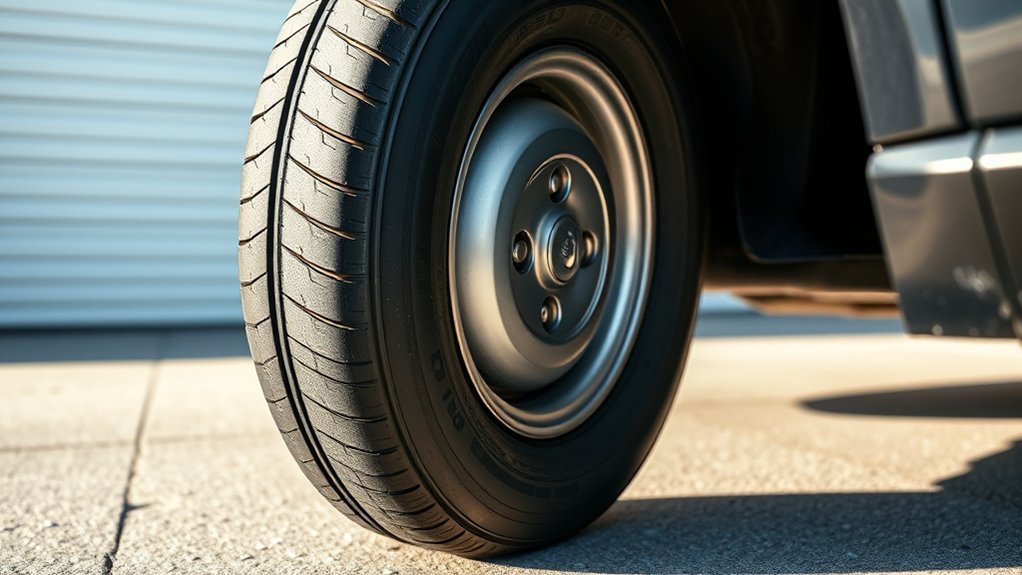
A tire bubble is an outward bulge or blister in the tire casing. According to Michelin’s sidewall-damage guidance, a sidewall bulge or bubble generally indicates damaged reinforcing cords, often following a severe impact.
When those cords are damaged, pressurized air can work into areas of the tire structure where it does not belong and push the outer rubber outward. That means the problem is deeper than the visible rubber surface.
A bubble therefore should not be treated like a small nail puncture. Once the tire’s load-bearing structure has been compromised, a normal patch or plug cannot restore the damaged cords.
Tire Bubble vs. Normal Sidewall Indentation
Not every uneven area on a tire sidewall is dangerous. The direction of the deformation matters.
An outward bulge or bubble is abnormal and needs immediate attention. An inward indentation can be a normal characteristic of radial-tire construction where internal cord material overlaps.
Note: Michelin explains that inward sidewall indentations can be normal on radial tires, while an outward protrusion or bubble can signal structural damage. If you cannot confidently tell which condition you have, let a tire professional inspect it before driving again.
Can You Drive on a Tire Bubble?
You should not continue normal driving on a tire with a confirmed bubble. The damaged area may have less ability to withstand pressure, vehicle load, heat, cornering forces, and impacts from the road.
There is also no reliable way to predict whether the tire will remain intact for another mile, ten miles, or longer. A bubble can remain visible for a period of time and still represent a structural weakness capable of failing suddenly.
Warning: If you notice a tire bubble while driving, do not make an abrupt or unsafe stop in moving traffic. Reduce speed smoothly, avoid hard braking and sharp steering, and stop at the first safe location. Then use an appropriate spare tire or call roadside assistance instead of driving to a tire shop on the damaged tire.
Tire problems in general have real safety consequences. NHTSA’s current TireWise data reports that 511 people died in tire-related crashes in 2024. That figure includes all tire-related crashes and is not specific to tire bubbles, but it reinforces why visible structural damage deserves prompt attention.
NHTSA reports 511 fatalities in tire-related crashes in 2024. A visible tire bubble should be treated as a structural safety problem, not something to monitor while continuing normal driving.
Why Tire Bubbles Form
Tire bubbles commonly develop after the tire’s internal reinforcement is damaged. A pothole, curb, deep road edge, or debris strike can squeeze the tire sharply between the obstacle and the wheel, damaging cords even when the outer rubber does not immediately look severe.
Running a tire underinflated or overloaded can also increase flexing and stress. These conditions may make a tire more vulnerable to damage and can contribute to internal deterioration.
Changes in outdoor temperature naturally change tire pressure, but temperature by itself should not create a healthy tire’s structural bubble. A true outward bulge indicates that the tire needs inspection for damage or separation rather than simply a pressure adjustment.
Common Causes
A hard road impact is one of the most common explanations for a sidewall bubble. Potholes, curbs, broken pavement, and road debris can compress the tire enough to weaken or break internal reinforcement.
Other factors that can increase the risk include prolonged underinflation, excessive vehicle load, running a tire while very low or flat, and previous impact damage that was not obvious immediately.
A manufacturing-related separation is also possible, although you should not assume a tire is defective based only on the appearance of a bubble. A dealer or tire manufacturer may need to inspect the wheel, inner liner, and damaged area before deciding whether the condition is road-hazard damage or potentially warranty-related.
Internal Tire Damage
A bubble can appear when damage weakens the tire’s internal cord structure and air pushes the surrounding rubber outward. The visible swelling is therefore evidence of a problem deeper in the tire casing.
- Impact damage can break or weaken reinforcing cords.
- Severe underinflation can damage the casing and inner liner.
- Overloading increases stress and heat in the tire.
- Internal damage may not always be visible from outside.
- A confirmed structural bulge requires the tire to be removed from service.
The U.S. Tire Manufacturers Association recommends removing a tire from the wheel when repairability must be assessed so the inside can be inspected for damage that cannot be seen externally.
How to Check for Tire Bubble Damage
Once the vehicle is safely parked, look around the sidewall, shoulder, and visible tread for an outward lump, blister, cut, scrape, or unusual deformation. Inspect both the outer-facing sidewall and any portion of the inner-facing sidewall you can see safely.
If the bubble appeared after a pothole or curb strike, also look for a bent wheel lip, fresh scrape, crack, or other impact mark near the same area. A severe impact can affect more than the tire.
[Products Worth Considering]

Yieokei Tesla jack pads are molded rubber lifting pucks designed for 2016-2026 Model 3/Y/S/X, including Juniper, to fit securely in the jack hole. They cushion the underframe and help position the jack precisely at the factory jack points to reduce risk of battery, paint, or chassis damage. The set also includes a tire repair tool kit for emergency roadside fixes and comes with a portable storage case to keep everything organized.

The Trivd Frol 1/2" air impact wrench delivers high performance torque up to 1500 ft-lbs with a twin hammer impact mechanism for strong, balanced blows. It features an ergonomic grip, compact lightweight design, and quick-stop control with 3 forward speeds up to 8000 RPM plus a reverse speed. Built for demanding automotive repair and tire shop work, the rear exhaust helps keep debris away from the surface.

Vigorder rubber cement glue delivers superior adhesion and cures quickly within about 30 seconds for seamless rubber bonding. Once cured, it helps provide a strong, durable, waterproof seal that holds up to vehicle weight, pressure, and heat. Suitable for cars, motorcycles, trucks, bicycles, and off-road tires, it’s designed for emergency patch and maintenance repairs.
Spotting Sidewall Bulges
A dangerous sidewall bulge usually looks like a smooth, rounded area that protrudes outward from the surrounding sidewall. Compare the shape with the same area on the other tires if needed.
Be especially cautious if you also noticed a new vibration, pulling sensation, pressure loss, or unusual thumping after an impact. Those symptoms can indicate tire, wheel, balance, alignment, or related damage that deserves professional inspection.
- Look for outward swelling rather than only surface discoloration.
- Inspect all four tires after a severe pothole or curb impact.
- Look for wheel damage close to the bulge.
- Take new vibration, pulling, or pressure loss seriously.
- Do not ignore a bubble because it looks small.
Checking For Hidden Damage
A visual inspection cannot reveal every type of internal tire damage. The inner liner and internal casing may need to be examined after the tire is removed from the wheel.
You can check the vehicle’s tire pressure when it is safe to do so, but normal pressure does not prove that a bubbled tire is structurally sound. The bubble itself is the reason to remove the tire from service.
Also inspect the tread for unusual wear and check whether the wheel appears bent or damaged. If the vehicle developed a vibration or pull after the impact, ask the technician to determine whether wheel balance, alignment, or suspension components also require attention.
Do not puncture, press aggressively on, or intentionally deflate the bulge in an attempt to diagnose it. Leave detailed inspection to a trained tire professional.
Why Tire Bubbles Can’t Be Repaired
A tire bubble cannot be safely repaired because the injury is structural rather than a simple air leak through an otherwise healthy tread area.
USTMA’s passenger and light-truck puncture-repair procedures limit normal repairs to qualifying punctures in the repairable tread area. The tire must be removed from the wheel for inspection, and a proper puncture repair uses both a stem to fill the injury and a patch to seal the inner liner.
A sidewall bubble does not meet those conditions. A patch, external plug, sealant, or extra air may affect an air leak, but none can rebuild broken or separated reinforcing cords.
- The visible bubble can represent damage beneath the rubber surface.
- The sidewall repeatedly flexes while the tire rolls.
- A patch cannot restore the original reinforcing structure.
- Hidden damage may extend beyond the visible swelling.
- Replacement restores the intact casing needed to carry load and pressure safely.
This is why a reputable shop may inspect the tire to determine the cause but still refuse to repair the bubble itself.
What to Do After You Spot a Tire Bubble
If you see a bubble while the vehicle is parked, do not begin a normal trip on that tire. If you discover the problem while already driving, slow down smoothly and reach the nearest safe stopping location without aggressive steering or braking.
A tire bubble should change your plan immediately: get the damaged tire out of service rather than trying to make it last until your next scheduled tire appointment.
- Stop somewhere safe. Park away from moving traffic on stable, level ground whenever possible.
- Look for obvious impact damage. Note the bubble, cuts, wheel damage, pressure loss, or other abnormalities without manipulating the bulge.
- Use a suitable spare if appropriate. Follow your vehicle owner’s manual and the spare tire’s instructions, including any speed or distance restrictions.
- Call roadside assistance if changing the tire is unsafe. Do not work beside fast traffic or on unstable ground.
- Have the damaged tire inspected. The shop can check the inner liner, wheel, and surrounding tire structure and determine the likely cause.
- Replace the tire with the correct specification. Matching requirements are especially important on AWD and 4WD vehicles.
[Products Worth Considering]

Steelman white tire marking crayons provide high-contrast, semi-permanent marks for repairing and inspecting tires and equipment. They write on wet or dry, smooth or coarse surfaces including rubber, metal, glass, and wood, making them ideal for puncture location and damage outlining. The lead- and zinc-free crayons resist weather and fading yet wipe away when you no longer need the marks.
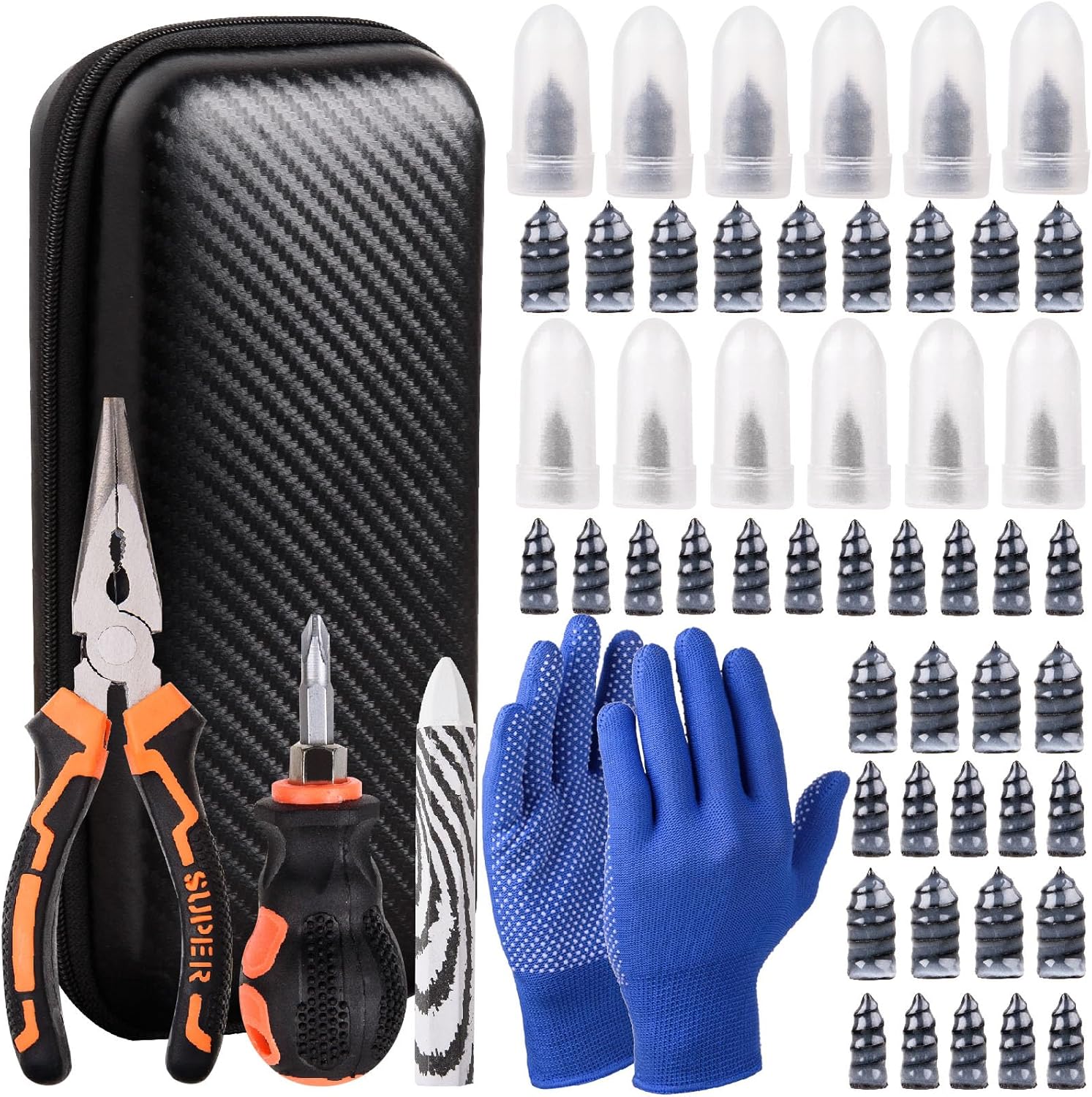
This tire sidewall puncture repair kit fixes flats fast without removing the tire, helping you get back on the road in minutes. It includes self-tapping repair nails, essential tools, gloves, and a portable storage bag for convenient roadside use. Designed for tubeless tires, it helps create a tight, leak-resistant seal for cars, motorcycles, trucks, SUVs, and ATVs.

The Dr.Roc spare tire tool kit helps you release, lower, or raise your spare tire with reliable extension tools and a lug nut wrench. It is made from rustproof automotive-grade steel and includes an organized carry case for convenient storage. Designed for compatibility with select GM models from the late 1990s through 2019, it uses upgraded extension components to install and remove spare tires with less hassle.
When to Replace the Tire
Replace a tire as soon as an outward bubble or structural bulge is confirmed, even when the tread still has plenty of depth. Tread life does not cancel out structural damage.
The replacement should follow the vehicle manufacturer’s requirements for tire size, type, load capacity, speed rating, and construction. Check the Tire and Loading Information label and the owner’s manual rather than choosing a replacement based only on what physically fits the wheel.
If only two tires are being replaced, major tire manufacturers generally recommend placing the tires with the deeper tread on the rear axle to help maintain stability, unless the vehicle manufacturer specifies otherwise.
For AWD or 4WD vehicles, do not assume that replacing one tire—or automatically replacing two—is always acceptable. Michelin’s tire-mixing guidance notes that these drivetrains may require closely matched tire diameters. Some manufacturers set specific limits for allowable tread-depth or circumference differences, and exceeding those limits can affect vehicle systems or stress the drivetrain.
Pro Tip: Check tire pressure at least monthly when the tires are cold. Use the pressure printed on the vehicle’s Tire and Loading Information label or specified in the owner’s manual—not the maximum-pressure number molded into the tire sidewall.
[Products Worth Considering]

This spare tire tool kit is designed for the 2004 to 2018 Ford F-150 to help you loosen and tighten wheel lug nuts and manage the spare tire and provided jack functions from underneath the vehicle. It includes the lug nut wrench and extension pieces plus a convenient storage carrying case for organized transport. The jack itself is not included.

TP-M13W combination repair unit kit includes wrapped stems with matching patches for fast, reliable tire repairs. It’s suitable for both radial and bias ply tires and is designed for chemical or heat vulcanization. Gray vulcanizing gum with blue backing helps create a strong bond, with the stem portion wrapped for added effectiveness.

This AstroAI 2-pack pencil tire pressure gauge delivers accurate tire readings across common vehicle types, with a precision nozzle that seals on valve stems for reliable results. It measures PSI, kPa, and BAR within a 10–75 PSI range, includes an integrated deflator valve, and features an ABS indicator bar for easier pressure checks. A compact, pocket-friendly design and battery-free operation make it ideal for road trips and everyday maintenance.
How to Reduce the Risk of Tire Bubbles
You cannot prevent every pothole or road hazard, but good tire care can reduce avoidable stress on the casing.
- Maintain the vehicle manufacturer’s recommended cold inflation pressure.
- Check pressure with a gauge at least monthly and before long trips.
- Do not overload the vehicle beyond its rated capacity.
- Slow down for potholes, broken pavement, and abrupt road edges when you can do so safely.
- Avoid striking curbs while parking.
- Inspect the tire and wheel after a hard impact, even if the tire does not immediately lose air.
- Have unexplained vibration, pulling, irregular wear, or repeated pressure loss inspected.
NHTSA recommends monthly tire inspections for pressure, treadwear, and physical damage such as cuts, cracks, bulges, and other abnormalities.
Can a Tire Bubble Be a Warranty Issue?
Sometimes the cause of a bubble is not obvious from the outside. A pothole or curb impact may leave a nearby wheel dent, sidewall scuff, or inner-liner bruise, while another type of separation may require closer examination.
Warranty coverage depends on the tire manufacturer, the warranty terms, and what caused the damage. Road-hazard damage is often treated differently from a manufacturing condition.
Michelin’s warranty guidance, for example, advises having a bubbled tire inspected so the dealer can determine whether impact evidence is present and whether warranty consideration applies.
Note: If the tire is relatively new, photograph the bubble, wheel, and surrounding sidewall before replacement and keep your purchase records. Documentation can help if the dealer or manufacturer needs to review the cause.
Frequently Asked Questions
Can a Tire With a Bubble Be Fixed?
No. A true outward bubble indicates structural damage or separation that a normal patch or plug cannot restore. The tire should be removed from service and replaced.
Can I Drive With a Bubble in My Tire?
Do not continue normal driving. If you are already moving, reduce speed smoothly and stop at the first safe location. Use an appropriate spare or roadside assistance rather than driving to the tire shop on the damaged tire.
Can a Tire Shop Fix a Bubble?
A shop can inspect the tire and determine the likely cause, but a structural sidewall bubble itself is not a normal repairable puncture. The damaged tire needs replacement.
How Long Will a Tire With a Bubble Last?
There is no dependable safe-distance or remaining-life estimate. A bubble represents a structural weakness, and the timing of a failure cannot be predicted from its size alone. Treat it as a replacement-now problem rather than trying to calculate how many miles remain.
Is Every Uneven Spot on a Tire Sidewall a Bubble?
No. A slight inward indentation can be normal on a radial tire because of the way internal cord material overlaps. An outward bulge or blister is different and should be professionally inspected.
Can a Small Tire Bubble Be Ignored?
No. Bubble size does not tell you how much internal strength remains. Even a small outward bulge can indicate damaged reinforcement and should be treated as a structural tire problem.
Is a Tire Bubble Covered by Warranty?
It depends on the tire warranty and the cause. Impact damage from potholes or curbs may be treated as road-hazard damage rather than a manufacturing defect. Have the tire inspected and keep photos and purchase records if you want the dealer or manufacturer to review it.
What If the Bulge Is in the Tread Instead of the Sidewall?
An unusual tread-area bulge can also indicate internal separation or other structural damage. Do not assume it is the same as a repairable nail puncture. Remove the tire from normal service and have a qualified tire professional inspect it.
Conclusion
A tire bubble is a structural warning that deserves immediate attention. A confirmed outward bulge cannot be restored with a normal patch or plug, and there is no reliable number of miles you can safely expect it to last. Stop at a safe location, use a suitable spare or roadside assistance, and replace the damaged tire with one that meets your vehicle’s specifications. After a pothole or curb impact, also have the wheel and surrounding components checked if you notice vibration, pulling, pressure loss, or visible damage.
Sources
- National Highway Traffic Safety Administration — TireWise — tire-related fatality data, recommended tire pressure, inspection, and maintenance guidance.
- Michelin — Sidewall Bulge or Bubble — internal cord damage, impact causes, and replacement guidance.
- Michelin — Sidewall Indentation — distinction between normal radial-tire indentations and abnormal bulges.
- U.S. Tire Manufacturers Association — Passenger and Light-Truck Tire Repair Procedures — repairable tread-area limits and internal-inspection requirements.
- Michelin — Mixing and Replacing Tires — replacement matching, rear-axle placement, and AWD/4WD considerations.
- Michelin FAQs — impact evidence and warranty inspection considerations for sidewall bubbles.

