
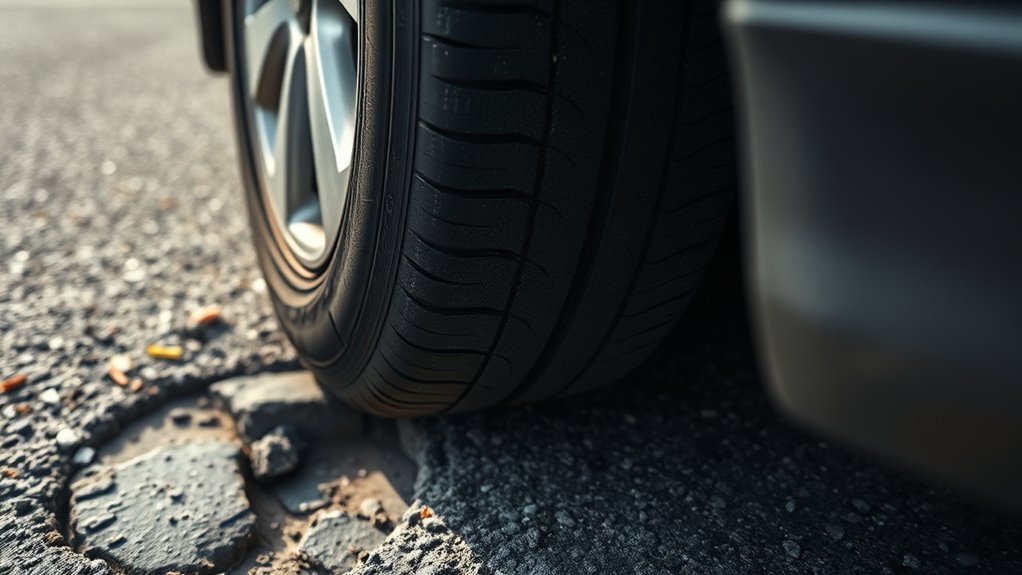
A tire bubble is a raised lump or blister in the tire’s sidewall or tread area. It usually means the tire’s internal cords, plies, or rubber layers have separated after impact damage, underinflation, overloading, or a possible defect. Treat it as urgent. A bubbled tire is not safe to keep driving on because it can lose air or fail without warning.
Quick Answer
A tire bubble usually comes from impact damage, low tire pressure, overloading, or a possible manufacturing defect that weakens the tire’s internal structure. Do not drive on it. Move the vehicle out of traffic if needed, install a spare or call for a tow, and replace the tire as soon as possible.
Key Takeaways
- A tire bubble is a sign of internal tire damage, not a cosmetic flaw.
- Potholes, curbs, road debris, underinflation, overloading, and defects can all lead to sidewall bubbles.
- A bubbled tire should be replaced, not patched, plugged, or driven on.
- Use a spare tire or roadside assistance if the vehicle is not safe to drive to a shop.
- After a hard impact, ask the shop to inspect the wheel, alignment, and suspension too.
At a Glance
| Time Required | Act immediately. Do not wait for the next oil change or tire rotation. |
| Difficulty | Easy to spot, but the tire must be inspected and replaced by a qualified tire technician. |
| Tools Needed | Flashlight, tire pressure gauge, spare tire if equipped, jack and lug wrench if you are trained to use them, or roadside assistance. |
| Cost | Varies by tire size and vehicle. Expect tire replacement, mounting, balancing, and possibly alignment or wheel repair after a hard impact. |
Warning: Do not keep driving on a tire with a bubble. Do not poke it, deflate it, patch it, or try to “watch it for a few days.” If you must move the vehicle, move it only to a safe spot out of traffic, then use a spare tire or call for a tow.
Is a Tire Bubble Safe to Drive On?
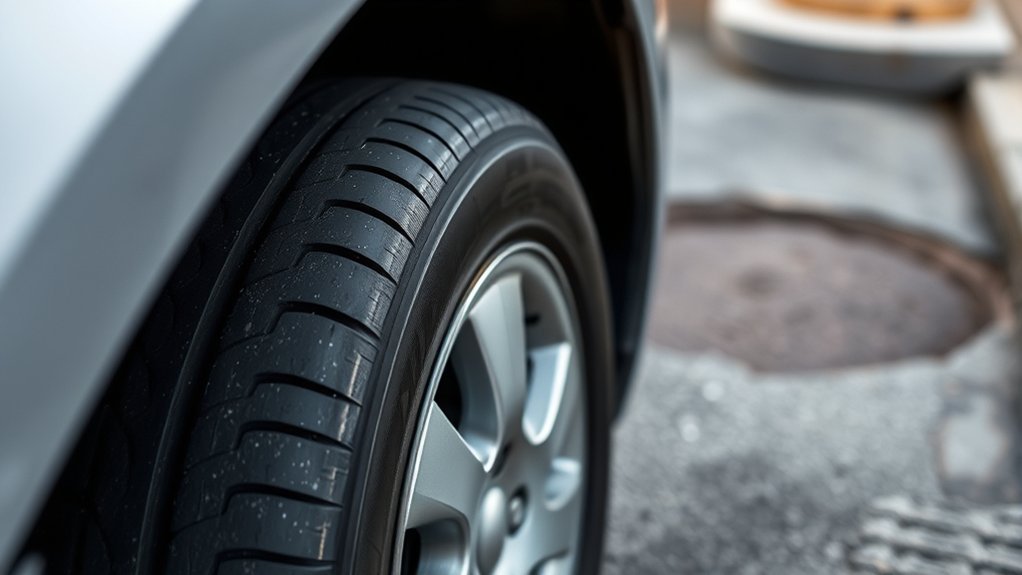
No. A tire bubble is not safe to drive on. When you see a raised bubble, the tire’s internal structure has likely been weakened. The damaged area may no longer hold pressure evenly, and the tire can fail suddenly, especially at highway speed, during hard braking, or after another pothole hit.
The National Highway Traffic Safety Administration reports that 511 people died in tire-related crashes in 2024. NHTSA also advises drivers to stop using tires with visible physical damage, including bulges, cuts, cracks, irregular wear, or performance problems. That makes a bubble an urgent safety signal, not a wait-and-see problem.
If the bubble appears while you are away from home, avoid the highway and do not try to drive normally to a shop. Pull over where it is safe, inspect the tire from outside the traffic lane, and use a spare or roadside assistance if the tire cannot be replaced on the spot.
What Causes a Tire Bubble?
A tire bubble forms when air pressure pushes against a weakened area inside the tire. That weak spot can come from broken sidewall cords, separated plies, heat damage, low pressure, overload, or a defect in the tire’s construction.
Impact Damage Causes
Impact damage is the most common cause of a sidewall bubble. Hitting a pothole, curb, speed bump, or road debris can pinch the tire between the obstacle and the wheel. That force may break internal cords even when the outside rubber looks only lightly scuffed.
The bubble may show up right away, or it may appear days later as the damaged area flexes under normal driving loads. After a hard hit, check the tire sidewalls, tread, wheel lip, and tire pressure before your next trip.
Low Pressure Risks
Low tire pressure can raise the risk of a bubble because an underinflated tire flexes more than designed. That extra flex builds heat, stresses the casing, and makes the sidewall more vulnerable when it hits a pothole or curb.
Check inflation with a tire pressure gauge, not by sight. NHTSA recommends checking all tires, including the spare, at least once a month when the tires are cold. Use the pressure shown on the driver-side door placard or in the owner’s manual, not the maximum pressure molded into the tire sidewall.
Overloading, Heat, and Tire Age
Overloading the vehicle can also stress the tire casing. If the tire is carrying more weight than it is rated for, the sidewall works harder, runs hotter, and becomes more likely to fail after an impact. Heat from long drives, hot weather, low pressure, and heavy loads can make existing internal damage worse.
Age matters too. Old tires can look usable while the rubber and internal materials have weakened over time. If your tires are older, cracking, losing pressure, vibrating, or showing uneven wear, have them inspected even if the tread still looks deep.
Why Potholes and Curbs Cause Tire Bubbles
Potholes and curbs cause tire bubbles by compressing the sidewall sharply. The tire is designed to flex, but a hard impact can exceed what the internal cords can handle. Once those cords break or separate, air pressure pushes outward and creates the visible bubble.
- A curb strike can pinch the sidewall against the rim and bruise the internal layers.
- A pothole hit can break cords even if the outer rubber does not tear.
- Repeated impacts can turn a small weak spot into a larger sidewall bulge.
- A bent wheel or poor alignment after the impact can keep stressing the same tire.
If a bubble appears after an impact, ask the shop to inspect more than the tire. The wheel may be bent, the rim bead area may be damaged, and the alignment or suspension may need attention.
Can Low Tire Pressure Cause a Tire Bubble?
Yes. Low tire pressure can contribute to a tire bubble because the sidewall flexes too much when the tire is underinflated. That repeated flexing can create heat and weaken the tire’s internal structure. If you then hit a pothole, curb, or debris, the tire is less able to absorb the impact safely.
Note: A Tire Pressure Monitoring System is helpful, but it is not a substitute for monthly tire checks. TPMS usually warns only when pressure is significantly low, so a tire can still be underinflated before the warning light turns on.
To lower the risk, check tire pressure monthly, before long trips, and after large temperature swings. Also check after any hard impact. A tire can suddenly lose pressure after a pothole or curb strike, even if it seemed fine at first.
Can a Tire Bubble Be a Defect?
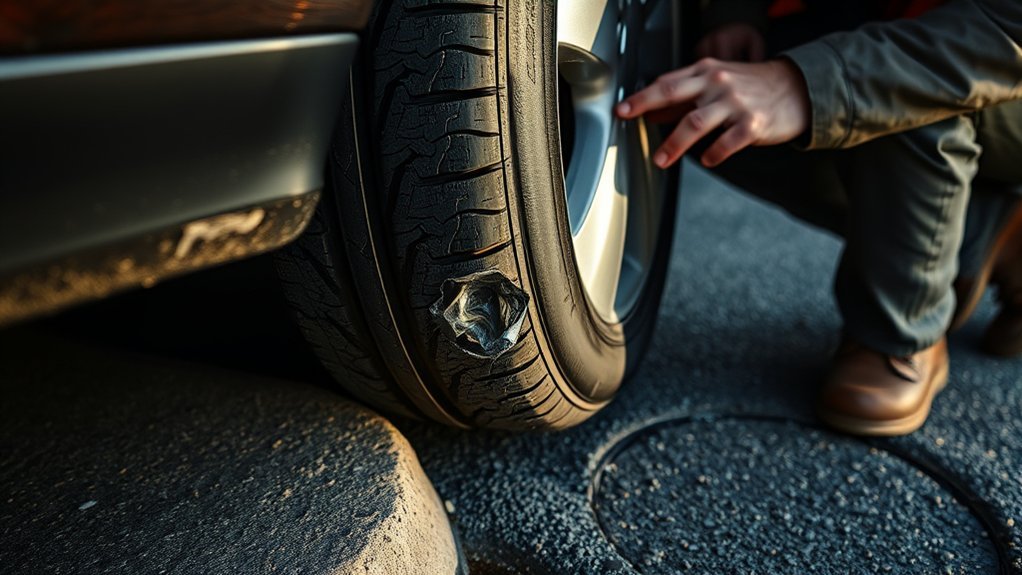
Yes, a tire bubble can sometimes be related to a manufacturing defect, but impact damage is more common. A defect may be more likely if the tire is fairly new, has no curb marks, has no puncture or visible impact damage, and shows a bubble during normal use.
Do not assume the cause on your own. Have a tire technician inspect the tire and document what they find. Ask whether the damage looks like impact break, sidewall separation, belt separation, underinflation damage, overload damage, or a possible defect.
You can also check the tire for recalls through the NHTSA recall search. If you suspect a safety defect, NHTSA allows vehicle and tire safety complaints. Complaints can help identify patterns that may lead to investigations or recalls.
Can You Fix a Tire Bubble?
No. You cannot safely fix a tire bubble. A patch or plug can address some punctures in the repairable tread area, but a bubble means the tire’s structure is damaged. Once the internal cords or plies have failed, the tire cannot be restored to safe strength.
| Condition | Safe Action |
|---|---|
| Sidewall bubble | Replace the tire immediately. |
| Tread-area bulge | Stop driving and have the tire inspected for separation. |
| Visible cord, cut, leak, or separation | Do not operate the vehicle on that tire. |
| Small sidewall indentation | Have it checked if you are unsure. A raised bubble is never normal. |
Federal commercial vehicle tire rules also prohibit operation on tires with tread or sidewall separation, exposed body ply or belt material, audible leaks, or inflation below the pressure needed for the load. Passenger-car drivers should treat the same types of damage as serious safety warnings, even when a specific commercial rule does not apply to their vehicle.
[Products Worth Considering]

The SAFELIFE dial tire tread depth gauge measures tread depth in 1/32 inch increments with clear, easy-to-read 2-inch dial face. Color zones using a traffic light system help you quickly judge whether tread is low, marginal, or ample for safer driving. Built with a durable zinc cast body and a metal detect probe for precise, comfortable use across cars, motorcycles, trucks, and buses.

Malco tire mounting and demounting lubricant is a ready-to-use tire lube formulated to reduce friction during tire installation for passenger cars, light trucks, farm tires, and heavy-duty equipment. It provides rust-inhibiting protection to help reduce corrosion on rims and wheels, and helps support proper tire bead seating during inflation to reduce air leakage. The silicone-free, soap-free formula is whitewall safe to help prevent discoloration on whitewall tires and sensitive sidewall markings.

Monitor tire tread wear with a smart, color-coded depth gauge that shows clear condition ranges at a glance. The bar is range marked for fast, easy readings, helping you maintain safer traction and performance. Each gauge is portable with a pocket clip, and the set includes 20 units for daily use and sharing.
What Should You Do About a Tire Bubble?
If you find a tire bubble, your goal is simple: stop using that tire safely and replace it. Do not keep driving because the tire still holds air. The problem is structural strength, not just pressure.
[Products Worth Considering]

The Tymate TM12 RV TPMS delivers real-time tire pressure and temperature monitoring with a stable 433Hz display for safer long-distance driving. It supports simultaneous monitoring across vehicle and trailer zones, includes six alarm modes for pressure, temperature, leakage, battery, and signal loss, and features easy DIY installation with auto calibration. Power is supplied via USB-C charging or solar recharging, with a wide 0–144 PSI range and up to 50 ft signal coverage for RVs and towable trailers.

The TYAMATE TM8 solar-powered wireless TPMS delivers real-time tire pressure and temperature monitoring with six alarm modes for safer driving. A vibrant color LCD display shows readings clearly while windshield mounting keeps it hands-free and easy to read. With a wide 0–87 PSI range, strong 433.92 MHz signal transmission, and quick sensor pairing, it’s ideal for RV, sedan, SUV, MPV, and truck use.

Vigorder rubber cement glue delivers superior adhesion and cures quickly within about 30 seconds for seamless rubber bonding. Once cured, it helps provide a strong, durable, waterproof seal that holds up to vehicle weight, pressure, and heat. Suitable for cars, motorcycles, trucks, bicycles, and off-road tires, it’s designed for emergency patch and maintenance repairs.
Inspect the Tire Immediately
Park in a safe, flat area away from traffic. Look at the tire in good light and check the whole sidewall, not just the bubble. Compare it with the other tires. Check for cuts, scuffs, rim damage, low pressure, exposed cords, tread separation, vibration, or a recent impact mark.
If the bubble is on the traffic side of the vehicle, do not stand in the roadway to inspect it. Move to a safe location first or call roadside assistance.
Replace, Don’t Repair
A tire with a bubble should be replaced. If your vehicle has a usable spare and you know how to install it safely, use the spare and drive only within the spare tire’s speed and distance limits. If you do not have a spare, if the spare is flat, or if the vehicle is in an unsafe location, call for a tow.
| Situation | Best Next Step |
|---|---|
| Bubble found at home | Do not drive. Arrange mobile tire service, install the spare, or tow to a shop. |
| Bubble found on the road | Pull off safely, avoid highway driving, and use a spare or roadside assistance. |
| Bubble after pothole or curb hit | Replace the tire and inspect the wheel, alignment, and suspension. |
| New tire with no impact marks | Ask the dealer to document the issue and check warranty or defect coverage. |
Use a Trusted Shop
Take the vehicle to a qualified tire shop, dealership, or service center. Ask the technician to remove the tire from service and inspect the inside if needed. A visual check from the outside can show the bubble, but the inside may reveal impact breaks, separation, cracking, or run-flat damage.
Ask for the diagnosis in writing if you plan to request warranty coverage. Keep the old tire until the warranty decision is made, if the shop or tire maker requires it.
Check the Wheel, Alignment, and Suspension
A tire bubble after a pothole or curb strike can be a clue that other parts took a hit too. Ask the technician to check the wheel for bends or cracks, inspect the bead seating area, and look for alignment or suspension damage if the steering wheel is off-center, the vehicle pulls, or you feel vibration.
Pro Tip: Take clear photos before the tire is removed. Capture the bubble, the full tire sidewall, the DOT date code, tread condition, wheel damage, and any curb scuff. These details can help with warranty, road-hazard, or defect questions.
How to Prevent Future Tire Bubbles
You cannot prevent every pothole hit, but you can reduce the risk of tire bubbles by keeping the tire strong, correctly inflated, and within its load rating.
- Check cold tire pressure monthly. Use the driver-door placard or owner’s manual pressure.
- Inspect after hard impacts. Look for sidewall bubbles, cuts, rim bends, and pressure loss.
- Avoid driving on a flat or nearly flat tire. Even a short drive can damage the casing.
- Do not overload the vehicle. Stay within the vehicle and tire load ratings.
- Slow down for potholes and speed bumps. A sharp impact at speed can break internal cords.
- Rotate tires as recommended. Rotation helps reduce irregular wear, but it does not repair or prevent impact damage by itself.
- Replace aging or damaged tires. Cracks, bulges, exposed cords, vibration, and repeated pressure loss need professional attention.
[Products Worth Considering]

This spare tire tool kit is designed for the 2004 to 2018 Ford F-150 to help you loosen and tighten wheel lug nuts and manage the spare tire and provided jack functions from underneath the vehicle. It includes the lug nut wrench and extension pieces plus a convenient storage carrying case for organized transport. The jack itself is not included.
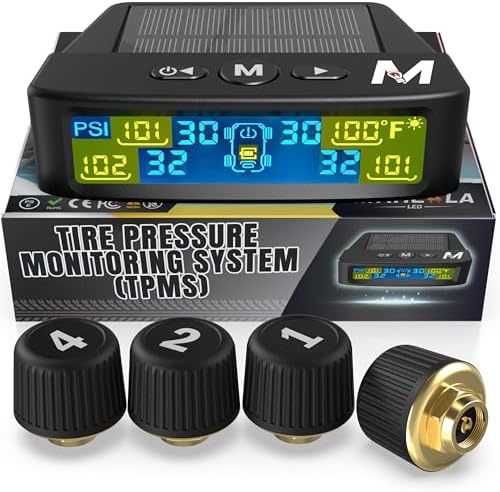
Marcala’s TPMS set of four sensors helps you monitor tire pressure and temperature in real time while driving, with updates every second. The bright color LCD uses auto-dimming for easy viewing, powered by dual solar and USB charging, and offers six alarm modes. Built for trailers, RVs, campers, trucks, and towing setups, the sensors support monitoring 1-4 wheels up to 98 PSI with IP67 waterproof protection.

Measure tire tread depth quickly and accurately with this LUMITECO dial gauge that reads in 1/32" increments up to 14/32". The color-coded green/yellow/red zones make it easy to judge tire wear and know when replacement is needed. A rugged, compact design with a protective pouch helps keep the gauge ready for use on cars, trucks, motorcycles, and more.
What If the Tire Blows Out While Driving?
If a damaged tire fails while you are driving, stay calm and keep the vehicle as balanced as possible. NHTSA recommends holding the steering wheel with both hands, avoiding sudden braking, gradually releasing the accelerator, steering to stabilize the vehicle, and pulling off the road only after the vehicle is under control.
Do not slam the brakes or jerk the wheel. Once stopped safely, turn on hazard lights, stay away from traffic, and call for help if you cannot change the tire safely.
Frequently Asked Questions
Can I drive on a tire with a bubble?
No. You should not drive on a tire with a bubble. A bubble means the tire’s internal structure is damaged or separated. Move the vehicle only if needed to get out of traffic, then use a spare tire, mobile tire service, or a tow.
Can a tire bubble be fixed?
No. A tire bubble cannot be safely fixed with a patch, plug, sealant, or sidewall repair. The damaged tire should be replaced because the internal cords or plies can no longer carry load safely.
What is the difference between a tire bulge and a tire bubble?
Drivers often use the words “bulge” and “bubble” for the same warning sign: a raised swollen area on the tire. A raised sidewall bubble or bulge should always be treated as unsafe. A small sidewall indentation can sometimes be a normal construction mark, but a raised bubble is not normal.
What causes a tire to develop a bubble?
Common causes include pothole impact, curb strikes, road debris, driving with low tire pressure, overloading, heat damage, driving on a flat tire, and possible manufacturing defects. The visible bubble forms when air pressure pushes against a weakened area inside the tire.
Can a tire bubble be covered by warranty?
Sometimes. If the tire has no impact marks and the shop finds evidence of a defect, the manufacturer or seller may consider warranty coverage. If the bubble came from a pothole, curb, or road debris, it is more likely to fall under road-hazard coverage if you purchased that protection.
Should I replace one tire or all four?
It depends on tread depth, drivetrain, tire size, and vehicle manufacturer guidance. Some all-wheel-drive vehicles need closely matched tread depths. Ask the tire shop to measure the other tires and check your owner’s manual before replacing only one tire.
Conclusion
A tire bubble is a serious safety warning. It usually means the tire’s internal structure has been damaged by impact, underinflation, overload, heat, age, or a possible defect. Do not patch it or keep driving on it. Replace the tire, inspect the wheel and suspension after a hard hit, and keep your tires properly inflated so you reduce the chance of another failure.
Sources
- NHTSA TireWise — tire pressure, tire damage, tire-related crash fatality data, TPMS limits, blowout guidance, and tire inspection guidance.
- NHTSA Recalls — tire recall search, safety defect complaints, and recall process guidance.
- eCFR 49 CFR 393.75 — federal commercial vehicle tire operation rules covering separation, exposed ply or belt material, leaks, tread depth, loading, and inflation.

