
What Causes a Bubble in a Tire? Causes, Risks & Next Steps
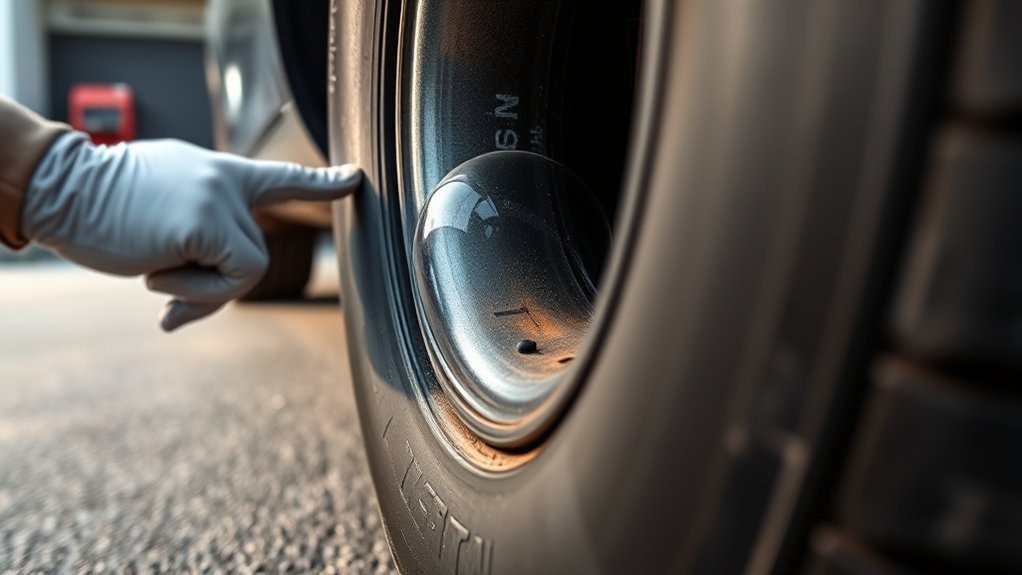
A tire bubble is a raised bulge on the tire’s sidewall or tread that usually means the tire’s internal cords, plies, or casing have been damaged. It is not a cosmetic flaw. A true bubble can lead to rapid air loss or a sudden blowout, so you should stop normal driving, use a spare tire if available, or arrange a tow to a qualified tire shop.
Quick Answer
A tire bubble is not safe to drive on. It means the tire’s internal structure may be compromised, and the tire can fail without warning. Do not patch, plug, or ignore it. Move the vehicle only far enough to get out of danger, then use a spare tire or tow the vehicle for replacement.
Key Takeaways
- A tire bubble usually points to broken internal cords, ply separation, or other structural damage.
- Common causes include pothole hits, curb impacts, driving underinflated, driving on a flat tire, overloading, and occasional manufacturing defects.
- A tire bubble cannot be safely repaired with a plug, patch, sealant, heat, or glue.
- Stop normal driving, inspect from a safe distance, take photos, and use a spare or tow truck.
- After replacement, check the wheel, rim, alignment, and tire pressure so the same problem does not come back.
At a Glance
| Time Required | A few minutes to inspect; usually 30–60 minutes at a tire shop for replacement, depending on shop workload and wheel condition. |
| Difficulty | Inspection is easy; safe replacement should be handled by a qualified tire technician unless you are only installing the spare. |
| Tools Needed | Flashlight, tire pressure gauge, phone camera, owner’s manual, spare tire kit, jack, lug wrench, or roadside assistance. |
| Cost | Visual inspection may be free. Replacement cost depends on tire size, brand, mounting, balancing, valve stem, TPMS service, and whether towing is needed. |
Is a Tire Bubble Safe to Drive On?
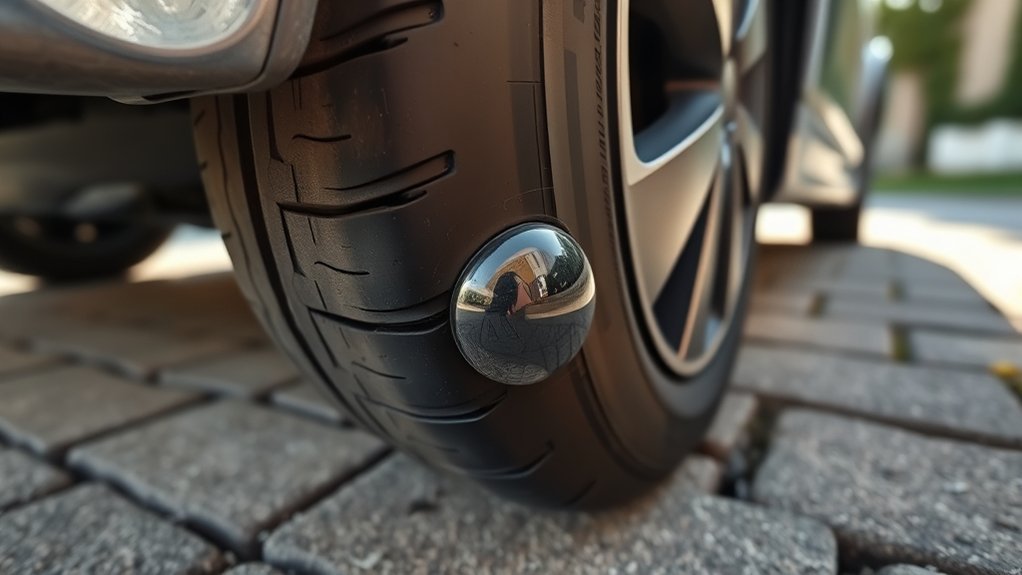
No, a tire bubble is not safe to drive on. A true bubble means the tire has lost part of its internal support. The sidewall or tread may still hold air while the car is parked, but it can fail when the tire heats up, flexes, carries load, or hits another bump.
The danger is sudden air loss. The National Highway Traffic Safety Administration explains that a blowout is a rapid loss of tire air pressure that can cause loss of vehicle control. NHTSA also reports that tire-related crashes happen by the thousands each year, which is why visible tire damage deserves immediate attention.
Warning: Do not keep driving on a tire bubble to “see if it gets worse.” If the tire fails at speed, you may lose steering control, damage the wheel, or cause a crash. Move out of traffic carefully, then use a spare or tow the vehicle.
[Products Worth Considering]

This tire repair kit provides fast emergency puncture repair without removing the tire from the rim, helping you get back on the road quickly. Its screw plug system is designed for punctures in both tread and sidewall and includes a complete patch plug tool set with essential accessories. A portable storage bag makes it easy to carry for cars, trucks, SUVs, motorcycles, and heavy-duty applications.

This VEVOR tire bead breaker uses a slide-hammer impact and wedge tip to separate tire beads from rims quickly and efficiently without damaging hub surfaces. The long handle and sturdy steel construction help reduce user strain while providing reliable, portable tire changing for cars, trucks, and more. Ideal for home mechanics and repair shops handling multiple vehicle tire sizes.

EVOULTES heavy duty tire inflator with an integrated gauge delivers accurate pressure readings from 10–120 PSI, helping you inflate, deflate, and check tires in one tool. The 16.5-inch extended dual-head air chuck with swivel base reaches hard-to-access dual wheel valves on trucks and RVs. A brass trigger core and side-mounted air release valve make operation smooth, with standard 1/4" NPT threading and quick-connect compatibility for easy setup.
What Causes a Tire Bubble?
A tire bubble forms when air pushes into a weakened area between the tire’s internal layers. That weak spot can come from impact damage, heat, excess flexing, overload, or a defect inside the tire. The raised area is the symptom; the real problem is structural damage underneath.
| Cause | What Happens Inside the Tire | What You Should Do |
|---|---|---|
| Pothole or curb impact | Internal cords can break and air can move between plies. | Inspect immediately and replace the tire if a bulge appears. |
| Low tire pressure | The sidewall flexes too much, builds heat, and weakens the casing. | Check cold pressure monthly and after impacts. |
| Driving on a flat | The rim can pinch and destroy the sidewall from the inside. | Stop as soon as safe; do not try to save a damaged sidewall. |
| Overloading | Excess weight increases heat and casing stress. | Follow the vehicle’s tire and loading label. |
| Manufacturing defect | Poor adhesion, contaminated material, or damaged cords can create a weak zone. | Save photos, DOT/TIN information, and service records for a warranty or recall check. |
Pothole and Curb Damage
Hitting a pothole, curb, speed bump, or road debris can pinch the tire between the obstacle and the wheel. That force can break internal cords even when the outer rubber looks mostly normal at first. A bubble may appear right away, later that day, or after several drives.
After a hard impact, check both sidewalls, the tread edges, and the wheel lip. Look for bulges, cuts, scuffs, cracks, exposed cords, vibration, or a steering pull. If you see a bubble, treat it as structural damage, not normal wear.
Pro Tip: Take clear photos of the bubble, the wheel, the road hazard if safe, the tire DOT/TIN code, and your tire pressure reading. Those details can help with road-hazard coverage, warranty review, or an insurance claim.
How Low Tire Pressure Causes Tire Bubbles
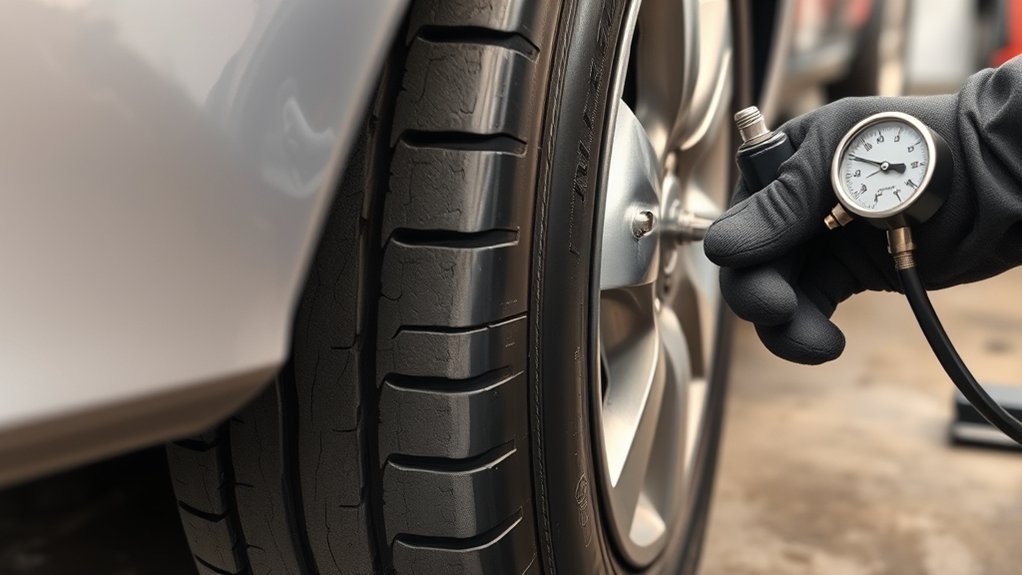
Low tire pressure makes the sidewall bend more than it was designed to bend. That repeated flexing creates heat and stress. Over time, the rubber, cords, and inner layers can weaken, especially if the tire also hits a pothole or carries too much weight.
Use the pressure listed on the vehicle’s tire and loading label or in the owner’s manual. Do not use the maximum pressure printed on the tire sidewall as your normal inflation target. NHTSA recommends checking tire pressure when the tires are cold, including the spare, and checking monthly even if your vehicle has a Tire Pressure Monitoring System.
Low Pressure Flexing
A properly inflated tire keeps its shape under load. An underinflated tire squats, flexes, and runs hotter. That extra movement can weaken the tire’s internal structure and make damage from ordinary road impacts more severe.
- Check tire pressure at least once a month.
- Check before long trips or heavy loads.
- Check after large temperature swings.
- Use an accurate gauge, not just a visual inspection.
- Do not ignore a TPMS light; it usually means at least one tire is already significantly underinflated.
Sidewall Stress Buildup
Sidewall stress builds up when the tire is repeatedly forced to flex, compress, and rebound. That can happen from low pressure, overload, aggressive driving over obstacles, or driving on a flat. Once the cords inside the sidewall are damaged, the tire cannot regain full strength.
| Condition | Effect | Possible Result |
|---|---|---|
| Low pressure | Extra sidewall flex | Heat, fatigue, and cord damage |
| Repeated driving | Internal layers weaken | Air moves between plies |
| Impact damage | Cords break or separate | A visible bubble forms |
| Continued use | The weak area grows | Blowout risk increases |
Bubble Risk Prevention
You can lower the risk of tire bubbles by keeping the tire from flexing, overheating, or taking sharp impacts. Keep pressure at the vehicle maker’s recommended level, avoid overloading, slow down for potholes and speed bumps, and inspect tires after any hard hit.
Note: A tire can be dangerously underinflated without looking flat. Use a pressure gauge. Visual checks are helpful for spotting damage, but they are not enough for inflation maintenance.
Tire Bubble vs. Normal Sidewall Indentation
Not every sidewall mark is a bubble. A bubble pushes outward from the tire. It looks like a raised lump, blister, or bulge. That outward shape is the warning sign.
A sidewall indentation usually pulls inward slightly. Continental explains that some dimples or indentations can come from normal radial tire construction and may not harm safety. Still, if you are not sure whether the mark is an indentation or a bulge, have a qualified tire specialist inspect it.
| What You See | Likely Meaning | Action |
|---|---|---|
| Raised bulge pushing outward | Possible broken cords or ply separation | Stop normal driving and replace the tire. |
| Small inward dimple | Possible normal construction indentation | Have it checked if unsure. |
| Cut, crack, exposed cord, or air leak | Tire damage | Do not drive normally; inspect and replace if structural damage is present. |
Can Manufacturing Defects Cause Tire Bubbles?
Yes, manufacturing defects can cause tire bubbles, although impact damage is more common. A defect can involve poor adhesion between layers, damaged internal cords, contaminated rubber, improper curing, or a faulty splice that allows air to move where it should not go.
If a bubble appears on a new or lightly used tire and you do not remember hitting a pothole, curb, or road debris, do not assume it is your fault. Have the tire inspected by the selling dealer, the tire manufacturer’s authorized retailer, or a qualified tire technician.
Defect-Related Bubble Formation
Defect-related bubbles may appear without obvious scrape marks, rim damage, or impact bruising. The tire still needs to come out of service because the risk is the same: the structure cannot be trusted under speed, load, heat, and cornering.
- Record the tire brand, model, size, and DOT/TIN code.
- Take photos of the bubble and the full sidewall.
- Save purchase receipts and installation records.
- Ask the dealer to document whether impact damage is visible.
- Check for open recalls through the tire manufacturer or NHTSA.
Warranty and Claim Options
You may have warranty, road-hazard, or recall options depending on the cause and age of the tire. Standard workmanship/material warranties usually do not cover pothole or curb damage, but road-hazard protection might. If the dealer finds no impact evidence, ask about a manufacturer defect review.
Keep maintenance records, rotation records, pressure records, photos, and the damaged tire until the claim is resolved. If the tire is discarded too soon, it may be harder to prove what happened.
What to Do When You Spot a Tire Bubble
When you spot a tire bubble, act like the tire is already unsafe. Do not press on the bubble, poke it, deflate the tire, or try to drive normally. The safest next step is to get the vehicle out of traffic and take the damaged tire out of service.
- Slow down smoothly. Avoid hard braking, sharp steering, and sudden lane changes.
- Pull over safely. Choose a flat area away from traffic if possible.
- Turn on hazard lights. Make your vehicle visible.
- Inspect from a safe position. Look for bulges, cuts, air loss, rim damage, or exposed cords.
- Take photos. Capture the bubble, tire size, DOT/TIN code, wheel, and any impact marks.
- Use a spare or call for a tow. Do not continue highway driving on the damaged tire.
- Visit a qualified tire shop. Ask for tire replacement and a wheel/rim inspection.
A tire bubble is a replacement problem, not a repair problem. The goal is not to save the damaged tire; it is to keep the vehicle controlled and get the tire out of service before it fails.
What If the Tire Blows Out While Driving?
If the tire fails before you can stop, focus on control. NHTSA’s blowout guidance is to hold the steering wheel with both hands, avoid panic braking, gradually release the accelerator, correct steering as needed, and pull off the road when the vehicle is stable and it is safe to do so.
- Do not slam on the brakes.
- Do not jerk the steering wheel.
- Keep the vehicle pointed where you want it to go.
- Let the vehicle slow down in a controlled way.
- Pull over only when you can do it safely.
[Products Worth Considering]

This compact capsule-style tire repair kit helps you quickly fix punctures and plug flats with minimal effort. The rugged stainless steel shell protects the contents for reliable roadside use, while the simple plug assembly makes repairs fast and tool-free. Suitable for motorcycles, cars, ATVs, UTVs, and even mountain bikes.

The JACO FlowPro Tire Inflator measures, inflates, and airs down tires up to 100 PSI with battery-free operation and ±2% accuracy after calibration. It features a glowing pressure dial for night visibility, a heavy-duty steel build with a hybrid hose, and a precision push-to-inflate thumb trigger. The patented Lightning Air Chuck locks on for a secure seal, and the kit includes quick-connect hardware for easy inline use with your air compressor.
Can a Tire Bubble Be Repaired?
No, a tire bubble cannot be safely repaired. A plug, patch, sealant, or screw-in repair might seal a small tread puncture in some situations, but it cannot rebuild broken cords or separated internal plies. A bubble is structural damage.
The U.S. Tire Manufacturers Association says puncture repairs are limited to the tread area only, must involve removing the tire from the wheel for inspection, and cannot be made where damage extends into the shoulder or sidewall area. Michelin also states that a tire with a bulge or bubble cannot be repaired and should be replaced.
Warning: Do not use a tire plug kit, tire sealant, heat, glue, or a sidewall patch on a tire bubble. Those methods do not restore the damaged internal structure and can give a false sense of safety.
How Is a Tire Bubble Replaced?
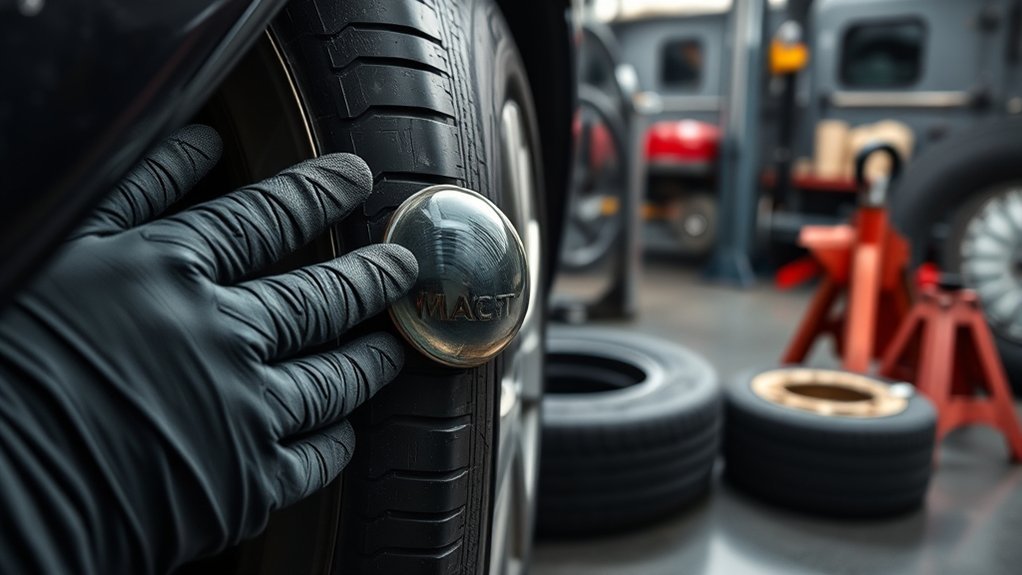
Replacing a tire with a bubble starts with removing the damaged tire from service. A technician should inspect the tire, wheel, valve stem, TPMS sensor area, and rim for impact damage. If the wheel is bent or cracked, installing a new tire without addressing the wheel can lead to vibration, air loss, or another failure.
- Lift the vehicle safely. The vehicle is raised at the correct jack point or on a shop lift.
- Remove the wheel assembly. The technician removes the wheel and checks for visible impact damage.
- Demount the tire. The damaged tire is removed from the rim so the inside can be inspected.
- Inspect the wheel and valve area. The rim, bead seat, valve stem, and TPMS components are checked.
- Select the correct replacement tire. The new tire should match the vehicle’s required size, load rating, speed rating, and drivetrain needs.
- Mount and balance the tire. The tire is seated, inflated, balanced, and checked for leaks.
- Reinstall and torque the wheel. Lug nuts are tightened to the manufacturer’s specification.
- Check alignment if needed. A hard pothole or curb impact can also affect alignment or suspension parts.
Should You Replace One Tire or More?
Sometimes one replacement tire is enough. Other times, you may need two or four. The right answer depends on tread depth, tire size, drivetrain, vehicle manufacturer guidance, and whether the tire model is still available.
- Front-wheel or rear-wheel drive: a tire shop may recommend replacing tires in pairs if tread depth is uneven.
- All-wheel drive: some vehicles require closely matched tread depth on all four tires to protect the drivetrain.
- Different tire model unavailable: the shop may recommend a matched pair or set for balanced handling.
- Severe impact: inspect the matching tire on the same axle and the wheel that hit the obstacle.
Check the owner’s manual and ask the tire technician to measure tread depth before deciding. New tires should match the vehicle specifications shown on the tire and loading label or the owner’s manual.
How to Prevent Tire Bubbles
You cannot prevent every road-hazard impact, but you can lower the odds of a tire bubble by reducing stress on the tire casing.
- Keep tires properly inflated. Use the vehicle placard PSI and check pressure when tires are cold.
- Inspect monthly. Look for cuts, cracks, bulges, uneven wear, nails, exposed cords, and sidewall damage.
- Slow down for potholes and speed bumps. Sharp impacts are one of the most common causes of sidewall damage.
- Avoid curb strikes. Do not pinch the tire while parking or turning sharply near curbs.
- Do not overload the vehicle. Follow the tire and loading information label.
- Rotate tires on schedule. NHTSA notes that rotation can reduce irregular wear; follow the owner’s manual or tire maker guidance.
- Check after impacts. If you hit a pothole, debris, or curb, inspect the tire and wheel as soon as you can do so safely.
- Respond to vibration or pulling. New vibration after an impact can mean tire, wheel, alignment, or suspension damage.
What Not to Do With a Tire Bubble
A tire bubble can tempt drivers to look for a quick fix, especially if the tire still holds air. Do not take shortcuts. The visible bulge is only the outside sign of internal failure.
- Do not patch the sidewall.
- Do not install a plug in or near the bubble.
- Do not use tire sealant as a fix for a bubble.
- Do not deflate and reinflate the tire to “reset” the bulge.
- Do not press, cut, heat, or puncture the bubble.
- Do not drive at highway speed to reach a cheaper shop.
- Do not ignore a small bubble; small structural failures can grow quickly.
Frequently Asked Questions
Can I drive on a tire with a bubble?
No. A tire with a bubble is unsafe for normal driving because the internal structure may be damaged. Move only far enough to get out of traffic if needed, then use a spare tire or arrange a tow to a tire shop.
How long can I drive with a tire bulge?
You should not plan to drive on it at all. A bulge can fail without warning, especially at speed, under load, in heat, or after another impact. The safe choice is to stop normal driving and replace the tire.
Can a tire with a bubble be fixed?
No. A bubble means the tire’s internal cords or layers may be damaged. Plugs, patches, sealants, and sidewall repairs do not restore that structure. The tire needs replacement.
Where can I get a tire bubble fixed?
A tire bubble is usually “fixed” by replacing the tire at a qualified tire shop, tire retailer, dealership service department, or trusted auto service center. If the vehicle is not safe to drive, call roadside assistance or a tow truck.
Is a small tire bubble still dangerous?
Yes. Even a small outward bulge can mean the tire casing is weakened. The size of the bubble does not prove the tire is safe. Have it replaced before returning to normal driving.
Can a tire bubble happen on the tread?
Yes, a raised area can appear on the tread as well as the sidewall. A tread bulge can also point to internal separation or belt damage, so it should be inspected immediately and usually requires replacement.
Will tire sealant help a tire bubble?
No. Tire sealant is meant for certain temporary puncture situations, not structural tire damage. It cannot repair broken cords, ply separation, or sidewall damage.
Conclusion
If you spot a tire bubble, treat it as a serious safety warning. The tire may still look inflated, but the casing has likely been weakened. Do not patch it, plug it, or wait for it to get worse. Get out of traffic, use a spare or tow service, document the damage, and replace the tire after a qualified inspection. A fast, careful response protects your vehicle, your passengers, and everyone else on the road.
Sources
- NHTSA TireWise: Tire Safety Ratings and Awareness — tire pressure, TPMS, blowout response, tire size, rotation, and inspection guidance.
- NHTSA: Safety and Savings Ride on Your Tires — tire-related crash statistics and tire-maintenance safety context.
- U.S. Tire Manufacturers Association: Puncture Repair Procedures — proper repair area, tread-only limits, and plug/patch repair warnings.
- Michelin USA: Sidewall Bulge or Bubble — why a tire with a bulge or bubble cannot be repaired and should be replaced.
- Continental Tires: Tire Damages — impact breaks, sidewall bulges, sidewall indentations, and prevention advice.
- Continental Tires: Tire Repair — repairable vs. non-repairable tire damage and why sidewall/structural damage requires replacement.

Related Articles
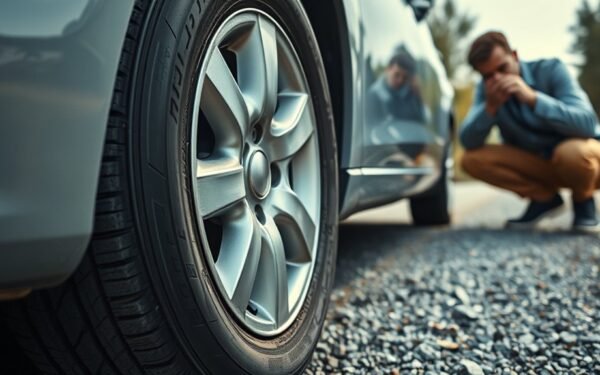
Can You Drive on a Tire With a Bulge? Safety Risks
Can you drive on a tire with a bulge, or is a sudden blowout lurking around the corner?
Read More
Is Tire Siping Worth It? Benefits and Drawbacks
Better grip in wet and wintry driving might tempt you—but is tire siping actually worth the tradeoffs?
Read More
Will a Donut Spare Fit Your Car? How to Check
How to tell if a donut spare will fit your car before you risk a dangerous mismatch.
Read More