
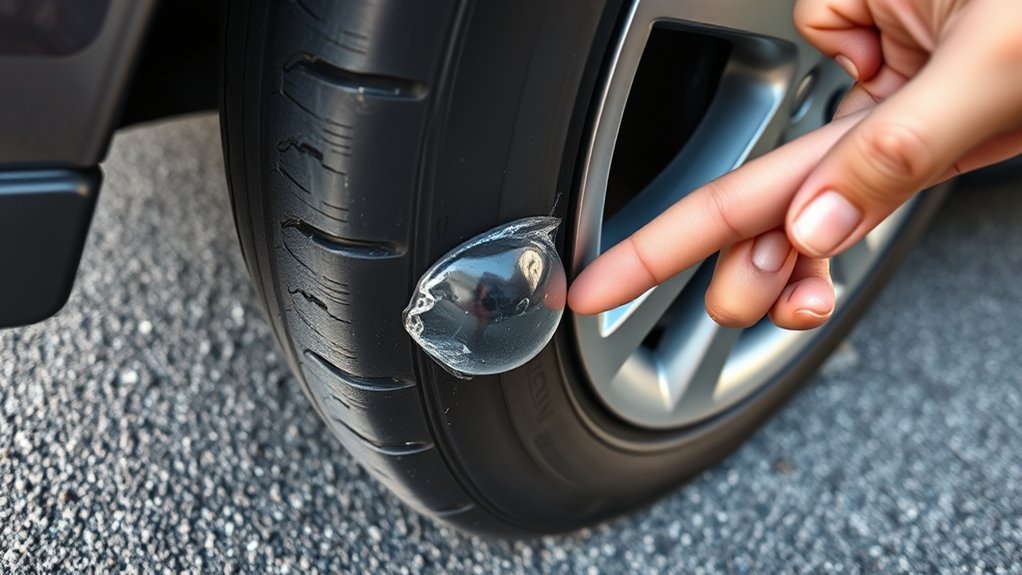
A bubble in your tire means the tire’s internal structure is damaged. The bulge may look small, but it can signal broken cords, separated plies, or air moving between tire layers. Do not keep driving on it. Move the vehicle only as far as needed to get safely out of traffic, then use a spare tire, roadside assistance, or a tow. A tire bubble cannot be safely repaired, so replacement is the safe fix.
Quick Answer
A bubble in your tire means the tire’s internal cords or plies are damaged. It is dangerous because the weakened area can fail without warning and cause a blowout. Do not drive on it except to move to a safe spot. Replace the tire, and have the wheel and nearby suspension checked.
Key Takeaways
- A tire bubble usually means internal tire damage, often from a pothole, curb strike, overload, low pressure, or a defect.
- Driving on a bubbled tire is unsafe because the damaged area can rupture and cause sudden pressure loss.
- A bubble cannot be fixed with a plug, patch, sealant, or sidewall repair. Replacement is the safe solution.
- Use a spare, roadside assistance, or towing instead of trying to drive normally to a shop.
- After an impact, inspect the wheel, alignment, suspension, and the tire on the other side of the axle.
Warning: Do not “watch” a tire bubble for a few days. A visible bulge means the tire has already lost structural strength. Even a short high-speed trip, heavy load, or sharp turn can increase the chance of sudden failure.
At a Glance
| Time Required | Stop immediately. Changing to a spare may take minutes, but full tire replacement depends on shop availability. |
| Difficulty | Easy to identify, but inspection and replacement should be handled by a qualified tire technician unless you are only installing the spare safely. |
| Tools Needed | Flashlight, tire pressure gauge, owner’s manual, spare tire kit if equipped, and roadside assistance or towing if no spare is available. |
| Cost | The tire must be replaced. Final cost depends on tire size, brand, road-hazard coverage, warranty status, and whether another tire must be matched. |
What Does a Bubble in Your Tire Mean?
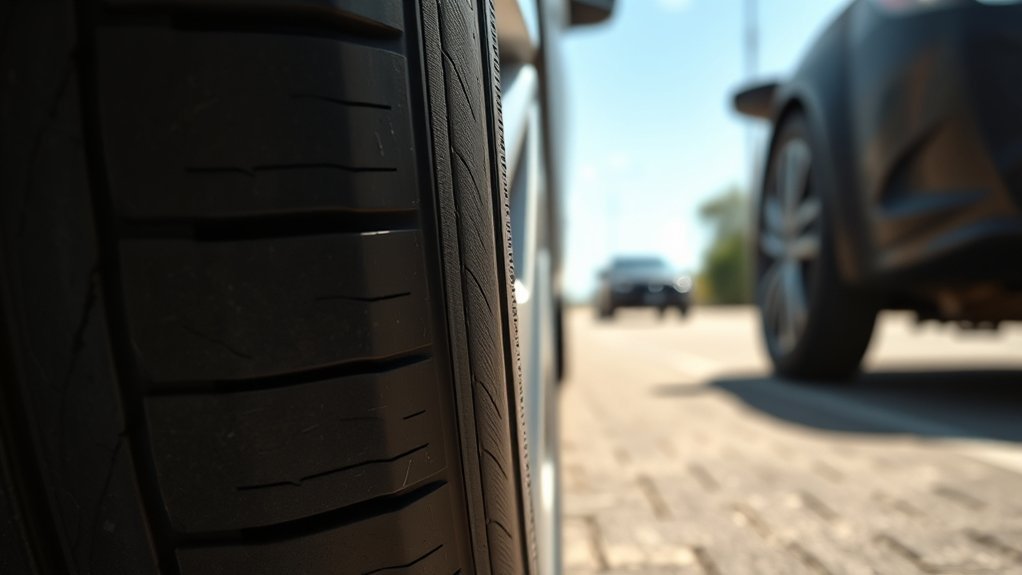
A bubble in your tire means part of the tire’s internal structure has failed. On many passenger tires, the sidewall contains fabric cords that help the tire hold its shape under pressure and load. When those cords break or separate, air can push into the weakened area and create a visible outward bulge.
Michelin describes a sidewall bulge or bubble as damage that generally points to damaged cords, often after a severe impact. Michelin also says a tire with a bulge or bubble cannot be repaired and should be replaced with the spare for inspection.
The most common trigger is impact damage, such as hitting a pothole, curb, road debris, railroad crossing, or speed bump too hard. A bubble can also appear after driving on a flat tire, overloading the vehicle, running too little air pressure, or, less commonly, from a manufacturing defect.
Note: A tire bubble is an outward bump. A slight inward sidewall indentation can be normal on radial tires. When in doubt, have a tire professional inspect it before driving farther.
Is a Tire Bubble Dangerous to Drive On?
Yes, a tire bubble is dangerous to drive on. You are not dealing with a cosmetic mark. The bubble shows that the tire’s structure is weaker in one spot, and that weak area can rupture under heat, speed, turning force, or vehicle weight.
The National Highway Traffic Safety Administration says poor tire maintenance, including low air pressure and missed rotation, can lead to a flat tire, blowout, or tread separation. NHTSA also reports that 511 people died in tire-related crashes in 2024. That number is not specific to tire bubbles, but it shows why tire damage deserves immediate attention.
A tire bubble is a structural warning sign, not a wear issue. Once the casing is damaged, the tire should come out of service.
Do not try to finish your commute, wait until payday, or drive at highway speed “carefully.” Slow driving does not restore the tire’s strength. The safer choice is to stop, install a usable spare if you have one, or arrange towing.
What Should You Do Right Away?
If you see a bubble in your tire, focus on safety first. Your goal is to get the vehicle out of traffic without putting more stress on the damaged tire.
[Products Worth Considering]
Salior’s tire plug kit provides a fast, reliable self-service fix for punctured or leaking tires without the need for flaring tools. Choose the correct plug size, then screw the nail into the puncture using the included screwdriver for an enhanced seal. The set is durable and convenient for on-the-go maintenance across multiple vehicle types.

Wykodra tire plugs provide quick vulcanizing repairs for tubeless tires, helping you seal punctures and get back on the road. The industrial-strength rubber creates a long-lasting, leak-resistant bond and is designed for emergency fixes without removing the tire. Choose between two standard plug sizes with color-matched options for small to larger damage across many vehicles and off-road uses.

Vigorder rubber cement glue delivers superior adhesion and cures quickly within about 30 seconds for seamless rubber bonding. Once cured, it helps provide a strong, durable, waterproof seal that holds up to vehicle weight, pressure, and heat. Suitable for cars, motorcycles, trucks, bicycles, and off-road tires, it’s designed for emergency patch and maintenance repairs.
Stop Driving Immediately
Slow down smoothly, avoid sharp steering, and pull into a safe location. Turn on your hazard lights if needed. Do not slam the brakes unless traffic conditions require it, because sudden force can add stress to the damaged tire.
- Move only as far as needed to reach a safe shoulder, parking lot, or side street.
- Check which tire has the bubble and whether it is losing air.
- Do not touch a hot tire with bare hands after highway driving.
- Do not continue driving normally on the bubbled tire.
Use a Spare or Tow the Vehicle
If your vehicle has a properly inflated spare, follow the owner’s manual and change the tire only if you can do it safely. If you are on a highway shoulder, in bad weather, on uneven ground, or without the right tools, call roadside assistance instead.
A temporary spare is not a normal tire. Follow the speed and distance limits printed on the spare or listed in your owner’s manual. Drive only far enough to get the damaged tire replaced.
Inspect the Wheel and Nearby Parts
A tire bubble often follows a hard impact. Ask the shop to inspect more than the tire. The rim may be bent, the alignment may be off, or nearby suspension parts may have taken the same hit. A quick pressure check on the other tires also helps catch related problems.
Pro Tip: Take clear photos of the bubble, tread, sidewall, DOT code, and any rim damage before replacement. Those photos can help with a tire warranty or road-hazard claim.
What Causes Tire Bubbles?
Tire bubbles form when the tire’s inner structure gets damaged or weakened. The outer rubber may still look mostly normal, but the support layers underneath are no longer holding pressure evenly.
- Hard impact: Potholes, curbs, road debris, and speed bumps can pinch the tire between the road and rim, damaging the internal cords.
- Underinflation: Low tire pressure makes the sidewall flex too much. That extra flex creates heat and stress inside the casing.
- Overloading: Carrying more weight than the tire or vehicle is rated for puts extra strain on the sidewall.
- Driving on a flat: Even a short distance on a very low or flat tire can damage the inner liner and sidewall.
- Manufacturing defect: Less commonly, a tire may develop separation without clear impact damage. A technician can help document this for a warranty review.
- Age and wear: Older tires, cracked sidewalls, and uneven wear can make damage more likely when the tire hits a road hazard.
The cause matters for warranty purposes, but it does not change the safety answer. Once a bubble appears, the tire needs replacement.
Can a Tire Bubble Happen Without Visible Damage?
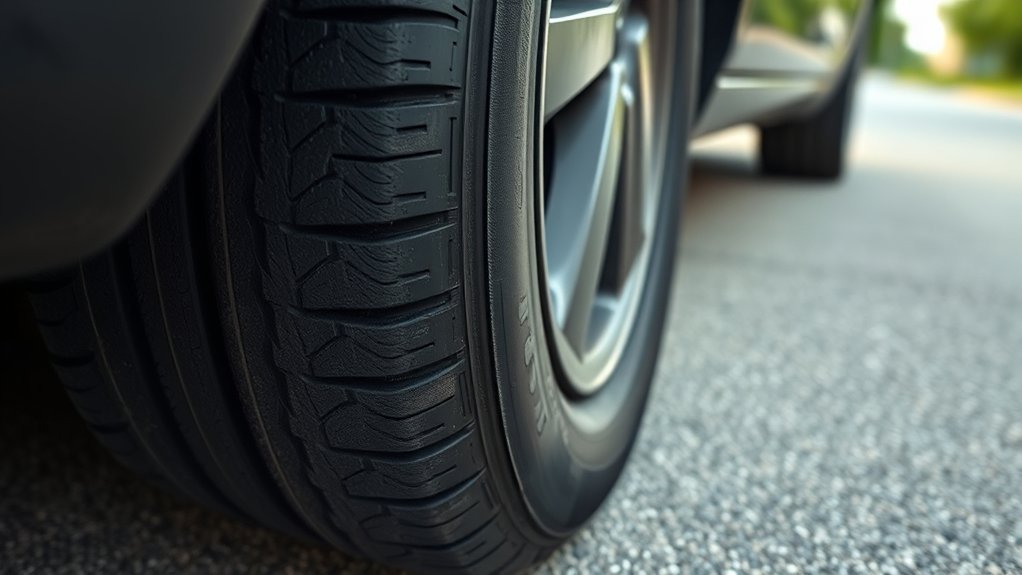
Yes, a tire bubble can happen without obvious exterior damage. You may not see a cut, scrape, or dent, especially if the damage started inside the tire or came from an impact you barely noticed.
That is why a visual check from the outside is not enough. The U.S. Tire Manufacturers Association says a tire must be removed from the rim for a complete inspection when repair is being considered, because internal damage may not be visible from the outside. A bubble is already a sign of internal structural damage, so inspection helps confirm the cause and replacement needs.
If the tire is newer and you do not remember hitting anything, ask the dealer or tire shop to document the condition. Keep your receipt, mileage, DOT code, pressure records, and photos. Warranty coverage varies by manufacturer and by road-hazard plan, so the shop or tire maker must decide whether the claim qualifies.
Bubble vs. Bulge vs. Sidewall Indentation
Drivers often use “bubble” and “bulge” to mean the same thing. Both describe an outward bump on the tire. Both are serious because they can point to damaged cords, ply separation, or air trapped between layers.
A sidewall indentation is different. An indentation dips inward and can appear where body ply cords overlap inside a radial tire. Michelin notes that sidewall indentations can be normal and may not affect tire performance. An outward bubble or bulge is not normal and needs immediate inspection.
| Outward bubble or bulge | Unsafe. Stop driving and replace the tire. |
| Inward indentation | Often normal on radial tires, but get it checked if you are unsure. |
| Cut, crack, or blister | Needs professional inspection. Replace the tire if cords or structural damage are present. |
Can You Fix a Bubble in a Tire?
No, you cannot safely fix a bubble in a tire. A plug, patch, sealant, or sidewall repair cannot restore broken internal cords or separated plies. The tire needs replacement.
The Tire Industry Association says puncture repairs are limited to the center of the tread area. If the damage is in the shoulder or sidewall, the tire is not repairable. USTMA also limits standard passenger and light-truck repairs to the tread area and says the tire must come off the wheel for proper inspection.
Sealant or emergency inflator may help in some temporary flat-tire situations, but it does not fix a bubble. A bubble is not a simple nail hole. It is a sign that the tire’s casing has lost strength.
[Products Worth Considering]

AUTOWN’s 68-piece tire repair kit helps you fix punctures and plug flats quickly and effectively. It includes a T-handle and spiral probe tool for easy insertion, while the steel patch and plug materials are designed for strong adhesion and long-lasting airtight performance. The compact case makes it convenient for roadside repairs across a wide range of vehicles.

The Gurduenon scissor car jack tire changing kit is designed for quick flat-tire replacement with a lifting capacity of 2.5 tons and a scissor-lift range sized for many vehicles. The complete emergency set includes a ratchet wrench, lug wrench, gloves, a pencil tire pressure gauge, and a storage bag for convenient trunk or garage use. Universal compatibility makes it suitable for cars, SUVs, and other vehicles roadside assistance needs.

The SAFELIFE dial tire tread depth gauge measures tread depth in 1/32 inch increments with clear, easy-to-read 2-inch dial face. Color zones using a traffic light system help you quickly judge whether tread is low, marginal, or ample for safer driving. Built with a durable zinc cast body and a metal detect probe for precise, comfortable use across cars, motorcycles, trucks, and buses.
When Is Tire Replacement the Only Option?
Tire replacement is the only safe option as soon as a bubble appears. That applies whether the bubble is on the sidewall, near the shoulder, or in the tread area. A visible bulge means the tire can no longer be trusted to carry load and hold pressure safely.
[Products Worth Considering]

Measure tire tread depth quickly and accurately with this LUMITECO dial gauge that reads in 1/32" increments up to 14/32". The color-coded green/yellow/red zones make it easy to judge tire wear and know when replacement is needed. A rugged, compact design with a protective pouch helps keep the gauge ready for use on cars, trucks, motorcycles, and more.
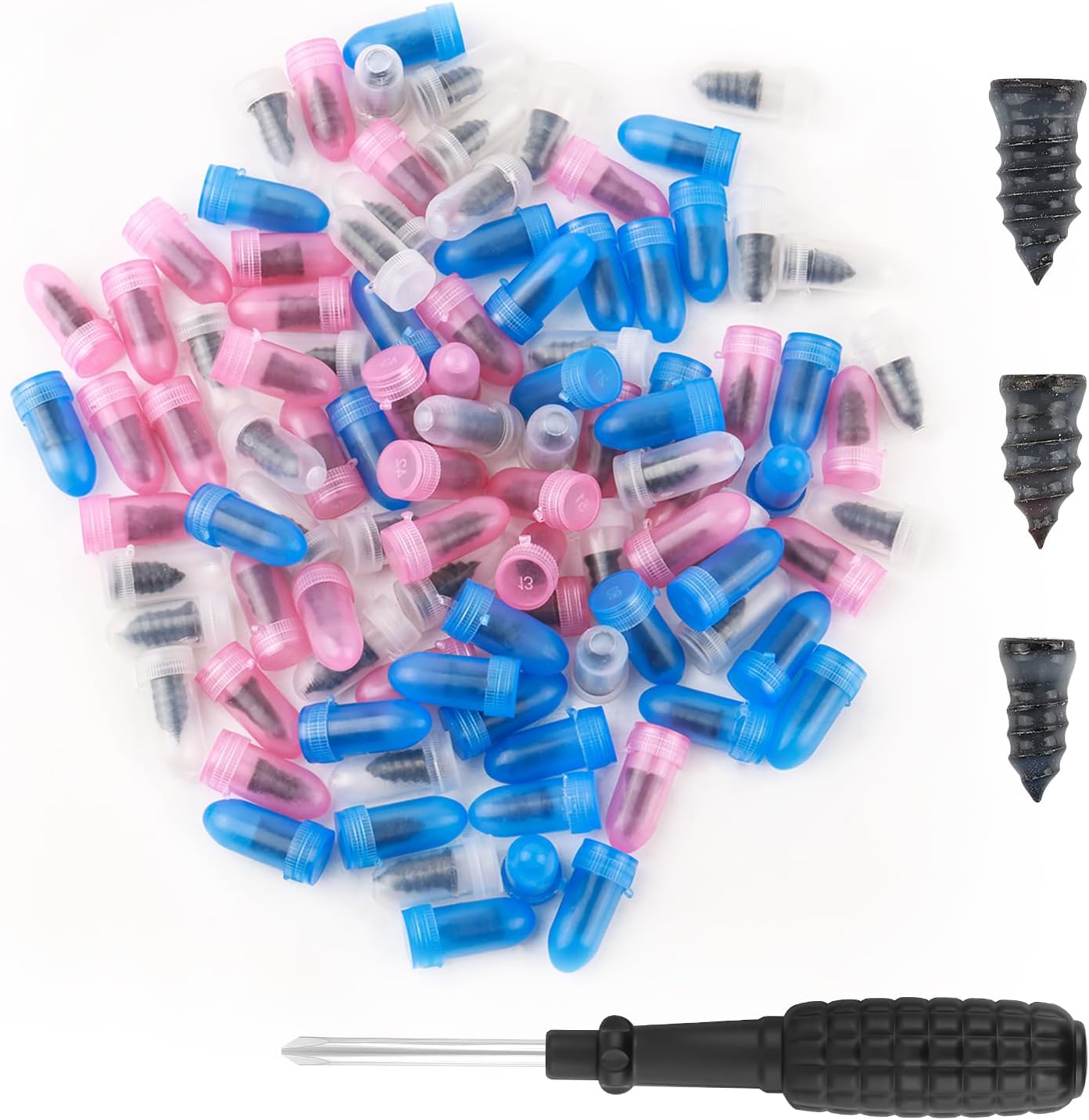
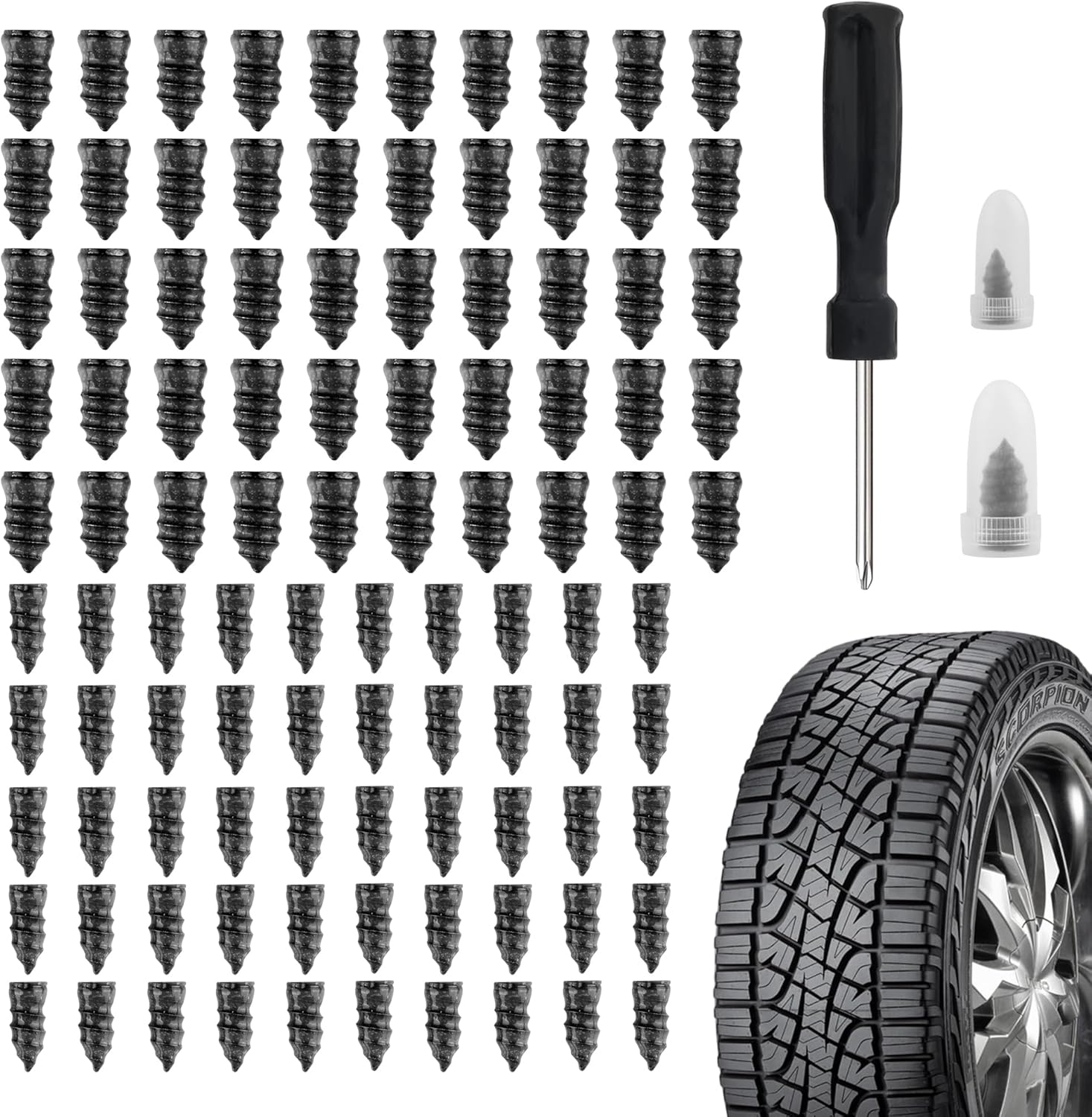
This 100-piece tire repair screw plug kit provides a fast, self-service solution for punctures on the road. Choose the correct plug size, insert it into the break, and screw it in to help seal the puncture and temporarily restore tire pressure. Thickened threads and rubber-wrapped plugs improve bite and sealing while remaining compact and easy to carry.

This screw-in tire plug kit seals punctures fast using the included screwdriver, letting you repair tread damage without removing the tire or using messy glue. It includes two plug sizes for different puncture types and uses high-density rubber for an airtight, heat-resistant temporary seal that helps you reach a tire shop safely. Compact and universal, it works on tubeless tires across cars, trucks, motorcycles, tractors, and more.
Bubble Means Replace
Bridgestone advises replacing a tire as soon as possible if you see an unusual bump or blister, because these bubbles are signs of damage inside the tire structure that can lead to tire failure. That guidance matches Michelin’s advice to replace the tire with the spare and take it to an authorized tire retailer for inspection.
Should You Replace One Tire or More?
Sometimes one replacement tire is enough. Other times, you may need to replace two tires on the same axle, or more if your vehicle requires closely matched tread depth. This matters most on all-wheel-drive and four-wheel-drive vehicles, where mismatched tire circumference can stress drivetrain parts.
Before buying one tire, ask the shop to check:
- The tread depth on the remaining tires.
- The vehicle manufacturer’s tire matching rules.
- The damaged tire’s size, load index, speed rating, and type.
- Whether the opposite tire on the same axle has uneven wear.
Do not install a tire with the wrong size, load rating, or speed rating. NHTSA recommends using the original tire size or another size recommended by the vehicle manufacturer.
Check Warranty Coverage
Replacement is still required, but you should check whether the damaged tire qualifies for warranty or road-hazard coverage. A shop may deny coverage if the bubble clearly came from a curb strike, pothole, overload, or underinflation. A claim may be more likely if the tire is newer and has no visible impact damage.
To support a claim, keep:
- Photos of the bubble from several angles.
- A photo of the DOT tire identification code.
- Purchase receipt and installation date.
- Current mileage.
- Maintenance records, including pressure checks and rotations.
- The shop’s written inspection notes.
How Can You Prevent Tire Bubbles?
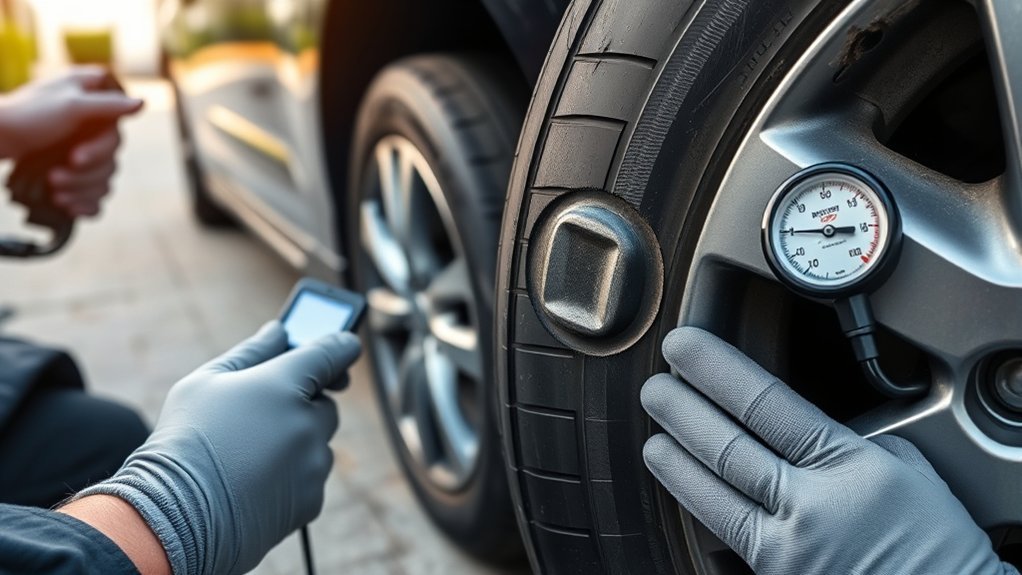
You cannot prevent every pothole or hidden road hazard, but you can lower the risk of tire bubbles by reducing sidewall stress.
- Check tire pressure monthly: NHTSA recommends checking all tires, including the spare, at least once a month when the tires are cold. Use the pressure listed on the driver’s door label or in the owner’s manual, not the maximum pressure printed on the tire sidewall.
- Avoid underinflation: Low pressure makes the tire flex more than designed. That added flex can build heat and weaken the casing.
- Respect the load rating: Do not overload your vehicle. Check the Tire and Loading Information Label for the safe capacity.
- Slow down for potholes and speed bumps: A sharp impact can pinch the tire against the rim and break internal cords.
- Inspect both sidewalls: Check the inner and outer sidewalls, not just the side you can see easily.
- Rotate tires when recommended: NHTSA says rotation can reduce irregular wear and notes that many vehicles recommend rotation every 5,000 to 8,000 miles, though your owner’s manual controls the final schedule.
- Fix alignment problems early: Pulling, vibration, or uneven wear can point to alignment or suspension issues that add tire stress.
Good maintenance cannot save a tire after a bubble appears, but it can help prevent some of the conditions that make sidewall damage more likely.
When Should You Get A Tire Bubble Inspected?
You should get a tire bubble inspected immediately. Do not wait for it to grow, and do not rely on normal tread depth as proof the tire is safe. The tread may look fine while the sidewall or internal casing has already failed.
Ask the technician to check:
- The bubble location and size.
- Inner and outer sidewall condition.
- Wheel or rim damage.
- Signs of underinflation or flat-tire driving.
- Alignment and suspension damage after an impact.
- The tread depth and condition of the other tires.
If the shop confirms a bubble, the tire should be removed from service. Do not reinstall it as a spare later. A damaged tire is not safe for emergency use.
Frequently Asked Questions
Is it safe to drive with a bubble in the tire?
No. A bubble means the tire’s internal structure is damaged. The tire can lose pressure or fail suddenly, especially at speed or under load. Move only to a safe location, then use a spare tire, roadside assistance, or towing.
What is the difference between a bulge and a bubble?
Most drivers use the words the same way. Both describe an outward bump that can point to internal tire damage. An inward sidewall indentation is different and can be normal on radial tires, but an outward bubble or bulge needs immediate inspection and replacement.
How long can you go with a bubble in your tire?
You should not drive any normal distance with a bubble in your tire. The safest answer is to stop as soon as you can do so safely. Use a spare or towing instead of trying to drive to work, home, or a tire shop on the damaged tire.
Can a tire with a bubble be fixed?
No. A tire bubble cannot be safely fixed with a plug, patch, sealant, or sidewall repair. The bubble means the casing has lost strength, and replacement is the safe solution.
Can a tire bubble be covered by warranty?
Sometimes, but it depends on the tire warranty, road-hazard plan, tire age, tread depth, and cause of damage. A bubble from a pothole or curb strike is usually treated differently from a possible manufacturing defect. Take photos and ask the tire dealer to document the inspection.
Should I replace one tire or two?
It depends on tread depth, axle matching, vehicle type, and manufacturer guidance. Some vehicles can accept one matching replacement tire. Others, especially AWD or 4WD vehicles, may need closely matched tires. Ask the shop to check tread depth and your owner’s manual before replacing only one tire.
Conclusion
A bubble in your tire is a serious safety warning. It means the tire’s internal structure has been damaged, and the weakened area can fail without warning. Do not keep driving on it. Pull over safely, use a spare or tow, and replace the tire. After a hard impact, also have the wheel, alignment, suspension, and remaining tires checked so the same problem does not put you at risk again.
Sources
- NHTSA TireWise — tire pressure, rotation, maintenance guidance, and 2024 tire-related crash fatality data.
- Michelin: Symptom Bulge or Bubble — bulge/bubble diagnosis, damaged cords, and replacement guidance.
- Michelin: Symptom Indentation — difference between normal sidewall indentation and tire damage.
- U.S. Tire Manufacturers Association: Tire Repair Basics — passenger and light-truck repair limits and inspection requirements.
- Tire Industry Association: Tire Repair — why sidewall and shoulder damage are not repairable under standard puncture repair guidance.
- Bridgestone Tire Safety — bulges, blisters, sidewall damage, and tire replacement guidance.

