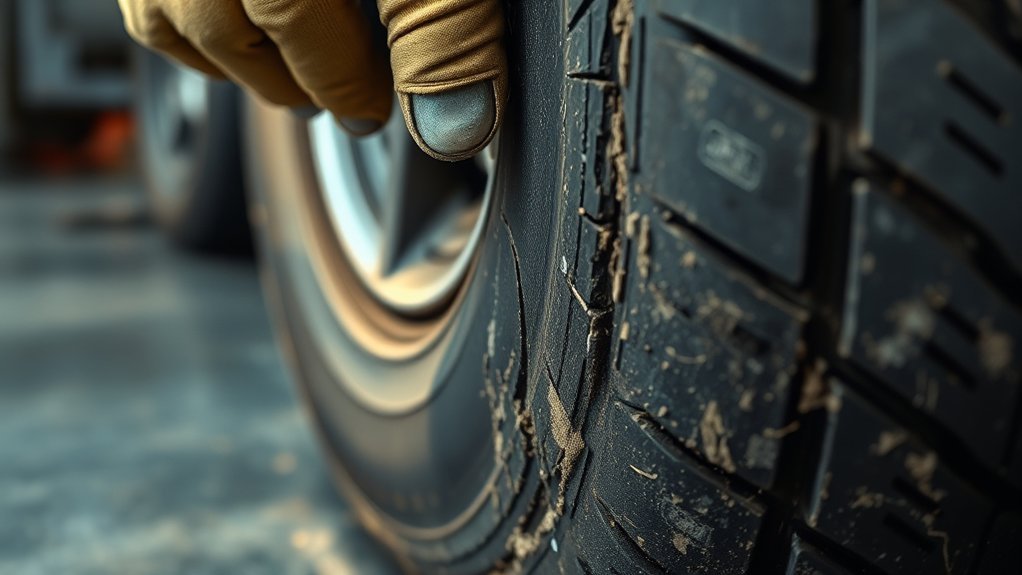
Cracked tires need more than a quick glance because the right decision depends on where the cracking is, how severe it is, the tire’s age, and whether other damage is present. Fine surface weather checking can differ from a deep opening, bulge, exposed cord, or crack around the shoulder. Inspect the entire tire promptly, and take serious damage out of normal service.
Quick Answer
Cracked tire rubber generally is not “repaired” like an eligible tread puncture. Fine, shallow weather checking may only require close inspection and monitoring, but deep or opening cracks, exposed cords, bulges, air loss, or serious sidewall and shoulder damage can make a tire unsafe. When structural damage is suspected, replace the tire rather than patch the cracked area.
Key Takeaways
- Fine surface checking is different from cracks that open, spread deeply, expose reinforcement, leak air, or appear with a bulge.
- Industry puncture-repair procedures are limited to qualifying damage in the tread area; the sidewall and shoulder are outside the normal puncture-repair zone.
- Replace a tire when tread reaches 2/32 inch, and do not let acceptable tread hide other serious damage.
- There is no universal rule that every tire must be discarded on its sixth birthday. Follow the vehicle and tire manufacturer’s age guidance.
- If several tires are similarly aged or damaged, a matched replacement set may make sense, but one- and two-tire replacement rules depend on the vehicle and remaining tires.
At a Glance
| Time Required | A few minutes for a basic visual check; a complete professional inspection may take longer. |
| Difficulty | Easy for an exterior check; internal tire assessment should be done by a trained tire professional. |
| Tools Needed | Flashlight, accurate tire-pressure gauge, tread-depth gauge or penny, and the vehicle tire-information placard or owner’s manual. |
| Cost | A visual check costs nothing if you have the tools. Professional inspection and tire-replacement prices vary by shop, tire size, vehicle, and tire model. |
What Tire Cracks Mean for Safety
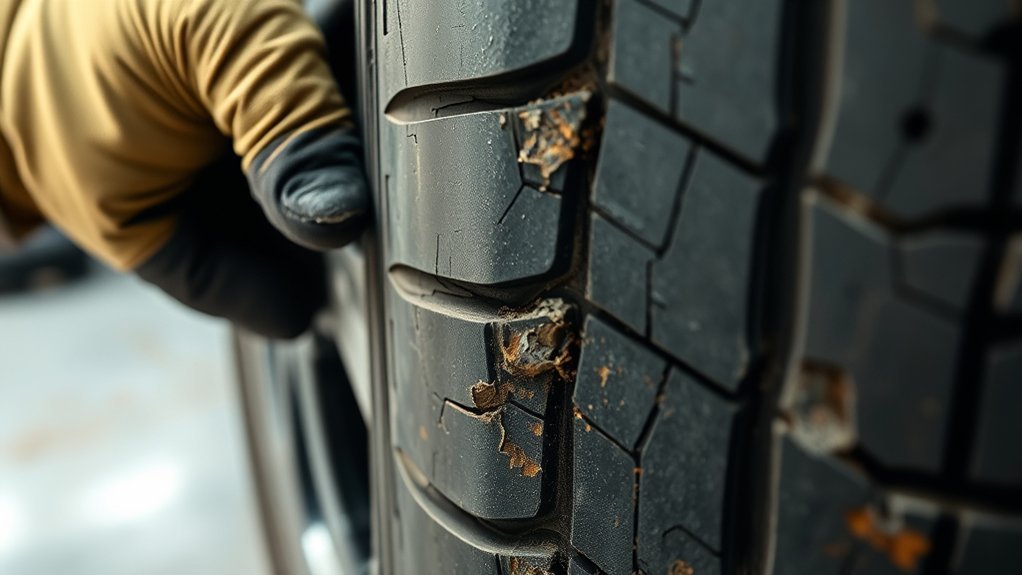
Tire cracks are signs that the rubber has changed or been damaged, but not every visible line has the same severity. Fine surface weather checking can develop as rubber ages and is exposed to environmental conditions. Deeper cracks, openings that spread when the tire flexes, exposed reinforcement, bulges, recurring pressure loss, or other structural symptoms are much more serious.
The sidewall deserves special attention because it flexes continually while the tire carries the vehicle. Michelin advises that visible sidewall damage should be inspected immediately and notes that serious sidewall damage cannot be repaired in the same way as an eligible tread puncture. See Michelin’s sidewall-damage guidance.
Age also matters, but calendar age is only one part of the decision. According to NHTSA TireWise, tire aging is affected by service, storage, environmental conditions, maintenance, sunlight, climate, and use. Inspect all four road tires and the spare rather than assuming acceptable tread means the tire is healthy.
Warning: Do not continue normal driving on a tire with exposed cords or fabric, a bulge or bubble, rapid or recurring air loss, a visibly opening deep crack, or another sign of structural failure. Use a safe spare if your vehicle and situation allow it, or arrange roadside assistance or towing for a professional inspection.
What Causes Tire Cracking and Weather Checking?
Tire rubber changes over time. Heat, sunlight, ozone and other environmental exposure, storage conditions, maintenance history, load, inflation, impacts, and chemical exposure can all affect how quickly visible weathering develops. NHTSA specifically identifies aging, sunlight, warmer climates, poor storage, and poor maintenance as factors that can contribute to tire aging.
Underinflation is especially important because it increases tire flex and heat. Check pressure when the tires are cold and use the vehicle manufacturer’s recommended pressure on the driver-door placard or in the owner’s manual—not the maximum pressure molded on the tire sidewall.
Long periods of low use do not stop aging. A stored vehicle, trailer, collector car, RV, or spare tire can still develop age-related deterioration even when tread wear is minimal.
Note: “Dry rot,” “weather checking,” “weather cracking,” and “ozone cracking” are commonly used to describe visible age/environment-related deterioration. The important safety question is not the label—it is whether the cracking is superficial or accompanied by signs that the tire’s structure or air retention is compromised.
Where Tire Cracks Usually Appear
You may find tire cracks on the outer or inner sidewall, around the shoulder where the tread transitions to the sidewall, or within and along the edges of the tread grooves. Inspect more than the outer sidewall you see while walking past the vehicle.
The location matters because normal industry puncture-repair procedures apply only to a qualifying injury in the designated tread area. Damage in the shoulder or sidewall is treated differently.
Sidewall Crack Areas
Sidewall cracking appears between the bead area and tread shoulder. Instead of deciding based only on the number of lines you see, look at their depth, width, distribution, and any nearby bulging or air loss.
| Condition | Typical clue | Action |
|---|---|---|
| Fine surface checking | Very shallow lines with no bulge, cord exposure, or air loss | Inspect promptly and monitor only if the tire remains serviceable |
| Widespread or opening cracks | Cracks visibly separate or worsen when the sidewall flexes | Professional assessment; replacement may be required |
| Structural warning | Exposed cords/fabric, bulge, major split, or air loss | Take out of normal service and replace if damage is confirmed |
Heat, age, environmental exposure, improper inflation, impact history, and storage can all contribute to deterioration. Compare all tires because a pattern on several tires may point to common age or operating conditions.
Shoulder Crack Zones
The shoulder is the transition between the main tread and the sidewall. This area works hard during steering, braking, and cornering, so damage there deserves prompt attention.
Do not treat shoulder cracking like an ordinary nail hole in the center tread. The U.S. Tire Manufacturers Association’s puncture-repair guidance says repairs are limited to the designated tread area and should not be performed when the injury extends into the shoulder/belt-edge area.
- Check the tire for pressure loss, bulging, cuts, impact marks, and uneven wear.
- Compare the shoulder with the same area on the other tires.
- Have opening, spreading, or otherwise serious shoulder damage evaluated before normal driving continues.
Fine weather checking does not automatically prove that internal structure has failed, but you should not assume a shoulder crack is safe merely because the tire still holds air.
Tread Edge Damage
Tread-edge cracks can appear near the shoulder or at the base of tread blocks and grooves. Look for widening splits, pieces of rubber separating, exposed reinforcement, abnormal wear, or signs that the tire has been driven while severely underinflated.
Damage outside the approved repairable tread zone is generally a replacement issue rather than a conventional puncture repair. If you cannot determine whether a crack is only superficial, have the tire removed and inspected by a trained technician.
How to Inspect Cracked Tires at Home
A home inspection can identify obvious warning signs, but it cannot reveal every internal problem. Use good light, check both tread and sidewall condition, verify cold inflation pressure, measure tread depth, and read the tire’s DOT Tire Identification Number.
[Products Worth Considering]

TireJect Off-Road Tire Sealant Kit provides 5-in-1 sealing to help fix tread punctures up to 3/8", sidewall punctures up to 3/8", bead leaks, slow leaks, and minor dry rot on low-speed tires. It permanently seals with liquid rubber, recycled tire particles, and Aramid fibers, making it ideal for flats caused by thorns, nails, and screws. The included dispensing cap attaches to the valve stem for a no-mess installation, along with a metal valve core remover tool and valve stem cap. This kit is for off-road use only.

Monitor tire tread wear with a smart, color-coded depth gauge that shows clear condition ranges at a glance. The bar is range marked for fast, easy readings, helping you maintain safer traction and performance. Each gauge is portable with a pocket clip, and the set includes 20 units for daily use and sharing.

Steelman white tire marking crayons provide high-contrast, semi-permanent marks for repairing and inspecting tires and equipment. They write on wet or dry, smooth or coarse surfaces including rubber, metal, glass, and wood, making them ideal for puncture location and damage outlining. The lead- and zinc-free crayons resist weather and fading yet wipe away when you no longer need the marks.
Check Sidewall And Tread
Start with the vehicle parked safely on a level surface. Inspect each visible sidewall and the tread for cracks, cuts, bulges, blisters, foreign objects, uneven wear, or exposed reinforcement.
- Use a flashlight to look along the sidewall, shoulder, tread grooves, and tread edges. Check the inner sidewall when it can be viewed safely; do not crawl beneath an unsupported vehicle.
- Check tire pressure when the tires are cold with an accurate gauge. Match the pressure to the vehicle placard or owner’s manual.
- Measure tread across the inner, center, and outer portions. NHTSA says tires should be replaced when tread is worn to 2/32 inch.
- Check the spare tire too, because it ages even if it is rarely used.
If you find a bulge, exposed cord or fabric, a major split, significant pressure loss, or another severe defect, stop treating the inspection as routine maintenance and arrange professional service.
Look For Deep Cracks
Use a flashlight to determine whether cracking appears confined to the surface or forms an opening into the rubber. A ruler cannot establish a universal “safe crack depth,” and there is no general 1/4-inch crack-depth rule.
The 1/4-inch measurement sometimes associated with tire repair refers instead to the maximum diameter of an otherwise eligible puncture injury under USTMA puncture-repair guidance. It does not make a 1/4-inch-deep sidewall crack acceptable.
Serious warning signs include visible fabric or cords, cracking that opens noticeably when the rubber flexes, a nearby bulge, pieces separating from the tire, or recurring air loss. If any of these appears, the tire needs professional assessment and is likely to require replacement.
Pro Tip: Photograph minor surface checking when you first notice it. A dated photo taken from the same angle later can help you see whether the pattern is spreading, although photos cannot replace an in-person tire inspection.
Measure Tread And Age
Tread depth and tire age help complete the picture, but neither should override visible structural damage. Use a tread-depth gauge or the penny test to identify tread at the NHTSA replacement point of 2/32 inch.
- Measure several places across each tire because wear may be uneven.
- Locate the DOT Tire Identification Number. For tires made since 2000, the final four digits identify the week and year of manufacture; for example, “3520” means the 35th week of 2020.
- Inspect the tread grooves and sidewalls for weathering even when tread depth remains well above the minimum.
NHTSA says some vehicle and tire manufacturers recommend replacement when tires reach roughly six to 10 years, regardless of tread wear. Follow the instructions for your specific vehicle and tire. As one manufacturer example, Michelin recommends annual professional inspections after five years of service and replacement at 10 years from the manufacture date as a precaution.
Can Tire Sidewall Cracks Be Repaired?
Cracked sidewall rubber is generally not restored with a conventional tire repair. A repairable puncture and age/weather cracking are different problems. USTMA recommends puncture repair only when the injury is confined to the approved tread area, is no larger than 1/4 inch (6 mm) in diameter, and meets the other repair criteria.
| Condition | Action |
|---|---|
| Fine, shallow weather checking | Inspect promptly; continued service depends on severity, age, and manufacturer guidance |
| Deep/opening sidewall crack, exposed reinforcement, or bulge | Replace the tire if structural damage is confirmed |
| Sidewall or shoulder puncture | Outside normal USTMA puncture-repair procedures |
| Eligible tread puncture | Professional repair may be possible after the tire is removed and inspected |
An approved puncture repair also requires removing the tire from the wheel so the interior can be inspected. A plug by itself is not an industry-recommended complete repair. Cracking caused by aged or deteriorated rubber is different: a patch cannot reverse the aging of the surrounding compound.
Are Tire Shoulder Cracks Safe to Drive On?
There is no blanket rule saying an unknown shoulder crack is safe for a certain distance. Minor superficial checking and serious structural cracking are not the same condition, so the tire needs to be judged by the full set of symptoms.
- Look for opening or growth: cracks that become wider, deeper, or more extensive deserve urgent assessment.
- Look for associated damage: a bulge, exposed reinforcement, pressure loss, vibration, or handling change increases concern.
- Get a professional assessment: the shoulder is outside the normal puncture-repair zone, and a technician can determine whether the tire should remain in service.
If cracking appears severe, do not use highway speed or a long drive as a “test.” Use a suitable spare or roadside assistance when structural damage is suspected.
When Crack Depth Means Replace the Tire
Crack severity matters, but there is no universal consumer measurement that says a tire becomes unsafe at a particular crack depth. Instead, look for evidence that cracking has progressed beyond superficial weather checking.
| Crack condition | Action |
|---|---|
| Fine surface checking with no other symptoms | Inspect and monitor according to professional/manufacturer guidance |
| Numerous, widening, or visibly opening cracks | Professional inspection; replacement may be necessary |
| Cracks exposing cords or fabric | Take out of normal service and replace |
| Cracking with a bulge, air loss, separation, or major deformation | Do not continue normal driving; arrange replacement/service |
Do not confuse the USTMA 1/4-inch puncture-diameter repair limit with crack depth. If a crack reaches reinforcement or accompanies structural symptoms, the tire should not remain in normal service simply because the opening measures less than a particular number.
When Tire Age Means Replacement
Age is a safety factor, but no single birthday determines the condition of every tire. Rubber and other tire components change over time, and the rate depends on storage, climate, use, maintenance, load, heat, and other conditions.
- Read the DOT/TIN date code to establish the tire’s manufacture date.
- Check the sidewall and tread grooves for cracking, cuts, bulges, or other deterioration.
- Measure tread depth and watch for abnormal wear or changes in pressure, vibration, noise, or handling.
- Follow the vehicle and tire manufacturer’s age-based inspection and replacement recommendations.
NHTSA notes that some manufacturers recommend replacing tires at an age between six and 10 years regardless of tread wear. Michelin, for example, recommends annual professional inspection after five years of service and precautionary replacement by 10 years from manufacture. These figures should not be turned into a universal six-year rule for every brand and vehicle.
Good tread does not cancel out age or damage: cracks, bulges, air-loss problems, and other defects can require action before the tread reaches its wear bars.
When to Replace All Four Tires
Replacing all four tires together gives you the easiest way to maintain a matched set, and USTMA recommends four-at-a-time replacement for optimum overall performance when appropriate. However, a damaged single tire does not automatically mean every vehicle must receive four new tires.
If only two tires are replaced, USTMA recommends installing the new pair on the rear axle. If a single replacement is unavoidable, USTMA recommends pairing the new tire with the remaining tire that has the deepest tread and placing that pair on the rear, subject to the vehicle manufacturer’s requirements.
AWD and 4WD vehicles deserve extra attention because some drivetrains specify tight limits on differences in tire outside diameter, rolling circumference, or tread depth. Follow the owner’s manual before replacing only one or two tires on these vehicles.
Consider a full matched set when all four tires are similarly aged, cracked, worn, or otherwise near replacement. Also maintain the tire size, load capacity, construction, and other specifications required by the vehicle manufacturer.
What to Do If Your Tires Are Cracking
Start by determining whether you are seeing fine weather checking or a more serious defect. Do not apply a cosmetic dressing and assume the underlying problem has been repaired; appearance does not restore damaged rubber or internal structure.
- Inspect all road tires and the spare for cracking, bulges, cuts, exposed reinforcement, and uneven wear.
- Check cold inflation pressure against the vehicle placard and correct pressure as needed only when the tire is otherwise safe to service.
- Measure tread depth and record the DOT/TIN manufacture date.
- Have questionable sidewall or shoulder cracking inspected by a trained tire professional.
- If the tire is relatively new, review the tire manufacturer’s workmanship/materials warranty and any separate road-hazard coverage to see whether the condition may qualify.
Do not deliberately keep driving a damaged tire simply because normal use can sometimes help tires that are stored for long periods. If the vehicle sits for extended periods, follow the tire and vehicle manufacturer’s storage guidance instead.
[Products Worth Considering]

Measure tire tread depth quickly and accurately with this LUMITECO dial gauge that reads in 1/32" increments up to 14/32". The color-coded green/yellow/red zones make it easy to judge tire wear and know when replacement is needed. A rugged, compact design with a protective pouch helps keep the gauge ready for use on cars, trucks, motorcycles, and more.
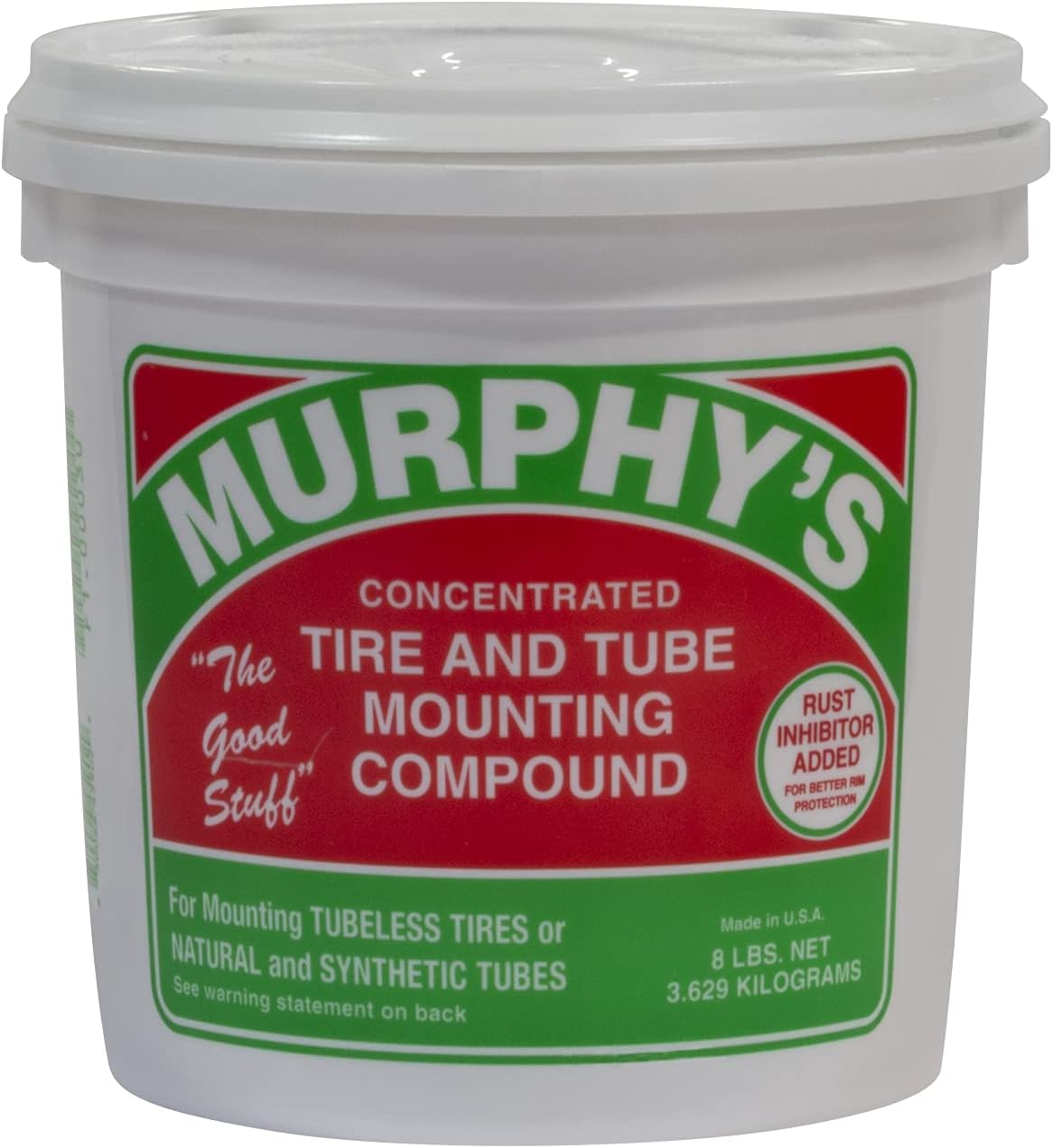
A concentrated tire and tube mounting compound designed to help simplify mounting rubber tires and tubes on passenger, semi truck, construction, and OTR applications. Its ultra-thick formula packs beads effectively and includes rust inhibitors to help protect against corrosion during use.
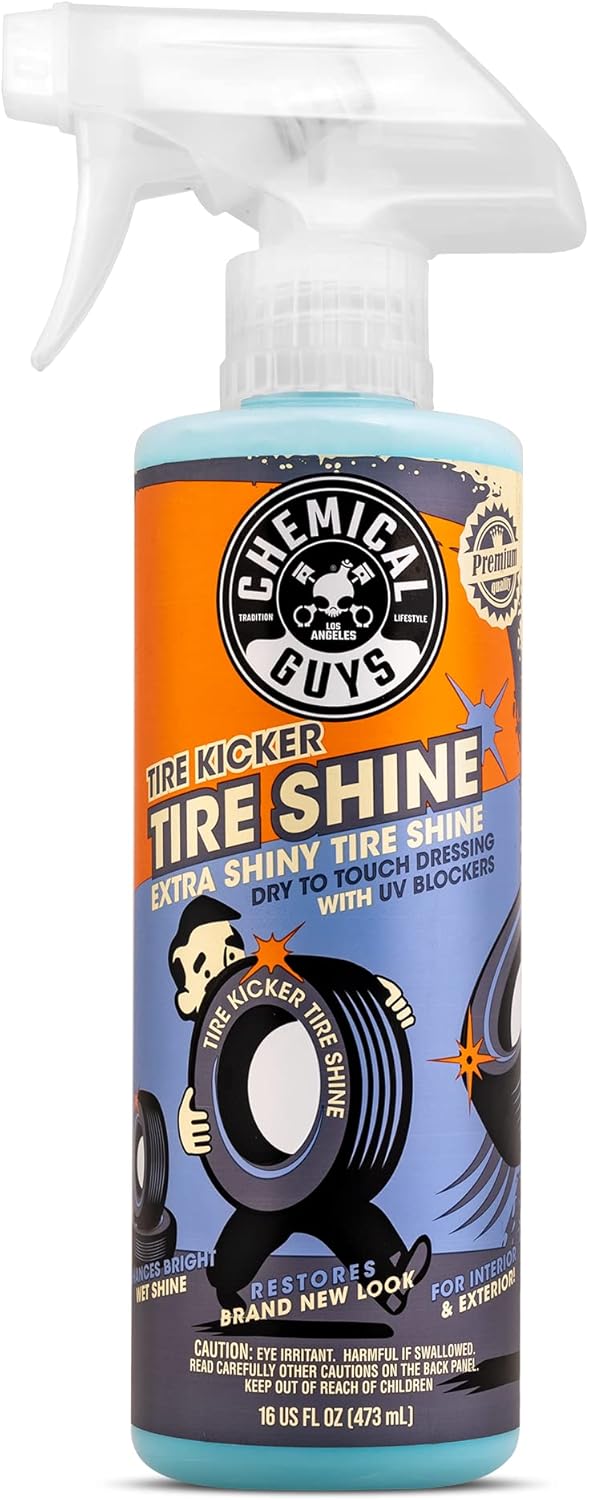
Chemical Guys Tire Kicker Sprayable Extra Glossy Tire Shine restores a deep, wet look on tires, rubber, vinyl, and plastic trim. It delivers a rich showroom shine that enhances color and luster while helping protect against fading, cracking, and discoloration. The spray application dries to the touch with a streak-free finish and no greasy sling, for fast results on cars, trucks, motorcycles, RVs, and boats.
How to Slow Tire Cracking
You cannot stop tire materials from aging indefinitely, but proper care can reduce unnecessary stress and help you spot deterioration sooner.
- Check tire pressure at least monthly and use the vehicle manufacturer’s cold-pressure specification.
- Avoid overloading the vehicle or tire beyond the manufacturer’s limits.
- Inspect tires regularly for cracking, cuts, bulges, punctures, and uneven wear.
- Protect stored tires from unnecessary heat, sunlight, ozone-generating equipment, and harsh chemical exposure according to the tire manufacturer’s storage instructions.
- Keep up with alignment, rotation, and other maintenance specified for the vehicle.
- Inspect spare tires as well as the four tires on the road.
Preventive care can slow avoidable deterioration, but it cannot reverse rubber that has already developed significant cracking or structural damage.
[Products Worth Considering]

Rubber Care delivers a beautiful dark black satin/matte finish on tires and other rubber or plastic surfaces, drying to the touch without oily shine. Its ceramic aircraft-grade formula helps repel dirt and brake dust residue, keeping surfaces cleaner longer. Triple nano ceramic polymer technology provides best-in-industry UV protection, restoring and protecting rubber while also working on weather stripping and de-ice boot care.
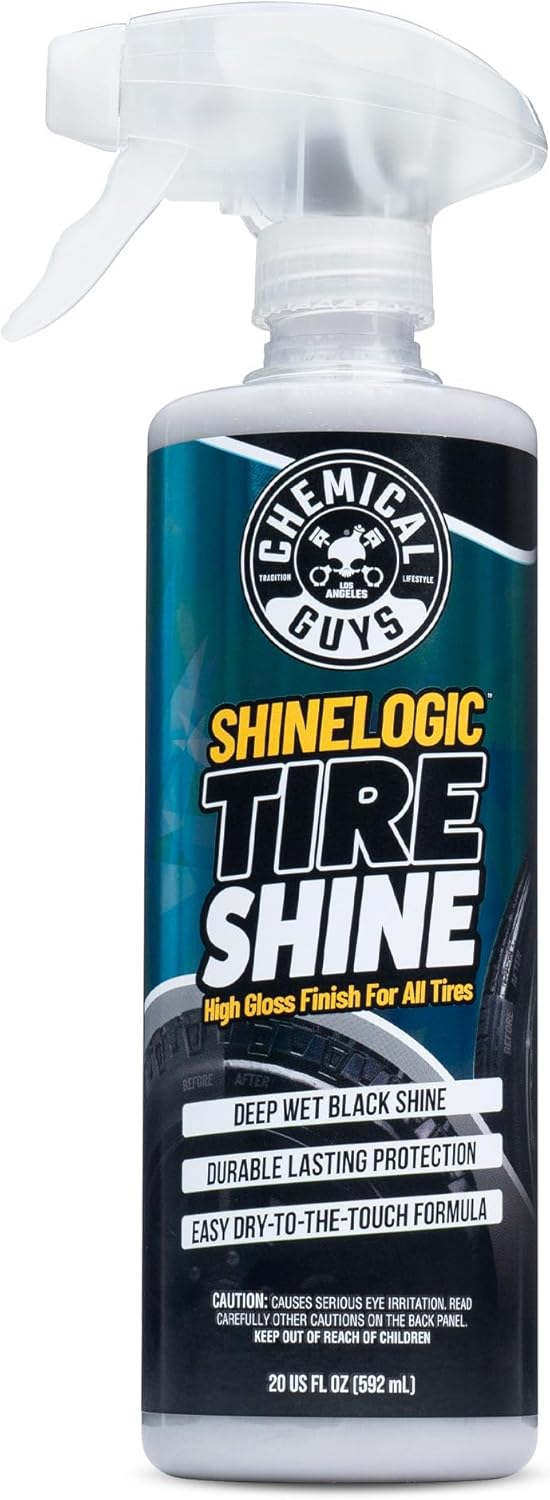
Chemical Guys ShineLogic Tire Shine delivers a deep wet black, high-shine finish for rubber tires with a sleek look. It’s designed for durable, one-step application with minimal drips, streaks, or runs, and it helps produce effortless, long-lasting shine. Choose aerosol or trigger spray for easy use on cars, trucks, motorcycles, RVs, and more.

This 20-piece tire changer kit makes motorcycle and bike tire repairs easier with extended 14.5-inch spoons for leverage and access. Built from CrV steel with a corrosion-resistant chrome finish, it helps resist bending while protecting rims and tubes using smooth rounded spoons and included rim protectors. The all-in-one set includes valve removal and accessory tools for faster tire changes across motorcycles, bicycles, ATVs, and lawn equipment.
Frequently Asked Questions
How long can I drive on tires with cracks?
There is no universal safe mileage or time allowance for an unknown cracked tire. Fine surface checking may be judged serviceable after inspection, but deep/open cracks, exposed reinforcement, bulges, air loss, or other structural signs call for taking the tire out of normal service rather than trying to reach a mileage target.
How much does it cost to fix a cracked tire?
Age- or weather-related cracking generally is not repaired like an eligible tread puncture, so there is no standard “crack repair” price. Your cost depends on whether the tire only needs inspection or must be replaced, plus its size, type, vehicle fitment, mounting, balancing, taxes, and local shop pricing.
Is a tire still good if it has cracks?
Possibly, if the marks are only superficial weather checking and the tire passes an appropriate inspection, but visible cracking should never be ignored. Deep or opening cracks, exposed reinforcement, bulges, pressure loss, separation, or other structural symptoms can require replacement even when tread depth still looks good.
At what point can a tire not be repaired?
Under USTMA puncture-repair guidance, the injury must be in the approved tread area and no larger than 1/4 inch (6 mm) in diameter, and the tire must satisfy the other inspection requirements. Sidewall and shoulder injuries are outside that normal repair procedure. A tire also should not be kept in service when damage or wear makes it unserviceable.
Can tire dressing or sealant fix dry rot or sidewall cracks?
No cosmetic dressing restores aged rubber or structural reinforcement. A product may change the tire’s appearance, but it cannot turn serious weather cracking into sound rubber. Do not use appearance as proof that a cracked tire is safe.
Does a tire automatically need replacement when it turns six years old?
Not under one universal U.S. rule. NHTSA says some vehicle and tire manufacturers recommend replacement between six and 10 years regardless of tread wear. Check the recommendations for your vehicle and tire brand, and have older tires inspected more carefully even when tread remains.
Conclusion
When a tire starts cracking, do not judge it by tread depth alone. Fine surface weather checking, severe sidewall damage, and structural cracking are different conditions. Inspect the sidewalls, shoulders, tread, pressure, age, and surrounding damage together. A crack that opens deeply, exposes reinforcement, appears with a bulge, causes air loss, or otherwise suggests structural failure is a replacement concern—not a patch job. If several tires show similar age and deterioration, evaluate the set and follow your vehicle manufacturer’s replacement requirements.
Sources
- National Highway Traffic Safety Administration — TireWise — tire aging, DOT/TIN date codes, pressure checks, physical damage, inspections, and the 2/32-inch tread replacement point.
- U.S. Tire Manufacturers Association — Tire Repair Basics — repairable tread area, maximum eligible puncture diameter, tire removal and inspection, and shoulder-repair limitations.
- U.S. Tire Manufacturers Association — Replacing Tires — replacement specifications and guidance for replacing fewer than four tires.
- Michelin USA — Sidewall Problems — sidewall cracking, severe sidewall damage, and professional inspection guidance.
- Michelin USA — When to Replace Tires — updated 2026 guidance on tire age, treadwear indicators, sidewall damage, and replacement decisions.