
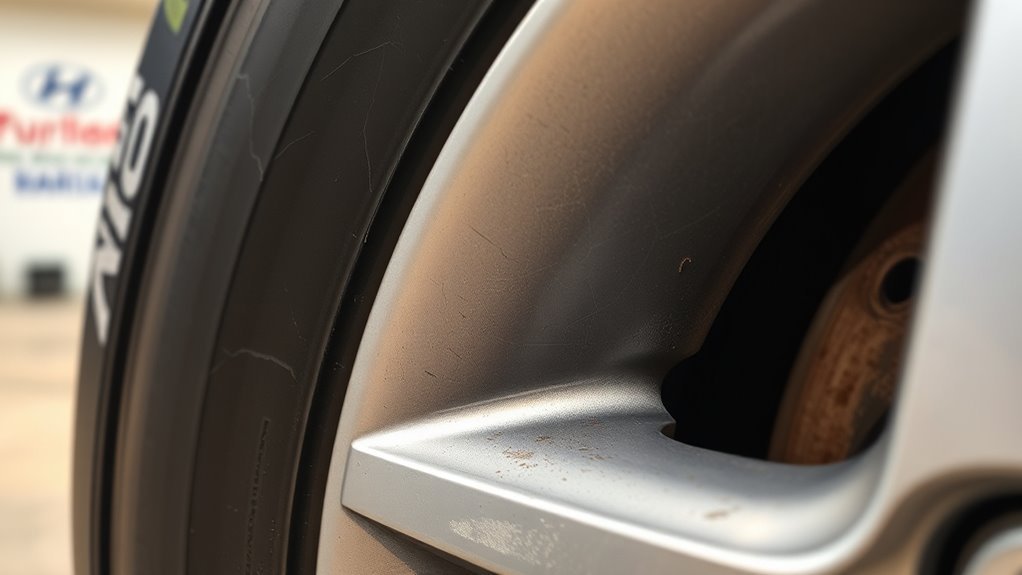
Tire sidewall cracks on your Hyundai Sonata should never be ignored. Some shallow surface checking is mostly cosmetic, but deeper cracks, bulges, exposed cords, air leaks, or cracking that spreads across the sidewall can weaken the tire and increase the risk of a blowout. The safest move is to inspect the tire closely, check its age and pressure, and have a tire professional evaluate anything beyond light surface cracking.
Quick Answer
Hyundai Sonata tire sidewall cracks are dangerous when they are deep, spreading, paired with a bulge, leaking air, or exposing fabric or steel cords. Do not use a simple 1/4-inch rule for sidewall cracks. If the crack opens when flexed or the tire is older, get it inspected and replace it if recommended.
Key Takeaways
- Light, shallow weather checking may only need monitoring, but deep or widespread sidewall cracks usually mean the tire should be replaced.
- Bulges, bubbles, exposed cords, steady air loss, vibration, or cracking that reaches into the rubber are urgent warning signs.
- Use the Sonata’s driver-door tire placard or owner’s manual for the correct cold tire pressure and tire size, not the maximum PSI printed on the tire sidewall.
- Check the DOT/TIN date code on the tire sidewall because age-related rubber degradation can matter even when tread depth looks acceptable.
At a Glance
| Time Required | 5–10 minutes for a basic tire inspection |
| Difficulty | Easy for visual checks; professional inspection needed for questionable cracks |
| Tools Needed | Flashlight, tire pressure gauge, tread-depth gauge or penny, gloves, and a clean cloth |
| Cost | DIY inspection is free; professional inspection may be complimentary or shop-rate; replacement cost varies by tire size and brand |
Understanding Hyundai Sonata Tire Sidewall Cracks
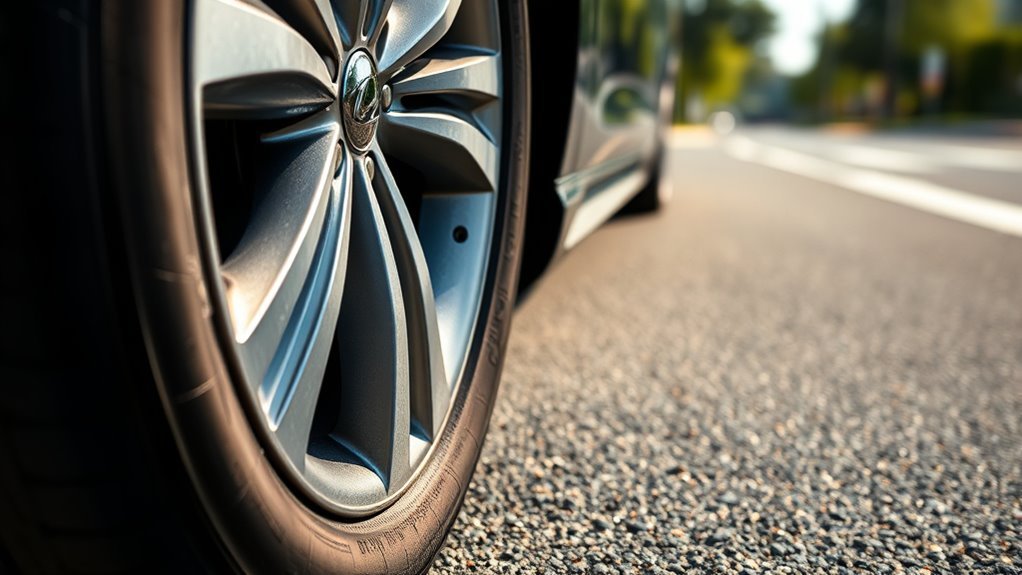
Sidewall cracks are splits or checking marks in the rubber on the side of the tire. On a Hyundai Sonata, they may appear as tiny hairline marks, curved weather-checking lines, or deeper openings near the shoulder where the tread meets the sidewall. The concern is that the sidewall flexes constantly while you drive, so damage in this area can worsen faster than a simple cosmetic mark.
According to NHTSA TireWise, tire aging happens as rubber and other tire components change over time because of service, storage, and environmental conditions. NHTSA also notes that tires should be checked for physical damage such as cuts, cracks, and bulges, and that some vehicle and tire manufacturers recommend age-based replacement even if tread remains.
NHTSA reported 511 motor vehicle traffic fatalities in tire-related crashes in 2024, which is why tire condition, pressure, tread, and age are not minor maintenance details.
Warning: Do not drive normally on a tire with a sidewall bulge, exposed cords, fast air loss, severe cracking, or vibration that begins suddenly. Install the spare if it is safe and properly inflated, call roadside assistance, or have the vehicle towed.
Common Causes of Hyundai Sonata Tire Sidewall Cracking
Sidewall cracking usually develops from a mix of age, environment, use, and maintenance. Common causes include:
- UV and sunlight exposure: A Sonata parked outside for long periods may develop cracking faster, especially on the sidewalls facing the sun.
- Ozone, heat, and weather: Heat cycles, ozone, and harsh climate conditions can dry and harden rubber over time.
- Tire age: Older tires lose flexibility even when tread depth still looks acceptable. Michelin recommends professional inspection after five years of use and replacement by ten years from the manufacture date as a precaution.
- Improper inflation: Underinflation increases sidewall flex and heat; overinflation can make the tire more vulnerable to impact damage.
- Long storage or low mileage: Tires on vehicles that sit for long periods may crack because the rubber is not flexed and “exercised” regularly.
- Curbs and road hazards: Rubbing a curb, hitting potholes, or scraping the sidewall can damage rubber and internal cords.
- Harsh cleaners and tire dressings: Strong chemicals or overuse of tire shine products can speed surface deterioration.
- Overloading: Carrying more weight than the vehicle or tire is rated for can overwork the sidewalls.
Tire Rack explains that weather checking can be accelerated by heat, ozone, sunlight, exhaust, curb abrasion, harsh cleaners, and long periods of parking or storage. That is why a Sonata that is driven rarely, parked outdoors, or maintained with incorrect pressure can show cracks before the tread is fully worn.
Identifying Dangerous Tire Cracks: Key Signs to Watch For
Not every visible mark means instant replacement, but some warning signs deserve immediate attention. Look at the crack’s depth, location, spread, and whether it appears with other symptoms such as pressure loss or vibration.
Common Crack Types
- Surface checking: Small, shallow hairline cracks on the outer rubber. These may be cosmetic if they do not extend beyond the surface, but they should be monitored.
- Sidewall cracks: Cracks on the tire’s sidewall are more serious than many tread-surface marks because the sidewall flexes and carries load while driving.
- Shoulder cracks: Cracks where the tread meets the sidewall can be concerning because this is a high-stress area.
- Tread-groove cracks: Cracks at the base of the tread grooves may signal age, dry rot, or deeper rubber deterioration.
- Growing or opening cracks: If a crack gets longer, wider, deeper, or opens when the rubber flexes, treat it as a safety issue.
Visual Inspection Tips
Park on level ground, set the parking brake, and inspect the tires when they are cool. Use a flashlight to check the outer sidewall, shoulder, tread grooves, valve stem area, and as much of the inner sidewall as you can safely see. Turn the steering wheel left and right to improve access to the front tires.
- Look for cracks that run in several directions, form a web pattern, or spread around the sidewall.
- Check for bulges, bubbles, cuts, missing chunks, exposed cords, nails, or impact damage.
- Compare all four tires. One badly cracked tire may point to sun exposure, curb damage, or a single tire that is older than the others.
- Check the tire pressure with a gauge, even if the TPMS light is off.
- Check tread depth. NHTSA says tires are not safe and should be replaced when tread is worn down to 2/32 inch.
Note: The TPMS light is helpful, but it is not a full tire inspection. NHTSA says TPMS is not a substitute for regular tire maintenance, and underinflation can be hard to spot visually.
Replacement Timing Indicators
Use this guide as a starting point, then get a professional inspection when you are unsure:
| What You See | What To Do |
|---|---|
| A few shallow hairline cracks that do not open when flexed | Monitor closely, check pressure monthly, and recheck during routine service |
| More cracks appearing, cracks near the shoulder, or cracks in tread grooves | Schedule a tire inspection soon |
| Deep cracks, cracks that open, or cracks that spread around the sidewall | Replace the tire if a professional confirms structural risk |
| Bulge, bubble, exposed cords, air loss, or vibration | Stop normal driving and replace the tire immediately |
| Tire is six to ten years old, even with good tread | Follow the tire maker’s age guidance and have the tire inspected carefully |
How to Evaluate the Severity of Tire Cracks
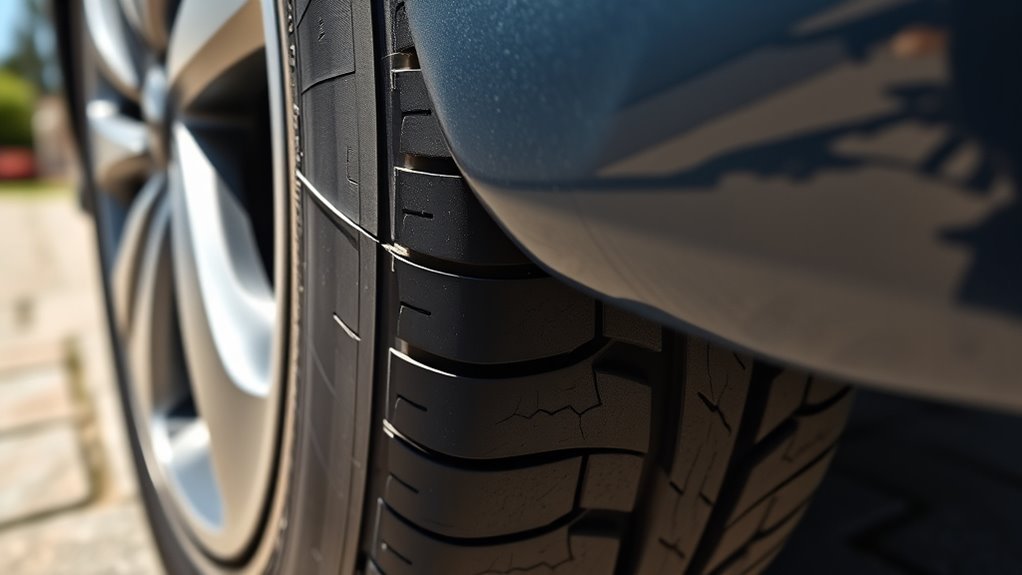
To evaluate tire cracks correctly, do more than glance at the outside wall. A safe inspection checks condition, age, pressure, tread depth, and recent driving symptoms.
Visual Inspection Techniques
- Start with cold tires. Check them before driving or after the car has been parked for at least three hours.
- Use a bright flashlight. Shine it across the sidewall at an angle so cracks and bulges cast shadows.
- Inspect both sidewalls. The inner sidewall can hide curb or pothole damage. If you cannot see it safely, ask a shop to lift the car.
- Press lightly around the crack. Do not pry or cut the rubber. If the crack opens, looks deep, or shows fabric, stop driving on that tire.
- Check the DOT/TIN age code. The final four digits show the week and year the tire was made. For example, 3520 means the 35th week of 2020.
- Check pressure and tread. Use the Sonata’s driver-door placard or owner’s manual for the correct cold pressure.
- Document changes. Take a photo and recheck after a week or before long trips. Growing cracks need professional attention.
Pro Tip: Photograph each tire’s sidewall and DOT date code after rotation or seasonal service. Comparing photos makes it easier to spot cracks that are spreading.
Professional Assessment Importance
A professional tire inspection matters because the most dangerous damage may be internal. If a tire has been driven while very low on air, hit a pothole hard, or developed a bulge, the internal cords may be damaged even if the outside looks only slightly marked.
Hyundai Service recommends tire pressure checks, visual inspections, and Hyundai-trained technician inspections for cracks, bulges, weak sidewall areas, correct pressure, and proper wear during scheduled maintenance. A tire professional can also tell whether the crack is superficial weather checking or damage that compromises the tire’s structure.
| Crack Type | Recommended Action |
|---|---|
| Superficial weather checking | Monitor and inspect regularly |
| Moderate cracking near shoulder or tread grooves | Schedule a professional tire inspection |
| Deep sidewall crack | Replace if structural depth is confirmed |
| Bulge, exposed cords, leak, or widespread cracking | Replace immediately |
Why You Should Regularly Check Your Tires
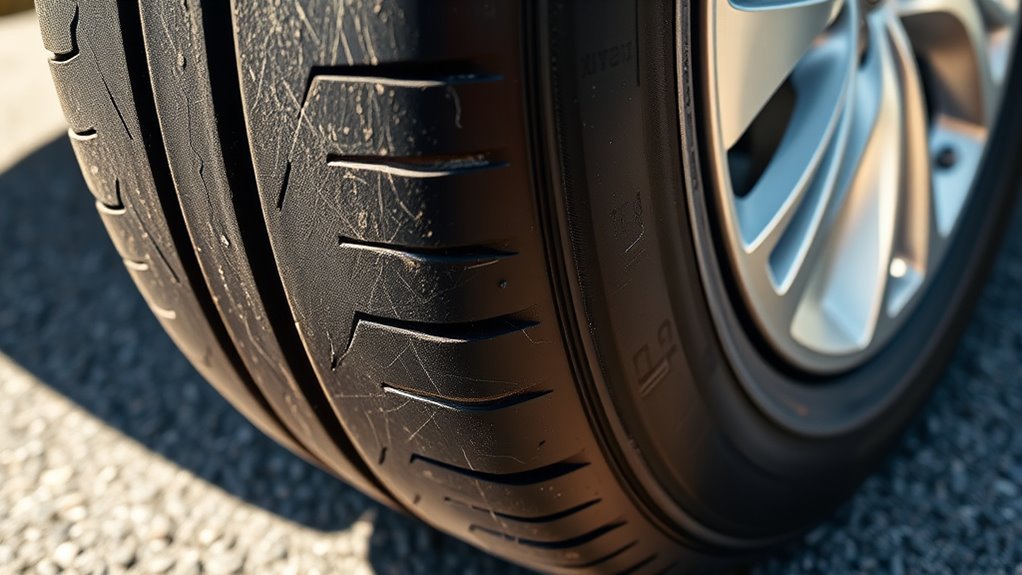
Regular tire checks help you catch cracks before they become an urgent safety problem. NHTSA recommends checking tire pressure at least once a month when tires are cold, including the spare, and checking tread while you check pressure.
- Early detection: Small cracks, bulges, and uneven wear are easier to manage when caught early.
- Better handling: Correct pressure and healthy tread improve braking, steering, and wet-road grip.
- Lower blowout risk: Proper pressure reduces excess heat and sidewall flex.
- Longer tire life: Rotation, alignment, balancing, and correct inflation help tires wear more evenly.
For a Hyundai Sonata, check the Tire and Loading Information Label on the driver’s side door edge or doorjamb for the correct tire size and cold inflation pressure. Do not inflate based on the maximum PSI printed on the tire sidewall; that number is not the vehicle’s recommended pressure.
When to Replace Cracked Tires?
Replace a cracked tire when the cracking suggests the tire can no longer safely hold its shape, pressure, or load. The safest replacement triggers are deep sidewall cracks, spreading cracks, exposed cords, bulges, bubbles, impact damage, air loss, or any crack that opens when the rubber flexes.
Do not rely on a simple “longer than 1/4 inch” rule for sidewall cracks. That measurement is often discussed in relation to tread-area puncture repair limits, not sidewall cracking. Tire Rack notes that tires with large cuts, cracks, bulges, blisters, or significant shoulder/sidewall damage should be replaced.
| Crack Condition | Action Required |
|---|---|
| Tiny surface checking with no air loss or bulge | Monitor, keep pressure correct, and recheck often |
| Cracks in tread grooves or near the shoulder | Have a tire professional inspect the tire |
| Deep sidewall cracks or cracks that open when flexed | Replace the tire |
| Bulge, bubble, exposed cords, leak, or sudden vibration | Stop normal driving and replace immediately |
| Tires older than the tire maker’s service-life guidance | Replace as a precaution, even if tread remains |
[Products Worth Considering]

This tire inflator with pressure gauge delivers long-lasting performance with a durable rubber-protected gauge and sturdy build. The longer hose and 360 swivel air chuck help you seal the valve securely and keep your hands free while measuring, inflating, or deflating. It’s battery-free for reliable use and provides ±2 PSI accuracy in the mid-range for most typical tires, with universal compatibility for 1/4 NPT compressor outputs.

Monitor tire tread wear with a smart, color-coded depth gauge that shows clear condition ranges at a glance. The bar is range marked for fast, easy readings, helping you maintain safer traction and performance. Each gauge is portable with a pocket clip, and the set includes 20 units for daily use and sharing.

Vigorder rubber cement glue delivers superior adhesion and cures quickly within about 30 seconds for seamless rubber bonding. Once cured, it helps provide a strong, durable, waterproof seal that holds up to vehicle weight, pressure, and heat. Suitable for cars, motorcycles, trucks, bicycles, and off-road tires, it’s designed for emergency patch and maintenance repairs.
Can Sidewall Cracks Be Repaired?
Structural sidewall cracks should not be patched, plugged, sealed, or covered with tire dressing. A patch-and-plug repair is designed for certain punctures in the repairable tread area, not for cracked or damaged sidewalls. If the sidewall rubber or internal cords are compromised, replacement is the safe repair.
Cosmetic tire dressing may temporarily hide dry-looking rubber, but it does not restore strength to cracked rubber. It can also make inspection harder if it fills or darkens small cracks. Clean tires with mild soap and water instead of harsh solvents.
[Products Worth Considering]

The SAFELIFE dial tire tread depth gauge measures tread depth in 1/32 inch increments with clear, easy-to-read 2-inch dial face. Color zones using a traffic light system help you quickly judge whether tread is low, marginal, or ample for safer driving. Built with a durable zinc cast body and a metal detect probe for precise, comfortable use across cars, motorcycles, trucks, and buses.

This Dr.Roc tire valve stem puller tools set helps install or remove snap-in tubeless valve stems safely and efficiently. It includes ozone-resistant EPDM snap-in valve stems, a valve stem installer, and a valve core remover for quick core removal or installation during tire service. Designed for reliable tubeless tire repair on motorcycles, ATVs, lawn equipment, cars, and trucks.

Milton S-921 pencil tire pressure gauge helps you maintain optimal tire pressure for passenger cars with accurate readings in PSI and kPa. It features a built-in deflator valve for convenient pressure adjustments, plus a single chuck head and nylon indicator bar for easy use on the go. Built from durable plated brass and designed for reliable performance, it’s a practical road trip and cold-weather maintenance tool.
Preventing Hyundai Sonata Tire Sidewall Cracking
Prevention starts with pressure, storage, cleaning, and routine inspections. These steps help slow rubber deterioration and reduce stress on the sidewalls:
- Check cold tire pressure monthly: Use a gauge and the Sonata’s driver-door placard or owner’s manual.
- Inspect before long trips: Look for cracks, bulges, cuts, punctures, uneven wear, and exposed cords.
- Limit UV exposure: Park in a garage or shaded area when possible, especially during long storage.
- Avoid harsh tire cleaners: Use mild soap and water, and avoid repeated heavy use of tire shine products.
- Rotate and align as recommended: Rotation, balance, and alignment reduce uneven stress and heat buildup.
- Avoid curb rubbing: Sidewall abrasion from curbs can weaken the outer rubber and hide deeper damage.
- Do not overload the vehicle: Follow the load limit on the Tire and Loading Information Label.
- Drive stored vehicles periodically: If safe and roadworthy, occasional driving helps flex the rubber and prevents flat-spotting.
What to Do If You Find a Sidewall Crack Before Driving
If you find a crack before a commute or road trip, use this quick decision process:
- Check for urgent signs: Bulge, bubble, exposed cords, air leak, severe crack depth, or sudden vibration means do not drive normally.
- Check pressure: If the tire is low, do not simply refill and continue without understanding why it lost pressure.
- Check age: Read the DOT/TIN date code. Older tires with cracking deserve extra caution.
- Use the spare only as directed: If your Sonata has a temporary spare, follow its speed and distance limits.
- Get professional help: Ask a tire shop or Hyundai service department to inspect the tire before highway driving.
[Products Worth Considering]

Measure tire tread depth quickly and accurately with this LUMITECO dial gauge that reads in 1/32" increments up to 14/32". The color-coded green/yellow/red zones make it easy to judge tire wear and know when replacement is needed. A rugged, compact design with a protective pouch helps keep the gauge ready for use on cars, trucks, motorcycles, and more.

ETENWOLF T300 is a calibrated digital tire pressure gauge for accurate readings from 3 to 200 PSI across light and heavy-duty vehicles. It includes thermal compensation for reliable performance in extreme cold or heat, with an auto shut-off to extend battery life and an LED for easier reading. The sturdy design supports rugged everyday use, making it ideal for pickups, RVs, and industrial applications.

Cristal Products Untouchable Tire Shine Spray delivers a deep, wet-look gloss that enhances your vehicle’s tires. It’s quick-drying and spreads smoothly for consistent, streak-free coverage, while forming a protective coating against UV rays, road grime, and weather. Suitable for all tire types, it helps restore dull, faded tires to a showroom-quality finish.
Why Expert Inspections Matter for Tire Safety
Expert inspections matter because tire damage is not always visible from the outside. A trained technician can check tread depth, pressure, age, uneven wear, impact damage, inner sidewall condition, valve stems, and whether the tire has been weakened by underinflation or road hazards.
Professional guidance is especially important if the crack is on the sidewall, near the shoulder, paired with vibration, or on a tire that has been driven while low on air. When in doubt, replacing one questionable tire is safer than gambling with a tire that may fail at highway speed.
Frequently Asked Questions
When should I replace tires with sidewall cracks?
Replace them when cracks are deep, spreading, opening when flexed, paired with a bulge or air leak, or showing fabric or steel cords. Shallow surface checking may only need monitoring, but sidewall cracks should be inspected by a professional if there is any doubt.
What causes sidewall cracking on tires?
Common causes include age, UV exposure, ozone, heat, improper inflation, long storage, low mileage, curb abrasion, pothole impacts, overloading, and harsh tire cleaners. Usually, several of these factors work together.
Is it safe to drive on a tire with a crack in the sidewall?
It depends on severity. A tiny surface crack may be safe to monitor, but deep sidewall cracks, bulges, exposed cords, pressure loss, or vibration make the tire unsafe for normal driving. Use a spare or roadside assistance if the tire shows urgent warning signs.
Can a cracked tire sidewall be patched or plugged?
No. Sidewall cracks and sidewall structural damage are not proper patch or plug repairs. A repair may be possible for certain tread-area punctures, but cracked or damaged sidewalls usually require replacement.
How do I check the age of my Hyundai Sonata tires?
Find the DOT/TIN code on the tire sidewall. The last four digits show the week and year of manufacture. For example, 3520 means the tire was made in the 35th week of 2020. Check both sidewalls because the full code may appear on only one side.
Should I replace all four tires if one Sonata tire has sidewall cracks?
Not always, but check all four tires for age, tread depth, brand/model match, and condition. If all tires are the same age and one is cracked from aging or dry rot, the others may be close behind. Ask a tire professional whether replacing one, two, or all four is safest for your vehicle and driving conditions.
Conclusion
Hyundai Sonata tire sidewall cracks deserve a careful look because tire safety depends on more than tread depth. Shallow surface checking may be monitored, but deep cracks, spreading cracks, bulges, exposed cords, air leaks, vibration, or older tires should be handled quickly. Check pressure monthly, use the driver-door placard for the correct cold PSI, read the DOT date code, and get a professional inspection before taking a questionable tire on the highway.
Sources
- NHTSA TireWise — tire pressure, tread depth, tire aging, DOT/TIN date-code guidance, TPMS limits, and tire-related crash data.
- Hyundai Service: Tires Replacement & Tire Service — Hyundai-specific inspection guidance for cracks, bulges, weak sidewall areas, pressure, and wear.
- Tire Rack: Why Does Tire Rubber Crack? — causes of weather checking, ozone cracking, and tire sidewall cracking.
- Tire Rack: When Should Tires Be Replaced? — replacement guidance for cracks, cuts, bulges, sidewall damage, and tire age.
- Michelin: When to Replace Tires — tire age, DOT date-code explanation, sidewall damage, and ten-year precautionary replacement guidance.

