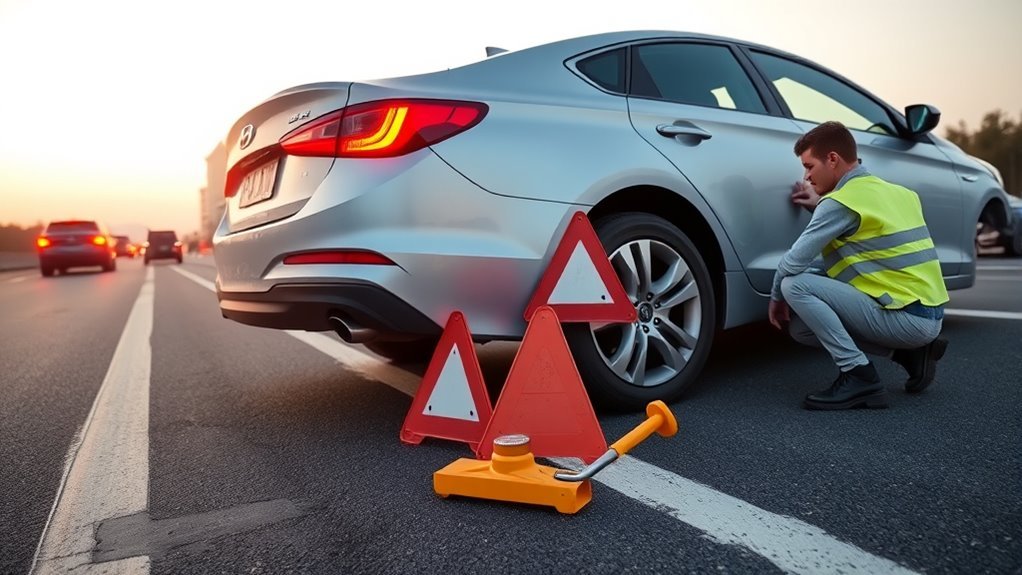
If you get a flat tire on the highway in your Hyundai Sonata, your first job is not to fix the tire—it is to get out of traffic safely. Slow down smoothly, turn on your hazard lights, move as far from traffic as you can, and only use the Hyundai Tire Mobility Kit if the vehicle is in a safe working area and the damage appears suitable for sealant.
Quick Answer
For a Hyundai Sonata flat tire on the highway, turn on the hazard lights, slow down gradually, pull as far from traffic as possible, and stay buckled inside if the shoulder is unsafe. Use the Tire Mobility Kit only for small tread punctures; call roadside assistance for sidewall damage, severe tire damage, or unsafe roadside conditions.
Key Takeaways
- Do not try to work beside fast-moving traffic. If the shoulder is narrow or visibility is poor, stay inside with your seat belt on and call for help.
- The Hyundai Tire Mobility Kit is a temporary fix for certain small tread punctures, not for sidewall damage, wheel damage, blowouts, or two flat tires.
- Follow the Hyundai manual sequence: connect the kit, run the compressor about 5–7 minutes, drive about 4–6 miles to spread sealant, then recheck and adjust tire pressure.
- After using sealant, drive cautiously and get the tire inspected, repaired, or replaced as soon as possible.
At a Glance
| Time Required | About 20–30 minutes if the vehicle is already in a safe area, including the 4–6 mile sealant-distribution drive |
| Difficulty | Easy to moderate, but only if the car is safely away from traffic |
| Tools Needed | Hyundai Tire Mobility Kit, working 12-volt outlet, tire pressure gauge, gloves and reflective gear if available |
| Cost | No roadside cost if your kit is complete and usable; tire inspection, repair, sealant replacement, or tire replacement costs vary by shop |
Pulling Over Safely After a Flat Tire

When you notice a flat tire, low tire pressure warning, vibration, or a sudden change in handling, keep both hands on the wheel and avoid slamming on the brakes. Ease off the accelerator, signal if you can, and move toward the widest shoulder, exit ramp, rest area, parking lot, or other level place away from traffic.
Once stopped, shift to Park, set the parking brake, and keep your hazard lights on. If you have reflective triangles or a bright cloth and can place them without stepping into traffic, use them to improve visibility.
Warning: Do not stand between your Sonata and traffic, and do not kneel beside a traffic-side tire on a narrow highway shoulder. If traffic is close, visibility is poor, or you feel unsafe, stay buckled inside the vehicle with the hazards on and call roadside assistance or 911 if there is immediate danger.
Before Using the Hyundai Tire Mobility Kit
The Hyundai Tire Mobility Kit is designed as a temporary emergency solution. It is not a permanent repair, and it is not suitable for every flat tire. Before connecting the kit, inspect only from a safe position and do not step into traffic.
Use the kit only when all of these are true:
- The tire damage appears to be a small puncture in the tread area.
- The tire and wheel are not visibly shredded, cracked, bent, or severely damaged.
- Only one tire is flat.
- The vehicle is safely parked away from moving traffic.
- The sealant bottle is present, not leaking, and not expired.
Do not use the kit if the puncture is in the tire wall or sidewall, if the tire was driven flat long enough to damage it, if the wheel is damaged, or if the damage appears larger than about 0.16 inch (4 mm). Hyundai also advises not removing foreign objects such as nails or screws before using the kit.
Note: Hyundai procedures can vary by model year and kit design. Use this guide as a safe overview, but follow the owner’s manual and tire placard for your exact Sonata.
Quick Setup Guide to Your Hyundai Tire Mobility Kit
Your Sonata’s Tire Mobility Kit usually includes a compressor and a sealant bottle. The goal is to add sealant and air, drive a short distance so the sealant spreads inside the tire, then recheck the pressure before continuing.
- Park safely first: Work only when the car is away from traffic and the parking brake is set.
- Read the kit label: The sealant bottle may include a speed restriction label. Place it where you can see it while driving.
- Use the 12-volt outlet: Plug the compressor into the vehicle’s power outlet only after the hose and bottle are connected as directed.
- Keep the vehicle outdoors: If the manual says to run the engine while using the compressor, do that only in a well-ventilated outdoor area.
Pro Tip: Store a small flashlight, gloves, and a tire pressure gauge with your emergency supplies. The compressor gauge may read high while running, so switch the compressor off briefly when checking pressure.
[Products Worth Considering]
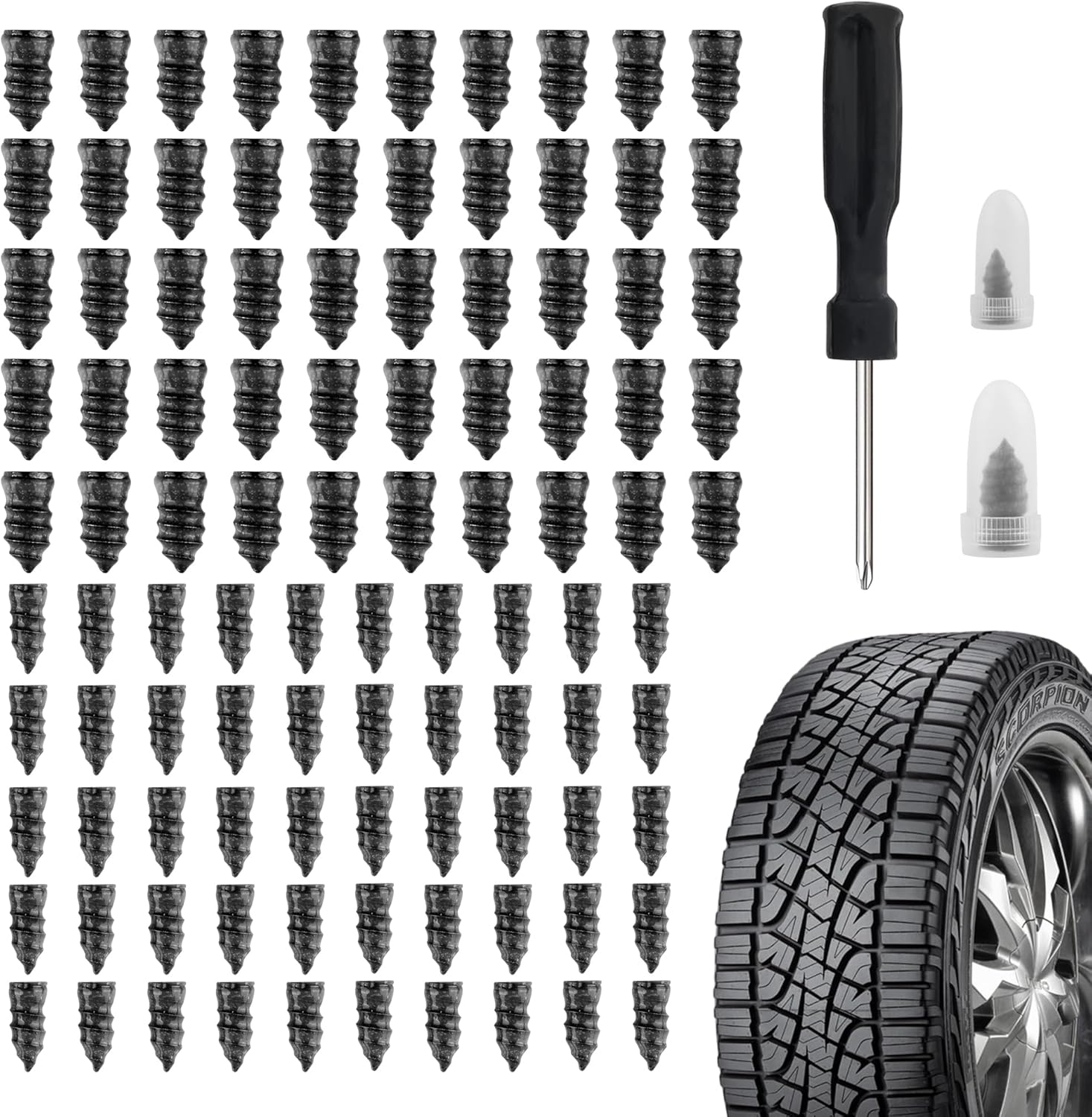
Salior’s tire plug kit provides a fast, reliable self-service fix for punctured or leaking tires without the need for flaring tools. Choose the correct plug size, then screw the nail into the puncture using the included screwdriver for an enhanced seal. The set is durable and convenient for on-the-go maintenance across multiple vehicle types.

TireJect Off-Road Tire Sealant Kit provides 5-in-1 sealing to help fix tread punctures up to 3/8", sidewall punctures up to 3/8", bead leaks, slow leaks, and minor dry rot on low-speed tires. It permanently seals with liquid rubber, recycled tire particles, and Aramid fibers, making it ideal for flats caused by thorns, nails, and screws. The included dispensing cap attaches to the valve stem for a no-mess installation, along with a metal valve core remover tool and valve stem cap. This kit is for off-road use only.

Wykodra tire plugs provide quick vulcanizing repairs for tubeless tires, helping you seal punctures and get back on the road. The industrial-strength rubber creates a long-lasting, leak-resistant bond and is designed for emergency fixes without removing the tire. Choose between two standard plug sizes with color-matched options for small to larger damage across many vehicles and off-road uses.
Step-by-Step Guide to Using Your Tire Mobility Kit
[Products Worth Considering]

Monitor tire tread wear with a smart, color-coded depth gauge that shows clear condition ranges at a glance. The bar is range marked for fast, easy readings, helping you maintain safer traction and performance. Each gauge is portable with a pocket clip, and the set includes 20 units for daily use and sharing.

This AUTOWN flat tire repair kit is designed for quick, reliable puncture repairs using a plug kit and spiral probe tool to simplify installation. Built for durability and safe handling, it offers strong adhesion and flexibility to help maintain tire air tightness. With a portable storage case and a multi-vehicle approach, it’s suitable for cars, motorcycles, ATVs, tractors, lawn mowers, RVs, jeeps, and trucks.

This roadside assistance kit helps drivers and passengers in urgent situations after an accident or breakdown, providing practical support while waiting for help. It includes a lightweight, compact tire inflator for fast inflation of standard vehicle tires, plus reinforced jumper cable protection for safer handling. Ideal for winter weather, road trips, camping, and travel, with everything stowed neatly in a trunk bag.
1. Prepare the Kit and Tire
- Set the parking brake and keep the hazard lights on.
- Take out the Tire Mobility Kit and review the instructions printed on the kit or in your owner’s manual.
- Detach the speed restriction label from the sealant bottle if your kit includes one, and place it where the driver can see it.
- Shake the sealant bottle if your kit instructions call for it.
- Remove the tire valve cap from the damaged tire.
2. Connect the Sealant and Compressor
- Attach the sealant bottle and filling hose to the compressor as shown in your kit instructions.
- Secure the filling hose to the tire valve. Make sure the hose is tight so sealant does not leak backward or clog the hose.
- Confirm the compressor switch is off.
- Plug the compressor power cord into the Sonata’s 12-volt power outlet.
3. Inflate the Tire With Sealant
With the vehicle outdoors and the engine running if your manual requires it, switch on the compressor. Hyundai’s procedure commonly calls for running the compressor for about 5–7 minutes to fill the tire with sealant and air. Do not run the compressor for more than 10 minutes at a time because it can overheat.
Do not drive if the tire cannot reach at least 29 psi (200 kPa) before the short sealant-distribution drive. This is a minimum safety threshold, not necessarily the final recommended pressure for your Sonata.
4. Drive to Distribute the Sealant
After disconnecting and storing the kit, drive immediately for about 4–6 miles, or about 10 minutes, so the sealant can spread inside the tire. Do not exceed 50 mph (80 km/h). If possible, stay above 12 mph (20 km/h) during this short drive.
If you feel vibration, pulling, ride disturbance, or hear unusual noise, slow down and pull off safely. Call roadside assistance or towing instead of continuing.
5. Recheck and Adjust Tire Pressure
Stop again in a safe location. Reconnect the compressor hose directly to the tire valve and check the pressure with the compressor switched off for a more accurate reading. Adjust the tire to the recommended pressure shown on the driver-side door placard or in your Sonata owner’s manual.
If the tire cannot hold pressure, do not keep driving. Call for roadside assistance, towing, or an authorized Hyundai dealer.
Troubleshooting: When the Kit Does Not Work
Stop using the Tire Mobility Kit and call for help if any of these happen:
- The compressor cannot raise the tire to at least 29 psi (200 kPa).
- The tire loses pressure again after the 4–6 mile sealant-distribution drive.
- Sealant leaks heavily from the hose, valve, tread, shoulder, or sidewall.
- The tire has a sidewall puncture, torn tread, bulge, exposed cords, or wheel damage.
- The compressor overheats or has already run for 10 minutes.
- The TPMS warning stays on after you have corrected the tire pressure.
- The sealant is expired, missing, frozen, or leaking from the bottle.
Warning: Tire sealant can irritate skin and eyes. If sealant contacts your skin, wash with plenty of water. If it gets in your eyes, flush with water and seek medical help if irritation continues. Keep sealant away from children and pets.
[Products Worth Considering]

Use this tire repair rubber screw kit for fast, self-service flat fixes on the road. Choose the matching short or long nail size and twist it into the puncture without removing the tire from the rim. Compact storage keeps the emergency set organized for cars, motorcycles, electric bikes, and bicycles, helping you seal tubeless leaks quickly and reliably.

Vigorder rubber cement glue delivers superior adhesion and cures quickly within about 30 seconds for seamless rubber bonding. Once cured, it helps provide a strong, durable, waterproof seal that holds up to vehicle weight, pressure, and heat. Suitable for cars, motorcycles, trucks, bicycles, and off-road tires, it’s designed for emergency patch and maintenance repairs.
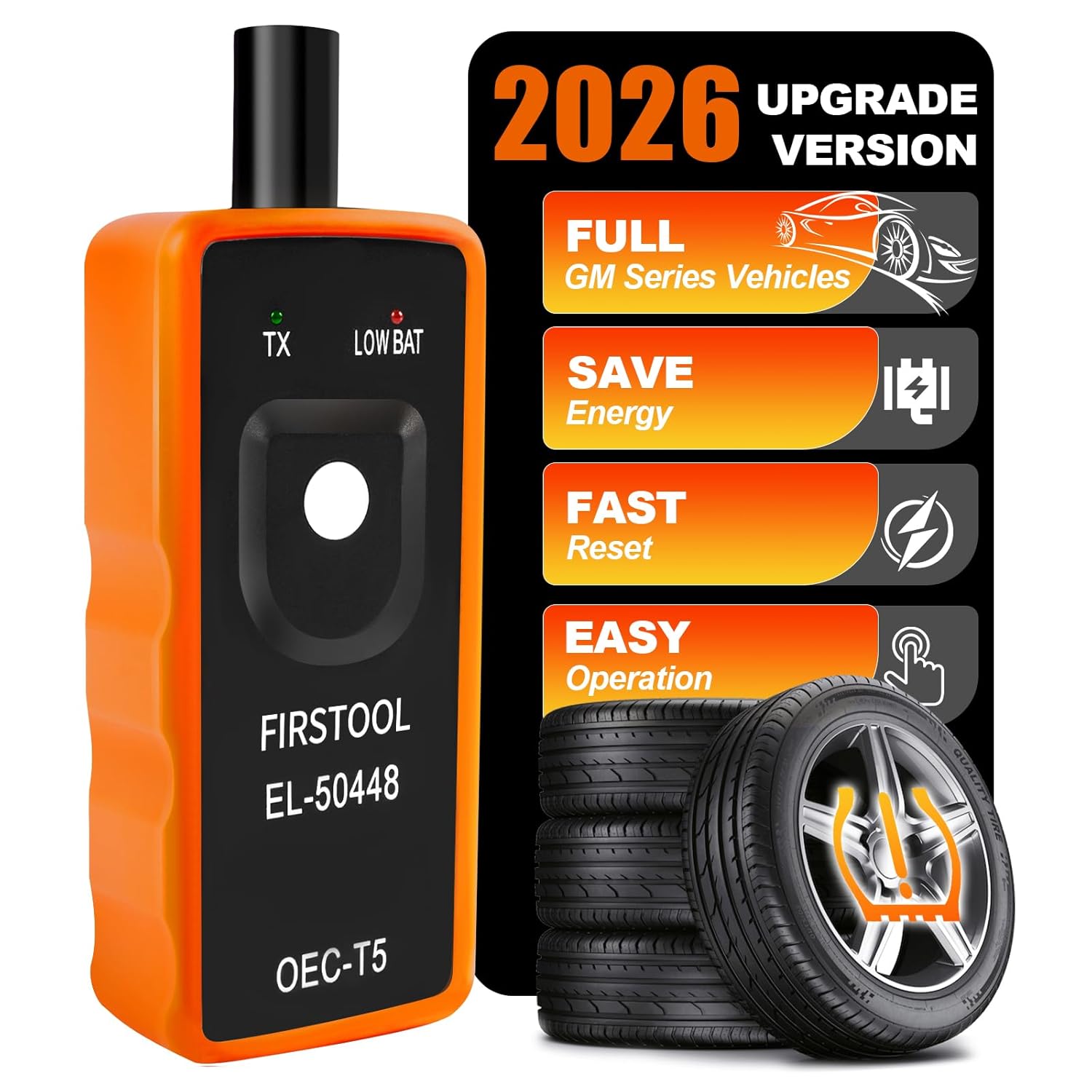
This TPMS relearn tool helps you quickly activate, match, and reset GM tire pressure sensors to keep the vehicle monitoring system working properly. It clears tire pressure alarms and dashboard warning lights after sensor replacement or tire rotation, and supports learning for common 315/433 MHz TPMS sensors. Designed for simple one-button operation, it can help you avoid unnecessary trips to repair shops.
Driving Safely After Fixing Your Tire: Key Tips to Follow
After using the Tire Mobility Kit, drive as if the repair could fail at any time. Keep your speed at or below the limit shown in your manual or on the kit label, avoid hard braking, and avoid sharp steering. The sealant repair is only meant to help you reach a safe service location.
- Recheck pressure after the sealant-distribution drive.
- Watch for TPMS warnings, vibration, pulling, or unusual noise.
- Do not take a long trip on a sealant-filled tire.
- Arrange a tire inspection as soon as possible.
When the tire is repaired or replaced, tell the shop that sealant was used. The tire pressure sensor and wheel may need cleaning or inspection.
Tire-related crashes caused 511 deaths in 2024, according to NHTSA. Proper tire pressure, tread checks, rotation, balance, and alignment are simple habits that help reduce flat-tire and blowout risk.
Maintaining Your Tires to Prevent Future Flats

Good tire maintenance lowers your risk of roadside emergencies. NHTSA recommends checking tire pressure at least once a month when the tires are cold, meaning the car has not been driven for at least three hours. Use the pressure listed on the driver-side tire placard or in the owner’s manual, not the maximum pressure printed on the tire sidewall.
- Check pressure monthly: Include all tires and any spare if your Sonata has one.
- Check tread monthly: Replace tires when tread reaches 2/32 inch or when wear bars are flush with the tread.
- Inspect for damage: Look for cuts, cracks, bulges, nails, screws, uneven wear, or exposed cords.
- Rotate on schedule: Follow your Hyundai manual; NHTSA notes that many vehicles use a 5,000–8,000 mile rotation interval when recommended by the manufacturer.
- Fix alignment or balance problems: Vibration, pulling, or uneven wear should be checked by a qualified technician.
When to Seek Professional Help for Flat Tire Issues
Call roadside assistance, towing, a tire shop, or an authorized Hyundai dealer when the tire damage is not a simple tread puncture or when roadside conditions are unsafe. The Tire Mobility Kit is not a substitute for a proper tire repair.
When to Call Tow Service
Call for towing or roadside help if:
- You cannot move the Sonata fully out of traffic.
- The flat is on the traffic side and the shoulder is narrow.
- The tire has sidewall damage, a large puncture, a blowout, or exposed cords.
- Two or more tires are flat.
- The wheel is bent, cracked, or damaged.
- The kit cannot inflate the tire or pressure drops again.
- You do not feel comfortable using the kit.
What Counts as a Real Tire Repair?
A proper permanent repair is done by a tire professional after the tire is removed from the wheel and inspected inside and out. The U.S. Tire Manufacturers Association explains that a safe puncture repair uses a plug or stem to fill the injury and a patch to seal the inner liner. A plug alone or a patch alone is not considered a proper repair.
Repairs are generally limited to the tread area, and puncture injuries must not extend into the shoulder or sidewall. If the damage is outside the repairable area, the safer choice is tire replacement.
Unfamiliar Roadside Conditions
If you are in an unfamiliar area, severe weather, poor lighting, or heavy traffic, prioritize personal safety over saving time. Stay visible, stay buckled if exiting is dangerous, and call for help. A flat tire is inconvenient; a roadside collision is far more serious.
Frequently Asked Questions
How do I turn off the low tire pressure warning on a Hyundai Sonata?
Inflate the tire to the correct cold pressure shown on the driver-side placard or owner’s manual, then drive a short distance so the TPMS can update. If the light stays on, flashes, or comes back after inflation, inspect the tire for a leak and have the system checked by a professional.
How do I fix a flat tire on a Hyundai Sonata step by step?
Pull over safely, set the parking brake, inspect whether the tire is suitable for the Tire Mobility Kit, connect the sealant bottle and compressor, run the compressor about 5–7 minutes, confirm the tire reaches at least 29 psi, drive about 4–6 miles to distribute sealant, then recheck and adjust the pressure.
Is the Hyundai Tire Mobility Kit a permanent fix?
No. The Tire Mobility Kit is a temporary emergency fix meant to help you reach a safe service location. Have the tire inspected, repaired, or replaced as soon as possible after using sealant.
Can I use the kit on a sidewall puncture?
No. Do not use the Tire Mobility Kit for tire wall or sidewall damage. Sidewall damage can lead to tire failure, so call roadside assistance or have the vehicle towed to a tire shop.
How fast can I drive after using the Hyundai Tire Mobility Kit?
Do not exceed 50 mph (80 km/h), and drive only far enough to reach a safe place for inspection or repair. During the first 4–6 mile sealant-distribution drive, Hyundai commonly advises staying between about 12 mph and 50 mph when conditions allow.
What should I do if the Tire Mobility Kit will not inflate the tire?
Stop trying to drive on the tire. If the tire cannot reach the minimum pressure, loses pressure again, or has visible serious damage, call roadside assistance or towing. Continuing to drive can damage the tire, wheel, and vehicle.
Conclusion
A flat tire on the highway in your Hyundai Sonata is manageable when you make safety the first priority. Pull over smoothly, stay visible, and avoid working beside traffic. If the tire has only a small tread puncture and your Tire Mobility Kit is complete, follow the Hyundai procedure carefully, drive slowly to distribute the sealant, recheck the pressure, and get professional tire service as soon as possible. If anything feels unsafe or the tire damage looks serious, skip the roadside fix and call for help.
Sources
- Hyundai Owner’s Manual — Using the Tire Mobility Kit when a tire is flat — backs the kit setup, compressor timing, pressure minimum, drive distance, and speed limits.
- Hyundai Owner’s Manual — Notes on the Safe Use of the Tire Mobility Kit — backs tread-only use, 4 mm limitation, parking brake, sealant cautions, and compressor warnings.
- NHTSA TireWise — backs monthly tire pressure checks, tread depth guidance, TPMS guidance, rotation, balance, alignment, and tire safety statistics.
- AAA Club Alliance — How to Stay Safe in a Roadside Emergency — backs stay-inside, hazard-light, visibility, and roadside safety guidance.
- U.S. Tire Manufacturers Association — Tire Repair Basics — backs professional tire repair requirements, tread-area repair limits, and plug-patch repair standards.