Disclosure: As an Amazon Associate, we earn from qualifying purchases. If you click a link on this page and make a purchase, we may receive a small commission at no extra cost to you.
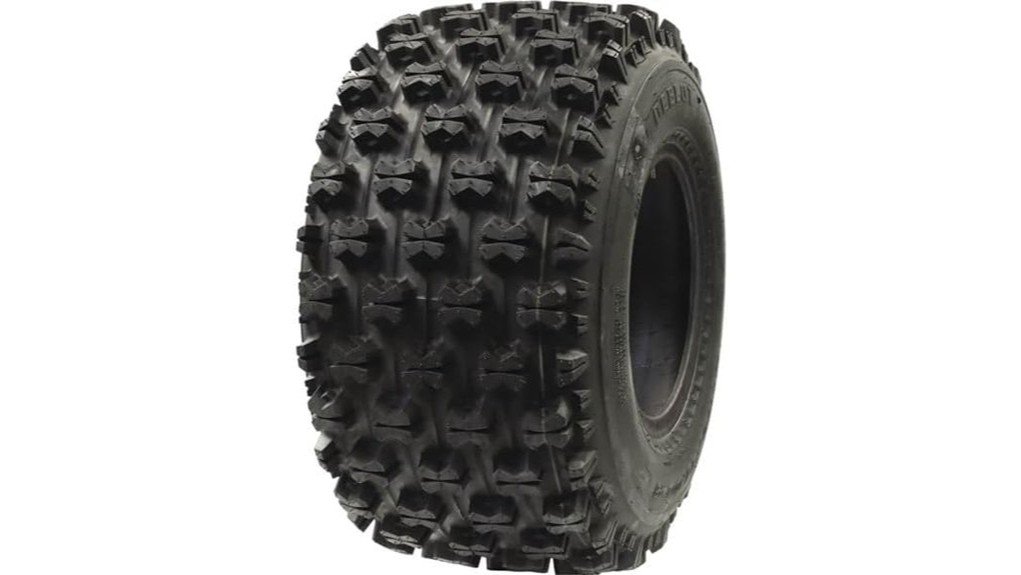
Choosing a rear ATV tire is mostly a fitment decision, but tread shape and casing strength also affect how your quad feels on the trail. The Ocelot P357 in 20×11-10 combines a flat sport-tire profile, 18 mm non-directional tread, split-knob lugs, and a 6-ply rated bias carcass. It is a practical option for hardpack, cross-country trails, and sport riding, but it is not a front tire or a dedicated deep-mud design. This review helps you decide whether its exact size, rear-position design, and performance priorities match your ATV.
Quick Verdict
Rating: 8/10, recommended with fitment caveats
Best For: Sport ATV owners who need a 20×11-10 rear tire for hardpack, open terrain, and mixed cross-country trails
Bottom Line: The P357 offers a durable 6-ply bias build, a broad contact patch, and predictable all-direction grip. Its main tradeoffs are limited size compatibility and a tread pattern that favors sport and mixed-terrain riding over deep mud.
| Specification | Detail |
|---|---|
| Brand | Ocelot |
| Model | P357, part number 748-P357-0075 |
| Product type | Rear sport ATV tire |
| Tire size | 20×11-10 |
| Rim diameter | 10 inches |
| Section width | 11 inches |
| Construction | 6-ply rated bias carcass |
| Tire type | Tubeless |
| Tread design | Non-directional, split-knob lug pattern with a flat profile |
| Tread depth | 18 mm |
| Published max load | 330 lb at 7 psi |
| Rubber hardness | About 68A to 70A durometer |
| Best use | Hardpack, open terrain, sport riding, and cross-country trails |
| Package note | Single tire; wheel is sold separately |
Before You Buy: This listing is for a 20×11-10 rear tire, not a front tire. Confirm the complete size on your current rear tire and in your ATV owner’s manual, and remember that the wheel is not included.
Key Takeaways
- The Ocelot P357 reviewed here is a 20×11-10 rear ATV tire for a 10-inch rim.
- Its 6-ply rated bias carcass is built for more casing strength than a lighter 4-ply sport tire.
- The flat, non-directional split-knob tread is designed to improve the contact patch, braking, cornering, and all-direction grip.
- The dense lug pattern is best suited to hardpack, open ground, and mixed cross-country terrain rather than deep, sticky mud.
- Its tubeless construction removes the inner tube, but the tire can still suffer punctures, bead leaks, or sidewall damage.
What Is the Ocelot P357?
The Ocelot P357 is a rear quad sport tire sold in several sizes and ply ratings. This review focuses only on the 20×11-10, 6-ply version linked in the article. It uses a bias-ply carcass, a broad flat profile, and a non-directional tread with split lugs.
Ocelot positions the P357 for sport ATV riding, open terrain, cross-country use, and GNCC-style riding. The design is comparable in purpose to rear sport tires such as the ITP Holeshot, Maxxis Razr, and QuadBoss Sport, but the correct choice still depends on your wheel size, required load capacity, terrain, and riding style.
Who Should Buy It?
Best For
- You need an exact 20×11-10 rear replacement tire for a 10-inch ATV rim.
- You ride mainly on hardpack, dry dirt, open trails, or mixed cross-country terrain.
- You want a 6-ply rated tubeless sport tire with a flat profile and non-directional tread.
Skip If
- You need a front tire, a different rim diameter, or a different rear tire size.
- Your normal terrain is deep mud and you need widely spaced, self-cleaning mud lugs.
- You want a radial tire or need a load rating above the published 330 lb figure.
Fit and Compatibility
The size code is the first detail to check. In 20×11-10, the first number is the approximate tire diameter, the second is the section width, and the last is the rim diameter. This P357 therefore mounts on a 10-inch rim and is intended for the rear position.
Do not choose it only because your ATV uses 10-inch rear wheels. Your current tire size, rim width, clearance, load needs, and the manufacturer’s approved sizes must also match. A wider or taller tire can rub suspension parts, change gearing, or affect handling even when the rim diameter is correct.
Pro Tip: Photograph the full size and service markings on your current rear tire before ordering. Replacing rear tires as a matched pair usually gives more consistent traction, rolling diameter, and cornering behavior.
6-Ply Bias Construction and Tubeless Design
The P357 uses a 6-ply rated bias carcass. Ply rating describes the tire’s strength class, not the literal number of fabric layers. Compared with a lighter-duty casing, the 6-ply rating is intended to provide firmer support and better resistance to deformation during rough trail use.
The tradeoff is that a stronger bias carcass can feel firmer and may add more unsprung weight than a lighter sport tire. The exact ride feel also depends on pressure, ATV weight, suspension setup, and terrain.
Its tubeless design removes the inner tube, so there is no tube to pinch between the rim and an obstacle. Tubeless does not mean puncture-proof. Nails, sharp rocks, damaged beads, bent rims, and sidewall cuts can still cause pressure loss.
Flat Profile and Split-Knob Tread
The broad, flat profile is designed to place more tread across the ground during acceleration and cornering. That shape suits a rear sport tire because it can provide a planted feel on hard surfaces and open trails, although steering response will still depend on the front tire setup and suspension.
Each tread block uses a split-knob form that lets portions of the lug flex independently. This can create more biting edges when the tire loads up under throttle, braking, or a turn. The non-directional layout also means the tire does not depend on a forward-facing arrow for its tread pattern.
Ocelot lists a rubber hardness of about 68A to 70A. That published durometer range suggests a compound intended to balance grip and wear, but actual tread life will vary with wheelspin, surface abrasiveness, pressure, alignment, and storage.
Performance on Dirt, Mud, and Hardpack
Hardpack and Open Terrain
This is where the P357’s dense lug pattern and flat footprint make the strongest case. The large number of tread blocks spreads contact across the surface, which can support steady acceleration, controlled braking, and a smoother feel than a tire with tall, widely spaced mud lugs.
Loose Dirt and Cross-Country Trails
The split-knob design adds multiple biting edges for changing trail directions. On dry loose dirt, the tire should provide predictable rear traction as long as pressure and suspension are set correctly. The flat profile also favors tight turns, but aggressive throttle can still break the rear loose.
Mud, Sand, and Rocks
The P357 can handle mixed trail sections, but it is not a specialized mud, sand-paddle, or rock-crawling tire. Its tighter tread spacing may hold more material than a true mud tire, while its flat sport profile will not float like a dedicated sand tire. Choose a terrain-specific design if one surface dominates your riding.
Braking and Cornering
The non-directional pattern places tread edges in several directions, while the split lugs can flex separately as loads change. Together, those features are designed to improve braking control and help the rear maintain grip through tight turns.
The P357 should feel most predictable when both rear tires match in model, size, tread depth, and pressure. Mixing a new tire with a heavily worn or different-pattern tire can create uneven traction during acceleration, braking, and cornering.
How It Performs in Real Use
For Recreational Trail Riding
On a route that alternates between packed dirt and loose sections, the P357’s all-direction tread gives you a versatile setup without requiring a terrain-specific mounting direction. The 18 mm tread depth provides substantial tread material for uneven trail surfaces.
For Sport and GNCC-Style Riding
The low, flat profile and split-knob design suit riding that involves quick direction changes, braking zones, and open-terrain acceleration. It is not a guarantee of race performance, but its layout follows the priorities of rear sport ATV tires.
For Utility Tasks
You can consider it for an ATV used for light work only when the exact rear size, wheel, load requirement, and vehicle guidance all match. Its sport-oriented flat tread may be less suitable than a utility tire when you need deep-mud traction, heavy-load stability, or a taller tread profile.
For Long-Term Ownership
The bias casing and approximately 68A to 70A rubber hardness are intended to balance durability and grip. You will get the best service life by limiting unnecessary wheelspin, checking pressure before rides, cleaning packed debris from the tread, and storing the ATV away from prolonged sunlight and ozone-producing equipment.
Installation, Pressure, and Care Tips
- Match the complete 20×11-10 size and rear position, not just the 10-inch rim diameter.
- Inspect the rim bead seat for bends, corrosion, cracks, or old sealant before mounting.
- Use a qualified tire technician if you do not have ATV tire mounting tools and experience.
- Follow the ATV owner’s manual and tire sidewall for operating pressure. The published 330 lb at 7 psi figure is a load reference, not a universal pressure setting for every machine.
- Check for bead leaks and recheck pressure after the first ride or heat cycle.
- Replace damaged valve stems and use a low-pressure gauge suited to ATV tires.
Compatibility and Safety
Never install this rear tire in a front position unless the tire maker and vehicle manufacturer explicitly approve that use. Front and rear ATV tires have different jobs, and the P357 reviewed here is identified as a rear sport tire.
Do not exceed the load, pressure, speed, or fitment limits shown on the tire sidewall and in your ATV manual. Published online speed-rating data for this listing is inconsistent, so the final authority should be the physical tire markings and your vehicle documentation. Stop riding if you notice exposed cords, sidewall cuts, bead damage, rapid pressure loss, or severe vibration.
Pros and Cons
Pros
- 6-ply rated bias carcass supports rough-trail durability.
- Flat profile creates a broad rear-tire footprint.
- Split-knob lugs add biting edges for braking and cornering.
- Non-directional tread simplifies tread-orientation decisions.
- Tubeless construction eliminates inner-tube pinch flats.
Cons
- Fits only ATVs approved for this exact rear size and load requirement.
- Not as specialized for deep mud or sand as terrain-specific tires.
- Wheel is not included, and professional mounting may add cost.
Is It Worth the Price?
The Ocelot P357 is positioned as a value-focused rear sport tire rather than a premium radial design. It offers strong value for the price when you specifically need a 20×11-10, 6-ply tubeless rear tire for hardpack and mixed trails.
You get less value if you must buy a different wheel, need a dedicated mud pattern, or require a higher load rating. Compare the delivered price for two matching rear tires, mounting, valve stems, and disposal before deciding.
How It Compares to Alternatives
The ITP Holeshot is a logical comparison if you want a well-known GNCC-style rear sport tire. The Maxxis Razr is another option to compare when brand history, compound choices, or a wider size range matter more than initial cost.
QuadBoss Sport tires also target similar sport and trail use. The Ocelot P357 makes the most sense when its exact 20×11-10 fit, 6-ply rating, flat profile, and value positioning match your needs.
Frequently Asked Questions
What rim does the 20×11-10 Ocelot P357 fit?
It fits a 10-inch-diameter rim. Rim diameter alone is not enough, so verify the approved rim width, clearance, and complete rear tire size in your ATV owner’s manual.
Can you use the P357 as a front ATV tire?
No, this 20×11-10 P357 is identified as a rear sport tire. Use a front tire in the size and design approved for your ATV rather than moving this rear tire to the front.
Is the wheel included with the tire?
No. The product is a single tire, and the wheel is sold separately. Confirm what the current Amazon seller includes before checkout because listing details can change.
What tire pressure should you use?
The listing publishes a 330 lb load figure at 7 psi, but that does not make 7 psi correct for every ATV. Use the vehicle manufacturer’s recommendation and the tire sidewall, then adjust only within approved limits.
Is the Ocelot P357 good in deep mud?
It can cross mixed muddy sections, but it is not a dedicated deep-mud tire. Its flatter profile and denser lug spacing favor sport riding, hardpack, and cross-country terrain over maximum mud cleanout.
Does tubeless construction prevent flats?
No. Tubeless construction removes the inner tube and avoids tube pinch flats, but punctures, bead leaks, rim damage, and sidewall cuts can still deflate the tire.
Should you replace both rear ATV tires together?
A matched rear pair is usually the safer choice when the other tire is worn, damaged, or a different model. Matching size, tread depth, construction, and pressure helps keep rear traction and handling more consistent.
The Bottom Line
The Ocelot P357 earns an 8/10 recommendation for riders who need this exact 20×11-10 rear size and spend most of their time on hardpack, open terrain, or mixed cross-country trails. Its main strengths are the 6-ply bias carcass, flat footprint, and split-knob grip, while its limits are narrow fitment and less specialization for deep mud or sand.
Skip it if you need a front tire, radial construction, a higher load rating, or a terrain-specific tread. Confirm the current seller’s package details and your ATV’s approved tire specifications before ordering.
Ready to Buy?
Check the latest price, seller, and product details before you decide.