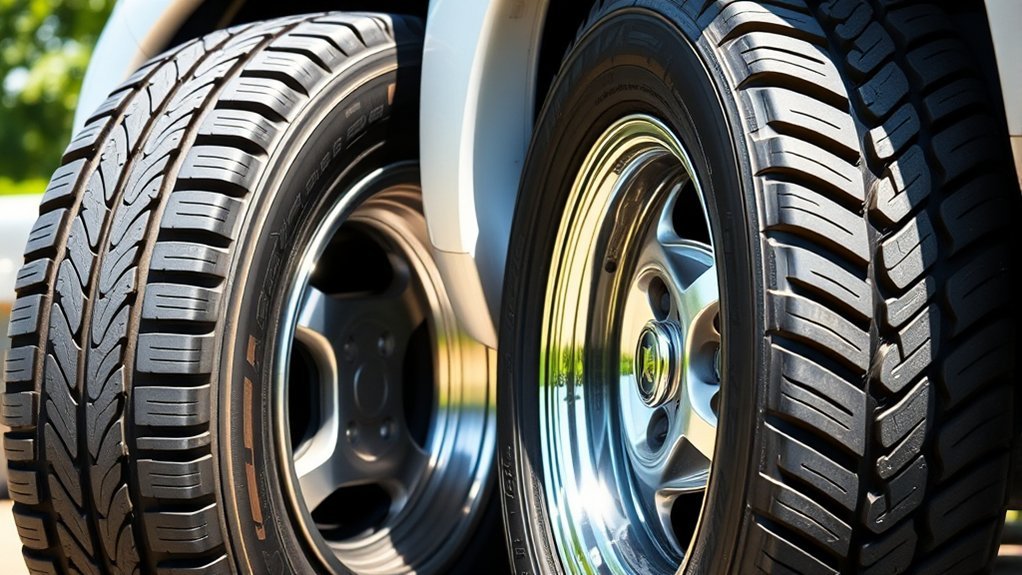
Choosing between radial and bias ply tires for your Hilux comes down to how you drive, how much weight you carry, and where the truck spends most of its time. If your Hilux sees highways, city streets, gravel roads, towing on pavement, and light trails, radial tires are usually the better everyday choice. If you use an older Hilux, work at low speeds, or drive mostly on rough off-road terrain, bias ply tires can still make sense in specific cases.
Quick Answer
For most Hilux owners, radial tires are the better choice because they handle better at road speeds, run with less heat buildup, and usually wear more evenly when maintained correctly. Bias ply tires can work for low-speed off-road use, farm tracks, older trucks, and specialty terrain, but they are less comfortable and less efficient on pavement.
Key Takeaways
- Choose radial tires if your Hilux sees regular highway driving, commuting, towing on paved roads, or mixed road use.
- Choose bias ply tires only when your driving is mostly low-speed, off-road, farm, utility, or specialty terrain use.
- Do not rely on a generic PSI number. Use the tire pressure listed on your Hilux tire placard or owner’s manual.
- Never mix radial and bias ply tires on the same Hilux unless a qualified tire professional confirms the setup is safe.
- Match the tire size, load rating, speed rating, and service description before comparing tread patterns or brands.
Understanding the Basics: What Are Radial and Bias Ply Tires?
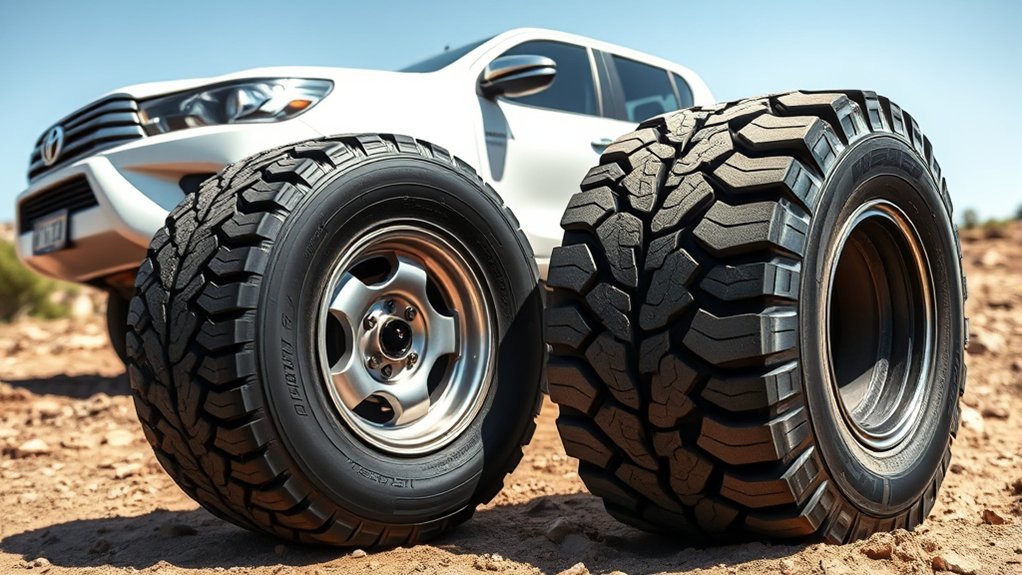
Radial tires use body ply cords that run from bead to bead at about 90 degrees to the tread centerline. In modern passenger and light-truck tires, the tread area also uses belts that help stabilize the contact patch, improve road control, and support more even wear. The NHTSA publication The Pneumatic Tire explains how tire construction, load, pressure, speed, and temperature all affect rolling resistance and performance.
Bias ply tires, also called diagonal tires, use body ply cords laid at angles below 90 degrees to the tread centerline. The crisscross casing can feel tough in slow, rough use, but the tread and sidewall work more as one structure. That can create more casing movement, heat, and rolling resistance on paved roads, especially when the tire is driven fast, overloaded, or underinflated.
For a Hilux, this difference matters because the truck may be used in very different ways. A daily-driven Hilux needs stable road manners, braking grip, wet-road control, and predictable tread wear. A trail, farm, or work Hilux may need casing toughness and slow-speed traction more than highway comfort. The right answer depends on tire construction, tread design, load rating, inflation pressure, and the surface you drive on most.
Warning: Do not choose a Hilux tire by construction type alone. Always match the tire size, load index or load range, speed rating, service description, and inflation guidance to your vehicle placard, owner’s manual, and actual load.
Key Differences Between Radial and Bias Ply Tires
Radial and bias ply tires can both move a Hilux down the road, but they behave differently under load, heat, speed, and rough terrain. Radials separate the sidewall and tread functions more effectively. That helps the sidewall flex while the belted tread area stays more stable. Bias ply tires flex more as one casing, which can help them conform to rough surfaces but can also increase heat and rolling resistance on pavement.
| Feature | Radial Tires | Bias Ply Tires |
|---|---|---|
| Construction | Body cords run radially from bead to bead, usually near 90 degrees to the tread centerline. | Body cords run diagonally and cross over each other in layers. |
| Best use | Highway driving, daily use, towing on paved roads, mixed road and gravel driving. | Low-speed off-road work, farm use, vintage fitments, rugged terrain, specialty applications. |
| Ride comfort | Usually smoother and more stable at road speeds. | Usually firmer and less settled on pavement. |
| Fuel use | Often lower rolling resistance than comparable older bias-style designs, depending on tread, load, pressure, and speed. | Can create more rolling resistance because of casing movement and heat, especially in road use. |
| Wear pattern | Often more even in normal road use when pressure, alignment, balance, and rotation are correct. | Can wear faster on pavement, especially at higher speeds or with poor inflation. |
Which Tire Type Should You Choose for Your Hilux?
Start with your real driving pattern, not the toughest-looking tread. A Hilux that drives to work during the week and reaches trails on the weekend usually needs a different tire than a farm truck that rarely sees highway speeds.
| Hilux Use Case | Better Starting Point | Why |
|---|---|---|
| Daily commuting and highway driving | Radial highway-terrain or all-terrain | Better comfort, road stability, braking feel, and tread life in normal use. |
| Mixed pavement, gravel, and light trails | Radial all-terrain | Good balance of on-road control and off-road grip for most Hilux owners. |
| Frequent towing or carrying tools | Correctly load-rated radial | Load capacity, heat control, and stability matter more than aggressive appearance. |
| Farm tracks and low-speed utility work | Bias ply or specialty radial, depending on fitment | Slow work can favor casing toughness, but road use still favors radials. |
| Older restored Hilux | Bias ply for originality, radial for drivability | Choose based on originality goals, wheel compatibility, and safe road behavior. |
[Products Worth Considering]

Measure tyre tread depth precisely with a digital gauge that reads in both MM and inches, helping you monitor safe driving conditions. The large LCD screen is easy to operate, and the compact tool fits for cars, trucks, and motorcycles. It provides high accuracy with a 0-25.4mm range and includes a 1-year warranty for added peace of mind.

TP-M13W combination repair unit kit includes wrapped stems with matching patches for fast, reliable tire repairs. It’s suitable for both radial and bias ply tires and is designed for chemical or heat vulcanization. Gray vulcanizing gum with blue backing helps create a strong bond, with the stem portion wrapped for added effectiveness.

Keep your tires properly inflated with this analog VONDIOR tire pressure gauge, designed for fast, easy readings without batteries. The swiveling, two-axis hose and large glow dial help you measure at any tire angle with instant visibility. Built with a protective rubber shield, it supports durable, low-maintenance use for cars and trucks.
Advantages of Radial Tires for Your Hilux
For most Hilux drivers, radial tires offer the best balance of comfort, stability, and durability. They suit the way many modern pickups get used: weekday commuting, weekend hauling, wet-road driving, gravel roads, and occasional trail use.
[Products Worth Considering]

Measure tire tread depth quickly and accurately with this LUMITECO dial gauge that reads in 1/32" increments up to 14/32". The color-coded green/yellow/red zones make it easy to judge tire wear and know when replacement is needed. A rugged, compact design with a protective pouch helps keep the gauge ready for use on cars, trucks, motorcycles, and more.

The Airmoto portable tire inflator quickly and accurately fills car, truck, SUV, motorcycle, and bicycle tires up to 120 PSI with auto shut-off when your target pressure is reached. Its large LCD, multi-unit pressure display, and digital gauge make it easy to dial in settings and verify readings, while the built-in LED flashlight helps in low light. The included polyurethane hard carrying case and storage mesh pocket keep the inflator and accessories protected and organized.

The SAFELIFE dial tire tread depth gauge measures tread depth in 1/32 inch increments with clear, easy-to-read 2-inch dial face. Color zones using a traffic light system help you quickly judge whether tread is low, marginal, or ample for safer driving. Built with a durable zinc cast body and a metal detect probe for precise, comfortable use across cars, motorcycles, trucks, and buses.
Better Road Handling
Radial tires usually give your Hilux more predictable road manners because the belted tread area stays more stable as the tire rolls. That helps the tire keep a more consistent footprint during braking, cornering, and highway driving.
- They generally feel more stable at higher road speeds.
- They often provide a smoother ride on paved roads.
- They can support more even tread wear when the truck is aligned and inflated correctly.
- They suit mixed-use all-terrain tires for drivers who split time between pavement and dirt.
Improved Fuel Efficiency
Radial tires are known for lower rolling resistance compared with older bias-style construction. Lower rolling resistance means the tire wastes less energy as heat while it rolls. That does not guarantee a fixed fuel-saving percentage for every Hilux, because tread pattern, pressure, load, vehicle condition, and driving style also matter.
For real-world fuel economy, tire pressure is just as important as construction. FuelEconomy.gov states that keeping tires inflated to the proper pressure can improve gas mileage by 0.6% on average and up to 3% in some cases. It also warns that underinflated tires can reduce gas mileage by about 0.2% for every 1 psi drop in the average pressure of all tires.
Pro Tip: Check pressure when the tires are cold. A tire is usually considered cold after the vehicle has been parked for at least three hours or driven less than about one mile at moderate speed.
When to Choose Bias Ply Tires for Off-Roading
Bias ply tires can still make sense when your Hilux works mostly away from pavement. Their casing construction can be useful for slow-speed terrain where sidewall strength, grip, and casing flex matter more than highway comfort.
- Low-speed off-road use: Bias ply tires can suit trail rigs, farm trucks, and utility Hilux builds that rarely travel at highway speeds.
- Rugged terrain: Their construction can feel tough on rocks, ruts, and uneven surfaces, depending on the specific tire model.
- Older Hilux fitments: Some vintage or specialty builds may use bias-style tires for originality or specific wheel compatibility.
- Budget or specialty use: Bias ply tires may cost less in some categories, but shorter road wear can reduce that savings if you drive on pavement often.
Bias ply tires are not automatically better for every off-road Hilux. Many modern radial all-terrain and mud-terrain tires offer strong off-road performance with better road comfort. If your Hilux drives to the trail on the highway, a radial all-terrain or mud-terrain tire is often the more practical choice.
How Tire Types Influence Your Hilux’s Fuel Efficiency
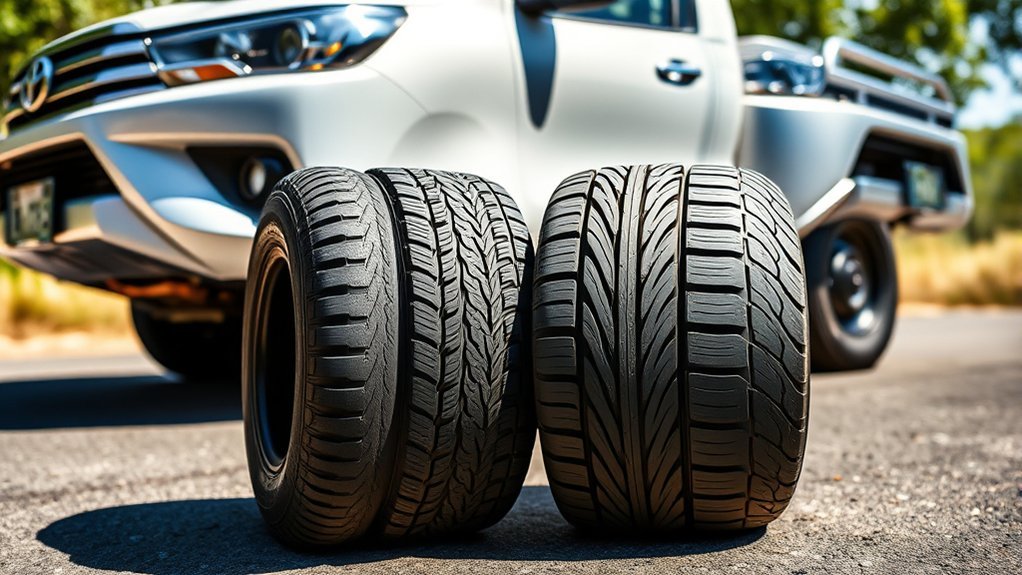
Tire construction affects fuel use through rolling resistance. A tire with lower rolling resistance requires less energy to keep moving. Radial construction generally helps here because the body cords can deflect with less heat buildup while the belts stabilize the tread area.
Still, construction is only one part of the story. A heavy mud-terrain radial can use more fuel than a mild all-terrain radial because of tread weight and pattern. An overloaded Hilux, poor alignment, underinflated tires, and aggressive driving can also reduce mileage. NHTSA TireWise also links tire maintenance with safety, durability, and fuel consumption.
| Tire Factor | Fuel Efficiency Impact | What to Do |
|---|---|---|
| Radial construction | Usually lower rolling resistance and less heat buildup than comparable bias construction. | Choose a load-rated radial if your Hilux spends time on pavement. |
| Bias ply construction | Can create more heat and rolling resistance on paved roads. | Use mainly for specialty low-speed off-road or work use. |
| Underinflation | Raises rolling resistance and can reduce fuel economy. | Use the Hilux placard or owner’s manual pressure, checked cold. |
| Aggressive tread | Can add weight, noise, and rolling resistance. | Choose all-terrain for mixed use and mud-terrain only when you need it. |
Tread Wear Patterns: What to Expect From Each Tire Type
Radial tires often wear more evenly in normal road use because the tread area is stabilized by belts. That can help your Hilux maintain consistent handling and traction over the life of the tire. However, even a good radial tire will wear poorly if the truck has incorrect pressure, worn suspension parts, poor alignment, poor balance, or frequent overloading.
Radial Tread Wear Characteristics
Radial tires usually perform best when you keep them at the correct cold pressure, rotate them on schedule, and keep the Hilux aligned. When maintained well, they can deliver steady tread wear and stable handling across city, highway, gravel, and light trail use.
Bias Ply Tread Wear Characteristics
Bias ply tires may wear faster or less evenly on paved roads, especially if they run hot, carry too much load, or spend long periods at higher speeds. Their construction can be useful in rough terrain, but long highway drives can expose weaknesses in comfort, heat control, and tread wear.
Wear Warning Signs to Watch
- Outer-edge wear: often points to underinflation, hard cornering, or alignment issues.
- Center wear: can point to overinflation or an incorrect load/pressure setup.
- One-side wear: often suggests alignment or suspension problems.
- Cupping or scalloping: may point to worn shocks, imbalance, or suspension issues.
- Cracks, bulges, or exposed cords: mean the tire needs professional inspection or replacement.
Comparing Comfort and Durability in Tire Choices
Comfort and durability often pull in different directions. A radial tire usually feels smoother and more controlled on paved roads because its sidewall and tread area can do different jobs. The sidewall can flex for ride comfort, while the belts help stabilize the tread.
A bias ply tire can feel tougher in certain off-road situations, but it often rides rougher on highways. It may also feel less precise during braking, cornering, and lane changes. For a Hilux that carries family, tools, camping gear, or towing weight on public roads, that difference matters.
A daily-driven Hilux usually benefits more from a correctly load-rated radial tire than from a bias ply tire built mainly for slow, rugged terrain.
Load, Towing, and Heat: What Hilux Owners Should Check First
Before you choose between radial and bias ply construction, check whether the tire can safely carry your truck’s load. A Hilux used for towing, tool storage, camping gear, rooftop tents, bull bars, winches, or rear drawers may need a different load rating than a lightly used commuter truck.
Do not choose a tire only because the tread looks aggressive. The tire must match your wheel size, carry the load, fit the truck without rubbing, and meet the proper speed rating for road use. Heat buildup becomes more important when you tow, drive fast, carry weight, or use an underinflated tire.
- Check the vehicle placard: Use the original tire size and pressure information as your starting point.
- Check the load index or load range: Make sure the tire can support your loaded Hilux.
- Check the speed rating: Pick a tire suitable for your normal road speeds.
- Check clearance: Larger tires can rub suspension, fenders, mud flaps, or body mounts.
- Check local rules: Some regions restrict tire size changes, wheel poke, or modified ride height.
Weather, Road Surface, and Terrain Considerations
Tire construction matters, but weather and tread design matter too. Wet roads need tread channels that move water away from the contact patch. Mud needs open tread voids. Snow and ice need rubber compounds and tread features designed for cold conditions.
If you drive your Hilux in winter conditions, do not rely on tire construction alone. Choose tires rated for the conditions you face. A radial all-terrain tire may work well on gravel and light dirt, but a dedicated winter tire is usually the safer choice for repeated snow, ice, and freezing temperatures.
Note: NHTSA describes all-terrain tires as a compromise between on-road driving and off-road capability. That compromise can be useful for a Hilux, but it does not replace a dedicated winter tire where severe winter grip is needed.
Maintenance Tips for Maximizing Tire Life on Your Hilux
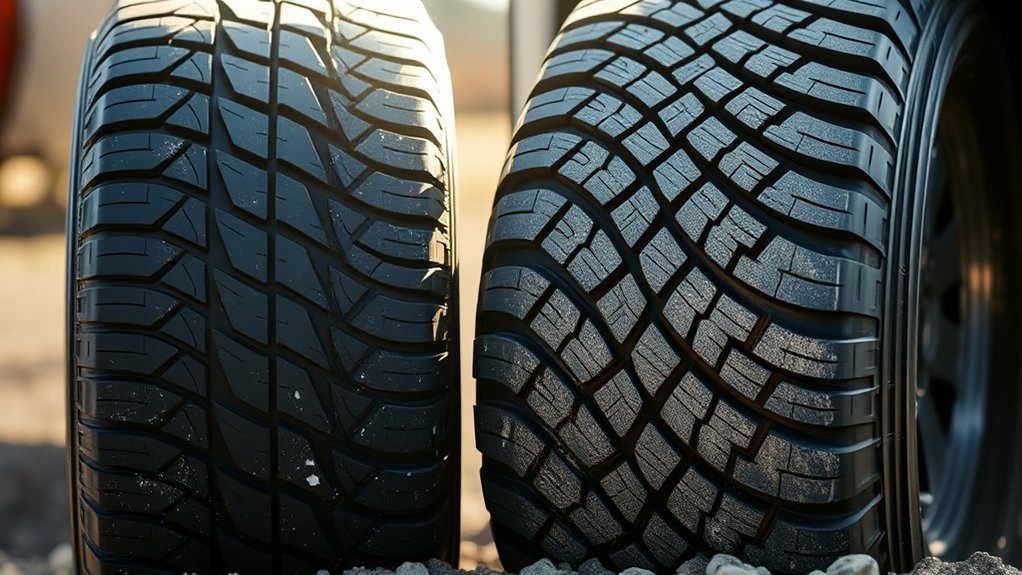
Tire life depends on maintenance as much as tire construction. NHTSA’s TireWise guidance says tire pressure affects safety, durability, and fuel consumption. It also recommends checking pressure at least once a month when tires are cold.
- Use the correct pressure: Follow the Hilux tire placard or owner’s manual. Do not use the maximum pressure molded on the tire sidewall as your normal setting.
- Check pressure cold: Check all tires, including the spare, before the truck has been driven far.
- Rotate on schedule: Follow Toyota’s guidance when available. As a general rule, NHTSA says to rotate tires every 5,000 to 8,000 miles if the vehicle maker recommends that interval, and Bridgestone lists 5,000 to 8,000 miles as a common range for many vehicles.
- Check tread depth monthly: NHTSA says tires should be replaced when tread is worn to 2/32 inch.
- Inspect after off-road trips: Look for cuts, bulges, punctures, missing tread blocks, sidewall damage, and stones lodged in the tread.
- Fix vibration quickly: Shaking can point to imbalance, tire damage, bent wheels, or suspension wear.
- Keep alignment in check: If your Hilux pulls, wanders, or wears one tire edge faster, schedule an alignment inspection.
- Check tire age and recalls: Used, older, or stored tires should be inspected for age cracking, damage, and open recalls before road use.
Note: Airing down for off-road traction can improve grip on some surfaces, but it also increases sidewall flex and heat. Air back up before highway driving and stay within safe tire and wheel limits.
How to Choose the Best Tires for Your Hilux
Start with the basics before choosing radial or bias ply construction. Your Hilux needs a tire that fits the wheel, carries the load, suits your speed range, and matches your terrain. Construction type matters, but it should come after fitment and safety.
[Products Worth Considering]

Secure your vehicle during transport with this 4-pack of heavy-duty tire tie down straps designed for trailers and hauling. The ratchet system with flat hooks and D-rings helps you tension the straps quickly, while the wheel-friendly design protects tires. With high break strength and corrosion-resistant hardware, these straps provide reliable, confidence-inspiring tie-down security for cars, trucks, and UTVs.

Monitor tire tread wear with a smart, color-coded depth gauge that shows clear condition ranges at a glance. The bar is range marked for fast, easy readings, helping you maintain safer traction and performance. Each gauge is portable with a pocket clip, and the set includes 20 units for daily use and sharing.

Milton S-921 pencil tire pressure gauge helps you maintain optimal tire pressure for passenger cars with accurate readings in PSI and kPa. It features a built-in deflator valve for convenient pressure adjustments, plus a single chuck head and nylon indicator bar for easy use on the go. Built from durable plated brass and designed for reliable performance, it’s a practical road trip and cold-weather maintenance tool.
1. Check the Tire Code
On many tire sidewalls, the letter in the size code tells you the construction. For example, “R” means radial. “D” can indicate diagonal or bias construction, and “B” can indicate belted bias. You may also see LT sizing for light-truck tires. Choose a tire that matches your Hilux’s required size and load needs.
2. Match Load Rating and Use
A Hilux that tows, hauls tools, carries camping gear, or drives rough tracks needs the correct load rating. Do not pick a tire only because it looks aggressive. A tire with the wrong load rating can overheat, wear quickly, or handle poorly under weight.
3. Confirm Fitment for Your Year, Trim, and Market
Hilux tire sizes can vary by model year, trim, wheel size, market, suspension setup, and previous modifications. Check the tire placard, owner’s manual, and current wheel size before buying. If your truck has a lift, aftermarket wheels, spacers, or body trimming, ask a qualified tire shop to confirm clearance before installation.
4. Choose by Driving Style
- Mostly pavement: Choose radial highway-terrain or all-terrain tires.
- Mixed pavement and dirt: Choose radial all-terrain tires with the correct load rating.
- Frequent mud and rocks: Choose radial mud-terrain tires unless your use is mostly low-speed specialty terrain.
- Farm, utility, or low-speed rough work: Bias ply may be worth considering if the tire is designed for that job.
- Older or restored Hilux: Bias ply may suit a period-correct build, but radials usually drive better on modern roads.
5. Avoid Mixing Tire Constructions
Do not mix radial and bias ply tires on your Hilux as a casual shortcut. The two constructions can respond differently during braking, steering, cornering, and load transfer. If you are replacing one tire, match the construction, size, load rating, speed rating, and tread type as closely as possible to the others.
6. Ask a Qualified Tire Professional When You Change Size or Construction
A tire professional can check wheel width, load capacity, speed rating, valve stems, balance needs, TPMS compatibility, and clearance. This matters more when you move away from the factory size or change from radial to bias ply construction on an older Hilux.
Frequently Asked Questions
Can I mix radial and bias ply tires on my Hilux?
You should not mix radial and bias ply tires on a Hilux for normal driving. The two constructions can handle, flex, and build heat differently. That can reduce stability during braking, cornering, wet-road driving, towing, or emergency maneuvers.
Do radial and bias ply tires use different tire pressures?
Pressure should come from your Hilux tire placard or owner’s manual, not from the tire type alone. Tire size, load rating, axle load, and use matter more than simply choosing radial or bias ply. Do not use the maximum sidewall pressure as your normal setting unless the vehicle or tire maker specifically requires it for your load.
Do radial tires last longer than bias ply tires?
Radial tires often wear more evenly and last longer in normal road use when they are correctly inflated, rotated, balanced, and aligned. Bias ply tires can wear faster on pavement, especially at higher speeds, but actual life depends on the tire model, tread compound, load, terrain, and maintenance.
Are bias ply tires better for off-road Hilux builds?
They can be better for some low-speed, rugged, or specialty off-road uses, but not for every off-road Hilux. Many modern radial all-terrain and mud-terrain tires offer strong off-road traction with better highway stability and comfort.
What tire brands are good for a Hilux?
Look for reputable brands that offer the exact size, load rating, speed rating, and tread type your Hilux needs. Michelin, BFGoodrich, Bridgestone, Goodyear, Toyo, Yokohama, Falken, and Cooper all make tires used on pickups, but the best choice depends on your market, wheel size, terrain, budget, and load needs.
How do weather conditions affect Hilux tire performance?
Wet, icy, hot, and muddy conditions all change tire performance. Tread pattern helps channel water and mud, while rubber compound affects grip and wear. For winter conditions, use tires designed for cold weather and snow instead of relying only on an all-terrain pattern.
How do I know if a tire is radial or bias ply?
Check the tire size on the sidewall. A size such as 265/65R17 uses “R” for radial construction. A “D” in the size code can indicate diagonal or bias construction, while “B” can indicate belted bias. Also confirm the tire type with the tire dealer before buying.
Should I buy used bias ply tires for an older Hilux?
Be cautious with used tires of any construction. Check the DOT date code, tread depth, cracks, repairs, sidewall damage, and recall status. Older bias ply tires may look period-correct, but they still need safe casing condition and the correct size, load rating, and pressure setup.
Conclusion
For most Hilux owners, radial tires are the better everyday choice. They suit highway driving, mixed road use, towing on pavement, commuting, and light off-road trips. They usually run cooler, handle better at speed, and wear more evenly when you keep them properly inflated, balanced, aligned, and rotated.
Bias ply tires still have a place, but that place is narrower. Consider them for older Hilux builds, slow off-road work, farm use, or specialty terrain where casing toughness matters more than highway comfort. Before you buy, confirm the correct size, load rating, speed rating, tire age, clearance, and pressure guidance for your exact Hilux setup.
Sources
- The Pneumatic Tire, DOT HS 810 561 — radial and bias tire construction, rolling resistance, heat, load, pressure, speed, tread, and tire performance basics.
- NHTSA TireWise — tire safety, tire pressure, tread depth, tire rotation, tire size, tire aging, recalls, load, and maintenance guidance.
- FuelEconomy.gov: Keeping Your Vehicle in Shape — fuel-economy impact of proper tire inflation.
- Bridgestone: How to Check Tire Pressure — cold tire pressure and gauge-use guidance.
- Bridgestone: Tire Rotation — tire rotation intervals, inspection, and maintenance basics.