
Regearing a Toyota Tacoma for 33 Inch Tires Explained
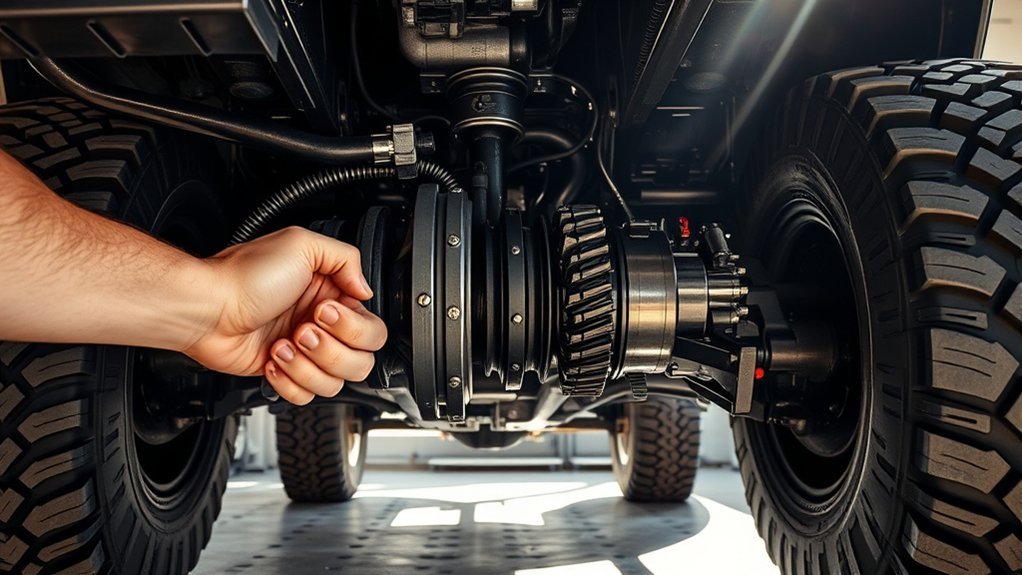
Installing 33-inch tires on a Toyota Tacoma changes more than its stance. The larger rolling diameter makes the factory axle gearing feel taller, while added tire weight can soften acceleration, increase transmission shifting, and reduce control on grades. Regearing can restore drivability, but the correct ratio depends on your Tacoma’s generation, engine, transmission, axle, factory ratio, vehicle weight, and how you use the truck.
Quick Answer
A Tacoma does not automatically need regearing for 33-inch tires. For many 2005–2015 trucks, 4.10 is a mild correction and 4.56 adds stronger load or trail performance. For 2016–2023 automatics, 4.88 is a common drivability choice, while 5.29 better suits heavy builds, frequent towing, or steep terrain.
Key Takeaways
- Choose a ratio from your exact factory gearing, measured tire diameter, transmission, added weight, terrain, and towing needs.
- A mathematically restored ratio may return stock-like RPM, but a deeper ratio can improve throttle response and reduce gear hunting.
- On a part-time 4WD Tacoma, the front and rear axle ratios must be changed as a matched setup.
- A lift does not guarantee 33-inch tire clearance. Wheel offset, tire width, caster, alignment, and trimming also matter.
- Professional setup and the gear manufacturer’s break-in procedure are critical to prevent noise, overheating, or premature failure.
At a Glance
| Typical Shop Time | Usually one to several working days, depending on axle condition, parts availability, locker work, and shop scheduling |
| Difficulty | Advanced differential setup; professional installation is strongly recommended |
| Specialized Equipment | Bearing tools, inch-pound torque wrench, dial indicator, press, setup bearings or shims, marking compound, and axle-specific service data |
| Cost | A four-figure project in most cases; total varies by 2WD or 4WD, axle type, bearings, lockers, labor, and local rates |
Why You May Need to Regear for 33-Inch Tires
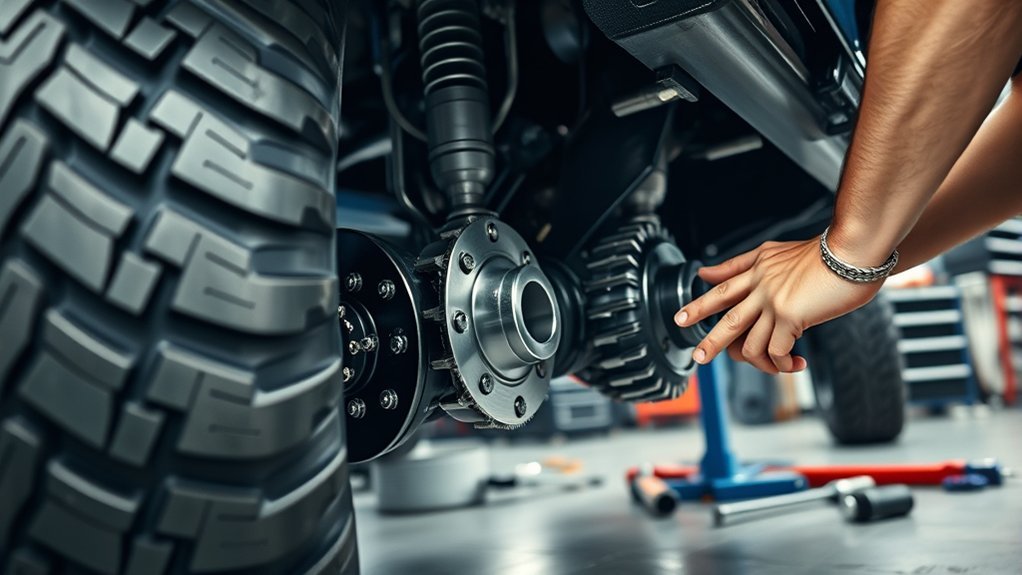
A larger tire travels farther with each revolution. That effectively makes the axle gearing taller, so the engine produces less wheel torque at the same road speed. The effect may feel small on a lightly equipped truck, but it becomes more noticeable with heavy LT tires, steel bumpers, armor, camping equipment, a trailer, high elevation, or frequent hill driving.
You may notice slower acceleration, delayed downshifts, repeated shifting on grades, reduced engine braking, or more throttle input to maintain speed. Regearing uses a numerically higher axle ratio to multiply torque and return the engine closer to a useful operating range.
Regearing should solve a specific drivability problem. Tire size alone does not make the modification mandatory.
[Products Worth Considering]

This VEVOR tire bead breaker uses a slide-hammer impact and wedge tip to separate tire beads from rims quickly and efficiently without damaging hub surfaces. The long handle and sturdy steel construction help reduce user strain while providing reliable, portable tire changing for cars, trucks, and more. Ideal for home mechanics and repair shops handling multiple vehicle tire sizes.

This 20-piece tire changer kit makes motorcycle and bike tire repairs easier with extended 14.5-inch spoons for leverage and access. Built from CrV steel with a corrosion-resistant chrome finish, it helps resist bending while protecting rims and tubes using smooth rounded spoons and included rim protectors. The all-in-one set includes valve removal and accessory tools for faster tire changes across motorcycles, bicycles, ATVs, and lawn equipment.

This portable cordless tire inflator delivers fast, efficient inflation for cars, motorcycles, bikes, and sports balls with a digital pressure gauge. Use the one-click PSI preset with auto shut-off for accurate, hands-free topping to your target pressure up to 150 PSI. It’s compact and rechargeable with a built-in emergency LED light plus valve adapters and accessories for quick, ready-to-go use.
How to Estimate the Ratio That Restores Stock Gearing
Use this basic formula as a starting point:
Target ratio = current axle ratio × new tire diameter ÷ original tire diameter
For example, a truck with 3.73 gears, a 31.6-inch original tire, and a true 33-inch replacement produces a calculated target of about 3.90. A commonly available 4.10 ratio would be a mild stock-like correction. Choosing 4.56 instead would intentionally add more torque multiplication for weight, hills, towing, or off-road use.
Use the tire manufacturer’s measured diameter or revolutions-per-mile figure when possible. A tire sold as a “33” may measure noticeably less than 33 inches when mounted and loaded.
Note: The restore-stock formula is only a baseline. It does not account for transmission behavior, torque-converter lockup, engine power band, tire weight, added vehicle weight, or your preferred cruise RPM.
Recommended Tacoma Gear Ratios for 33-Inch Tires
No single ratio is correct for every Tacoma. Confirm the factory ratio, axle housing, locker type, transmission, and available gear set before ordering parts. The guidance below is a practical starting point, not a substitute for an axle-specific quote from a qualified drivetrain shop.
| Tacoma Setup | Ratio to Consider | Best Fit | Main Tradeoff |
|---|---|---|---|
| 2005–2015, light V6 daily driver | 4.10 | A mild correction when the calculated restore-stock target is near 4.0 and the axle supports the ratio | May not be deep enough for heavy armor, towing, or mountain use |
| 2005–2015, mixed daily and trail use | 4.56 | Heavier 33s, hills, moderate towing, or drivers who want stronger throttle response | Higher cruise RPM than a mild correction |
| 2005–2015, heavy or aggressive build | 4.88 | Four-cylinder trucks, substantial added weight, frequent steep terrain, or future tire growth | More engine RPM and noise during highway cruising |
| 2016–2023 automatic, light to moderate build | 4.88 | A common 33-inch daily-driver and weekend-trail choice intended to reduce gear hunting | Deeper than a simple diameter-only correction |
| 2016–2023 automatic, heavy build | 5.29 | Armor, overland load, frequent towing, high elevation, steep grades, or planned 34–35-inch tires | Higher highway RPM and a less relaxed cruise |
| 2024 and newer | Verify before modifying | Confirm exact axle, powertrain, locker, hybrid compatibility, calibration needs, and available parts | Earlier Tacoma gear packages and assumptions may not apply |
Aftermarket manufacturers list multiple Tacoma axle designs and gear packages, including different rear differentials for open and factory-locker trucks. Review the axle-specific fitment details on the Revolution Gear & Axle Tacoma catalog before treating a ratio as available for your truck.
Warning: On a 4WD Tacoma, do not change only one axle to a different ratio. The front and rear gear ratios must remain matched. A mismatch can create driveline binding and severe component damage when four-wheel drive is engaged.
Signs You Should Regear Your Tacoma
Evaluate how the truck drives after the tire installation instead of assuming the answer from tire diameter alone. Regearing becomes more reasonable when several of these symptoms occur together:
- Repeated gear hunting: The automatic transmission shifts up and down on modest grades or in light headwinds.
- Weak low-speed response: Pulling into traffic or accelerating from a stop requires noticeably more throttle.
- Poor grade performance: The truck struggles to hold speed on hills, especially with cargo or a trailer.
- Reduced engine braking: Descents require more brake input because the taller effective gearing provides less resistance.
- Frequent manual gear selection: You regularly lock out higher gears to keep the engine from lugging or shifting repeatedly.
- Heavy permanent load: Bumpers, sliders, skids, drawers, a camper, or recovery gear have added substantial weight.
- Future tire plans: You expect to move from 33-inch tires to a larger size and want to avoid paying for another regear.
If your Tacoma accelerates acceptably, holds its top gear on your normal roads, and does not tow or carry much extra weight, keeping the factory gears may be the better value.
How to Choose the Right Ratio for Your Tacoma
1. Confirm the Current Axle and Factory Ratio
Do not rely on generation, engine size, or an online forum alone. Tacoma axle ratios and differential housings vary by year, drivetrain, transmission, trim, and locker configuration. Confirm the build information through the vehicle documentation, axle identification, dealer parts lookup, or a drivetrain shop.
2. Use the Tire’s Actual Diameter
Compare the manufacturer’s mounted diameter or revolutions per mile for the old and new tires. Tire pressure, rim width, vehicle weight, and tread wear can change the loaded rolling radius.
3. Include Weight, Terrain, and Towing
A stock truck used on flat highways needs less correction than a loaded overland build used at elevation. Heavy tires also require more energy to accelerate than a lighter tire of the same diameter. Choose the ratio for the completed build, not the truck before its other modifications.
4. Compare Expected Highway RPM
A universal target such as 2,500 RPM at 75 mph is not appropriate for every Tacoma. Expected RPM depends on axle ratio, actual tire diameter, transmission top-gear ratio, torque-converter lockup, and road speed. Use an axle manufacturer’s calculator and confirm the result with the installer before ordering gears. Nitro Gear’s documented third-generation Tacoma examples show how 4.88 and 5.29 ratios change cruise RPM with 33-inch tires, but your exact result may differ by transmission and tire measurement.
Pro Tip: Ask the shop to calculate cruise RPM for your normal highway speed and to explain why its recommended ratio fits your transmission, payload, terrain, and future tire plans.
Effects of Regearing on Acceleration and Fuel Efficiency
Regearing can improve throttle response, reduce lugging, and help an automatic transmission stay in a suitable gear. It does not create engine power, and it does not guarantee better fuel economy.
Engine Load and Transmission Behavior
With a numerically higher ratio, the engine turns more times for each wheel revolution. That increases torque multiplication at the wheels and can make the truck feel more responsive. It may also reduce repeated downshifts because the engine reaches a more useful operating range sooner.
The tradeoff is higher engine and driveline speed at a given road speed. Going too deep can make highway cruising louder and may increase fuel use on long, flat routes.
What to Expect From Fuel Economy
A correctly selected ratio may recover some efficiency lost to constant downshifting or excessive throttle. However, 33-inch tires may still reduce mileage because they can be heavier, wider, and more resistant to rolling and aerodynamic movement. Driving speed, tire construction, alignment, pressure, vehicle weight, and terrain often matter as much as the axle ratio.
Remove the original assumption that improper gearing automatically causes a specific 12–13 MPG result. Fuel use varies too widely by truck and route for that number to serve as a reliable diagnostic threshold.
Understanding the Costs of Regearing Your Tacoma
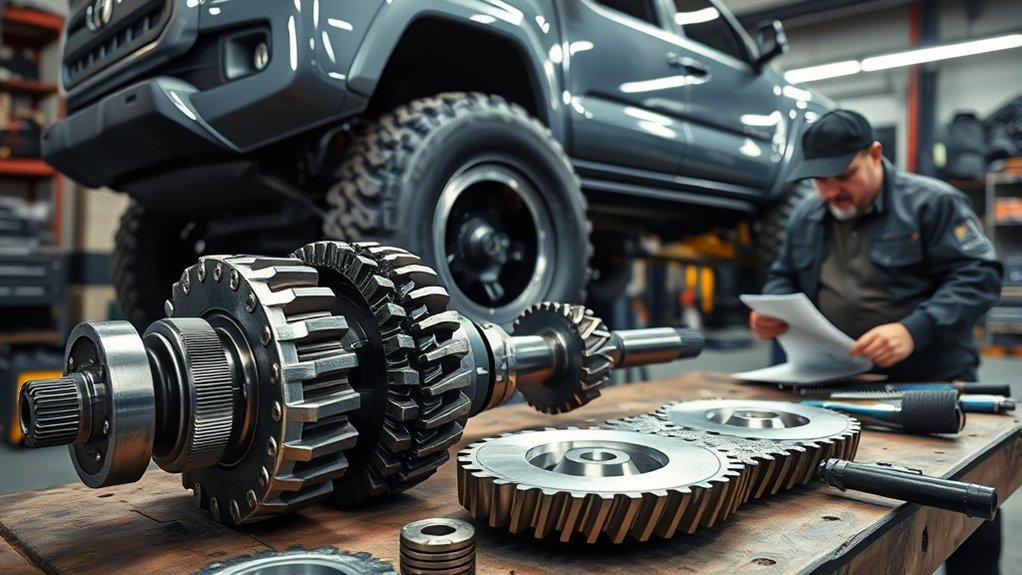
Regearing is a precision drivetrain job, so the final bill depends on much more than the ring-and-pinion sets. A 2WD rear-axle job can cost less than a 4WD setup that requires matched front and rear gears. Factory lockers, aftermarket lockers, worn bearings, carrier changes, seals, axle removal, and regional labor rates can all change the total.
A complete written quote should identify:
- Front and rear gear brands, ratios, and exact axle fitment
- Master installation kits, bearings, seals, shims, and one-time-use hardware
- Locker installation or replacement, if included
- Fluids, shop supplies, alignment, calibration, and taxes
- Labor warranty and gear manufacturer warranty
- Break-in instructions and the first differential-fluid service
Do not select an installer only by the lowest price. Correct pinion depth, bearing preload, backlash, and contact pattern determine whether the new gears run quietly and survive long-term use.
Selecting the Ideal Lift Kit for 33-Inch Tire Fitment
Regearing and tire clearance solve different problems. Gears restore drivability, while suspension, wheel, and body clearance determine whether the tire rubs. A 2–3 inch lift is common, but lift height alone does not guarantee fitment.
[Products Worth Considering]

This portable cordless tire inflator delivers up to 160 PSI with fast 17 L/min airflow to help you quickly top up tires and get back on the road. It features dual power mode, running on a 21V rechargeable battery or a 12V DC adapter for convenient roadside use. An automatic shut-off with digital pressure gauge helps prevent overinflation, and a built-in LED light improves visibility in low-light conditions.

The JACO FlowPro Tire Inflator measures, inflates, and airs down tires up to 100 PSI with battery-free operation and ±2% accuracy after calibration. It features a glowing pressure dial for night visibility, a heavy-duty steel build with a hybrid hose, and a precision push-to-inflate thumb trigger. The patented Lightning Air Chuck locks on for a secure seal, and the kit includes quick-connect hardware for easy inline use with your air compressor.
Lift Kit Height Options
Many 2005–2023 Tacoma suspension systems advertise support for tires up to about 33 inches. However, manufacturers may still require minor fender trimming and specify wheel backspacing or offset. For example, ICON’s 2005–2023 Tacoma suspension fitment notes pair up-to-33-inch tires with specific wheel dimensions and warn that trimming may be required.
- Mild leveling or up to about 2 inches: May work with narrower 33-inch combinations, suitable wheel offset, and limited suspension compression.
- About 2–3 inches: Provides more room, but can still require trimming, caster adjustment, or upper-control-arm changes.
- More lift: Does not automatically solve rubbing at the body mount, firewall, cab mount, or rear of the front fender.
Wheel Offset, Alignment, and Suspension Compatibility
Tire width and wheel offset can create more rubbing than diameter alone. A wheel that pushes the tire outward may improve upper-control-arm clearance but increase contact with the fender liner or body mount. A wheel with too much backspacing can place the tire close to the upper control arm.
After installing suspension or control-arm parts, obtain a full alignment and verify caster, camber, toe, brake-line clearance, ABS-wire clearance, and tire contact at full steering lock. Check clearance with the suspension compressed, not only while the truck is parked on level ground.
Installation, Safety, and Calibration
Differential setup requires precise measurement and repeatable bearing preload. Incorrect setup can cause gear whine, overheating, metal contamination, bearing failure, or broken teeth. Use a shop with documented Toyota differential experience and ask whether it builds the assemblies in-house or sends them to a specialist.
- Match both axles on 4WD trucks: Front and rear ratios must agree before four-wheel drive is used.
- Verify locker compatibility: Factory and aftermarket lockers may require different carriers, bearings, or gear packages.
- Recalibrate where supported: Larger tires can affect indicated speed, odometer distance, shift behavior, and driver-assistance calibration.
- Initialize the TPMS when required: Toyota notes that tire-size changes can require tire-pressure warning system initialization on newer Tacomas.
- Check load capacity: Use tires and wheels with sufficient load ratings for the truck’s axle loads and intended use.
For inflation pressure, begin with the vehicle placard and work with a qualified tire professional when a non-original tire size or load range changes the required pressure. NHTSA tire guidance explains that pressure should be checked cold and that the sidewall number is the tire’s maximum, not the vehicle’s recommended operating pressure.
Maintenance Tips After Regearing Your Tacoma
New ring-and-pinion gears generate extra heat while their contact surfaces settle. Follow the instructions supplied by the gear manufacturer and installer, even when they differ from a general online schedule.
Revolution Gear & Axle’s break-in guidance recommends short initial drives followed by complete cooling periods, avoiding heavy acceleration, keeping speed controlled early in the process, and avoiding towing or off-road use before the first 500-mile oil change.
- Listen for new whine, howl, clunking, or cyclic vibration during acceleration, cruise, and deceleration.
- Inspect the differential housings, pinion seals, axle seals, and drain plugs for leaks.
- Complete the installer’s required break-in fluid change and document it for warranty purposes.
- Check tire pressure cold and inspect for uneven wear after the alignment settles.
- Rotate the tires according to the tire or vehicle service schedule and your wear pattern.
- Recheck driveline angles and vibration if the truck also received a suspension lift.
Annual inspections can be useful for heavily modified or hard-used trucks, but the correct service interval should reflect mileage, towing, water crossings, off-road use, lubricant condition, and the gear manufacturer’s requirements.
What Tacoma Owners Commonly Notice After Regearing
Owner reports are useful for identifying patterns, but they are not controlled tests. Commonly reported benefits include stronger initial response, less gear hunting on grades, easier low-speed trail control, and better drivability with permanent cargo. Common tradeoffs include higher highway RPM, more engine noise, break-in inconvenience, and the cost of correcting a poor installation.
A 4.56 ratio may feel balanced in one second-generation truck and too mild in another with heavier tires and armor. A third-generation owner may prefer 4.88 for daily driving, while a heavily loaded build may benefit from 5.29. Compare reports only from trucks with similar engines, transmissions, tire measurements, weight, elevation, and driving patterns.
Financing Options for Regearing Your Tacoma
If paying the full amount at once is difficult, compare the total repayment cost rather than only the monthly payment. Possible options include a personal loan, a credit card, or a repair-shop financing plan. Promotional financing may be useful only when you can meet every payment condition before a deferred-interest period ends.
- Personal loan: May offer fixed payments and a defined payoff date, but approval and rates depend on your credit profile.
- Credit card: Convenient for deposits or smaller balances, but a high annual percentage rate can make the project much more expensive.
- Shop financing: Can simplify payment at the installer, though fees, deferred interest, and late-payment terms require careful review.
- Save before modifying: Often the lowest-cost choice when the truck remains safe and drivable on its current gearing.
Budget for the first fluid service, alignment, calibration, unexpected worn parts, and any locker or bearing work discovered during disassembly. Do not finance cosmetic or performance modifications in a way that prevents you from covering essential vehicle repairs.
Frequently Asked Questions
What is a good gear ratio for 33-inch Tacoma tires?
For many 2005–2015 V6 trucks, 4.10 is a mild correction and 4.56 provides stronger performance with weight or hills. For many 2016–2023 automatics, 4.88 is a common 33-inch choice, while 5.29 better suits heavy builds, frequent towing, steep terrain, or future 34–35-inch tires. Verify axle fitment before ordering.
Do you have to regear a Tacoma for 33-inch tires?
No. A lightly equipped Tacoma may remain acceptable on factory gears. Regearing becomes more valuable when the truck hunts between gears, struggles on grades, tows frequently, carries permanent weight, operates at elevation, or needs better low-speed control.
Is 4.56 or 4.88 better for 33-inch tires?
The answer depends on the transmission and build. A 4.56 ratio can suit a second-generation daily driver that needs a moderate improvement. A 4.88 ratio is often preferred for a third-generation automatic or a heavier build because it provides stronger torque multiplication and can reduce gear hunting, with the tradeoff of higher cruise RPM.
Will regearing improve Tacoma gas mileage?
It may improve efficiency when factory gears cause constant downshifting or excessive throttle, but it does not guarantee an MPG increase. Tire weight, width, rolling resistance, speed, terrain, alignment, pressure, and added vehicle weight still affect fuel consumption.
Can you regear only the rear axle on a 4WD Tacoma?
Not to a different ratio if you plan to use four-wheel drive. The front and rear ratios must match. Regearing only the rear to a different ratio can cause binding and serious damage when 4WD is engaged. A 2WD Tacoma has no driven front differential, so its project is different.
Do you need a 3-inch lift for 33-inch tires on a Tacoma?
Not always, and a 3-inch lift does not guarantee zero rubbing. Fitment depends on generation, tire width, wheel offset and backspacing, caster, upper-control-arm clearance, body-mount clearance, fender liners, and suspension compression. Some combinations fit with less lift and trimming, while others rub despite more lift.
Conclusion
The best Tacoma gear ratio for 33-inch tires is the one that matches your exact truck and use. A second-generation daily driver may need only a mild 4.10 correction, while 4.56 can better support weight and hills. Many third-generation automatics respond well to 4.88, and heavier builds may justify 5.29. Confirm the axle, calculate cruise RPM, compare future tire plans, and use an experienced differential installer before committing.
Sources
- Toyota USA: 2015 Tacoma Product Information — official generation-specific configuration reference
- Revolution Gear & Axle: Tacoma Parts and Axle Fitment — Tacoma differential types and available gear-package fitment
- Nitro Gear & Axle: 2019 Tacoma Regear Testing — 4.88 and 5.29 examples with 33-inch tires
- Revolution Gear & Axle: Gear Set Break-In — heat cycling, driving limits, towing precautions, and first fluid change
- ICON Vehicle Dynamics: 2005–2023 Tacoma Suspension Fitment — 33-inch tire, wheel, lift, and trimming notes
- NHTSA TireWise — cold inflation pressure and tire-safety guidance

Related Articles
How Tire Weight Affects Toyota Tacoma Performance
How does tire weight influence your Toyota Tacoma's performance and efficiency? Discover the surprising effects that could change your driving experience.
Read More
Tire Noise Levels by Tire Type on a Toyota Tacoma
A comprehensive look at how tire types affect noise levels in your Toyota Tacoma reveals surprising insights that could enhance your driving experience.
Read More
How To Choose Tires for a Dual Use Toyota Tacoma
Unlock the secrets to selecting the perfect tires for your dual-use Toyota Tacoma, ensuring optimal performance and comfort on every adventure. Discover more inside!
Read More