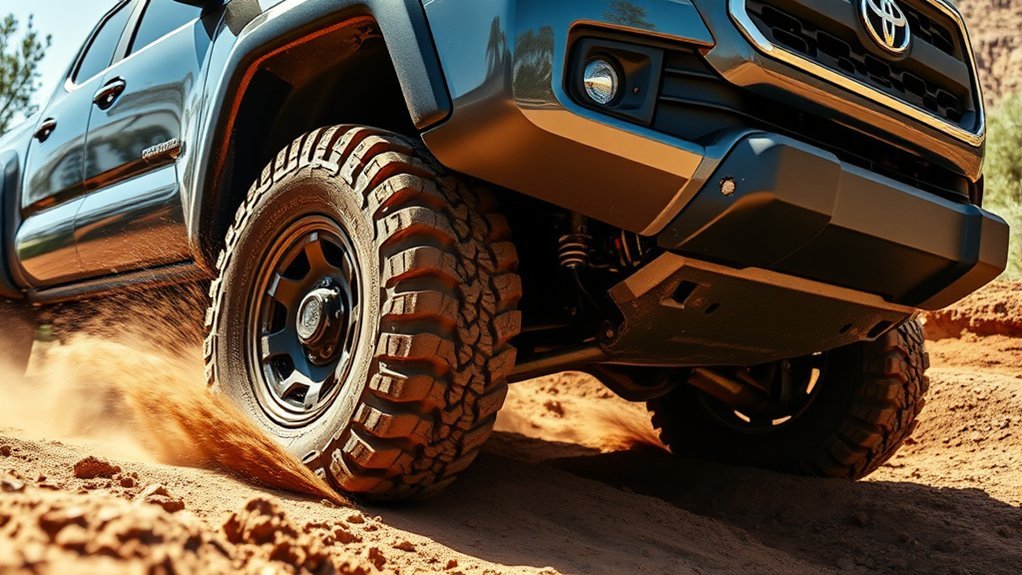
Tire weight can change how your Toyota Tacoma accelerates, brakes, steers, rides, and uses fuel, but weight is only one part of the result. Tire diameter, tread design, casing stiffness, inflation pressure, wheel weight, gearing, alignment, and driving conditions can matter just as much. The best upgrade keeps the required load capacity and fitment while avoiding more size and mass than your use case needs.
Quick Answer
Heavier Tacoma tires usually make the drivetrain work harder because the truck must move more rotating mass. Larger tires can also reduce effective gearing and add rolling resistance. You may feel slower acceleration, heavier steering, firmer ride quality, and lower fuel economy, but the size of each change depends on the complete tire-and-wheel setup.
Key Takeaways
- Tire weight, tire diameter, and rolling resistance are separate variables. Do not blame every performance change on weight alone.
- Extra mass at the tire affects both unsprung mass and rotational inertia, but no universal “effective weight multiplier” applies to every wheel and tire.
- Larger-diameter tires reduce effective gearing, which can make acceleration and transmission behavior feel more sluggish.
- Maintain the Tacoma’s required tire size, load capacity, clearance, and cold inflation pressure unless a qualified professional approves the alternate setup.
- Regearing can restore leverage after a major diameter increase, but it is not automatically needed because a replacement tire is a few pounds heavier.
Why Unsprung Weight Matters for Your Tacoma
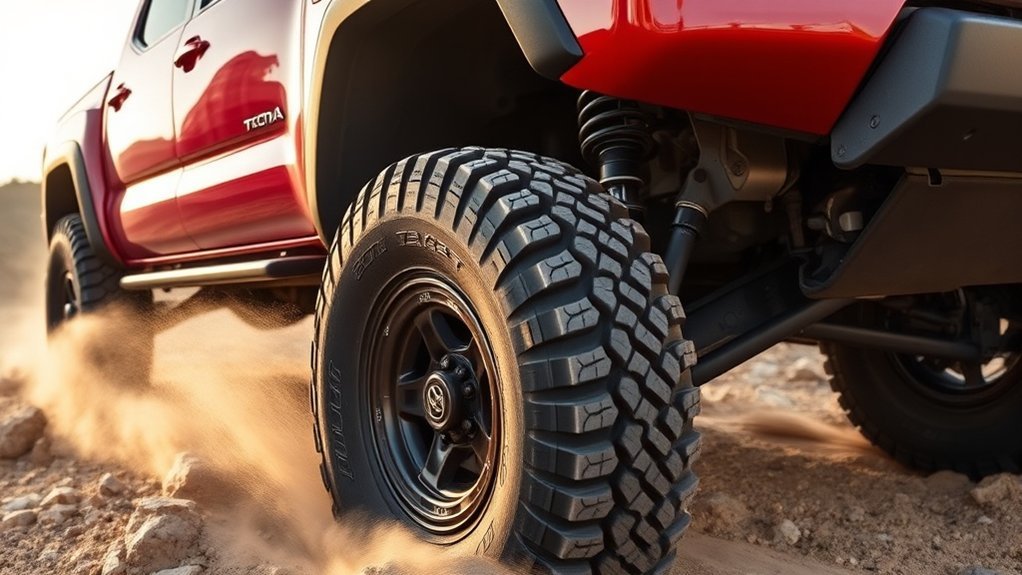
Your Tacoma’s wheels, tires, brake components, and part of the suspension move with the road instead of being fully supported by the springs. Engineers call this unsprung mass. Changing tire and wheel weight changes how much mass the suspension must control as the tread follows bumps, potholes, washboard roads, and rocks.
Lower unsprung mass can help a suspension respond more quickly, but the real outcome depends on spring rates, shock damping, tire stiffness, and road speed. Research on vehicle ride models supports the general point that unsprung mass affects ride and road holding, but it does not support a simple rule that every pound at the wheel always equals a fixed number of pounds in the cab. A published Journal of Sound and Vibration study on unsprung weight shows why suspension response must be evaluated as a system.
A tire can be heavier, larger, stiffer, and more aggressive at the same time. The change you feel is the combined effect, not tire weight acting alone.
Tire Weight vs. Tire Size: Why the Difference Matters
Tacoma owners often move to a heavier tire and a larger diameter in the same upgrade. That makes it easy to confuse two different effects. Extra mass increases the energy needed to accelerate the rotating assembly. Extra diameter also changes the tire’s leverage and the truck’s effective final-drive ratio.
| Upgrade Variable | What It Changes | What You May Notice |
|---|---|---|
| More tire or wheel weight | Unsprung mass and rotational inertia | Slower response, more work during acceleration and braking |
| Larger outside diameter | Effective gearing, clearance, and indicated vehicle speed | Reduced low-speed leverage, different shift behavior, possible calibration needs |
| More aggressive tread | Rolling resistance, noise, and surface grip | More road noise, possible MPG loss, better traction in the intended terrain |
| Stiffer LT construction | Sidewall deflection, durability, and load capability | Firmer ride and different steering feel |
| Different inflation pressure | Heat, contact patch, wear, and rolling resistance | Changes in comfort, grip, tire temperature, and fuel use |
This distinction also explains why two tires with the same listed weight may drive differently. Their tread compound, carcass construction, width, and rolling resistance can vary. For a deeper explanation of that energy loss, see this guide to tire rolling resistance.
How Heavier Tires Affect Acceleration
A heavier tire requires more torque to speed up because the engine must accelerate both the truck and the rotating tire. Where the mass sits also matters. Weight concentrated farther from the wheel center contributes more rotational inertia than the same amount of mass near the hub.
Diameter can create an even more obvious change. A taller tire travels farther with each axle revolution, so it effectively makes the axle gearing taller. The Tacoma may feel slower from a stop, hold gears longer, downshift more often on hills, or feel less responsive while towing. These effects are usually stronger when an upgrade adds diameter, weight, width, and aggressive tread together.
Note: Claims such as “5 pounds at each wheel equals 32 pounds of vehicle weight” are not reliable universal formulas. Compare the actual before-and-after tire and wheel specifications instead.
How Tire Weight Impacts Braking Performance
Heavier rotating assemblies store more kinetic energy at a given speed, so the brakes must manage more energy during deceleration. A larger tire can also change mechanical leverage at the contact patch. In practice, you may notice a less immediate brake response after a major tire-and-wheel upgrade.
That does not mean every heavier tire automatically produces a longer measured stopping distance. Tread compound, wet and dry grip, temperature, road surface, brake condition, vehicle load, and ABS behavior also matter. A heavier tire with much better surface grip may outperform a lighter tire in a specific condition, while a heavy mud-terrain tire may respond poorly on wet pavement compared with a road-focused tire.
Warning: After changing tire diameter, load range, wheel offset, or total assembly weight, test braking and steering at low speed in a safe area before highway driving, towing, or carrying a heavy payload.
How Heavier Tires Affect Handling, Ride, and Stability
Extra unsprung mass can make it harder for the suspension to keep the tire controlled over rapid bumps. You may feel more impact harshness, steering kickback, or wheel movement on broken pavement. The effect is especially noticeable when a heavier tire also has a stiffer sidewall.
However, lighter is not automatically better for every Tacoma. A durable LT tire may be worth the added weight when you regularly drive on sharp rock, carry heavy loads, or travel far from paved roads. The goal is to choose enough construction and load capacity for the job without adding unnecessary mass or stiffness.
- Street and commuting: Prioritize correct fitment, wet braking, comfort, noise, and moderate rolling resistance.
- Towing and payload: Prioritize load capacity, heat management, pressure guidance, and stable construction.
- Rock and trail use: Prioritize sidewall protection, tread durability, clearance, and repairability.
- Snow and ice: Prioritize appropriate winter traction rather than using tire weight as a shortcut. Tire design and ratings matter more, as explained in this guide to winter tire traction.
Wheel offset, alignment, and tire balance can also change steering and stability. Do not assume a new vibration or pulling problem is caused only by weight. This tire vibration troubleshooting process covers many of the same checks that apply after a Tacoma tire upgrade.
Tire Weight and Fuel Efficiency
Heavier tires can reduce fuel economy because the truck must accelerate more rotating mass, especially in stop-and-go driving. Larger diameter, wider tread, aggressive blocks, lower pressure, and alignment changes may add further losses. At steady highway speed, rolling resistance and aerodynamic factors may matter more than the energy used to accelerate tire mass.
The National Highway Traffic Safety Administration explains that lower rolling resistance reduces energy loss and estimates that a 10% reduction in tire rolling resistance can improve vehicle fuel economy by about 1% to 2%. NHTSA also recommends checking pressure monthly when tires are cold and using the vehicle placard or owner’s manual, not the maximum pressure molded on the tire sidewall. See the agency’s TireWise safety and rolling-resistance guidance.
Exact MPG changes cannot be predicted from tire size or weight alone. A claim that all Tacomas with 35-inch tires achieve one MPG range and all trucks with 37-inch tires achieve another ignores engine, transmission, axle ratio, lift, wheel weight, tread, speed, terrain, temperature, payload, and driving style. The same caution applies when comparing how tires affect gas mileage on other Toyota models.
| Fuel-Economy Factor | Likely Direction | Best Check |
|---|---|---|
| Heavier assembly | More energy during acceleration | Compare complete tire-and-wheel weight |
| Larger diameter | Taller effective gearing | Compare actual measured diameter and recalibrate when required |
| Aggressive tread | Often more rolling resistance | Use manufacturer data and consistent road testing |
| Underinflation | More heat and rolling resistance | Check cold pressure against approved guidance |
| Poor alignment | More scrub and irregular wear | Inspect alignment after suspension or wheel changes |
Benefits and Trade-Offs of Choosing Lighter Tires
A lighter tire that still meets your Tacoma’s load, speed, terrain, and durability needs can improve responsiveness. You may notice easier acceleration, more natural steering, and less work for the suspension. A lighter road-focused tire may also use less fuel than a heavy off-road tire when both are operated correctly.
[Products Worth Considering]

Keep your tires properly inflated with this analog VONDIOR tire pressure gauge, designed for fast, easy readings without batteries. The swiveling, two-axis hose and large glow dial help you measure at any tire angle with instant visibility. Built with a protective rubber shield, it supports durable, low-maintenance use for cars and trucks.

These aluminum alloy tire valve stem caps with an O-ring seal help protect valve stems from corrosion while adding a clean, stylish look to your vehicle. The universal fit works across cars, trucks, motorcycles, bicycles, and more, making them an easy upgrade for everyday driving and off-road use. Installation is quick, and the included four-pack keeps all your tires dressed and protected.
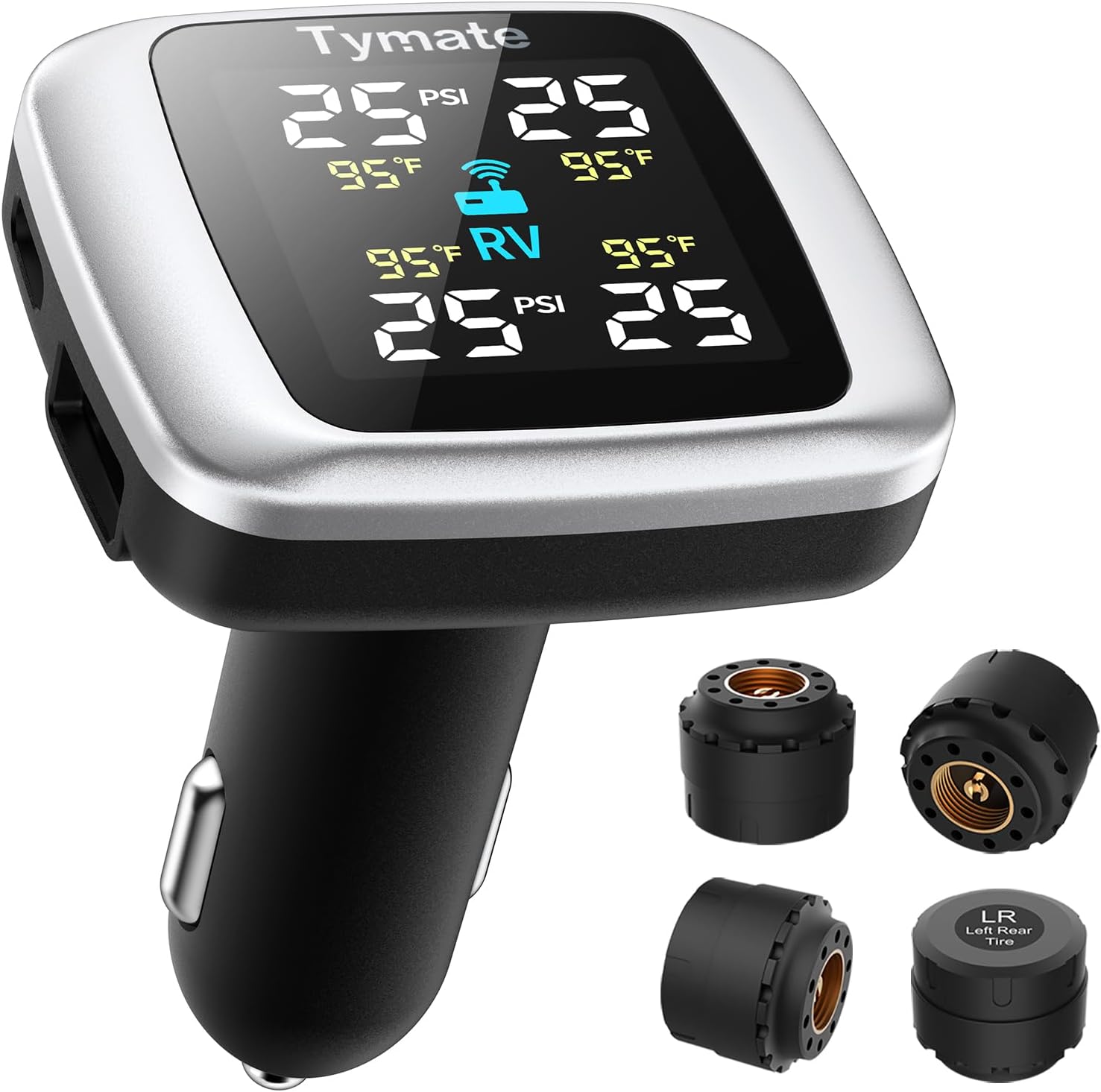
Tymate TM7 is a wireless tire pressure monitoring system that delivers real-time pressure and temperature readings for safer driving. It includes four external sensors, a bright color LCD display with adjustable backlight, and six alarm modes for high/low pressure, fast leakage, high temperature, and sensor signal or battery issues. The system covers a wide 0–144 PSI range and plugs into your vehicle’s cigarette lighter socket for quick DIY setup.
Improved Acceleration Response
Reducing rotating mass can make throttle response feel sharper, especially during frequent starts and low-speed acceleration. The benefit is easiest to isolate when tire diameter, wheel size, tread type, and pressure remain similar.
More Controlled Suspension Response
With less mass for the shocks and springs to control, the wheel may follow small road changes more easily. Still, tire stiffness and shock tuning can outweigh a modest weight difference, so judge the complete setup rather than the scale number alone.
Potential Fuel-Economy Benefit
A lighter assembly can reduce energy demand during acceleration, but it does not guarantee a specific MPG gain. Look for a tire that balances weight with suitable rolling resistance, traction, and durability. This article on tire weight and fuel economy explains the same distinction on another Toyota platform.
Do not choose a tire only because it is light. A tire that lacks the required load index, has poor wet traction, or is too fragile for your terrain is not a safe performance upgrade.
When Regearing Can Help With Larger Tires
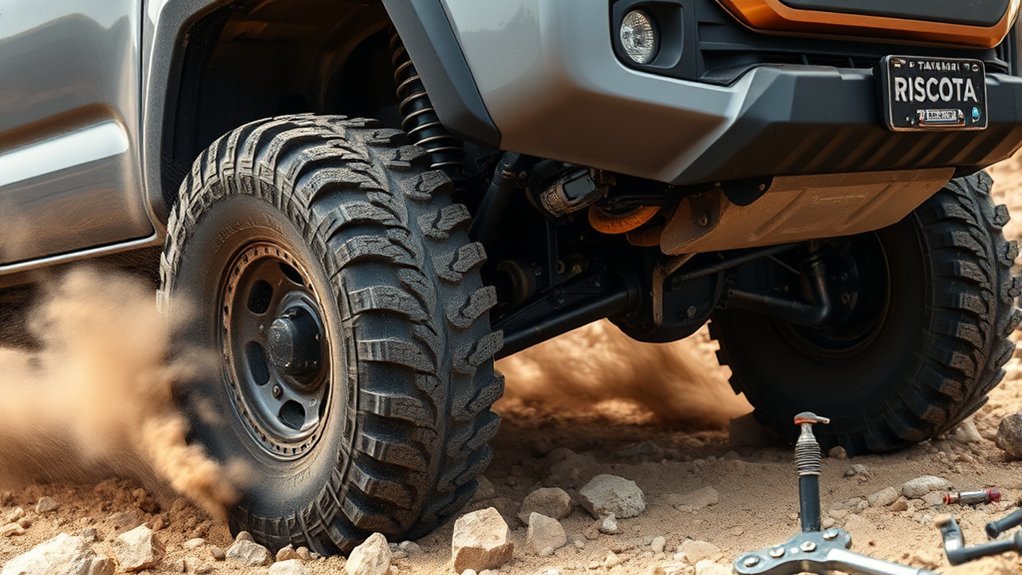
Regearing changes the axle ratio to restore mechanical leverage lost when tire diameter increases. It can improve launch feel, hill performance, transmission shift behavior, engine braking, and low-speed control. The need comes mainly from the diameter change and vehicle use, not from tire weight by itself.
No single axle ratio, including 5.29, is correct for every Tacoma. The right choice depends on model year, engine, transmission, factory axle ratio, transfer case, tire diameter, cruising speed, elevation, payload, towing, and off-road priorities. Regearing also affects engine speed at a given road speed, so fuel economy can improve, remain similar, or worsen depending on the setup and route.
[Products Worth Considering]

These universal tire valve stem caps help protect valve cores from dust, debris, and moisture while helping maintain stable tire pressure. The corrosion-resistant metal construction and sealed design provide reliable protection in road grime, mud, and winter conditions. Twist-on installation makes them quick to fit on cars, SUVs, trucks, and motorcycles.

Vigorder rubber cement glue delivers superior adhesion and cures quickly within about 30 seconds for seamless rubber bonding. Once cured, it helps provide a strong, durable, waterproof seal that holds up to vehicle weight, pressure, and heat. Suitable for cars, motorcycles, trucks, bicycles, and off-road tires, it’s designed for emergency patch and maintenance repairs.

The Topeak SmartGauge D2 delivers precise digital tire pressure readings for bikes, motorcycles, and sports equipment up to 250 psi (17 bar). Its rotating SmartHead works with both Presta and Schrader valves, so you can check pressure quickly without adapters. The LCD display makes it easy to read results in psi, bar, or kg/cm² with an included CR2032 battery for immediate use.
Signs Regearing May Be Worth Evaluating
- The truck frequently hunts between gears on grades.
- Acceleration and towing response became noticeably weaker after a major diameter increase.
- Low-speed trail control no longer suits your driving.
- The transmission runs hotter or works harder under the same load.
- You have verified tire pressure, alignment, brake drag, and engine condition first.
Pro Tip: Give a reputable drivetrain shop your exact Tacoma year, engine, transmission, factory axle code, measured tire diameter, normal highway speed, towing weight, and terrain. A ratio recommendation without those details is guesswork.
How to Choose Tacoma Tires Without Sacrificing Safety
Start with the tire and loading label on the driver-side doorjamb and the owner’s manual for your exact year and configuration. Toyota lists different factory tire sizes and cold inflation pressures across Tacoma trims. For example, the online 2024 Tacoma maintenance data includes several approved tire and wheel combinations rather than one universal specification.
- Confirm size and load capacity. The U.S. Tire Manufacturers Association advises using the same size, load index, and speed-rating designation recommended by the vehicle or tire manufacturer unless an approved alternate is specified. Review its replacement-tire guidance.
- Compare complete assembly weight. Add the wheel and tire weights. A light tire on a very heavy wheel may not reduce total unsprung mass.
- Check measured dimensions. Listed size does not reveal every real-world difference. Compare actual diameter, section width, tread width, and approved rim-width range.
- Verify clearance. Check suspension, body mount, upper control arm, fender liner, mud flap, and full-lock clearance through suspension travel.
- Use correct pressure guidance. Do not use the sidewall maximum as your routine target. Read about the dangers of underinflated tires and the dangers of overinflated tires. When using a non-stock size or load range, obtain pressure guidance from a qualified tire professional using load data.
- Plan for TPMS and calibration. Toyota states that the tire-pressure warning system may require initialization when tire size or inflation settings change. Follow the procedure for your exact model year or have a qualified shop complete it.
- Balance and align the truck. New tires should be balanced, and alignment should be checked when wear, suspension changes, or steering symptoms justify it.
[Products Worth Considering]

ETENWOLF T300 is a calibrated digital tire pressure gauge for accurate readings from 3 to 200 PSI across light and heavy-duty vehicles. It includes thermal compensation for reliable performance in extreme cold or heat, with an auto shut-off to extend battery life and an LED for easier reading. The sturdy design supports rugged everyday use, making it ideal for pickups, RVs, and industrial applications.

Replace worn or missing TPMS sensors with a pre-programmed 4-pack designed for compatible GM vehicles. These 315MHz sensors provide real-time tire pressure monitoring and alert you if pressure is too high, too low, or if a rapid air leak occurs. Most installations are ready with minimal relearn effort after mounting, helping improve safety and driving confidence.

The TYAMATE TM8 solar-powered wireless TPMS delivers real-time tire pressure and temperature monitoring with six alarm modes for safer driving. A vibrant color LCD display shows readings clearly while windshield mounting keeps it hands-free and easy to read. With a wide 0–87 PSI range, strong 433.92 MHz signal transmission, and quick sensor pairing, it’s ideal for RV, sedan, SUV, MPV, and truck use.
How to Measure the Real-World Effect on Your Tacoma
Owner reports can be useful, but one person’s MPG or acceleration result does not transfer cleanly to another Tacoma. Use your own repeatable baseline before the upgrade and compare under similar conditions afterward.
| Measurement | Before Upgrade | After Upgrade |
|---|---|---|
| Tire and wheel weight | Record each assembly | Record the same way |
| Actual tire diameter | Measure loaded or use trusted data | Measure under similar conditions |
| Fuel economy | Average several full tanks | Correct for tire-size calibration and compare several tanks |
| Shift behavior | Note hills, towing, and cruising RPM | Repeat on the same route and load |
| Steering and braking | Record normal feel and vibration | Test safely at low speed first |
Use hand-calculated fuel economy rather than relying only on the dash display. A larger tire can change distance reporting unless the vehicle has been correctly calibrated. Keep route, speed, payload, pressure, weather, and fuel type as consistent as possible.
Tips for Preserving Fuel Economy After a Tire Upgrade
- Avoid unnecessary diameter and width. Choose the smallest size that meets your clearance and traction goal.
- Compare wheel and tire weight together. A lighter wheel can offset part of a heavier tire.
- Use the correct cold inflation pressure. Check monthly and before towing or long trips. Proper inflation supports safety, wear, and fuel use; see these benefits of proper tire inflation.
- Choose tread for your real use. Deep, aggressive tread may be worthwhile off-road but wasteful for a mostly paved commute.
- Correct alignment and rubbing. Scrub, contact, or dragging components can erase the benefit of a lighter setup.
- Drive long enough to compare fairly. One windy trip or one tank does not establish a reliable MPG change.
Noise and comfort should also be part of the decision. Tread pattern and casing design can matter more than weight, as shown by the factors discussed in this guide to quiet tire design.
Common Tacoma Tire-Upgrade Mistakes
- Using a forum MPG range as a guaranteed result.
- Comparing tire weight while ignoring wheel weight and diameter.
- Assuming a higher load range is always better for an unloaded daily driver.
- Inflating to the tire sidewall maximum instead of approved vehicle-specific guidance.
- Choosing an axle ratio from tire diameter alone without considering transmission, use, and cruising speed.
- Ignoring speedometer, odometer, TPMS, clearance, alignment, and braking checks after installation.
- Buying a lighter tire that does not meet the required load capacity or terrain durability.
Frequently Asked Questions
Does 10 pounds per tire make a difference on a Tacoma?
It can. Adding 10 pounds to each tire adds 40 pounds of actual vehicle mass, all at rotating, unsprung locations. You may notice slower response, especially when the new tire is also taller or more aggressive. The size of the effect depends on where the added mass sits and how the rest of the setup changes.
Will lighter tires improve Tacoma fuel economy?
They may reduce energy demand during acceleration, but weight alone cannot guarantee an MPG increase. Diameter, width, rolling resistance, tread, pressure, alignment, speed, and driving conditions also affect fuel use.
Do heavier Tacoma tires require regearing?
Not necessarily. Regearing is mainly considered when a larger tire diameter makes the effective gearing too tall for the truck’s engine, transmission, load, and use. A modest weight increase with near-stock diameter may not justify an axle-ratio change.
Can larger tires affect the speedometer and TPMS?
A diameter change alters wheel revolutions per mile and can affect indicated speed and distance unless the vehicle is calibrated. Toyota also states that the tire-pressure warning system may need initialization after tire-size or inflation-setting changes. Follow the manual for your exact Tacoma year.
What is the best tire weight for a Toyota Tacoma?
There is no universal target. Choose the lightest practical tire that still meets the required size, load capacity, speed rating, terrain durability, traction, clearance, and towing needs. Compare the complete wheel-and-tire assembly, not the tire alone.
Conclusion
Tire weight matters on a Toyota Tacoma, but it should never be judged in isolation. A heavier assembly can reduce acceleration response, add work during braking, change suspension behavior, and contribute to higher fuel use. A larger diameter can create an even stronger effect by changing effective gearing and calibration.
Choose tires by matching your exact Tacoma, load, terrain, and driving priorities. Verify the approved size and pressure guidance, compare complete assembly weight, preserve load capacity, check clearance, and test the truck after installation. Consider regearing only after evaluating the actual diameter change and the way your truck is used.
Sources
- Toyota 2024 Tacoma Owner’s Manual: Maintenance Data — factory tire sizes, wheel sizes, cold inflation pressures, and wheel torque specifications by configuration.
- Toyota 2024 Tacoma Owner’s Manual: Items to Initialize — TPMS initialization after tire-size or inflation-setting changes.
- NHTSA TireWise — replacement-size, tire-pressure, maintenance, and rolling-resistance guidance.
- U.S. Tire Manufacturers Association: Replacing Tires — size, load-index, speed-rating, and replacement-position guidance.
- Hrovat, “Influence of Unsprung Weight on Vehicle Ride Quality” — engineering research on unsprung mass, ride, and handling.