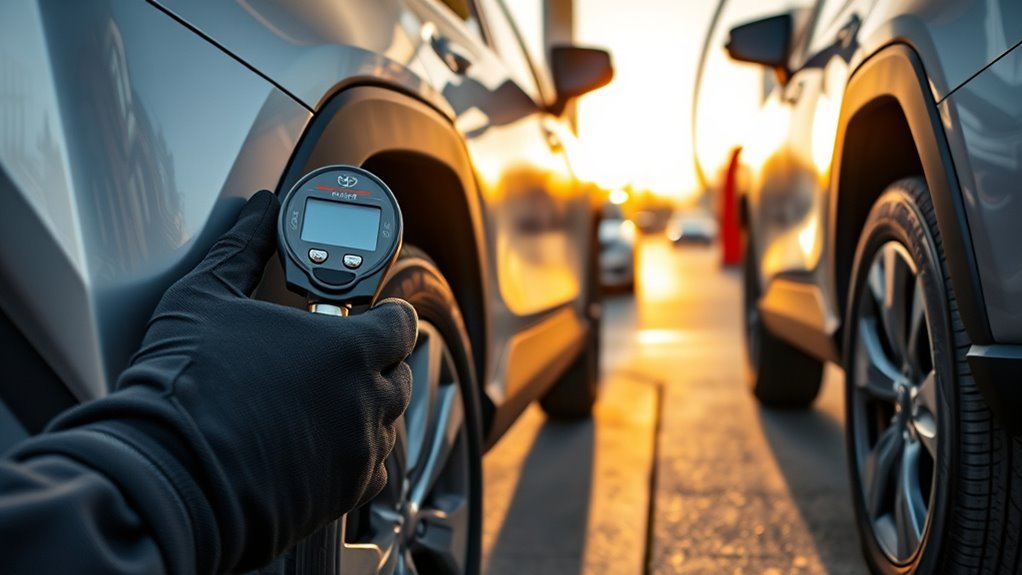
Proper tire inflation for your RAV4 is one of the simplest maintenance habits that improves safety, fuel economy, tire life, and ride quality. The correct pressure is the cold PSI listed on your RAV4’s Tire and Loading Information label, usually found on the driver’s door jamb, or in the owner’s manual. Many late-model RAV4 models are commonly in the low-30s PSI range, but your vehicle’s label always wins because pressure can vary by model year, tire size, trim, market, and replacement tires.
Quick Answer
Proper RAV4 tire inflation means keeping every tire at the Toyota-recommended cold PSI shown on the door-jamb label, not the maximum PSI on the tire sidewall. Correct pressure improves braking, steering response, tread wear, fuel economy, and blowout resistance. Check all tires monthly when cold, including the spare.
Key Takeaways
- Use your RAV4’s door-jamb Tire and Loading Information label or owner’s manual for the correct cold PSI.
- Do not use the maximum PSI printed on the tire sidewall as your normal driving pressure.
- According to FuelEconomy.gov, proper tire inflation can improve gas mileage by 0.6% on average and up to 3% in some cases.
- A TPMS warning light is helpful, but it is not a substitute for checking pressure with a gauge.
- Cold weather can lower tire pressure, so seasonal checks are especially important.
At a Glance
| Time Required | 5–10 minutes |
| Difficulty | Easy beginner maintenance |
| Tools Needed | Accurate tire pressure gauge, air compressor or gas-station air pump, valve caps |
| Cost | Usually free if you already own a gauge; about $5–$25 for a basic gauge |
Why Tire Pressure Matters for Your RAV4
Your RAV4’s tires carry the vehicle, absorb road impacts, help the steering respond, and provide the grip needed for braking and cornering. When tire pressure is too low or too high, the tire does not sit on the road the way Toyota intended.
Underinflated tires flex more, build more heat, increase rolling resistance, and often wear faster on the outer edges. Overinflated tires can ride harshly, reduce the tire’s contact patch, and wear faster in the center. Both conditions can reduce comfort, traction, and tire life.
The most important rule is simple: use the recommended cold pressure for your specific RAV4. You can find it on the driver’s door-jamb Tire and Loading Information label or in your Toyota RAV4 owner’s manual resources.
What Tire Pressure Should a RAV4 Have?
The correct RAV4 tire pressure is the cold tire inflation pressure printed on your vehicle’s tire label. On many late-model RAV4 models, the recommended pressure is commonly around the low-30s PSI, but you should not rely on a general number from the internet because your exact value may differ.
Check these places in this order:
- Driver’s door-jamb label: This is the fastest and most reliable place to check your original tire size and recommended cold PSI.
- Owner’s manual: Use the manual for pressure-checking instructions, tire size details, spare tire information, and TPMS guidance.
- Toyota dealer or tire professional: Ask for help if you use aftermarket wheels, non-original tire sizes, off-road tires, or replacement tires with different load ratings.
Note: The pressure printed on the tire sidewall is the tire’s maximum pressure, not the recommended everyday driving pressure for your RAV4.
[Products Worth Considering]

Keep your tires properly inflated with this analog VONDIOR tire pressure gauge, designed for fast, easy readings without batteries. The swiveling, two-axis hose and large glow dial help you measure at any tire angle with instant visibility. Built with a protective rubber shield, it supports durable, low-maintenance use for cars and trucks.

Measure tire tread depth quickly and accurately with this LUMITECO dial gauge that reads in 1/32" increments up to 14/32". The color-coded green/yellow/red zones make it easy to judge tire wear and know when replacement is needed. A rugged, compact design with a protective pouch helps keep the gauge ready for use on cars, trucks, motorcycles, and more.

Monitor tire tread wear with a smart, color-coded depth gauge that shows clear condition ranges at a glance. The bar is range marked for fast, easy readings, helping you maintain safer traction and performance. Each gauge is portable with a pocket clip, and the set includes 20 units for daily use and sharing.
Why Proper Tire Inflation Is Critical for Safety
Maintaining proper tire inflation is a safety issue, not just a fuel-saving habit. The National Highway Traffic Safety Administration warns that poor tire maintenance, including not having enough air and failing to rotate tires, can lead to flat tires, blowouts, or tread separation. NHTSA also reported 511 fatalities in tire-related crashes in 2024.
Correct tire pressure helps your RAV4 maintain proper steering feel, braking response, traction, durability, and load-carrying ability. This matters most during emergency braking, wet-road driving, highway speeds, and heavily loaded trips.
Warning: Do not drive on a tire that looks flat, is severely low, has a bulge, shows exposed cords, or loses pressure repeatedly. Install the spare if safe to do so or call roadside assistance.
How Tire Pressure Affects Your Gas Mileage
Tire pressure affects fuel economy because low pressure increases rolling resistance. When your tires are underinflated, your RAV4 needs more energy to roll down the road, which can increase fuel use.
Fuel Efficiency Impact
According to FuelEconomy.gov, keeping tires inflated to the proper pressure can improve gas mileage by about 0.6% on average and up to 3% in some cases. Underinflated tires can reduce gas mileage by about 0.2% for every 1 PSI drop in the average pressure of all tires.
Small PSI losses do not feel dramatic from the driver’s seat, but they add up through extra rolling resistance, faster wear, and more frequent fuel stops.
Energy Consumption Increase
The table below shows how low pressure can affect fuel economy. Actual savings vary by fuel price, driving style, tire condition, weather, and how far below the recommended PSI the tires were.
| Tire Condition | Likely Effect | Best Action |
|---|---|---|
| At the placard PSI when cold | Best balance of safety, comfort, tire wear, and MPG | Maintain monthly |
| Average pressure is 1 PSI low across all tires | About 0.2% lower MPG | Add air to the recommended cold PSI |
| Several PSI low | More rolling resistance, heat, and edge wear | Inflate promptly and inspect for leaks |
Tire Drag Reduction
When tire pressure is correct, the tire rolls with less wasted energy. That means the engine or hybrid system does not have to work as hard to maintain speed. Proper inflation also helps preserve the steering and braking balance Toyota designed into the RAV4.
Extending Your Tires’ Lifespan Through Proper Inflation
Maintaining ideal tire pressure helps your RAV4’s tires wear evenly. Even wear is important because tires are expensive, and premature wear can force replacement long before the tread should be finished.
Optimal Pressure Maintenance
NHTSA recommends checking tire pressure at least once a month when the tires are cold. A tire is considered cold when the vehicle has been parked for at least three hours or has not been driven far. Checking cold matters because pressure rises as tires heat up during driving.
Make pressure checks part of a simple monthly routine: check PSI, inspect tread depth, look for cuts or bulges, and make sure valve caps are installed. NHTSA notes that proper inflation can help tires last longer, and additional maintenance such as rotation, balance, and alignment also supports tire life.
Preventing Uneven Wear
Underinflated tires often wear faster along the shoulders. Overinflated tires often wear faster down the center. If you see uneven wear, vibration, pulling, or one tire losing air more quickly than the others, the issue may be pressure-related, alignment-related, or caused by a leak or damaged tire.
Check tread depth monthly. NHTSA says tires should be replaced when tread is worn to 2/32 of an inch, and the penny test is a quick visual check: place a penny into the tread with Lincoln’s head upside down. If you can see the top of Lincoln’s head, the tire is worn to the minimum and should be replaced.
Improved Handling and Performance With Correct Tire Pressure

When your RAV4’s tires are properly inflated, the tread contacts the road more evenly. That improves the vehicle’s stability, cornering feel, braking consistency, and wet-road traction.
Low pressure can make the RAV4 feel sluggish or soft when turning. High pressure can make the ride feel harsh and may reduce grip on rough or uneven pavement. Correct pressure gives you the best balance: a comfortable ride, predictable handling, and steady braking.
Pro Tip: Keep a small digital tire gauge in the glove box and a portable inflator at home. You are more likely to check pressure regularly when the tools are easy to reach.
How Proper Tire Pressure Reduces Environmental Impact
Proper tire pressure can reduce wasted fuel. For gasoline RAV4 models, lower fuel use means lower tailpipe emissions. For hybrid and plug-in hybrid RAV4 models, lower rolling resistance can help the vehicle use energy more efficiently.
Because the fuel-economy gain from tire pressure is usually modest per vehicle, the biggest benefit comes from consistency. Checking tires every month, fixing slow leaks, replacing worn tires, and keeping wheels aligned all help reduce unnecessary waste over the life of the vehicle.
How to Effectively Check and Maintain Tire Pressure
Checking RAV4 tire pressure is quick, but the timing and method matter. Follow these steps for the most accurate reading:
- Park long enough for a cold reading. Check pressure before driving, or after the RAV4 has been parked for at least three hours.
- Find your recommended PSI. Read the Tire and Loading Information label on the driver’s door jamb. Use the front and rear values shown there.
- Remove the valve cap. Put the cap somewhere clean so it does not pick up dirt.
- Press the gauge straight onto the valve stem. If you hear air leaking, reset the gauge and press again until you get a clean reading.
- Add air if the tire is low. Add air in small bursts, then recheck.
- Release air if the tire is high. Press the valve stem briefly and recheck until the pressure matches the placard value.
- Reinstall the valve cap. Valve caps help keep dirt and moisture out of the valve.
- Repeat for all tires. Check all four tires and the spare if your RAV4 has one.
If a tire needs air again within a few days, inspect it for a nail, valve leak, bead leak, or wheel damage. A slow leak should be repaired before it becomes a roadside problem.
[Products Worth Considering]
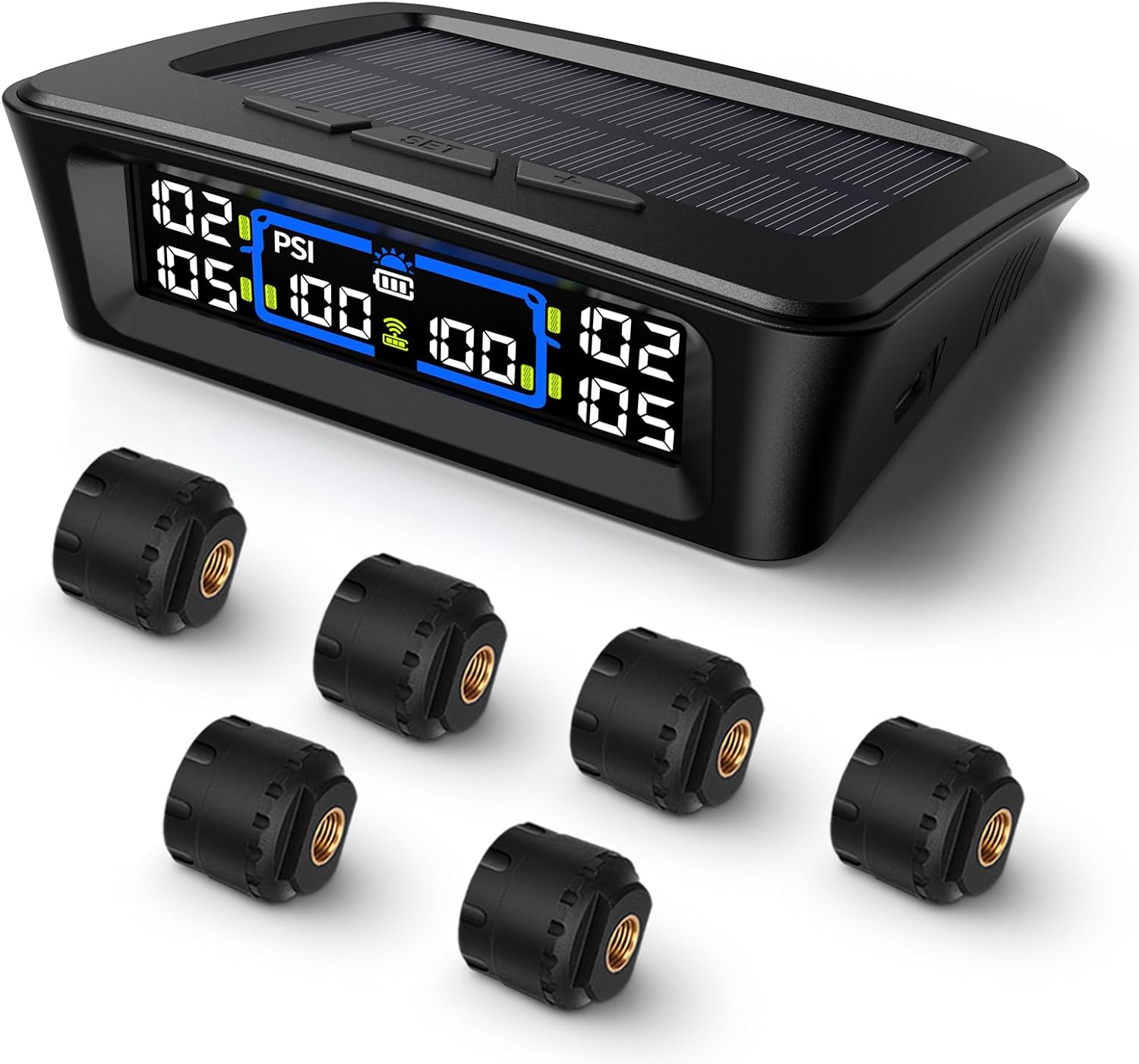
The Tymate TM12 RV TPMS delivers real-time tire pressure and temperature monitoring with a stable 433Hz display for safer long-distance driving. It supports simultaneous monitoring across vehicle and trailer zones, includes six alarm modes for pressure, temperature, leakage, battery, and signal loss, and features easy DIY installation with auto calibration. Power is supplied via USB-C charging or solar recharging, with a wide 0–144 PSI range and up to 50 ft signal coverage for RVs and towable trailers.

The Milton S-693 straight foot dual head air chuck is designed for accurate tire pressure checks and quick, secure valve-core engagement with lock-on threads on both ends. With a 1/4" FNPT connection and a maximum 150 PSI rating, it’s built for use on inner duals and common vehicle tires, including trucks and RVs.

This tire inflator with pressure gauge delivers long-lasting performance with a durable rubber-protected gauge and sturdy build. The longer hose and 360 swivel air chuck help you seal the valve securely and keep your hands free while measuring, inflating, or deflating. It’s battery-free for reliable use and provides ±2 PSI accuracy in the mid-range for most typical tires, with universal compatibility for 1/4 NPT compressor outputs.
Seasonal Effects on Tire Pressure
Tire pressure changes with temperature. The U.S. Tire Manufacturers Association notes that inflation pressure can rise or fall about 1–2 PSI for every 10°F change in temperature. That is why your TPMS light may appear on a cold morning even if the tires looked fine the day before.
In winter, check pressure more often because cold air can lower PSI. In summer, do not bleed air from hot tires just because the reading is higher after driving. Let the tires cool, then compare the cold reading with the door-jamb label.
Note: Your recommended PSI does not change just because the season changes. What changes is how often you may need to add air to maintain the correct cold pressure.
TPMS Warnings and Common Tire Maintenance Issues for RAV4 Owners
Your RAV4’s Tire Pressure Monitoring System can warn you when a tire is significantly underinflated, but it should not replace manual checks. Federal TPMS rules require a warning when one or more tires are significantly below the vehicle manufacturer’s recommended cold inflation pressure, but a tire can still be a few PSI low before the warning appears.
- Steady TPMS light: Check all tires with a gauge and inflate to the placard PSI when cold.
- Light appears on cold mornings: Pressure may have dropped overnight. Check the tires instead of assuming the light is harmless.
- Flashing TPMS light, then steady: This can indicate a TPMS malfunction. Have the system inspected.
- One tire keeps losing air: Look for a puncture, valve issue, bead leak, cracked wheel, or damaged tire.
- RAV4 pulls to one side: Check tire pressure first. If pressure is correct, inspect alignment, tire wear, and suspension.
- Vibration or rough ride: Check pressure, tread condition, balance, and wheel damage.
[Products Worth Considering]

AstroAI AIRUN H is a compact 12V tire inflator designed for fast, convenient inflation with an easy-to-read digital pressure gauge. Set your target pressure with programmable controls and let the auto shut-off turn off the pump when the preset is reached. It also includes a backlit screen and LED flashlight for nighttime use, with a ToughUltra durability design for longer service life.
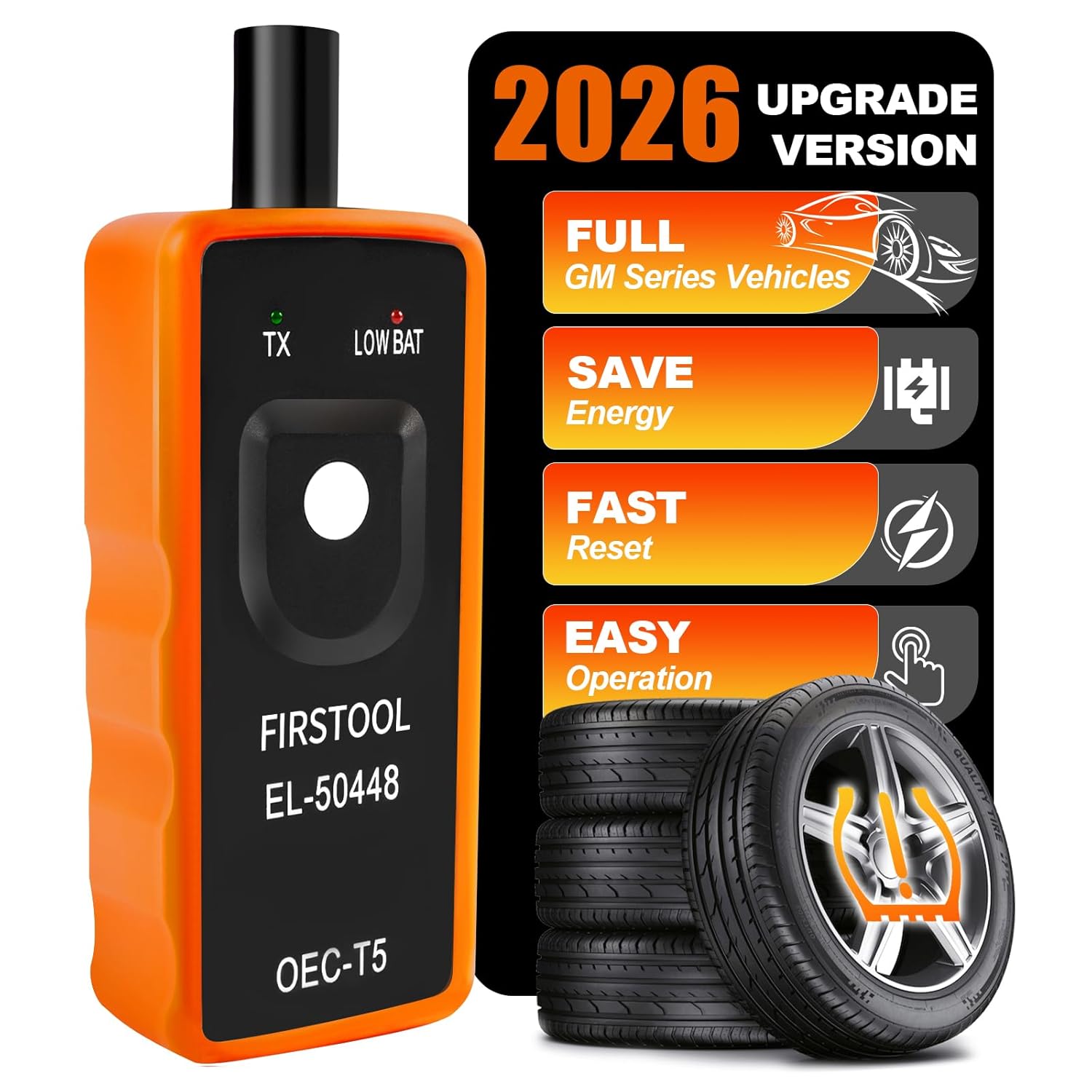
This TPMS relearn tool helps you quickly activate, match, and reset GM tire pressure sensors to keep the vehicle monitoring system working properly. It clears tire pressure alarms and dashboard warning lights after sensor replacement or tire rotation, and supports learning for common 315/433 MHz TPMS sensors. Designed for simple one-button operation, it can help you avoid unnecessary trips to repair shops.

The SAFELIFE dial tire tread depth gauge measures tread depth in 1/32 inch increments with clear, easy-to-read 2-inch dial face. Color zones using a traffic light system help you quickly judge whether tread is low, marginal, or ample for safer driving. Built with a durable zinc cast body and a metal detect probe for precise, comfortable use across cars, motorcycles, trucks, and buses.
Common Tire Pressure Mistakes to Avoid
- Using the sidewall maximum PSI: That is not the recommended RAV4 operating pressure.
- Checking only when the TPMS light comes on: Use a gauge monthly because TPMS is a backup warning, not routine maintenance.
- Checking right after highway driving: Hot readings are naturally higher. Use cold readings whenever possible.
- Ignoring the spare: A low spare will not help when you need it.
- Overinflating to chase MPG: Too much pressure can reduce comfort, grip, and even tread wear.
- Forgetting load and tire changes: If you change tire size, load rating, or wheel setup, confirm the correct inflation pressure with a qualified tire professional or Toyota dealer.
Frequently Asked Questions
What are the benefits of proper tire inflation?
Proper tire inflation helps your RAV4 brake, steer, corner, and ride the way Toyota intended. It can also improve fuel economy, reduce uneven tread wear, lower heat buildup, and extend tire life.
Is 37 PSI too high for a RAV4?
It may be too high if your RAV4’s door-jamb label recommends a lower cold PSI, such as a value in the low-30s. Always compare pressure when the tires are cold. A hot tire reading can be several PSI higher after driving, so do not bleed hot tires unless you know they were overinflated when cold.
How often should I check RAV4 tire pressure?
Check tire pressure at least once a month, before long trips, after major temperature swings, and any time the TPMS light comes on. Check when the tires are cold for the most accurate result.
Should I inflate my RAV4 tires higher in winter?
Use the same Toyota-recommended cold PSI in winter, but check more often because pressure drops as temperatures fall. Add air as needed to bring the cold tire back to the door-jamb value.
Can I rely on the RAV4 TPMS instead of a tire gauge?
No. TPMS is a warning system, not a maintenance tool. A tire can be below the recommended PSI before the warning appears, so monthly manual checks with a gauge are still important.
Do I need to check the spare tire?
Yes. If your RAV4 has a spare, check it during your monthly tire-pressure routine. Spare tires can use a different pressure than the four road tires, so follow the owner’s manual, spare tire label, or tire sidewall instructions for the spare.
Conclusion
Maintaining proper tire inflation keeps your RAV4 safer, smoother, and more efficient. Use the cold PSI on the driver’s door-jamb label, check all tires monthly with a reliable gauge, and respond quickly to TPMS warnings, uneven wear, or repeated pressure loss. A few minutes of tire care can help protect your fuel economy, your tires, and your confidence on the road.
Sources
- Toyota RAV4 Owner’s Manuals and Warranty Resources — vehicle-specific tire pressure and maintenance reference.
- NHTSA TireWise — tire safety, pressure checks, tread, TPMS, and tire-related crash data.
- FuelEconomy.gov: Keeping Your Vehicle in Shape — tire inflation and fuel-economy impact.
- U.S. Tire Manufacturers Association: Tire Care Essentials — monthly checks, cold tire pressure, and temperature effects.
- 49 CFR § 571.138: Tire Pressure Monitoring Systems — federal TPMS performance requirements.