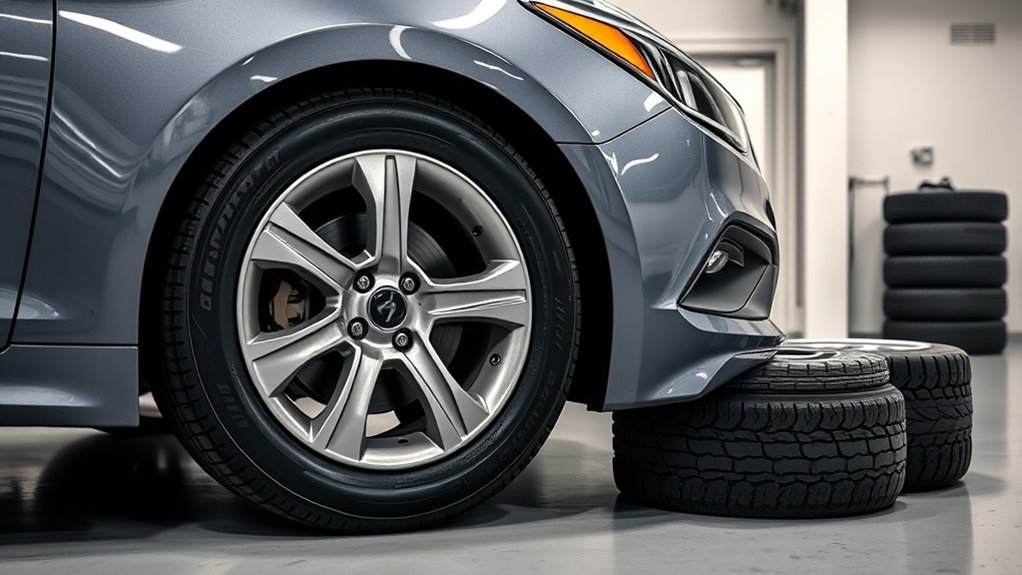
Your 2016 Hyundai Sonata tire size depends on the trim and wheel package, so the safest answer is not a single number. Most 2016 Sonata trims use 205/65R16, 215/55R17, or 235/45R18 tires, but the driver-side door-jamb placard is the final authority for your exact tire size, load rating, speed rating, and cold tire pressure.
Quick Answer
Most 2016 Hyundai Sonata models use 205/65R16, 215/55R17, or 235/45R18 tires. Many 16- and 17-inch listings are around 35 PSI cold, while 18-inch 2.0T trims are often listed around 34 PSI. Always follow the tire placard on your driver-side door jamb before buying or inflating tires.
Key Takeaways
- Common 2016 Sonata OEM sizes are 205/65R16, 215/55R17, and 235/45R18, depending on trim.
- Use the driver-side door-jamb placard for your exact cold PSI, load index, and speed rating.
- Do not replace tires with a lower load index or speed rating than the factory service description.
- Rotate tires every 7,500 miles or sooner if uneven wear appears, and check pressure when tires are cold.
At a Glance
| Time Required | 5–10 minutes to confirm size and pressure; 45–90 minutes for professional tire installation |
| Difficulty | Easy for checking size/pressure; professional recommended for mounting, balancing, TPMS, or wheel changes |
| Tools Needed | Tire pressure gauge, tread-depth gauge, flashlight, owner’s manual or door-jamb placard, and torque wrench if wheels are removed |
| Cost | Varies by size and tire model; budget for four tires plus mounting, balancing, valve stems or TPMS service, disposal, and alignment if needed |
2016 Hyundai Sonata Tire Sizes and Recommended Pressures
The main 2016 Hyundai Sonata tire sizes are 205/65R16, 215/55R17, and 235/45R18. The exact size depends on trim, engine, wheel package, and market. The owner’s manual table for the listed 16- and 17-inch full-size tires shows 240 kPa / 35 psi, while 235/45R18 pressure references are commonly around 34 psi. Treat those numbers as a guide, not a substitute for the tire placard on your car.
Warning: Do not inflate tires to the maximum PSI printed on the tire sidewall unless that number matches a specific service procedure. The sidewall number is the tire’s maximum cold inflation limit, not the Sonata’s normal recommended pressure. Use the driver-side door-jamb placard for daily driving.
| 2016 Sonata Trim | Common OEM Tire Size | Common Service Description | Pressure Note |
|---|---|---|---|
| SE, Eco, Hybrid SE | 205/65R16 | Often 95H | Manual table shows 35 PSI for the listed 16-inch full-size tire; verify placard. |
| Sport, Limited, Hybrid Limited, Plug-In Hybrid | 215/55R17 | Often 94V | Manual table shows 35 PSI for the listed 17-inch full-size tire; verify placard. |
| Sport 2.0T, Limited 2.0T | 235/45R18 | Often 94V | Common references list about 34 PSI; verify placard before inflating. |
The pressure should be checked when the tires are cold, which means the car has been parked for at least three hours or driven less than about one mile. Warm tires can read several PSI higher, so do not bleed air from a warm tire just to force it down to the cold placard number.
OE Fitments by 2016 Sonata Trim
Use the trim table above as a practical starting point, then confirm your actual Sonata. A previous owner may have changed wheels, and some cars may have different regional or package-specific equipment. Your replacement tire should match the size, load index, and speed rating shown on the door placard or the existing correct tire.
- Open the driver-side door and read the tire placard on the door jamb.
- Match the tire size, such as 205/65R16, 215/55R17, or 235/45R18.
- Match or exceed the load index. For example, load index 95 is rated for about 1,521 lb per tire when properly inflated.
- Match or exceed the speed rating. Do not downgrade from an H or V rating if that is what your trim specifies.
- Check all four tires. Mixed sizes, mismatched tread patterns, or different tire types can affect handling and stability control.
Note: The tire size molded into the sidewall tells you what is currently installed. The door-jamb placard tells you what Hyundai specified for that vehicle. If the two do not match, use the placard and ask a tire professional to inspect the wheel setup before buying replacements.
How to Read the Size, Load Index, and Speed Rating
A tire marked 205/65R16 95H gives you four important details. 205 is the tire width in millimeters. 65 is the sidewall height as a percentage of the width. R16 means radial construction for a 16-inch wheel. 95H is the service description: 95 is the load index, and H is the speed rating.
For the Sonata, the service description matters as much as the size. A cheaper tire with the same dimensions but a lower load index or speed rating is not an equal replacement. If your placard or existing correct tire shows 95H or 94V, choose a replacement that matches or exceeds that rating.
Safe Replacement Rules for 2016 Sonata: Sizes, Rim Changes, and Load Index
The safest replacement is the same size and service description that came on your Sonata. If you want to change wheel size for appearance or handling, keep the overall tire diameter close to stock and confirm wheel width, bolt pattern, offset, center bore, lug hardware, brake clearance, suspension clearance, and Tire Pressure Monitoring System compatibility.
- Stay with OEM-equivalent sizes when possible: 205/65R16, 215/55R17, or 235/45R18 depending on trim.
- Do not use 245/40R19 as a claimed 2016 OEM size: it is not a common 2016 Sonata factory fitment. Treat it as a custom fitment that needs professional measurement.
- Match the load rating: never install tires with a lower load index than the placard or original tire.
- Match the speed rating: do not downgrade the speed rating unless a qualified tire professional confirms a safe and legal winter-tire exception for your use.
- Keep tire types consistent: do not mix summer, all-season, all-weather, and winter tires on the same axle.
- Recheck lug torque: the 2016 manual lists wheel lug nut torque at 65–79 lb-ft for the shown wheel table.
Pro Tip: If you are upsizing wheels, compare the new tire’s overall diameter and revolutions per mile against the factory size. A large mismatch can affect speedometer accuracy, ABS, traction control, ride comfort, and fender clearance.
[Products Worth Considering]

Replace your worn or missing TPMS sensors with pre-programmed, direct-fit sensors for compatible Ford, Lincoln, and select Mazda models. Each sensor comes ready to activate with a scan tool, helping restore accurate tire pressure monitoring and trouble-free installation. Built with a long-life CR2032 battery and tested before factory release, this set provides dependable performance with a one-year warranty.

Keep your tires properly inflated with this analog VONDIOR tire pressure gauge, designed for fast, easy readings without batteries. The swiveling, two-axis hose and large glow dial help you measure at any tire angle with instant visibility. Built with a protective rubber shield, it supports durable, low-maintenance use for cars and trucks.

The Trivd Frol 1/2" air impact wrench delivers high performance torque up to 1500 ft-lbs with a twin hammer impact mechanism for strong, balanced blows. It features an ergonomic grip, compact lightweight design, and quick-stop control with 3 forward speeds up to 8000 RPM plus a reverse speed. Built for demanding automotive repair and tire shop work, the rear exhaust helps keep debris away from the surface.
Best Tires for 2016 Sonata: All-Season, Performance, and Winter Picks

The best tire for a 2016 Hyundai Sonata depends on climate, wheel size, and driving style. Do not buy only by brand name. First confirm the exact size and service description, then choose the category that matches your roads.
| Driving Need | Best Tire Type | Good Examples to Compare | Trade-Off |
|---|---|---|---|
| Daily commuting, comfort, long tread life | Touring all-season | Michelin Defender2, Continental TrueContact Tour 54 | Best balance for most drivers, but not a substitute for dedicated winter tires in severe snow or ice. |
| Rain plus occasional light snow | All-weather tire with 3PMSF rating | Compare current all-weather options in your exact size | Better cold-weather margin than many all-seasons, usually less sporty than performance tires. |
| Sharper steering on 18-inch 2.0T trims | Grand touring or performance all-season | Choose a 235/45R18 tire with the correct 94V-or-higher service description | More grip can mean more road noise, faster wear, and firmer ride quality. |
| Real winter driving, ice, packed snow, mountain roads | Dedicated winter tire | Bridgestone Blizzak WS90, Michelin X-Ice Snow+ | Excellent cold grip, but should be swapped off when warm weather returns. |
If you drive mostly in warm weather and want a quiet ride, start with a touring all-season. If you see frequent freezing temperatures, slush, or snow, use a true winter tire or a severe-snow-rated all-weather tire. If you drive a Sport 2.0T or Limited 2.0T and value handling, choose a tire that preserves the 235/45R18 size and the correct speed/load rating.
[Products Worth Considering]

Monitor tire tread wear with a smart, color-coded depth gauge that shows clear condition ranges at a glance. The bar is range marked for fast, easy readings, helping you maintain safer traction and performance. Each gauge is portable with a pocket clip, and the set includes 20 units for daily use and sharing.

Measure tire tread depth quickly and accurately with this LUMITECO dial gauge that reads in 1/32" increments up to 14/32". The color-coded green/yellow/red zones make it easy to judge tire wear and know when replacement is needed. A rugged, compact design with a protective pouch helps keep the gauge ready for use on cars, trucks, motorcycles, and more.
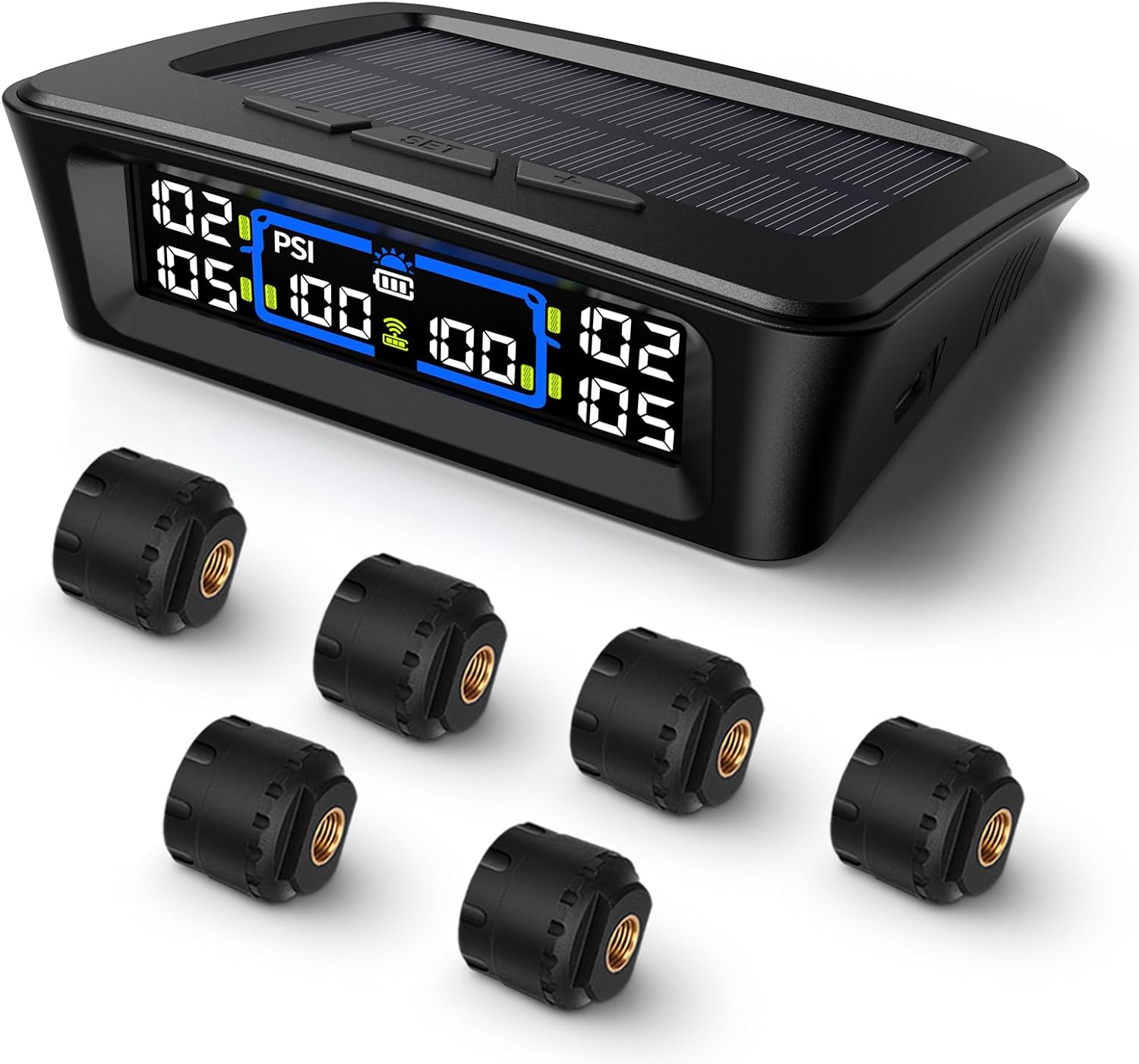
The Tymate TM12 RV TPMS delivers real-time tire pressure and temperature monitoring with a stable 433Hz display for safer long-distance driving. It supports simultaneous monitoring across vehicle and trailer zones, includes six alarm modes for pressure, temperature, leakage, battery, and signal loss, and features easy DIY installation with auto calibration. Power is supplied via USB-C charging or solar recharging, with a wide 0–144 PSI range and up to 50 ft signal coverage for RVs and towable trailers.
Budgeting, Installation, and Maintenance: Costs, Rotation, and Replacement Timing
Tire pricing changes by size, brand, speed rating, warranty, and local installation fees. A full tire job usually includes four tires, mounting, balancing, valve stems or TPMS service kits, disposal fees, taxes, and sometimes an alignment. Get quotes by exact tire size, not just by vehicle model.
- Price the correct size first: 205/65R16 is usually cheaper than 235/45R18, but brand and rating can change the final cost.
- Add installation costs: mounting, balancing, valve service, disposal, and taxes can meaningfully change the out-the-door price.
- Budget for alignment if needed: uneven shoulder wear, pulling, vibration, or a recent pothole hit can justify an alignment check.
- Rotate on schedule: Hyundai recommends rotating the tires every 7,500 miles or sooner if irregular wear develops.
- Check pressure monthly: cold pressure checks protect tread life, braking, fuel economy, and sidewall durability.
[Products Worth Considering]

The TYAMATE TM8 solar-powered wireless TPMS delivers real-time tire pressure and temperature monitoring with six alarm modes for safer driving. A vibrant color LCD display shows readings clearly while windshield mounting keeps it hands-free and easy to read. With a wide 0–87 PSI range, strong 433.92 MHz signal transmission, and quick sensor pairing, it’s ideal for RV, sedan, SUV, MPV, and truck use.

Upgrade your wheels with MIKKUPPA M12x1.5 mag seat lug nuts built for secure, corrosion-resistant performance. These closed-end chrome lug nuts are a direct replacement for select Toyota models, including Camry, Corolla, RAV4, Sienna, Avalon, Highlander, Matrix, Venza, and Prius. Triple-chromium plating and cold-forged, heat-treated steel help deliver strength for daily driving and replacement needs.

Replace worn or malfunctioning GM TPMS sensors with this 433MHz pre-programmed sensor set designed for compatibility with many Chevrolet, Buick, GMC, and Cadillac models. It includes guidance for proper OBDII relearning/pairing after installation and supports reliable long-term operation with a high-performance CR2032 battery. Quality tested for durability and performance to help restore accurate tire pressure monitoring.
When to Replace 2016 Sonata Tires
Replace tires immediately if you see exposed cords, sidewall bulges, deep cracks, punctures that cannot be repaired correctly, or uneven wear that reaches the wear bars. Tread depth also depends on weather. The legal minimum is not the same as the safest replacement point for rain or snow.
- 2/32 inch: legal minimum in many U.S. passenger-tire situations; replace immediately.
- 4/32 inch: plan replacement for wet-road safety because hydroplaning and stopping distance worsen as tread gets shallow.
- 5/32 inch: plan replacement for snow or slush use because winter traction needs deeper tread.
- Six years or older: inspect more carefully for aging, cracking, and hardening, even if tread remains.
- Ten years: many tire makers and safety professionals treat this as a hard age limit regardless of tread depth.
Note: The DOT date code on the sidewall shows when the tire was made. The last four digits identify the week and year, such as 2324 for the 23rd week of 2024.
Frequently Asked Questions
What tires come on a 2016 Hyundai Sonata?
Common 2016 Hyundai Sonata factory sizes are 205/65R16 on SE/Eco/Hybrid SE trims, 215/55R17 on many Sport/Limited/Hybrid/Plug-In trims, and 235/45R18 on Sport 2.0T and Limited 2.0T trims. Always confirm your exact car on the driver-side door-jamb placard.
What is my OEM tire size?
Your OEM tire size is printed on the driver-side door-jamb tire placard. The sidewall shows what is currently installed, but the placard shows the factory specification for that vehicle. If the two do not match, have the wheel and tire setup checked before ordering replacements.
What PSI should 2016 Hyundai Sonata tires be?
Use the cold tire pressure on your driver-side door-jamb placard. The 2016 manual table shows 35 PSI for the listed 205/65R16 and 215/55R17 full-size tires, while many 235/45R18 references list about 34 PSI. Check pressure cold, not after a long drive.
Can I put 18-inch wheels on a Sonata that came with 16-inch wheels?
Yes, but only if the wheel width, bolt pattern, offset, center bore, lug hardware, brake clearance, tire diameter, load rating, speed rating, and TPMS compatibility are correct. A tire shop should verify the fitment before installation.
Is 245/40R19 an OEM tire size for the 2016 Hyundai Sonata?
It is not a common 2016 Sonata OEM fitment. Do not treat 245/40R19 as a direct factory replacement for a 2016 Sonata unless a fitment professional has confirmed the wheel setup, clearance, load rating, and overall diameter.
What is the best oil for a 2016 Hyundai Sonata?
This is a related maintenance question, not a tire-size question. The 2016 Sonata manual recommends SAE 5W-20 for better fuel economy where available and also shows 5W-30 and 10W-30 in the viscosity chart depending on temperature and availability. Check your owner’s manual and oil cap before servicing.
Conclusion
The right 2016 Hyundai Sonata tire choice starts with the door-jamb placard. Most trims use 205/65R16, 215/55R17, or 235/45R18 tires, but size alone is not enough. Match the load index, speed rating, cold PSI, and wheel specifications before buying. Rotate every 7,500 miles, check pressure monthly, inspect tread and sidewalls, and choose the tire category that fits your climate instead of chasing the cheapest or widest option.
Sources
- 2016 Hyundai Sonata Owner’s Manual, Tires and Wheels — tire sizes, 35 PSI listing for shown full-size tires, and lug nut torque.
- 2016 Hyundai Sonata Owner’s Manual, Tire Rotation — 7,500-mile tire rotation interval and inspection guidance.
- NHTSA TireWise — tire placard, cold pressure, tire inspection, and tire safety guidance.
- Tire Rack: When Should Tires Be Replaced? — practical tread-depth guidance for dry, wet, and snowy conditions.
- Goodyear Tire Load Index Guide — load index meaning and load-capacity reference.
- 2016 Hyundai Sonata Owner’s Manual, SAE Viscosity — oil-viscosity information for the related FAQ.