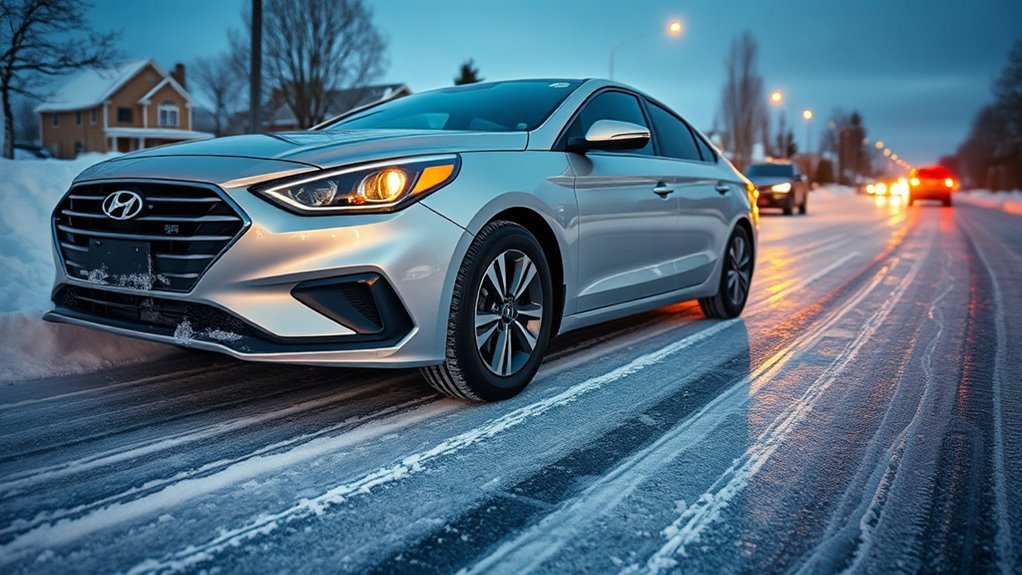
Using summer tires in winter on your Hyundai Sonata is risky because these tires are built for warm pavement, not freezing roads, packed snow, slush, or ice. Once temperatures stay near or below 45°F (7°C), summer-tire rubber can stiffen, traction drops, and stopping distances can increase. For real winter driving, a Sonata needs winter tires or, in milder climates, all-weather tires with the Three-Peak Mountain Snowflake symbol.
Quick Answer
Do not use summer tires on a Hyundai Sonata in winter conditions. They lose grip in cold weather and perform especially poorly on snow or ice. Switch to dedicated winter tires for frequent freezing weather, or choose all-weather tires with the 3PMSF symbol if your winters are mild.
Key Takeaways
- Summer tires are designed for warm dry and wet roads, not freezing temperatures, snow, slush, or ice.
- The common changeover point is when average daily temperatures stay below about 45°F (7°C).
- Winter tires give the best cold-weather grip; all-weather tires with the 3PMSF symbol can work for milder winter climates.
- If summer tires were exposed to freezing temperatures, inspect them for tread cracking, chipping, bulges, and uneven wear before using them again.
At a Glance
| Time Required | 10–15 minutes for a basic tire inspection; about 30–60 minutes for a professional seasonal tire swap. |
| Difficulty | Easy for inspection; professional mounting and balancing are recommended if tires are not already on wheels. |
| Tools Needed | Tire-pressure gauge, tread-depth gauge or quarter, flashlight, and your Sonata’s door-jamb tire placard. |
| Cost | Inspection is usually free at home. Tire swap, mounting, storage, and winter-tire prices vary by tire size, shop, and brand. |
Warning: Do not drive on summer tires in snow, ice, freezing rain, or untreated winter roads unless it is unavoidable. If you are already caught out, drive slowly, leave extra following distance, avoid sudden steering or braking, and get the tires changed as soon as possible.
Why Using Summer Tires in Winter Is Dangerous

Summer tires are made to grip warm pavement. Their tread patterns and rubber compounds are designed for responsive handling in warm dry and wet conditions, not for biting into snow or staying flexible in freezing weather. When the road gets cold, the tire can feel harder, less planted, and slower to respond.
That matters on a Hyundai Sonata because the car depends on four small contact patches to steer, stop, and accelerate. Stability control, traction control, anti-lock brakes, and available driver-assist systems can help manage a skid, but they cannot create grip that the tires do not have.
The risk increases on bridges, shaded roads, packed snow, black ice, and slushy intersections. A Sonata on summer tires may take longer to stop, slide during turns, or struggle to climb a snowy driveway. Like most midsize sedans, it can also struggle in deep, unplowed snow, but the bigger safety issue is tire grip, not just ride height.
How Cold Weather Affects Summer Tire Performance
Many tire makers use about 45°F (7°C) as the practical point where drivers should consider changing from summer tires to winter or all-weather tires. It is not a magic switch where a tire instantly fails, but it is a useful safety line: below that temperature, summer tires are no longer operating in the conditions they were designed for.
Cold weather affects summer tires in four main ways:
- Rubber stiffness: The compound becomes less flexible, so the tire cannot conform to cold pavement as well.
- Less snow grip: Summer tread blocks do not have the deep grooves and sipes that help winter tires grip snow and ice.
- Longer braking: Reduced traction means the car may need more distance to stop, especially on slick surfaces.
- Possible tire damage: Some summer performance tires can suffer tread cracking or block chipping after exposure to near-freezing or below-freezing temperatures, according to Tire Rack.
Note: Cold weather also lowers tire pressure. Check your Sonata’s tire pressure when the tires are cold and inflate them to the pressure listed on the driver-side door-jamb placard, not the maximum pressure molded into the tire sidewall.
Identifying Tire Damage From Improper Seasonal Use
If you used summer tires through freezing weather, inspect them before you keep driving on them in spring. Damage can be subtle at first, but it can affect safety and tire life.
Look for these warning signs:
- Fine cracks across the tread face or near the tread blocks.
- Chipped tread blocks or small chunks missing from the tread.
- Sidewall bulges, bubbles, or cuts, which require immediate professional inspection.
- Uneven wear on one shoulder, feathered edges, or cupping.
- Vibration or pulling after a cold snap, pothole hit, or slide.
- Low tread depth, especially if the tires are close to the wear bars.
Do not assume a damaged summer tire is safe because it still holds air. If you see cracking, missing rubber, cords, bulges, or severe uneven wear, have a tire shop inspect it before highway driving.
Why You Should Switch to Winter or All-Weather Tires
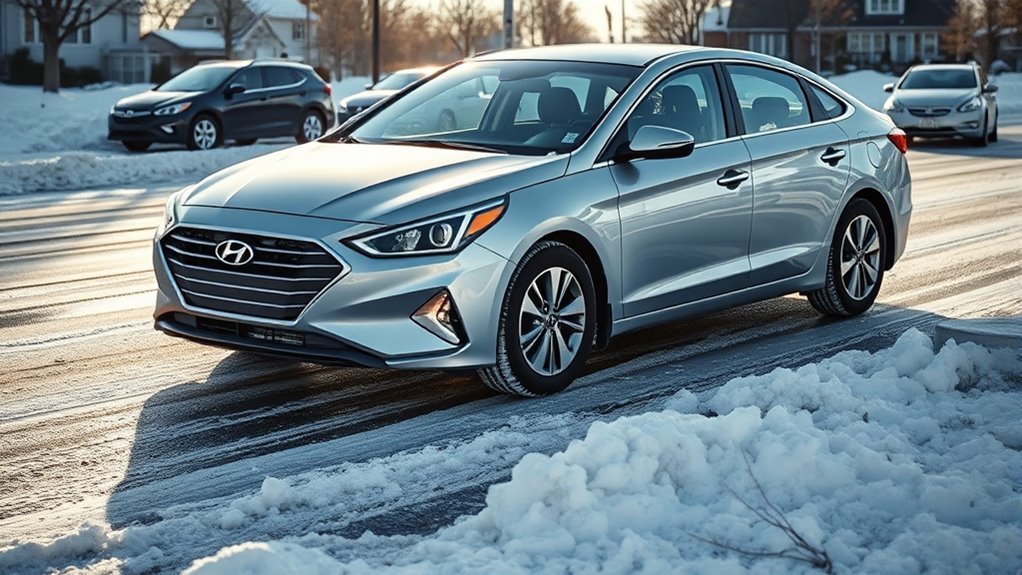
Switching tires is not just about getting moving in snow. It is about steering, braking, and keeping control when the road surface changes. Winter tires use rubber compounds that stay more flexible in cold weather, plus tread patterns with deeper grooves and sipes to help grip snow and ice.
[Products Worth Considering]

Monitor tire tread wear with a smart, color-coded depth gauge that shows clear condition ranges at a glance. The bar is range marked for fast, easy readings, helping you maintain safer traction and performance. Each gauge is portable with a pocket clip, and the set includes 20 units for daily use and sharing.

The SAFELIFE dial tire tread depth gauge measures tread depth in 1/32 inch increments with clear, easy-to-read 2-inch dial face. Color zones using a traffic light system help you quickly judge whether tread is low, marginal, or ample for safer driving. Built with a durable zinc cast body and a metal detect probe for precise, comfortable use across cars, motorcycles, trucks, and buses.

Measure tire tread depth quickly and accurately with this LUMITECO dial gauge that reads in 1/32" increments up to 14/32". The color-coded green/yellow/red zones make it easy to judge tire wear and know when replacement is needed. A rugged, compact design with a protective pouch helps keep the gauge ready for use on cars, trucks, motorcycles, and more.
Performance in Cold Conditions
In cold weather, winter tires are the strongest choice for a Hyundai Sonata that regularly sees freezing temperatures, snow, or ice. They are designed to stay pliable and maintain traction when a summer tire is outside its ideal operating range.
All-weather tires can be a practical middle ground if your area has mild winters but occasional snow. Look for the Three-Peak Mountain Snowflake symbol, often shortened to 3PMSF. The Tire and Rubber Association of Canada explains that the 3PMSF symbol identifies tires designed and tested for winter driving performance.
Safety Risks of Summer Tires
Summer tires can feel sporty and precise in warm weather, but those strengths work against you in winter. In freezing temperatures, they can lose the flexibility needed for grip. In snow and ice, the shallow warm-weather tread pattern cannot clear snow and slush like a winter tire.
The result can be longer stopping distances, poor cornering control, wheelspin, and a higher chance of sliding through turns or intersections. Even if your Sonata has good brakes, the brake system still relies on tire traction to slow the car.
Importance of Seasonal Swapping
Plan your tire swap before the first storm, not after the roads are already icy. A good rule is to install winter or all-weather tires when average daily temperatures stay below about 45°F (7°C), then switch back to summer tires when temperatures are consistently above that range in spring.
Pro Tip: If your winter tires are mounted on a second set of wheels, seasonal swaps are usually faster and can reduce repeated mounting stress on the tire beads.
Summer, All-Season, All-Weather, and Winter Tires: What’s Best for a Hyundai Sonata?
The right tire depends on your climate, commute, and how often you drive in real winter weather. Use this comparison before buying a new set for your Sonata.
| Tire Type | Best For | Winter Use |
| Summer tires | Warm dry and wet pavement, sporty handling, warm-season driving. | Poor choice. Avoid snow, ice, and freezing conditions. |
| All-season tires | Drivers in mild climates who want one tire for spring, summer, and fall. | Acceptable only for light, mild winter conditions. Not the best choice for regular snow or ice. |
| All-weather tires | One-set convenience in areas with moderate winters and occasional snow. | Good compromise if the tire carries the 3PMSF symbol. |
| Winter tires | Frequent freezing temperatures, snow, slush, icy roads, hills, and long winter commutes. | Best choice for winter traction and control. |
[Products Worth Considering]

The Kurgo Seasonal Tire Tote helps protect your car interior, clothes, and garage from tire grime, brake dust, and residue during seasonal tire changes. Its universal design fits most passenger tires between 22" and 31" in diameter, making storage and transport simpler with less mess. Built for rugged, repeated use, it’s machine washable for easy care and comes with a lifetime warranty.

Steelman white tire marking crayons provide high-contrast, semi-permanent marks for repairing and inspecting tires and equipment. They write on wet or dry, smooth or coarse surfaces including rubber, metal, glass, and wood, making them ideal for puncture location and damage outlining. The lead- and zinc-free crayons resist weather and fading yet wipe away when you no longer need the marks.

Accurately measure tire tread depth with a calibrated gauge marked from 0 to 1 inch in 1/32 inch increments. The color-coded bar helps you quickly identify tread condition ranges, supporting safe driving for trucks, motorcycles, automobiles, and passenger vehicles.
What to Do If Your Sonata Still Has Summer Tires in Winter
If temperatures have dropped and your Sonata is still on summer tires, treat it as a short-term safety problem, not a normal setup. The safest option is to avoid driving until conditions warm up or the tires are changed.
If driving is unavoidable:
- Stay off snow-covered, icy, or untreated roads whenever possible.
- Use main roads that have been plowed, treated, and warmed by traffic.
- Drive well below the speed limit and leave several extra car lengths of space.
- Avoid sudden throttle, hard braking, and sharp steering inputs.
- Do not rely on traction control or ABS to overcome the wrong tire.
- Schedule a tire change as soon as possible.
If you slid into a curb, hit a pothole, or drove through freezing conditions for an extended period, inspect the tires and have the alignment checked if the steering wheel is off-center or the car pulls to one side.
How Using the Wrong Tires Can Lead to Accidents
Using the wrong tires can increase accident risk because every safety system starts with traction. Brakes need traction to slow the car. Steering needs traction to change direction. Stability control needs traction to correct a slide.
Summer tires in winter can reduce that traction in the exact moments you need it most: stopping at an icy intersection, turning onto a snowy side street, or braking when traffic suddenly slows. The problem is not only getting stuck. It is losing control before you realize the road surface has changed.
For a Hyundai Sonata, the safest winter setup is a full matching set of four tires appropriate for the season. Do not mix summer and winter tires on the same vehicle. Mixing tire types can create uneven grip between the front and rear axles, which can make the car harder to control.
Comparing Winter and Summer Tires for the Hyundai Sonata
Winter and summer tires can both be excellent, but they are excellent in different seasons. A summer tire is the better warm-weather performance tire. A winter tire is the better cold-weather safety tire.
- Tread design: Winter tires use deeper grooves and many small cuts called sipes to grip snow and slush. Summer tires use patterns optimized for warm dry and wet pavement.
- Rubber compound: Winter tires stay more flexible in cold weather. Summer tires can stiffen when temperatures drop.
- Braking behavior: Winter tires are built to maintain braking grip in cold conditions. Summer tires may take longer to stop on cold or slick surfaces.
- Best season: Summer tires belong in warm weather. Winter tires belong in freezing temperatures and winter precipitation.
The tire with the best warm-weather steering feel is not automatically the tire with the safest winter grip. Winter safety depends on compound flexibility, tread design, tread depth, and proper pressure.
[Products Worth Considering]

The Topeak SmartGauge D2 delivers precise digital tire pressure readings for bikes, motorcycles, and sports equipment up to 250 psi (17 bar). Its rotating SmartHead works with both Presta and Schrader valves, so you can check pressure quickly without adapters. The LCD display makes it easy to read results in psi, bar, or kg/cm² with an included CR2032 battery for immediate use.

These aluminum alloy tire valve stem caps protect the valve core from corrosion and help prevent air leakage for more stable tire pressure. The rubber ring design helps support a secure, safe seal while adding a stylish look to your Honda wheels. Easy to install by hand, these caps are ideal for everyday driving and weather exposure.

Replace worn tires quickly with this universal 4.80/4.00-8 tire and inner tube set designed for wheelbarrows and outdoor utility carts. The ribbed tread helps reduce turf damage while the natural rubber construction supports longer service life. Compatible with 15.5-inch outer diameter, 4-inch width, and 8-inch rim diameter wheels, it uses a straight TR-13 valve stem for easy installation. For best results, inflate with a manual pump and do not exceed 25 PSI.
How to Maintain Tire Performance in Different Seasons

Good tire maintenance helps your Sonata handle predictably in every season. The basics are simple: use the right tire type, keep the tires inflated correctly, rotate them on schedule, and inspect them before the weather changes.
Proper Tire Selection
Before buying tires, check the tire size, load rating, and speed rating on your Sonata’s driver-side door-jamb placard or owner’s manual. Use tires that match the correct size and rating for your model year and trim.
Choose based on climate:
- Frequent snow, ice, or freezing commutes: dedicated winter tires.
- Mild winters with occasional snow: all-weather tires with the 3PMSF symbol.
- Mostly warm climate with rare cold snaps: all-season tires may be enough, but avoid summer tires during freezing weather.
- Warm-weather performance driving: summer tires are best only when temperatures are consistently warm.
Seasonal Tire Inspections
Inspect your tires before winter and again before switching back to warm-weather tires. NHTSA TireWise recommends paying attention to tire pressure, tread, rotation, and tire condition as part of basic tire safety.
Check:
- Tread depth across the inner, center, and outer tread.
- Cracks, bulges, punctures, nails, and exposed cords.
- Uneven wear that may point to alignment or suspension issues.
- Valve stems and missing valve caps.
- TPMS warnings after major temperature changes.
For snow driving, do not wait until tires reach the dry-road wear bars. Tire Rack recommends replacing tires at about 5/32 inch for snow driving, 4/32 inch for wet roads, and 2/32 inch for dry roads.
Optimal Storage Practices
Store off-season tires in a cool, dry, clean place away from direct sunlight, heaters, ozone-producing equipment, and standing moisture. Clean road salt and brake dust off the tires before storage.
- If the tires are mounted on wheels, stack them flat or hang them properly.
- If the tires are unmounted, store them upright and rotate their position occasionally.
- Use tire bags or covers to reduce dust and UV exposure.
- Label each tire position, such as front left or rear right, so rotation is easier next season.
Tire Pressure, Tread Depth, and Rotation
Temperature swings can change tire pressure quickly. Check pressure at least monthly and before long winter trips. Always measure when the tires are cold, because driving heats the tires and can raise the reading.
Rotate tires according to Hyundai’s maintenance schedule or your tire shop’s recommendation. Regular rotation helps prevent uneven wear, which is especially important on front-wheel-drive Sonata models because the front tires handle much of the steering, braking, and acceleration load.
Frequently Asked Questions
What happens if you use summer tires in winter?
Summer tires can lose grip as temperatures fall, especially on snow, ice, slush, or freezing rain. Your Hyundai Sonata may take longer to stop, slide more easily in turns, and struggle to accelerate. In very cold conditions, some summer tires may also develop tread cracking or chipping.
How long can you drive summer tires in cold weather?
Only as long as necessary to get to a safe place or a tire shop. Avoid driving on summer tires when temperatures are consistently below about 45°F (7°C), and do not use them on snow or ice. If they were exposed to freezing temperatures, inspect them for cracking or tread damage before normal use.
Are all-season tires enough for a Hyundai Sonata in winter?
Standard all-season tires can work in mild winter areas with little snow, but they are not the same as winter tires. If your area gets regular snow, ice, or long stretches below freezing, choose dedicated winter tires. If you want one tire set for the whole year, consider all-weather tires with the 3PMSF symbol.
Can summer tires crack in winter?
Yes, some summer performance tires can develop compound cracking or tread-block chipping after exposure to near-freezing or below-freezing temperatures. If you see cracks, chunks missing from the tread, bulges, or cords, do not keep driving until a tire professional inspects the tire.
When should you switch back to summer tires?
Switch back when temperatures are consistently above about 45°F (7°C) and the risk of snow or freezing roads has passed. Do not keep winter tires on through hot weather longer than necessary, because their softer compounds can wear faster in warm conditions.
Conclusion
Using summer tires in winter on a Hyundai Sonata is not worth the risk. Summer tires are made for warm pavement, and they can lose traction, stop poorly, and even suffer cold-related damage in freezing conditions. For frequent snow and ice, use dedicated winter tires. For milder winter climates, consider all-weather tires with the 3PMSF symbol. Keep summer tires for the warm months, inspect them after any freezing exposure, and your Sonata will be safer and easier to control all year.
Sources
- Michelin USA — Summer vs. winter vs. all-season tires — supports the 45°F seasonal changeover guidance.
- Continental Tires — Tires for winter — supports winter-tire compound and tread-pattern explanations.
- Tire Rack — Summer performance tires in cold temperatures — supports cold-related cracking and chipping guidance.
- NHTSA TireWise — supports tire pressure, tread, rotation, recall, and tire-care guidance.
- Tire Rack — When tires should be replaced — supports tread-depth guidance for snow, wet, and dry roads.
- Tire and Rubber Association of Canada — Why winter tires — supports the 3PMSF winter-tire symbol explanation.