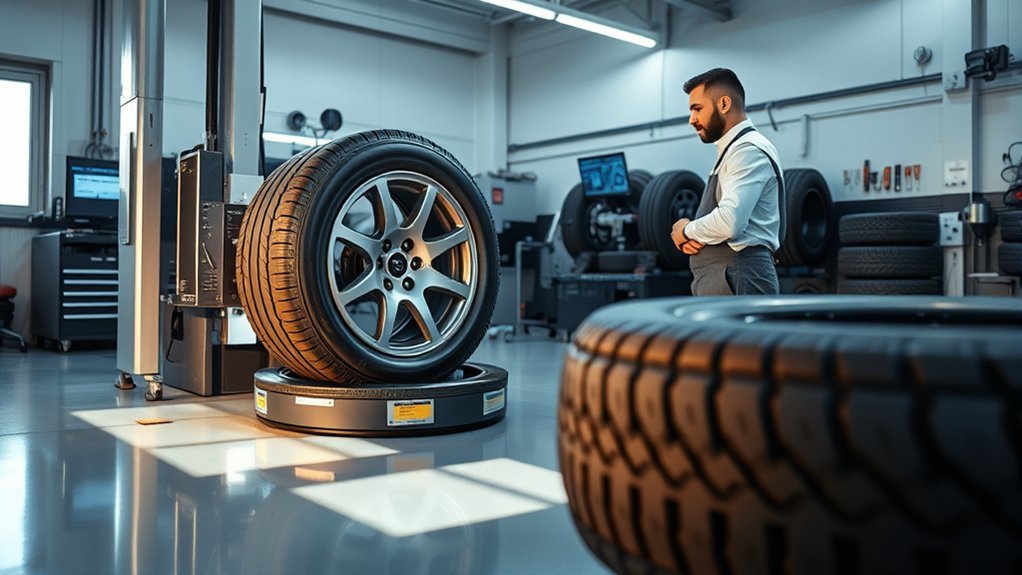
Road force balancing is a tire and wheel diagnostic service used when a regular balance does not fully solve vibration, shake, or ride-quality problems. It checks how the tire and wheel assembly behaves while a load roller presses against it, helping the technician find tire stiffness, wheel runout, bead-seating, and match-mounting issues that a standard spin balance may miss.
Quick Answer
Road force balancing is worth considering when you still feel highway-speed vibration after a normal tire balance, when new tires do not ride smoothly, or when a shop needs to diagnose tire/wheel uniformity. It is different from wheel alignment, which adjusts suspension angles.
Key Takeaways
- Standard balancing corrects weight imbalance; road force balancing also checks how the tire and wheel behave under load.
- The most common reason to request it is a vibration that remains after a regular balance.
- Pulling, uneven tread wear, and an off-center steering wheel often point more toward alignment, tire pressure, or suspension issues.
- Road force balancing can help find tire uniformity problems, bent wheels, rim runout, bead-seating issues, and assemblies that need match-mounting.
- It cannot repair damaged tires, worn suspension parts, warped brakes, or driveline problems.
At a Glance
| Time Required | Usually similar to a tire balance appointment; extra time may be needed if the tire must be rotated on the rim or a wheel needs further inspection. |
| Difficulty | Professional service only; it requires a road force balancer and a trained technician. |
| Tools Needed | Road force wheel balancer with a diagnostic load roller, proper wheel adapters, wheel weights, tire changer if match-mounting is needed, and tire pressure tools. |
| Cost | Varies by shop, tire size, wheel type, and whether the service is included with a tire purchase. Ask for a quote before approving the work. |
What Is Road Force Balancing and How Does It Differ From Traditional Balancing?
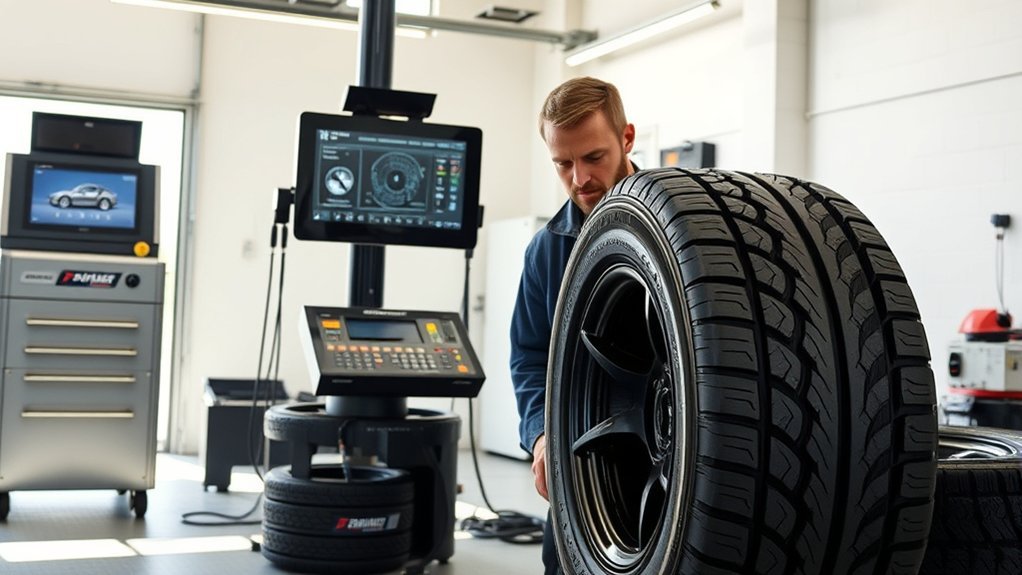
Road force balancing is a more detailed version of wheel balancing. A regular balance spins the tire and wheel assembly and tells the technician where to add weights so the assembly rotates evenly. That solves many common steering-wheel shakes and seat vibrations.
Road force balancing goes further. A machine such as a Hunter Road Force balancer uses a diagnostic load roller to press against the rotating tire and simulate road load. This helps identify problems that may not show up during a normal spin balance, including tire uniformity issues, rim runout, improper bead seating, and tire/wheel combinations that need match-mounting.
The key difference is simple: regular balancing corrects weight imbalance, while road force balancing checks how the tire and wheel assembly behaves while loaded. That is why a tire can be “balanced” on a standard machine and still cause vibration on the road.
A tire can have correct weight balance and still ride poorly if the tire or wheel is not uniform under load.
Regular Balancing vs. Road Force Balancing vs. Wheel Alignment
Drivers often mix up balancing, road force balancing, and alignment because the symptoms can overlap. Use this table as a starting point before approving a service.
| Service | What It Checks or Corrects | Common Symptoms | Best Use |
|---|---|---|---|
| Regular wheel balancing | Uneven weight distribution around the tire and wheel assembly. | Vibration at certain speeds, often felt in the steering wheel or seat. | Routine tire installation, rotation-related vibration, or normal balance correction. |
| Road force balancing | Weight balance plus loaded tire/wheel variation, tire stiffness, rim runout, and match-mounting needs. | Persistent highway-speed vibration after a standard balance. | Diagnosing stubborn ride-quality complaints, especially after new tires or wheel changes. |
| Wheel alignment | Suspension angles such as camber, caster, and toe. | Vehicle pulls to one side, steering wheel is off-center, or tread wears unevenly. | Correcting tracking, steering, and tire-wear problems caused by suspension-angle issues. |
Note: A vehicle can need more than one service. For example, a car may need road force balancing for a highway vibration and an alignment for uneven tire wear.
[Products Worth Considering]

The Topeak SmartGauge D2 delivers precise digital tire pressure readings for bikes, motorcycles, and sports equipment up to 250 psi (17 bar). Its rotating SmartHead works with both Presta and Schrader valves, so you can check pressure quickly without adapters. The LCD display makes it easy to read results in psi, bar, or kg/cm² with an included CR2032 battery for immediate use.

This universal wheel alignment tool helps you accurately restore tire tilt angles after tire or suspension repairs using an adjustable camber gauge. It features a powerful magnetic base that firmly attaches to brake rotors for stationary, slip-free readings, improving consistency during measurement. Built from durable PC plastic, it resists wear and corrosion and is compact enough for car, truck, RV, and motorcycle alignment tasks.

The Ziopetru adjustable magnetic wheel alignment tool helps you check and restore camber and caster positioning after removing and reinstalling undercarriage components. With a clear leveling/bubble measurement system and an easy zeroing adjustment knob, it supports precise horizontal angle checking. The strong magnetic base mounts to metal surfaces for convenient use at home on cars, motorcycles, trucks, vans, and SUVs.
Top 5 Benefits of Road Force Balancing for Tire Performance
Road force balancing is not necessary for every tire complaint, but it can be valuable when normal balancing does not solve the problem. The main benefits are:
- Better vibration diagnosis: It can reveal tire or wheel variation that a standard balancer may miss.
- Improved ride comfort: When the problem is tire/wheel uniformity, match-mounting can reduce shake and harshness.
- More accurate new-tire quality checks: It helps the shop catch a tire or wheel assembly that may ride poorly before the customer leaves.
- Help with tire pull diagnosis: Some road force systems can help identify lateral-force issues that contribute to vehicle pull.
- Better decision-making: The technician can decide whether the assembly needs weights, match-mounting, wheel inspection, tire replacement, or further suspension diagnosis.
For the best result, ask the shop to explain the before-and-after readings and whether the issue came from the tire, the wheel, the mounting position, or another part of the vehicle.
How Can You Tell If You Need Wheel Alignment or Road Force Balancing?
The fastest clue is when the symptom happens. A vibration that appears at highway speeds and remains after a normal balance often points toward road force balancing. A vehicle that drifts, pulls, has an off-center steering wheel, or wears tread unevenly often points toward alignment, tire pressure, suspension, or tire-pull issues.
[Products Worth Considering]

The Calvana Ultra-Durable Angled Tire Lube Bucket Kit provides reliable lubrication for faster, smoother tire changes. It includes an angled universal lube bottle and premium cotton swabs to help lubricate tire beads during removal and mounting. Built for rugged use with a reinforced handle and durable fiber design, it’s a direct replacement for Coats 8106259 to reduce downtime and compatibility concerns.

These pre-assembled 15x6.00-6 front tire and wheel assemblies are designed for quick replacement on riding lawn mowers and lawn tractors. Built with natural rubber pneumatic tires and turf-friendly tread for solid traction and improved shock absorption. A thickened welded rim and 3/4" sintered iron bushing help provide stable, heavy-duty support for everyday mowing use.

Malco tire mounting and demounting lubricant is a ready-to-use tire lube formulated to reduce friction during tire installation for passenger cars, light trucks, farm tires, and heavy-duty equipment. It provides rust-inhibiting protection to help reduce corrosion on rims and wheels, and helps support proper tire bead seating during inflation to reduce air leakage. The silicone-free, soap-free formula is whitewall safe to help prevent discoloration on whitewall tires and sensitive sidewall markings.
Common Symptoms Explained
| Symptom | More Likely Cause | Service to Ask About |
|---|---|---|
| Vibration at 50–70 mph that remains after a regular balance | Tire/wheel force variation, rim runout, bead seating, or hidden tire issue | Road force balancing and wheel inspection |
| Vehicle pulls left or right on a flat road | Alignment, tire pressure difference, tire conicity/lateral force, brake drag, or suspension issue | Alignment check, tire pressure check, and tire pull diagnosis |
| Uneven wear on one tire edge | Alignment, worn suspension, underinflation, overinflation, or missed rotations | Alignment and tire inspection |
| Shake only while braking | Brake rotor, pad, hub, or suspension issue | Brake and suspension inspection, not just balancing |
| Low-speed thump or wobble | Tire damage, separated belt, bent wheel, or severe runout | Immediate tire and wheel inspection |
Warning: Do not keep driving on a tire with a bulge, exposed cords, deep sidewall cut, sudden severe vibration, or rapid air loss. Have the tire inspected before highway driving.
Service Differences Clarified
Wheel alignment and road force balancing solve different problems. Alignment adjusts the vehicle’s suspension angles so the tires meet the road correctly. Road force balancing checks the tire and wheel assembly itself while it is loaded by the machine.
That means road force balancing should not be sold as a cure for all pulling or uneven wear. It may help diagnose tire-related pull or vibration, but it does not adjust camber, caster, or toe. If the vehicle pulls, the shop should check tire pressure, tire condition, alignment angles, wheel runout, and suspension parts before blaming one cause.
Recommended Diagnostic Approach
A good diagnostic order looks like this:
- Inspect the tires first: Look for bulges, flat spots, cupping, uneven tread, exposed cords, or mismatched tires.
- Check pressure: Set all tires to the vehicle manufacturer’s recommended pressure when cold.
- Confirm the symptom: Note the speed, road surface, steering-wheel feel, seat/floor vibration, and whether braking changes it.
- Try standard balancing when appropriate: Many vibration issues are simple weight imbalance.
- Use road force balancing for stubborn vibration: If the vibration remains, ask for road force readings and match-mounting if needed.
- Check alignment and suspension: If the vehicle pulls, wanders, or wears tires unevenly, alignment and suspension inspection are essential.
When Should You Consider Road Force Balancing?
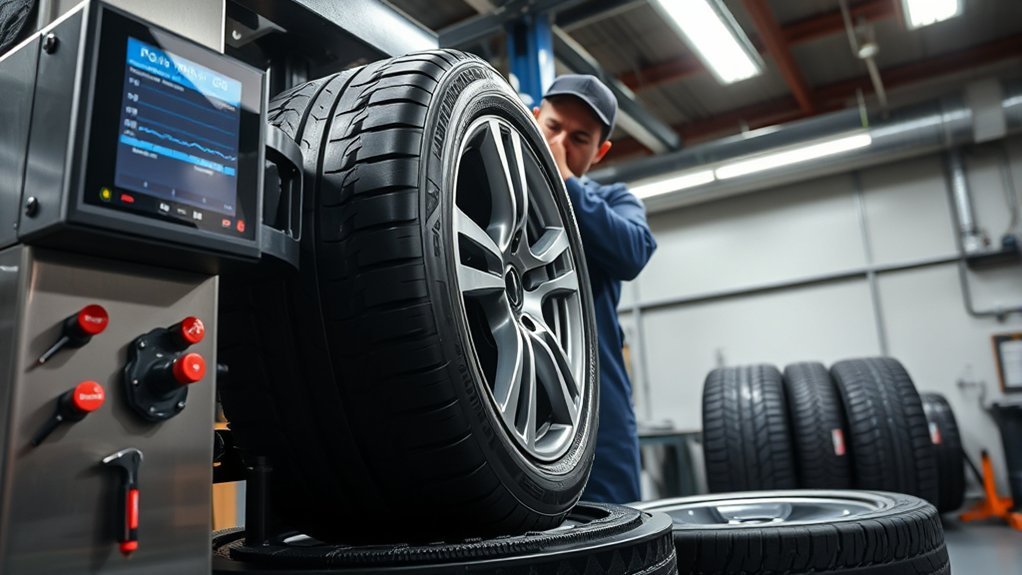
Consider road force balancing when the ride problem points to the tire and wheel assembly but a normal balance has not fixed it. It is especially useful in these situations:
- You installed new tires and the vehicle now has a shake or rough ride.
- A standard balance did not remove the vibration.
- The vibration is most noticeable at highway speeds.
- The vehicle has large wheels, low-profile tires, or a sensitive suspension.
- A wheel was repaired, replaced, or hit by a pothole.
- The shop suspects a bent rim, tire uniformity issue, or poor bead seating.
Pro Tip: Ask the technician for the before-and-after road force readings for each wheel. Also ask whether any tire was match-mounted, whether a wheel showed runout, and whether any tire should be inspected for warranty coverage.
How Road Force Balancing Works: Step-by-Step Process
The exact process depends on the shop’s equipment, but most road force balancing appointments follow the same basic path.
Key Components Involved
| Component | Function | Why It Matters |
|---|---|---|
| Road force balancer | Spins the tire and wheel assembly while measuring imbalance and road force variation. | Provides data a standard balancer may not capture. |
| Diagnostic load roller | Presses against the tire to simulate road load. | Helps reveal stiffness, loaded runout, and uniformity issues. |
| Wheel adapters and centering tools | Center the wheel correctly on the machine. | Poor centering can create false readings. |
| Match-mounting marks | Show where to rotate the tire on the rim. | Can reduce the combined high spot of the tire and wheel. |
| Wheel weights | Correct remaining static or dynamic imbalance. | Final balance still matters after road force correction. |
Balancing Procedure Overview
- The technician inspects the tire and wheel. Damage, unusual wear, mud, old weights, or debris can affect results.
- The assembly is mounted on the balancer. Proper centering is critical because a poorly mounted wheel can create misleading readings.
- The machine spins the assembly. It measures regular imbalance and loaded tire/wheel variation.
- The load roller applies pressure to the tire. This simulates how the tire behaves against the road and helps reveal stiff spots or runout.
- The machine recommends corrections. It may suggest adding weights, rotating the tire on the rim, checking rim runout, or inspecting the tire.
- The technician match-mounts if needed. This means breaking the tire bead and rotating the tire on the wheel to better match high and low spots.
- The final balance is completed. Weights are installed and the assembly is rechecked.
- The vehicle is test-driven when appropriate. A test drive confirms whether the vibration is gone or whether further diagnosis is needed.
What Happens During Road Force Balancing?
During road force balancing, the machine measures both imbalance and how evenly the tire rolls under load. If the machine finds a high road force reading, the technician may rotate the tire on the rim so the stiffest area of the tire better matches the low point of the wheel. This is often called match-mounting or ride matching.
If match-mounting lowers the reading, the technician finishes the balance with weights. If the reading remains high, the shop may inspect for a bent wheel, tire defect, improper bead seating, or a tire that should be replaced or reviewed for warranty consideration.
Road force balancing is diagnostic as much as corrective. The value is not just that it can make the ride smoother; it can also tell the technician when the tire and wheel are not the real cause of the vibration.
What Road Force Balancing Can and Cannot Fix
Road force balancing is helpful, but it is not magic. It should be part of a proper diagnosis.
| Can Help With | Cannot Fix |
|---|---|
| Persistent vibration after a standard balance | Worn ball joints, tie rods, shocks, struts, or wheel bearings |
| Tire/wheel force variation | Brake pulsation or warped/uneven brake rotor issues |
| Minor tire/wheel high-spot matching | Severely damaged, separated, bulging, or unsafe tires |
| Improper bead seating diagnosis | Driveline vibration from axles, driveshafts, or mounts |
| Bent wheel or rim runout detection | Suspension alignment angles |
[Products Worth Considering]

Monitor tire tread wear with a smart, color-coded depth gauge that shows clear condition ranges at a glance. The bar is range marked for fast, easy readings, helping you maintain safer traction and performance. Each gauge is portable with a pocket clip, and the set includes 20 units for daily use and sharing.

Replace or upgrade your zero-turn lawn mower tires with a universal fit flat-free tire and wheel assembly in a convenient 2-pack. Smooth tread front-caster style helps turning with reduced turf damage, while flat-free design eliminates the maintenance and downtime of air-filled flats. The included adapter kit supports 5/8-inch axles and hub lengths from 3.4 to 5 inches for compatibility across most ZTR mowers.

Measure tire tread depth quickly and accurately with this LUMITECO dial gauge that reads in 1/32" increments up to 14/32". The color-coded green/yellow/red zones make it easy to judge tire wear and know when replacement is needed. A rugged, compact design with a protective pouch helps keep the gauge ready for use on cars, trucks, motorcycles, and more.
What If the Vibration Is Still There After Road Force Balancing?
If the vibration remains, do not keep paying for repeated balances without a broader inspection. Ask the shop to check:
- Whether the road force readings are now within the balancer’s recommended limits.
- Whether any wheel has radial or lateral runout.
- Whether the tire has a belt issue, flat spot, bulge, or irregular wear.
- Whether the wheel is hub-centric and mounted correctly on the vehicle.
- Whether lug nuts were torqued properly in the correct pattern.
- Whether vibration changes while braking, accelerating, coasting, or turning.
- Whether suspension, steering, wheel bearings, brakes, or driveline parts are worn.
Also keep basic tire safety in mind. The National Highway Traffic Safety Administration recommends regular attention to tire pressure, tread, maintenance, and recalls. Road force balancing is useful, but it does not replace routine tire inspection.
Questions to Ask the Shop Before Approving Road Force Balancing
- Is the service included with my tire purchase, or is it an added charge?
- Will you road force all four tires or only the wheel with the vibration complaint?
- Can you show me the before-and-after road force numbers?
- Did the machine recommend match-mounting?
- Was the issue caused by the tire, the wheel, bead seating, or mounting?
- Did any wheel show runout or bending?
- If a new tire reads poorly, can it be inspected for manufacturer warranty consideration?
- If the numbers are good but the vibration remains, what will you inspect next?
Frequently Asked Questions
How much does road force tire balancing cost?
The cost depends on the shop, tire size, wheel design, local labor rate, and whether the service is included with a tire purchase. Some tire retailers include it for customers when needed, while others charge per wheel. Ask for a written quote and ask whether match-mounting is included.
What’s the difference between road force balance and regular balance?
Regular balancing corrects weight imbalance by adding wheel weights. Road force balancing also checks how the tire and wheel assembly behaves under load, which helps find tire uniformity problems, rim runout, bead-seating issues, and assemblies that may need match-mounting.
Is road force balancing the same as wheel alignment?
No. Road force balancing checks the tire and wheel assembly. Wheel alignment adjusts suspension angles so the tires meet the road correctly. Vibration often points toward balancing, while pulling, uneven tire wear, or an off-center steering wheel often points toward alignment or suspension diagnosis.
Do all four tires need road force balancing?
Not always. If the vibration source is unknown, checking all four assemblies can save time. If the symptom clearly points to one corner, the shop may start there. For new tire sets or persistent vibration, checking all four is often the most complete approach.
Can new tires need road force balancing?
Yes. New tires can still have variation, and a wheel can add runout or mounting issues. If a new tire set causes vibration after a normal balance, road force balancing can help identify whether the tire, wheel, or mounting position is responsible.
What do high road force numbers mean?
A high reading means the tire and wheel assembly has more loaded variation than desired for that vehicle or tire setup. The fix may be match-mounting, correcting bead seating, replacing a bent wheel, replacing a problem tire, or inspecting other vehicle parts if the assembly is not the cause.
Conclusion
Road force balancing is best used as a diagnostic upgrade when a normal balance does not solve vibration or when a new tire and wheel setup does not ride smoothly. It can identify loaded tire and wheel problems that standard balancing may miss, and it can guide the technician toward match-mounting, wheel inspection, tire replacement, or further vehicle diagnosis.
If your vehicle shakes at highway speed, start with tire pressure, tire condition, and a standard balance. If the vibration remains, road force balancing is a smart next step. If the vehicle pulls, wears tires unevenly, or vibrates while braking, ask for alignment, suspension, brake, and wheel inspections too.
Sources
- Hunter Engineering — Road Force Wheel Balancer — supports diagnostic load roller, Road Force Measurement, match-mounting, and vibration-diagnosis details.
- America’s Tire — What Is Road Force Balancing? — supports balancing vs. road force balancing differences and common reasons for persistent vibration.
- Tire Review — Road Force and Force Variation — supports explanation of tire force variation and why balanced tires can still vibrate.
- Bridgestone — Tire Alignment — supports alignment definition and symptoms such as pulling, handling issues, and uneven wear.
- NHTSA TireWise — supports tire safety, tire maintenance, and recall-awareness guidance.