
You should have your Hyundai Sonata’s tire balance checked at every tire rotation, which Hyundai recommends every 12,000 km or 7,500 miles, and balance the tires sooner if you feel highway-speed vibration, notice uneven tread wear, install new tires, repair a tire, or hit a hard pothole or curb. Tire balancing helps the wheel-and-tire assembly spin evenly so your Sonata rides smoothly, handles predictably, and avoids avoidable tire and suspension wear.
Quick Answer
For most Hyundai Sonata drivers, check tire balance during each 7,500-mile tire rotation and rebalance whenever vibration, cupping, scalloping, uneven wear, a new tire installation, a tire repair, or a hard road impact suggests the wheel-and-tire assembly is no longer spinning evenly.
Key Takeaways
- Use your Sonata’s tire rotation visit as the normal time to check wheel balance.
- Balance sooner if the steering wheel, seat, or floor vibrates at highway speed.
- Uneven tread wear, missing wheel weights, tire repairs, new tires, and pothole impacts are all good reasons to rebalance.
- Balancing fixes weight distribution; alignment fixes wheel angles. A car that pulls to one side may need an alignment check, not just balancing.
- Do not ignore bulges, exposed cord, deep cuts, or severe vibration. Have the tire inspected before continuing to drive.
At a Glance
| Time Required | About 30 to 60 minutes for a typical four-wheel balance, depending on the shop and whether extra diagnosis is needed. |
| Difficulty | Professional service recommended because accurate balancing requires a wheel-balancing machine. |
| Tools Needed | Computer wheel balancer, wheel weights, tire-pressure gauge, torque wrench, and inspection tools. |
| Cost | Often priced per wheel or bundled with rotation. Kelley Blue Book lists an average tire rotation and balance at about $112 to $132, but local prices vary. |
Why Is Regular Tire Balancing Important for Your Sonata?
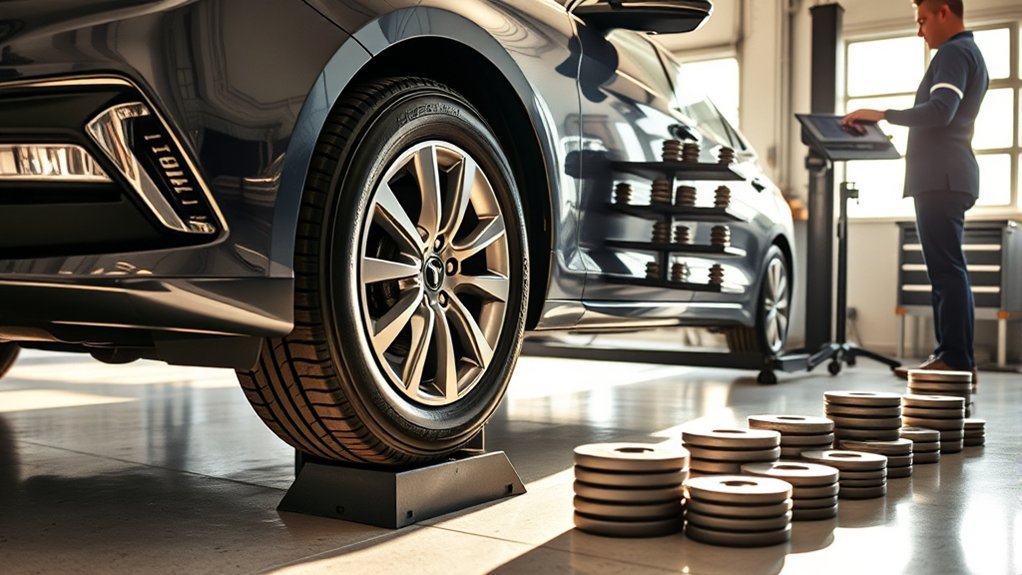
Regular tire balancing matters because even a small weight difference in the wheel-and-tire assembly can create vibration once the tire spins at road speed. Michelin explains that wheel balancing helps the tire and wheel assembly spin evenly at speed, reducing vibration and stress on the tread, steering, and suspension.
For a Hyundai Sonata, good tire balance helps with three everyday things: a smoother highway ride, more even tire wear, and steadier steering feel. It also gives your technician a chance to catch tire problems early, such as cupping, scalloping, sidewall damage, or a missing wheel weight.
Note: Balancing does not fix every vibration. Bent wheels, tire damage, worn suspension parts, brake issues, and alignment problems can feel similar, so persistent shaking should be diagnosed rather than guessed at.
How Often Should You Balance Your Sonata’s Tires?
For normal driving, use the Sonata’s tire rotation interval as your main reminder. Hyundai recommends rotating tires every 12,000 km or 7,500 miles and checking tire balance during rotation. That makes each rotation visit the best time to ask the shop to inspect balance, tread wear, tire pressure, and wheel condition.
You should balance sooner than 7,500 miles if you notice symptoms or if something changes the wheel-and-tire assembly. Common triggers include:
- New tires installed on the Sonata.
- A tire patch, plug, or wheel repair.
- A hard pothole, curb strike, or road-debris impact.
- Vibration in the steering wheel, seat, or floor at highway speed.
- Uneven tread wear, especially cupping, scalloping, or patchy wear.
- A wheel weight that has fallen off.
- Seasonal tire or wheel changes.
Continental notes that balancing intervals vary by vehicle and driving conditions, but also lists vibrations, uneven wear, and higher fuel consumption as signs of imbalance. That is why symptoms matter as much as mileage.
Pro Tip: If you already rotate your Sonata’s tires during oil-change visits, ask the shop to check balance and tread wear at the same appointment. It is easier to correct a small imbalance before it turns into choppy tread wear.
Signs That Indicate Your Tires Need Balancing
The clearest signs of an out-of-balance tire usually show up at speed. If the Sonata feels smooth around town but shakes on the highway, wheel balance should be one of the first things checked.
Steering Wheel Vibrations
A vibration in the steering wheel, especially around highway speeds, often points to a front wheel-and-tire balance issue. A vibration felt more through the seat or floor can point to the rear tires, although a technician should confirm the cause.
- Speed-related shaking: The vibration appears or gets worse at certain speeds.
- Steering wheel buzz: The wheel feels like it is buzzing or fluttering in your hands.
- Seat or floor vibration: The shake is felt through the cabin rather than only the wheel.
- Shaking after new tires: The tire may need rebalancing or road-force balancing.
Uneven Tire Wear
Uneven tread wear is another warning sign. Hyundai notes that abnormal wear can be caused by incorrect tire pressure, improper wheel alignment, out-of-balance wheels, severe braking, or severe cornering. That means uneven wear should be inspected, not ignored.
| Sign of Wear | What It May Mean | Recommended Action |
|---|---|---|
| Cupping or scalloping | Balance issue, worn shocks/struts, or suspension wear | Inspect suspension and rebalance tires |
| One edge wearing faster | Possible alignment or pressure issue | Check alignment and tire pressure |
| Patchy wear around the tread | Possible imbalance or tire damage | Balance and inspect the tire |
| Center or shoulder wear | Possible inflation problem | Set cold tire pressure to the door placard |
Pulling to One Side
If your Sonata pulls left or right on a flat, straight road, do not assume balancing alone will fix it. Pulling is more commonly connected to alignment, tire pressure, tire wear, brake drag, or road crown. Balancing should still be checked if vibration is present, but an alignment inspection may also be needed.
- Check cold tire pressure first.
- Look for uneven shoulder wear or visible tire damage.
- Ask for a balance check if vibration is present.
- Ask for an alignment check if the steering wheel is off-center or the car pulls consistently.
Consequences of Ignoring Tire Balancing
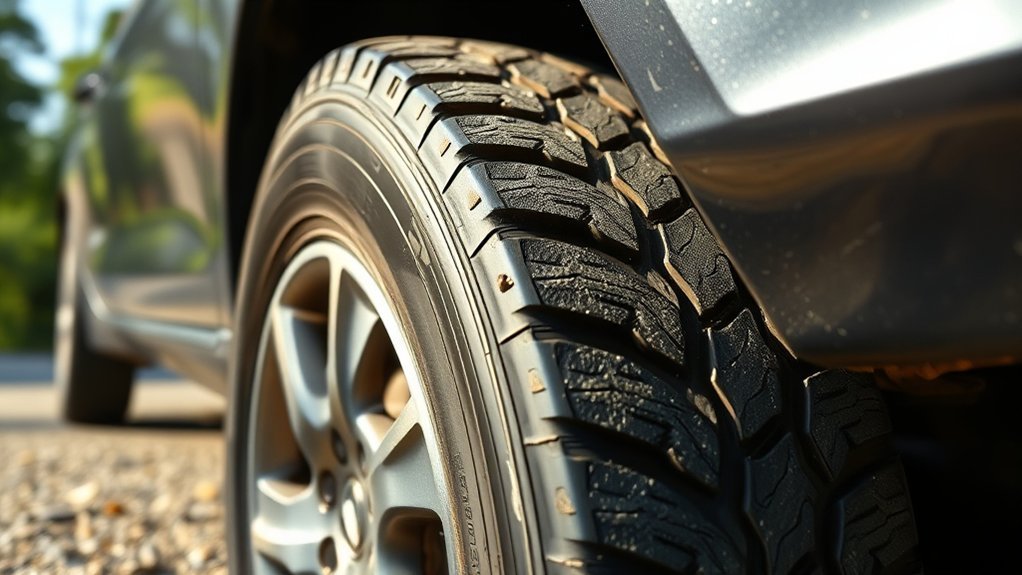
Ignoring tire balance can turn a small vibration into a bigger tire, comfort, and suspension problem. The longer a tire bounces or wobbles slightly as it rolls, the more likely it is to wear unevenly.
Uneven Tire Wear
Unbalanced tires can create choppy or patchy tread wear. Once that pattern is worn into the tire, balancing may stop the vibration from getting worse, but it may not make the tread smooth again. That can shorten tire life and make the Sonata louder on the road.
Increased Fuel Consumption
Unbalanced tires may make the vehicle work harder by increasing rolling resistance and reducing smooth tire contact with the road. However, avoid relying on a fixed percentage loss. Fuel economy is affected by many factors, including tire pressure, alignment, driving style, temperature, and tire design. FuelEconomy.gov specifically emphasizes proper tire inflation as a maintenance step that supports fuel efficiency.
Handling Issues
A vibration that keeps getting worse can reduce driving comfort and make the car feel less stable. It can also place extra stress on steering and suspension components. If the shaking is severe, appears suddenly, or is paired with a tire bulge, visible cord, or rapid air loss, stop driving and have the tire inspected.
Warning: Do not keep driving on a tire with a sidewall bulge, exposed cord, deep cut, or sudden severe vibration. Balancing is not a repair for structural tire damage.
Benefits of Keeping Your Tires Properly Balanced
Properly balanced tires help your Hyundai Sonata feel smoother, quieter, and more controlled. They also help the tire maintain more consistent contact with the road, which supports predictable steering and braking feel.
The main benefits include:
- Smoother ride: Less steering wheel, seat, and floor vibration.
- More even tire wear: Lower risk of cupping and patchy tread wear.
- Better driving comfort: Less noise and fatigue on long highway drives.
- Protection for related parts: Less vibration stress on steering and suspension components.
- Better maintenance timing: Balance checks often reveal pressure, alignment, or tire damage issues early.
How Tire Balancing Differs From Tire Rotation
Tire balancing, tire rotation, and wheel alignment are related, but they are not the same service. Knowing the difference helps you ask for the right repair.
[Products Worth Considering]

Measure tire tread depth quickly and accurately with this LUMITECO dial gauge that reads in 1/32" increments up to 14/32". The color-coded green/yellow/red zones make it easy to judge tire wear and know when replacement is needed. A rugged, compact design with a protective pouch helps keep the gauge ready for use on cars, trucks, motorcycles, and more.

Steelman white tire marking crayons provide high-contrast, semi-permanent marks for repairing and inspecting tires and equipment. They write on wet or dry, smooth or coarse surfaces including rubber, metal, glass, and wood, making them ideal for puncture location and damage outlining. The lead- and zinc-free crayons resist weather and fading yet wipe away when you no longer need the marks.

Monitor tire tread wear with a smart, color-coded depth gauge that shows clear condition ranges at a glance. The bar is range marked for fast, easy readings, helping you maintain safer traction and performance. Each gauge is portable with a pocket clip, and the set includes 20 units for daily use and sharing.
Purpose of Tire Balancing
Tire balancing corrects weight differences in the wheel-and-tire assembly. A technician mounts the wheel on a balancing machine, spins it, measures the imbalance, and adds small weights to the rim so the assembly rotates smoothly.
You need balancing when vibration, new tire installation, tire repair, lost weights, or uneven wear suggests the assembly is no longer balanced.
Purpose of Tire Rotation
Tire rotation moves tires to different positions on the car to help equalize tread wear. Hyundai recommends rotating Sonata tires every 12,000 km or 7,500 miles, or sooner if irregular wear develops. During that service, the manual also says to check tire balance, inspect for damage, adjust pressures, and check lug-nut torque.
Purpose of Wheel Alignment
Wheel alignment adjusts the angles of the wheels so they meet the manufacturer’s specifications. Alignment is the service to consider when your Sonata pulls to one side, the steering wheel is off-center, or the tires show rapid edge wear. A car can be balanced but still need alignment, and a car can be aligned but still vibrate from imbalance.
Frequency of Each Service
| Service | Normal Timing | Do It Sooner If… |
|---|---|---|
| Tire balancing | Check during rotation; rebalance as needed | You feel vibration, install tires, repair a tire, or hit a pothole |
| Tire rotation | Every 7,500 miles for many Sonata models | Irregular wear appears early |
| Wheel alignment | As needed; some drivers check annually | The car pulls, steering wheel is off-center, or edge wear appears |
When to Schedule Tire Balancing During Maintenance
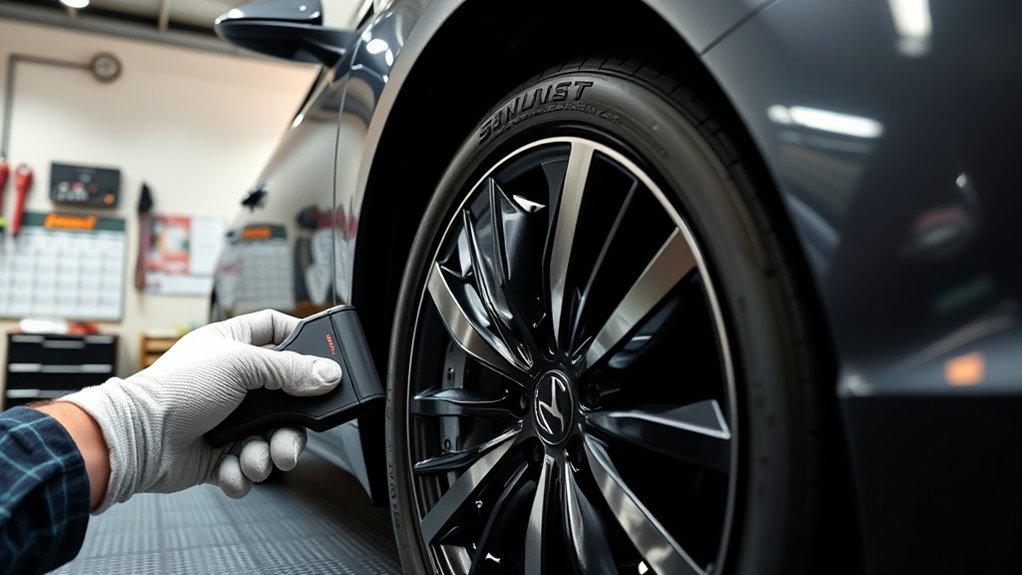
The easiest schedule is to make tire balance part of your regular tire rotation routine. When your Sonata reaches the rotation interval, ask the shop to inspect tire balance, tire pressure, tread depth, tire condition, and lug-nut torque.
You should also schedule balancing outside the normal interval after:
- Installing new tires.
- Repairing a puncture.
- Replacing or straightening a wheel.
- Changing seasonal tire and wheel sets.
- Hitting a pothole, curb, or road debris hard enough to feel it in the cabin.
- Noticing vibration at a repeatable speed.
The best time to catch a balance problem is before the tire develops permanent cupping or scalloping. Pair balance checks with rotation, pressure checks, and tread inspections.
What Happens During a Tire Balancing Service?
During a typical balance service, the technician removes the wheel-and-tire assembly, places it on a balancing machine, spins it, and lets the machine identify where weight is needed. The technician then installs clip-on or adhesive wheel weights and checks the assembly again until the imbalance is within spec.
If your Sonata still vibrates after a standard balance, ask about road-force balancing. Road-force balancing uses a roller to simulate the load of the road against the tire. It can help diagnose tire stiffness variation, wheel runout, or mounting issues that a normal spin balance may miss.
[Products Worth Considering]

Vigorder rubber cement glue delivers superior adhesion and cures quickly within about 30 seconds for seamless rubber bonding. Once cured, it helps provide a strong, durable, waterproof seal that holds up to vehicle weight, pressure, and heat. Suitable for cars, motorcycles, trucks, bicycles, and off-road tires, it’s designed for emergency patch and maintenance repairs.

Keep your tires properly inflated with this analog VONDIOR tire pressure gauge, designed for fast, easy readings without batteries. The swiveling, two-axis hose and large glow dial help you measure at any tire angle with instant visibility. Built with a protective rubber shield, it supports durable, low-maintenance use for cars and trucks.

Replace or upgrade your zero-turn lawn mower tires with a universal fit flat-free tire and wheel assembly in a convenient 2-pack. Smooth tread front-caster style helps turning with reduced turf damage, while flat-free design eliminates the maintenance and downtime of air-filled flats. The included adapter kit supports 5/8-inch axles and hub lengths from 3.4 to 5 inches for compatibility across most ZTR mowers.
Choosing the Right Service Center for Tire Balancing
Choose a shop that has modern balancing equipment, trained technicians, and a process for inspecting tires rather than simply adding weights. A good service center should be willing to explain whether your problem looks like balance, alignment, tire damage, or suspension wear.
Look for:
- Computer wheel-balancing equipment: Needed for accurate diagnosis and weight placement.
- Road-force balancing availability: Useful for stubborn vibration after new tires or repeated balancing attempts.
- Torque-wrench use: Lug nuts should be tightened to the proper specification, not just blasted on with an impact gun.
- Tire inspection: The technician should check for bulges, cuts, exposed cord, uneven wear, and missing weights.
- Clear pricing: Ask whether balancing is priced per tire, per axle, or bundled with rotation.
[Products Worth Considering]

The SAFELIFE dial tire tread depth gauge measures tread depth in 1/32 inch increments with clear, easy-to-read 2-inch dial face. Color zones using a traffic light system help you quickly judge whether tread is low, marginal, or ample for safer driving. Built with a durable zinc cast body and a metal detect probe for precise, comfortable use across cars, motorcycles, trucks, and buses.

This manual duck head tire changer kit makes tire installation and removal simpler by letting you embed the duck head into the tire with applied pressure. The integrated design and durable steel construction help reduce friction and improve efficiency and safety during use. Suitable for 16–21 inch wheels, it’s convenient for cars, trucks, SUVs, and ATV tires, with 24-hour after-sales support.

Measure tyre tread depth precisely with a digital gauge that reads in both MM and inches, helping you monitor safe driving conditions. The large LCD screen is easy to operate, and the compact tool fits for cars, trucks, and motorcycles. It provides high accuracy with a 0-25.4mm range and includes a 1-year warranty for added peace of mind.
How to Monitor Your Tire Balance and Health
You do not need special tools to spot early warning signs. Once a month, walk around your Sonata and look for uneven tread wear, sidewall bubbles, cuts, nails, or anything that looks different from tire to tire. Check cold tire pressure using the pressure listed on the driver-door placard, not the maximum pressure molded into the tire sidewall.
| Task | Frequency | What to Look For |
|---|---|---|
| Check tire pressure | Monthly and before long trips | Low pressure, uneven pressure side to side, TPMS warning |
| Inspect tread | Monthly | Cupping, scalloping, edge wear, nails, cracks |
| Rotate tires | Every 7,500 miles for many Sonata models | Ask the shop to check balance and tire condition |
| Balance check | During rotation or when symptoms appear | Vibration, missing weights, patchy wear |
What Happens If You Ignore Tire Balancing?
Ignoring tire balancing can make a small comfort issue turn into a tire-wear problem. The most common results are:
- More vibration: The steering wheel, seat, or floor may shake at certain speeds.
- Uneven tire wear: Cupped or scalloped tread can make the tire noisy and shorten its usable life.
- More strain on related parts: Repeated vibration can add stress to steering and suspension components.
- Less predictable driving feel: The Sonata may feel rougher, louder, or less settled on the highway.
- Higher long-term cost: Tires that wear unevenly may need replacement earlier than expected.
Balancing is not a cure-all, but it is a relatively simple maintenance step that supports tire life, comfort, and safety.
Frequently Asked Questions
Can I balance my Hyundai Sonata tires myself at home?
Not accurately unless you have the right tire-balancing equipment. A visual inspection at home can help you spot damage or uneven wear, but proper balancing requires a machine that spins the wheel-and-tire assembly and identifies where weights are needed.
What tools are needed for tire balancing?
A shop typically uses a computer wheel balancer, wheel weights, a valve-stem and tire-pressure setup, a torque wrench, and inspection tools. Road-force balancing requires a more advanced balancing machine with a roller that simulates road load.
How does tire balancing affect fuel efficiency?
Balanced tires help the Sonata roll more smoothly, while imbalance can increase vibration and rolling resistance. Fuel economy depends on many factors, so it is better to say balancing may support efficiency rather than promise a specific mileage gain.
Can unbalanced tires cause steering issues?
Yes. Unbalanced front tires can cause steering wheel vibration, especially at highway speeds. If the Sonata pulls to one side or the steering wheel is off-center, also check tire pressure and wheel alignment because those issues are not solved by balancing alone.
How long does a tire balancing service take?
A standard four-wheel balance usually takes about 30 to 60 minutes. It may take longer if the technician finds tire damage, bent wheels, worn suspension parts, or a vibration that needs road-force balancing.
Should I balance tires every time I rotate them?
You should at least have balance checked during rotation. If the Sonata rides smoothly and tire wear is even, the shop may not need to rebalance every time. If there is vibration, uneven wear, or a missing weight, rebalance the affected wheel-and-tire assemblies.
Is road-force balancing worth it for a Hyundai Sonata?
Road-force balancing is worth considering if a normal balance does not fix the vibration, especially after new tires, wheel repair, or a hard impact. It can reveal tire or wheel issues that a standard spin balance may miss.
Conclusion
For a Hyundai Sonata, the practical rule is simple: check tire balance during each 7,500-mile tire rotation and rebalance sooner if vibration, uneven wear, new tires, tire repair, or a hard impact suggests a problem. Proper balancing helps your Sonata ride smoothly, protects tire life, and keeps small vibration issues from turning into expensive wear problems. Pair balancing with regular tire pressure checks, rotation, tread inspections, and alignment checks when the car pulls or wears tires unevenly.
Sources
- Hyundai Owner’s Manual — Tire Rotation — backs the 7,500-mile rotation interval and checking tire balance during rotation.
- NHTSA TireWise — backs tire safety, maintenance, and inspection importance.
- FuelEconomy.gov — Keeping Your Vehicle in Shape — backs tire inflation and fuel-economy maintenance context.
- Michelin — Wheel Alignment and Balancing — backs the difference between alignment and balancing plus vibration and tread-wear symptoms.
- Continental Tires — Balancing Tires — backs balancing symptoms, causes, and general balancing guidance.
- Kelley Blue Book — Tire Rotation and Balance Costs — backs average tire rotation and balance cost estimates.