
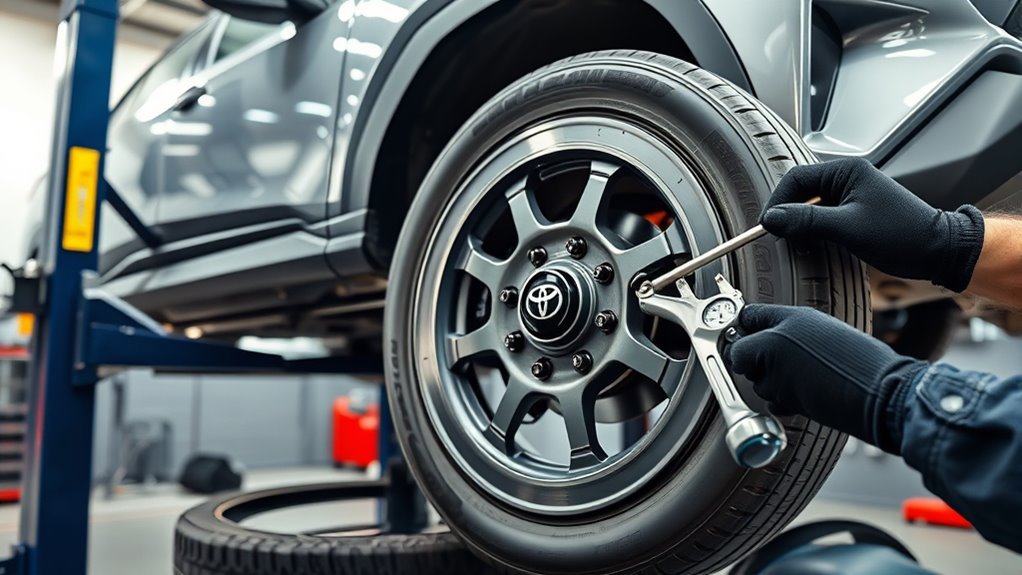
How to Fix Tire Vibration in Your Toyota RAV4
What’s in This Article
- Check Safety Basics Before You Diagnose Vibration
- Identify and Fix Common Causes of Tire Vibration
- Recognize Signs That Mean You Need Tire and Wheel Checks
- How to Inspect and Balance Your Tires Properly
- Inspecting Suspension and Steering Components
- Understanding How Brake Components Affect Tire Vibration
- When Should You Call a Mechanic About Persistent Vibration?
- Effective Strategies to Prevent Tire Vibration Issues
- Frequently Asked Questions
- Conclusion
A vibrating Toyota RAV4 usually means one of your tires, wheels, brakes, or suspension parts needs attention. The shake may feel minor at first, but it can point to uneven tire wear, poor wheel balance, or a worn steering part. This guide shows you how to narrow down the cause, what to check first, and when you should let a mechanic inspect the vehicle.
Quick Answer
To fix tire vibration in your Toyota RAV4, start with tire pressure, visible tire damage, tread wear, wheel balance, and wheel alignment. If the shake happens during braking, inspect the brake rotors, pads, and calipers. If the vibration stays after tire service, ask a mechanic to check the suspension, steering, wheel bearings, and drivetrain.
Key Takeaways
- Start with tire pressure, tread wear, and visible tire damage before you inspect larger parts.
- Vibration at highway speeds often points to tire imbalance, wheel damage, or alignment problems.
- Vibration while braking can point to warped rotors, worn pads, or stuck calipers.
- Worn tie rods, ball joints, control arms, struts, and wheel bearings can make tire vibration worse.
- Get professional help if the shake grows stronger, affects steering, or remains after basic tire service.
Check Safety Basics Before You Diagnose Vibration
Before you troubleshoot the vibration, park your RAV4 on level ground and let the tires cool. Use the tire placard on the driver-side door jamb or your owner’s manual for the correct tire pressure.
Do not use the maximum pressure on the tire sidewall as your target pressure. That number shows the tire’s limit, not Toyota’s recommended setting for your vehicle.
Warning: Do not keep driving on a tire with a bulge, exposed cord, deep cut, or rapid air loss.
Identify and Fix Common Causes of Tire Vibration
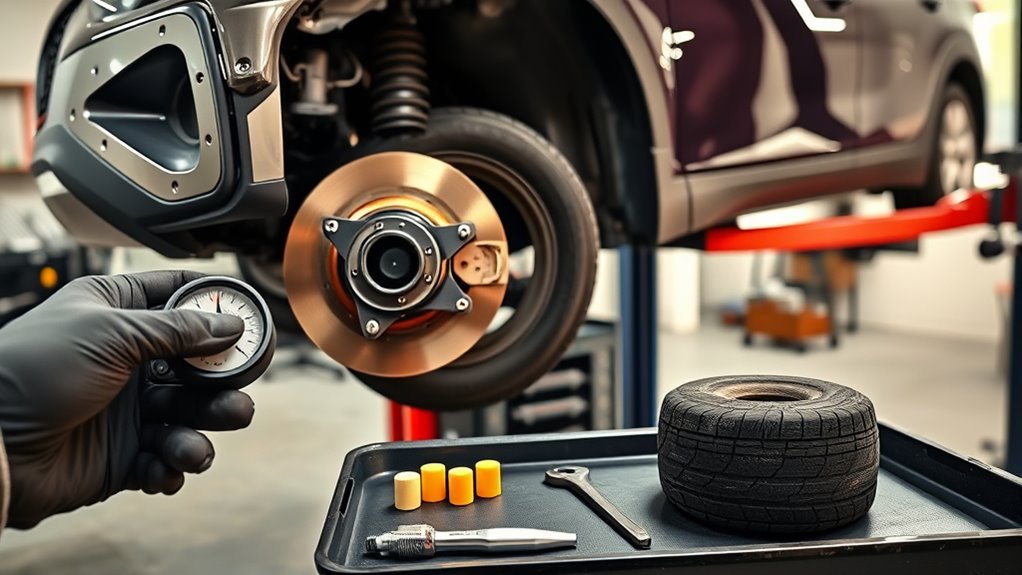
When your Toyota RAV4 vibrates, focus on the most common causes first. Check tire balance, tire pressure, tread condition, wheel alignment, and visible tire damage.
Unbalanced wheels often cause shaking at higher speeds. Misalignment can make the vehicle pull to one side and can create uneven tread wear.
Inspect each tire for bald spots, cupping, bulges, punctures, and cuts. Also check the wheels for bends or damage, since a damaged wheel can cause the same shake as a bad tire.
If the vibration continues after tire checks, inspect suspension and steering parts. Worn tie rods, ball joints, control arm bushings, struts, shocks, and wheel bearings can all cause or worsen vibration.
[Products Worth Considering]

Accurately measure tire tread depth with a calibrated gauge marked from 0 to 1 inch in 1/32 inch increments. The color-coded bar helps you quickly identify tread condition ranges, supporting safe driving for trucks, motorcycles, automobiles, and passenger vehicles.

Monitor tire tread wear with a smart, color-coded depth gauge that shows clear condition ranges at a glance. The bar is range marked for fast, easy readings, helping you maintain safer traction and performance. Each gauge is portable with a pocket clip, and the set includes 20 units for daily use and sharing.

The Trivd Frol 1/2" air impact wrench delivers high performance torque up to 1500 ft-lbs with a twin hammer impact mechanism for strong, balanced blows. It features an ergonomic grip, compact lightweight design, and quick-stop control with 3 forward speeds up to 8000 RPM plus a reverse speed. Built for demanding automotive repair and tire shop work, the rear exhaust helps keep debris away from the surface.
Recognize Signs That Mean You Need Tire and Wheel Checks
Your RAV4 gives you clues before vibration becomes a bigger repair. Note where you feel the shake, when it starts, and whether it changes with speed, braking, or turning.
A steering wheel shake often points to front tire, wheel, alignment, or suspension issues. A vibration through the seat or floor can point to rear tires, rear wheels, or drivetrain parts.
Common Vibration Symptoms
Vibration at highway speeds often points to tire imbalance, uneven wear, or a bent wheel. If the shake starts during acceleration, check for tire defects, worn bearings, or drivetrain concerns.
Vibration during braking often points to brake rotor or pad issues. If the steering wheel shakes only while you brake, inspect the front brakes first.
Track the speed range where the vibration starts. That detail helps a mechanic separate tire, brake, suspension, and drivetrain causes.
Uneven Tire Wear
Uneven tire wear often causes vibration before the tire looks badly worn. Look for these signs during a tire inspection:
- Bald patches on the tire surface.
- Cupping or scalloping across the tread.
- More wear on the inner or outer tread edge.
- Different tread depths from one tire to another.
Rotate your tires every 5,000 to 7,500 miles, unless your owner’s manual gives a different interval. Keep pressure at the recommended level to reduce uneven wear.
Steering Wheel Shaking
If your steering wheel shakes at higher speeds, start with wheel balance and tire condition. Then check alignment if the vehicle pulls, drifts, or wears the tire edges faster than the center.
If the wheel shakes while you brake, inspect the brake rotors, pads, and calipers. A loose wheel bearing can also create vibration and steering looseness.
Do not ignore a shake that grows stronger. A small vibration can turn into poor handling, longer stopping distance, or faster tire wear.
How to Inspect and Balance Your Tires Properly
Start your tire inspection with a pressure gauge, a tread depth gauge, and a clear look at each tire. Work around the vehicle one tire at a time so you do not miss damage.
- Check tire pressure: Set each tire to the pressure listed on the RAV4 tire placard or owner’s manual.
- Inspect for damage: Look for bulges, cuts, punctures, embedded objects, and exposed cord.
- Measure tread depth: Use a tread depth gauge and compare the inner, center, and outer tread.
- Check tire age and condition: Replace tires that show cracking, separation, or uneven wear that balancing cannot fix.
- Schedule wheel balancing: Ask a tire shop to balance the wheel and tire assembly with professional equipment.
- Ask about road force balancing: Use this test when normal balancing does not solve the vibration.
Pro tip: Ask the shop to record which wheel needed the most weight, since that tire or wheel may need closer inspection.
Balancing fixes weight distribution around the wheel and tire. Alignment fixes the wheel angles, so these services solve different problems.
[Products Worth Considering]

The SAFELIFE dial tire tread depth gauge measures tread depth in 1/32 inch increments with clear, easy-to-read 2-inch dial face. Color zones using a traffic light system help you quickly judge whether tread is low, marginal, or ample for safer driving. Built with a durable zinc cast body and a metal detect probe for precise, comfortable use across cars, motorcycles, trucks, and buses.

Measure tire tread depth quickly and accurately with this LUMITECO dial gauge that reads in 1/32" increments up to 14/32". The color-coded green/yellow/red zones make it easy to judge tire wear and know when replacement is needed. A rugged, compact design with a protective pouch helps keep the gauge ready for use on cars, trucks, motorcycles, and more.

ETENWOLF’s calibrated tire pressure gauge delivers accurate readings for cars, trucks, motorcycles, bikes, SUVs, RVs, and ATVs across a 0–75 PSI range. The large glow dial improves visibility in low light, while the 360° swivel chuck makes it easy to check valve pressure from any angle. It’s designed to stay accurate even in extreme hot or cold weather.
Inspecting Suspension and Steering Components
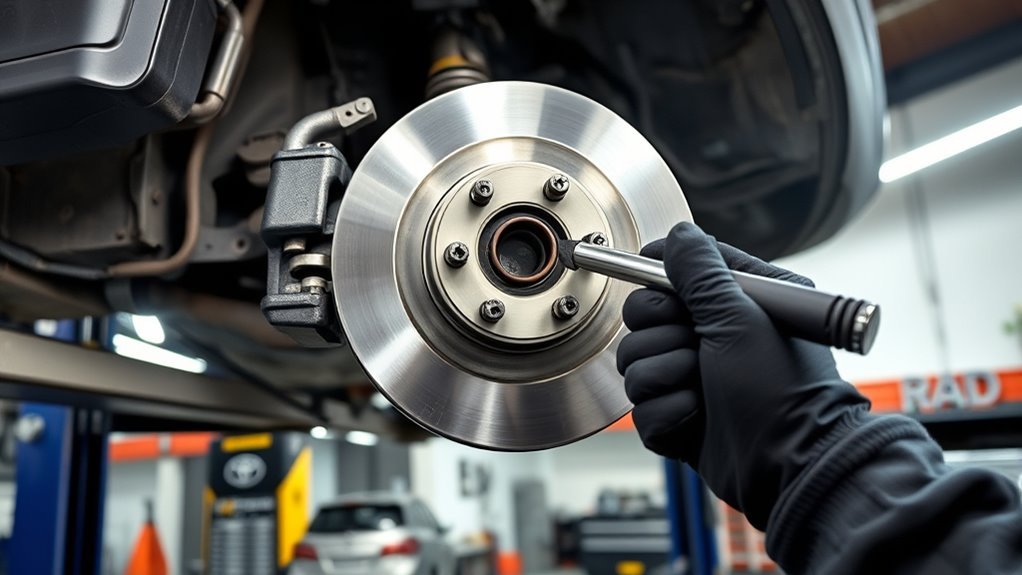
Suspension and steering parts control how each tire contacts the road. When these parts wear, they can cause vibration, uneven tire wear, loose steering, and poor handling.
Check tie rods for looseness, damaged boots, and play. Inspect ball joints for wear, since worn joints can change wheel angle as you drive.
Look at control arms, bushings, struts, shocks, and the steering rack. Leaks, torn rubber, loose mounting points, or knocking sounds all need closer inspection.
| Component | Symptoms of Wear | Action Required |
|---|---|---|
| Tie Rods | Loose steering or shaking | Inspect, tighten, or replace |
| Ball Joints | Clunking or uneven tire wear | Inspect and replace if worn |
| Control Arms | Poor alignment or damaged bushings | Repair or replace |
| Struts/Shocks | Leaks, bounce, or poor handling | Replace as needed |
Understanding How Brake Components Affect Tire Vibration
Brake problems can feel like tire vibration, especially when the shake starts as you press the brake pedal. Focus on the brake system if the vibration appears only during braking.
- Warped or uneven rotors: Uneven rotor surfaces can send vibration through the steering wheel or pedal.
- Worn brake pads: Uneven pad material can create pulsing, noise, or inconsistent braking.
- Sticking calipers: A stuck caliper can overheat a brake and make one wheel drag.
- Loose or worn hardware: Damaged clips, pins, or mounts can cause noise and rough braking.
Brake issues affect more than ride comfort. They can reduce control, increase stopping distance, and wear tires faster.
[Products Worth Considering]

This universal wheel alignment tool helps you accurately restore tire tilt angles after tire or suspension repairs using an adjustable camber gauge. It features a powerful magnetic base that firmly attaches to brake rotors for stationary, slip-free readings, improving consistency during measurement. Built from durable PC plastic, it resists wear and corrosion and is compact enough for car, truck, RV, and motorcycle alignment tasks.

This tire inflator with pressure gauge delivers long-lasting performance with a durable rubber-protected gauge and sturdy build. The longer hose and 360 swivel air chuck help you seal the valve securely and keep your hands free while measuring, inflating, or deflating. It’s battery-free for reliable use and provides ±2 PSI accuracy in the mid-range for most typical tires, with universal compatibility for 1/4 NPT compressor outputs.

Measure tyre tread depth precisely with a digital gauge that reads in both MM and inches, helping you monitor safe driving conditions. The large LCD screen is easy to operate, and the compact tool fits for cars, trucks, and motorcycles. It provides high accuracy with a 0-25.4mm range and includes a 1-year warranty for added peace of mind.
When Should You Call a Mechanic About Persistent Vibration?
Call a mechanic when vibration continues after you check tire pressure, tire condition, balance, and alignment. You should also get help if the shake affects steering, braking, or vehicle control.
Warning Signs Of Trouble
Ask a mechanic to inspect your RAV4 if you notice any of these warning signs:
- Vibration at a narrow speed range: Shaking around a certain speed may point to balance, alignment, tire, or wheel issues.
- New noises with vibration: Humming, clunking, grinding, or clicking can point to bearings, brakes, or suspension parts.
- Worse vibration during braking: This pattern can point to brake rotor, pad, or caliper problems.
- Poor ride quality: A harsh, bouncy, or loose feel can point to tire or suspension wear.
- Steering pull or wander: This can point to alignment, tire damage, or worn steering parts.
Frequency Of Occurrence
A vibration that happens once may come from rough pavement or debris stuck in a wheel. A vibration that repeats at the same speed or driving condition needs inspection.
If the shake grows stronger over a few drives, stop waiting and schedule service. Waiting can damage tires, wheels, suspension parts, and brakes.
Impact On Driving Experience
Tire vibration makes your RAV4 less comfortable and less predictable. It can also hide other warning signs, such as brake pulsation or steering looseness.
Pay attention after tire service. If the vibration changes after rotation, balancing, or new tires, the tire shop should recheck the wheel balance, tire seating, and lug nut torque.
Effective Strategies to Prevent Tire Vibration Issues

Prevent tire vibration by keeping your tire and wheel maintenance on schedule. Check tire pressure monthly and before long trips, using the pressure listed for your RAV4.
Rotate the tires every 5,000 to 7,500 miles, or follow the interval in your owner’s manual. Schedule alignment service when the vehicle pulls, the steering wheel sits off-center, or the tread wears unevenly.
Balance wheels whenever you install new tires, repair a tire, or notice speed-related vibration. Replace worn or damaged tires before they create more stress on the suspension and brakes.
Note: A smooth test drive after service helps confirm whether the repair fixed the vibration.
Frequently Asked Questions
Why Is My RAV4 Vibrating While Driving?
Your RAV4 may vibrate because of tire imbalance, uneven tire wear, a bent wheel, poor alignment, worn suspension parts, or brake issues. Note the speed and driving condition where the vibration starts, since that helps narrow the cause.
How to Get Rid of Tire Vibration?
Start by checking tire pressure, tire damage, and tread wear. Then have the wheels balanced and the alignment checked if the vehicle pulls or wears tires unevenly.
Can Bad Alignment Cause Tire Vibration?
Bad alignment can cause uneven tire wear, pulling, and steering wheel shake. Alignment problems often get worse over time because the tire keeps wearing in the wrong pattern.
Why Does My RAV4 Vibrate Only When Braking?
Vibration only during braking often points to uneven brake rotors, worn pads, or a sticking caliper. A mechanic should inspect the brake system if the shake appears through the pedal or steering wheel.
Should I Drive My RAV4 If the Tire Vibration Is Severe?
Do not keep driving if the vibration feels severe, the steering feels loose, or a tire shows visible damage. Pull over safely and arrange service before the issue affects control or damages more parts.
Conclusion
Tire vibration in your Toyota RAV4 usually starts with tire pressure, tire condition, wheel balance, or alignment. Check those basics first, then look at brakes, suspension, steering parts, and wheel bearings if the shake remains.
Act quickly when the vibration affects braking, steering, or ride control. A careful inspection now can protect your tires, reduce repair costs, and give you a smoother drive.
