
How to Check Tire Age on a Toyota RAV4: Locate the DOT Code
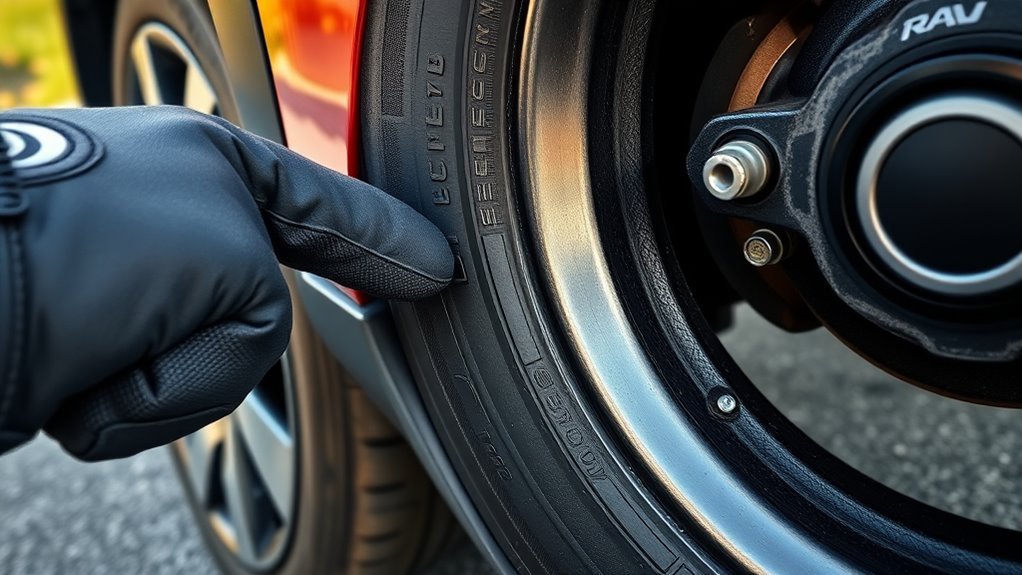
Checking the tire age on your Toyota RAV4 takes only a few minutes, but it can prevent a risky surprise on the road. The key is the DOT Tire Identification Number, often called the DOT code or TIN, molded into the tire sidewall. The final four digits tell you the tire’s manufacture week and year.
Quick Answer
To check tire age on a Toyota RAV4, find the DOT/TIN code on the tire sidewall and read the final four digits. The first two digits are the manufacture week, and the last two digits are the year. For example, 2319 means the tire was made in week 23 of 2019.
Key Takeaways
- The final four digits of the DOT/TIN date code show the tire’s manufacture week and year.
- The full date code may be on only one sidewall, so check both the outer and inner side of each tire.
- Age is only one safety factor; also check tread depth, pressure, cracks, bulges, cuts, vibration, and uneven wear.
- Some tire and vehicle manufacturers recommend replacing tires at 6 to 10 years, even if the tread still looks usable.
- Check all four RAV4 tires and the spare, and use matching tires carefully on AWD models.
At a Glance
| Time Required | 5 to 10 minutes for all four tires; longer if the date code is on the inner sidewall |
| Difficulty | Easy |
| Tools Needed | Flashlight, clean cloth, tire pressure gauge, tread depth gauge or penny |
| Cost | Free if you already have a gauge; usually under $15 for a basic tread and pressure gauge |
How to Locate the DOT Code on Your Toyota RAV4 Tires
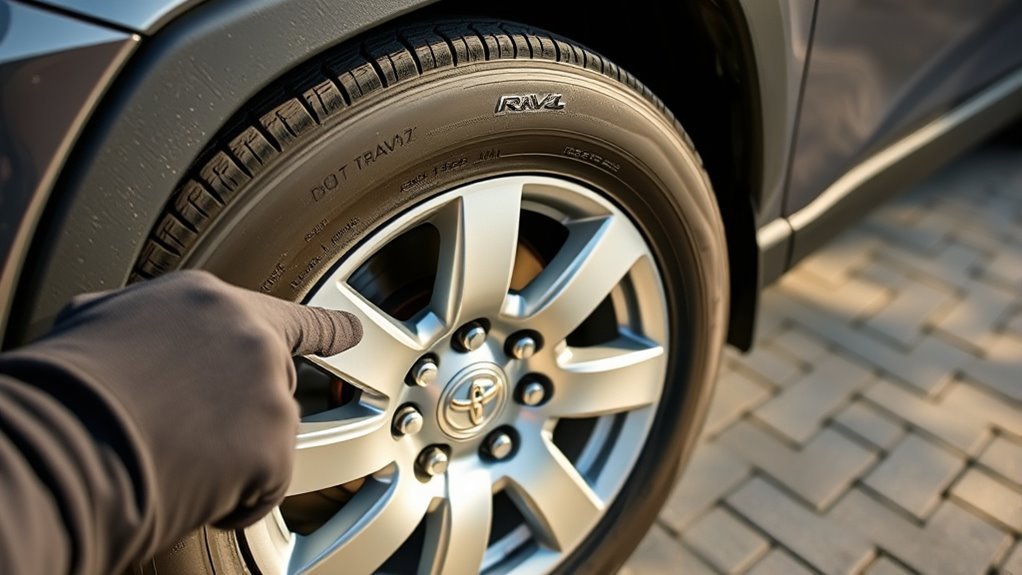
Park your RAV4 on level ground, set the parking brake, and make sure you can safely see the tire sidewalls. The DOT/TIN code is usually molded into the sidewall near the wheel rim. It begins with the letters DOT, followed by groups of letters and numbers.
- Clean the sidewall with a cloth so the raised lettering is easier to read.
- Use a flashlight and look near the rim for the letters DOT.
- Find the final four-digit date code at the end of the full Tire Identification Number.
- If you see “DOT” but not the final four digits, check the other side of the tire. The full TIN may be molded on only one sidewall.
- Repeat the check on all four tires and the spare, if your RAV4 has one.
Pro Tip: Turn the front wheels left or right before checking the front tires. This gives you a better view of the inner sidewall, where the full date code may be located.
[Products Worth Considering]

Blackline Blackout is a water-based trim and tire dressing that restores rubber, vinyl, and plastic with a rich satin, blackout look. Its no-sling formula dries quickly and helps prevent messy transfer onto paint. The coating repels water and offers UV protection to help prevent fading, cracking, and discoloration for a clean, long-lasting finish.

Upgrade your tires with authentic 40mm caliber bullet-shaped stem caps designed to help keep inflation consistent and secure. The patented insert helps protect TPMS and the lacquer coating resists tarnishing for a stylish look. Easy to install on standard Schrader valve stems, these caps fit cars, trucks, SUVs, motorcycles, BMX and bicycles.
Upgrade your vehicles with these universal aluminum alloy tire valve stem caps designed to help keep dust out and maintain stable tire pressure. Each cap features an internal rubber seal for long-lasting leak protection and features an easy screw-on installation that won’t damage the valve stem threads. Suitable for cars, trucks, motorcycles, and bicycles, they also add a personalized decorative touch to your wheels.
Decoding the DOT Code: Understanding Tire Age and Importance
The DOT symbol and Tire Identification Number do more than show tire age. Under federal tire identification rules, the TIN includes the tire plant code, manufacturer code, and final date code. The federal tire identification rule says the four-number date code identifies the week and year of manufacture.
What the Final Four Digits Mean
Read the date code like this:
- 2319 = 23rd week of 2019
- 4023 = 40th week of 2023
- 0109 = 1st full calendar week of 2009
The first two digits show the week of the year. The last two digits show the year. A tire marked 4023, for example, was manufactured in the 40th week of 2023. That does not mean it was installed on your RAV4 that week; it only tells you when the tire was made.
What If the Tire Has a Three-Digit Date Code?
Some tires made before 2000 used older three-digit date codes. If you find a three-digit code on a road-use tire today, treat the tire as far beyond normal service life and have it replaced instead of trying to keep using it. Even if the tread looks deep, the rubber and internal materials can degrade with age.
Warning: Do not drive on a tire with bulges, exposed cords, deep cracks, sidewall damage, repeated air loss, or strong vibration. Age is important, but visible damage or performance changes can make a tire unsafe immediately.
The Importance of Tire Age for Safety and Performance
Tires can age even when they have plenty of tread left. Heat, sunlight, storage conditions, road use, low pressure, and poor maintenance can all affect the rubber and internal structure. The National Highway Traffic Safety Administration explains that tire aging happens as rubber and other tire components change over time due to service, storage, and environmental conditions.
NHTSA reported 511 motor vehicle traffic fatalities in tire-related crashes in 2024, which is why tire age, pressure, tread, and visible condition should be checked together.
There is no single age that makes every tire unsafe. Tire brand, climate, storage, driving habits, and maintenance all matter. However, NHTSA notes that some vehicle and tire manufacturers recommend replacing tires that are six to 10 years old, regardless of treadwear. Michelin also recommends replacing tires by 10 years from the manufacture date, including spare tires, as a precaution.
How to Use the DOT Code to Assess Tire Condition
The DOT date code gives you the tire’s age, but it should not be the only thing you check. Use it as part of a simple tire safety routine for your Toyota RAV4.
Step 1: Write Down Each Tire Date
Check the left front, right front, left rear, right rear, and spare tire if equipped. Write down the final four digits for each tire. Do not assume all four tires are the same age, especially if you bought the RAV4 used or replaced only one tire after a puncture.
Step 2: Compare the Age to Service Guidance
If a tire is approaching six years old, inspect it more carefully and consider a professional inspection. If it is near 10 years from its manufacture date, plan replacement even if the tread still looks acceptable. Always follow the tire manufacturer’s guidance, your Toyota owner’s manual, and your tire professional’s inspection.
Step 3: Check Tread, Pressure, and Damage
NHTSA says tires should be replaced when tread is worn to 2/32 of an inch. It also recommends checking tire pressure at least once a month when the tires are cold, including the spare. On a RAV4, the correct tire pressure is on the Tire and Loading Information Label on the driver’s door edge or B-pillar, and tire details are also covered in the Toyota Owners tire information section.
Note: The pressure number molded on the tire sidewall is not your RAV4’s recommended cold tire pressure. Use the driver-door label or owner’s manual instead.
Step 4: Use the TIN for Recall Checks
The DOT/TIN can also help identify whether a tire is included in a recall. If you receive a recall notice or suspect a tire issue, compare the full TIN on the tire with the recall information. You can also use NHTSA’s tire recall resources from its TireWise page.
What People Get Wrong About Tire Age and Safety
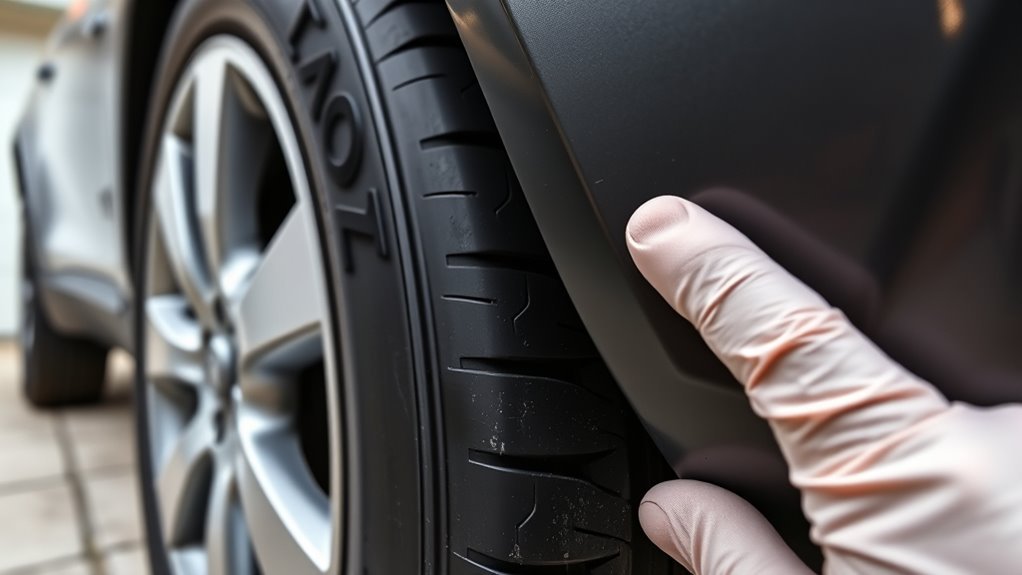
Many drivers only look at tread depth, but tread is not the whole story. A tire can have usable tread and still be too old, damaged, or poorly maintained. Avoid these common tire-age mistakes:
- Assuming good tread means the tire is safe: Aging, cracks, internal damage, and pressure loss can still create risk.
- Checking only the outside sidewall: The full date code may be on the inner side of the tire.
- Ignoring the spare: Spare tires age even when they are rarely used.
- Forgetting tire pressure: Underinflation is hard to spot by eye and can damage the tire.
- Replacing only one tire on an AWD RAV4 without checking fit: Tire size, tread depth, brand, model, and rolling circumference should match closely.
[Products Worth Considering]

Upgrade your Toyota tire setup with these corrosion-resistant, leak-proof valve stem caps designed to help protect the valve core from water, snow, and road grime. The caps feature a snug rubber seal and durable copper alloy construction to resist rust and oxidation while maintaining stable tire pressure. Ideal for replacing worn original caps and keeping your wheels looking clean and stylish.

These universal tire valve stem caps help protect your valve core from dust, debris, moisture, and corrosion, supporting more stable tire pressure. The aluminum alloy design resists long-term wear, while the sealing construction helps help prevent air leakage. They twist on easily for quick installation and help safeguard driving safety across cars, SUVs, trucks, and motorcycles.
What to Do When Your Tires Are Too Old or Unsafe
If your RAV4 tires are old, cracked, bulging, badly worn, or losing pressure, have them inspected by a qualified tire professional. Replace any tire that is unsafe because of age, treadwear, sidewall damage, exposed cords, puncture location, or internal damage.
For RAV4 AWD models, be careful about replacing just one tire. A tire with a different outside diameter can rotate at a different speed than the other tires. That can affect traction control and may add stress to AWD components. If only one tire needs replacement, ask the tire shop or Toyota dealer to compare tread depth and rolling circumference before installation. In many cases, replacing two or all four tires is the safer choice.
When buying used tires, always check the DOT/TIN date code before purchase. Avoid tires with missing, unreadable, suspicious, or extremely old date codes. If a tire lacks the DOT symbol or appears not to be compliant for public-road use, do not use it on your RAV4 until a tire professional confirms it is appropriate and legal for your vehicle.
Toyota RAV4 Tire Age Checklist
- Check all four DOT/TIN date codes.
- Check the spare tire date code if your RAV4 has a spare.
- Check cold tire pressure monthly using the driver-door label.
- Measure tread depth monthly or during routine maintenance.
- Look for cracks, cuts, bulges, exposed cords, uneven wear, and embedded objects.
- Watch for vibration, pulling, repeated pressure loss, or noise changes.
- Confirm replacement tires match the correct size, load rating, speed rating, and type recommended for your RAV4.
Frequently Asked Questions
Can I find the DOT code on all tire brands?
Most passenger tires sold for U.S. public-road use have a DOT Tire Identification Number on the sidewall. The full TIN and date code may be on only one side of the tire, so check both sidewalls. If the code is missing or unreadable, have the tire inspected before using it.
How often should I check my tire age?
Check the DOT date code when you buy a new or used RAV4, when you buy tires, before long trips, and at least twice a year. Tire pressure and tread should be checked at least monthly, because pressure loss and treadwear can make a tire unsafe before age alone does.
Does tire age affect warranty coverage?
It can. Tire warranties vary by brand and often include time limits, treadwear limits, maintenance requirements, and exclusions for damage or improper use. Check the tire manufacturer’s warranty booklet and keep rotation, alignment, and pressure-maintenance records.
Can I replace just one tire based on age?
Sometimes, but it depends on the other tires’ age, tread depth, size, and condition. On AWD RAV4 models, replacing one tire with a much newer or deeper-tread tire can create a rolling-circumference mismatch. Ask a tire shop or Toyota dealer to measure before replacing only one tire.
What other factors affect tire safety besides age?
Tread depth, tire pressure, sidewall cracks, cuts, bulges, puncture location, uneven wear, overloading, heat exposure, alignment, balance, and driving vibration all affect tire safety. A tire that is young can still be unsafe if it is damaged or poorly maintained.
Should I check the spare tire age on my RAV4?
Yes. Spare tires age even when they are rarely used. Check the spare’s DOT date code, pressure, and visible condition. If the spare is old, cracked, or unable to hold pressure, replace it before you need it in an emergency.
Conclusion
Your RAV4’s tires tell you their age through the DOT/TIN date code. Find the final four digits, read the week and year, then check that age against the tire’s tread, pressure, visible condition, and performance. If the tire is old, damaged, mismatched, or questionable, do not guess. Have it inspected and replace it when needed. Fresh, properly maintained tires help your Toyota RAV4 brake, steer, and handle the way it should.
Sources
- NHTSA TireWise — tire aging, tire maintenance, monthly pressure checks, tread depth, and 2024 tire-related crash fatality data
- eCFR 49 CFR Part 574 — DOT/TIN tire identification and four-digit date-code requirements
- Toyota Owners RAV4 Tire Information — Toyota owner-manual tire information, DOT/TIN, tire symbols, and treadwear indicator reference
- Michelin: When to Replace Tires — tire age, service-life guidance, visible damage, and spare tire replacement guidance
- Tire Rack: AWD/4WD Tire Matching — practical guidance on matching tires and checking owner-manual requirements for AWD and 4WD vehicles

Related Articles
Why These 10 Wheel Locks Are Perfect for Your RAV4
Protecting your RAV4 starts before you lock the doors. Wheel theft is an avoidable cost and a hassle that interrupts your routine, and choosing…
Read More
10 Best 80000 Mile Tires for Rav4
You want tires that last, keep you safe, and save you money over the long run. Choosing 80,000 mile tires for your RAV4 matters…
Read More
10 Long Warranty Tires That Will Transform Your RAV4 Experience
You spend a lot of time behind the wheel of your RAV4, and the right tires change everything from ride comfort to fuel economy…
Read More