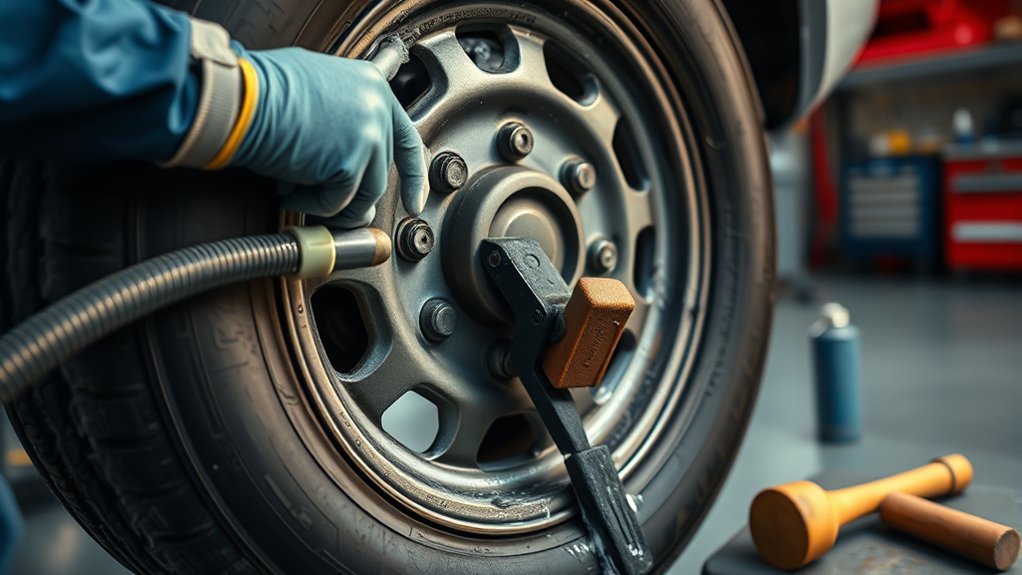
Getting a tire bead to seat is usually a matter of cleaning the rim, lubricating both beads, centering the tire, and using controlled air flow until both bead lines sit evenly on the rim. The job can be dangerous if the tire, rim, tools, or pressure are wrong, so treat bead seating as a safety-first tire-service task, not just a quick burst of air.
Quick Answer
To get a tire to bead, clean and inspect the rim, apply approved tire mounting lubricant to both beads, center the tire, and inflate with a gauge while staying clear of the tire’s trajectory. If the bead does not seat by the tire or wheel maker’s limit, stop, deflate, relubricate, and reset it.
Key Takeaways
- Use approved tire mounting lubricant or tire soap, not WD-40, starter fluid, gasoline, ether, silicone spray, or petroleum-based products.
- Clean the rim bead seat and inspect the tire bead before adding air; dirt, corrosion, torn rubber, and mismatched sizes can stop the bead from sealing.
- A ratchet strap can help some small tubeless tires spread outward, but it is not a safety device and should never replace proper tire-service equipment.
- Do not judge bead seating by a “pop” alone. Inspect the bead line on both sides of the tire all the way around.
- If the bead will not seat before the manufacturer’s bead-seating limit, stop, deflate fully, reposition, relubricate, and try again safely.
At a Glance
| Time Required | 10–30 minutes for a simple small tubeless tire; longer if cleaning, relubricating, or repositioning is needed. |
| Difficulty | Moderate. Stop and use a tire shop if the tire, rim, bead, valve, or equipment looks questionable. |
| Tools Needed | Approved tire mounting lube, air compressor, accurate gauge, clip-on air chuck, valve-core tool, soapy water for leak checking, eye protection, and optionally a ratchet strap for small tubeless tires. |
| Cost | Usually $5–$25 for lubricant and small supplies if you already have safe inflation equipment. |
Warning: Tire mounting and bead seating can cause serious injury or death if the tire or rim fails during inflation. Do not work on split rims, multi-piece rims, commercial truck or bus tires, agricultural tires, run-flat tires, badly corroded wheels, mismatched tire/rim sizes, or damaged beads unless you are trained and using the correct professional equipment.
Check the Tire and Rim Before You Add Air
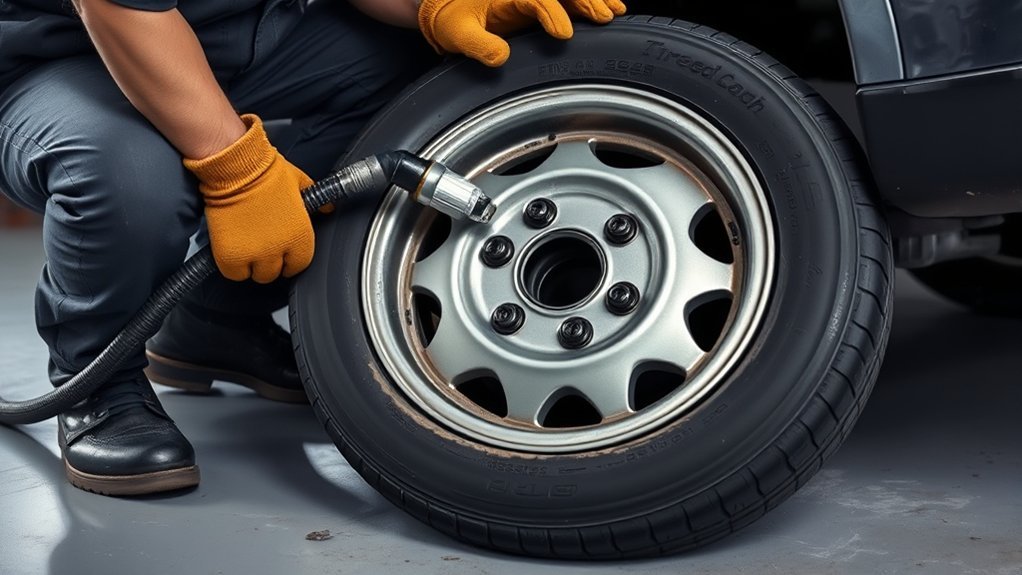
Before trying to seat the bead, confirm that the tire size matches the rim size and that the rim is not cracked, bent, badly rusted, or previously welded. Also inspect both tire beads for tears, exposed cords, flat spots, or damage from earlier mounting attempts.
Clean the bead seat area on the rim and wipe loose dirt, rust scale, old rubber buildup, and debris from the tire bead. OSHA’s rim-wheel service rule requires bead seating surfaces and tire bead areas to be free of dirt, surface rust, scale, and loose rubber buildup before mounting and inflation. That same basic rule applies in the garage: a dirty rim makes the bead harder to seal and easier to damage.
Make sure the valve stem is accessible, straight, and not cracked. If the valve is old, leaking, or damaged, replace it before you try to seat the tire. A bad valve can make you chase a “bead problem” that is really an air-loss problem.
Lubricate Both Beads the Right Way
Apply a thin, even coat of approved tire mounting lubricant to both tire beads and the rim bead seat area. The goal is to reduce friction so the bead can slide into its seat without tearing, folding, or hanging up on one spot.
Use tire mounting paste, tire soap, or another lubricant made for tire service. Michelin explains that tire mounting lubricant helps protect the bead from tool damage, helps the tire move onto the rim, and assists proper bead seating. Avoid WD-40, gasoline, ether, starter fluid, silicone spray, antifreeze, grease, and petroleum-based lubricants because they are not approved bead lubricants and may create safety or tire-damage risks.
Note: Do not overdo the lube. A smooth film is enough. Heavy puddles inside the tire are messy, can contaminate the assembly, and are not needed for proper bead seating.
[Products Worth Considering]

The Calvana Ultra-Durable Angled Tire Lube Bucket Kit provides reliable lubrication for faster, smoother tire changes. It includes an angled universal lube bottle and premium cotton swabs to help lubricate tire beads during removal and mounting. Built for rugged use with a reinforced handle and durable fiber design, it’s a direct replacement for Coats 8106259 to reduce downtime and compatibility concerns.

Malco tire mounting and demounting lubricant is a ready-to-use tire lube formulated to reduce friction during tire installation for passenger cars, light trucks, farm tires, and heavy-duty equipment. It provides rust-inhibiting protection to help reduce corrosion on rims and wheels, and helps support proper tire bead seating during inflation to reduce air leakage. The silicone-free, soap-free formula is whitewall safe to help prevent discoloration on whitewall tires and sensitive sidewall markings.
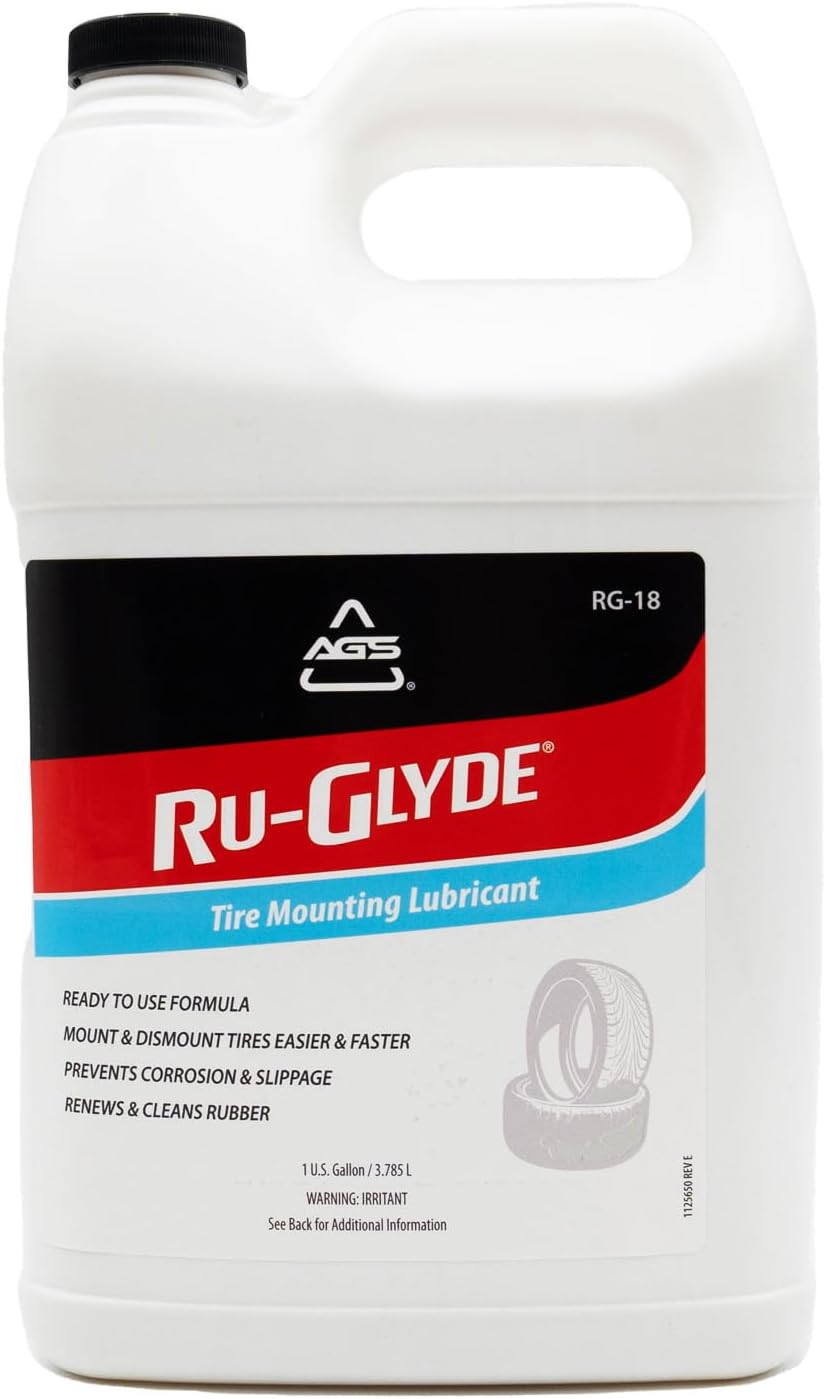
Ru-Glyde tire mounting lubricant from AGS seats tire beads smoothly on the first try with a thick, stay-put formula. It is ready to use with no mixing or dilution, helps prevent rim rust, and dries completely without causing bead slip residue. The water-based formula also conditions aged rubber, making it useful for sidewalls, gaskets, and door seals while remaining safe for tire, wheel, and technicians.
Center the Tire on the Rim
Set the tire squarely on the rim so both sidewalls are as even as possible. If one bead is tucked deep into the drop center while the other side sits far away from the rim, air will escape before pressure can build.
Push and massage the tire by hand to bring both beads close to the bead seat. For low-profile or stiff-sidewall tires, make sure the bead is positioned correctly in the rim well instead of being stretched awkwardly over the rim flange. If the tire looks twisted, offset, or cocked to one side, stop and reset it before inflating.
Use a Ratchet Strap Only as a Small-Tire Aid
For some small tubeless tires, a ratchet strap around the center of the tread can squeeze the tread and push the sidewalls outward toward the rim. Center the strap evenly around the tread, tighten it only enough to help the beads contact the rim, and keep the ratchet mechanism away from the valve stem.
Do not crank the strap so hard that it distorts the tire, damages the casing, or pulls the assembly off-center. The strap is only a positioning aid. It is not a restraining device, not a substitute for a tire machine, and not protection from a tire or rim failure.
Pro Tip: If the tire has a large air gap at the bead, remove the valve core temporarily to improve airflow during the initial seating attempt. Use a clip-on chuck and gauge, then reinstall the valve core and set the final pressure after the beads are seated.
[Products Worth Considering]
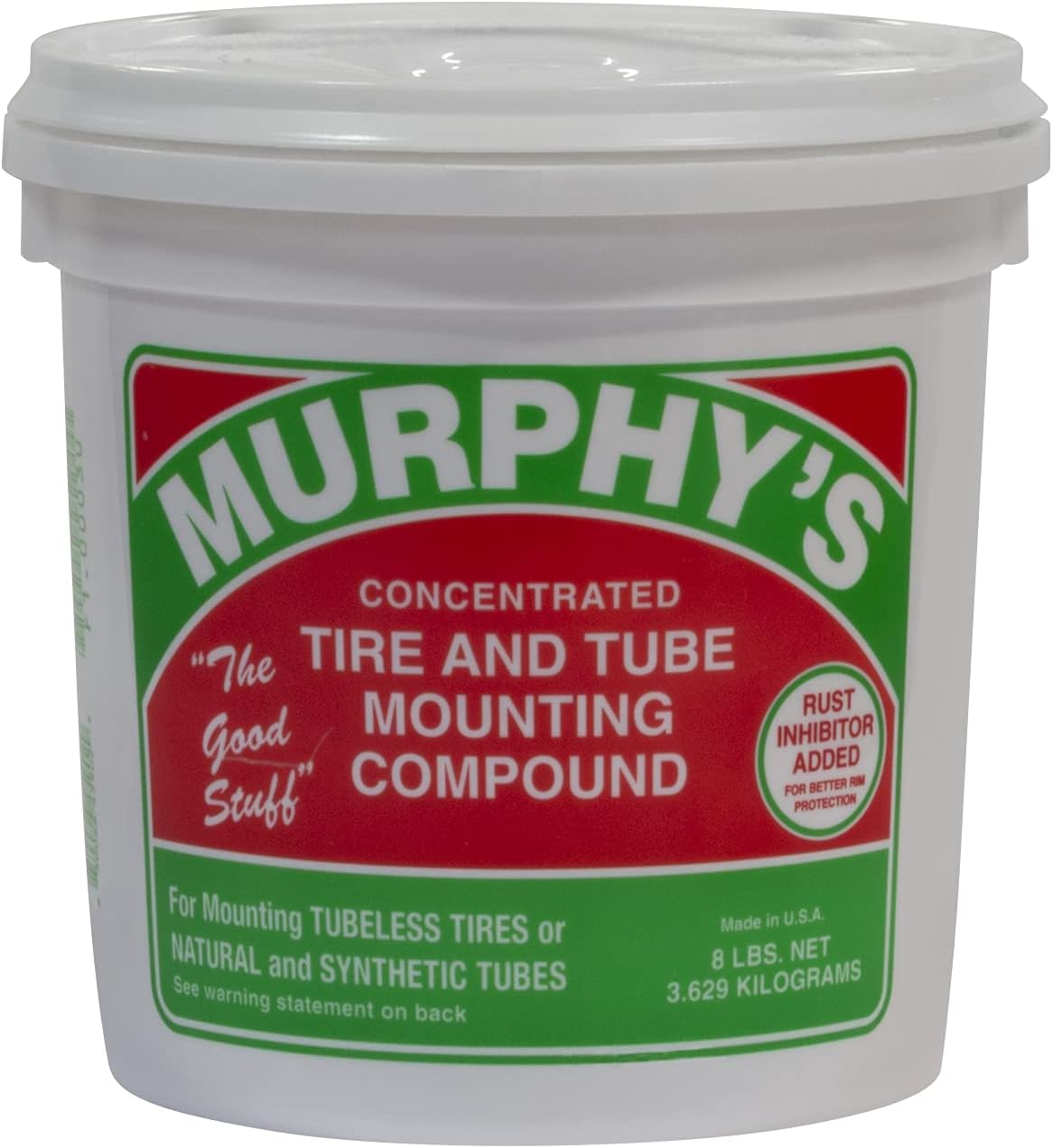
A concentrated tire and tube mounting compound designed to help simplify mounting rubber tires and tubes on passenger, semi truck, construction, and OTR applications. Its ultra-thick formula packs beads effectively and includes rust inhibitors to help protect against corrosion during use.

This VEVOR tire bead breaker uses a slide-hammer impact and wedge tip to separate tire beads from rims quickly and efficiently without damaging hub surfaces. The long handle and sturdy steel construction help reduce user strain while providing reliable, portable tire changing for cars, trucks, and more. Ideal for home mechanics and repair shops handling multiple vehicle tire sizes.

This Dr.Roc tire valve stem puller tools set helps install or remove snap-in tubeless valve stems safely and efficiently. It includes ozone-resistant EPDM snap-in valve stems, a valve stem installer, and a valve core remover for quick core removal or installation during tire service. Designed for reliable tubeless tire repair on motorcycles, ATVs, lawn equipment, cars, and trucks.
Inflate With Control, Not Guesswork
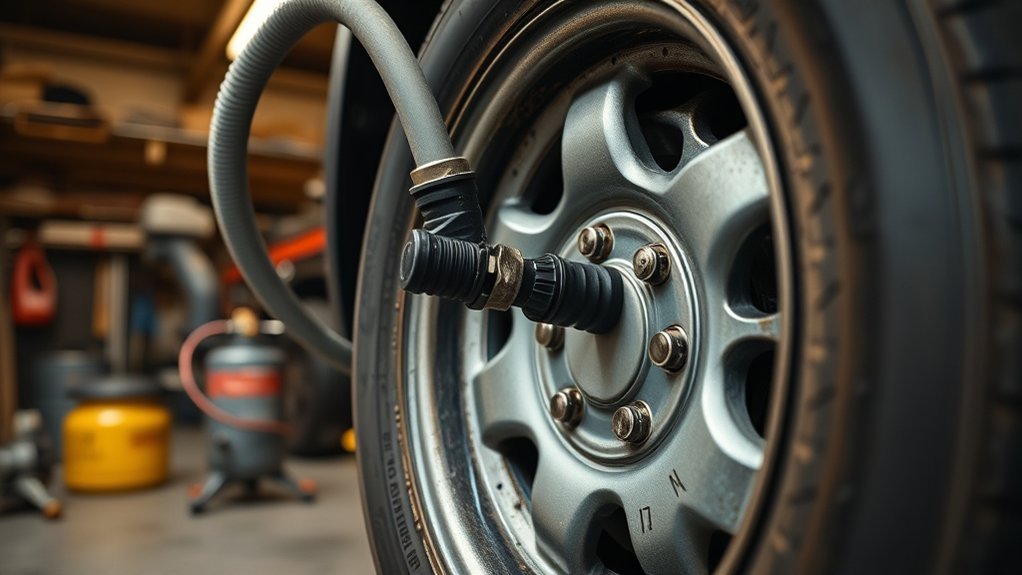
Connect the air line with a clip-on chuck and use a gauge so you can watch pressure as it rises. Keep your hands, face, and body out of the tire’s trajectory. Do not lean over the tire while adding air.
Add air in controlled bursts until the beads move outward and begin sealing. You may hear one or two pops as the beads move into place, but sound alone does not prove the tire is seated. Inspect both sides of the tire and look for the molded bead indicator line. It should run evenly around the rim with no low, wavy, or hidden sections.
Follow the tire or wheel manufacturer’s bead-seating pressure limit. If you do not have a manufacturer limit for the tire you are servicing, do not keep adding pressure in the hope that the bead will eventually pop on. Industry procedures commonly warn not to exceed 40 psi while seating beads; if the bead has not seated by the limit, stop, fully deflate the tire, reposition it, relubricate, and try again.
[Products Worth Considering]

Inflate Presta and Schrader bike and car tires with one compressor attachment, including tubeless setups. The digital gauge lets you monitor 2–200 PSI readings in 0.1 PSI increments with ±2 PSI accuracy, while the adjustable lever and built-in bleed button help you dial in precise pressure. Quick-connect coupler, hose, and a complete Presta service kit with spare cores and caps make it ready for fast maintenance.

AstroAI’s tire pressure gauge with inflator helps you check and adjust car tire pressure accurately for safer, smoother driving. It offers 3-in-1 operation to inflate, deflate, or measure pressure, with an easy-to-read 2.5-inch glow dial and a heavy-duty air chuck for convenient use. Universal compatibility supports Schrader-valve tires and quick-connect 1/4" NPT air compressors for quick maintenance.

Upgrade your Toyota tire setup with these corrosion-resistant, leak-proof valve stem caps designed to help protect the valve core from water, snow, and road grime. The caps feature a snug rubber seal and durable copper alloy construction to resist rust and oxidation while maintaining stable tire pressure. Ideal for replacing worn original caps and keeping your wheels looking clean and stylish.
Fix Stubborn Bead Spots
If one section will not seat, mark the stubborn spot so you can work on the actual problem instead of guessing. Deflate the tire fully before touching or repositioning the bead. Add more tire mounting lubricant to the dry or tight section, then push the bead back into a better position on the rim.
If the ratchet strap has shifted, loosen it and recenter it. A crooked strap can pull the tire sideways and make the leak worse. Reinflate with the same pressure limit and inspect the bead line again.
| Problem | Likely Cause | Safe Fix |
| Air rushes out around the bead | Bead is too far from the rim or tire is off-center | Deflate, center the tire, relubricate, and use a gentle strap assist if appropriate. |
| One section will not pop into place | Dry bead, rim corrosion, or bead sitting crooked | Deflate fully, mark the spot, clean and relube that area, then reinflate with a gauge. |
| Bead line looks uneven | Tire is not fully seated even if it made a popping sound | Do not drive on it. Deflate, relubricate, reposition, and inspect both sides again. |
| Pressure rises but bead still will not seat | Stiff sidewall, wrong tire/rim fit, damage, or not enough safe equipment | Stop at the bead-seating limit. Deflate and take the assembly to a tire professional. |
Check the Bead Line and Set Final Pressure
Once both beads are seated, remove the air chuck and inspect the tire on both sides. The molded bead indicator line should be the same distance from the rim all the way around. If it dips under the rim edge or waves in and out, the tire is not seated correctly.
Spray soapy water around both beads and the valve stem. Bubbles show a leak that needs to be fixed before the tire goes back into service. After the leak check, install the valve core if you removed it, add a valve cap, and set the cold tire pressure to the vehicle placard, owner’s manual, or equipment manufacturer’s specification. Do not use the maximum pressure molded on the sidewall as your normal operating pressure unless the manufacturer specifically calls for it.
When to Stop and Go to a Tire Shop
Stop the job and use a qualified tire service professional if the tire will not seat by the manufacturer’s bead-seating pressure limit, if the rim is cracked or heavily corroded, if the bead is torn, if the tire and rim sizes do not match, or if you are working with a multi-piece wheel, split rim, commercial tire, run-flat tire, or any assembly you cannot safely restrain during inflation.
Also stop if you see sidewall bulges, distortions, cracking, snapping sounds, or anything that looks abnormal during inflation. Fully deflate the tire from a safe position before approaching it.
Frequently Asked Questions
How do you get a stubborn tire bead to seat?
Clean the rim bead seat, apply approved tire mounting lubricant to both beads, center the tire, and inflate with a gauge while staying clear of the trajectory. For some small tubeless tires, a centered ratchet strap around the tread can help push the sidewalls outward. If the bead does not seat by the manufacturer’s limit, deflate, relubricate, reposition, and try again safely.
Why won’t my tire bead seat?
Common reasons include a dry bead, dirty or rusty rim, off-center tire, stiff sidewalls, damaged bead, leaking valve stem, or a tire/rim size mismatch. Deflate the tire fully, inspect the assembly, clean the bead seat, relubricate, and center the tire before inflating again.
Can I use WD-40 to seat a tire bead?
No. WD-40 is not an approved tire mounting lubricant. Use tire mounting paste, tire soap, or another product made for tire service. Avoid petroleum-based products, silicone spray, starter fluid, ether, gasoline, antifreeze, and grease because they can create tire, rim, or safety problems.
How much pressure should it take to seat a tire bead?
Always follow the tire or wheel manufacturer’s bead-seating pressure limit. If you do not have that limit, do not keep increasing pressure. Industry safety procedures commonly warn not to exceed 40 psi while trying to seat beads. If the bead is not seated by the limit, stop, deflate, reposition, relubricate, and reinflate.
Is a ratchet strap safe for seating a tire bead?
A ratchet strap can help some small tubeless tires spread enough to start sealing, but it must be used carefully. Center it around the tread, tighten only enough to help the sidewalls move outward, and never treat the strap as a safety cage or restraining device. If the strap slips, the tire distorts, or pressure rises without seating, stop.
Conclusion
Getting a tire to bead safely comes down to the basics: clean parts, correct fit, approved lubricant, centered beads, controlled inflation, and careful inspection. Do not rely on a popping sound alone, and do not keep adding pressure when the bead refuses to seat. If the tire will not seat after cleaning, lubrication, and proper repositioning, the safest next step is to deflate the assembly and let a tire professional handle it.
Sources
- OSHA 29 CFR 1910.177 — Servicing multi-piece and single-piece rim wheels — rim/wheel inspection, clean bead seating surfaces, compatibility checks, and safe inflation rules.
- U.S. Tire Manufacturers Association TISB Vol. 46 No. 4 — difficult bead seating causes, lubrication, centering, inspection, and pressure-limit warnings.
- U.S. Tire Manufacturers Association TISB Vol. 5 No. 3 — tire mounting safety, approved lubrication, and warnings against petroleum-based lubricants and unsafe bead-seating aids.
- Tire Industry Association — Demounting and Mounting Procedures for Tubeless Truck and Bus Tires — controlled inflation, trajectory warnings, pressure limits, and final inspection principles.
- Michelin Technical Bulletin: Lubricant for Michelin Truck Tires — approved tire mounting lubricant purposes and lubricant warnings.
- NHTSA TireWise — tire pressure, tire safety, recalls, and consumer tire-care guidance.