
How to Seat a Tire Bead: Proven Methods for a Proper Seal
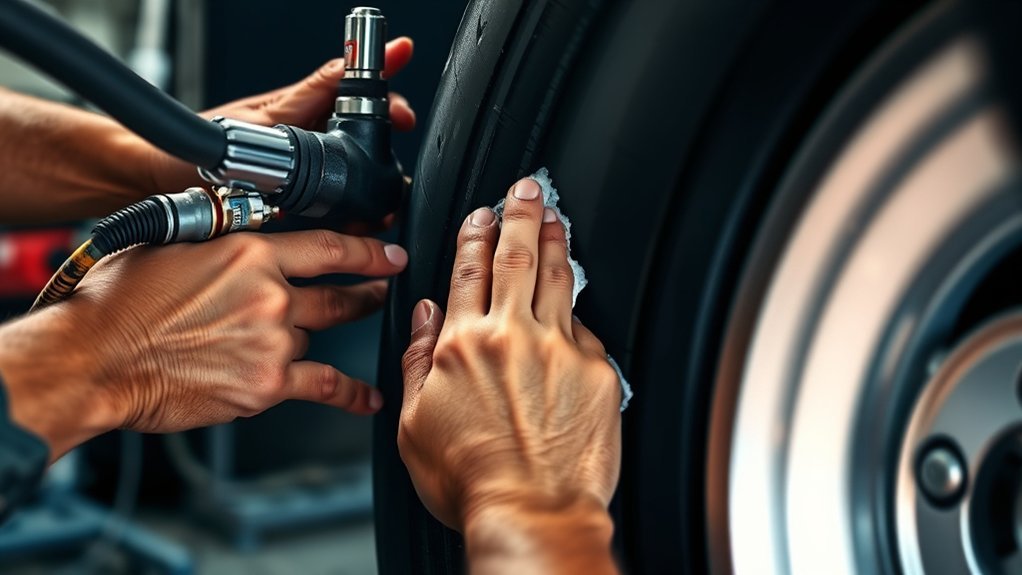
Seating a tire bead means getting the tire’s bead to seal evenly against the rim so the tire can hold air. The job is often simple when the tire, rim, valve, lubricant, and airflow are right, but it can become dangerous if you force pressure into a damaged or mismatched tire and wheel assembly.
Quick Answer
To seat a tire bead, clean and inspect the rim and bead, confirm the tire and wheel match, apply approved tire mounting lubricant, remove the valve core for better airflow, and inflate with controlled air while staying clear of the tire’s sidewall path. If the bead will not seat by the tire or wheel maker’s limit, deflate, reposition, relubricate, and retry.
Key Takeaways
- Never try to seat a bead on a cracked, bent, corroded, mismatched, or damaged rim or tire.
- Use approved tire mounting lubricant, not grease, WD-40, oil, silicone, solvents, starter fluid, or fire.
- Remove the valve core only for the seating step so high-volume air can enter quickly, then reinstall it before setting final pressure.
- A centered ratchet strap can help small tubeless tires expand outward, but it is not a substitute for safe pressure control.
- If the bead does not seat by the tire or wheel manufacturer’s bead-seating limit, stop, deflate, reset, and inspect the cause.
At a Glance
| Time Required | 15–30 minutes for a clean, undamaged tubeless tire and rim; longer if cleaning or troubleshooting is needed |
| Difficulty | Moderate; use a trained tire professional for highway tires, run-flats, truck tires, motorcycle tires, split rims, or any damaged assembly |
| Tools Needed | Air compressor, pressure gauge, clip-on chuck or inflator, valve core tool, approved tire mounting lubricant, clean brush or rag, soapy water for leak checks, eye protection, and optional ratchet strap |
| Cost | Usually $0–$20 if you already have an air source and basic tools; professional mounting is safer for road-use tires |
Warning: A tire and wheel assembly can fail with explosive force. Stay out of the sidewall trajectory, use a pressure gauge, and never use starting fluid, ether, gasoline, WD-40, aerosol ignition, open flame, or any flammable substance to seat a bead. Follow the tire and wheel manufacturer’s bead-seating pressure limit. If you do not know the limit or the bead will not seat, stop and use a trained tire professional.
What Stops a Tire Bead From Seating
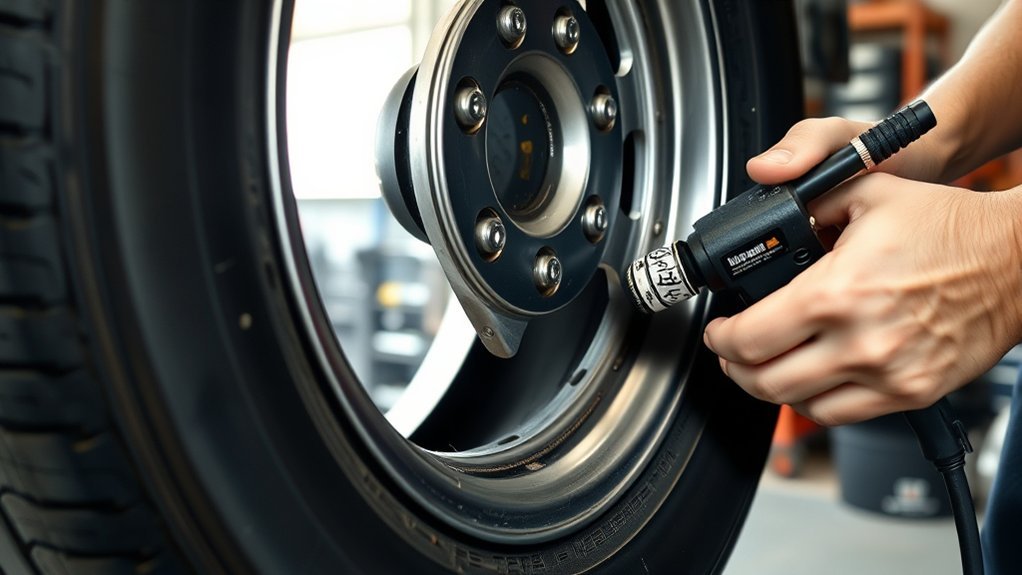
Several problems can keep a tire bead from sealing against the rim. The most common are dirt, rust, old rubber, corrosion, bent rim flanges, a damaged bead, a leaking valve stem, or a tire and wheel that do not match. Cold rubber and stiff sidewalls can also slow the process because the bead will not move easily into the rim seat.
Before adding more air, look for the reason the tire is leaking. If air escapes faster than the compressor can fill the tire, the bead may be too far from the rim, the tire may be sitting crooked, or the valve core may be restricting airflow. More pressure is not the fix for a damaged or mismatched assembly.
Before You Start: Safety and Compatibility Checks
Do these checks before you inflate the tire:
- Match the tire and wheel size. The bead diameter and rim diameter must match exactly. Never force a tire onto a wheel with a different bead diameter.
- Inspect the rim. Do not use a rim that is cracked, bent, deeply pitted, welded, heavily corroded, or visibly out of round.
- Inspect the tire bead. Stop if the bead is torn, kinked, cut, separated, or has exposed cords.
- Check the valve stem and core. Replace damaged valve parts before seating the bead. If the wheel has TPMS, avoid pulling, twisting, or striking the sensor.
- Use the right lubricant. Use approved tire mounting lubricant whenever possible. A light dish-soap-and-water mix can help in a pinch, but do not use petroleum grease, oil, silicone, solvent, or flammable products.
- Know when to stop. If the bead does not seat by the tire or wheel maker’s stated bead-seating pressure, release the air, reposition the tire, relubricate, and retry. For many passenger tubeless tires, tire makers commonly warn not to exceed 40 PSI for bead seating; some specialty tires require lower limits.
For large truck tires, multi-piece rims, motorcycle tires, run-flat tires, or any tire used on public roads, the safest choice is professional mounting equipment, a restraint or cage where required, and a trained technician.
Prep the Rim and Tire for Seating
Clean the bead seat on both sides of the rim before you try to seat the tire. Remove loose rust, dirt, old rubber, dried sealant, and debris. Wipe the tire bead as well. A tiny ridge of dirt can give air a path to escape before the bead has a chance to pop into place.
Set the tire squarely on the wheel. Push the lower bead into the rim drop center where needed, then work around the tire so the bead sits evenly. Pay extra attention near the valve stem because that area often leaks first when the tire is not centered.
Pro Tip: If the tire has been stored flat or the sidewalls are squeezed together, let it sit upright in a warm room first. Do not use open flame or direct high heat; just let the rubber become more flexible at room temperature.
Use a Strap to Compress the Tire
A ratchet strap can help some small tubeless tires, lawn equipment tires, ATV tires, and other low-volume tires seat more easily. Wrap the strap around the center of the tread and tighten it evenly. This presses the tread inward and pushes the sidewalls outward so the bead can touch the rim.
| Action | Result |
|---|---|
| Center the strap on the tread | Keeps pressure even around the tire |
| Tighten only enough to spread the sidewalls | Helps the bead reach the rim without crushing the tire |
| Remove the valve core | Allows faster airflow during the seating step |
| Loosen the strap as soon as the bead seals | Prevents the strap from overloading the tread as pressure rises |
Do not lean over the assembly while inflating. Keep your hands and face away from the sidewalls. If the strap shifts, the bead sits crooked, or the tire begins to bulge unevenly, stop and deflate the tire before adjusting anything.
[Products Worth Considering]

This VEVOR tire bead breaker uses a slide-hammer impact and wedge tip to separate tire beads from rims quickly and efficiently without damaging hub surfaces. The long handle and sturdy steel construction help reduce user strain while providing reliable, portable tire changing for cars, trucks, and more. Ideal for home mechanics and repair shops handling multiple vehicle tire sizes.

This 4-in-1 tire valve core removal tool helps you deflate, unblock, and remove or install valve cores quickly for easier tire repair. The multifunction design also supports re-taping damaged threads and reaming inside the valve stem for smoother service. Included as a 2-pack, it’s compact for convenient carry and works for cars, bicycles, and motorcycles.

This multi-function tire valve stem removal tool set makes it fast to remove, install, bleed, and clean valve cores for easier tire maintenance. It includes valve core removers, a 4-way spool tool, replacement valve caps, and spare cores to handle replacements and repairs with confidence. Universal compatibility suits cars, trucks, motorcycles, bicycles, and more for roadside convenience.
Apply Tire Mounting Lubricant to the Bead
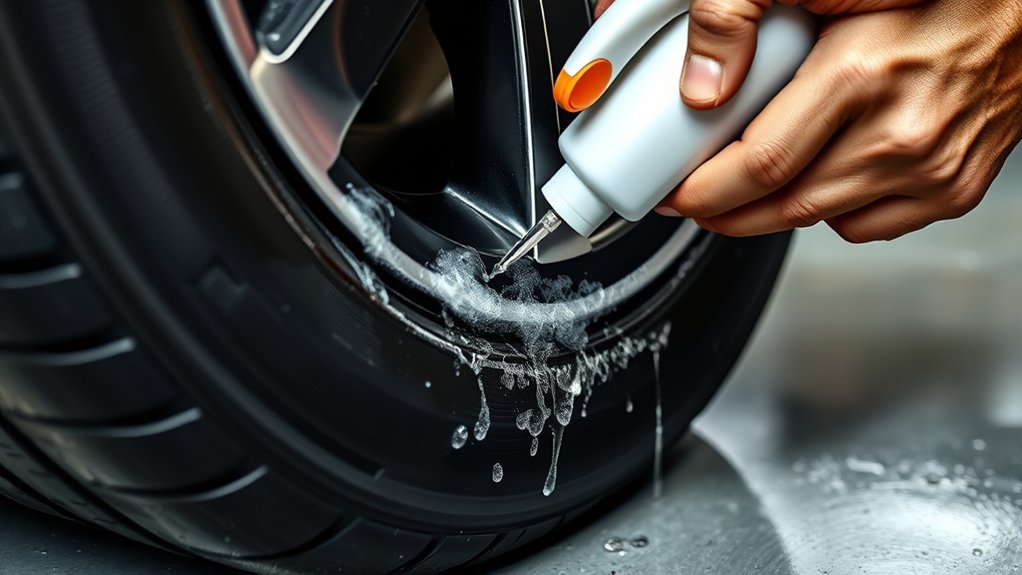
Brush a thin, even film of approved tire mounting lubricant around both tire beads and the rim bead seats. The goal is to reduce friction so the bead can slide into place instead of grabbing the rim edge.
If you do not have tire mounting lubricant, a small amount of mild dish soap mixed with water is a common field option for some tubeless tires. Use only enough to wet the bead. Too much liquid can make a mess and may let the tire slip on the rim after installation.
Note: Do not use wheel bearing grease, motor oil, WD-40, silicone spray, brake cleaner, gasoline, ether, or other petroleum, solvent, or flammable products as bead lubricant.
[Products Worth Considering]

This EVOULTES 2-way air chuck set includes a dual head closed flow air chuck and a ball head chuck for versatile tire inflation. It connects easily to air lines, inflator gauges, and compressors using 1/4" NPT threads and includes two 1/4" male quick plugs for fast coupling. Built with durable metal construction and sealed threads using Teflon tape to help prevent air leaks, it’s ideal for inflating Schrader valve tires across cars, bikes, and motorcycles.

Camco Trailer Aid Plus tandem tire ramp lifts your trailer for quick, safe tire changes with ample clearance from its 5 1/2-inch lift. It helps you change a flat tire without unloading cargo, making roadside and routine maintenance more efficient. The heavy-duty, waterproof and rustproof polymer design supports up to 15,000 lb and is built for easy portability and storage.

READY-TO-USE TIRE MOUNTING AND DEMOUNTING LUBE: Reduces friction during tire service on passenger cars, light trucks, tractors, agricultural tires and heavy-duty construction equipment, so the bead slides over the rim instead of fighting the machine.
Remove the Valve Core for Faster Airflow
Use a valve core tool to remove the valve core before the first inflation attempt. With the core out, air can enter the tire faster, which helps the sidewalls expand before air leaks out around the bead.
Make sure the tire is centered on the rim first. Connect the air source, stand clear, and watch both bead lines. The bead should rise evenly on both sides. Once both beads seat and the tire holds shape, disconnect the air, reinstall the valve core, and then inflate the tire to its final operating pressure.
Use a High-Flow Air Burst
A high-flow air source works better than a weak compressor because bead seating needs volume, not just pressure. Use a clip-on chuck or controlled inflator with a gauge when possible. Short, controlled bursts are safer than one long blast.
[Products Worth Considering]

145 PSI Maximum Pressure: This tire bead seater can hold up to 19 L/ 5 gal, making it suitable for tires up to 24.5 inches on various vehicles such as cars, trucks, ATVs, and tractors. You can adjust the operating pressure between 85-116 psi or 5.9-8 bar, depending on the tire size, to ensure the right pressure for each vehicle.

Instant Inflation: This tire bead seater boosts tire-changing efficiency, saving both time and effort. By instantly releasing high-pressure air, it forces the tire bead back into the rim’s groove, completing the bead seating process

FOR MULTIPLE TIRE TYPES – Perfect for seating tubeless tires on passenger cars, pickup trucks, SUVs, trailers, tractors, lawn equipment, ATVs, UTVs, light commercial vehicles, and many off-road applications.
Direct Air Connection
With the valve core removed, connect the inflator directly to the valve stem. Keep the tire upright, keep your body away from the sidewall path, and monitor the pressure. Listen for the bead to pop into place, but do not rely on sound alone. Check the molded bead line around both sidewalls to confirm the tire is seated evenly.
Fast Pressure Build
If the bead starts to seal, continue only with controlled air. If one area lags, stop before the pressure gets too high. Deflate, push that section of bead closer to the rim, add a little more mounting lubricant, and try again. Do not keep adding pressure to force a bead past an obvious obstruction.
A stubborn bead is usually a setup problem, not a pressure problem. Clean, align, lubricate, and reset before adding more air.
Check the Rim, Valve, and Bead for Leaks
After the bead seats, apply soapy water around the bead line, valve stem, and valve core. Bubbles show where air is escaping. Small bubbles at the bead mean the bead may be uneven, dirty, dry, or damaged. Bubbles at the valve usually mean the core is loose, the valve stem is cracked, or the TPMS valve hardware needs service.
Inspect Rim Damage
Look closely at the bead seat and rim flange. Steel wheels can bend; aluminum wheels can crack or corrode. If the bead seat is deeply pitted or the rim is bent out of shape, do not try to force a seal. Replace or professionally repair the wheel before using the tire.
Test Valve Core
Reinstall the valve core and snug it with the correct tool. Do not overtighten it. Spray soapy water on the valve opening and around the valve stem base. If bubbles form, replace the core or valve stem as needed.
Check Bead Seal
Inspect the molded bead line around both sides of the tire. The line should sit the same distance from the rim all the way around. If the line dips below the rim edge in one spot, the bead is not fully seated there. Deflate before making any adjustment.
Reposition the Tire and Retry
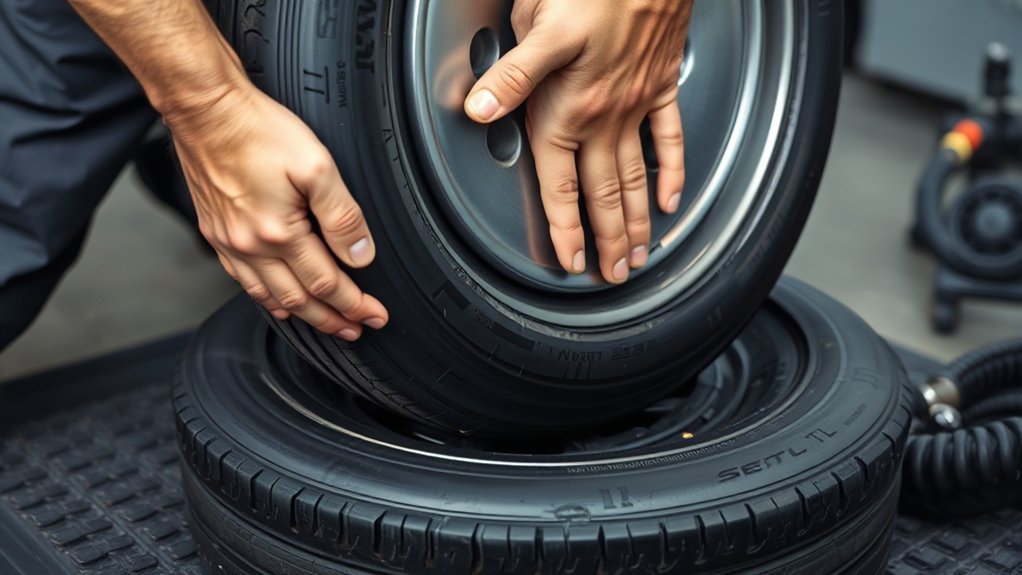
If the tire still will not seat, do not keep chasing it with more pressure. Release the air, break the bead back loose where needed, and reset the tire on the rim. Clean any missed debris and add a fresh, thin coat of mounting lubricant.
| Step | Action |
|---|---|
| 1 | Deflate the tire completely before adjusting it |
| 2 | Inspect the rim edge, bead seat, and tire bead again |
| 3 | Clear debris, rust, old sealant, and dried rubber |
| 4 | Recenter the tire around the valve stem and rim |
| 5 | Relubricate, remove the valve core, and retry with controlled airflow |
If the same section keeps leaking, the tire may be deformed, the rim may be damaged, or the tire and wheel may not be compatible. That is the point to stop and have the assembly checked by a tire shop.
Add Sealant After the Bead Pops In
Only add tire sealant if your tubeless system is designed to use it. Many bicycle, ATV, lawn, and some off-road setups use sealant, but most passenger-car tire mounting jobs do not require adding sealant through the valve stem. Follow the sealant manufacturer’s dosage for your tire size.
Remove Valve Core
After the bead is seated and the tire is stable, remove the valve core only if you need to inject sealant. Keep the wheel positioned so the valve is not at the bottom; this helps prevent sealant from spilling back out.
Add Sealant Correctly
Inject the recommended amount of sealant through the valve stem, reinstall the valve core, and inflate the tire to the correct operating pressure. Rotate and gently shake the tire so the sealant coats the inside evenly.
| Step | Purpose |
|---|---|
| Use the product’s dosage chart | Prevents too little or too much sealant |
| Match sealant to tire type | Avoids compatibility problems |
| Reinstall the valve core promptly | Restores pressure control |
| Rotate the tire | Spreads sealant across the inner surface |
Recheck Tire Pressure
After adding sealant, set the tire to the pressure listed on the vehicle placard, equipment manual, tire maker’s instructions, or wheel maker’s instructions. Do not use the sidewall maximum as the normal operating pressure unless the manufacturer specifically tells you to.
Check Pressure and Test for Leaks
Once both beads are seated, the valve core is installed, and the tire is inflated to operating pressure, test the bead and valve again with soapy water. Watch for steady bubbles. If bubbles appear, deflate and correct the leak before using the tire.
Let the tire sit for a few hours, then recheck pressure with an accurate gauge. A small pressure change can happen as temperature changes, but a steady drop means the seal is not holding. Reinspect the bead, valve, rim, and any puncture repairs before putting the tire back in service.
Troubleshooting a Tire Bead That Still Won’t Seat
| Problem | Likely Cause | Safe Fix |
|---|---|---|
| Air rushes out around the bead | Bead is too far from the rim or the tire is squeezed narrow | Use a centered strap, relubricate, and retry with the valve core removed |
| One side seats but the other side will not | Tire is crooked or dry on one side | Deflate, reposition the low side, lubricate again, and retry |
| Bead line is uneven | Partial seat or bead hung on rim edge | Deflate before adjusting; never pry or hammer a pressurized tire |
| Bubbles at the valve | Loose core, cracked stem, or TPMS valve issue | Replace the valve core or service the valve stem/TPMS hardware |
| Bead will not pop by the pressure limit | Damage, wrong size, corrosion, stiff bead, or poor alignment | Stop, deflate, inspect, and use a trained tire professional |
Frequently Asked Questions
How do you seat a stubborn tire bead?
Clean the rim and bead, confirm the tire and wheel match, apply approved mounting lubricant, remove the valve core, and use a high-volume air source with controlled pressure. For small tubeless tires, a centered ratchet strap can help spread the sidewalls. If the bead will not seat by the manufacturer’s bead-seating pressure limit, deflate, reposition, relubricate, and retry. Do not force it with more pressure.
Can I use WD-40 to seat a tire bead?
No. WD-40 is not tire mounting lubricant, and it can leave residue you do not want between the tire and rim. Use approved tire mounting lubricant instead. A small amount of mild soapy water may help in a field repair, but avoid petroleum, silicone, solvent, and flammable products.
What is the 105% rule on tires?
The 105% rule is not a bead-seating pressure rule. In cycling aerodynamics, it usually means the rim should be at least 105% as wide as the tire to help airflow. It does not mean you should inflate a tire to 105% of its recommended pressure to seat the bead.
How much PSI does it take to seat a tire bead?
It depends on the tire, wheel, and manufacturer’s instructions. Many tubeless passenger tire references use a 40 PSI bead-seating limit, while some specialty tires require lower limits. Always follow the tire and wheel maker’s limit. If the bead does not seat by that limit, deflate and fix the cause instead of adding more pressure.
Can I use fire or starting fluid to seat a tire bead?
No. Fire seating with starting fluid, ether, gasoline, aerosol sprays, or other flammable substances is dangerous and can damage the tire or rim. Use cleaning, correct lubricant, proper airflow, and professional equipment instead.
What are the common problems with tire bead sealer?
Bead sealer can hide the real problem if the rim is corroded, the bead is damaged, or the tire and wheel do not match. It can also make future tire service messy. Use bead sealer only when appropriate for the tire type and after the rim and bead have been inspected, cleaned, and confirmed safe.
When should I stop trying to seat the bead myself?
Stop if the tire or rim is damaged, the size does not match, the bead will not seat by the manufacturer’s pressure limit, the bead line stays uneven, the valve or rim keeps leaking, or you are working with a road-use tire, motorcycle tire, run-flat, truck tire, or multi-piece rim without proper training and equipment.
Conclusion
A tire bead usually seats when the basics are right: a clean rim, an undamaged bead, correct tire and wheel sizing, approved lubricant, fast airflow, and careful pressure control. If the tire still refuses to pop into place, do not force it. Deflate, reset, inspect for the real problem, and call a tire professional when the assembly is damaged, mismatched, or beyond your equipment.
Sources
- OSHA 29 CFR 1910.177 — inspection, compatibility, cleaning, lubricant, and rim-wheel servicing safety guidance
- Continental Tire Technical Service Bulletin — tire mounting lubricant, bead-seating pressure, restraint, and flammable-substance warnings
- U.S. Tire Manufacturers Association TISB Vol. 5 No. 3 — motorcycle tire mounting, pressure-limit, relubrication, and safety warnings
- Bridgestone Motorcycle Tire Safety Information — trained mounting, rim matching, pressure, and flammable-substance warnings
- Specialty Tires of America Wheels and Tire Mounting — specialty tire mounting, rim matching, pressure, and safety cage guidance

Related Articles

How to Book a Costco Tire Center Appointment
Tired of guesswork? Learn how to book a Costco Tire Center appointment and avoid surprises before your next visit.
Read More
How to Use Costco Tire Inflation: Step-by-Step
Never overinflate at Costco—learn the exact steps, tools, and tips to fill your tires safely and leave with confidence.
Read More
How to Book a Tire Appointment at Walmart
Mysterious steps make booking a Walmart tire appointment simpler than you think, but one crucial detail could save you time and money.
Read More