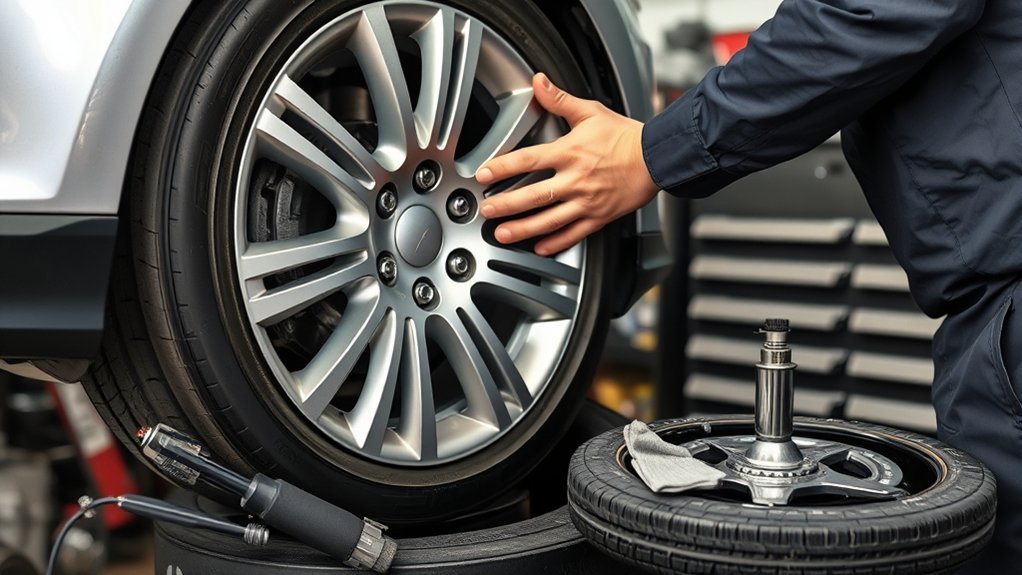
Unmounting a tire means separating the tire beads from the rim and lifting the tire off the wheel without damaging the bead, rim finish, valve stem, or TPMS sensor. The job is easiest with a tire machine, but the same safety rule always comes first: remove the valve core, confirm the tire is completely flat, and never fight a pressurized tire or damaged wheel.
Quick Answer
To unmount a tire, remove the valve core, fully deflate the tire, break both beads, lubricate the bead area, clamp the wheel securely, keep the TPMS sensor out of the tool path, and lift each bead over the rim with the demount head or tire irons.
Key Takeaways
- Remove the valve core and confirm the tire is fully deflated before bead breaking or demounting.
- Use tire lubricant, rim protectors, and the wheel’s drop center to reduce force and protect the bead.
- Keep the TPMS sensor near the top of the wheel and away from the bead breaker, pry bar, and demount head.
- Stop if the wheel is cracked, bent, badly corroded, or if the tire is a run-flat or stiff low-profile tire you cannot control safely.
- Clean the bead seats and inspect the valve, TPMS parts, and rim before any tire goes back on.
At a Glance
| Time Required | 10–25 minutes per tire with a machine; longer with manual tools |
| Difficulty | Moderate with a tire changer; difficult by hand |
| Tools Needed | Tire machine or manual changer, valve core tool, tire lubricant, bead breaker, tire irons, rim protectors, gloves, eye protection, wire brush, and pressure gauge |
| Cost | Low if you already have equipment; professional tire shops often charge a service fee per tire |
Warning: A tire and wheel assembly can release dangerous stored energy. Remove the valve core, confirm the tire is completely deflated, and stay out of the tire’s sidewall trajectory during inflation. For workplace and large-vehicle rim service, follow OSHA rim-wheel safety rules. For passenger tires, follow your tire changer manual and stop if anything looks damaged.
When Not to Unmount a Tire Yourself
Do not unmount a tire yourself if the rim is cracked, bent, deeply corroded, welded, heated, or visibly damaged. Also stop if the tire has been driven flat, the bead is torn, the sidewall is bulged, or the wheel uses a multi-piece rim. Those conditions need a trained tire professional with the correct equipment.
Run-flat tires, very low-profile tires, heavy truck tires, and reverse-mount wheels can also require special adapters or assist arms. If you need excessive force, the tool setup is wrong or the tire is not fully in the drop center. Forcing it can tear the bead, scratch the rim, or break a TPMS sensor.
Gather Tire Removal Tools
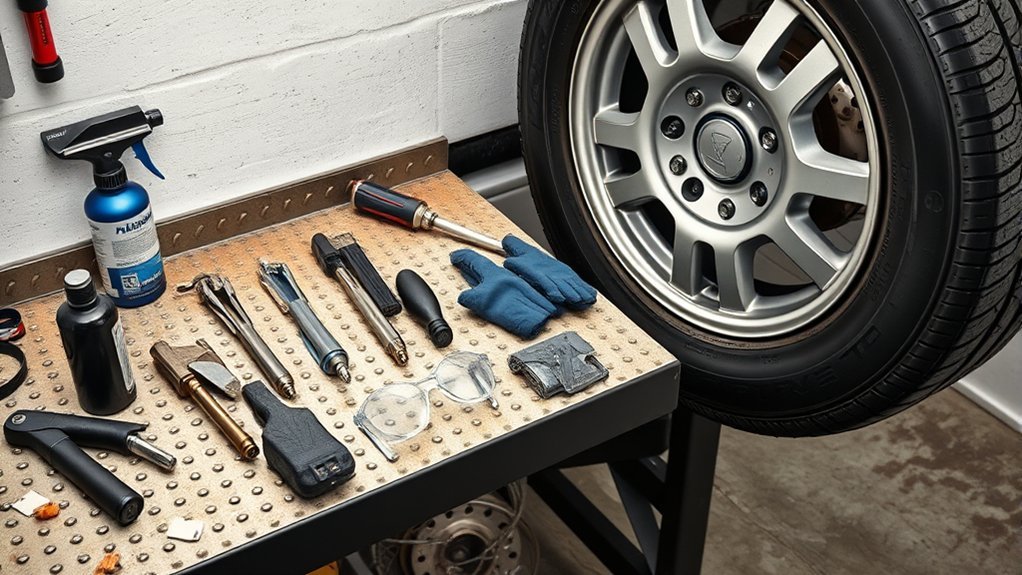
Start by setting up every tool before you touch the tire. You need a tire machine or manual tire changer, a valve core tool, tire lubricant, rim protectors, tire irons, gloves, eye protection, a pressure gauge, and a steel wire brush. If you are working with alloy wheels, use plastic or nylon rim protectors anywhere a clamp, pry bar, or demount head may touch the finish.
Use only approved tire lubricant on bead and rim mating surfaces. Do not use petroleum oil, grease, or flammable sprays. The lubricant helps the bead slide instead of tearing, and it reduces the force needed to lift the tire over the rim.
Pro Tip: Keep a dedicated valve-core container beside the machine. A missing or contaminated valve core can cause a slow leak after the tire is remounted.
[Products Worth Considering]
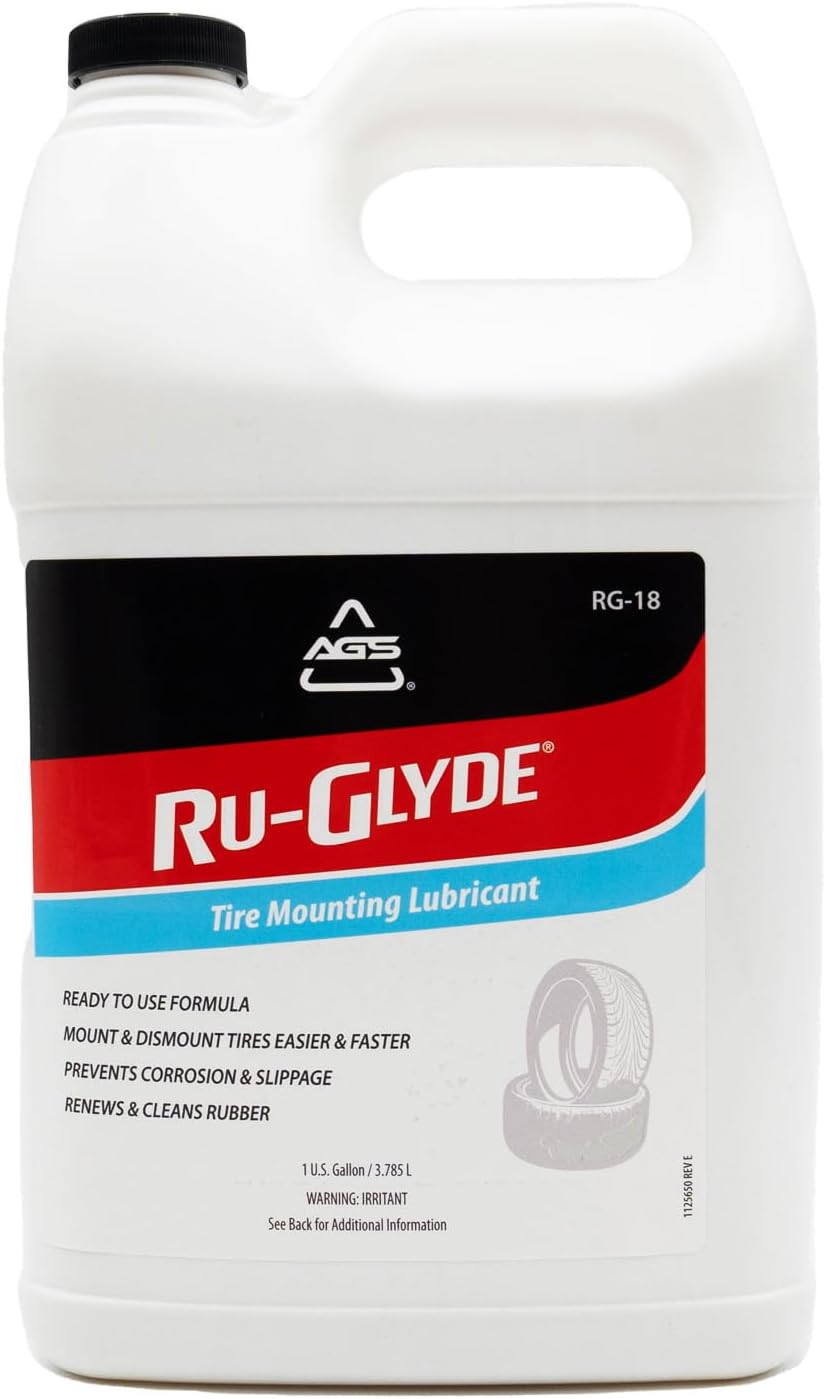
Ru-Glyde tire mounting lubricant from AGS seats tire beads smoothly on the first try with a thick, stay-put formula. It is ready to use with no mixing or dilution, helps prevent rim rust, and dries completely without causing bead slip residue. The water-based formula also conditions aged rubber, making it useful for sidewalls, gaskets, and door seals while remaining safe for tire, wheel, and technicians.

This manual duck head tire changer kit makes tire installation and removal simpler by letting you embed the duck head into the tire with applied pressure. The integrated design and durable steel construction help reduce friction and improve efficiency and safety during use. Suitable for 16–21 inch wheels, it’s convenient for cars, trucks, SUVs, and ATV tires, with 24-hour after-sales support.

This VEVOR tire bead breaker uses a slide-hammer impact and wedge tip to separate tire beads from rims quickly and efficiently without damaging hub surfaces. The long handle and sturdy steel construction help reduce user strain while providing reliable, portable tire changing for cars, trucks, and more. Ideal for home mechanics and repair shops handling multiple vehicle tire sizes.
Prepare the Tire and Wheel
Before deflating the tire, mark its position on the wheel with tape or a paint marker if you plan to reinstall the same tire. This helps you preserve rotation direction, balance reference marks, and the original valve-stem relationship. It does not guarantee that TPMS relearn or reset will be avoided, because that depends on the vehicle.
Check the sidewall for directional arrows, inside/outside markings, tire size, load index, and obvious damage. Remove clip-on or stick-on wheel weights only if they block the tire machine, bead breaker, or rim cleaning area. If the wheel has a direct TPMS sensor at the valve stem, note its location before bead breaking.
Mark Tire Location
Mark the tire at the valve stem and add a second mark for rotation direction if the tire is directional. If the tire has red or yellow balance dots, record their position before you remove it. These marks help during remounting, but the final balance should still be checked after the tire is installed.
Deflate and Remove the Valve Core
Remove the valve cap, then use a valve core tool to unscrew the valve core. Let the air escape until pressure is at zero. Press the sidewall by hand and listen at the valve stem to confirm there is no trapped pressure. Never break the bead on a tire that still holds air.
If the vehicle has TPMS, keep the valve stem and sensor away from the bead breaker shoe. In most cases, placing the valve stem near 12 o’clock while using the bead breaker gives you more control and keeps the sensor out of the direct tool path.
Clean Wheel and Beads
Wipe heavy dirt from the sidewall and rim before clamping the wheel. Grit trapped between the clamp and rim can scratch the finish or make the wheel sit unevenly. A cleaner wheel is easier to secure, easier to inspect, and less likely to leak after reassembly.
Break the Tire Bead and Deflate It
With the valve core removed and the tire fully flat, place the bead breaker shoe against the tire sidewall close to the rim lip, not on the rim itself. Keep the shoe away from the valve stem and TPMS sensor. Apply steady pressure until the bead separates from the bead seat.
Rotate the wheel and repeat at several points around the tire. Then turn the wheel over and break the second bead the same way. The bead is fully broken only when both sidewalls can be pushed down by hand around the full circumference.
Note: The drop center is the recessed channel in the middle of the wheel. When one side of the tire bead sits in this channel, the opposite side has enough slack to lift over the rim.
Unmount a Tire With a Rim Clamp
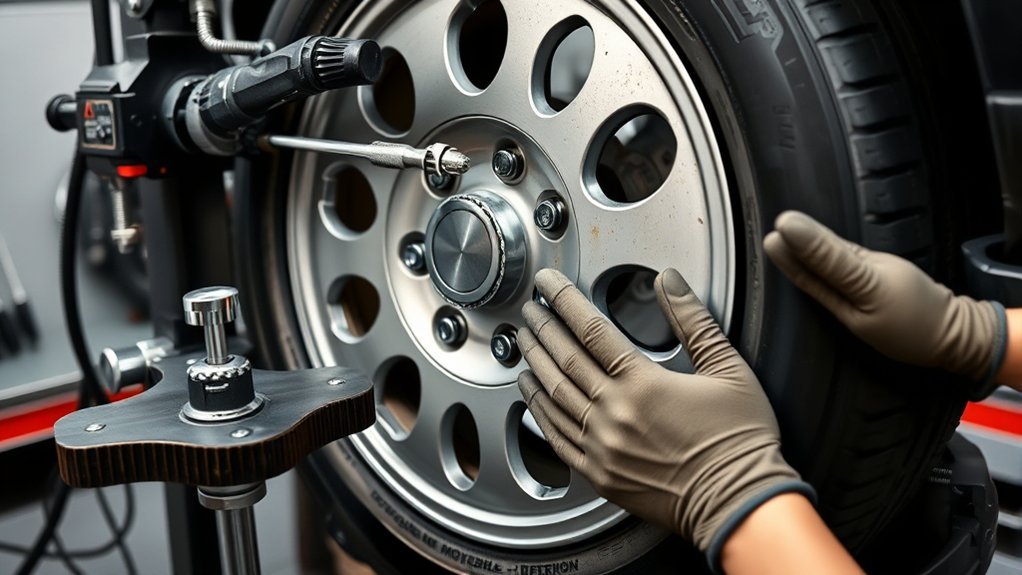
Once both beads are loose, place the wheel on the tire machine with the narrow ledge side and drop center positioned according to the machine maker’s instructions. Secure the wheel with protected clamps. The wheel should not rock, slip, or tilt on the turntable.
Set the demount head close to the rim without scraping it. Apply lubricant to the upper bead. Place the valve stem slightly ahead of the demount head if your machine manual recommends that position, then use a tire iron to lift the upper bead over the demount head. Rotate the turntable slowly while keeping the opposite side of the bead pressed into the drop center.
| Step 1 | Clamp the wheel securely with plastic guards in place. |
| Step 2 | Lubricate the upper bead and keep the opposite bead down in the drop center. |
| Step 3 | Lift the upper bead over the demount head without contacting the TPMS sensor. |
| Step 4 | Rotate slowly until the upper bead clears the rim. |
| Step 5 | Repeat for the lower bead, then lift the tire off the wheel. |
Do not let the bead climb out of the drop center while rotating. If the tire starts stretching or the machine stalls, stop, back up, add lubricant, and press the bead deeper into the wheel center.
[Products Worth Considering]

This tire inflator with pressure gauge delivers long-lasting performance with a durable rubber-protected gauge and sturdy build. The longer hose and 360 swivel air chuck help you seal the valve securely and keep your hands free while measuring, inflating, or deflating. It’s battery-free for reliable use and provides ±2 PSI accuracy in the mid-range for most typical tires, with universal compatibility for 1/4 NPT compressor outputs.

This 20-piece tire changer kit makes motorcycle and bike tire repairs easier with extended 14.5-inch spoons for leverage and access. Built from CrV steel with a corrosion-resistant chrome finish, it helps resist bending while protecting rims and tubes using smooth rounded spoons and included rim protectors. The all-in-one set includes valve removal and accessory tools for faster tire changes across motorcycles, bicycles, ATVs, and lawn equipment.

This TPMS relearn tool helps you quickly activate, match, and reset GM tire pressure sensors to keep the vehicle monitoring system working properly. It clears tire pressure alarms and dashboard warning lights after sensor replacement or tire rotation, and supports learning for common 315/433 MHz TPMS sensors. Designed for simple one-button operation, it can help you avoid unnecessary trips to repair shops.
Remove a Tire With a Pedestal Changer
A pedestal or center-clamp changer secures the wheel through the centerbore instead of the outer rim. Install the correct cone, plate, or reverse-mount adapter before tightening the wheel. Use plastic covers where the tool contacts the wheel face.
Break both beads according to the machine maker’s instructions, then lubricate the bead area. Position the demount head or roller so the TPMS sensor stays clear of the working zone. Use steady machine pressure rather than jerking the tire by hand. Once the upper bead clears the rim, repeat the process for the lower bead and lift the tire away.
[Products Worth Considering]

This TPMS sensor training and relearn reset tool is customized for Ford, Lincoln, and Mercury vehicles to help activate tire pressure programming after sensor replacement or tire rotation. It can activate individual tire pressure sensors with one-button operation, helping prevent TPMS warning light illumination. It is not a sensor programming tool and cannot program replacement sensors—use it to trigger/activate sensors only.

This compact 2-piece tire spoon kit makes quick work of motorcycle and small tire changes on the trail or in the garage. Forged and heat-treated steel construction helps resist bending and breaking for reliable repeated use. Curved ends grip tire beads securely while reducing pinching, and the flat lever end improves control for faster installs and removals.

Replace worn or malfunctioning GM TPMS sensors with this 433MHz pre-programmed sensor set designed for compatibility with many Chevrolet, Buick, GMC, and Cadillac models. It includes guidance for proper OBDII relearning/pairing after installation and supports reliable long-term operation with a high-performance CR2032 battery. Quality tested for durability and performance to help restore accurate tire pressure monitoring.
Manual Tire Changer Method
A manual changer or tire irons can remove some standard passenger tires, but it takes more effort and carries a higher risk of rim or bead damage. Secure the wheel firmly so it cannot slide. Break both beads first, then lubricate the upper bead and place rim protectors under each tire iron.
- Push one side of the bead into the drop center.
- Use the first tire iron to lift a small section of bead over the rim.
- Hold that section in place, then move a second tire iron a few inches away.
- Work around the rim in small steps instead of trying to lift a large section at once.
- Repeat the same process for the lower bead.
If the bead becomes very tight, stop and reset the tire in the drop center. Extra force usually means the tire is positioned wrong, not that you need a longer pry bar.
Clean the Rim and Check TPMS Parts
After the tire is off, clean the rim bead seats with a steel wire brush or approved wheel-cleaning tool. Remove loose rust, old rubber, adhesive, corrosion flakes, and dirt from the bead seat and rim flange. Do not grind away good metal or reshape the bead seat.
Inspect the wheel for cracks, bends, pitting, and old impact damage. A damaged wheel may not seal safely and should not be reused until inspected by a qualified professional. Also inspect the valve stem and TPMS sensor before installing another tire.
Clean Rim Bead Seats
Work around the entire bead seat until the sealing surface is smooth and clean. Pay close attention to corrosion near the valve stem, clip-on weight marks, and old adhesive from stick-on weights. Wipe away debris before applying new lubricant during mounting.
Inspect TPMS Components
Check the TPMS sensor body, valve stem, nut, grommet, washer, and valve core. Replace cracked, corroded, flattened, or distorted parts. If the sensor was hit by a bead breaker or pry bar, test it with a TPMS scan tool before the tire goes back on.
NHTSA explains that TPMS can be direct, using sensors in the tires, or indirect, using wheel-speed and other vehicle data. That is why relearn and reset steps vary by vehicle.
Replace Service Pack Parts
When a direct TPMS sensor uses a replaceable service pack, install the correct seal, washer, nut, valve core, and cap for that sensor. Tighten the nut to the sensor maker’s torque specification. Do not guess by feel, because over-tightening can distort the seal or crack the sensor body.
After remounting and inflation, check the TPMS light and verify pressure with an accurate gauge. FMVSS No. 138 defines TPMS performance requirements for many U.S. vehicles, but the reset procedure still comes from the vehicle owner’s manual.
Safe Remounting and Inflation After Removal
If you are mounting a tire after removal, confirm the tire size, bead diameter, load rating, and wheel width are compatible before assembly. Apply approved rubber lubricant to bead and wheel mating surfaces unless the tire or wheel maker says not to.
Use only the minimum pressure needed to seat the beads while the tire is on the machine. For final inflation, follow the tire changer manual, tire maker, wheel maker, and vehicle placard. Stay out of the trajectory, use a clip-on chuck when required, and inflate to the vehicle manufacturer’s recommended cold pressure rather than the maximum pressure molded on the tire sidewall. NHTSA recommends using the vehicle placard or owner’s manual for the correct cold tire pressure.
Troubleshooting Common Tire Unmounting Problems
Bead Will Not Break
Add lubricant near the bead seat, rotate the tire, and work in several positions instead of one spot. If corrosion is heavy or the tire has been driven flat, stop and have it inspected. Forcing the bead breaker can bend a rim or tear the tire.
Bead Keeps Slipping Out of the Drop Center
Use a helper arm, bead hold-down clamp, or manual pressure to keep the opposite side of the bead in the drop center. Without that slack, the bead will stretch against the rim and resist the demount head.
Rim Is Getting Scratched
Stop and inspect the clamp guards, demount head cover, and rim protectors. Dirt under a clamp can scratch a wheel as badly as a metal tool. Clean the contact points and reset the wheel before continuing.
TPMS Light Comes On After Service
Check the tire pressure first. If pressure is correct, scan the TPMS sensor and follow the vehicle’s relearn or reset procedure. A flashing TPMS warning followed by a solid light often points to a system fault rather than normal low pressure.
New Tire Leaks at the Bead
Deflate the tire safely, remove it if needed, and inspect the bead seat again. Common causes include corrosion, old rubber buildup, bead damage, a dirty valve stem seat, or a bent rim flange.
Frequently Asked Questions
How do you take off a tire step by step?
Remove the valve cap, remove the valve core, fully deflate the tire, break both beads, lubricate the bead area, secure the wheel on a tire machine or manual changer, lift the upper bead over the rim, then repeat for the lower bead. After removal, clean the bead seats and inspect the rim, valve, and TPMS parts.
What is the 3 tire rule?
The “3 tire rule” is an informal stability reminder some people use when lifting a vehicle: keep as many tires supported as practical and never lift from unsafe points. It is not a substitute for jack stands, the vehicle owner’s manual, or shop safety procedures. For unmounting a tire from a rim, the key rule is different: remove the wheel, remove the valve core, and fully deflate the tire before demounting.
How do you dismount a tire on a tire machine?
Clamp the wheel securely, keep the TPMS sensor out of the tool path, lubricate the bead, and set the demount head close to the rim without scraping it. Lift the upper bead over the demount head, rotate slowly, then repeat for the lower bead. Keep the opposite side of the bead pressed into the drop center during each pass.
How do you dismount and mount a tire safely?
To dismount, fully deflate the tire, break both beads, lubricate the bead area, and remove both beads with the machine or tire irons. To mount, confirm tire and wheel compatibility, lubricate the beads, keep the bead in the drop center, protect the TPMS sensor, seat the beads with the minimum pressure needed, and inflate to the vehicle placard pressure using approved safety procedures.
Can you unmount a tire without a machine?
Yes, some standard passenger tires can be removed with a manual changer, bead breaker, tire irons, lubricant, and rim protectors. It is much harder than using a tire machine and is not a good choice for run-flat tires, stiff low-profile tires, expensive alloy wheels, or damaged tire and wheel assemblies.
Do you need to replace TPMS service parts when removing a tire?
Replace TPMS seals, grommets, washers, nuts, valve cores, or caps when they are worn, corroded, leaking, or required by the sensor maker. Many shops replace service-pack parts during tire service because reused rubber seals can leak after the tire is remounted.
Conclusion
Unmounting a tire is a controlled process, not a strength test. Deflate it fully, break both beads, use the drop center, protect the rim, and keep the TPMS sensor out of the tool path. If the bead will not move or the wheel looks damaged, stop and get professional help. Careful setup prevents leaks, sensor damage, scratched wheels, and unsafe reassembly.
Sources
- OSHA 1910.177, Servicing multi-piece and single piece rim wheels — deflation, lubrication, rim inspection, and inflation safety practices for covered rim-wheel service.
- NHTSA TireWise: Tire Safety Ratings and Awareness — tire pressure, TPMS basics, and tire maintenance guidance.
- 49 CFR 571.138, Standard No. 138; Tire pressure monitoring systems — U.S. TPMS performance requirements.
- U.S. Tire Manufacturers Association: Tire Care & Safety — tire inspection, pressure, repair, and professional service guidance.