
How to Use a Tire Changer Machine: Full Tutorial for Beginners
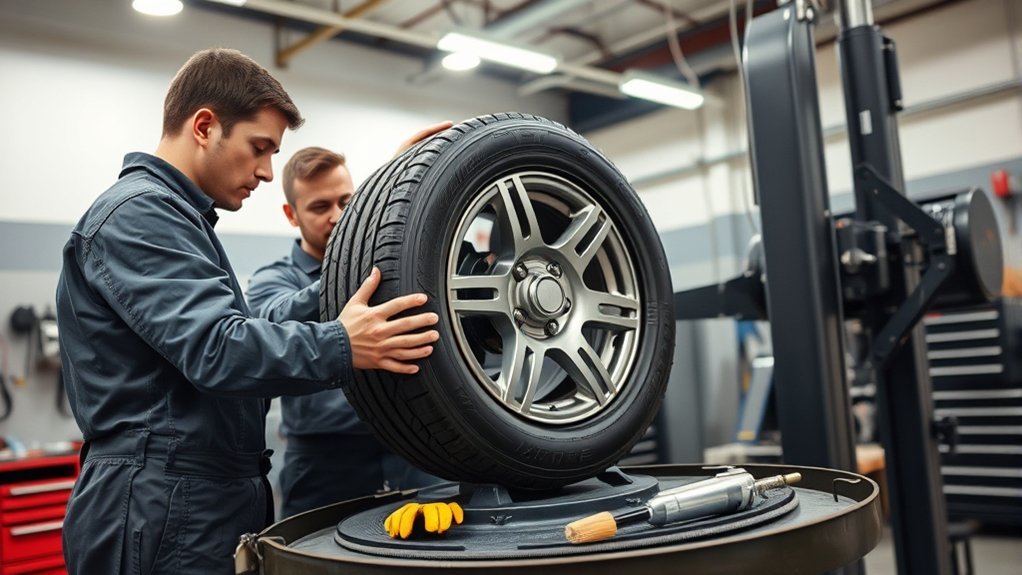
Using a tire changer machine is much easier than removing a tire by hand, but it still involves stored air pressure, moving clamps, bead-breaking force, and possible TPMS sensor damage. This guide explains the general process for standard passenger and light-truck tubeless tire/wheel assemblies. Always follow your specific machine manual, tire manufacturer instructions, and shop safety rules before starting.
Quick Answer
To use a tire changer machine, remove the valve core, fully deflate the tire, break both beads away from the rim and TPMS sensor, clamp the wheel, position the mount/demount head, lubricate both beads, demount and mount the tire, seat the bead safely with controlled air, then set pressure to the vehicle placard and check for leaks.
Key Takeaways
- Remove the valve core, not necessarily the whole valve stem, to release air before bead breaking.
- Keep the bead breaker, pry bar, and mount/demount head away from the TPMS sensor and rim face.
- Use approved tire mounting lubricant on both beads and rim flanges; never use petroleum products or flammable shortcuts.
- Stand clear during bead seating, use the machine or a restraint device as required, and do not exceed the tire manufacturer’s bead-seating pressure limit.
- Finish by checking cold inflation pressure, leak-testing the bead and valve, balancing the wheel, and torquing lugs to specification.
At a Glance
| Time Required | About 20–45 minutes per tire for a trained DIYer or technician, plus time for balancing and reinstalling the wheel |
| Difficulty | Intermediate; high-risk if you are not trained on tire inflation and bead seating |
| Tools Needed | Tire changer, valve core tool, tire mounting lubricant, bead lever, eye protection, gloves, tire pressure gauge, air supply, leak-check solution, torque wrench, and wheel balancer |
| Cost | Consumables are usually low-cost, but tire changer machines range from basic manual units to professional powered machines costing thousands of dollars |
Prepare the Tire Changer Safely
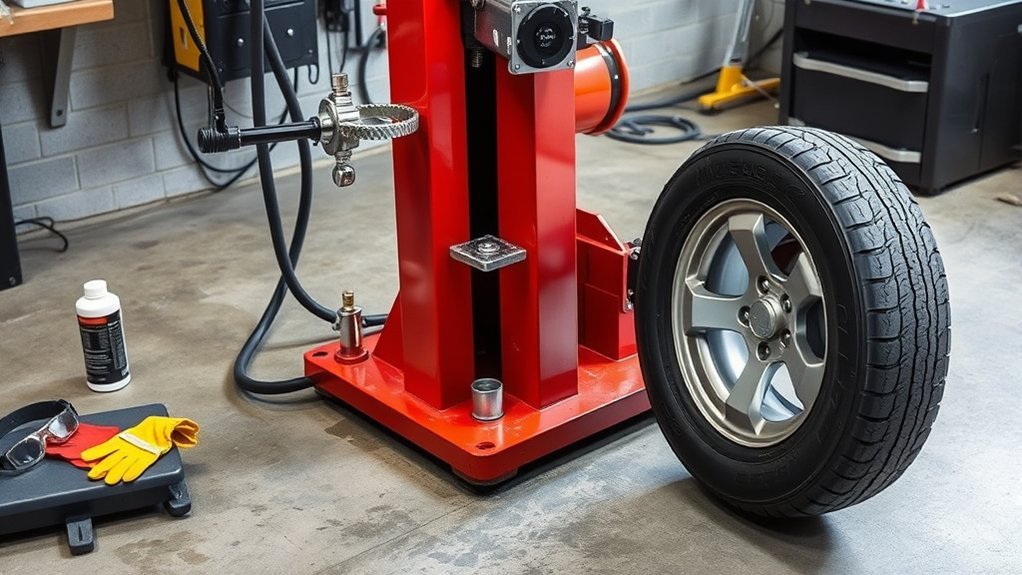
Before you touch the pedals, clear the work area and inspect the machine. Make sure the turntable, clamps, bead breaker shovel, mount/demount head, air hose, pressure gauge, and emergency stop or shutoff controls are working. Read the machine’s operating manual if the pedal layout, clamp style, or inflation system is unfamiliar.
Warning: Tire inflation and bead seating can be dangerous. OSHA’s rim-wheel servicing rule requires a restraining device or barrier for certain inflation work, and industry guidance says to secure the assembly on the machine or in a safety cage before inflating. Never lean over the tire while adding air.
Wear eye protection and work gloves, and keep loose clothing away from rotating parts. Check the tire sidewall, wheel lip, and bead area for cracks, cuts, severe corrosion, or bent rim sections. If the wheel or tire is damaged, stop and replace the unsafe part instead of forcing it through the machine.
Also confirm that the replacement tire matches the wheel diameter, width range, load rating, and vehicle requirements. If you are still choosing a tire, compare UTQG ratings, load index, speed rating, and the vehicle placard before mounting.
[Products Worth Considering]

This VEVOR tire bead breaker uses a slide-hammer impact and wedge tip to separate tire beads from rims quickly and efficiently without damaging hub surfaces. The long handle and sturdy steel construction help reduce user strain while providing reliable, portable tire changing for cars, trucks, and more. Ideal for home mechanics and repair shops handling multiple vehicle tire sizes.

This 4-in-1 tire valve core removal tool helps you deflate, unblock, and remove or install valve cores quickly for easier tire repair. The multifunction design also supports re-taping damaged threads and reaming inside the valve stem for smoother service. Included as a 2-pack, it’s compact for convenient carry and works for cars, bicycles, and motorcycles.
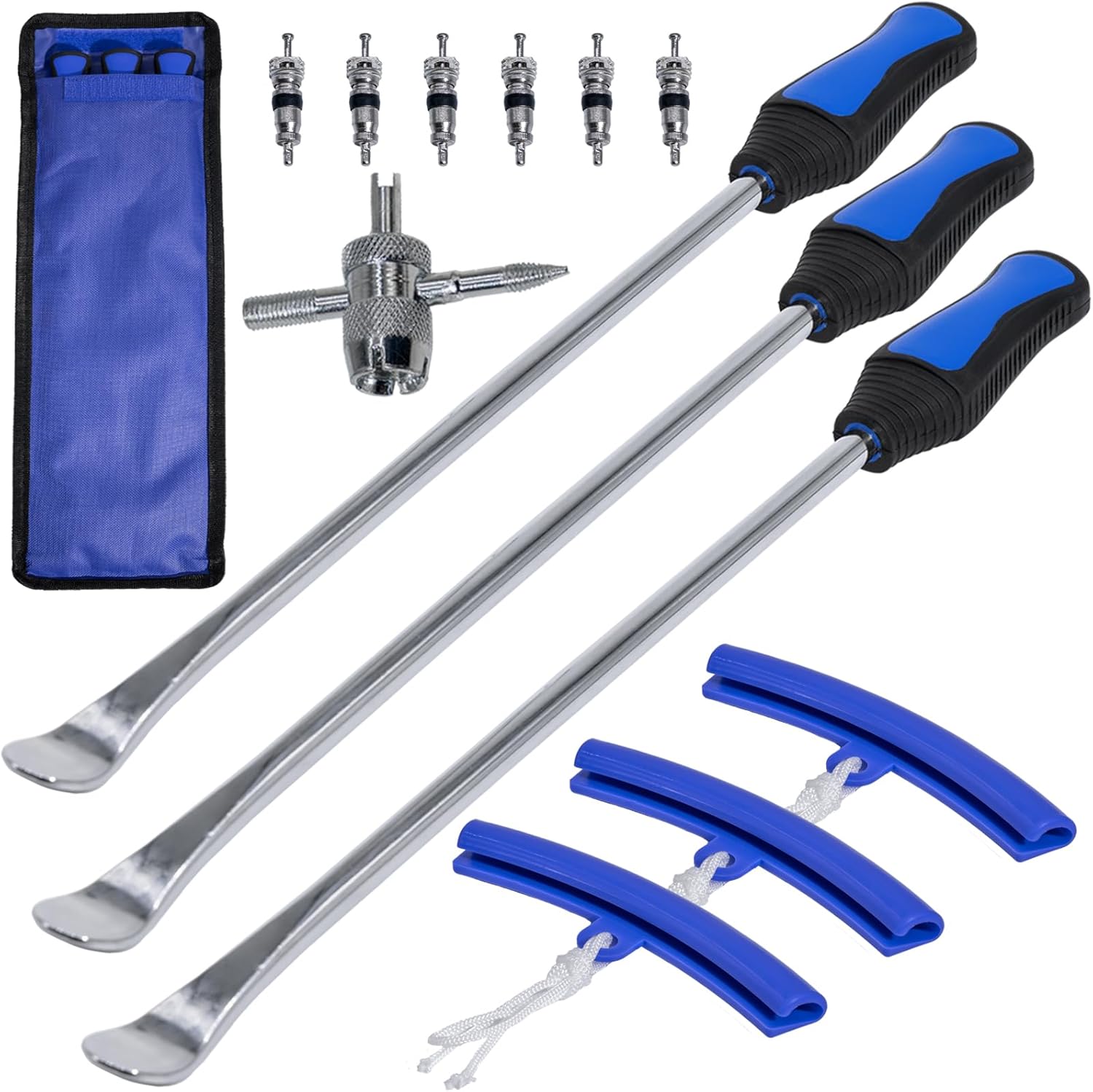
This tire spoon set helps you remove and install motorcycle, dirt bike, lawn tractor, and bicycle tires with extra leverage from a 14.5-inch spoon length. The kit includes tire removal tools, rim protectors, and a valve tool to simplify repairs and help protect rims during changing. Designed for quick, on-the-go service, it’s convenient for garage work, trails, and track-side fixes.
Remove the Valve Core and Break the Bead
Start by removing the valve cap, then use a valve core tool to remove the valve core. This lets the tire deflate completely. Do not begin bead breaking until all air pressure is gone.
Remove the Valve Core
Hold the valve core as you unscrew it so it does not shoot out or get lost. If the valve stem is cracked, leaking, corroded, or being serviced as part of a TPMS repair kit, replace it according to the sensor or valve manufacturer’s instructions. Otherwise, the normal deflation step is valve core removal, not tearing out the entire stem.
Note: If the wheel has a TPMS sensor, mark the valve/sensor location before bead breaking. Keep the bead breaker and tire tool away from that area so the sensor body does not get crushed between the tire bead and rim.
Position the Bead Breaker
Place the tire against the bead breaker pad or shovel according to the machine manual. Position the shovel close to the rim edge, but do not let it strike the metal rim face. You want the shovel to push on the tire sidewall near the bead, not gouge the wheel.
If the tire has a TPMS sensor, start the bead break away from the valve stem. Work around the tire as needed, using steady pressure instead of sudden force. If you are replacing the tire with a tougher model, such as one from a list of durable tires, take extra time with lubrication and positioning because stiff sidewalls resist movement.
Press the Bead-Breaker Pedal
Press the bead-breaker pedal smoothly until the bead separates from the rim seat. Release the pedal, rotate the wheel, and repeat until the bead is fully loose on that side. Turn the wheel over and break the bead on the opposite side using the same method.
- Confirm the tire is fully deflated first.
- Keep fingers and hands out of pinch points.
- Keep the shovel off the rim face.
- Work away from TPMS sensors and valve hardware.
- Break both beads before clamping the wheel.
Lock the Wheel and Remove the Tire
Place the wheel on the tire changer turntable or center clamp with the correct side facing up for your machine and wheel design. Lock the wheel securely using the clamp pedal or center-clamp mechanism. The wheel should not rock, slip, or shift when light pressure is applied.
Swing the arm into position and set the mount/demount head, often called the duckhead, near the rim edge. Leave the clearance recommended by the machine manual so the head guides the tire bead without scraping the wheel. Tighten the arm or knob so the head stays fixed during rotation.
Use the bead lever to lift the upper bead over the mount/demount head. Keep the bead opposite the head pushed down into the wheel’s drop center; this gives the tire enough slack to come off without stretching or tearing the bead. Rotate the turntable slowly and watch the bead as it moves over the head.
Repeat the process for the lower bead. If the bead binds, stop the turntable, add lubricant, reset the bead into the drop center, and try again. Do not force the tire off with excessive pry-bar pressure because that can bend a rim, damage the tire bead, or break a TPMS sensor.
Pro Tip: While the tire is off, inspect the rim sealing surface, valve hole, and old tire. Check tread depth, uneven wear, sidewall cracks, and puncture repairs before deciding whether the old tire is safe to reuse.
Lubricate and Mount the New Tire
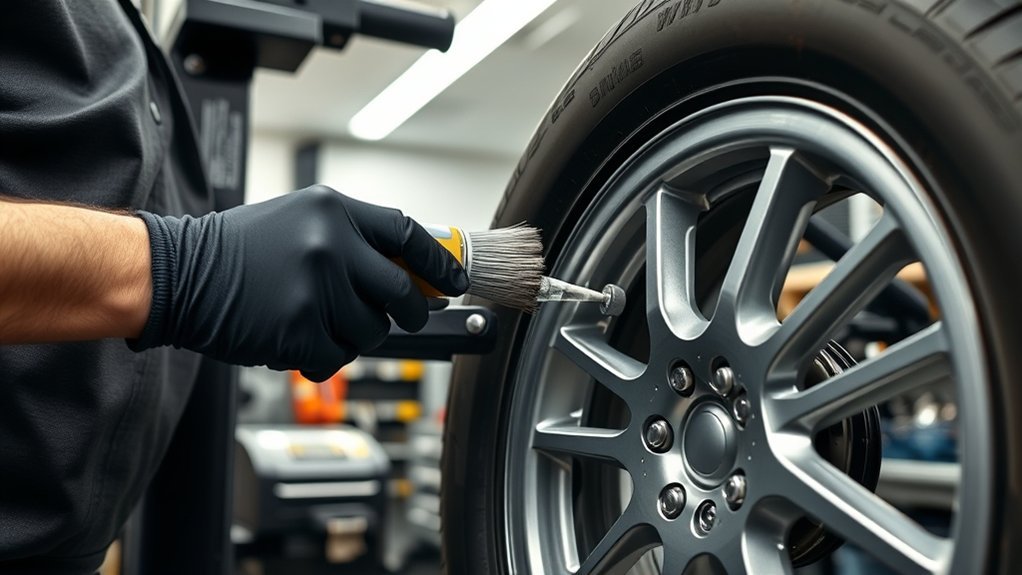
Clean the rim bead seats with a suitable brush or cleaning pad, then wipe away loose corrosion, old rubber, and dirt. Install a new valve stem or TPMS service kit if required. Before mounting, confirm again that the tire matches the vehicle’s tire size specifications and load requirements.
Bead Lubrication
Apply approved tire mounting lubricant to both tire beads and the rim bead-seat areas. Use enough lubricant for the bead to slide smoothly, but do not flood the tire or coat TPMS electronics. Do not use petroleum products, silicone sprays, antifreeze, starter fluid, or flammable materials to mount or seat a tire.
A tire bead should slide into place with lubrication, correct drop-center positioning, and machine leverage—not brute force.
Tire Mounting Steps
Set the tire at a slight angle over the rim. Place the lower bead over the duckhead tail and under the head, then rotate the turntable while guiding the tire. Keep the bead section opposite the head down in the drop center.
Mount the upper bead the same way. Keep your knuckles clear of the rim and mount/demount head, and do not stand where the rotating assembly can catch your clothing. If the tire is a low-profile, run-flat, or stiff sidewall design, use assist arms or a bead press if your machine has them.
- Lubricate both beads before mounting.
- Keep the tire bead in the drop center.
- Watch the TPMS sensor location throughout the rotation.
- Stop and reset if the bead climbs, binds, or twists.
- Never force the bead over the rim dry.
Seat the Tire Bead With Air
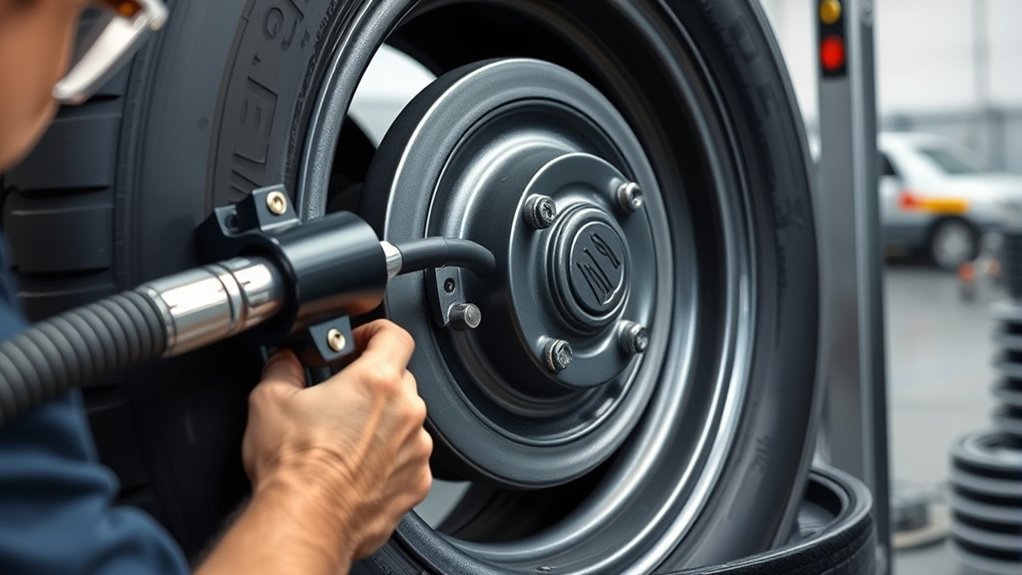
Once the tire is mounted, connect the air hose securely to the valve stem. Keep the valve core out during initial bead seating if your machine and tire instructions call for higher air flow, then reinstall it after the beads seat. Stand to the side, keep your face and body out of the tire’s trajectory path, and monitor the pressure gauge at all times.
Warning: Do not exceed the tire manufacturer’s maximum bead-seating pressure. If no lower limit is specified, industry guidance commonly warns not to exceed 40 psi while seating beads. If the bead does not seat, fully deflate the tire, re-lubricate, inspect for damage or size mismatch, and try again safely.
Use short, controlled air bursts only if your tire changer is designed for bead seating. You may hear one or two sharp pops as the beads move into place. After the bead seats, stop the air flow and visually check that the bead indicator line is even around both sides of the rim.
Reinstall the valve core, inflate the tire to the vehicle manufacturer’s recommended cold pressure, and check the bead and valve area with leak-check solution. If bubbles form, deflate the tire and correct the leak before reinstalling the wheel.
[Products Worth Considering]

This 20-piece tire changer kit makes motorcycle and bike tire repairs easier with extended 14.5-inch spoons for leverage and access. Built from CrV steel with a corrosion-resistant chrome finish, it helps resist bending while protecting rims and tubes using smooth rounded spoons and included rim protectors. The all-in-one set includes valve removal and accessory tools for faster tire changes across motorcycles, bicycles, ATVs, and lawn equipment.

This manual duck head tire changer kit makes tire installation and removal simpler by letting you embed the duck head into the tire with applied pressure. The integrated design and durable steel construction help reduce friction and improve efficiency and safety during use. Suitable for 16–21 inch wheels, it’s convenient for cars, trucks, SUVs, and ATV tires, with 24-hour after-sales support.
Check Tire Pressure and Wrap Up
Use a calibrated tire pressure gauge to set the tire to the pressure listed on the vehicle’s tire information placard or owner’s manual. Do not use the sidewall maximum pressure as the normal operating pressure unless the vehicle or tire manufacturer specifically instructs you to do so.
FuelEconomy.gov reports that keeping tires properly inflated can improve gas mileage by 0.6% on average and up to 3% in some cases, while underinflation can reduce mileage by about 0.2% for every 1 psi drop in the average pressure of all tires. Proper pressure also helps tire life, handling, and consistent wear.
After inflation, balance the wheel assembly on a wheel balancer. Reinstall the wheel on the vehicle, tighten the lug nuts by hand first, lower the vehicle properly, and torque the lug nuts in the correct pattern to the vehicle manufacturer’s specification. If the vehicle has TPMS, complete any required relearn or sensor registration procedure.
Troubleshooting Common Tire Changer Problems
| Problem | Likely Cause | Fix |
| Bead will not break | Old bead stuck by corrosion, wrong shovel angle, or tire not fully deflated | Confirm zero pressure, add lube near bead, reposition shovel, and work around the tire gradually |
| Rim gets scratched | Mount head too close, missing plastic protectors, or pry bar contacting the wheel | Reset duckhead clearance, use protectors, and use steady pressure instead of prying against the rim face |
| Bead will not seat | Dry bead, dirty rim, wrong tire size, damaged bead, or air escaping too quickly | Deflate completely, inspect tire and rim, clean, re-lubricate, verify size, and retry without exceeding bead-seating limits |
| Slow leak after mounting | Valve leak, dirty bead seat, damaged bead, or corrosion on rim | Use leak-check solution, replace valve hardware, clean bead seat, and remount if needed |
| TPMS warning after service | Sensor damaged, dead battery, missing relearn, or incorrect pressure | Check pressure cold, inspect sensor, scan TPMS, and complete the vehicle’s relearn procedure |
Frequently Asked Questions
How much does a tire changer machine cost?
A basic manual tire changer can cost far less than a powered shop machine, while professional swing-arm, tilt-back, center-clamp, and leverless machines can cost several thousand dollars or more. Budget for accessories too, including tire lube, valve tools, wheel weights, protectors, and a wheel balancer.
What are the common problems with tyre changers?
Common tyre changer problems include scratched rims, incorrect bead seating, weak clamping, poor lubrication, air leaks, damaged TPMS sensors, and bent tire beads from forcing stiff sidewalls. Most problems come from rushing, using the wrong machine setup, skipping lubricant, or ignoring the drop center.
How do you use a tire pressure machine at home?
Check pressure when the tire is cold. Remove the valve cap, press the hose or gauge firmly onto the valve, read the pressure, and add air in short bursts. Set the tire to the vehicle placard or owner’s manual pressure, not the sidewall maximum. Reinstall the valve cap when finished.
How much money does a tire changer make?
Tire changer pay depends on location, employer, experience, certifications, and whether the role includes general automotive service. For current U.S. wage data, check the Bureau of Labor Statistics Occupational Employment and Wage Statistics tables for “Tire Repairers and Changers.”
Do you need to balance a tire after using a tire changer?
Yes. After a tire is mounted, the wheel and tire assembly should be balanced before going back on the vehicle. Skipping balancing can cause vibration, uneven wear, steering shake, and customer comebacks.
Can a tire changer damage a TPMS sensor?
Yes. A bead breaker, pry bar, or tire bead can damage the TPMS sensor if the sensor location is ignored. Mark the valve stem, keep the bead breaker away from the sensor, use enough lubricant, and follow the vehicle and tire changer instructions for sensor-safe mounting.
Conclusion
A tire changer machine can make tire replacement faster, cleaner, and more controlled, but only when you use it with the right safety habits. Deflate the tire fully, protect the TPMS sensor, keep the bead in the drop center, lubricate the beads, stand clear during inflation, and never force a bead that will not seat. Once the tire is mounted, set pressure from the vehicle placard, leak-check, balance the wheel, and torque the lugs correctly. If you drive in cold or snowy conditions, choose the right seasonal tire as well, including dedicated winter tires where appropriate.
Sources
- OSHA 29 CFR 1910.177 — rim-wheel servicing and inflation restraint/barrier safety requirements
- NHTSA Tire Safety — cold tire pressure, tire placard guidance, and consumer tire safety basics
- FuelEconomy.gov Maintenance Tips — fuel-economy impact of proper tire inflation
- U.S. Tire Manufacturers Association Tire Information Service Bulletin — approved lubricant, bead-seating pressure, and tire mounting safety guidance
- Hunter Tire Changer Operation Manuals — manufacturer-specific tire changer operating instructions
- BLS Occupational Employment and Wage Statistics Tables — current wage data source for tire repairers and changers

Related Articles

How to Book a Costco Tire Center Appointment
Tired of guesswork? Learn how to book a Costco Tire Center appointment and avoid surprises before your next visit.
Read More
How to Use Costco Tire Inflation: Step-by-Step
Never overinflate at Costco—learn the exact steps, tools, and tips to fill your tires safely and leave with confidence.
Read More
How to Book a Tire Appointment at Walmart
Mysterious steps make booking a Walmart tire appointment simpler than you think, but one crucial detail could save you time and money.
Read More