
How to Operate a Tire Machine: Complete Beginner’s Tutorial
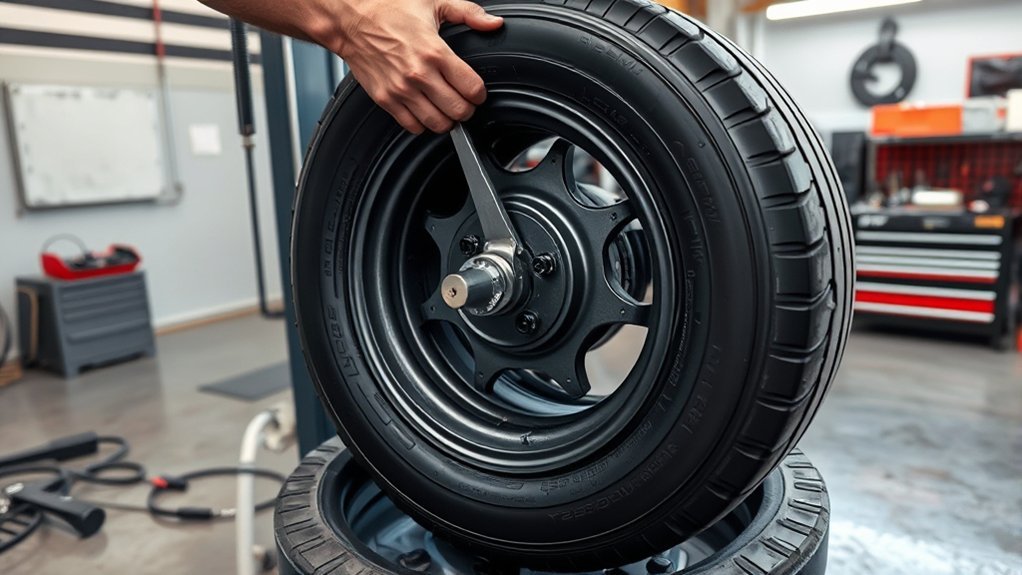
Operating a tire machine is straightforward only when the wheel, tire, machine, and technician are properly prepared. This guide covers the basic workflow for typical passenger and light-truck single-piece wheel assemblies: deflating the tire, breaking the bead, clamping the wheel, demounting the old tire, lubricating the bead, mounting the new tire, seating the bead, and setting final pressure. Always follow the tire changer’s manual, the tire manufacturer’s warnings, and your shop’s safety procedures before starting.
Quick Answer
To operate a tire machine, fully deflate the tire, inspect the wheel and tire, break both beads, clamp the wheel securely, use the mount/demount head to remove the tire, lubricate the new tire’s beads, mount both beads into the drop center, then inflate carefully until the beads seat and the tire reaches the vehicle’s recommended PSI.
Key Takeaways
- Use a tire machine only after training and after reading the machine’s operating manual.
- Remove the valve cap and valve core to deflate the tire before breaking the bead.
- Keep the bead breaker on the tire sidewall close to the rim, not on the metal rim itself.
- Use approved tire bead lubricant on the bead and rim flange; never use flammable products to seat a bead.
- Follow the tire manufacturer’s maximum bead-seating pressure; if no lower limit is given, do not exceed 40 psi while seating beads.
At a Glance
| Time Required | About 10–20 minutes per tire for a trained user, depending on tire style, wheel condition, and machine type. |
| Difficulty | Moderate. Low-profile, run-flat, stiff-sidewall, reverse-mount, and TPMS-equipped wheels require extra care. |
| Tools Needed | Tire changer, valve-core tool, approved bead lubricant, tire gauge, air supply, clip-on air chuck if required, leak-check solution, PPE, and any TPMS service parts. |
| Cost | Usually low per tire if you already have shop equipment; extra costs may include valve stems, TPMS service kits, wheel weights, or specialty tire service. |
Warning: Tire changing can cause serious injury if the tire, rim, machine, or inflation process is handled incorrectly. This guide is not a substitute for training, your tire changer’s manual, or the tire and wheel manufacturer’s instructions. Large truck, bus, agricultural, off-road, and multi-piece rim assemblies require specialized procedures and may fall under OSHA rim-wheel servicing rules.
How a Tire Machine Works
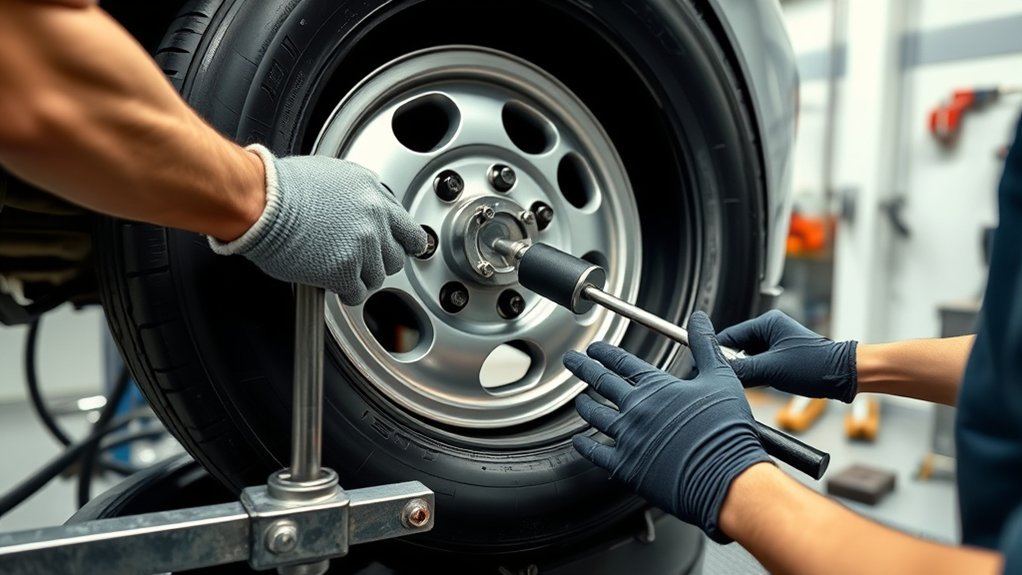
A tire machine, also called a tire changer, uses a bead breaker, turntable or center clamp, mount/demount head, tire bar, foot pedals, and air system to remove and install tires with controlled mechanical force. The bead breaker separates the tire bead from the rim bead seat. The clamping system holds the wheel steady. The mount/demount head, often called the duck head, guides the bead over the rim while the turntable rotates.
Controls vary by machine. Some tire changers use outside rim clamps, some use center-post clamping, and some have helper arms for stiff or low-profile tires. Before using any model, read the manufacturer’s operating manual and identify the controls for bead breaking, clamping, rotation, tool-head movement, and inflation.
Note: Pedal colors and positions are not universal. Do not rely on a generic “middle pedal” or “black pedal” description unless it matches your specific tire changer.
[Products Worth Considering]

This VEVOR tire bead breaker uses a slide-hammer impact and wedge tip to separate tire beads from rims quickly and efficiently without damaging hub surfaces. The long handle and sturdy steel construction help reduce user strain while providing reliable, portable tire changing for cars, trucks, and more. Ideal for home mechanics and repair shops handling multiple vehicle tire sizes.
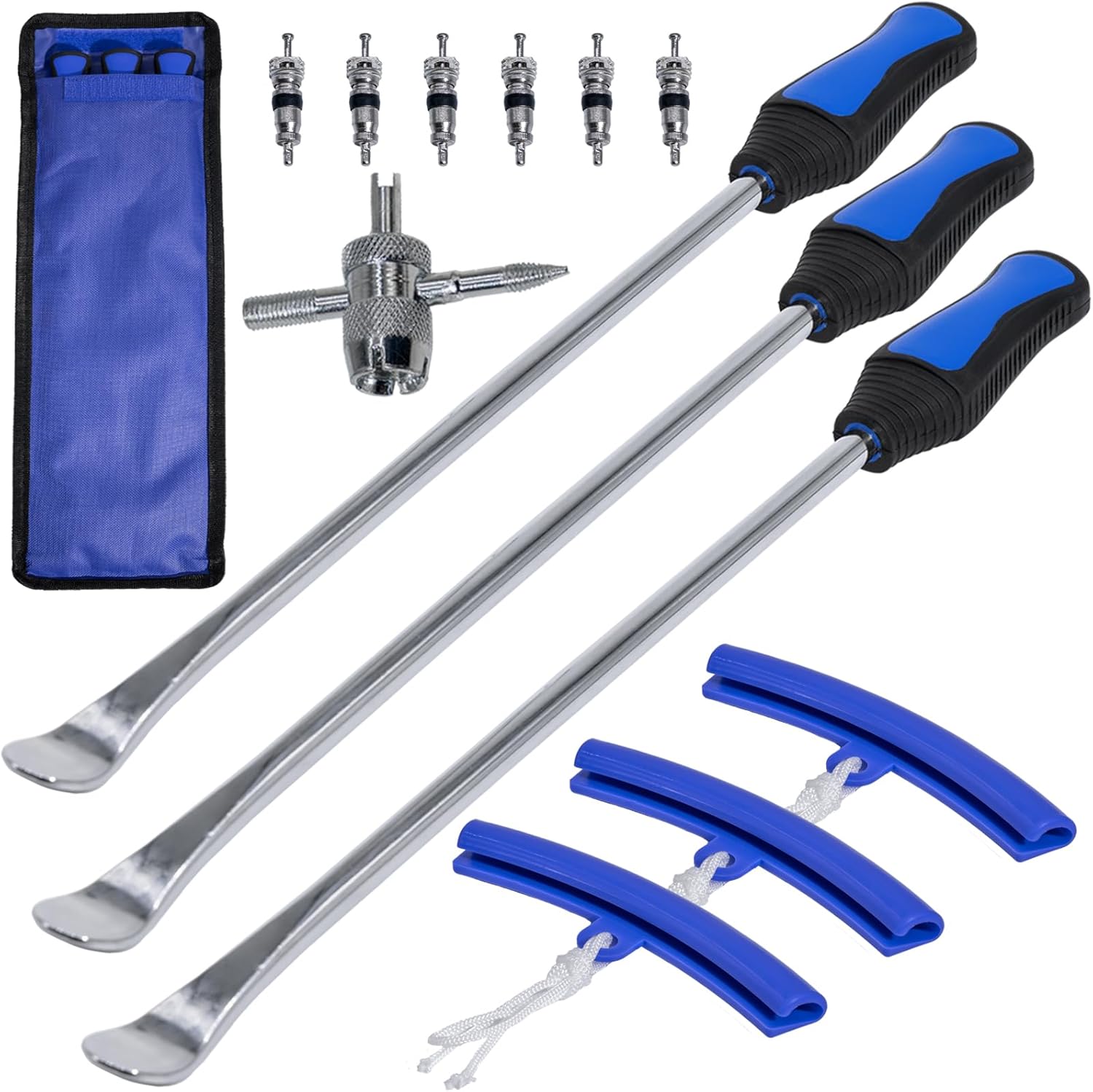
This tire spoon set helps you remove and install motorcycle, dirt bike, lawn tractor, and bicycle tires with extra leverage from a 14.5-inch spoon length. The kit includes tire removal tools, rim protectors, and a valve tool to simplify repairs and help protect rims during changing. Designed for quick, on-the-go service, it’s convenient for garage work, trails, and track-side fixes.

This 20-piece tire changer kit makes motorcycle and bike tire repairs easier with extended 14.5-inch spoons for leverage and access. Built from CrV steel with a corrosion-resistant chrome finish, it helps resist bending while protecting rims and tubes using smooth rounded spoons and included rim protectors. The all-in-one set includes valve removal and accessory tools for faster tire changes across motorcycles, bicycles, ATVs, and lawn equipment.
Safety Checks Before You Start
Start with personal protection and a clean work area. Wear safety glasses or a face shield, cut-resistant gloves, sturdy closed-toe or steel-toe footwear, and snug clothing. Remove loose jewelry, keep long hair secured, and keep your hands away from pinch points. Check that the machine is bolted or positioned securely, the air supply is regulated, the bead breaker moves smoothly, and the clamps or center post are clean.
Inspect the tire and wheel before placing them on the machine. Do not mount a tire on a damaged rim, a cracked wheel, a severely corroded bead seat, or a rim with the wrong diameter or width. Confirm the tire size matches the wheel size exactly. A tire that “almost fits” can fail violently during inflation.
Warning: Never use starter fluid, ether, gasoline, aerosol inflators, heat, or any flammable substance to seat a bead. Use only approved tire bead lubricant and controlled air pressure.
Prepare the Wheel and Valve Stem
Remove the valve cap, then remove the valve core with a valve-core tool so the tire fully deflates. Wait until all pressure is gone before using the bead breaker. If the wheel has a tire pressure monitoring system, identify the sensor location before breaking the bead or rotating the tire on the machine.
If the wheel uses a rubber snap-in valve stem, replace the valve stem when replacing the tire. If it uses a TPMS valve stem or clamp-in sensor, use the correct service kit and torque procedure from the sensor or vehicle manufacturer. Do not pry against the sensor, and avoid placing the bead breaker directly over the valve area.
Break the Bead on Both Sides
Place the wheel in the bead breaker area according to your machine manual. Position the bead breaker shovel against the tire sidewall close to the rim flange, but do not let the shovel strike the wheel. Keep the valve and TPMS sensor away from the bead breaker whenever possible.
Apply steady pedal pressure until the bead separates from the rim. You should see the tire sidewall move inward toward the wheel’s drop center. Release the pedal, rotate the tire, and repeat as needed around the circumference. Flip the wheel and break the bead on the second side the same way.
Pro Tip: If the bead is stubborn, do not force the shovel into the rim. Add bead lubricant, rotate the tire, and work in several smaller bites until the bead releases evenly.
Lock the Wheel on the Machine
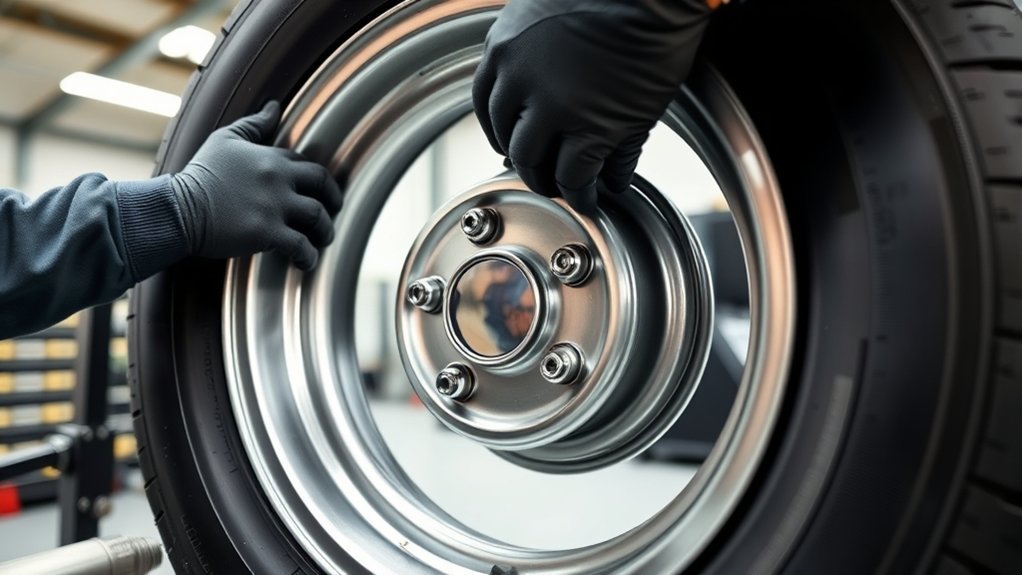
Center the wheel on the turntable or center-post system. If your machine uses rim clamps, set them to grip the rim securely without scratching or bending the wheel. If the wheel is finished, painted, polished, or alloy, use protective clamp covers or adapters when available. If your machine uses a center clamp, make sure the cone, pin, and lock are fully seated.
Check the wheel from several angles. It should sit level, centered, and stable. If the wheel wobbles or shifts, release it and clamp it again. Do not continue until the wheel is locked firmly in place.
Remove the Old Tire Safely
Move the mount/demount head into position near the rim edge. Set it close enough to guide the bead but far enough away to avoid scraping the wheel. Tighten the tool-head lock if your machine has one. Use the tire bar or bead-lifting tool to bring the upper bead over the duck head.
Keep the opposite side of the tire pressed down into the drop center. The drop center is the lowered channel in the wheel that gives the bead enough slack to move over the rim flange. If the bead is not in the drop center, the tire will feel too tight and the bead or wheel may be damaged.
- Lift the upper bead over the mount/demount head.
- Keep hands clear of the rim edge and rotating tire.
- Rotate the turntable slowly until the upper bead comes off.
- Lift or position the lower bead onto the mount/demount head.
- Rotate again until the tire is free from the wheel.
Bead Breaking
Good bead breaking depends on placement, not brute force. The shovel should push the tire bead inward without contacting the wheel. If it slips, stop, reset the tire, and try again. Rushing this step can scratch the rim, tear the bead, or damage a TPMS sensor.
Tire Locking
The wheel must be locked before the mount/demount head does any work. A loose wheel can shift suddenly and create pinch points. Use the correct clamping method for the wheel style, and avoid clamping on decorative or fragile surfaces unless the machine’s adapters are designed for it.
Duck Head Bead Removal
The duck head should guide the bead smoothly over the rim. Do not force the tire bar if the bead feels trapped. Recheck that the bead opposite the tool head is down in the drop center, add lubricant, and rotate at a controlled speed.
| Step | What to Check | Why It Matters |
|---|---|---|
| 1 | Bead is lifted over the duck head | Prevents tearing the bead during rotation |
| 2 | Opposite bead is in the drop center | Creates slack so the tire can move over the rim |
| 3 | Hands are away from pinch points | Reduces injury risk during rotation |
| 4 | TPMS sensor is not under stress | Prevents sensor and valve-stem damage |
Apply Lubricant to the Bead
Apply approved tire bead lubricant to both tire beads and the rim flange. Use a brush or swab to coat the contact surfaces evenly. The lubricant reduces friction, helps prevent bead damage, and allows the bead to slide into position during mounting and inflation.
Do not use petroleum products, silicone products, antifreeze, grease, or flammable materials. Do not flood the inside of the tire with lubricant. Too much liquid can affect balance, trap moisture, or make the bead slip after installation.
Bead Lubrication Basics
A good bead lubricant should be made for tire service, dry without staying slippery, and be compatible with the tire and wheel. Coat the full bead circumference before mounting. Reapply only if the bead starts to dry before the tire is installed.
Rim Edge Application
Apply lubricant to the rim flange and bead-seat area where the tire slides into place. Wipe away heavy excess after mounting. A clean, even coat is better than a thick layer that drips into the tire.
Mount the New Tire on the Rim
Confirm the tire’s direction, outside marking, size, load rating, and speed rating before mounting. Directional tires must face the correct rotation direction. Asymmetric tires must have the “outside” sidewall facing outward. Match the tire to the approved rim width and diameter.
Place the tire on the wheel at an angle. Guide the lower bead over the duck head and into the drop center. Rotate the turntable slowly while keeping the bead down where needed. Once the lower bead is mounted, position the upper bead the same way and rotate again until it is fully on the wheel.
- Check the tire’s rotation direction and outside/inside markings.
- Lubricate both beads and the rim flange.
- Mount the lower bead first.
- Keep the bead opposite the tool head in the drop center.
- Mount the upper bead with steady machine rotation.
- Stop immediately if the bead binds, stretches, or begins to tear.
Note: Low-profile, run-flat, and stiff-sidewall tires often need helper arms, extra lubrication, and slower movement. If the machine is not rated for that tire style, do not force the job.
[Products Worth Considering]

This manual duck head tire changer kit makes tire installation and removal simpler by letting you embed the duck head into the tire with applied pressure. The integrated design and durable steel construction help reduce friction and improve efficiency and safety during use. Suitable for 16–21 inch wheels, it’s convenient for cars, trucks, SUVs, and ATV tires, with 24-hour after-sales support.

Camco Trailer Aid Plus tandem tire ramp lifts your trailer for quick, safe tire changes with ample clearance from its 5 1/2-inch lift. It helps you change a flat tire without unloading cargo, making roadside and routine maintenance more efficient. The heavy-duty, waterproof and rustproof polymer design supports up to 15,000 lb and is built for easy portability and storage.
Inflate the Tire to Seat the Bead
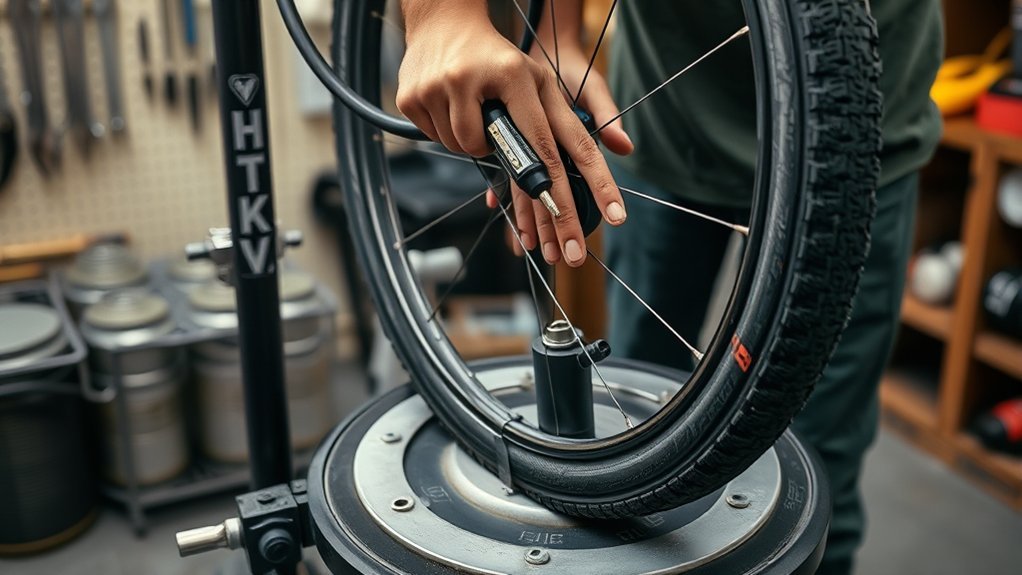
Before inflation, confirm both beads are positioned evenly and the wheel is secured by the machine’s positive lock-down system. Attach the air hose according to your machine manual. Keep your body out of the tire’s trajectory, keep hands away from the bead and rim, and never lean over the assembly during inflation.
Use controlled air pressure to help the beads move outward and seat against the rim. Follow the tire manufacturer’s maximum bead-seating pressure. If no lower manufacturer limit is specified, do not exceed 40 psi to seat the beads. If the beads do not seat by that limit, stop, deflate the tire, reposition it, relubricate, and determine the cause before trying again.
Warning: Do not keep adding air to force a bead to seat. Overinflation during bead seating can break the tire bead or wheel with explosive force.
Seat the Bead With Air
Use the machine’s inflation control as directed by the manual. Watch the bead lines on both sides of the tire. The molded bead line should become even around the rim as the bead seats. Short air pulses may help on some machines, but pressure must stay within the tire manufacturer’s bead-seating limit.
Check Pressure and Seating
Once the beads are seated, reduce or increase pressure to the vehicle manufacturer’s recommended cold tire pressure, usually found on the driver’s door placard or in the owner’s manual. Check with a separate tire gauge instead of relying only on the machine gauge. Inspect both bead lines again, then apply leak-check solution around the bead and valve area.
| What You See | What It Means | What to Do |
|---|---|---|
| Even bead line around both sides | Bead is likely seated correctly | Set final PSI and leak-check |
| Gap or uneven bead line | Bead is not seated | Deflate, relubricate, reposition, and try again within pressure limits |
| Bulge, distortion, cracking, or damage | Possible tire or wheel failure risk | Stop, deflate safely, and remove the tire from service |
| Air bubbles at valve or bead | Leak is present | Repair the source before installing the wheel |
Check Bead Seating and Alignment
Inspect the bead line on both sidewalls. It should sit at an even height from the rim all the way around. Spin the wheel slowly on the machine and watch for wobble, bead hop, or an uneven sidewall line. If anything looks uneven, deflate the tire, break the bead back loose if needed, add lubricant, and remount the tire.
Also check that the valve stem is straight, the TPMS sensor is not leaking, and the tire is not pinched or distorted. Install the valve core if it was removed, confirm the valve cap is in place, and wipe away excess lubricant from the wheel.
Set the Final Tire Pressure
Inflate the tire to the vehicle manufacturer’s recommended cold PSI, not the maximum pressure printed on the tire sidewall. The sidewall number is a maximum tire limit, not the normal service pressure for most vehicles. Use a reliable tire gauge and recheck after the tire has rested for a moment.
After pressure is set, spray leak-check solution around the valve stem and both bead areas. Bubbles indicate a leak that must be corrected before the assembly goes back on the vehicle. If the wheel will be installed on a vehicle, balance the tire and wheel assembly and torque the lug nuts to the vehicle manufacturer’s specification using the correct torque sequence.
NHTSA reports nearly 11,000 tire-related motor vehicle crashes each year, which is why correct mounting, inflation, inspection, and maintenance matter beyond the shop.
Troubleshooting Common Tire Machine Problems
The Bead Will Not Break Loose
Confirm the tire is fully deflated and the valve core is removed. Reposition the bead breaker closer to the rim without touching the metal. Add lubricant, rotate the tire, and use several controlled presses instead of one hard press. If corrosion has bonded the bead to the rim, inspect carefully for wheel damage before continuing.
The Tire Slips on the Turntable
Stop the machine and reclamp the wheel. Make sure the clamps, cones, or adapters match the wheel style. Clean lubricant from clamping surfaces. Do not continue if the wheel can move under load.
The Bead Will Not Seat
Deflate the tire, confirm the tire and rim sizes match, relubricate the beads, and check that both beads are positioned correctly. Do not exceed the manufacturer’s bead-seating pressure limit. If the bead still will not seat, remove the tire and inspect for bead damage, rim corrosion, incorrect tire size, or an incompatible rim profile.
The TPMS Sensor Is in the Way
Stop and identify the sensor location. Keep the bead breaker, tire bar, and mount/demount head away from the sensor area. Replace damaged stems or service seals with the correct TPMS service parts before inflation.
Frequently Asked Questions
What safety gear should I wear while using a tire machine?
Wear safety glasses or a face shield, cut-resistant gloves, sturdy footwear, and snug clothing. Hearing protection is smart in a busy shop. Avoid jewelry, loose sleeves, and anything that can catch in the rotating assembly.
How do I know if my tire machine fits my wheel size?
Check the tire changer’s manual for rim diameter, wheel width, clamping range, center-post capacity, and tire-type limits. Also confirm the machine has the right adapters or helper arms for low-profile, run-flat, reverse-mount, or delicate alloy wheels.
What should I do if the bead will not break loose?
Make sure the tire is fully deflated, then reposition the bead breaker on the tire sidewall close to the rim. Add approved lubricant and work around the tire in small sections. Do not drive the bead breaker into the wheel or force it against a TPMS sensor.
Can I use a tire machine on low-profile tires?
Yes, but only if the tire changer is designed for low-profile tires and you know the correct procedure. Low-profile tires have short, stiff sidewalls that can tear or damage easily. Use approved lubricant, protected tooling, helper arms when required, and slow controlled movement.
How often should I maintain and clean my tire machine?
Wipe the machine after each use, clean bead lubricant and rubber debris daily, and inspect clamps, pads, hoses, pedals, and moving parts regularly. Follow the manufacturer’s lubrication and service schedule. Heavy-use shops should inspect the machine more often.
What pressure should I use to seat the bead?
Use the tire manufacturer’s maximum bead-seating pressure. If no lower limit is given, do not exceed 40 psi while seating beads. If the bead does not seat within that limit, stop, deflate the tire, reposition it, relubricate, and inspect for a tire or rim problem.
Conclusion
Using a tire machine safely comes down to preparation, correct clamping, controlled bead movement, approved lubricant, and careful inflation. Fully deflate the tire before bead breaking, protect the rim and TPMS sensor, keep the bead in the drop center during mounting, and never exceed safe bead-seating pressure. Before the wheel leaves the machine, confirm the bead is even, the valve area does not leak, the final pressure matches the vehicle placard, and the assembly is ready for balancing and installation.
Sources
- NHTSA — Safety and Savings Ride on Your Tires — tire-related crash statistic and tire maintenance safety context.
- U.S. Tire Manufacturers Association — Care and Service of Passenger and Light Truck Tires — passenger/light-truck tire service, valve, bead, lubricant, and mounting guidance.
- U.S. Tire Manufacturers Association — Passenger and Light Truck Demounting and Mounting Wall Chart — recommended detailed mounting/demounting procedures.
- Tire Industry Association — Demounting and Mounting Procedures — trained-personnel warnings and bead-seating pressure safety.
- OSHA 29 CFR 1910.177 — rim-wheel servicing rules for large vehicle single-piece and multi-piece rim wheels.
- Hunter Engineering — Tire Changer Digital Operation Manuals — model-specific tire changer operation manuals.

Related Articles

How to Book a Costco Tire Center Appointment
Tired of guesswork? Learn how to book a Costco Tire Center appointment and avoid surprises before your next visit.
Read More
How to Use Costco Tire Inflation: Step-by-Step
Never overinflate at Costco—learn the exact steps, tools, and tips to fill your tires safely and leave with confidence.
Read More
How to Book a Tire Appointment at Walmart
Mysterious steps make booking a Walmart tire appointment simpler than you think, but one crucial detail could save you time and money.
Read More