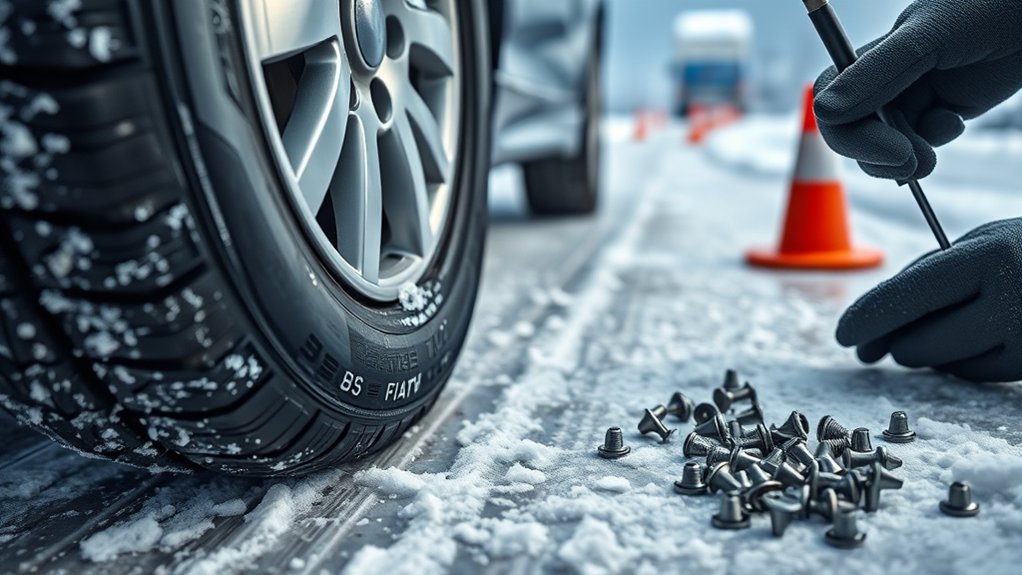
Tire studding means adding small metal studs to a studdable winter tire so the tread can bite into ice and hard-packed snow. It can help in harsh winter conditions, but it is not the best choice for every driver. Studded tires are noisy, restricted by law in many places, and can perform worse than modern studless winter tires on mixed or clear pavement.
Quick Answer
Tire studding is the process of installing metal pins into studdable winter tires. The studs act like tiny cleats on ice, improving grip in very icy conditions. They make the most sense for frequent glare ice, packed snow, steep grades, or rural roads that stay frozen.
Key Takeaways
- Studded tires use metal pins to create extra mechanical grip on ice and hard-packed snow.
- They are most useful on frozen, unplowed, or consistently icy roads, not on mostly dry pavement.
- Modern studless winter tires often give better all-around winter performance for mixed city and highway driving.
- Studded tire laws vary by state, province, and season, so check local rules before installation.
- Only tires designed with molded stud holes should be studded, and correct stud size and seating matter for safety.
At a Glance
| Best For | Glare ice, packed snow, steep icy roads, rural routes, mountain access roads, and long cold stretches where pavement stays frozen. |
| Difficulty | Moderate to advanced if done yourself; simple if installed by a tire shop. |
| Tools Needed | Studdable winter tires, correct-size tire studs, tread-depth gauge, tire stud gun, water-based lubricant, safety glasses, and work gloves. |
| Cost | Varies by tire size, tire model, studs, and shop labor. Ask for a quote that separates tire price, studs, installation, balancing, and seasonal changeover. |
| Legal Check | Check your state, province, or local DOT rules before installing. Many areas restrict studded tires to specific winter dates. |
What Studded Tires Are and How They Work
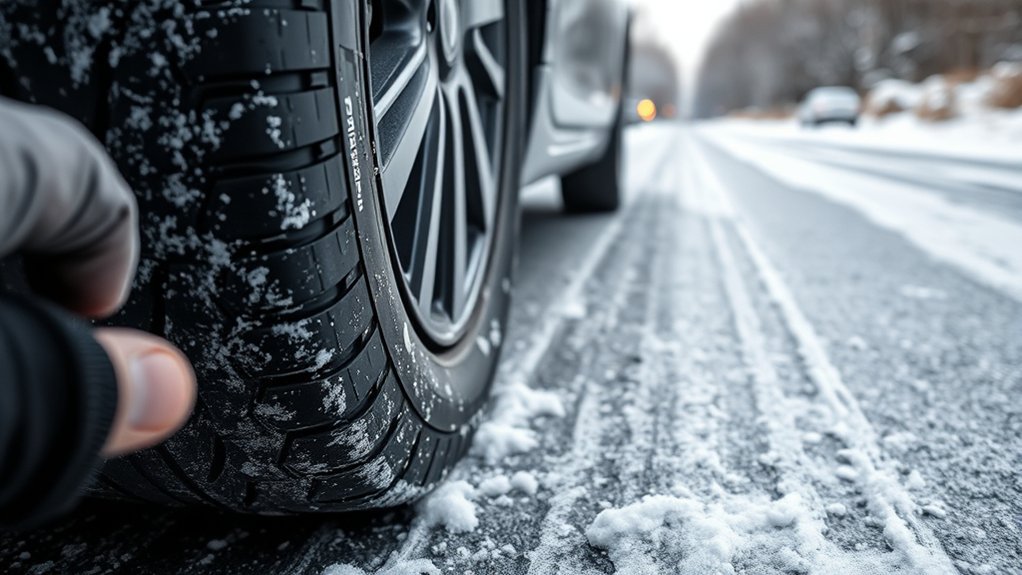
Studded tires are winter tires with small metal pins installed in the tread. These pins protrude slightly from the rubber and press into icy surfaces. Instead of relying only on rubber friction, the tire gets a mechanical bite, similar to the way cleats grip a hard surface.
There is an important difference between studded, studdable, and studless winter tires:
- Studded tires already have metal studs installed.
- Studdable tires are winter tires made with molded stud holes, so studs can be installed later.
- Studless winter tires use cold-weather rubber compounds, siping, and tread design instead of metal studs.
Do not assume every winter tire can be studded. A tire should be marked or sold as studdable, and the studs must match the depth of the molded holes. The three-peak mountain snowflake symbol is useful because it identifies tires that meet severe snow-service performance criteria, but it does not automatically mean the tire accepts studs.
Warning: Do not drill holes into a standard tire to add studs. Studs should be installed only in tires designed with molded stud pockets. Using the wrong tire, wrong stud size, or poor installation can damage the tire and create a safety risk.
[Products Worth Considering]

Accurately measure tire tread depth with a calibrated gauge marked from 0 to 1 inch in 1/32 inch increments. The color-coded bar helps you quickly identify tread condition ranges, supporting safe driving for trucks, motorcycles, automobiles, and passenger vehicles.

Measure tire tread depth quickly and accurately with this LUMITECO dial gauge that reads in 1/32" increments up to 14/32". The color-coded green/yellow/red zones make it easy to judge tire wear and know when replacement is needed. A rugged, compact design with a protective pouch helps keep the gauge ready for use on cars, trucks, motorcycles, and more.

Monitor tire tread wear with a smart, color-coded depth gauge that shows clear condition ranges at a glance. The bar is range marked for fast, easy readings, helping you maintain safer traction and performance. Each gauge is portable with a pocket clip, and the set includes 20 units for daily use and sharing.
Why Studded Tires Help on Ice
Ice is difficult because it gives tires very little friction. A studded tire helps by pushing small metal points into the icy surface. On glare ice or hard-packed snow, that bite can improve starting, braking, and steering control.
The advantage is most noticeable when the road surface is consistently frozen. Think of rural roads after freezing rain, shaded mountain passes, steep icy driveways, lake-effect snow regions, and unplowed roads where snow gets compressed into a hard layer.
Studs can help on ice, but they are not magic. Tire design still matters, and a top-tier studless ice-and-snow tire may outperform a budget studded tire in some tests.
That is why studded tires should be chosen for your real driving conditions, not just because they sound tougher. If your roads alternate between dry pavement, slush, rain, and light snow, a modern studless winter tire may feel quieter, smoother, and more predictable.
Studded vs. Studless Tires
The best winter tire depends on what your roads look like most of the time. Studded tires are strongest on ice and hard-packed snow. Studless winter tires are usually better for drivers who face a mix of snow, slush, wet roads, and dry pavement.
| Condition | Studded Tires | Studless Winter Tires |
| Glare ice | Often excellent because studs bite into the surface. | Can be excellent with premium ice-and-snow designs. |
| Packed snow | Strong, especially when snow has hardened. | Strong, depending on tread and compound. |
| Wet pavement | Can be less refined and noisy. | Usually smoother and more balanced. |
| Dry pavement | Noisy and may contribute to pavement wear. | Usually the better choice for mixed commuting. |
| Legal restrictions | Often restricted by season or banned in some places. | Usually not subject to studded-tire date restrictions. |
For most drivers, the choice comes down to ice frequency. If your winter is mostly wet pavement with occasional snow, choose studless winter tires. If you regularly drive on glare ice, steep frozen roads, or packed-snow routes, studded tires may be worth the tradeoff.
[Products Worth Considering]

The SAFELIFE dial tire tread depth gauge measures tread depth in 1/32 inch increments with clear, easy-to-read 2-inch dial face. Color zones using a traffic light system help you quickly judge whether tread is low, marginal, or ample for safer driving. Built with a durable zinc cast body and a metal detect probe for precise, comfortable use across cars, motorcycles, trucks, and buses.

Black Magic Tire Wet delivers a deep wet-look shine that makes tires appear dark, rich, and freshly detailed. Its long-lasting formula helps resist rain, dust, and road grime for weeks of glossy protection, not days. Apply by spraying onto clean, dry tires—no buffing or wiping required—with a low-sling design to reduce splatter on paint and wheels.

Steelman white tire marking crayons provide high-contrast, semi-permanent marks for repairing and inspecting tires and equipment. They write on wet or dry, smooth or coarse surfaces including rubber, metal, glass, and wood, making them ideal for puncture location and damage outlining. The lead- and zinc-free crayons resist weather and fading yet wipe away when you no longer need the marks.
Studded Tire Laws and Seasonal Limits
Studded tire laws vary by location. Some states and provinces allow them only during winter months. Some restrict the number, type, or weight of studs. Some areas ban them because metal studs can wear road surfaces.
For example, the Oregon Department of Transportation says studded tires are allowed in Oregon from November 1 through March 31 and warns that driving outside the allowed period can carry a fine. Oregon also notes that studded tires can be less effective in many non-icy conditions and can damage roads.
Before you buy or install studs, check:
- Your state, province, or country’s legal date window.
- Whether studs are allowed on your vehicle type and tire size.
- Whether local mountain passes require chains even if you have winter tires.
- Whether your route crosses into another jurisdiction with different rules.
- Whether fines apply after the seasonal deadline.
Note: Studded tire rules are legal requirements, not suggestions. If the legal window closes, remove the tires or switch to a legal traction option before driving on public roads.
When Studded Tires Make Sense
Studded tires make the most sense when ice is a normal part of your winter drive, not a rare surprise. They are especially useful if you drive:
- On steep hills that freeze often.
- On rural or unplowed roads.
- In areas with repeated freeze-thaw cycles that create glare ice.
- To ski areas, mountain cabins, or remote winter job sites.
- On shaded roads where ice stays long after main roads clear.
They make less sense if you mostly drive on plowed city streets, wet highways, dry pavement, or short mild-winter commutes. In those situations, the extra noise, legal restrictions, and pavement-wear concerns may outweigh the ice advantage.
When Not to Use Studded Tires
Skip studded tires if your roads are usually bare, wet, or only lightly snowy. Studs need ice or packed snow to do their best work. On clear pavement, they add noise and vibration, and they can reduce the smooth contact between rubber and road.
You should also avoid studded tires if:
- Your local law bans them or the season is closed.
- You do mostly highway driving on dry pavement.
- You live where winter temperatures often rise above freezing.
- You need a quiet ride for daily commuting.
- Your vehicle manufacturer or tire shop recommends another traction option for your tire size or route.
How Tire Studding Is Done
Professional tire shops use a stud gun to press each stud into a molded pocket in the tread. The stud size must match the hole depth. If the stud is too short, it may not reach the ice well. If it is too tall or crooked, it can loosen, wear unevenly, or damage the tire.
A safe tire-studding process usually includes these steps:
- Confirm the tire is designed to accept studs.
- Check that the tire is new or suitable for studding.
- Measure the stud-hole depth with a tread-depth gauge.
- Choose the correct stud size for that hole depth.
- Lubricate the holes with water or approved lubricant.
- Use a tire stud gun to seat each stud straight and nearly flush.
- Inspect every stud for height, angle, and secure seating.
- Break in the tires gently for the first 50–100 miles.
Pro Tip: After installation, drive gently for the first few days. Avoid hard braking, aggressive acceleration, and sharp cornering so the studs can seat properly in the tread.
Maintenance for Studded Tires
Studded tires still need normal tire care. The studs cannot make up for poor pressure, uneven wear, old rubber, or damaged tread. The National Highway Traffic Safety Administration recommends checking tire pressure when tires are cold, inspecting tires regularly, and making sure tread depth is at least 2/32 inch or greater.
For better winter performance and longer tire life:
- Check tire pressure at least monthly and before long trips.
- Rotate tires according to the tire maker or vehicle manual.
- Inspect studs for missing, crooked, or unevenly worn pins.
- Remove studded tires when the season ends or when laws require it.
- Store them in a cool, dry place away from direct sunlight and heat.
- Do not run winter tires year-round unless the tire maker specifically allows it.
Studded Tire Alternatives
If studded tires are illegal, too noisy, or unnecessary for your roads, you still have strong winter traction options:
- Studless winter tires: Best all-around choice for many drivers who face cold, snow, slush, and wet roads.
- All-weather tires with 3PMSF: A year-round option for mild to moderate winter areas, though not equal to premium winter tires on severe ice.
- Tire chains: Useful or legally required on some mountain passes and severe snow routes.
- Snow socks: Temporary fabric traction aids for short, low-speed use where chains are not practical.
If you are unsure, ask a local tire shop what works on your actual roads. Local experience matters because winter traction needs in coastal slush are very different from mountain ice or rural packed snow.
[Products Worth Considering]

The 22800 wheel stud installer makes replacing wheel studs quick and secure, saving time and effort during tire service. It uses a ratchet or impact wrench to pull new studs firmly into place, helping when existing studs are too long. Compatible with most automotive wheels and light-duty truck wheel studs, it’s designed for easy, tool-assisted installation.

Malco tire mounting and demounting lubricant is a ready-to-use tire lube formulated to reduce friction during tire installation for passenger cars, light trucks, farm tires, and heavy-duty equipment. It provides rust-inhibiting protection to help reduce corrosion on rims and wheels, and helps support proper tire bead seating during inflation to reduce air leakage. The silicone-free, soap-free formula is whitewall safe to help prevent discoloration on whitewall tires and sensitive sidewall markings.

Milton S-921 pencil tire pressure gauge helps you maintain optimal tire pressure for passenger cars with accurate readings in PSI and kPa. It features a built-in deflator valve for convenient pressure adjustments, plus a single chuck head and nylon indicator bar for easy use on the go. Built from durable plated brass and designed for reliable performance, it’s a practical road trip and cold-weather maintenance tool.
Frequently Asked Questions
Is it worth studding tires?
Yes, it can be worth studding tires if you regularly drive on glare ice, packed snow, steep frozen roads, or unplowed routes. If your winter driving is mostly wet, dry, or mixed pavement, studless winter tires are usually the better all-around choice.
How much does tire studding cost?
The total cost depends on the tire size, tire model, number of studs, local labor rates, and whether you are buying new winter tires at the same time. Ask the shop to quote the tires, studs, stud installation, mounting, balancing, and seasonal changeover separately.
How long do studded tires last?
Studded tire life depends on tread depth, rubber age, driving style, road surface, tire pressure, rotation, and how much time the tires spend on dry pavement. Using them only in legal winter months and storing them properly helps preserve both the tread and studs.
Can I stud my tires myself?
You can stud tires yourself only if the tires are designed for studs and you have the correct studs, tools, and safety equipment. Use eye protection and gloves, measure the hole depth, seat each stud straight, and follow the tire or stud-equipment maker’s instructions. When in doubt, use a professional tire shop.
Can any winter tire be studded?
No. Only studdable tires with molded stud holes should be studded. The three-peak mountain snowflake symbol means the tire meets severe snow-service criteria, but it does not automatically mean the tire has stud pockets.
Are studded tires better than chains?
They solve different problems. Studded tires are installed for seasonal winter driving on icy roads. Chains are temporary traction devices for severe snow, mountain passes, or chain-control areas. Some routes may still require chains even if you have winter tires.
Do studded tires work on dry roads?
They will roll on dry roads, but dry pavement is not where they shine. Studs add noise, can make the ride harsher, and may contribute to road wear. If most of your winter driving is on dry pavement, choose studless winter tires or all-weather tires instead.
Conclusion
Tire studding can be a smart winter traction upgrade when your roads are truly icy. The metal studs help the tire bite into glare ice and packed snow, giving you extra control in conditions where ordinary rubber can struggle. But studs also bring tradeoffs: noise, road wear, seasonal laws, and weaker value on mixed or clear pavement.
Choose studded tires if ice is a frequent, serious part of your route. Choose studless winter tires if you need balanced traction for snow, slush, rain, and dry pavement. Before installing studs, confirm the tire is studdable, check local law, and make sure the work is done safely.
Sources
- U.S. Tire Manufacturers Association — TISB 37 Severe Snow Conditions — backs up the three-peak mountain snowflake severe snow-service definition.
- Oregon Department of Transportation — Traction Tires — backs up studded tire legal-season examples, performance cautions, and road-damage concerns.
- Tire Rack — 2022 Studdable Winter / Snow Tire Test — backs up the nuanced comparison between studded, non-studded, and studless ice-and-snow tire performance.
- National Highway Traffic Safety Administration — Winter Weather Driving Tips — backs up tire pressure, tread inspection, and winter driving safety guidance.
- Bruno Wessel — How to Stud a Tire — backs up stud installation safety, stud sizing, seating, and break-in guidance.