
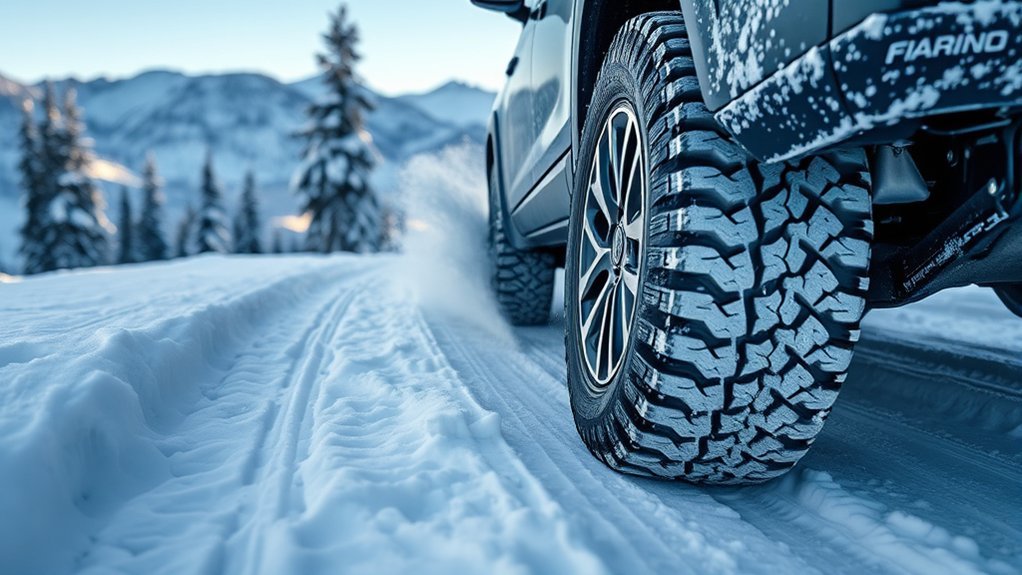
All-terrain tires can work well in light to moderate snow, but the words all-terrain do not automatically mean a tire is designed for severe winter conditions. Snow performance varies widely by model. For the best indication of winter capability, look for the Three-Peak Mountain Snowflake (3PMSF) symbol and consider how often you drive on packed snow, deep snow, slush, or ice.
Quick Answer
All-terrain tires can provide useful traction in light and moderate snow, especially when they carry the 3PMSF severe-snow symbol. However, dedicated winter tires are usually the better choice for frequent ice, heavy snow, steep winter roads, and long periods of freezing weather because they are designed specifically for cold-weather grip.
Key Takeaways
- All-terrain tires vary greatly in winter performance, so do not judge snow capability by the category name alone.
- A 3PMSF symbol is more meaningful than an M+S marking because it indicates the tire has met a defined severe-snow traction requirement.
- The 3PMSF test focuses on driving traction in snow; it does not by itself guarantee excellent braking, cornering, or ice grip.
- Dedicated winter tires are usually the stronger choice for frequent ice, heavy snow, steep grades, and sustained freezing temperatures.
- Maintain the vehicle manufacturer’s recommended cold tire pressure rather than deliberately lowering pressure for road driving.
- Good tread depth, smooth driving, proper tire maintenance, and approved traction devices can make a major difference in winter control.
Are All-Terrain Tires Good in Snow?
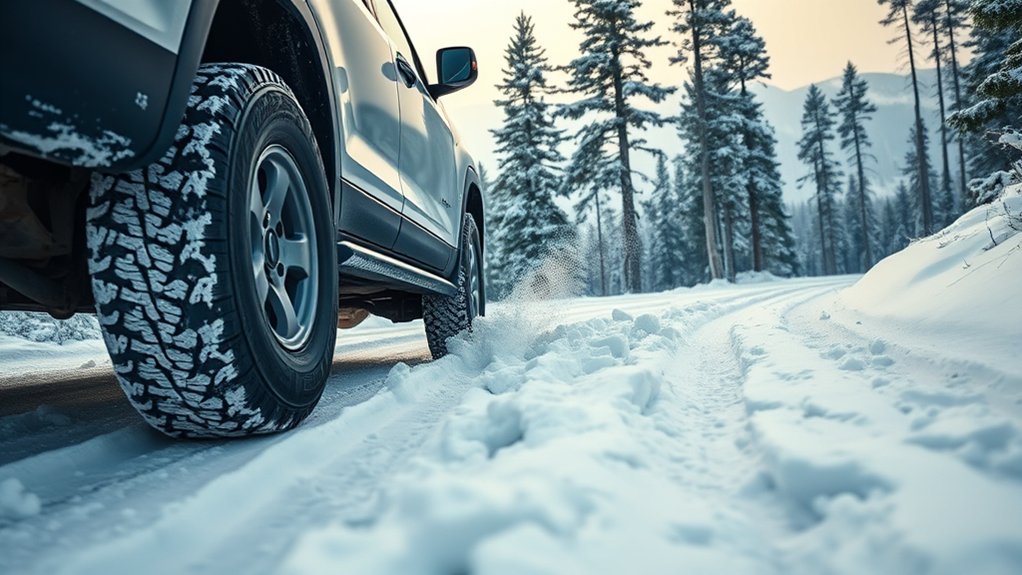
Yes, many all-terrain tires can handle light to moderate snow effectively, but their capability depends on the specific tire. Deep tread grooves, biting edges, and sipes can help a tire move through loose or packed snow. Those features often make a snow-capable all-terrain tire useful for drivers who also need traction on gravel, dirt, and other unpaved surfaces.
The important point is that all-terrain is a use category, not a severe-winter certification. One all-terrain model may provide strong snow traction while another may be designed mainly around dry-road durability and off-road performance.
If winter performance matters, check whether the tire carries the Three-Peak Mountain Snowflake symbol rather than assuming an aggressive tread pattern is enough.
An aggressive-looking all-terrain tread can help in loose snow, but the tire’s winter certification, compound, siping, tread depth, and actual test performance matter more than appearance.
For frequent heavy snow, polished packed snow, freezing rain, or icy roads, dedicated winter tires remain the stronger option because they are engineered specifically for cold-weather traction.
What Does the 3PMSF Symbol Mean?
The Three-Peak Mountain Snowflake (3PMSF) symbol is one of the most useful things to check when choosing an all-terrain tire for snow. According to Transport Canada, tires qualifying for the severe-snow designation must meet a defined traction-performance requirement on medium-packed snow.
The standard requires a qualifying tire to achieve a traction index of at least 110 compared with a reference test tire. That makes the symbol more meaningful for snow performance than simply looking at how aggressive the tread appears.
Note: The 3PMSF symbol does not mean a tire has been proven equally strong at every winter task. Severe-snow certification focuses on snow traction. It does not by itself certify outstanding ice braking, snow cornering, or every other winter-performance characteristic.
ASTM F1805, the relevant traction test method, measures longitudinal driving traction. Braking and lateral traction are separate performance characteristics. That is one reason a 3PMSF all-terrain tire should not automatically be treated as equivalent to a dedicated winter tire.
3PMSF vs. M+S
You may also see M+S, M/S, or similar mud-and-snow markings on an all-terrain tire. An M+S marking generally describes tread characteristics intended to provide some mud and snow capability, but it is not the same performance-based severe-snow certification as 3PMSF.
If snow capability is a major buying priority, a 3PMSF-marked all-terrain tire is normally a more useful starting point than an M+S-only model.
What Makes All-Terrain Tires Work in Winter?
Winter traction depends on more than one tread feature. The tread pattern, siping, compound, tread depth, tire size, and surface conditions all work together.
- Deep grooves: Give loose snow and slush somewhere to move instead of trapping it beneath the tire.
- Biting edges: Help the tread engage packed snow as the tire rotates.
- Sipes: Small cuts in tread blocks create additional edges that can improve grip on slippery surfaces.
- Tread-block stability: Helps the tire maintain steering response instead of allowing the blocks to move excessively.
- Cold-weather compound: A compound that remains flexible as temperatures fall can conform to the road more effectively than one that becomes comparatively stiff.
Transport Canada notes that conventional all-season and summer tires begin losing elasticity below about 7°C (45°F), while winter compounds are designed to remain flexible at lower temperatures. That does not mean every all-terrain tire behaves identically, which is why model-specific testing and certification matter.
How All-Terrain Tires Handle Different Winter Surfaces
| Winter Surface | Typical All-Terrain Performance | Better Choice When Conditions Are Severe |
| Light loose snow | Often capable, especially with 3PMSF certification and healthy tread depth | Winter tire if snow is frequent or temperatures remain very low |
| Packed snow | Varies considerably by compound and siping | Dedicated winter tire |
| Deep snow | Open tread can help move snow, but vehicle clearance and snow depth also matter | Winter tire or approved traction device when conditions require it |
| Slush | Wide grooves can help evacuate slush, but hydroplaning risk remains | Slow down and use a tire with strong winter and wet-road performance |
| Glaze or black ice | Usually the most challenging winter surface for a general-purpose all-terrain tire | Dedicated winter tire with strong verified ice performance |
Where All-Terrain Tires Struggle on Ice
Ice is much harder for a tire to grip than loose snow because the surface gives the tread very little texture to bite into. Large all-terrain tread blocks that work well in dirt and loose snow do not automatically create strong ice traction.
Compound flexibility and dense siping become especially important on polished snow and ice. A dedicated winter tire is designed around those conditions, while an all-terrain tire must balance winter performance against durability, off-road traction, dry handling, tread life, and other year-round requirements.
The limitations of 3PMSF certification also matter here. A tire can meet a severe-snow traction standard without proving exceptional ice braking.
Warning: Do not assume AWD or 4WD makes an all-terrain tire safe on ice. Extra driven wheels can help the vehicle accelerate, but stopping and cornering still depend heavily on available tire-to-road grip.
When the road looks glossy, accelerate gently, leave much more following distance, avoid abrupt steering, and brake progressively. NHTSA’s winter-driving guidance also recommends slowing down because controlling and stopping a vehicle is harder on slick or snow-covered roads.
How All-Terrain Tires Compare to Winter Tires
All-terrain tires and winter tires are designed around different priorities. All-terrain tires balance pavement use with dirt, gravel, mud, durability, and year-round usability. Winter tires put much more emphasis on cold-weather grip.
Transport Canada recommends tires carrying the mountain-and-snowflake symbol for winter use and explains that winter tires retain their flexibility and grip at much lower temperatures than conventional all-season tires.
Winter tires usually provide the more predictable choice when cold temperatures, packed snow, ice, and winter braking performance are the main priorities.
- Choose all-terrain tires when: you need regular gravel or off-road capability, winters are moderate, roads are usually cleared, and the specific tire has verified winter capability.
- Choose dedicated winter tires when: snow and ice are frequent, temperatures stay below freezing for long periods, you drive steep roads, or maximum winter braking and cornering control matter more than year-round convenience.
Pro Tip: When comparing two all-terrain tires for winter use, check the 3PMSF marking first, then look for independent snow and ice test results. Do not choose solely by tread appearance.
[Products Worth Considering]

The SAFELIFE dial tire tread depth gauge measures tread depth in 1/32 inch increments with clear, easy-to-read 2-inch dial face. Color zones using a traffic light system help you quickly judge whether tread is low, marginal, or ample for safer driving. Built with a durable zinc cast body and a metal detect probe for precise, comfortable use across cars, motorcycles, trucks, and buses.

Measure tyre tread depth precisely with a digital gauge that reads in both MM and inches, helping you monitor safe driving conditions. The large LCD screen is easy to operate, and the compact tool fits for cars, trucks, and motorcycles. It provides high accuracy with a 0-25.4mm range and includes a 1-year warranty for added peace of mind.

Keep your tires properly inflated with this analog VONDIOR tire pressure gauge, designed for fast, easy readings without batteries. The swiveling, two-axis hose and large glow dial help you measure at any tire angle with instant visibility. Built with a protective rubber shield, it supports durable, low-maintenance use for cars and trucks.
How Much Tread Do You Need for Snow?
Tread depth has a major effect on how well a tire can move snow and slush away from its contact area.
NHTSA says tires should be replaced when tread reaches 2/32 inch. That is a basic safety replacement threshold, not a promise that a tire near that depth will still perform well in snow.
For winter driving, more tread is useful. Transport Canada advises against using tires worn close to 4 mm (5/32 inch) on snow-covered roads.
If an all-terrain tire is approaching that level and winter weather is common where you drive, its remaining dry-road legality should not be confused with good snow performance.
How to Improve All-Terrain Tire Traction
You can improve winter performance without making unsafe pressure changes.
- Use the correct cold pressure. Check the driver’s-door tire placard or owner’s manual and inflate each tire to the vehicle manufacturer’s recommended cold pressure.
- Check pressure regularly. Tire pressure falls as outside temperature drops. NHTSA recommends checking tires when they are cold, meaning the vehicle has generally been parked for at least three hours.
- Maintain adequate tread depth. Shallow grooves cannot clear snow and slush as effectively as deeper tread.
- Rotate the tires as specified by the vehicle or tire manufacturer. Uneven tread depth can create inconsistent traction from one corner of the vehicle to another.
- Correct alignment or balance problems. Cupping and irregular wear reduce the amount of useful tread contacting the road.
- Slow down. Tire technology cannot overcome excessive speed on snow or ice.
- Use smooth controls. Gentle steering, acceleration, and braking help preserve the limited grip available.
- Leave traction and stability systems enabled during normal driving. Turn them off only when your specific owner’s manual recommends it for a situation such as freeing a stuck vehicle.
- Use chains or cables only when approved. Check the owner’s manual for permitted traction devices, tire sizes, installation axle, clearance restrictions, and speed limits, and follow applicable local laws.
Warning: Do not deliberately lower your normal road tire pressure to create more snow grip. NHTSA recommends using the vehicle manufacturer’s specified cold inflation pressure. Underinflation can affect handling, tire durability, fuel use, and safety.
[Products Worth Considering]
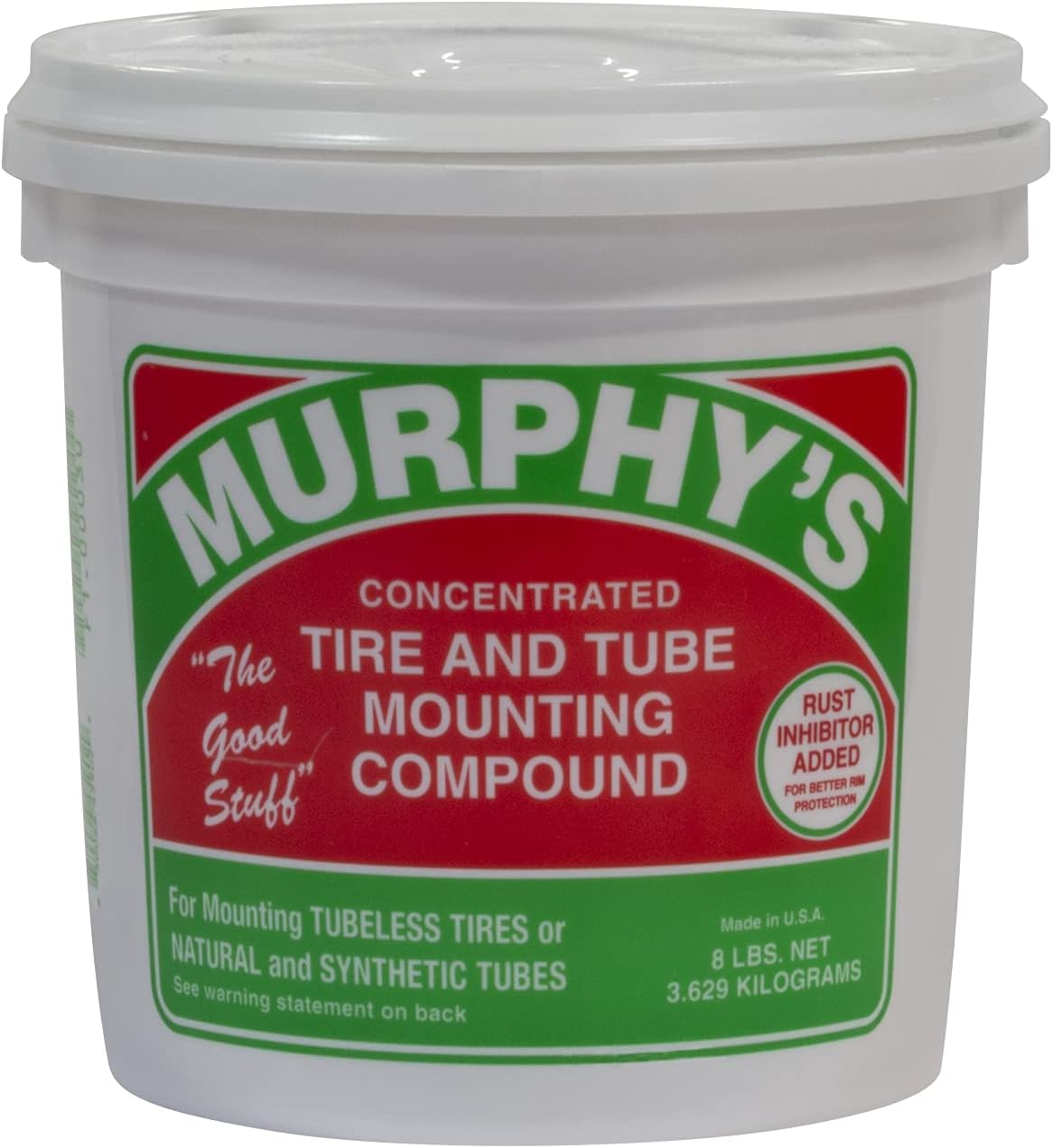
A concentrated tire and tube mounting compound designed to help simplify mounting rubber tires and tubes on passenger, semi truck, construction, and OTR applications. Its ultra-thick formula packs beads effectively and includes rust inhibitors to help protect against corrosion during use.

Monitor tire tread wear with a smart, color-coded depth gauge that shows clear condition ranges at a glance. The bar is range marked for fast, easy readings, helping you maintain safer traction and performance. Each gauge is portable with a pocket clip, and the set includes 20 units for daily use and sharing.
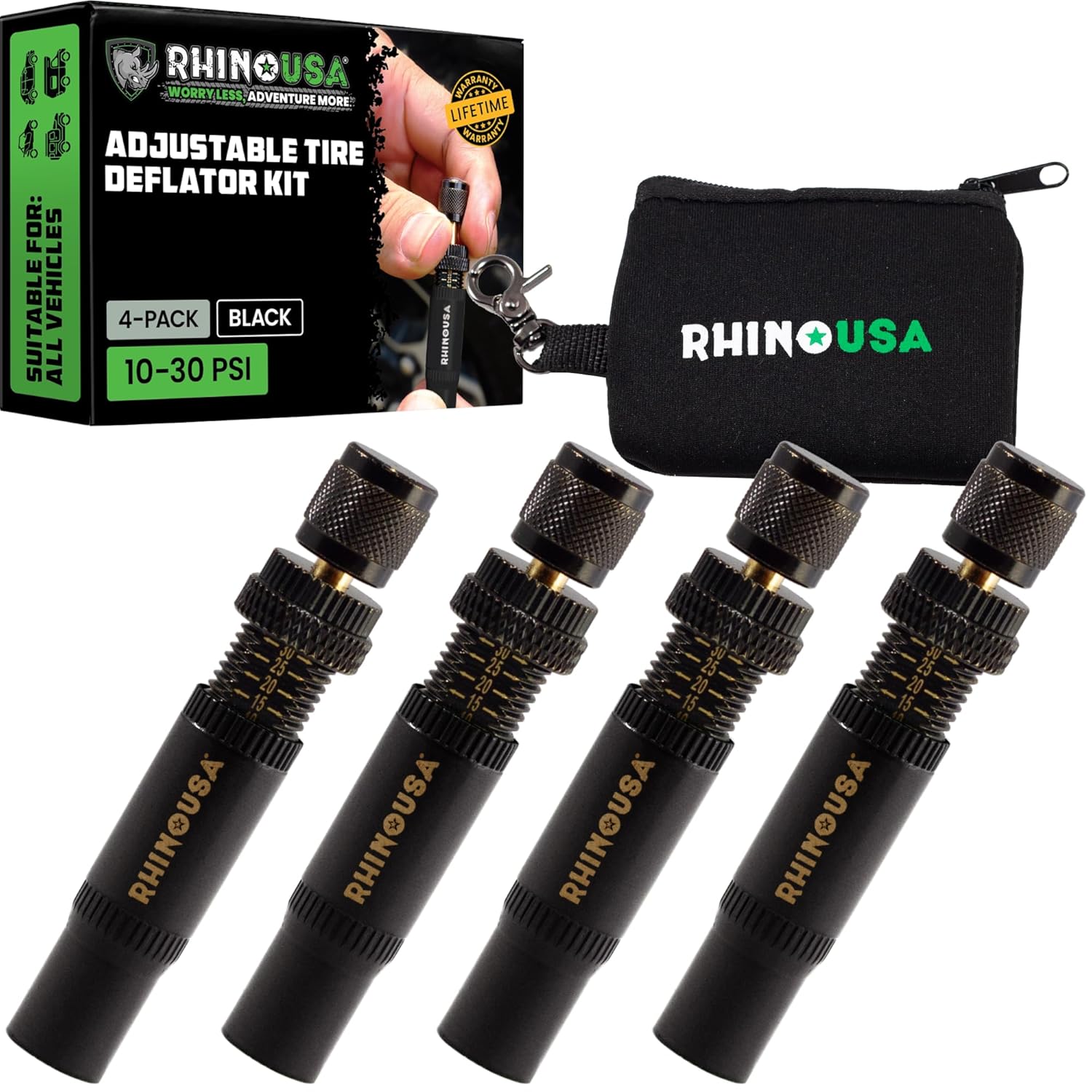
Use the Rhino USA adjustable tire deflators to air down all four tires at once by screwing one deflator onto each valve stem, letting you step away while the tires reach your preset pressure. Each deflator independently adjusts across a 10–30 PSI range with laser-etched indicators for quick setup and verification, making it ideal for beach, sand, and rocky off-road trails.
How to Choose All-Terrain Tires for Winter
If you want one tire set for year-round pavement, occasional off-road driving, and moderate winter weather, use this checklist:
- Look for the 3PMSF symbol.
- Do not rely on an M+S marking alone when severe-snow performance matters.
- Read independent snow, slush, and ice test results for the exact tire model.
- Match the vehicle manufacturer’s required tire size and appropriate load rating.
- Check the tire’s remaining tread depth before winter begins.
- Use four compatible tires with similar construction and tread condition.
- Consider how frequently you encounter ice rather than snow alone.
- Check whether your vehicle permits snow chains or cables with your tire and wheel size.
If your winters consist mainly of cleared roads with occasional snowfall, a strong 3PMSF all-terrain tire may provide a practical compromise. If you regularly encounter black ice, hard-packed snow, mountain passes, steep roads, or prolonged freezing temperatures, dedicated winter tires give you a larger winter-specific safety margin.
[Products Worth Considering]

Steelman white tire marking crayons provide high-contrast, semi-permanent marks for repairing and inspecting tires and equipment. They write on wet or dry, smooth or coarse surfaces including rubber, metal, glass, and wood, making them ideal for puncture location and damage outlining. The lead- and zinc-free crayons resist weather and fading yet wipe away when you no longer need the marks.

Milton S-921 pencil tire pressure gauge helps you maintain optimal tire pressure for passenger cars with accurate readings in PSI and kPa. It features a built-in deflator valve for convenient pressure adjustments, plus a single chuck head and nylon indicator bar for easy use on the go. Built from durable plated brass and designed for reliable performance, it’s a practical road trip and cold-weather maintenance tool.

Upgrade your ride with a 2-pack set of 26x1.95 folding mountain bike tires built for dependable traction on mud, rocks, and trail surfaces. A reinforced puncture-resistant layer helps protect against sharp debris, while included butyl inner tubes provide strong sealing and shock absorption. Ready for fast swaps with included tire levers and universal sizing for most bikes.
Frequently Asked Questions
How long do all-terrain tires typically last in winter use?
There is no reliable mileage range that applies to all all-terrain tires. Tread life depends on the tire model, compound, vehicle weight, alignment, rotation, towing, road surface, inflation, and driving habits. Check the specific manufacturer’s treadwear warranty and measure actual tread depth instead of relying on a generic mileage estimate.
Do all-terrain tires affect fuel economy in cold weather?
They can, but there is no universal percentage. Some all-terrain tires are heavier or have greater rolling resistance than road-focused tires. Cold temperatures, winter fuel blends, heater use, snow-covered roads, and low tire pressure can also reduce vehicle efficiency. Keeping the tires at the recommended cold pressure helps avoid unnecessary rolling resistance.
Can tire pressure be adjusted for better winter grip?
For normal road driving, use the vehicle manufacturer’s recommended cold inflation pressure shown on the tire placard or in the owner’s manual. Do not deliberately underinflate the tires just to increase the contact patch. Because pressure naturally decreases in cold weather, check it regularly during winter and add air when needed.
Are all-terrain tires louder on highways than winter tires?
Some are, especially models with large, widely spaced tread blocks, but noise varies by tire design, pavement, speed, vehicle insulation, and wear. A mild on-road all-terrain tire may be quiet, while a more aggressive off-road design can create noticeably more tread-pattern noise.
Do all-terrain tires require special maintenance in snowy conditions?
They do not require a completely different maintenance routine, but winter makes regular checks more important. Measure cold pressure, inspect tread depth and damage, rotate the tires on schedule, correct uneven wear, and remove packed snow or ice from the wheel area when necessary.
Does the 3PMSF symbol mean an all-terrain tire is as good as a winter tire?
No. The symbol confirms that the tire meets a defined severe-snow traction requirement, but the certification does not represent every aspect of winter performance. Dedicated winter tires are designed more specifically for cold temperatures, packed snow, slush, and ice.
Are M+S all-terrain tires good enough for snow?
An M+S marking indicates mud-and-snow-oriented tread characteristics, but it does not provide the same performance-based severe-snow certification as 3PMSF. If winter traction is important, check for the 3PMSF symbol and independent snow-test results.
Conclusion
So, are all-terrain tires good in snow? They can be a capable year-round compromise, especially when the exact tire carries the 3PMSF severe-snow symbol and still has plenty of tread. They work best for drivers who combine normal road use with gravel, dirt, or off-road travel and face only moderate winter conditions.
They are not automatically a substitute for dedicated winter tires. If ice, packed snow, steep grades, heavy snowfall, or long periods of freezing weather are normal where you drive, winter tires remain the more winter-focused choice. Whatever tire you use, maintain the vehicle manufacturer’s recommended cold pressure, monitor tread depth, slow down in poor conditions, and use only approved traction devices when needed.
Sources
- National Highway Traffic Safety Administration — TireWise — tire pressure, tread depth, maintenance, tire categories, and winter tire guidance.
- National Highway Traffic Safety Administration — Winter Weather Driving Tips — cold-weather tire pressure and winter-driving safety.
- Transport Canada — Using Winter Tires — winter compounds, 3PMSF guidance, tread depth, installation, and pressure.
- Transport Canada — Winter Tire Performance Standards — medium-packed-snow testing and the severe-snow traction-index requirement.
- ASTM International — ASTM F1805-18 — standardized longitudinal traction testing on snow and ice surfaces.

