
Can You Use Winter Tires Year Round on a Hyundai Sonata?
No, you should not use winter tires year-round on your Hyundai Sonata. Winter tires are built for cold roads, snow, slush, and ice—not hot pavement. Once temperatures consistently stay above about 45°F (7°C), their soft rubber can wear faster, feel less precise, increase road noise, and reduce everyday efficiency. Your Sonata will drive better and more safely in warmer weather on the correct all-season, all-weather, or summer tires for your climate.
Quick Answer
Use winter tires on a Hyundai Sonata only during sustained cold weather—roughly when average daily or road temperatures are below 45°F (7°C). Switch back once temperatures stay above that range. In warm weather, winter tire rubber gets too soft, wears faster, handles less precisely, and can reduce efficiency.
Key Takeaways
- Winter tires are the right choice for cold roads, snow, ice, and slush, especially when temperatures stay below about 45°F (7°C).
- They are not a good year-round tire because warm pavement can speed up wear and reduce steering response.
- Hyundai guidance says snow tires should be equivalent in size and type to the standard tires and mounted on all four wheels.
- For warm weather, use all-season tires, all-weather tires, or summer tires depending on your local climate and the tire type listed for your Sonata.
- Do not judge winter tire safety by tread depth alone; also check age, cracking, pressure, uneven wear, and the DOT date code.
At a Glance
| Time Required | 10–15 minutes to inspect tread, pressure, and temperature trends; longer if a shop swaps or mounts tires. |
| Difficulty | Easy for inspection; professional help recommended for mounting, balancing, or changing tire sizes. |
| Tools Needed | Tire pressure gauge, tread depth gauge or quarter, weather forecast, and your Hyundai tire placard or owner’s manual. |
| Cost | At-home inspection costs little or nothing; tire changeover costs vary by shop, wheel setup, and whether mounting/balancing is needed. |
Why Winter Tires Aren’t Suitable for Year-Round Use
Winter tires work because their rubber compound stays flexible in cold weather. That flexibility helps the tire bite into snow, slush, and icy pavement. The downside is that the same compound can become too soft on warm roads. When that happens, the tread blocks move more, steering can feel less crisp, and the tire may wear faster.
That is why the common seasonal rule is simple: use winter tires when temperatures are consistently below about 45°F (7°C), and switch back to all-season, all-weather, or summer tires when temperatures consistently rise above that point. Michelin explains that winter tires are built for conditions at or below 45°F, while all-season and summer tires are better suited to warmer roads. Michelin’s tire type guide also notes that all-season tires work best in moderate climates, while summer tires are designed for warm dry or wet roads.
Warning: Do not use one pair of winter tires with one pair of all-season or summer tires on your Sonata. Mixing tire types can make braking and cornering less predictable. Use four matching tires of the correct size, load rating, and type.
Year-round winter tire use can also cost more over time. Even if the tires still look usable, warm-weather driving can wear away the specialized tread you need for winter. By the time snow returns, the tires may have less grip exactly when you need it most.
[Products Worth Considering]

Accurately measure tire tread depth with a calibrated gauge marked from 0 to 1 inch in 1/32 inch increments. The color-coded bar helps you quickly identify tread condition ranges, supporting safe driving for trucks, motorcycles, automobiles, and passenger vehicles.

Measure tire tread depth quickly and accurately with this LUMITECO dial gauge that reads in 1/32" increments up to 14/32". The color-coded green/yellow/red zones make it easy to judge tire wear and know when replacement is needed. A rugged, compact design with a protective pouch helps keep the gauge ready for use on cars, trucks, motorcycles, and more.

Monitor tire tread wear with a smart, color-coded depth gauge that shows clear condition ranges at a glance. The bar is range marked for fast, easy readings, helping you maintain safer traction and performance. Each gauge is portable with a pocket clip, and the set includes 20 units for daily use and sharing.
How Temperature Affects Your Tires
Temperature changes how tire rubber behaves. Winter tires are designed to stay pliable in cold weather. Summer tires are designed to stay firm and responsive in warm weather. All-season tires sit in the middle, giving acceptable performance across a wider range but not the best performance at either extreme.
The 45°F (7°C) guideline is not about one warm afternoon. It is about the temperatures your Sonata sees day after day.
- Below about 45°F (7°C): Winter tires stay flexible and can improve traction, braking, and control in cold weather, snow, slush, and ice.
- Above about 45°F (7°C): Winter tires may feel softer, wear faster, and respond less sharply than the correct warm-weather tire.
- Hot pavement: Warm roads can increase tread squirm, road noise, and wear on winter tires.
- Changing seasons: Switch based on consistent weather patterns, not the calendar alone.
Hyundai’s own winter-driving guidance says to use snow tires when the road temperature is below 45°F (7°C). It also notes that snow tires may not have as much traction on dry roads as the original equipment tires. Hyundai’s snow and icy conditions guidance is especially important if you drive a Sonata in a region with changing spring and fall temperatures.
Key Differences Between Winter and All-Season Tires
Choosing the right tire for your Hyundai Sonata starts with understanding the job each tire is built to do.
| Tire Type | Best Use | Main Trade-Off |
|---|---|---|
| Winter tires | Cold roads, snow, ice, slush, freezing rain | Wear faster and feel less precise in warm weather |
| All-season tires | Moderate climates, rain, dry roads, light winter weather | Not ideal for deep snow, ice, or harsh winter driving |
| All-weather tires | Drivers who want one year-round tire with better snow traction than standard all-season tires | Still not equal to dedicated winter tires in severe winter conditions |
| Summer tires | Warm dry and wet roads | Poor choice for snow, ice, or freezing temperatures |
For most Sonata owners, all-season tires are the easiest warm-weather choice. If your area has mild winters and you do not want to swap tires twice a year, a quality all-weather tire with the Three-Peak Mountain Snowflake symbol may be worth considering. If your Sonata trim came with summer tires, do not use those in snow or ice; Hyundai recommends snow tires or all-season tires on all four wheels when operating in snowy or icy conditions. Hyundai’s summer tire guidance explains this limitation.
The Importance of Tread Design in Winter Conditions
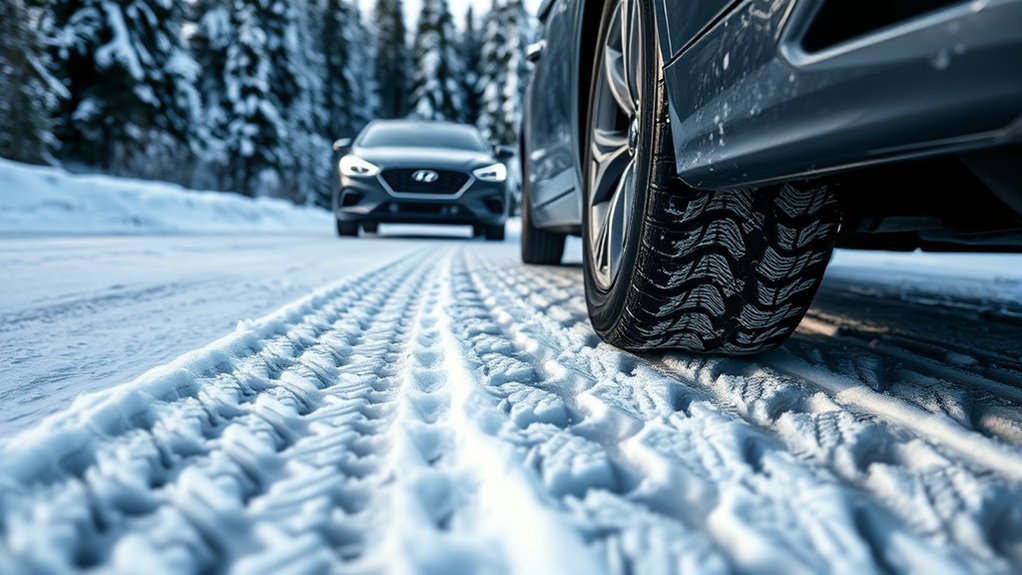
Winter tire tread is not just deeper; it is shaped to work in snow, ice, and slush. The tread blocks, grooves, and tiny cuts called sipes create edges that help the tire grip cold, slippery surfaces.
- Deeper grooves: Help move slush and snow away from the contact patch.
- More biting edges: Sipes and tread blocks grip packed snow and icy surfaces better than a typical all-season tread.
- Cold-weather compound: Helps the tire stay flexible when ordinary rubber would harden.
- 3PMSF marking: The Three-Peak Mountain Snowflake symbol means the tire meets a severe-snow traction standard.
One important detail: 3PMSF is useful, but it is not a magic label. Tire Rack’s explanation of the 3PMSF symbol notes that the test measures acceleration traction on medium-packed snow. It does not directly test braking, cornering, or ice traction. For harsh winter driving, a dedicated winter tire is still the stronger choice than a standard all-season tire.
What Happens to Winter Tires When Temperatures Rise?
When temperatures rise and stay above about 45°F (7°C), winter tires are outside their best operating range. That does not mean they instantly become dangerous on the first warm day, but it does mean they are no longer the best tool for daily driving.
Increased Tire Wear
The soft rubber that helps winter tires grip cold roads can wear quickly on warm pavement. Exact mileage varies by tire model, driving style, alignment, inflation, road surface, and storage, so be cautious with any universal number. A winter tire used only in cold months may last several winter seasons, while one driven through hot summers can lose useful tread much sooner.
Michelin’s winter tire life guidance says lifespan depends on usage, brand, storage conditions, and maintenance. It also recommends regular tread-depth checks and switching back to all-season or summer tires once winter ends. Michelin’s winter tire life guide is a good reference for tire age, tread depth, and storage.
Reduced Performance Efficiency
Warm-weather winter tire use can affect more than tread life. You may notice a softer steering feel, more road noise, slower response during lane changes, and less confident braking on warm dry pavement compared with the proper seasonal tire. Rolling resistance may also be higher than a tire designed for warm-weather efficiency.
| Temperature Pattern | Best Tire Decision | Why It Matters |
|---|---|---|
| Consistently below 45°F (7°C) | Use winter tires if snow, ice, slush, or freezing rain are likely | Winter rubber and tread are in their intended range |
| Mixed spring/fall weather | Watch the 7–10 day forecast before switching | Avoid switching too early before a cold snap |
| Consistently above 45°F (7°C) | Switch to all-season, all-weather, or summer tires | Warm-weather tires improve tread life, response, and everyday comfort |
How to Know When to Switch to All-Season Tires
Switching tires is not just a date on the calendar. Use temperature, road conditions, tread depth, and the tire’s condition together.
Temperature Threshold Considerations
Use the 45°F (7°C) rule as your starting point. If the forecast shows daily temperatures staying above that range and snow or ice is unlikely, it is time to schedule the switch. If nights are still below freezing or you regularly drive early in the morning on cold roads, waiting a little longer may make sense.
Pro Tip: Make the decision from a week of weather, not one warm afternoon. Spring can bring warm daytime pavement and freezing morning commutes in the same week.
Tread Wear Assessment
Check winter tire tread depth before storing them and again before reinstalling them. Tire Rack recommends replacing tires at about 5/32 inch of remaining tread for driving in snow, 4/32 inch for wet roads, and 2/32 inch for dry roads. Tire Rack’s tread-depth guidance is a useful benchmark because snow traction drops before the tire reaches the legal-style minimum.
Also inspect for uneven wear, cracks, bulges, punctures, vibration, or a tire that keeps losing pressure. USTMA says tire tread should be at least 2/32 inch and recommends monthly checks for inflation, wear, and damage. USTMA’s tire care essentials also explains why tread equals traction.
Driving Conditions Evaluation
Ask these questions before deciding whether to keep winter tires on your Sonata:
- Are average temperatures still below 45°F (7°C)? If yes, winter tires may still be appropriate.
- Do you still expect snow, ice, freezing rain, or slush? If yes, do not switch too early.
- Is your tread deep enough for snow? If it is near 5/32 inch or lower, plan replacement before the next winter season.
- Are the tires aging or cracking? Old rubber can lose performance even if tread remains.
- Are you using four matching tires? If not, correct the setup before driving in winter conditions.
Why All-Season Tires Are Better in Warmer Weather
All-season tires are usually a better match for a Hyundai Sonata once winter weather is over. They are designed for everyday dry and wet roads, moderate temperatures, and light winter conditions. They also tend to feel more stable and predictable than winter tires on warm pavement.
If you live somewhere with real winters, all-season tires are not a replacement for dedicated winter tires during snow and ice season. But in spring, summer, and fall, they are usually more practical than winter tires. They help preserve your winter tire tread for the months when it matters most.
Note: Some drivers use all-weather tires instead of separate winter and all-season sets. Look for the 3PMSF symbol if you want better snow traction than a standard all-season tire, but remember that all-weather tires still may not match dedicated winter tires in severe winter conditions.
[Products Worth Considering]

The SAFELIFE dial tire tread depth gauge measures tread depth in 1/32 inch increments with clear, easy-to-read 2-inch dial face. Color zones using a traffic light system help you quickly judge whether tread is low, marginal, or ample for safer driving. Built with a durable zinc cast body and a metal detect probe for precise, comfortable use across cars, motorcycles, trucks, and buses.

Steelman white tire marking crayons provide high-contrast, semi-permanent marks for repairing and inspecting tires and equipment. They write on wet or dry, smooth or coarse surfaces including rubber, metal, glass, and wood, making them ideal for puncture location and damage outlining. The lead- and zinc-free crayons resist weather and fading yet wipe away when you no longer need the marks.

The Kurgo Seasonal Tire Tote helps protect your car interior, clothes, and garage from tire grime, brake dust, and residue during seasonal tire changes. Its universal design fits most passenger tires between 22" and 31" in diameter, making storage and transport simpler with less mess. Built for rugged, repeated use, it’s machine washable for easy care and comes with a lifetime warranty.
Choosing the Right Tires for Winter Conditions in Your Hyundai Sonata
For a Hyundai Sonata, the right winter tire setup is not just about buying any tire labeled “snow.” Fitment matters. Hyundai says snow tires should be equivalent in size and type to the standard tires, mounted on all four wheels, and inflated to the same pressure as the original tires. Always confirm your exact tire size on the driver-side door placard and in your Hyundai owner’s manual before buying tires.
- Use the correct size and load rating: Do not guess based on another Sonata model year or trim. Check your door placard.
- Install winter tires on all four wheels: This keeps braking, steering, and cornering more balanced.
- Use the correct inflation pressure: Check pressure when tires are cold, and do not rely only on the TPMS light.
- Choose 3PMSF-rated winter tires for severe snow: The snowflake symbol helps identify tires tested for severe snow traction.
- Ask about speed rating: Some winter tires have different speed ratings than the original tire; follow tire dealer and manufacturer guidance.
Winter Tire Storage and Maintenance
Good storage can help your winter tires last longer. Before putting them away, clean off salt and road grime, dry them, label their wheel position, and store them in a cool, dry place away from sunlight, heat, oil, and electric motors. If the tires are mounted on wheels, they can usually be stacked or hung. If they are unmounted, store them upright and rotate their position occasionally.
When winter returns, inspect each tire before reinstalling it. Look for cracks, flat spots, bulges, punctures, uneven wear, or a DOT date code that shows the tire is aging out. A tire can become less safe from age and rubber deterioration even when it still has visible tread.
Simple Switch Checklist for Your Sonata
- Check the forecast: Wait until temperatures consistently stay above 45°F (7°C) before removing winter tires.
- Measure tread depth: Plan replacement if winter tires are near 5/32 inch before snow season.
- Inspect tire condition: Look for cracking, bulges, uneven wear, punctures, or vibration.
- Confirm fitment: Use the tire size and pressure listed on the Sonata’s door placard or owner’s manual.
- Switch all four tires together: Do not mix winter tires with all-season or summer tires.
- Store winter tires properly: Keep them clean, dry, cool, and away from sunlight.
Frequently Asked Questions About Winter Tires
Can I use winter tires year-round on my Hyundai Sonata?
No. Winter tires are designed for cold-weather driving. In warm weather, they can wear faster, feel less responsive, make more road noise, and reduce everyday comfort and efficiency. Switch to all-season, all-weather, or summer tires when temperatures consistently stay above about 45°F (7°C).
What happens to winter tires above 45°F (7°C)?
They do not instantly fail, but they move outside their best operating range. The rubber can become too soft, tread blocks can squirm, steering may feel less precise, and tread wear can speed up on warm pavement.
How long do winter tires typically last?
There is no single mileage number for every winter tire. Life depends on tire model, driving style, road surface, alignment, pressure, storage, and how much warm-weather driving they see. Inspect tread depth, age, cracking, and wear every season.
Can winter tires improve traction in heavy rain?
In cold rain or slush, winter tires can help because their compound stays flexible. In warm heavy rain, all-season or summer tires are usually a better choice because they are designed for warmer wet pavement. Worn winter tires can also lose wet-weather effectiveness.
Are all winter tires the same?
No. Winter tires vary by compound, tread pattern, ice traction, snow traction, speed rating, comfort, tread life, and price. For a Sonata, choose the correct size and load rating, and look for the Three-Peak Mountain Snowflake symbol for severe snow service.
Can I mix winter and all-season tires?
No. Mixing tire types can make the car respond unpredictably during braking, steering, and cornering. For balanced handling, install four matching tires of the correct size, type, and load rating.
What is the cost difference between winter and all-season tires?
Winter tires can cost more upfront because you may need a second set of tires and seasonal changeovers. However, using winter tires only in cold months helps preserve their tread, while using all-season or summer tires in warm months helps preserve everyday handling and comfort.
Are all-weather tires a good year-round option for a Sonata?
They can be a good compromise if your area has mild to moderate winter weather and you want one tire set year-round. Choose a 3PMSF-rated all-weather tire if snow traction matters. For severe winters, dedicated winter tires are still the safer choice.
Conclusion
Winter tires are excellent for a Hyundai Sonata in the right season, but they are not a year-round solution. Once temperatures consistently stay above about 45°F (7°C), switch to a tire made for warmer roads. You will preserve your winter tire tread, improve everyday handling, and keep your Sonata better matched to the season. For the safest setup, use four matching tires, follow the tire size and pressure on your Hyundai placard, and inspect tread depth and tire age before every winter.
Sources
- Hyundai Owner’s Manual — Snow or Icy Conditions — supports the 45°F road-temperature guidance, all-four snow tire rule, tire size/type guidance, and dry-road traction caution.
- Hyundai Owner’s Manual — Summer Tires — supports the warning that summer tires are substantially reduced in snow and ice and that snow or all-season tires should be used on all four wheels in winter conditions.
- Michelin — Summer vs. Winter vs. All-Season Tires — supports tire-type differences, the 45°F seasonal switching guideline, and 3PMSF overview.
- Michelin — How Long Do Winter Tires Last? — supports tire life variables, replacement considerations, tire age, and storage guidance.
- Tire Rack — Three-Peak Mountain Snowflake Symbol — supports what 3PMSF means and its limitations.
- Tire Rack — When Should Tires Be Replaced? — supports tread-depth guidance for snow, wet roads, and dry roads.
[Products Worth Considering]

Milton S-921 pencil tire pressure gauge helps you maintain optimal tire pressure for passenger cars with accurate readings in PSI and kPa. It features a built-in deflator valve for convenient pressure adjustments, plus a single chuck head and nylon indicator bar for easy use on the go. Built from durable plated brass and designed for reliable performance, it’s a practical road trip and cold-weather maintenance tool.

The Topeak SmartGauge D2 delivers precise digital tire pressure readings for bikes, motorcycles, and sports equipment up to 250 psi (17 bar). Its rotating SmartHead works with both Presta and Schrader valves, so you can check pressure quickly without adapters. The LCD display makes it easy to read results in psi, bar, or kg/cm² with an included CR2032 battery for immediate use.

Measure tyre tread depth precisely with a digital gauge that reads in both MM and inches, helping you monitor safe driving conditions. The large LCD screen is easy to operate, and the compact tool fits for cars, trucks, and motorcycles. It provides high accuracy with a 0-25.4mm range and includes a 1-year warranty for added peace of mind.

Related Articles
7 Winter Tires to Keep Your Hyundai Sonata Safe This Season
You rely on your Hyundai Sonata every day, and winter roads can turn routine drives into risky trips. Choosing the right tires improves safety,…
Read More
7 Snow Tires That Will Transform Your Hyundai Sonata This Season
You rely on your Hyundai Sonata for daily drives, and winter changes everything about traction and stopping distance. Choosing the right tire is one…
Read More
10 Must-Have Summer Tires for Your Hyundai Sonata This Spring
You want a safe, quiet and predictable ride when the temperatures rise, and choosing the right set of summer or touring tires makes a…
Read More