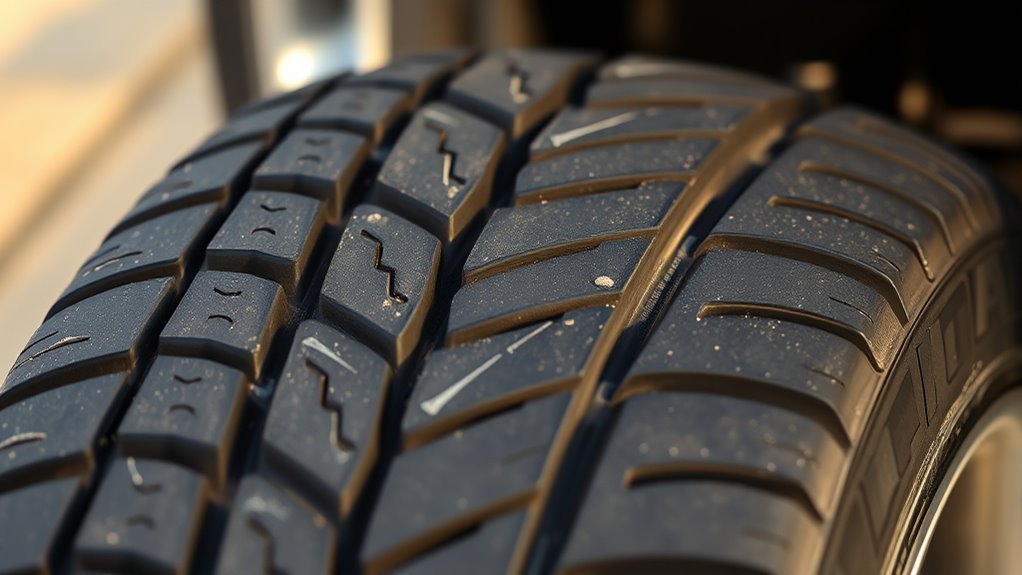
Uneven tire wear on a Hyundai Sonata is more than a cosmetic issue. The pattern on the tread can point to overinflation, underinflation, alignment drift, worn suspension parts, wheel imbalance, or a missed rotation. Use the wear pattern as an early warning sign, then confirm it with a cold tire-pressure check, tread-depth inspection, and, when needed, a professional alignment or suspension check.
Quick Answer
On a Hyundai Sonata, center tread wear often points to overinflation, both-edge shoulder wear usually points to underinflation, one-sided inner or outer wear suggests alignment or camber issues, cupping can indicate suspension or balance problems, and feathering commonly points to toe misalignment. Check tire pressure cold and inspect the tread monthly.
Key Takeaways
- Use the PSI on your Sonata’s driver-door placard or owner’s manual, not the maximum pressure printed on the tire sidewall.
- Check pressure when the tires are cold: parked for at least 3 hours or driven less than 1 mile.
- Rotate Sonata tires every 7,500 miles or sooner if irregular wear appears, following Hyundai’s guidance.
- Bulges, exposed cords, severe vibration, or tread at the wear bars mean the tire needs immediate professional attention.
At a Glance
| Time Required | 10–15 minutes for a monthly driveway inspection |
| Difficulty | Easy for inspection; professional service needed for alignment, balancing, suspension, or tire replacement |
| Tools Needed | Tire-pressure gauge, tread-depth gauge or penny, flashlight, and gloves |
| Cost | $0–$15 for inspection tools; repairs vary by tire, alignment, balance, or suspension issue |
Common Tire Wear Patterns: Understanding What They Indicate
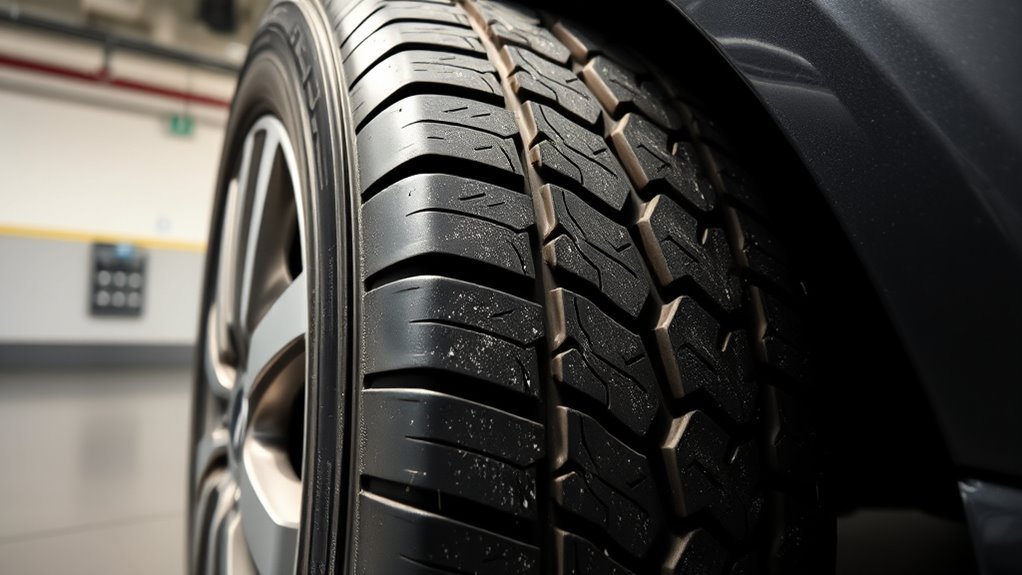
The fastest way to read tire wear is to compare the center tread, both shoulders, and the inner and outer edges. One pattern usually does not prove the problem by itself, but it gives you a strong clue about what to check next.
| Wear Pattern | What It Usually Means | What To Do First |
|---|---|---|
| Center tread worn faster than edges | Often overinflation | Check cold PSI and adjust to the Sonata’s placard |
| Both shoulders worn faster than center | Often underinflation, overloading, or a slow leak | Inflate correctly and inspect for punctures or valve leaks |
| Only inner or only outer shoulder worn | Alignment, camber, worn suspension, or aggressive cornering | Schedule an alignment and suspension inspection |
| Cupping, scalloping, dips, or choppy tread | Suspension wear, wheel imbalance, loose parts, or tire/wheel damage | Have balance, shocks/struts, bearings, and suspension checked |
| Feathered tread blocks with sharp and rounded edges | Toe alignment problem | Get a professional alignment before the pattern worsens |
| Flat spot or one patch worn smooth | Hard braking, locked wheel, balance issue, or tire damage | Inspect immediately if vibration or noise appears |
Warning: Do not ignore bulges, exposed cord, tread separation, a tire that repeatedly loses air, or vibration that suddenly appears. These can signal tire failure risk and should be inspected before more driving.
How to Identify Center Wear: Signs of Overinflation
Center wear means the middle ribs of the tire tread are wearing faster than the shoulders. On a Hyundai Sonata, this often happens when the tire has more air pressure than the vehicle requires for the load and tire size.
Signs of Center Wear
- The center of the tread looks smoother or shallower than the inner and outer shoulders.
- The ride feels harsher than normal over bumps.
- Wet-road grip may feel reduced because the tire contact patch is not working as intended.
- Cold pressure readings are above the PSI listed on the driver-door placard or owner’s manual.
Causes of Overinflation
Overinflation often comes from filling the tire to the sidewall maximum instead of the vehicle placard, adjusting pressure when the tire is hot, or forgetting that pressure changes with temperature. Hyundai warns that overinflation can cause a harsh ride, excessive center tread wear, and greater risk of road-hazard damage.
| Cause | Why It Matters |
|---|---|
| Using the tire sidewall maximum | That number is not the Sonata’s recommended operating pressure. |
| Adjusting hot tires | Warm tires normally read higher, so pressure decisions can be misleading. |
| Seasonal temperature changes | Cold weather can reduce tire pressure, while heat can raise readings after driving. |
| Infrequent pressure checks | Small errors can continue long enough to create visible tread wear. |
Prevention Tips for Drivers
Check all four tires when they are cold. Hyundai defines cold tires as tires that have been parked for at least 3 hours or driven less than 1 mile. Use the pressure listed on the Sonata’s tire label or owner’s manual, then recheck after adding or releasing air.
Pro Tip: Keep a digital or pencil-style tire-pressure gauge in the glove box. TPMS is helpful, but it is not a replacement for regular manual pressure checks.
Edge Wear: Symptoms of Underinflation
Underinflation usually shows up as wear on both shoulders of the tire, with the center tread staying deeper for longer. If only one edge is wearing, look more closely at alignment, camber, suspension, or driving habits instead of assuming low pressure is the only cause.
Symptoms of Underinflation
- Both inner and outer shoulders are wearing faster than the center tread.
- The tire looks slightly flattened where it meets the road.
- Fuel economy drops because rolling resistance increases.
- The TPMS light appears or returns after being reset.
- The tire needs air repeatedly, which may point to a puncture, bead leak, or valve-stem issue.
Effects on Handling
Low tire pressure can make a Sonata feel sluggish, increase heat buildup, reduce steering response, and raise the risk of tire damage. Hyundai warns that severe underinflation can lead to heat buildup, blowouts, tread separation, and loss of control.
Importance of Regular Checks
Inspect your tires monthly for inflation, wear, and damage. The recommended cold tire pressure for your Sonata is listed in the owner’s manual and on the tire label on the driver’s side center pillar. Always use a gauge, because visual checks alone can miss a tire that is several PSI low.
Inner and Outer Shoulder Wear: Signs of Misalignment
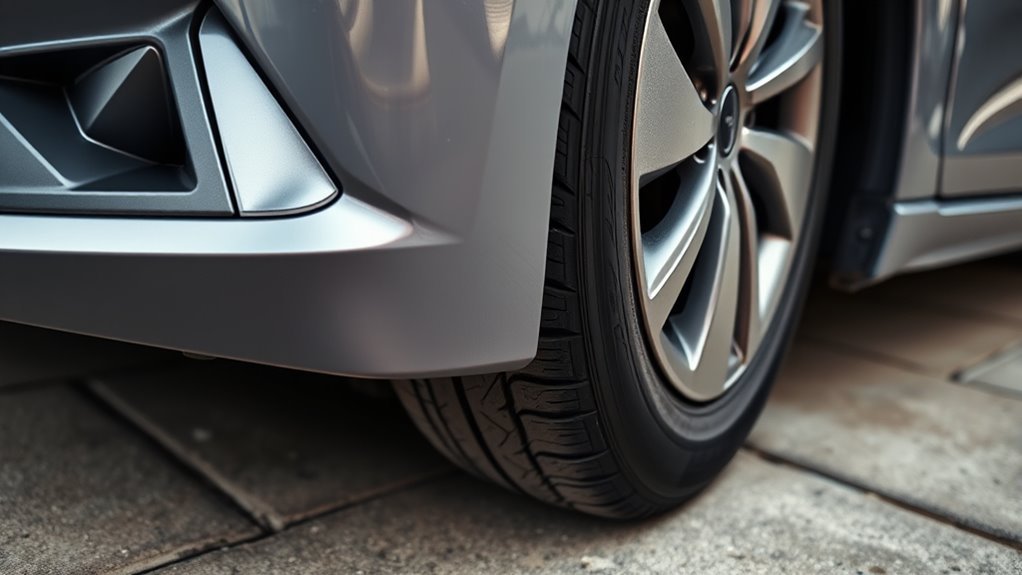
Uneven wear on only the inner or only the outer shoulder is a strong clue that the tire is not meeting the road evenly. On a Hyundai Sonata, the likely causes include toe misalignment, camber issues, worn suspension bushings, worn steering components, or a previous pothole impact.
Watch for these supporting signs:
- The steering wheel is off-center while driving straight.
- The car pulls left or right on a flat road.
- The tire feels smooth in one direction and rough in the other when you run your hand lightly across the tread.
- Uneven wear returns even after pressure is corrected.
Note: Alignment is not just a tire-life issue. Poor alignment can reduce straight-line stability, braking grip, and steering control, especially in rain.
Cupping: What It Tells You About Your Suspension
Cupping, also called scalloping, looks like repeating dips, waves, or choppy patches around the tire. It can create a humming or rumbling noise that gets louder with speed. Common causes include worn shocks or struts, wheel imbalance, loose suspension parts, damaged wheel bearings, or tire/wheel problems.
Take cupping seriously because it usually means the tire is bouncing or loading unevenly as it rolls. Simply replacing the tire without fixing the cause can allow the same pattern to return on the new tire.
- Have shocks, struts, wheel bearings, and suspension joints inspected.
- Ask for wheel balancing if vibration is present.
- Check whether the tire is out of round or damaged.
- Rotate only if the tire is still safe and the technician approves it.
Feathering: Misalignment’s Impact on Tire Performance
Feathering happens when tread blocks wear at an angle, leaving one edge sharp and the opposite edge rounded. You can often feel it by running your palm lightly across the tread in both directions. If it feels smooth one way and rough the other, toe alignment may be off.
Toe misalignment makes the tires scrub slightly as the Sonata moves forward. That scrubbing can shorten tire life, increase road noise, and make the car feel less stable. A professional alignment is the correct fix; adding air or rotating the tires will not solve the root problem.
Flat Spots, Diagonal Wear, and Patchy Wear
Not every uneven pattern fits neatly into inflation or alignment. A single flat spot can come from hard braking, a locked wheel, or a tire that sat in one position for a long time. Diagonal or patchy wear can point to balance problems, worn parts, missed rotations, or damage from road impacts.
If patchy wear comes with vibration, steering shake, or a thumping sound, have the tire and wheel checked promptly. A technician may inspect balance, runout, wheel damage, suspension looseness, and tire internal condition.
How to Inspect Your Hyundai Sonata Tires at Home
A simple monthly inspection can catch most tire wear problems before they become expensive or unsafe.
- Park safely on level ground. Let the tires cool for at least 3 hours if possible.
- Check cold pressure. Use a gauge and compare each tire with the Sonata’s driver-door placard or owner’s manual.
- Scan the tread face. Look for center wear, shoulder wear, cupping, feathering, cracks, cuts, nails, or exposed cord.
- Measure tread depth. Use a tread-depth gauge, or use a penny as a quick check. If wear bars are flush with the tread, replace the tire.
- Compare all four tires. One tire wearing faster than the others can point to pressure loss, alignment, suspension, or rotation issues.
- Drive and listen. Humming, thumping, pulling, vibration, or steering shake should be checked by a tire professional.
Warning: Replace or professionally inspect a tire immediately if you see exposed cords, sidewall bulges, tread separation, deep cuts, or a repeated pressure loss. Do not rely on rotation to “fix” an unsafe tire.
[Products Worth Considering]

Steelman white tire marking crayons provide high-contrast, semi-permanent marks for repairing and inspecting tires and equipment. They write on wet or dry, smooth or coarse surfaces including rubber, metal, glass, and wood, making them ideal for puncture location and damage outlining. The lead- and zinc-free crayons resist weather and fading yet wipe away when you no longer need the marks.

Monitor tire tread wear with a smart, color-coded depth gauge that shows clear condition ranges at a glance. The bar is range marked for fast, easy readings, helping you maintain safer traction and performance. Each gauge is portable with a pocket clip, and the set includes 20 units for daily use and sharing.

Measure tire tread depth quickly and accurately with this LUMITECO dial gauge that reads in 1/32" increments up to 14/32". The color-coded green/yellow/red zones make it easy to judge tire wear and know when replacement is needed. A rugged, compact design with a protective pouch helps keep the gauge ready for use on cars, trucks, motorcycles, and more.
Tire Rotation: Why It’s Important for Tire Health
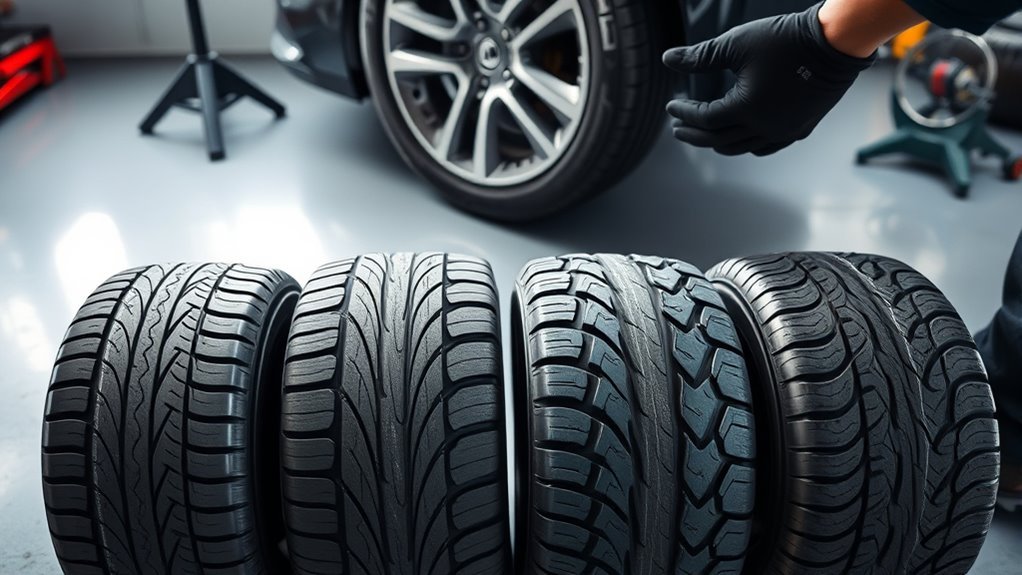
Tire rotation helps even out the different loads placed on the front and rear tires. Hyundai recommends rotating tires every 12,000 km, or 7,500 miles, or sooner if irregular wear develops. During rotation, the tires should also be checked for correct balance, uneven wear, and damage.
Rotation helps, but it is not a cure for every pattern. If your Sonata has cupping, feathering, one-sided shoulder wear, vibration, or pulling, fix the root cause first. Otherwise, the uneven pattern can continue after the tires are moved to a new position.
[Products Worth Considering]

Keep your tires properly inflated with this analog VONDIOR tire pressure gauge, designed for fast, easy readings without batteries. The swiveling, two-axis hose and large glow dial help you measure at any tire angle with instant visibility. Built with a protective rubber shield, it supports durable, low-maintenance use for cars and trucks.

The SAFELIFE dial tire tread depth gauge measures tread depth in 1/32 inch increments with clear, easy-to-read 2-inch dial face. Color zones using a traffic light system help you quickly judge whether tread is low, marginal, or ample for safer driving. Built with a durable zinc cast body and a metal detect probe for precise, comfortable use across cars, motorcycles, trucks, and buses.

This tire inflator with pressure gauge delivers long-lasting performance with a durable rubber-protected gauge and sturdy build. The longer hose and 360 swivel air chuck help you seal the valve securely and keep your hands free while measuring, inflating, or deflating. It’s battery-free for reliable use and provides ±2 PSI accuracy in the mid-range for most typical tires, with universal compatibility for 1/4 NPT compressor outputs.
When to Replace a Worn Tire
Replace the tire instead of trying to save it when the tread is at the wear bars, cords are visible, the sidewall has a bulge, the tire has tread separation, or a technician finds internal damage. A tread-depth gauge is the best tool, but the penny test can help you spot a tire that is already too worn for safe wet-weather grip.
Also replace tires that are mismatched in a way that conflicts with Hyundai’s tire-size guidance. Hyundai warns that replacement tires should match the original size, type, construction, and tread pattern unless the manufacturer recommends another size.
[Products Worth Considering]

Accurately measure tire tread depth with a calibrated gauge marked from 0 to 1 inch in 1/32 inch increments. The color-coded bar helps you quickly identify tread condition ranges, supporting safe driving for trucks, motorcycles, automobiles, and passenger vehicles.

The Ziopetru adjustable magnetic wheel alignment tool helps you check and restore camber and caster positioning after removing and reinstalling undercarriage components. With a clear leveling/bubble measurement system and an easy zeroing adjustment knob, it supports precise horizontal angle checking. The strong magnetic base mounts to metal surfaces for convenient use at home on cars, motorcycles, trucks, vans, and SUVs.

Measure tyre tread depth precisely with a digital gauge that reads in both MM and inches, helping you monitor safe driving conditions. The large LCD screen is easy to operate, and the compact tool fits for cars, trucks, and motorcycles. It provides high accuracy with a 0-25.4mm range and includes a 1-year warranty for added peace of mind.
Why Regular Inspections Matter for Tire Wear Patterns
Regular inspections protect safety, ride quality, and tire life. NHTSA recommends keeping a tire-pressure gauge in the vehicle, checking pressure correctly, balancing and aligning tires when needed, and following the owner’s manual for rotation. FuelEconomy.gov also notes that properly inflated tires are safer, last longer, and can improve gas mileage.
The practical goal is simple: catch the pattern early, correct the cause, and avoid driving on a tire that can no longer grip, steer, or support the car safely.
A tire wear pattern is a clue, not a final diagnosis. Confirm it with pressure readings, tread-depth checks, and a professional inspection when the pattern involves vibration, pulling, cupping, or one-sided wear.
Frequently Asked Questions
What tire wear patterns indicate a problem?
Center wear, both-edge shoulder wear, one-sided shoulder wear, cupping, feathering, diagonal wear, and flat spots can all indicate a problem. The likely causes include incorrect tire pressure, poor alignment, wheel imbalance, worn suspension parts, hard braking, or tire damage.
How often should I rotate Hyundai Sonata tires?
Hyundai recommends rotating the tires every 12,000 km, or 7,500 miles, or sooner if irregular wear develops. Check balance, tread wear, tire damage, and brake-pad wear during the rotation.
Can I fix uneven tire wear by adding air?
Adding or releasing air can stop pressure-related wear from getting worse, but it will not restore tread that is already worn away. If the pattern comes from alignment, suspension, balance, or tire damage, pressure adjustment alone will not fix the cause.
Is tire cupping dangerous?
Cupping can become dangerous if it is tied to worn suspension parts, imbalance, or tire damage. It can reduce ride stability and increase noise or vibration. Have the tire, wheel balance, shocks, struts, bearings, and suspension inspected.
Should I use the PSI on the tire sidewall?
No. Use the recommended cold PSI on the Sonata’s driver-door tire label or in the owner’s manual. The sidewall number is the tire’s maximum inflation pressure, not the vehicle’s recommended operating pressure.
Conclusion
Hyundai Sonata tire wear patterns can tell you a lot about pressure, alignment, suspension, balance, and driving conditions. Center wear often points to overinflation, both-edge wear to underinflation, one-sided wear to alignment or camber issues, cupping to suspension or balance problems, and feathering to toe misalignment. Check pressure cold, inspect tread monthly, rotate on schedule, and get professional service when the pattern affects safety or handling.
Sources
- Hyundai Owner’s Manual — Recommended cold tire inflation pressures — cold-pressure checks, overinflation, underinflation, tire failure risk.
- Hyundai Owner’s Manual — Tire rotation — 7,500-mile rotation interval and rotation inspection guidance.
- NHTSA TireWise — pressure checks, tire rotation, alignment, balancing, and tire safety.
- FuelEconomy.gov — Keeping Your Vehicle in Shape — proper tire inflation and fuel-economy impact.
- Michelin — Excessive or irregular tyre wear — center wear, one-sided wear, alignment, camber, and suspension guidance.
- eCFR 49 CFR § 570.62 — Tires — federal tire inspection and tread-depth criteria.