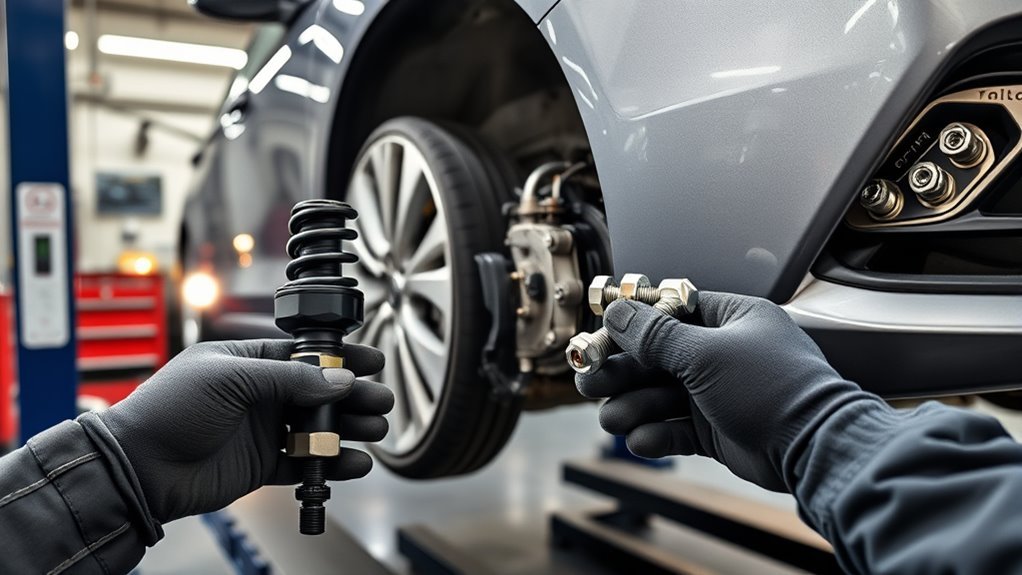
If your Hyundai Sonata’s camber is outside specification and the factory suspension does not provide a normal camber adjustment point, do not assume the only fix is “turning an adjustment bolt.” First confirm the alignment reading, inspect the tires and suspension, then choose the right repair: replace worn or bent parts, install a compatible camber bolt kit, or use model-specific adjustable arms.
Quick Answer
If your Hyundai Sonata camber is not adjustable from the factory, the usual solutions are a professional alignment diagnosis, replacement of worn or bent suspension parts, or a vehicle-specific aftermarket camber kit. Camber bolts may correct small errors, while adjustable arms are better for lowered cars or larger corrections.
Key Takeaways
- Factory camber and caster on many Sonata models are preset, so the shop may only be able to adjust toe without aftermarket parts.
- Uneven tire wear or pulling can come from camber, but also from tire pressure, tire conicity, road crown, worn bushings, bent parts, or previous collision damage.
- Camber bolts are usually the simplest fix for small corrections, but the actual adjustment range depends on the part and application.
- After any camber repair, get a four-wheel alignment with before-and-after printouts and ask the shop to follow Hyundai alignment procedures.
At a Glance
| Time Required | 15–30 minutes for inspection; 1–2 hours for camber kit installation plus alignment at a shop. |
| Difficulty | Moderate to advanced. Final alignment should be done on a professional alignment rack. |
| Tools Needed | Tire pressure gauge, tread-depth gauge, jack, jack stands, torque wrench, sockets, and professional alignment equipment. |
| Cost | Camber bolts are usually the lowest-cost parts option; adjustable arms and labor cost more. Always budget for a four-wheel alignment afterward. |
Understanding Why the Hyundai Sonata’s Camber Is Non-Adjustable

Camber is the inward or outward tilt of the wheel when viewed from the front or rear of the vehicle. A small amount of negative camber can be normal, but too much negative or positive camber can reduce tire contact and cause shoulder wear.
On many Hyundai Sonata suspension designs, camber and caster are preset by the geometry of the strut, knuckle, control arm, and subframe. That means the alignment technician can usually adjust toe, but may not have a factory camber bolt or eccentric to turn. Hyundai’s alignment guidance also tells technicians to refer to the applicable shop manual for the exact alignment specifications and repair process for the vehicle.
If the camber reading is outside specification, the first question is not “which aftermarket part should I buy?” The first question is “why is it out?” Common causes include worn control-arm bushings, a bent strut, bent knuckle, sagging spring, shifted subframe, lowered suspension, accident damage, or incorrect previous repairs.
Note: “Non-adjustable” does not mean “unfixable.” It means the factory setup may not include a normal camber adjustment point. The correct fix depends on the cause and the amount of camber correction needed.
Confirm the Problem Before Buying Camber Parts
Before installing camber bolts or adjustable arms, get a printout from a four-wheel alignment machine. The printout should show the current camber, caster, and toe for each wheel, plus the factory specification range for your Sonata’s year, trim, wheel size, and suspension setup.
Use this quick checklist before approving parts:
- Check tire pressure cold: Set pressure to the door-jamb placard, not to the number on the tire sidewall.
- Inspect the tread: Inner-edge wear often points to negative camber or toe-out; outer-edge wear can point to positive camber, toe-in, hard cornering, or underinflation.
- Look for damaged parts: Bent struts, loose ball joints, worn control-arm bushings, and shifted subframes can all change camber.
- Confirm ride height: Lowering springs or sagging springs can push camber outside the factory range.
- Ask about road crown and tire pull: A car may drift because of the road surface or tire conicity, not because camber is the root cause.
A good alignment diagnosis starts with tires, ride height, steering parts, suspension parts, and road-test conditions—not just the camber number on the screen.
Common Issues Caused by Non-Adjustable Camber
When a Hyundai Sonata’s camber is out of specification and cannot be corrected with factory adjustments, you may notice symptoms such as:
- Uneven tire wear: The inside or outside shoulder wears faster than the center tread.
- Vehicle pull or drift: The car may require constant steering correction, especially if camber is different from side to side.
- Steering wheel off-center: This is often a toe or steering-center issue, but it can appear with a broader alignment problem.
- Reduced tire life: Incorrect camber and toe can scrub the tread instead of letting it roll cleanly.
- Poor handling after lowering: Lowering a Sonata can increase negative camber and may require aftermarket correction parts.
Do not blame camber alone until the shop checks toe. Toe that is only slightly out can destroy tires quickly, even when the camber number looks only mildly off.
Effective Aftermarket Solutions for Camber Adjustment
If the suspension is not bent or worn and the car still needs more camber correction than the factory setup allows, aftermarket parts can help. The right choice depends on the amount of correction needed, the axle affected, and whether the vehicle is stock height or lowered.
| Solution | Best For | Important Caution |
|---|---|---|
| Camber bolt kit | Small front camber corrections on strut-style suspensions | Verify bolt diameter, location, torque spec, and adjustment range before buying. |
| Adjustable control arms | Lowered vehicles or larger rear/front correction needs when available | Use street-appropriate parts; some spherical-bearing arms can add noise and maintenance. |
| Replace worn or bent parts | Camber out of range after pothole damage, collision, or bushing wear | Do not use aftermarket correction parts to hide a bent safety component. |
| Shims or specialty joints | Only when a vehicle-specific kit and shop procedure supports them | Do not stack generic shims into strut or suspension mounts unless the kit maker and shop manual allow it. |
Camber bolt kits are often the simplest option. Some aftermarket cam bolts provide about plus or minus 1.25 degrees of correction, while other kits may differ. MOOG, for example, describes adjustment cams and bolts as parts used to dial in camber, caster, or toe depending on the application. Always confirm the exact part number against your Sonata’s year and suspension before ordering.
[Products Worth Considering]

Steelman white tire marking crayons provide high-contrast, semi-permanent marks for repairing and inspecting tires and equipment. They write on wet or dry, smooth or coarse surfaces including rubber, metal, glass, and wood, making them ideal for puncture location and damage outlining. The lead- and zinc-free crayons resist weather and fading yet wipe away when you no longer need the marks.

The Ziopetru adjustable magnetic wheel alignment tool helps you check and restore camber and caster positioning after removing and reinstalling undercarriage components. With a clear leveling/bubble measurement system and an easy zeroing adjustment knob, it supports precise horizontal angle checking. The strong magnetic base mounts to metal surfaces for convenient use at home on cars, motorcycles, trucks, vans, and SUVs.

Monitor tire tread wear with a smart, color-coded depth gauge that shows clear condition ranges at a glance. The bar is range marked for fast, easy readings, helping you maintain safer traction and performance. Each gauge is portable with a pocket clip, and the set includes 20 units for daily use and sharing.
How Adjustable Control Arms Improve Performance
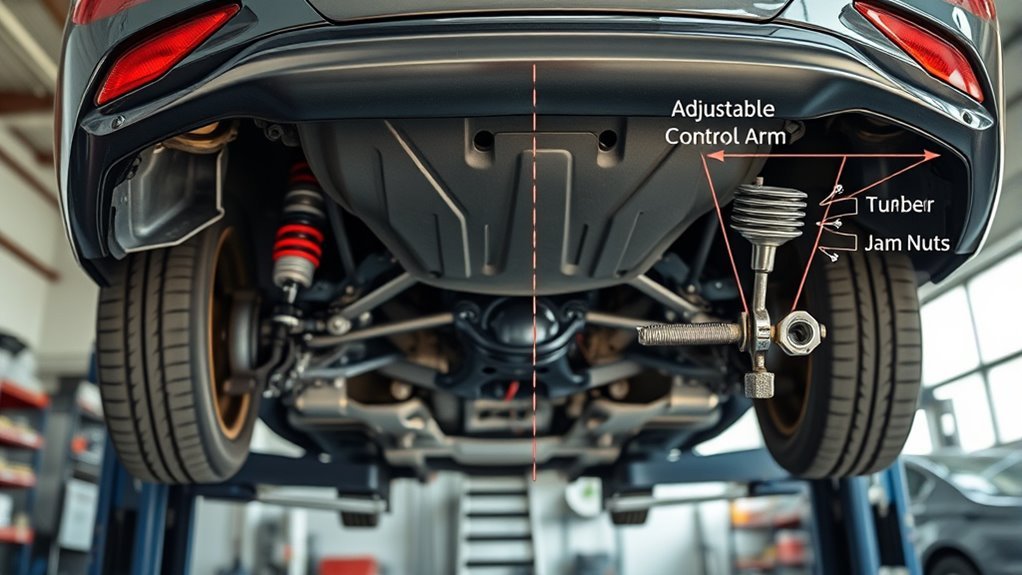
Adjustable control arms can help when camber bolts do not provide enough correction or when the rear suspension needs a dedicated adjustment point. They allow the alignment technician to change suspension geometry more precisely, which can improve tire contact and reduce uneven tire wear.
[Products Worth Considering]

Measure tire tread depth quickly and accurately with this LUMITECO dial gauge that reads in 1/32" increments up to 14/32". The color-coded green/yellow/red zones make it easy to judge tire wear and know when replacement is needed. A rugged, compact design with a protective pouch helps keep the gauge ready for use on cars, trucks, motorcycles, and more.

This universal wheel alignment tool helps you accurately restore tire tilt angles after tire or suspension repairs using an adjustable camber gauge. It features a powerful magnetic base that firmly attaches to brake rotors for stationary, slip-free readings, improving consistency during measurement. Built from durable PC plastic, it resists wear and corrosion and is compact enough for car, truck, RV, and motorcycle alignment tasks.

The SAFELIFE dial tire tread depth gauge measures tread depth in 1/32 inch increments with clear, easy-to-read 2-inch dial face. Color zones using a traffic light system help you quickly judge whether tread is low, marginal, or ample for safer driving. Built with a durable zinc cast body and a metal detect probe for precise, comfortable use across cars, motorcycles, trucks, and buses.
Enhanced Handling Dynamics
Correct camber helps the tire sit on the road at the intended angle. For a daily-driven Sonata, the goal is not aggressive race-car camber. The goal is stable straight-line tracking, predictable cornering, and even tire wear.
Precise Alignment Adjustments
Adjustable arms give the alignment shop more control than fixed factory arms. This is especially helpful after lowering springs, suspension changes, or repairs that leave the camber slightly outside the factory range.
| Feature | Benefit | Tool Required |
|---|---|---|
| Adjustable camber arms | More precise tire contact | Professional alignment rack |
| Corrected left-right camber split | Better straight tracking | Before-and-after alignment printout |
| Reduced edge wear | Longer tire life when toe is also correct | Tread-depth gauge and follow-up checks |
Increased Tire Longevity
The biggest real-world benefit is tire life. Correct camber by itself helps, but toe must also be set correctly. A Sonata with corrected camber but incorrect toe can still wear tires quickly.
Pro Tip: Ask for the alignment printout and keep it with your service records. If the tires wear unevenly later, the printout helps prove whether the issue was camber, toe, or a part that moved after the repair.
How to Use Shims and Ball Joints for Effective Camber Adjustments
Shims and adjustable ball joints should be treated as specialty solutions, not universal fixes. Some vehicles and suspension locations support shims; others do not. The same is true for adjustable ball joints. Fitment must be verified by year, axle, suspension design, and the part manufacturer’s instructions.
| Component | Purpose | When to Avoid It |
|---|---|---|
| Purpose-built shims | Minor geometry correction where the suspension design allows it | Avoid generic spacing or stacking that changes bolt engagement or clamping force. |
| Adjustable ball joints | Camber correction on supported applications | Avoid if no reputable manufacturer lists the part for your Sonata. |
If a shop recommends shims or ball joints, ask for the part number, brand, adjustment range, and whether the part is designed for street use. Also ask whether the part changes any torque procedure or inspection interval.
[Products Worth Considering]

This tire inflator with pressure gauge delivers long-lasting performance with a durable rubber-protected gauge and sturdy build. The longer hose and 360 swivel air chuck help you seal the valve securely and keep your hands free while measuring, inflating, or deflating. It’s battery-free for reliable use and provides ±2 PSI accuracy in the mid-range for most typical tires, with universal compatibility for 1/4 NPT compressor outputs.

Accurately measure tire tread depth with a calibrated gauge marked from 0 to 1 inch in 1/32 inch increments. The color-coded bar helps you quickly identify tread condition ranges, supporting safe driving for trucks, motorcycles, automobiles, and passenger vehicles.

ETENWOLF’s calibrated digital tire pressure gauges deliver accurate readings across a wide pressure range, from below 12 PSI to above 140 PSI. The built-in thermal compensation helps maintain performance in extreme cold and hot conditions, while the LED light improves visibility for quick checks. Includes replaceable AAA batteries for long-lasting use and convenience for everyday tire monitoring.
Installing Aftermarket Camber Solutions: A Step-by-Step Guide
Installing aftermarket camber solutions on your Hyundai Sonata can improve alignment correction, but the job must be done carefully because it affects steering and tire contact.
Warning: Never work under a vehicle supported only by a jack. Use jack stands on solid ground, torque suspension fasteners to specification, and do not drive aggressively until the vehicle has been professionally aligned.
- Confirm the alignment readings: Get a current alignment printout showing camber, caster, and toe on all four wheels.
- Inspect the suspension first: Replace loose, worn, or bent parts before installing correction hardware.
- Select the correct kit: Choose a camber bolt, arm, shim, or joint listed for your exact Sonata year and suspension location.
- Lift and secure the vehicle: Park on level ground, chock the wheels, lift at the correct point, and support the car with jack stands.
- Install the part as directed: Follow the part maker’s instructions and the vehicle service procedure. Do not guess on bolt direction or torque.
- Get a four-wheel alignment: Set camber, toe, and steering wheel center on a calibrated alignment rack.
- Road-test and recheck: Confirm the vehicle tracks straight, the steering wheel is centered, and there are no clunks or loose-fastener symptoms.
Hyundai alignment guidance requires technicians to use the applicable shop manual for specs and, on EPS/MDPS-equipped vehicles, perform Absolute Steering Position calibration after an alignment when required by the procedure. That is one reason a shop familiar with Hyundai alignment work is worth choosing.
Tips for Finding a Reliable Alignment Shop
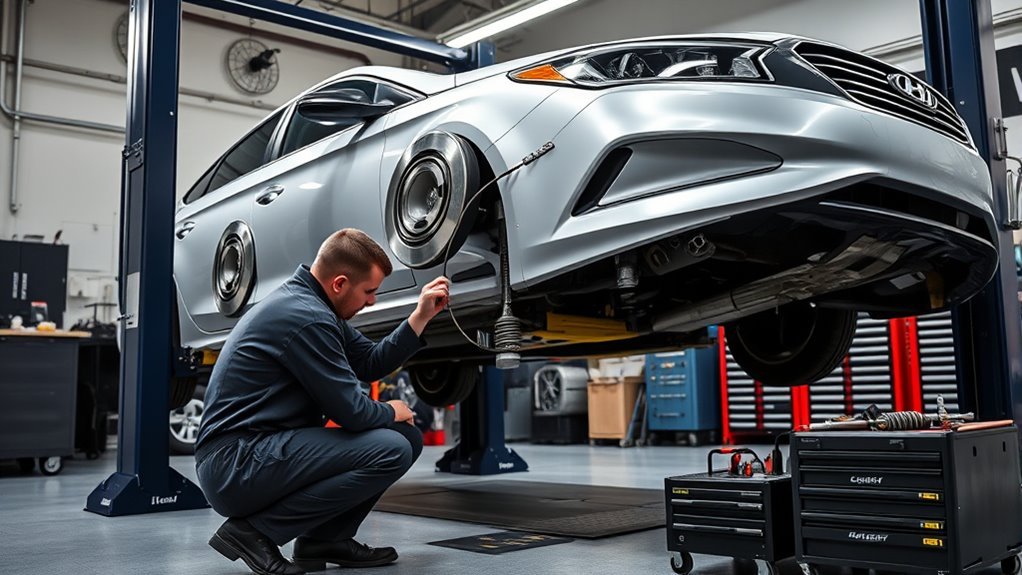
A reliable alignment shop should do more than set toe and send you away. For a Sonata with a camber issue, ask these questions before booking:
- Can you print before-and-after alignment readings? You want the numbers, not just “green” or “red.”
- Is your alignment rack calibrated regularly? Bad equipment can create bad diagnoses.
- Will you inspect suspension and steering parts before alignment? Worn parts can make alignment settings move.
- Can you install camber bolts or adjustable arms if needed? Some tire shops align only; others handle suspension correction.
- Do you know Hyundai EPS/MDPS calibration requirements? This matters if the car has electric power steering and the procedure calls for calibration after alignment.
- Will you road-test for drift or pull? Road crown, wind, tire pull, and brake drag can mimic alignment problems.
Choose a shop that explains the numbers clearly. A trustworthy technician should be able to show which wheel is out, how far it is from spec, and whether the correction requires parts or normal adjustment.
How to Monitor Tire Wear
After correcting camber, monitor tire wear for the next few thousand miles. Early checks help you catch a problem before a new set of tires is ruined.
Regular Visual Inspections
- Tread depth: Measure inner, center, and outer tread depth on each tire.
- Edge wear: Compare the inside and outside shoulders. Uneven shoulder wear can point to camber or toe problems.
- Sidewall condition: Look for bulges, cracks, cuts, or exposed cords.
- Feathering: Run your hand lightly across the tread. A saw-tooth feel often points to toe issues.
Check the tires every month and before long trips. If the same tire shoulder keeps wearing after an alignment, return to the shop with your printout.
Tire Pressure Checks
Check cold tire pressure at least monthly. Hyundai’s tire maintenance guidance says cold pressure should be set to the placard specification and that tires warm up during driving, which can raise pressure readings. Do not bleed air from hot tires just because the number is higher after a drive.
Tread depth is also a safety issue. Federal tire inspection rules use 2/32 inch as the minimum tread depth threshold, but wet-road traction can drop before a tire reaches that limit. Replace tires sooner if wear is uneven, the tread is near the wear bars, or the tire is damaged.
Hyundai tire maintenance guidance also notes that many Hyundai models use a 7,500-mile tire rotation interval, or sooner if irregular wear develops. Always check your owner’s manual for the exact interval and rotation pattern for your Sonata.
What to Know About Legal Options for Alignment Problems?
If your Sonata has repeated alignment, pulling, or tire-wear issues that a dealer or repair shop cannot resolve, documentation matters. Keep every alignment printout, tire receipt, repair order, photo of tire wear, and written explanation from the shop.
- Check open recalls and service campaigns: Use Hyundai’s official VIN lookup before paying for steering or EPS-related repairs.
- Contact Hyundai Consumer Assistance: Open a case if a dealer repair does not resolve a warranty or campaign concern.
- Use your warranty records: Alignment-related claims often need proof of measurements, diagnosis, and repair attempts.
- Ask for a second inspection: A qualified alignment or suspension specialist may identify bent parts, subframe shift, or tire pull missed elsewhere.
- Consider legal advice only when needed: Lemon-law and consumer-rights rules vary by state, vehicle age, mileage, warranty status, and number of repair attempts.
Note: This section is general consumer information, not legal advice. If you believe the vehicle qualifies for a warranty claim, buyback, or lemon-law remedy, speak with a qualified consumer-rights attorney in your state.
Frequently Asked Questions
Can camber be adjusted on a Hyundai Sonata?
On many Sonata models, factory camber and caster are preset rather than normally adjustable. Toe is usually adjustable. If camber is out of range, the fix may be replacing worn or bent parts or installing a compatible aftermarket camber correction part.
How much does it cost to fix camber alignment?
A basic alignment is usually less expensive than installing parts, but camber correction can cost more if the vehicle needs camber bolts, adjustable arms, struts, bushings, or other suspension repairs. Always ask for a written estimate that separates parts, labor, and the final alignment.
Are camber bolts safe for a Sonata?
Camber bolts can be safe when they are the correct size, installed in the correct location, torqued properly, and followed by a professional alignment. They are not a safe shortcut for bent suspension parts or collision damage.
Will bad camber make my Sonata pull to one side?
It can, especially if camber is different from left to right. However, tire pressure, tire conicity, road crown, brake drag, worn suspension parts, and steering calibration can also cause pull. Diagnose those items before blaming camber alone.
How much does it cost to fix EPS on a Hyundai Sonata?
EPS cost depends on the exact failure, diagnostic trouble codes, parts needed, labor, and whether the vehicle has an open recall or service campaign. For a 2011 Sonata, check Hyundai’s official VIN recall lookup before paying out of pocket for EPS or MDPS-related repairs.
Conclusion
A Hyundai Sonata with non-adjustable factory camber is not a dead end. Start with a proper alignment printout, inspect the tires and suspension, and confirm whether the problem is camber, toe, tire pull, worn parts, or road-test conditions. If the suspension is healthy but camber still needs correction, a compatible camber bolt kit or adjustable arm can bring the alignment back into range. The safest path is simple: diagnose first, install the right part second, and finish with a professional four-wheel alignment.
Sources
- Hyundai Technical Service Bulletin 20-SS-001H — wheel alignment requirements, diagnostic best practices, printout requirements, and EPS/MDPS calibration guidance.
- Hyundai Technical Service Bulletin 20-SS-002H — tire pressure, tire rotation, and tire wear inspection best practices.
- eCFR 49 CFR 570.9 Tires — federal tread-depth and tire-condition inspection standard.
- Hyundai Safety Recalls and Service Campaigns VIN Lookup — official Hyundai recall and service campaign lookup by VIN.
- Hyundai Consumer Assistance Contact Page — official Hyundai owner support and consumer assistance contact information.
- MOOG Adjustment Cams and Bolts — manufacturer information on camber, caster, and toe adjustment hardware.