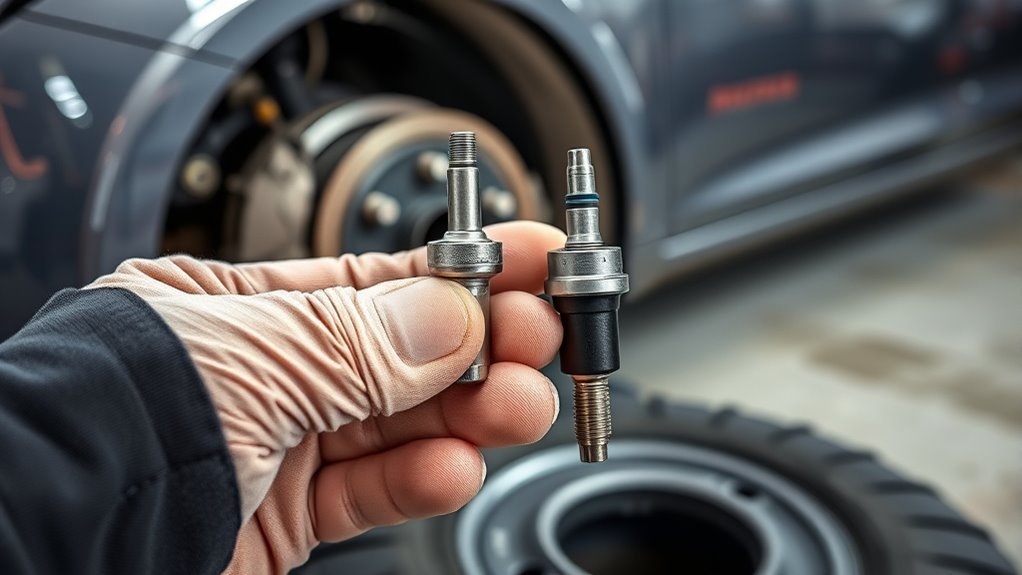
Yes — aftermarket TPMS sensors can work on a Hyundai Sonata, but only when the sensor matches the car’s required valve style, wheel fitment, radio protocol, and relearn process. The safest path is to verify fitment by VIN or by a professional TPMS catalog before the tire is mounted, because a sensor can physically fit the wheel and still fail to communicate with the car.
Quick Answer
Aftermarket TPMS sensors work on many Hyundai Sonata models when they are programmed or pre-configured for the correct Sonata protocol and installed with the right valve stem. Confirm fitment by VIN, wheel size, and sensor type first. Genuine Hyundai sensors are usually lower-risk, while quality programmable aftermarket sensors can save money.
Key Takeaways
- Do not buy by “Hyundai Sonata” alone. Match the sensor by year, trim, wheel size, valve style, and VIN whenever possible.
- Part numbers such as 52940-L1100 and 52940-T6100 are genuine Hyundai TPMS references, not generic aftermarket sensors.
- Blank universal sensors must be programmed with a compatible TPMS tool before or during installation.
- After installation, set all tires to the cold placard pressure, then complete the correct reset or relearn process before judging the repair.
At a Glance
| Time Required | About 30–60 minutes for installation at a tire shop, plus 5–20 minutes for reset, relearn, and verification. |
| Difficulty | Moderate. Sensor programming and tire dismounting usually require shop tools. |
| Tools Needed | TPMS scan/programming tool, tire machine, valve service kit, torque tool for the valve hardware, and an accurate tire pressure gauge. |
| Cost | Varies by sensor brand and labor. Genuine Hyundai online listings for 2024 Sonata TPMS parts show different part numbers and prices, so verify with a VIN before buying. |
Will Aftermarket TPMS Work on a Hyundai Sonata?

Aftermarket TPMS sensors can work on a Hyundai Sonata when they are selected and programmed correctly. The key is compatibility, not just appearance. A sensor needs to fit the wheel, seal properly at the valve stem, transmit on the correct frequency/protocol, and be accepted by the Sonata’s TPMS system after relearn or reset.
Genuine Hyundai sensors are the lowest-risk option because they are built as direct replacement parts for specific Hyundai applications. Aftermarket sensors can still be a smart buy, especially from brands with strong catalog coverage and clear programming instructions, but avoid no-name sensors that do not list exact Sonata compatibility.
Warning: Do not ignore, cover, or disable a TPMS warning light. TPMS is a safety system, but it is not a replacement for checking tire pressure manually when the tires are cold.
For safety, use the tire inflation pressure shown on the driver-side door-jamb placard, not the maximum PSI printed on the tire sidewall. The National Highway Traffic Safety Administration recommends checking tire pressure when tires are cold, because heat from driving raises pressure readings.
Do Aftermarket TPMS Sensors Physically Fit a Sonata?
Many aftermarket sensors physically fit Hyundai Sonata wheels, but “fits the hole” is not enough. Before installation, confirm these details:
- Model year and trim: Sonata TPMS requirements can change by generation, market, trim, and production date.
- Wheel size: Some genuine part listings separate applications by wheel size, so a 19-inch wheel may not use the same sensor reference as another wheel package.
- Valve type: Confirm whether the wheel uses rubber snap-in, aluminum clamp-in, fixed-angle, or adjustable-angle valve hardware.
- Sensor body clearance: The sensor must clear the wheel barrel, tire bead area, brake hardware, and mounting angle.
- Frequency and protocol: Universal sensors may support multiple frequencies, but they still need the correct Hyundai/Sonata protocol programmed into them.
- Service kit: Replace the valve core, grommet, nut, cap, or rubber valve stem as required. Reusing old sealing parts can cause slow leaks.
Pro Tip: Ask the installer to scan the old sensor IDs before removing the tires. If the old sensors still respond, the shop may be able to copy or reference the existing IDs and reduce relearn problems.
[Products Worth Considering]

Replace worn or missing TPMS sensors with a pre-programmed 4-pack designed for compatible GM vehicles. These 315MHz sensors provide real-time tire pressure monitoring and alert you if pressure is too high, too low, or if a rapid air leak occurs. Most installations are ready with minimal relearn effort after mounting, helping improve safety and driving confidence.

The VEHLIVE SU-50448 II TPMS relearn tool provides a fast activation reset to restore accurate tire pressure monitoring after sensor replacement or tire rotation. It supports 315 MHz and 433 MHz GM series sensors and helps clear dashboard pressure warnings. With simple two-button operation and horn-confirmed relearning order, you can reprogram sensors conveniently at home.
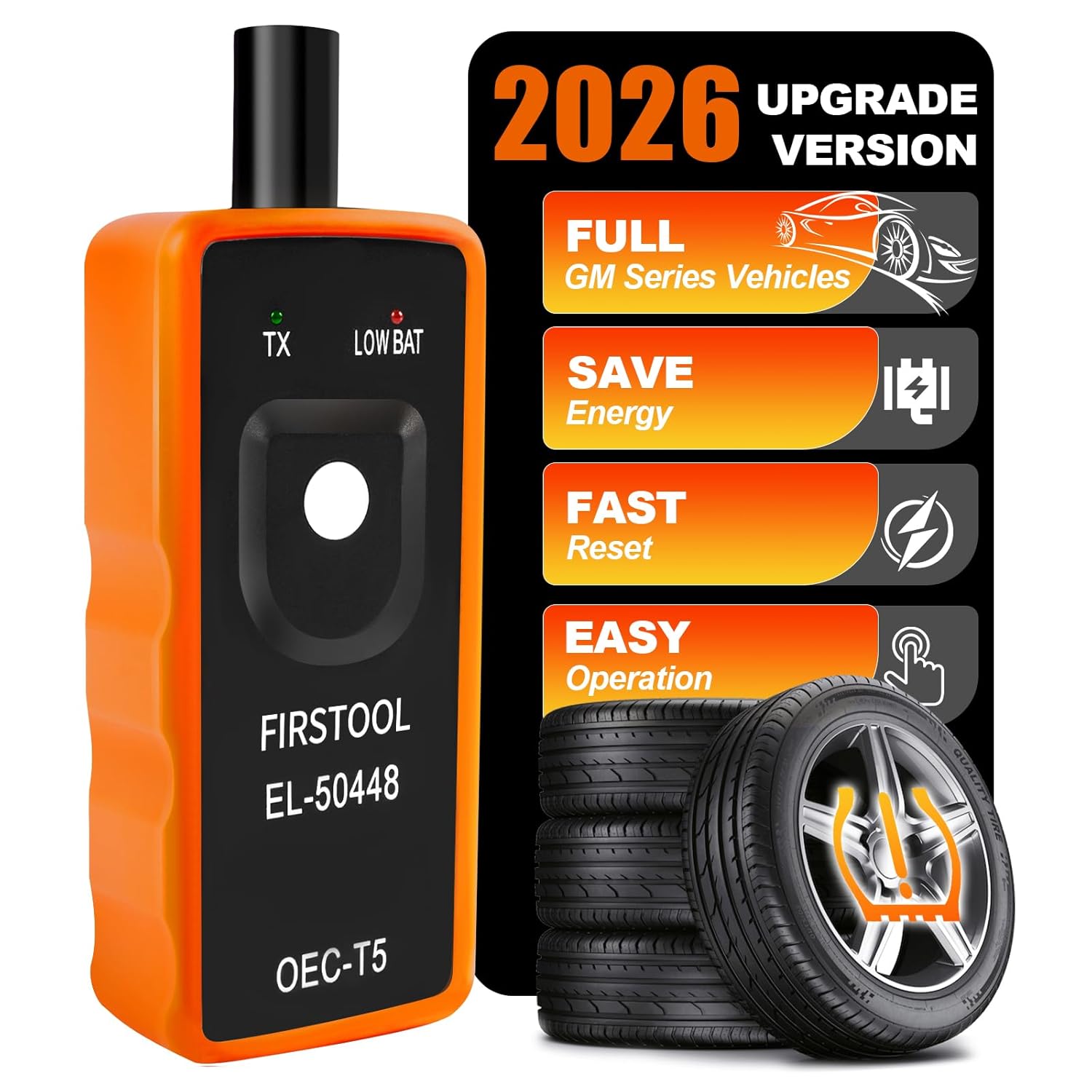
This TPMS relearn tool helps you quickly activate, match, and reset GM tire pressure sensors to keep the vehicle monitoring system working properly. It clears tire pressure alarms and dashboard warning lights after sensor replacement or tire rotation, and supports learning for common 315/433 MHz TPMS sensors. Designed for simple one-button operation, it can help you avoid unnecessary trips to repair shops.
Known Part Numbers and Cross-Reference Checks
Be careful with part-number language. A Hyundai part number is not the same thing as an aftermarket sensor number. For example, online genuine Hyundai parts listings show 52940-L1100 as a 2024 Hyundai Sonata tire pressure monitor sensor, while 52940-T6100 is listed as a Hyundai TPMS sensor/valve reference associated with Sonata applications including 19-inch wheels. Always verify by VIN before ordering.
| Sensor Type | What It Means | Best Use |
| Genuine Hyundai 52940-L1100 | OE Hyundai TPMS sensor reference shown in genuine parts catalogs for 2024 Sonata applications. | Use when a VIN lookup or Hyundai parts catalog confirms it fits your car. |
| Genuine Hyundai 52940-T6100 | OE Hyundai TPMS/valve reference listed for Sonata applications, including notes tied to 19-inch wheels in parts listings. | Use only after confirming wheel size, production details, and VIN fitment. |
| Programmable aftermarket sensor | A blank sensor that must be programmed to the correct vehicle protocol with a TPMS tool before use. | Good for cost control when installed by a shop with the right programming tool. |
| Pre-programmed multi-application sensor | A sensor designed to cover multiple vehicles and follow OE relearn steps when the application lookup confirms fitment. | Useful when the manufacturer catalog lists your exact Sonata application. |
Note: Do not assume a Kia K5, Elantra, Tucson, or other Hyundai/Kia sensor will work just because it looks similar. Cross-fit only counts when a parts catalog, TPMS tool, or VIN lookup confirms the same application.
[Products Worth Considering]

Masoll Gen 2 external TPMS sensors are a DIY replacement set of 4 for select GM vehicles made after 2006, helping you shut off the TPMS warning light quickly. Simply screw the sensors onto the tire valves and sync to your car ECU using the included EL-50448 relearn tool. Dual-frequency 315/433 MHz design provides OEM-level performance with accurate readings and replaceable batteries for about two years.

Replace worn or malfunctioning GM TPMS sensors with this 433MHz pre-programmed sensor set designed for compatibility with many Chevrolet, Buick, GMC, and Cadillac models. It includes guidance for proper OBDII relearning/pairing after installation and supports reliable long-term operation with a high-performance CR2032 battery. Quality tested for durability and performance to help restore accurate tire pressure monitoring.

Autel MX TPMS sensors combine 315MHz and 433MHz in a single easy-to-install press-in design for faster tire service. They support wireless programming with strong signal performance, and the sensors are clone-able for streamlined replacement. Built for reliability and tested to SAE standards, each sensor includes a series number for quality control.
Program Aftermarket TPMS on a Sonata: Step-by-Step Guide
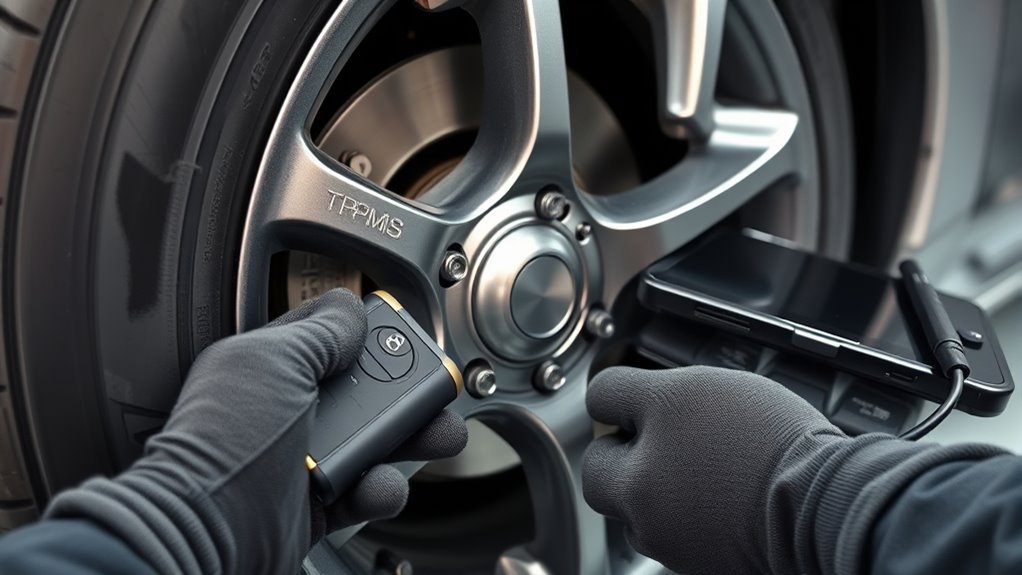
The exact process depends on whether you are using genuine Hyundai sensors, pre-programmed multi-application sensors, or blank programmable sensors. Use the sensor maker’s catalog and your Sonata’s VIN as the final fitment check.
- Scan the existing sensors first. A TPMS tool can read each old sensor ID, battery status, pressure, and signal response if the sensor is still alive.
- Confirm the replacement sensor. Match the year, trim, wheel size, valve type, sensor angle, and protocol before mounting the tire.
- Program blank sensors before installation. For universal programmable sensors, use a compatible TPMS tool to create or copy the correct Sonata sensor IDs.
- Install with fresh sealing hardware. Use the correct service kit and torque the valve hardware to the sensor maker’s specification.
- Inflate all tires cold. Set pressure to the door-jamb placard value when the tires are cold.
- Reset or relearn the vehicle. Follow the Sonata’s model-year procedure, which may be an automatic relearn, a cluster-menu reset, or an OBD-assisted relearn through a TPMS scan tool.
- Verify the repair. Drive as required by the tool or manual, then confirm that all four sensors read correctly and the TPMS warning does not return.
Schrader’s EZ-sensor line, for example, uses programmable sensors that combine 314.9, 315, and 433 MHz applications into a single sensor family, but the sensor still needs the correct vehicle programming. Continental’s REDI-Sensor application lookup is another example of using a manufacturer catalog to confirm the right TPMS sensor and relearn instructions before installation.
How to Reset or Relearn Sonata TPMS After Sensor Installation
Do not assume every Sonata has a physical TPMS reset button under the steering wheel. Hyundai’s official TPMS reset instructions for the sourced manual page use the instrument cluster and steering-wheel controls:
- Adjust all four tires to the recommended cold inflation pressure.
- Park the vehicle.
- Use the steering-wheel controls to open the Tire Pressure screen in the cluster.
- Press and hold the OK button and select Set.
- Confirm the TPMS warning light blinks for about 4 seconds or that the tire pressures are stored.
Hyundai’s manual guidance also says to reset TPMS after tire or wheel repair/replacement, tire rotation, pressure adjustment, low-pressure warning, and certain suspension or ABS/ESC service. If your Sonata does not show this menu, use the owner’s manual for your exact model year or have a tire shop perform an OBD-assisted relearn.
Troubleshooting Sonata TPMS: No-Read, Warning Light, and False Readings
If the TPMS warning returns after new sensors are installed, start with the simple checks before replacing parts again.
| Symptom | Likely Cause | What to Do |
| Sensor will not read with a TPMS tool | Dead sensor battery, wrong sensor, unprogrammed blank sensor, or damaged sensor. | Trigger the sensor at the wheel, verify part number, then reprogram or replace it. |
| TPMS light flashes, then stays on | System malfunction, sensor communication fault, or wrong protocol. | Scan for TPMS faults. Hyundai guidance says a blinking-then-solid malfunction indicator should be inspected if it remains after reset. |
| Pressure reads wrong after installation | Sensors assigned to the wrong wheel position, warm tire readings, or incomplete relearn. | Check cold pressure manually, perform relearn again, and verify wheel locations with the TPMS tool. |
| Slow air leak at valve stem | Old seal reused, wrong valve kit, corrosion, or incorrect torque. | Replace the service kit, clean the valve hole, and torque the hardware to spec. |
| Light returns after driving | Actual low pressure, seasonal pressure drop, wrong learned baseline, or incompatible sensor. | Set all tires cold to placard pressure, reset TPMS, then scan sensor IDs and signal strength. |
A TPMS warning is a prompt to check the tires, not proof that every tire is safe. Always confirm pressure with a gauge when the tires are cold.
OEM vs Aftermarket for Sonata: Cost, Warranty, and Installer Recommendations
Choose the sensor based on total cost, not just the price on the box. A cheap sensor that needs two shop visits can cost more than a genuine Hyundai sensor installed once.
- Choose genuine Hyundai sensors if you want the simplest parts-counter match, factory-backed part support, and lower compatibility risk.
- Choose quality aftermarket sensors if a reputable catalog confirms fitment and your installer has the tool to program and relearn them.
- Avoid unknown sensors if the listing does not show year/trim compatibility, valve type, protocol support, warranty terms, or programming requirements.
- Use a professional installer if the tire has to come off the wheel. TPMS valve hardware can leak or break if installed without the correct tools.
For many Sonata owners, the best value is either a verified genuine Hyundai sensor by VIN or a reputable programmable sensor installed by a shop that can program, relearn, and verify all four wheels before you leave.
[Products Worth Considering]
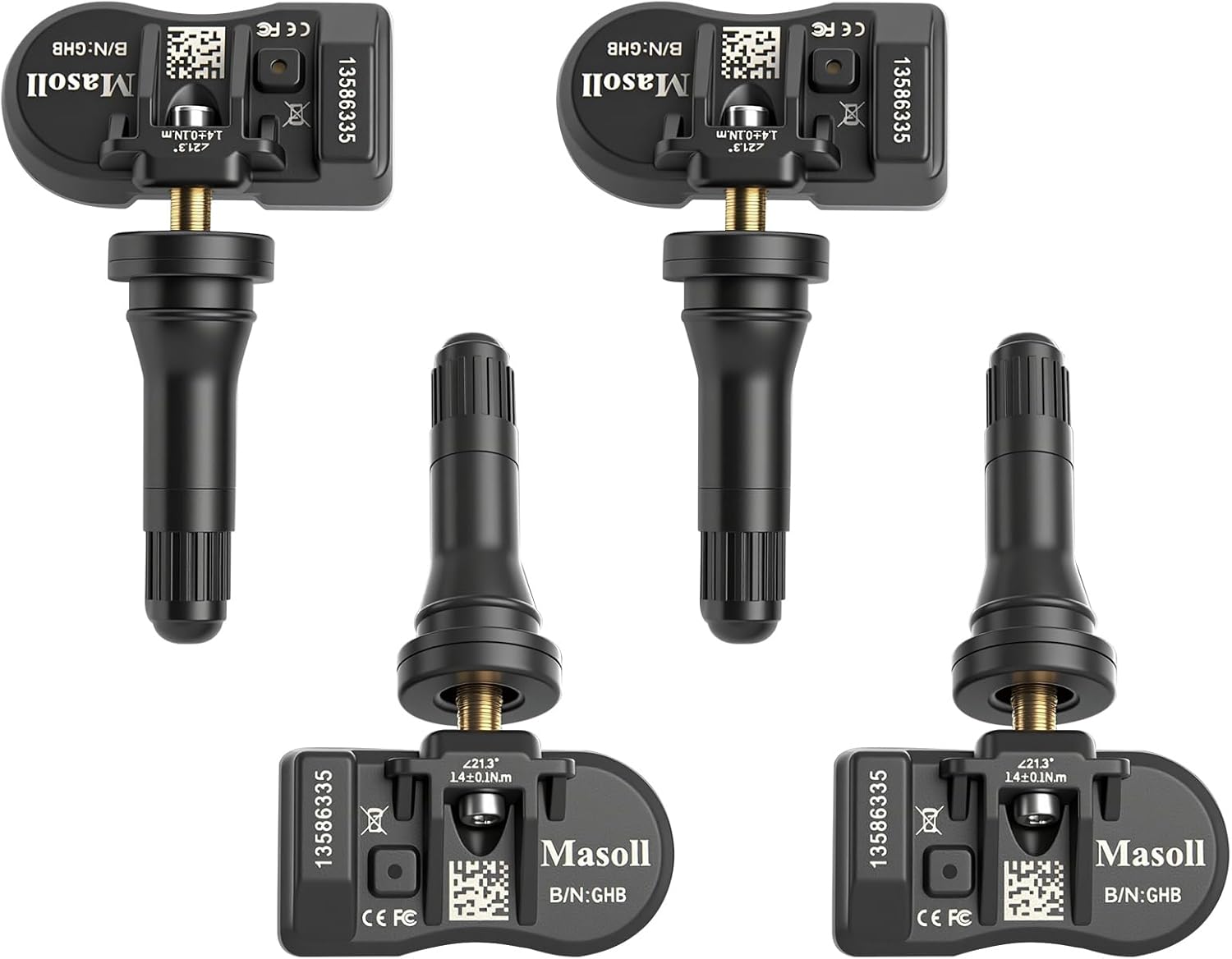
Masoll TPMS sensors are designed for most GM vehicles after 2006, helping you clear tire pressure warnings with OEM-level 315/433MHz compatibility. The 4-pack includes pre-programmed sensors, but re-learning is required after installation using a GM TPMS relearn tool or scan tool. Built with a dual-antenna design and a long-life CR2050 battery, these sensors deliver reliable performance in extreme temperatures with corrosion-resistant valve construction.

This TPMS sensor training and relearn reset tool is customized for Ford, Lincoln, and Mercury vehicles to help activate tire pressure programming after sensor replacement or tire rotation. It can activate individual tire pressure sensors with one-button operation, helping prevent TPMS warning light illumination. It is not a sensor programming tool and cannot program replacement sensors—use it to trigger/activate sensors only.

Replace your worn or missing TPMS sensors with pre-programmed, direct-fit sensors for compatible Ford, Lincoln, and select Mazda models. Each sensor comes ready to activate with a scan tool, helping restore accurate tire pressure monitoring and trouble-free installation. Built with a long-life CR2032 battery and tested before factory release, this set provides dependable performance with a one-year warranty.
Frequently Asked Questions
Is it okay to use aftermarket TPMS sensors on a Hyundai Sonata?
Yes, as long as the sensor is confirmed for your Sonata’s year, trim, wheel size, valve style, frequency, and protocol. Use a reputable brand and have the sensor programmed or relearned with a compatible TPMS tool.
Do Hyundai Sonata TPMS sensors need to be programmed?
Blank universal aftermarket sensors usually need programming before they can work. Genuine or pre-programmed sensors may not need sensor programming, but the vehicle may still need a TPMS reset, drive relearn, or OBD relearn after installation.
Where is the TPMS reset button on a Hyundai Sonata?
Many newer Sonata models do not use a separate under-dash TPMS reset button. Hyundai’s official reset instructions for the sourced manual page use the steering-wheel controls and the instrument-cluster Tire Pressure menu. Older models may differ, so check the owner’s manual for your exact year.
Can I mix OEM and aftermarket TPMS sensors?
It can work if every sensor transmits the correct protocol and the vehicle learns all four IDs, but mixing brands can make troubleshooting harder. If one sensor fails, scan all four sensors and confirm the system can read them consistently.
Will aftermarket TPMS sensors void my Hyundai warranty?
Using aftermarket sensors does not automatically void the whole vehicle warranty, but a failure caused by an incompatible or improperly installed sensor may not be covered. Keep receipts, use sensors listed for your Sonata, and have them installed correctly.
Conclusion
Aftermarket TPMS sensors can work on a Hyundai Sonata, but fitment and programming matter more than the label “universal.” Confirm the sensor by VIN, wheel size, valve type, and TPMS protocol before installation. Treat Hyundai part numbers such as 52940-L1100 and 52940-T6100 as genuine OE references, not generic aftermarket numbers. For the fewest headaches, use a confirmed genuine sensor or a reputable programmable sensor installed by a shop that can program, relearn, and verify the system.
Sources
- HyundaiPartsDeal — Genuine 2024 Hyundai Sonata TPMS Sensor listings — supports OE part-number references including 52940-L1100 and 52940-T6100.
- Hyundai OEM Parts Online — 52940-T6100 TPMS sensor listing — supports the Sonata/19-inch-wheel fitment note.
- Hyundai Owner’s Manual — Resetting TPMS — supports cluster-menu reset steps and when TPMS should be reset.
- NHTSA TireWise — tire pressure safety — supports cold tire pressure and placard-pressure guidance.
- eCFR 49 CFR 571.138 — Tire Pressure Monitoring Systems — supports federal TPMS warning-system requirements.
- Continental REDI-Sensor Application Lookup — supports using manufacturer application catalogs for TPMS sensor fitment and relearn instructions.