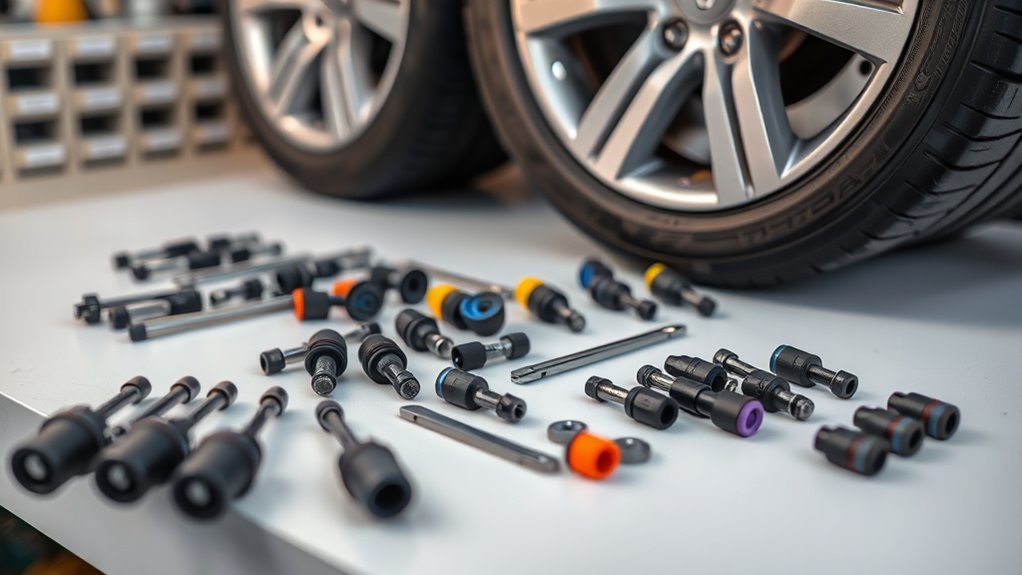
Choosing a Hyundai Sonata TPMS sensor is not as simple as matching one model year to one part number. The safe way is to verify the VIN, read the old sensor ID or part number, confirm the radio frequency, and match the valve hardware before the tire is mounted. That extra check prevents the most common TPMS problems: a sensor that will not wake up, a warning light that will not clear, or a new wheel that slowly leaks.
Quick Answer
For a Hyundai Sonata, match the TPMS sensor by VIN, OEM part family, sensor frequency, and valve style. Older Sonatas may use different TPMS families than later LF and DN8 models, so do not rely on one universal year chart. When in doubt, scan the old sensor or ask a Hyundai parts counter to verify fitment by VIN.
Key Takeaways
- Use the VIN and the old sensor label or scan-tool ID before ordering; Sonata TPMS fitment changes by generation, trim, market, and build date.
- Do not assume every Sonata sensor is 433 MHz. Match the exact frequency listed for your sensor family.
- Replace the valve service kit when installing a sensor, and use the correct rubber snap-in or metal clamp-in hardware for the wheel.
- Some sensors auto-learn after driving; programmable aftermarket sensors may need cloning or ID registration with a TPMS tool.
At a Glance
| Time Required | 10–20 minutes to verify fitment; 45–90 minutes for sensor replacement when tires must be demounted, balanced, and relearned. |
| Difficulty | Moderate for diagnosis; professional tire-service job if the tire bead must be broken. |
| Tools Needed | VIN, tire pressure gauge, TPMS scan/programming tool, correct service kit, tire machine, wheel balancer, and torque tools for clamp-in valve hardware. |
| Cost | Usually varies by OEM vs aftermarket sensor, local labor, tire mount/balance fees, and whether programming is needed. Verify current price by VIN before buying. |
Sonata TPMS Basics: Sensor Types, Frequencies, and OE Patterns
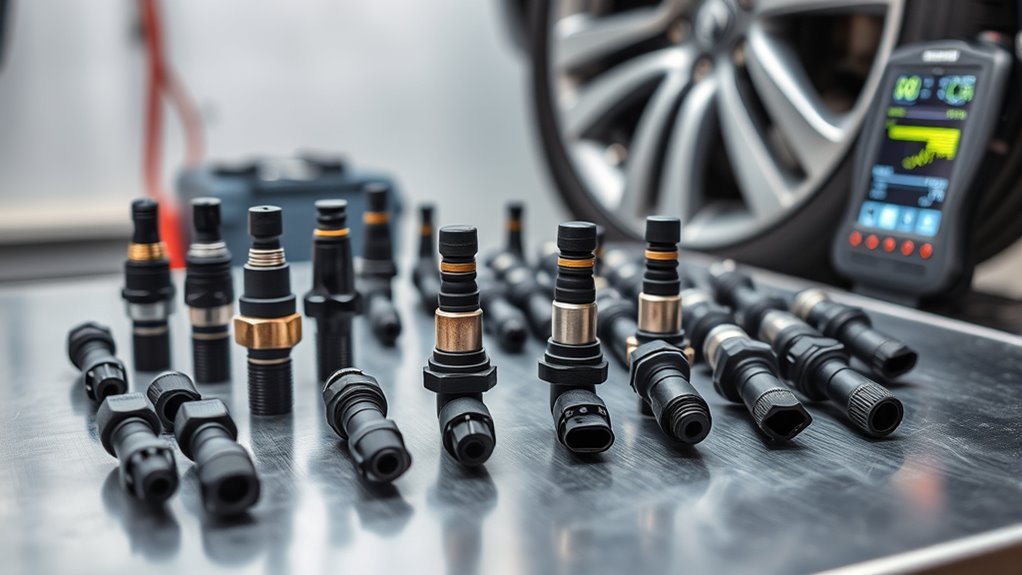
The Hyundai Sonata uses a tire pressure monitoring system to warn the driver when tire pressure is too low or when the system has a malfunction. In the United States, 49 CFR § 571.138 sets federal TPMS performance requirements for passenger vehicles, including warning behavior for significant under-inflation.
Most Sonata replacement work involves direct TPMS sensors mounted at the valve stem inside each wheel. A direct sensor reads pressure and temperature, then transmits a radio signal to the vehicle. The important details are the sensor ID, frequency, protocol, and valve hardware. If any of those are wrong, the sensor may physically install but still fail to communicate.
Warning: Do not buy a Sonata TPMS sensor from a year-only chart unless the seller also confirms the VIN, frequency, and valve style. A sensor with the wrong radio frequency or protocol will not relearn correctly.
Hyundai Sonata TPMS Compatibility by Year and Generation
The most important correction is this: there is no single trustworthy “one part number fits every Sonata in this year range” rule. Genuine parts catalogs show multiple Sonata TPMS part families across 2006–2023. Use this table as a starting point, then confirm with the VIN or the old sensor.
| Sonata years | Common cataloged TPMS families | What to verify |
| 2006–2010 Sonata | Common listings include 52933-3E000, 52933-1F000 / 52933-1FA00, and 52933-2F000 depending on year, trim, and catalog. | Confirm by VIN and old sensor label. Early cars can be especially sensitive to frequency and valve-hardware differences. |
| 2011–2014 Sonata | Common catalog listings include 52933-2M000 and 52933-2M550 for many YF-generation applications. | Check gas vs hybrid, trim, wheel package, and build date before ordering. |
| 2015–2019 Sonata | 52933-C1100 is a common LF-generation TPMS family in genuine parts listings. | Many replacement listings for this family are 433 MHz, but still verify the exact application before installing. |
| 2020–2023 Sonata | DN8-generation listings commonly include 52933-D4100 and 52940-L1100 depending on build and catalog source. | Confirm production date, wheel package, market, and whether the catalog supersedes one part number to another. |
For a real purchase decision, start with the genuine Hyundai Sonata TPMS sensor catalog, then confirm any listed part through a Hyundai dealer or parts counter by VIN. Catalogs can show multiple valid-looking results for the same model year, so the VIN is the tie-breaker.
How to Confirm Exact TPMS Sensor Fit Before Buying
Follow these checks before you spend money or mount the tire:
- Get the VIN. The VIN lets a Hyundai parts counter check model year, production date, trim, market, and wheel package.
- Read the old sensor. If the tire is already off the wheel, record the printed OEM part number, supplier name, and frequency from the sensor body.
- Scan the sensor ID. A TPMS scan tool can read the sensor ID, battery status, pressure, temperature, and frequency on many sensors.
- Match the frequency. Do not mix 315 MHz and 433 MHz sensors. The vehicle receiver must be able to hear the sensor.
- Match the protocol. A programmable sensor must be configured for the Hyundai Sonata application, not just the same frequency.
- Match the valve hardware. Rubber snap-in and metal clamp-in stems use different seals, nuts, caps, and torque requirements.
- Check supersessions. Hyundai and dealer catalogs may replace an older number with a newer one. Use the newest verified VIN match.
Pro Tip: If you are replacing sensors before a battery failure, scan and clone the old sensor IDs first. A correctly cloned sensor can save relearn time because the vehicle sees the same IDs it already knows.
[Products Worth Considering]

Masoll Gen 2 external TPMS sensors are a DIY replacement set of 4 for select GM vehicles made after 2006, helping you shut off the TPMS warning light quickly. Simply screw the sensors onto the tire valves and sync to your car ECU using the included EL-50448 relearn tool. Dual-frequency 315/433 MHz design provides OEM-level performance with accurate readings and replaceable batteries for about two years.

Replace your worn or missing TPMS sensors with pre-programmed, direct-fit sensors for compatible Ford, Lincoln, and select Mazda models. Each sensor comes ready to activate with a scan tool, helping restore accurate tire pressure monitoring and trouble-free installation. Built with a long-life CR2032 battery and tested before factory release, this set provides dependable performance with a one-year warranty.

The VEHLIVE SU-50448 II TPMS relearn tool provides a fast activation reset to restore accurate tire pressure monitoring after sensor replacement or tire rotation. It supports 315 MHz and 433 MHz GM series sensors and helps clear dashboard pressure warnings. With simple two-button operation and horn-confirmed relearning order, you can reprogram sensors conveniently at home.
Tools, Parts, and Valve Hardware You Need
A complete Sonata TPMS job usually needs more than the sensor itself. Prepare these items before the wheel is opened:
- Correct TPMS sensors: OEM, OE-equivalent, or programmable aftermarket sensors matched to the VIN.
- Valve service kits: seals, nuts, caps, cores, grommets, or snap-in stems as required by the sensor design.
- TPMS scan/programming tool: used to read old IDs, program blank sensors, clone IDs, and check signal strength.
- Tire pressure gauge: used to set all four tires to the door-jamb placard pressure when cold.
- Tire service equipment: tire changer and wheel balancer if the tire bead must be broken.
Note: TPMS sensor batteries are sealed inside the sensor body. When the battery dies, the normal repair is to replace the whole sensor, not the battery alone.
[Products Worth Considering]

This TPMS sensor training and relearn reset tool is customized for Ford, Lincoln, and Mercury vehicles to help activate tire pressure programming after sensor replacement or tire rotation. It can activate individual tire pressure sensors with one-button operation, helping prevent TPMS warning light illumination. It is not a sensor programming tool and cannot program replacement sensors—use it to trigger/activate sensors only.
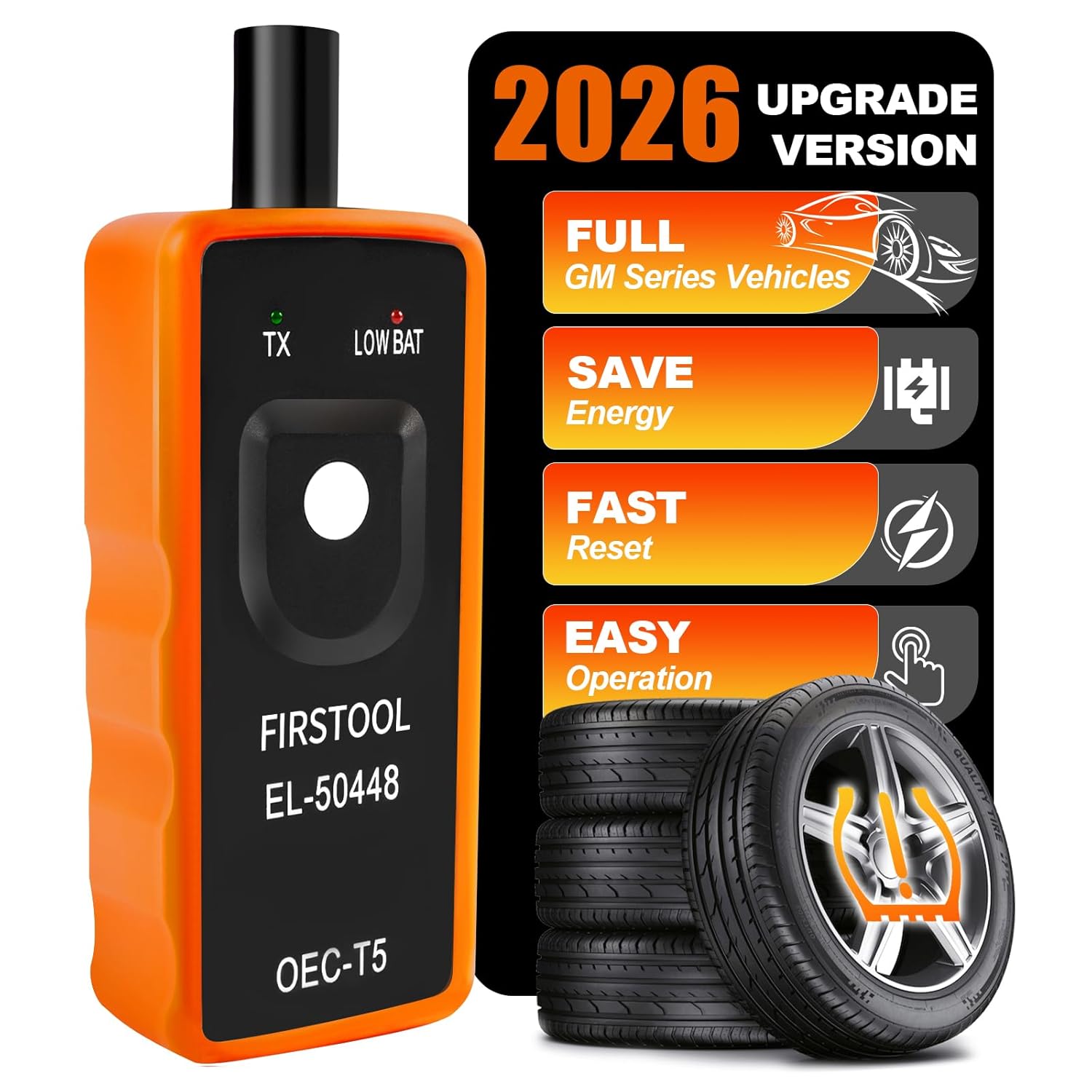
This TPMS relearn tool helps you quickly activate, match, and reset GM tire pressure sensors to keep the vehicle monitoring system working properly. It clears tire pressure alarms and dashboard warning lights after sensor replacement or tire rotation, and supports learning for common 315/433 MHz TPMS sensors. Designed for simple one-button operation, it can help you avoid unnecessary trips to repair shops.

Replace worn or malfunctioning GM TPMS sensors with this 433MHz pre-programmed sensor set designed for compatibility with many Chevrolet, Buick, GMC, and Cadillac models. It includes guidance for proper OBDII relearning/pairing after installation and supports reliable long-term operation with a high-performance CR2032 battery. Quality tested for durability and performance to help restore accurate tire pressure monitoring.
Sonata TPMS Installation & Programming: Pre-Programmed Sensors, Self-Learn, and Shop Options
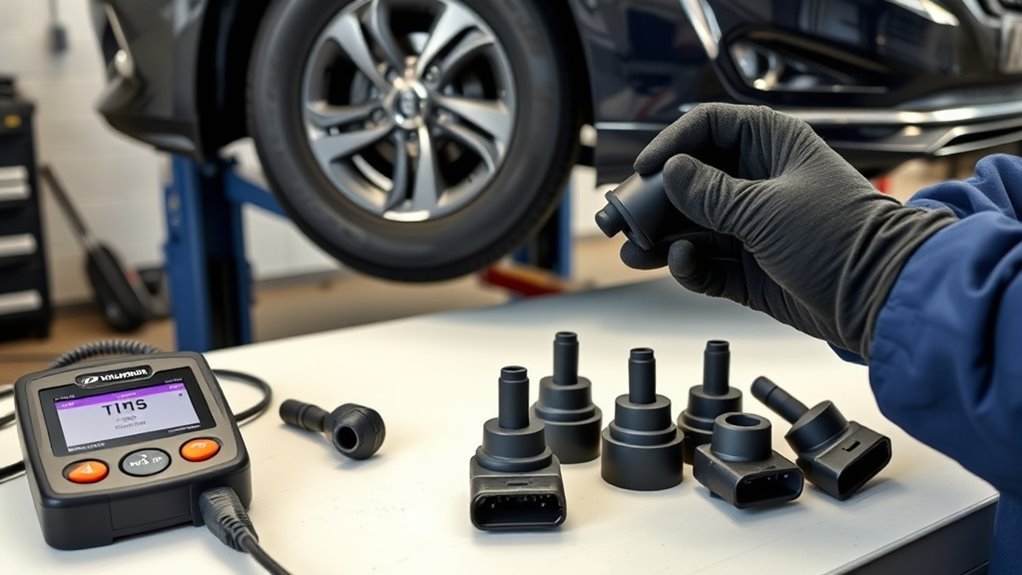
Before installation, decide which sensor path you are using. OEM sensors may already have the correct protocol. Programmable aftermarket sensors may need to be configured. Clonable sensors can copy the old IDs if the original sensors still transmit.
- Set the tire pressures first. Inflate all tires to the cold pressure on the driver-door placard.
- Scan the old sensors. Save each sensor ID and location before removing anything.
- Break the tire bead safely. Keep tire tools away from the sensor area to avoid cracking the sensor body.
- Install the new sensor and service kit. Use the correct seal and stem style, and follow the sensor maker’s torque specification for clamp-in stems.
- Program or clone if needed. Blank aftermarket sensors must be written with the correct Sonata application before installation or relearn.
- Relearn the vehicle. Depending on year and sensor type, the Sonata may auto-learn after driving, or it may need TPMS tool registration through the diagnostic port.
- Verify the repair. Re-scan all four sensors, confirm pressure readings, check for leaks, and make sure the TPMS warning light stays off.
Hyundai service guidance can vary by year, so check the correct owner manual through Hyundai’s Manuals & Warranties portal. For newer Hyundai menu-based systems, the official owner manual reset procedure may include setting tire pressure, selecting the Tire Pressure screen, and holding OK to reset the system.
[Products Worth Considering]
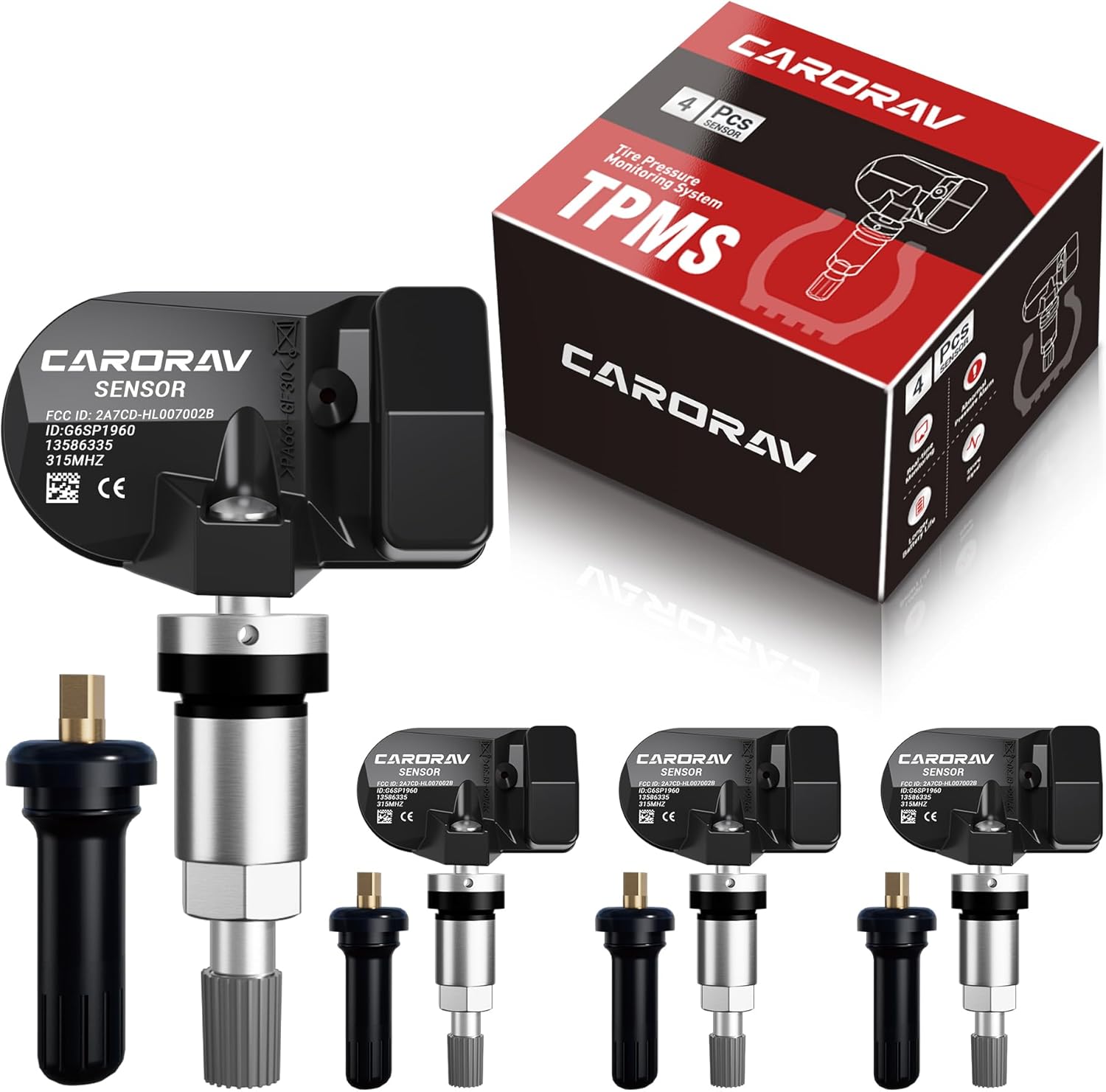
Replace worn or missing TPMS sensors with CARORAV pre-programmed GM-compatible sensors for a smoother installation experience. These 315MHz replacement sensors help monitor tire pressure in real time with long battery life, and they are designed to withstand harsh temperatures. Manual or OBDII relearn may be required to reset the system for proper recognition.
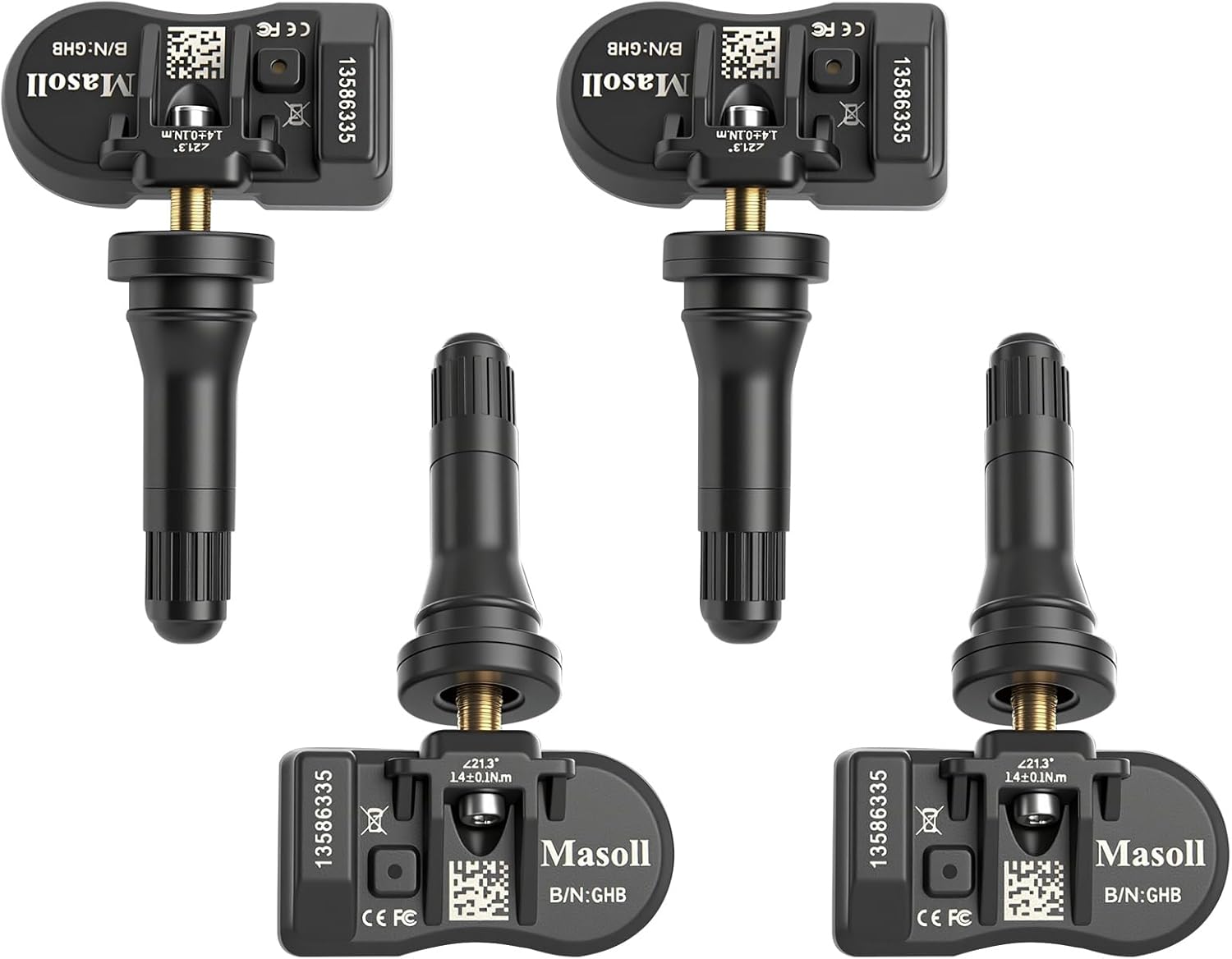
Masoll TPMS sensors are designed for most GM vehicles after 2006, helping you clear tire pressure warnings with OEM-level 315/433MHz compatibility. The 4-pack includes pre-programmed sensors, but re-learning is required after installation using a GM TPMS relearn tool or scan tool. Built with a dual-antenna design and a long-life CR2050 battery, these sensors deliver reliable performance in extreme temperatures with corrosion-resistant valve construction.
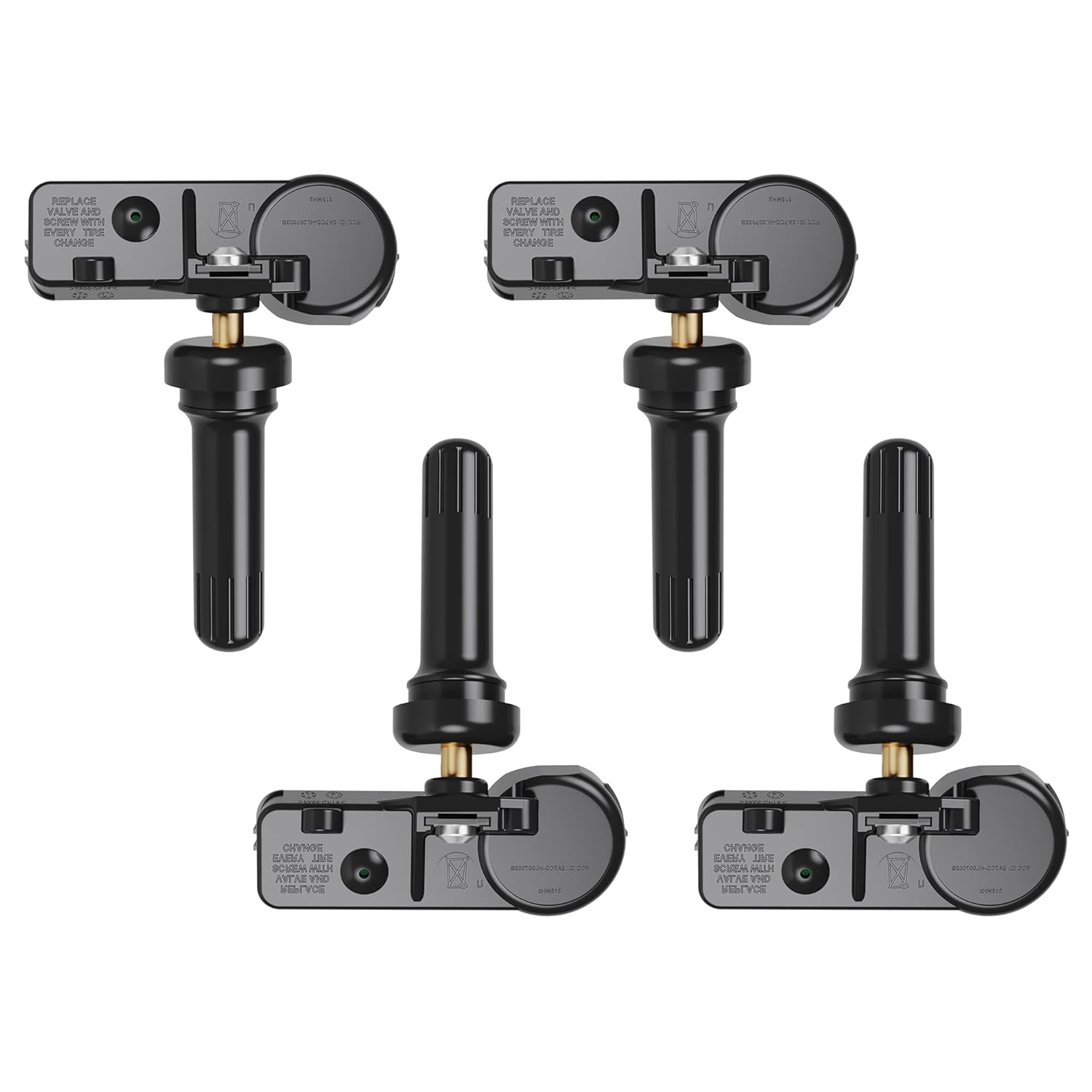
Replace worn or faulty TPMS sensors with this brand new 315MHz GM-compatible replacement set for select Chevy, GMC, Buick, Cadillac, and similar vehicles. These sensors are pre-programmed for your make/model/year and typically only require activation with a scan tool. Built for long service life with a high-temperature battery, they help maintain reliable tire pressure monitoring for safer driving.
TPMS Reset vs Relearn: What Actually Clears the Light?
A reset and a relearn are not always the same thing. A pressure reset tells the vehicle that the current tire pressures are the baseline. A sensor relearn teaches the TPMS module which sensor IDs belong to the vehicle.
| Situation | Best next step |
| Tire pressure was low, but no sensor was replaced. | Set all tires to placard pressure, then drive. Some Hyundai systems clear after receiving valid sensor reports. |
| OEM-style sensor was installed with the correct protocol. | Drive the vehicle and monitor sensor reception. If it does not learn, use a TPMS scan tool or shop tool. |
| Programmable aftermarket sensor was installed. | Program the sensor for the Sonata before relearn. Frequency alone is not enough. |
| TPMS light flashes first, then stays on. | Treat it as a system fault. Scan for dead sensors, wrong IDs, wrong frequency, receiver issues, or DTCs. |
A TPMS light that stays on after correct inflation usually means the vehicle has not received a valid sensor signal, the sensor battery is weak, or the wrong sensor was installed.
Common Sonata TPMS Issues and Troubleshooting
Use symptoms to narrow the problem before replacing parts:
| Symptom | Likely cause | Fix |
| TPMS warning appears after tire replacement. | Sensor damaged during tire work or not relearned. | Scan all four sensors and complete the correct relearn. |
| One wheel shows no pressure reading. | Dead sensor battery, broken sensor, or wrong ID. | Replace or program that sensor and verify the ID. |
| New sensor will not register. | Wrong frequency, wrong protocol, or blank programmable sensor. | Confirm frequency and program the sensor for the exact Sonata application. |
| Slow leak at valve stem. | Old seal, incorrect service kit, cracked stem, or wrong torque. | Replace the service kit and leak-test the wheel. |
TPMS Battery Life and Maintenance
Most TPMS sensor batteries last roughly 5–10 years, though driving habits, temperature, sensor quality, and storage time affect lifespan. A Sonata that is already on its second or third set of tires may be close to sensor battery failure even if the sensors still work today.
Replace sensors proactively when:
- The vehicle is 7–10 years old and the tires are already being replaced.
- A TPMS scan tool reports weak or low battery status.
- One sensor intermittently drops out while the other three work normally.
- The valve stem is corroded, cracked, or leaking.
- You are installing a second wheel/tire set and want TPMS to work on both sets.
Frequently Asked Questions
What type of TPMS does the Hyundai Sonata use?
Most 2006–2023 Hyundai Sonata models use direct TPMS sensors mounted in the wheels. The sensor sends pressure data to the vehicle by radio signal. Exact sensor family, frequency, and protocol vary by year, trim, market, and build date.
How do I know which TPMS sensor my Sonata needs?
Use the VIN first, then confirm with the old sensor part number or a TPMS scan tool. Match the OEM part family, radio frequency, sensor protocol, and valve hardware. If two catalog listings look similar, ask a Hyundai parts counter to confirm by VIN before ordering.
Are all Hyundai Sonata TPMS sensors 433 MHz?
No. Later Sonata sensor families are commonly listed as 433 MHz, but older applications can differ. Always verify frequency from the old sensor label, VIN-based parts catalog, or TPMS scan tool before buying.
Do Hyundai Sonata TPMS sensors need to be programmed?
Sometimes. OEM-style sensors may auto-learn after driving if they are the correct application. Programmable aftermarket sensors usually need to be written or cloned with a TPMS tool before the vehicle can recognize them.
Why is my TPMS light still on after replacing a sensor?
The sensor may not be programmed, the vehicle may not have completed relearn, the frequency may be wrong, or the TPMS module may still store a fault. Scan all four sensors and complete the correct relearn or ID registration procedure.
Should I replace all four TPMS sensors at once?
If the sensors are original and near 7–10 years old, replacing all four during a tire change can save labor later. If only one newer sensor failed because of damage, replacing just that sensor may be reasonable.
Conclusion
You can avoid most Sonata TPMS problems by treating fitment as a verification process, not a guess. Start with the VIN, confirm the old sensor or scan-tool data, match frequency and valve hardware, and choose the right relearn path for the sensor type. If the tire must be demounted or the sensor must be programmed, a qualified tire shop with a TPMS tool is usually the fastest and safest route.
Sources
- Hyundai Manuals & Warranties — owner manual lookup and model-specific TPMS guidance.
- 49 CFR § 571.138 Tire Pressure Monitoring Systems — federal TPMS performance requirements.
- HyundaiPartsDeal Sonata TPMS Sensor Catalog — genuine Hyundai Sonata TPMS part-family cross-checking.
- OEM Parts Online 52933-C1100 — common 2015+ Sonata TPMS part-family reference.
- OEM Parts Online 52940-L1100 — common 2020+ Hyundai TPMS part-family reference.
- Tomorrow’s Technician Hyundai TPMS Relearn Guide — technician-level relearn and reception guidance.