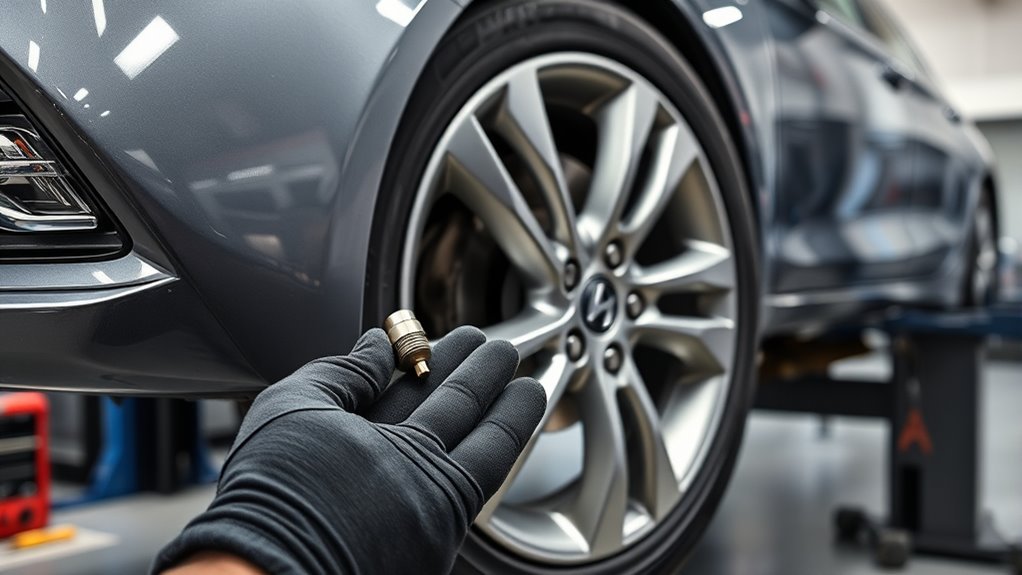
You usually do not have to replace the TPMS sensors every time you change tires on a Hyundai Sonata. If your Sonata uses direct TPMS sensors and the sensors still read correctly, you can reuse them. The smart move is to test each sensor, service the valve hardware, and replace only sensors that have a weak/dead battery, physical damage, corrosion, or no signal.
Quick Answer
You can reuse Hyundai Sonata TPMS sensors during a tire change if each sensor activates, shows a valid ID, has acceptable battery/status data, and is not cracked, corroded, or leaking at the valve. Replace the failed sensor only, then reset/relearn the TPMS as your model year requires.
Key Takeaways
- Reuse healthy TPMS sensors; do not replace all four just because new tires are being installed.
- Test sensors before and after tire service with a TPMS activation tool when possible.
- Replace valve service parts such as the valve core, cap, nut, seal, washer, or rubber valve stem as required by the sensor type.
- A light that flashes for about one minute and then stays on points to a TPMS system malfunction, not just low air pressure.
- Reset, relearn, and programming are different steps; your Sonata may need one or more depending on whether sensors were reused, moved, or replaced.
At a Glance
| Time Required | 5–10 minutes to check pressures; 15–30 minutes during tire service to test sensors and replace valve service parts. |
| Difficulty | Easy for pressure checks; moderate for sensor testing; tire dismounting should be handled by a tire shop. |
| Tools Needed | Tire pressure gauge, air source, TPMS activation/scan tool, valve service kit, torque tool for clamp-in stems, and the owner’s manual. |
| Cost | Lowest when reusing working sensors and replacing only service parts; higher when one or more sensors need replacement, programming, balancing, and labor. |
Can You Reuse TPMS Sensors on a Hyundai Sonata? (Short Answer and Decision Flow)
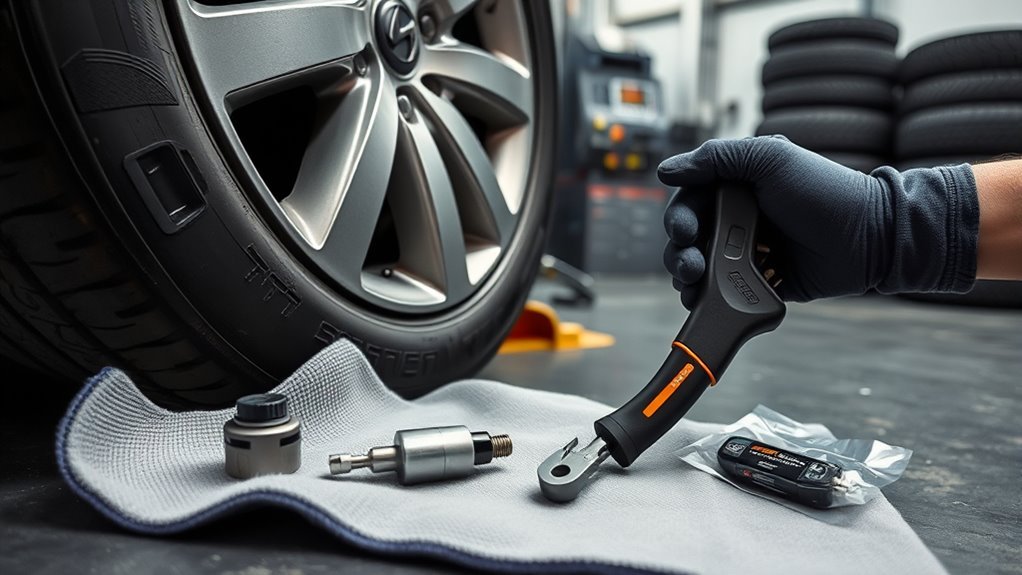
Yes, you can usually reuse Hyundai Sonata TPMS sensors if your Sonata has direct wheel-mounted sensors and each sensor passes inspection. Hyundai describes tire pressure sensors as being mounted inside the tire behind the valve stem on sensor-equipped wheels, except for the spare tire on many models. The key is to confirm the sensor is still working before the old tire comes off and again after the new tire is mounted.
Use this decision flow:
| Condition | Best Action | Why |
|---|---|---|
| Sensor activates, shows a valid ID, and has no damage or corrosion | Reuse it | There is no reason to replace a working sensor just because the tire is new. |
| Sensor works, but valve parts are old or disturbed during tire mounting | Reuse the sensor and install the correct service kit | Fresh seals, caps, cores, washers, or stems help prevent slow leaks. |
| Sensor will not activate, battery/status is weak, or signal is intermittent | Replace that sensor | A failing sensor may leave the car unable to warn you about real low pressure. |
| Sensor housing is cracked, stem is damaged, or clamp-in valve is corroded | Replace the damaged part or sensor assembly | Physical damage and corrosion can cause leaks or signal failure. |
Note: If your specific Sonata uses an indirect TPMS that relies on ABS wheel-speed data, there may be no wheel-mounted pressure sensors to reuse. Check your owner’s manual, dashboard display, or a tire shop’s TPMS scan before buying sensors.
How to Check TPMS Sensors on a Hyundai Sonata
Start with the basics before blaming a sensor. Hyundai’s TPMS guidance says tire pressures should be checked cold and set to the pressure on the tire placard or tire inflation label. A cold tire generally means the car has been parked for at least three hours or driven less than about 1 mile.
- Check all four tires with a quality gauge. Do not rely only on appearance. A tire can look normal and still be underinflated.
- Inflate to the door-placard pressure. Use the pressure listed on the Sonata’s driver-side placard, not the maximum pressure molded on the tire sidewall.
- Read the dash behavior. A steady low-pressure warning usually means one or more tires need attention. A warning light that flashes for about one minute and then stays on points to a TPMS malfunction.
- Trigger each sensor with a TPMS activation tool. Record the sensor ID, pressure, temperature, frequency, and battery/status if the tool displays it.
- Inspect the valve area during tire mounting. Look for cracked rubber, bent stems, corrosion on clamp-in nuts, damaged housings, missing caps, and air leaks.
- Recheck after mounting and balancing. After the tires are installed, confirm that each sensor still reads and that the dashboard pressure display updates after a few minutes of driving if your model requires drive time.
Warning: Do not ignore a TPMS light after a tire change. Hyundai warns that underinflation can affect handling, braking, tire life, and tire failure risk. TPMS is a backup warning system, not a replacement for manual pressure checks.
When to Replace a TPMS Sensor: Battery, Damage, or Corrosion
Replace a TPMS sensor when diagnostics show it is no longer reliable. Many sensors last several years, but age is only one part of the decision. A five-year-old sensor with a strong signal may be fine; a newer sensor can still fail if it was damaged during tire removal, exposed to corrosion, or fitted with the wrong service parts.
| Issue | Common Symptom | Action |
|---|---|---|
| Battery near end of life | No activation, weak battery/status reading, or intermittent signal | Replace the sensor. Internal TPMS batteries are normally not serviced separately. |
| Corrosion | Rust, white oxidation, seized nut, slow leak, or poor signal | Replace the affected valve parts or sensor assembly before it leaks or breaks. |
| Physical damage | Cracked case, bent stem, broken housing, or failed activation after mounting | Replace immediately and verify the new sensor reads correctly. |
| Wrong or unprogrammed aftermarket sensor | TPMS light flashes then stays on after installation | Program or clone the sensor correctly, then perform the required relearn/reset. |
If one sensor fails and the other three are newer and test well, replacing only the failed sensor is reasonable. If all four sensors are original, old, and the tires are already off the wheels, replacing the full set may prevent paying duplicate tire labor later. The best answer depends on sensor age, scan-tool readings, local labor cost, and how long you plan to keep the car.
[Products Worth Considering]
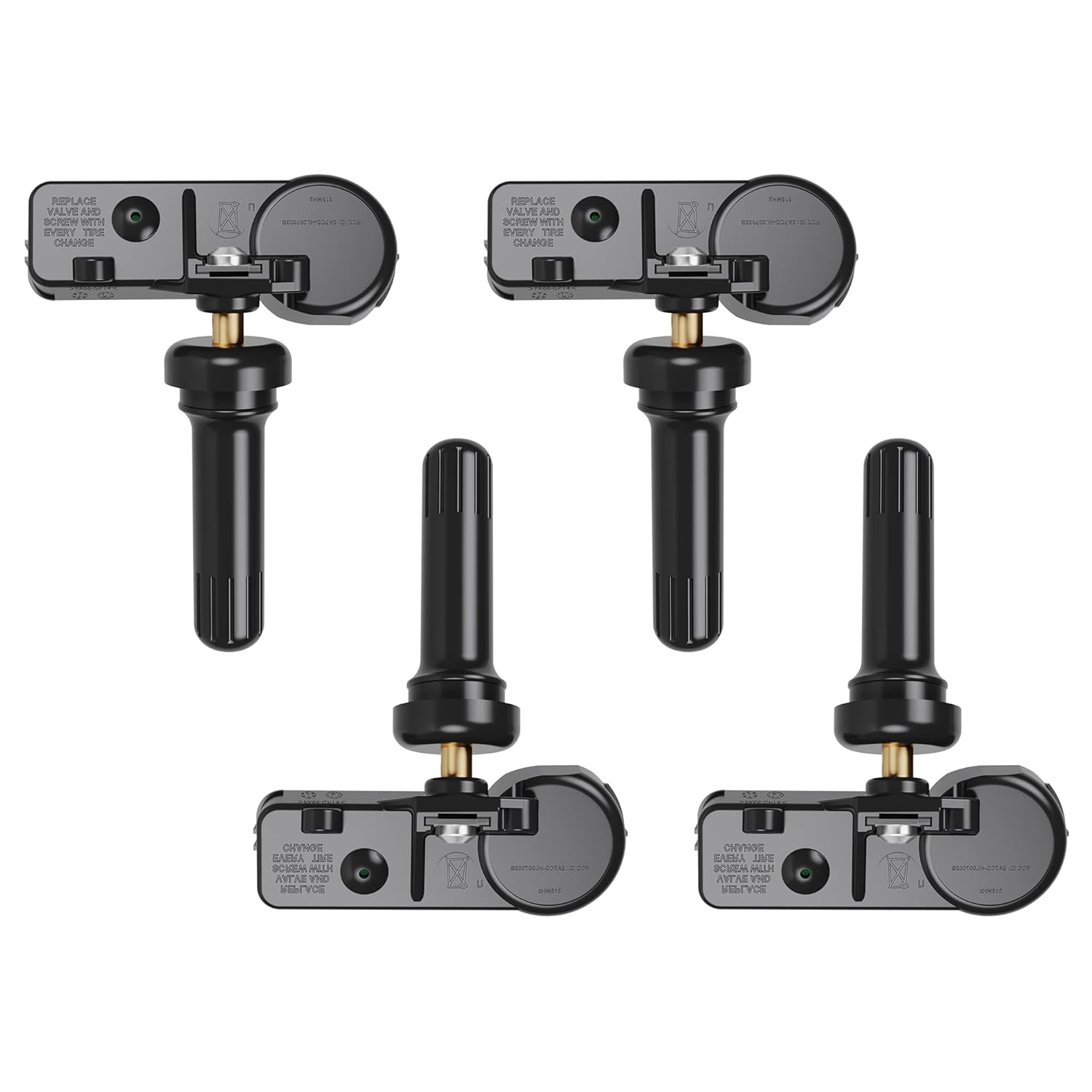
Replace worn or faulty TPMS sensors with this brand new 315MHz GM-compatible replacement set for select Chevy, GMC, Buick, Cadillac, and similar vehicles. These sensors are pre-programmed for your make/model/year and typically only require activation with a scan tool. Built for long service life with a high-temperature battery, they help maintain reliable tire pressure monitoring for safer driving.

Replace your worn or missing TPMS sensors with pre-programmed, direct-fit sensors for compatible Ford, Lincoln, and select Mazda models. Each sensor comes ready to activate with a scan tool, helping restore accurate tire pressure monitoring and trouble-free installation. Built with a long-life CR2032 battery and tested before factory release, this set provides dependable performance with a one-year warranty.
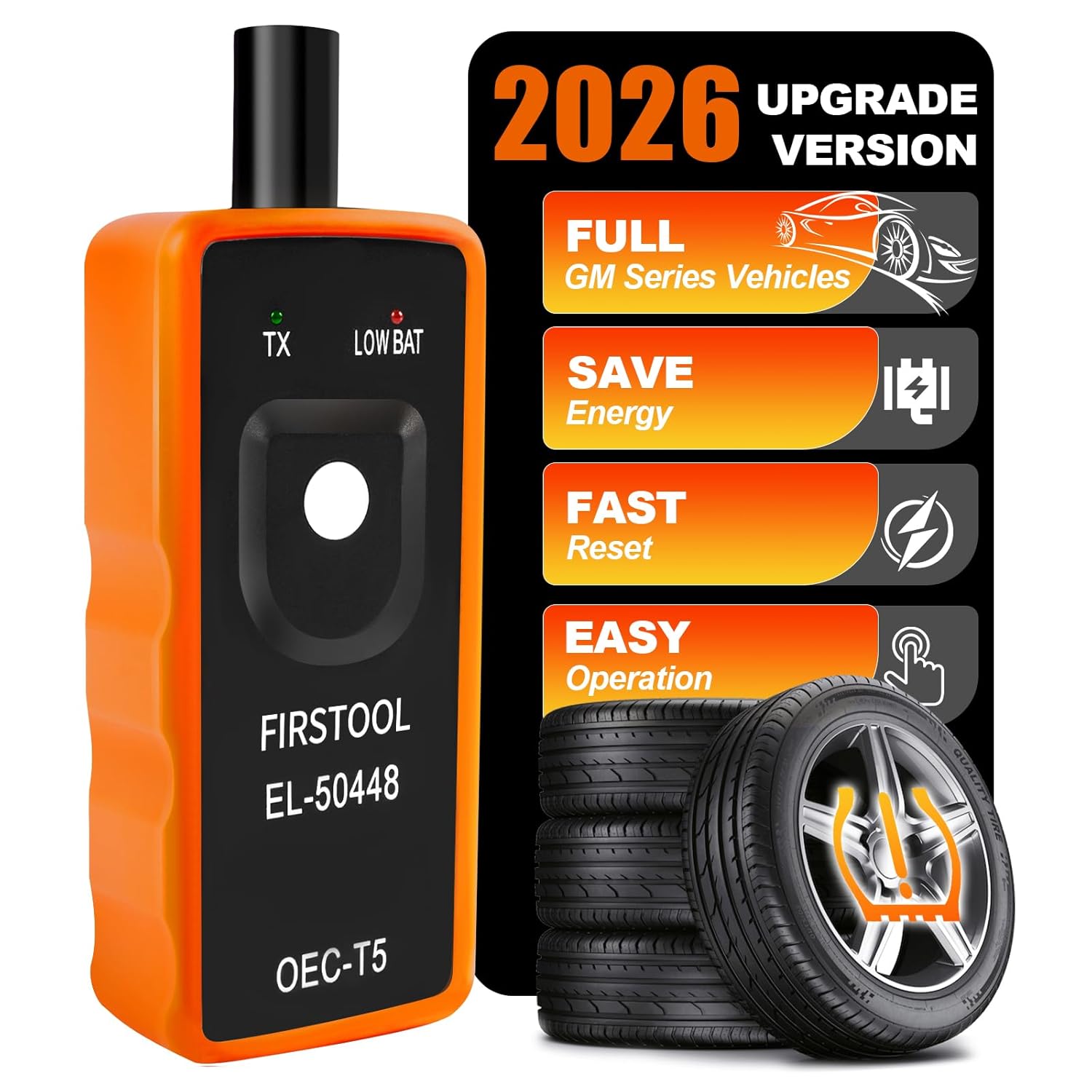
This TPMS relearn tool helps you quickly activate, match, and reset GM tire pressure sensors to keep the vehicle monitoring system working properly. It clears tire pressure alarms and dashboard warning lights after sensor replacement or tire rotation, and supports learning for common 315/433 MHz TPMS sensors. Designed for simple one-button operation, it can help you avoid unnecessary trips to repair shops.
Which Valve Parts to Replace During Tire Mounting (Stem, Core, Nut, Grommet)
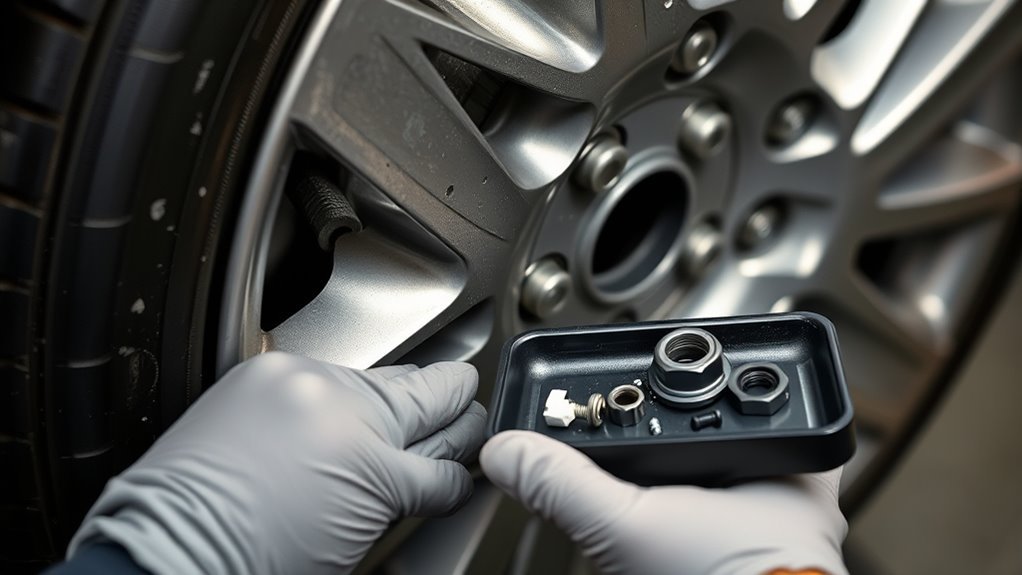
The sensor may be reusable, but the valve hardware often should not be reused after it has been disturbed. TPMS service kits commonly include parts such as a valve core, mounting nut, seal, sealing washer, cap, grommet, and sometimes a rubber or metal valve stem. The exact kit depends on whether your Sonata’s sensor uses a rubber snap-in valve or a metal clamp-in valve.
- Replace the valve core to help restore a clean internal seal.
- Replace the valve cap to keep moisture and debris away from the valve core.
- Replace the rubber snap-in stem if the sensor design uses a replaceable rubber valve stem.
- Replace the nut, washer, and grommet/seal on clamp-in metal valve assemblies when required.
- Use the correct torque specification for clamp-in stems, because overtightening can damage the valve or sensor.
Pro Tip: Ask the tire shop to do a “test before touch” TPMS scan before removing the old tires. That proves whether a sensor was already weak before service and reduces arguments if a sensor fails during mounting.
[Products Worth Considering]

Replace worn or malfunctioning GM TPMS sensors with this 433MHz pre-programmed sensor set designed for compatibility with many Chevrolet, Buick, GMC, and Cadillac models. It includes guidance for proper OBDII relearning/pairing after installation and supports reliable long-term operation with a high-performance CR2032 battery. Quality tested for durability and performance to help restore accurate tire pressure monitoring.
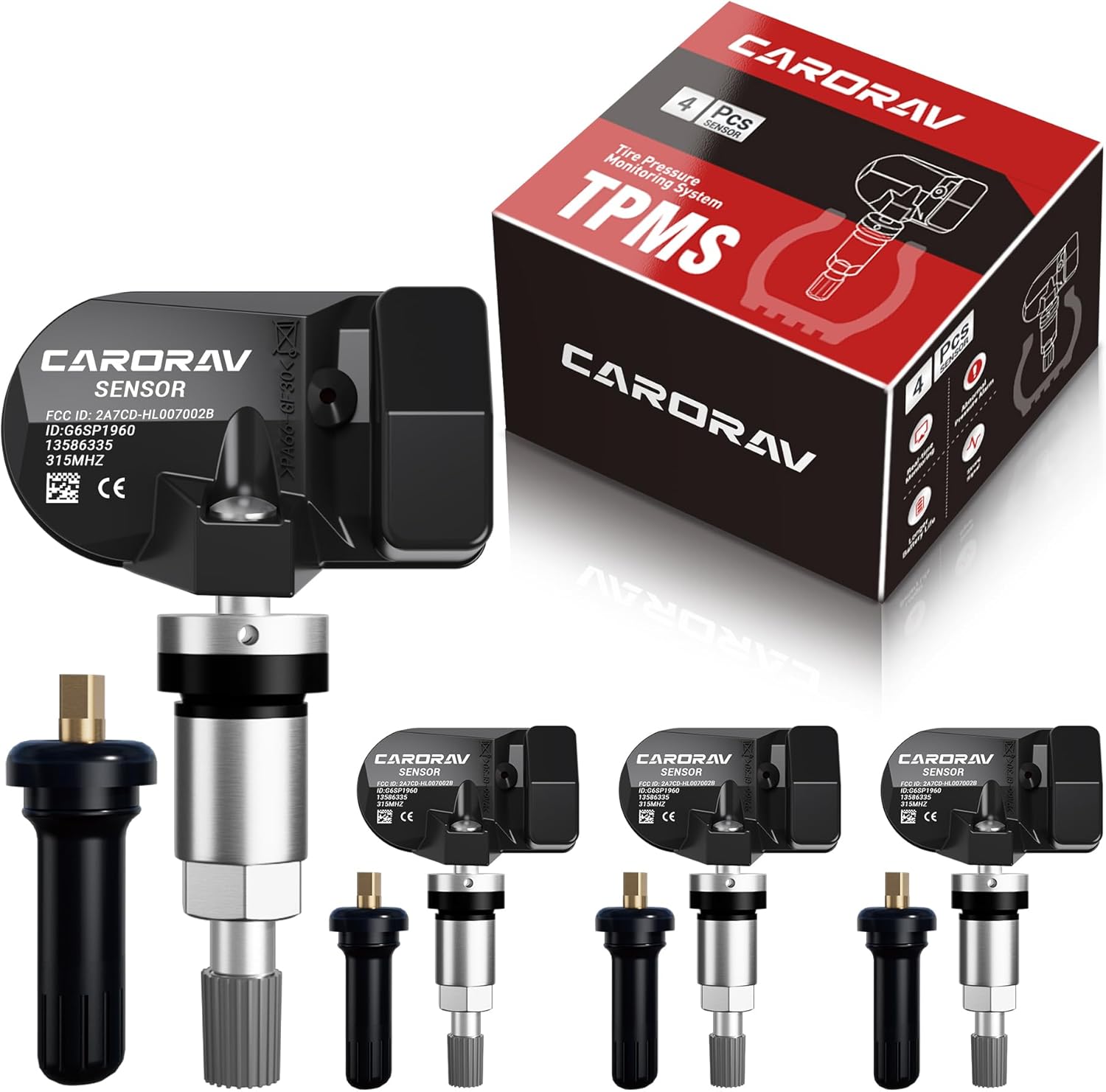
Replace worn or missing TPMS sensors with CARORAV pre-programmed GM-compatible sensors for a smoother installation experience. These 315MHz replacement sensors help monitor tire pressure in real time with long battery life, and they are designed to withstand harsh temperatures. Manual or OBDII relearn may be required to reset the system for proper recognition.
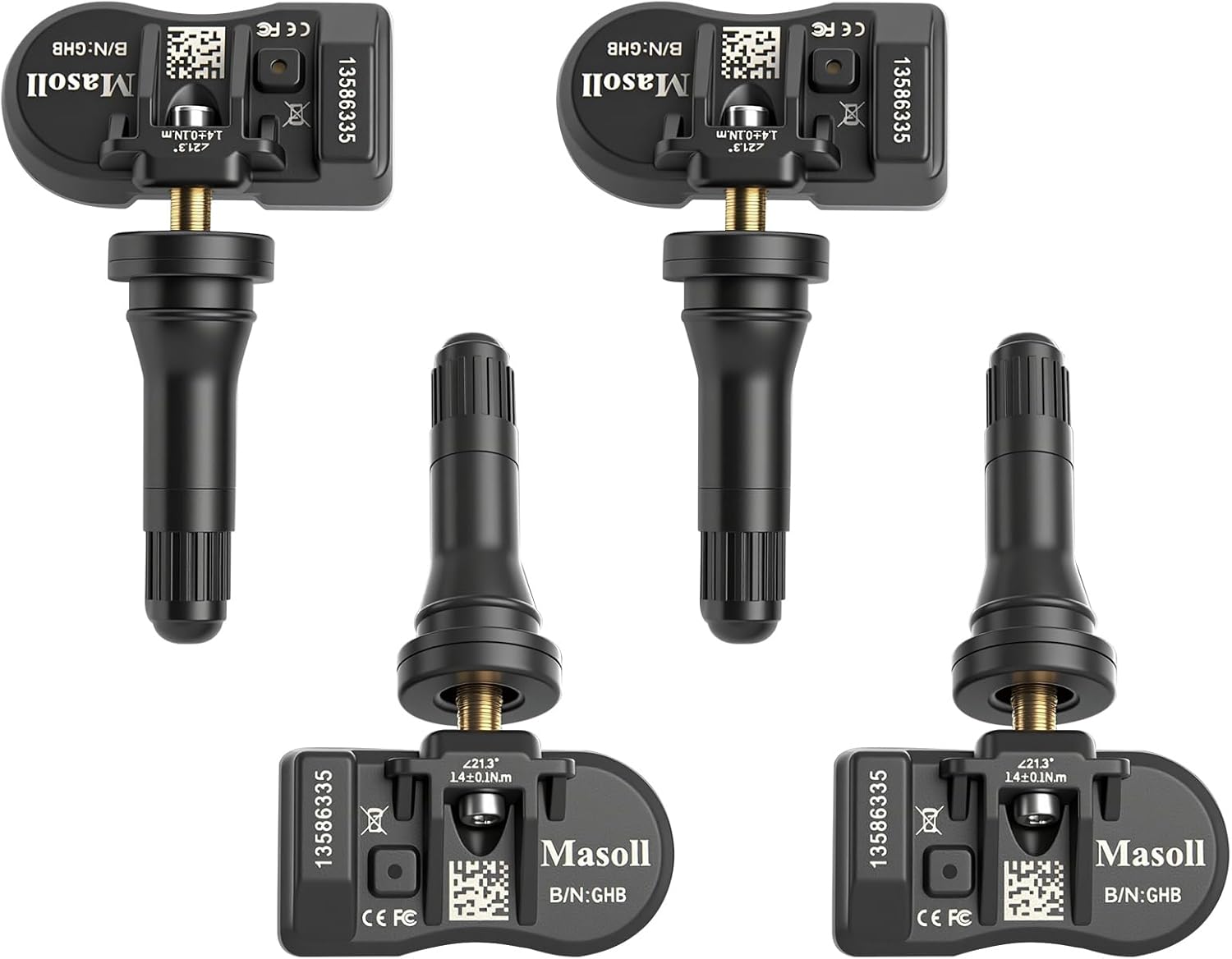
Masoll TPMS sensors are designed for most GM vehicles after 2006, helping you clear tire pressure warnings with OEM-level 315/433MHz compatibility. The 4-pack includes pre-programmed sensors, but re-learning is required after installation using a GM TPMS relearn tool or scan tool. Built with a dual-antenna design and a long-life CR2050 battery, these sensors deliver reliable performance in extreme temperatures with corrosion-resistant valve construction.
Cost, Timing, and Step-by-Step Workflow for Reuse vs Replace (Including Relearn/Programming)
Reuse is usually the cheapest path because you keep the working sensor and replace only the small service parts. Full sensor replacement costs more because it can include the sensor, tire dismounting, mounting, balancing, programming or cloning, relearn/reset labor, and verification. Prices vary widely by model year, OEM vs aftermarket sensor, and local shop labor, so a written quote is better than a generic online average.
[Products Worth Considering]

Autel MX TPMS sensors combine 315MHz and 433MHz in a single easy-to-install press-in design for faster tire service. They support wireless programming with strong signal performance, and the sensors are clone-able for streamlined replacement. Built for reliability and tested to SAE standards, each sensor includes a series number for quality control.

The VEHLIVE SU-50448 II TPMS relearn tool provides a fast activation reset to restore accurate tire pressure monitoring after sensor replacement or tire rotation. It supports 315 MHz and 433 MHz GM series sensors and helps clear dashboard pressure warnings. With simple two-button operation and horn-confirmed relearning order, you can reprogram sensors conveniently at home.

Replace worn or missing TPMS sensors with a pre-programmed 4-pack designed for compatible GM vehicles. These 315MHz sensors provide real-time tire pressure monitoring and alert you if pressure is too high, too low, or if a rapid air leak occurs. Most installations are ready with minimal relearn effort after mounting, helping improve safety and driving confidence.
Workflow if You Reuse the Existing Sensors
- Set all tires to the correct cold pressure before diagnosis.
- Use a TPMS tool to read each sensor ID and status before tire removal.
- Inspect each sensor and valve assembly during tire mounting.
- Install the correct TPMS valve service kit where applicable.
- Mount and balance the tires.
- Reset/calibrate the TPMS if your Sonata’s owner’s manual calls for it after tire repair, replacement, rotation, or pressure adjustment.
- Drive as required and confirm that tire pressures display normally and the warning light stays off.
Workflow if You Replace One or More Sensors
- Match the replacement sensor to the Sonata’s model year, frequency, valve type, and wheel type.
- Program or clone universal aftermarket sensors before installation if required.
- Install the sensor with the correct service kit and torque.
- Mount and balance the tire.
- Perform the required relearn or reset using the vehicle menu, scan tool, OBD procedure, or drive procedure specified for that model year.
- Verify all sensor IDs, pressure readings, and dash warnings before returning the car to service.
Note: Keeping the same working sensors usually means you do not need to program new sensor IDs. However, Hyundai may still require a TPMS reset/calibration after tire repair, replacement, rotation, or pressure adjustment, depending on the model year and system.
Hyundai Sonata TPMS Reset, Relearn, and Programming: What’s the Difference?
Many TPMS problems come from mixing up three different terms. They sound similar, but they are not the same job.
| Term | What It Means | When It May Be Needed |
|---|---|---|
| Reset / calibration | Stores or recalibrates the current tire-pressure baseline in the vehicle. | After pressure adjustment, tire repair/replacement, wheel rotation, or when the owner’s manual says to reset. |
| Relearn | Teaches the vehicle which sensor ID belongs to which wheel position. | After replacing sensors, moving sensors, or when tire positions no longer match the display. |
| Programming / cloning | Writes the correct vehicle protocol or copied sensor ID into a programmable aftermarket sensor. | Before installing blank or universal aftermarket sensors. |
For current Hyundai reset instructions, Hyundai describes adjusting all tires to the recommended pressure, using steering-wheel controls to select Tire Pressure in the cluster, holding OK, and confirming the warning light response. Older Sonata model years and trims may differ, so use the exact owner’s manual for your vehicle.
Troubleshooting TPMS After a Tire Change
| What You See | Likely Cause | What to Do |
|---|---|---|
| Low-pressure light stays on steadily | One or more tires may still be below placard pressure, or the system has not updated yet. | Check all four tires cold, inflate correctly, reset if required, and drive long enough for readings to update. |
| TPMS light flashes about one minute, then stays on | TPMS malfunction, unreadable sensor, incompatible wheel/sensor, or interference. | Scan all sensors and have the system inspected if the fault returns. |
| One tire pressure does not display | Sensor may be asleep, damaged, dead, or not learned to that position. | Drive a few minutes if your model requires it, then scan that wheel with a TPMS tool. |
| Light appears after installing the spare | Many spare tires do not have a TPMS sensor. | Repair and reinstall the original sensor-equipped wheel, then verify the light turns off after driving. |
| Sensor fails after tire sealant was used | Unapproved sealant can contaminate or damage the pressure sensor. | Tell the tire shop sealant was used and have the sensor inspected before reuse. |
Warning: Do not disable, modify, or ignore the TPMS to avoid a repair. Hyundai warns that tampering with TPMS components can interfere with the system’s ability to warn you about low tire pressure or malfunctions.
Frequently Asked Questions
Do Hyundai Sonata TPMS sensors need to be programmed?
Existing working sensors usually do not need programming just because you installed new tires. New blank or universal aftermarket sensors may need programming or cloning before installation, and the vehicle may need a relearn or reset afterward.
Where is the TPMS reset button on a Hyundai Sonata?
It depends on the model year and trim. Some Hyundai vehicles use a physical reset button, but current Hyundai instructions commonly use steering-wheel controls and the cluster Tire Pressure menu with the OK button. Check the Sonata owner’s manual for your exact year before looking under the dash.
Can I replace just one TPMS sensor on a Hyundai Sonata?
Yes. If only one sensor fails and the others test well, replacing only the failed sensor is normal. If all sensors are old and the tires are already off, replacing the full set may save future labor.
How long do Hyundai Sonata TPMS sensors last?
Many TPMS sensors last several years. A practical planning range is about 5–7 years for many sensors, with life affected by battery condition, climate, corrosion, miles driven, and tire-service damage. Test the sensors instead of replacing them by age alone.
Will the TPMS light turn off by itself after I add air?
Often, yes, after all tires are set to the correct cold pressure and the vehicle is driven long enough for the system to update. Some Sonata models also require a reset through the cluster or steering-wheel controls after pressure adjustment or tire service.
Can tire sealant damage a TPMS sensor?
Yes. Hyundai warns that puncture-repair sealant not approved for the vehicle may damage the tire pressure sensor. Tell the tire shop if sealant was used before they reuse the sensor.
Conclusion
You can often reuse Hyundai Sonata TPMS sensors when changing tires, but only after they pass a real check. Confirm cold tire pressure, scan each sensor, inspect the housing and valve hardware, and replace the valve service parts that seal the assembly. Replace a sensor if the battery/status is weak, the signal is intermittent, the sensor will not activate, or the valve/housing is damaged. After the tire work, perform the reset, relearn, or programming step your specific Sonata requires so the warning system stays reliable.
Sources
- Hyundai Owner’s Manual: Resetting TPMS — supports reset steps and when Hyundai says TPMS reset is needed.
- Hyundai Owner’s Manual: Changing a Tire with TPMS — supports sensor location, spare tire behavior, sealant warning, and TPMS safety notes.
- Hyundai Owner’s Manual: Tire Pressure Monitoring System — supports warning-light behavior and the statement that TPMS is not a substitute for proper pressure maintenance.
- 49 CFR § 571.138: Tire Pressure Monitoring Systems — supports federal TPMS warning and malfunction-telltale requirements.
- Hamaton TPMS Support Centre — supports direct vs indirect TPMS, sensor service recommendations, battery-life planning, and programming notes.
- Bartec USA: TPMS Service Kits — supports TPMS rebuild/service kit components and service-kit replacement guidance.