
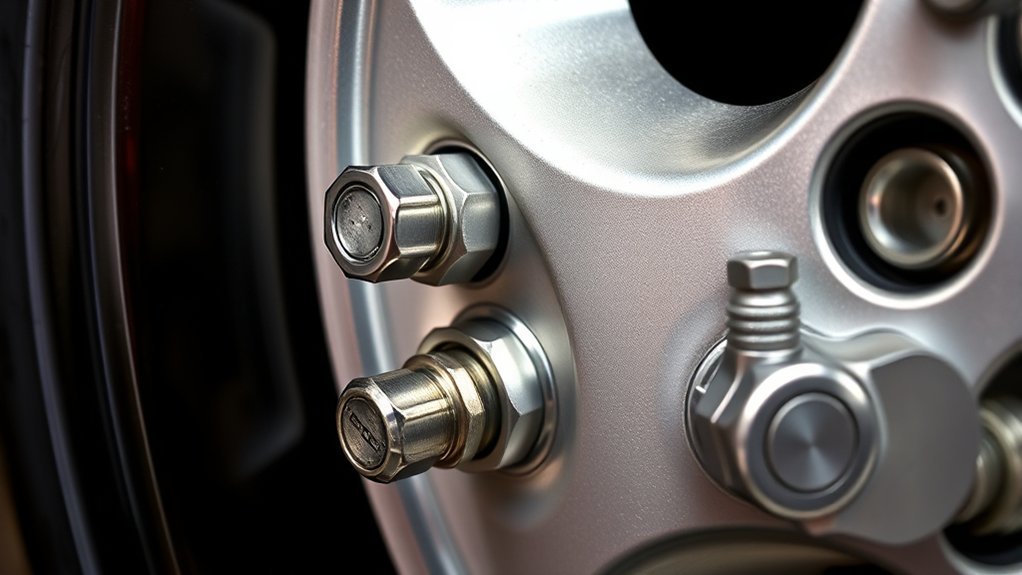
The fasteners people call “tire bolts” are usually lug nuts or lug bolts. They do not hold the rubber tire itself. They hold the wheel against the hub. If your vehicle has wheel studs sticking out from the hub, the fasteners are lug nuts. If the whole threaded fastener comes out when you remove the wheel, your vehicle uses lug bolts.
Quick Answer
The “bolts” on a tire are called lug nuts if they thread onto fixed wheel studs, or lug bolts if the fastener threads directly into the hub. To install them safely, match the thread size, seat style, and torque specification listed for your vehicle.
Key Takeaways
- The fasteners on a wheel are usually called lug nuts or lug bolts, depending on the vehicle design.
- Lug nuts thread onto wheel studs that stay mounted in the hub.
- Lug bolts pass through the wheel and thread directly into the hub.
- Thread size, thread pitch, seat style, and length must match the wheel and vehicle.
- Final tightening should be done with a torque wrench, not by guesswork or an impact wrench.
At a Glance
| Time Required | 5–15 minutes to identify hardware; 20–40 minutes for a careful wheel removal and reinstall |
| Difficulty | Easy to identify; moderate for safe removal and installation |
| Tools Needed | Owner’s manual, correct socket, breaker bar or lug wrench, jack, jack stands, wheel chocks, and calibrated torque wrench |
| Cost | No cost to identify; replacement hardware or a torque wrench adds cost if you do not already have them |
What Are Lug Nuts and Lug Bolts?
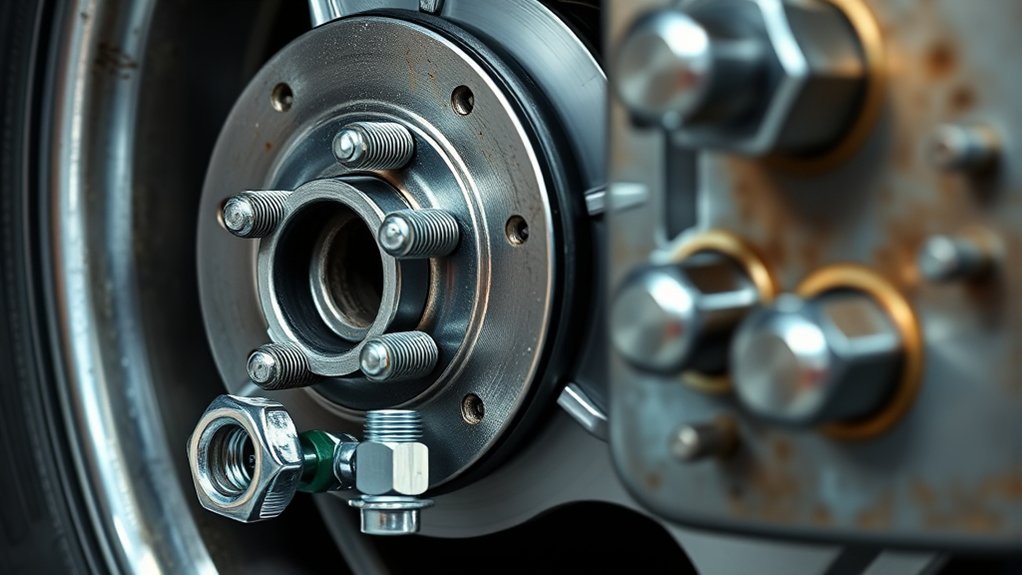
Lug nuts are threaded nuts that screw onto wheel studs. The studs stay attached to the hub, and the nuts clamp the wheel in place. You will see the studs sticking out when the wheel is removed.
Lug bolts combine the threaded shaft and seating head into one removable fastener. They pass through the wheel and thread into the hub. When you remove a lug bolt, the whole fastener comes out.
Many American and Asian vehicles use wheel studs with lug nuts, while many European brands use lug bolts. That pattern is common, not universal, so check your actual wheel hardware before buying replacements.
Note: The tire is the rubber part. The wheel is the metal rim. Lug nuts and lug bolts secure the wheel to the hub, even though many drivers casually call them “tire bolts.”
How Do Lug Nuts Secure Wheels?
Lug nuts secure a wheel by creating clamping force. As you tighten each nut onto a wheel stud, the nut pulls the wheel firmly against the hub. The seat of the nut also contacts the wheel’s matching seat area.
That fit matters. A conical nut must sit in a conical wheel seat. A ball-seat nut must sit in a rounded wheel seat. A flat or mag-style nut must match a flat washer-style surface. If the seat style is wrong, the fastener may feel tight but still fail to clamp the wheel correctly.
Threaded Wheel Stud Grip
Wheel studs are the threaded shafts fixed to the hub. Lug nuts thread onto those studs and pull the wheel inward. The threads carry tension, while the nut seat helps center and load the wheel.
- Use the correct thread diameter and pitch.
- Start each lug nut by hand before using any tool.
- Stop if the nut binds, wobbles, or will not thread smoothly.
- Replace damaged studs or nuts before driving.
- Use the vehicle maker’s torque specification for final tightening.
Torque and Seat Fit
Proper wheel installation requires the wheel-attaching hardware to be tightened to the recommended torque specification for the vehicle. Too little torque can let the wheel loosen. Too much torque can stretch studs, damage threads, distort brake parts, or make later removal difficult.
The seating surface is just as important as the torque number. The wrong seat shape can concentrate load in a small area and damage the wheel. Before installing aftermarket wheels, compare the new wheel’s seat style with the hardware the wheel maker requires.
Warning: Never rely on an impact wrench for final tightening. Hand-start every fastener, snug them evenly, and finish with a calibrated torque wrench set to the vehicle’s specification.
What Types of Lug Nut Seats Exist?
Lug nut seat type describes the contact shape between the fastener and the wheel. Common lug hardware styles include spherical or ball seats, conical seats, mag seats with flat washers, tuner nuts, spline-drive nuts, open-ended nuts, and lug bolts.
[Products Worth Considering]

This 1/2-inch drive breaker bar delivers powerful leverage for loosening and tightening stubborn lug nuts and automotive fasteners. The 180-degree flex head helps you reach tight spaces at the angle you need, making tire and brake jobs easier. A spring-loaded ball detent design holds 1/2-inch sockets securely while the chrome-moly head provides durable strength for everyday use.

These M14x1.5 closed-end chrome lug nuts are a one-piece replacement designed for secure fitment on compatible GM, Ford, and select Chrysler/Dodge models. Featuring a 60-degree conical seat and anti-rust chrome plating, they help resist corrosion and maintain a bright look for everyday driving. Built for long-term durability, they include OEM-style part references and are backed by 12 months of support.

This car D-wheel lock nut key provides an anti-theft solution for D-shaped wheel lock bolts, helping keep your wheels secure. It features a flower-shaped internal pattern that resists micro-adjustment theft while allowing removal and mounting of compatible locking nuts. Made for reliable performance under high torque, it’s easy to use with standard socket wrench turning for quick tire maintenance and emergency repairs.
Conical Seat
A conical seat, also called an acorn or tapered seat, uses an angled cone shape. Many conical lug nuts use a 60-degree taper, but you should still confirm the exact wheel requirement before installing them.
- The tapered seat helps center the fastener in the wheel.
- It is common on many aftermarket wheels.
- It must match the wheel’s tapered seat angle.
- It should be torqued only after all fasteners are hand-started.
Ball Seat
A ball seat, also called a spherical or radius seat, uses a rounded contact surface. You often see this style on certain factory wheel designs and some European applications.
Do not use a ball-seat fastener on a conical-seat wheel. The rounded surface will not sit evenly in the taper, and the wheel may not clamp correctly.
Flat and Mag Seats
Flat-seat hardware uses a flat contact surface. Mag-seat hardware usually uses a straight shank and washer that sit against a flat wheel surface. These designs need the correct shank diameter, shank length, washer, and thread engagement.
- Flat seat: spreads load across a flat contact area.
- Mag seat: uses a washer and shank-style design.
- Wrong shank length: can bottom out or fail to clamp.
- Wrong washer: can damage the wheel or loosen.
What Lug Nut Size and Thread Do You Need?
You need the lug nut or lug bolt size that matches your vehicle and wheel. Do not choose by appearance alone. Match the full specification before installing replacement hardware.
- Thread diameter: common examples include M12, M14, 1/2 inch, and 9/16 inch.
- Thread pitch: metric examples include M12 x 1.25 and M12 x 1.50; inch examples include 1/2-20.
- Seat style: conical, ball/radius, flat, mag, tuner, or spline style.
- Length: lug bolts and mag-seat nuts need the correct shank or shaft length.
- Hex or key size: the socket or key must fit the fastener without slipping.
- OE spare compatibility: factory spare wheels may require factory hardware.
If you changed to aftermarket wheels, the original lug nuts may not be correct even if the thread size matches. Wheel seat design can change, and the wrong seat can prevent safe clamping.
Pro Tip: Keep one original lug nut or lug bolt in a labeled bag if you switch wheel sets. It gives you a physical reference for thread, seat, length, and socket size.
[Products Worth Considering]

Upgrade your wheels with MIKKUPPA M12x1.5 mag seat lug nuts built for secure, corrosion-resistant performance. These closed-end chrome lug nuts are a direct replacement for select Toyota models, including Camry, Corolla, RAV4, Sienna, Avalon, Highlander, Matrix, Venza, and Prius. Triple-chromium plating and cold-forged, heat-treated steel help deliver strength for daily driving and replacement needs.

Upgrade your wheels with MIKKUPPA closed-end lug nuts designed for reliable fit and corrosion resistance. The one-piece, cold-forged and heat-treated steel construction helps resist rust and stripping, while the integrated finish delivers a durable black appearance. Built to OEM standards with a conical 60-degree seat, these nuts provide a secure solution for compatible Ford, Honda, Jeep, and Chevrolet models.

The Trivd Frol 1/2" air impact wrench delivers high performance torque up to 1500 ft-lbs with a twin hammer impact mechanism for strong, balanced blows. It features an ergonomic grip, compact lightweight design, and quick-stop control with 3 forward speeds up to 8000 RPM plus a reverse speed. Built for demanding automotive repair and tire shop work, the rear exhaust helps keep debris away from the surface.
What Lug Nut Torque Should You Use?
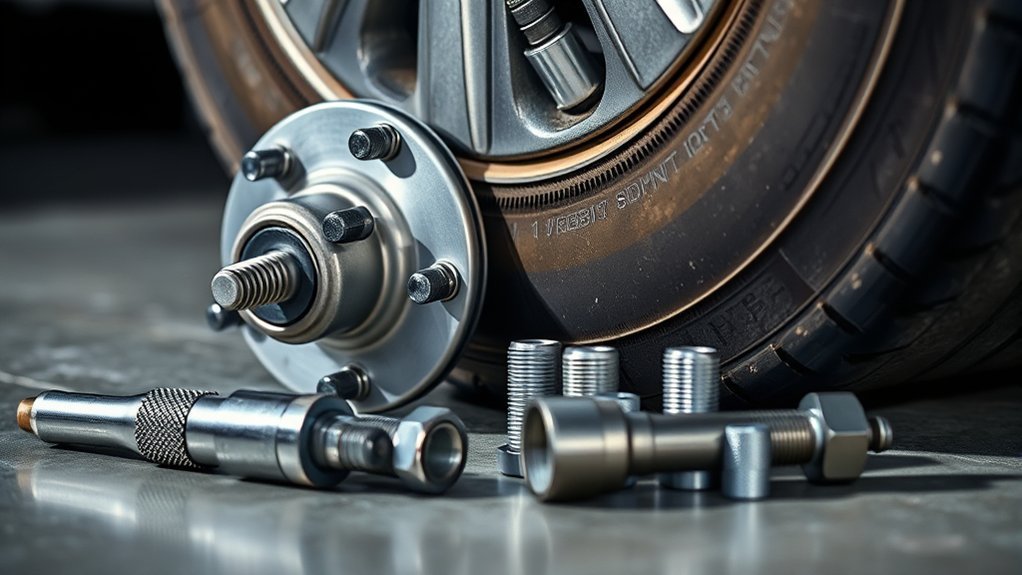
Use the torque specification listed in your owner’s manual, service manual, or wheel documentation. The correct value changes by vehicle, wheel, fastener size, and hardware design.
A GM service bulletin hosted by NHTSA warns that improper torque methods can create wheel mounting problems and brake rotor distortion. It also recommends hand-tightening first, then using a star or criss-cross pattern before final torque.
- Use a calibrated torque wrench for final tightening.
- Snug fasteners in a star or criss-cross pattern.
- Do not use an impact wrench or torque stick for final torque.
- Torque only after the wheel sits flat against the hub.
- Recheck torque after service if your manual, wheel maker, or tire shop recommends it.
Many wheel and tire sources recommend a follow-up torque check after a short break-in period. Tire Rack says new wheels should be retorqued after the first 50 to 100 driving miles, while Continental describes a common 50 km retorque check after a tire change. If your shop gives a specific retorque interval, follow that advice.
A lug fastener can feel tight before it creates the right clamping force. That is why clean seating surfaces, hand-started threads, the correct pattern, and a torque wrench all matter.
How Do You Remove and Install Lug Nuts?
Work on a flat, stable surface. Set the parking brake, chock the opposite wheels, and use the vehicle’s approved jack points. A jack lifts the vehicle, but jack stands support it. Do not place any part of your body under a vehicle supported only by a jack.
- Break the fasteners loose while the tire is on the ground. Turn each lug nut or lug bolt slightly counterclockwise before lifting the vehicle.
- Lift and support the vehicle. Use the correct jack point, then place jack stands where the manual recommends.
- Remove the fasteners in a star pattern. Keep the socket fully seated so you do not round the corners.
- Inspect the hardware. Look for stripped threads, rust, cracks, swollen caps, damaged seats, or bent studs.
- Clean mating surfaces. Remove loose rust and grit from the hub face, wheel mounting pad, and threads.
- Install the wheel flush against the hub. Make sure it sits flat before tightening.
- Start every fastener by hand. If it does not turn smoothly by hand, stop and inspect the threads.
- Snug the fasteners evenly. Use a star or criss-cross pattern so the wheel seats evenly.
- Lower the vehicle enough to prevent wheel spin. Keep some weight off the wheel until final torque begins.
- Torque to specification. Use the correct pattern and your torque wrench.
- Recheck after driving if recommended. Follow the interval in your manual, wheel documents, or tire shop instructions.
Warning: Do not lubricate lug nut or lug bolt threads unless the vehicle service manual specifically tells you to. Lubrication changes friction and can cause over-tightening at the same torque setting.
When Should You Replace Lug Nuts?
Replace lug nuts, lug bolts, or wheel studs when they no longer thread, seat, or torque correctly. A fastener that looks minorly damaged can still fail to clamp the wheel safely.
- Replace fasteners with stripped, crossed, or flattened threads.
- Replace nuts with cracked, rounded, or damaged seats.
- Replace swollen two-piece capped lug nuts that no longer fit the correct socket.
- Replace badly corroded hardware instead of forcing it.
- Replace missing fasteners immediately and inspect the matching stud or hub thread.
- Get professional help if a stud spins, snaps, or pulls out.
A damaged lug bolt is usually replaceable. The bigger concern is damaged hub threads. If the hub threads are stripped, the repair may require thread repair, insert work, or hub replacement depending on the vehicle design.
Wheel Studs vs. Wheel Bolts
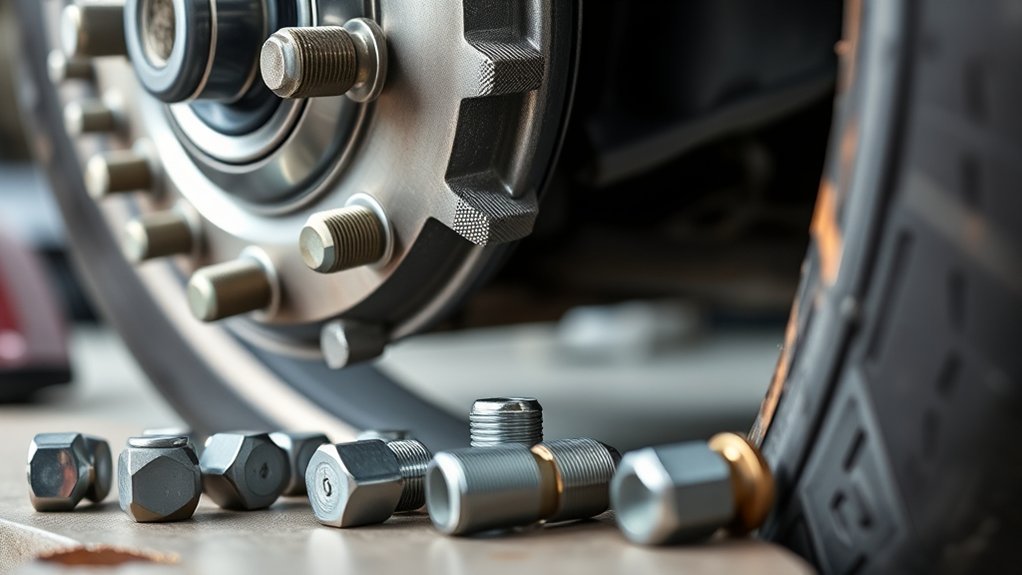
Wheel studs and wheel bolts do the same main job: they help clamp the wheel to the hub. The difference is how the threaded hardware stays with the vehicle.
With wheel studs, the studs remain fixed in the hub. You lift the wheel onto the studs, then install lug nuts. This can make wheel changes easier because the studs help support and align the wheel.
With wheel bolts, the fastener comes out completely. You must hold the wheel in line with the hub while starting each bolt. Some vehicles use guide pins or alignment tools to make this easier.
| Feature | Lug Nuts with Studs | Lug Bolts |
| What stays on the hub? | Wheel studs | Threaded hub holes |
| What do you remove? | Only the lug nuts | The entire bolt |
| Wheel alignment during install | Studs help hold the wheel | You may need to support and align the wheel by hand |
| Common use | Common on many American and Asian vehicles | Common on many European vehicles |
Wheel Locks and Special Keys
Some vehicles use one locking lug nut or locking lug bolt on each wheel. A wheel lock needs a matching key or adapter before you can remove it. Keep that key in the glove box, spare-tire kit, or another known location in the vehicle.
If a shop cannot find the wheel-lock key, a simple tire rotation or flat repair can become much harder. If the key is missing, replace the locks with a complete matching set before you need emergency service.
[Products Worth Considering]

The 22800 wheel stud installer makes replacing wheel studs quick and secure, saving time and effort during tire service. It uses a ratchet or impact wrench to pull new studs firmly into place, helping when existing studs are too long. Compatible with most automotive wheels and light-duty truck wheel studs, it’s designed for easy, tool-assisted installation.

This spare tire tool kit is designed for the 2004 to 2018 Ford F-150 to help you loosen and tighten wheel lug nuts and manage the spare tire and provided jack functions from underneath the vehicle. It includes the lug nut wrench and extension pieces plus a convenient storage carrying case for organized transport. The jack itself is not included.

Secure your parked vehicle quickly with AFA Tooling 4T rubber wheel chocks in a 4-pack for two dual-wheel sets. The ribbed design and textured base grip fast without pounding, so you can chock tires on trailers, RVs, ATVs, and work vehicles with confidence. EZ rustproof handles with rope ties keep the pair together for easy placement and removal, while nylon-reinforced rubber stands up to dirt, ice, salt, and harsh weather.
Frequently Asked Questions
What are the bolts on your tires called?
They are usually called lug nuts or lug bolts. Lug nuts thread onto studs that stay on the hub. Lug bolts pass through the wheel and thread directly into the hub.
What are the six bolts called on the tire of a car?
They may be six lug nuts or six lug bolts. If threaded studs remain on the hub after removal, they are lug nuts. If each threaded fastener comes out completely, they are lug bolts.
What are lug nut bolts called?
The correct term is usually lug bolt. A lug bolt is a one-piece threaded fastener that passes through the wheel and tightens into the hub. A lug nut is separate and tightens onto a fixed wheel stud.
Do I have lug nuts or lug bolts?
Look behind one removed fastener. If studs remain sticking out from the hub, you have lug nuts. If the fastener you removed is a complete threaded bolt, you have lug bolts.
Can I drive with one missing lug nut or lug bolt?
Do not treat a missing wheel fastener as safe. Stop driving as soon as you can do so safely, replace the missing hardware with the correct part, and inspect the remaining studs, bolts, seats, and wheel holes for damage.
Should lug nuts be tightened in a circle?
No. Use a star or criss-cross pattern so the wheel seats evenly against the hub. After all fasteners are snug, use a torque wrench and the vehicle’s specified torque value.
Sources
- Tire Rack — How Do I Properly Torque My Wheel Lug Nuts or Bolts? — supports torque specifications, torque sequence, and 50–100 mile retorque guidance.
- GM Service Bulletin hosted by NHTSA — Proper Wheel Installation and Wheel Torque Techniques — supports hand-tightening, star/criss-cross pattern, and torque-wrench guidance.
- Continental Tires — Retorquing Wheels — supports retorque safety, loose lug nut risks, and settling after tire changes.
- CAA North & East Ontario — When to Retorque Your Tires and Why It’s Essential — supports post-service retorque guidance and risks of under- or over-tightening.
- DrivingLine by Nitto — Lug Nuts: Which One Is Right for You — supports lug nut types, seat styles, thread pitch, and lug bolt identification.
Conclusion
The fasteners on your wheel are called lug nuts when they thread onto wheel studs, and lug bolts when they thread directly into the hub. The name matters, but the fit matters more. Match the thread, seat style, length, and torque specification before you install replacement hardware.
When you remove or install a wheel, work safely, hand-start every fastener, tighten in a star pattern, and finish with a torque wrench. If threads, seats, studs, bolts, or hub threads look damaged, replace the bad parts before you drive.
