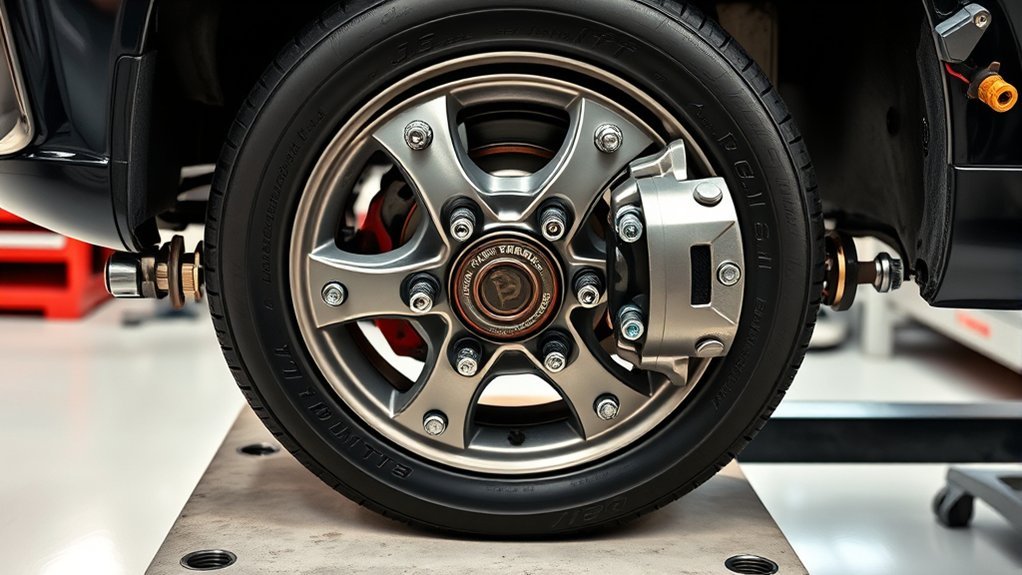
Your trailer tire stays attached to the axle because several parts work together: the wheel bolts to the hub with wheel studs and lug nuts, while the hub rides on the axle spindle through inner and outer bearings. A spindle nut or castle nut, washer, cotter pin or nut retainer, grease seal, and dust cap keep that hub-and-bearing assembly correctly positioned and protected.
Quick Answer
A trailer tire is held to the axle by the wheel hub assembly. The wheel is clamped to the hub by wheel studs and lug nuts, while the hub is retained on the axle spindle by bearings, a spindle nut or castle nut, a washer, and a cotter pin or nut retainer.
Key Takeaways
- The wheel hub is the main part that connects the trailer wheel to the axle spindle.
- Wheel studs and lug nuts clamp the wheel tightly against the hub face.
- Inner and outer bearings let the hub rotate smoothly while carrying trailer load.
- The spindle nut or castle nut adjusts and retains the hub, but it should not be simply overtightened.
- Proper lug nut torque, bearing grease, seal condition, and regular inspection help prevent wheel separation.
At a Glance
| Time Required | 10–20 minutes for a basic pre-trip wheel check; 1–2 hours to remove, inspect, repack, or replace one hub assembly. |
| Difficulty | Easy for visual checks; moderate for bearing service or hub replacement. |
| Tools Needed | Wheel chocks, jack, jack stands, lug wrench, torque wrench, pliers, clean rags, grease, new cotter pin, new grease seal, and the correct replacement bearings or hub if servicing. |
| Cost | Usually low for grease, seals, and cotter pins; moderate for complete hub kits, bearings, or professional trailer-shop service. |
What Holds a Trailer Wheel On?
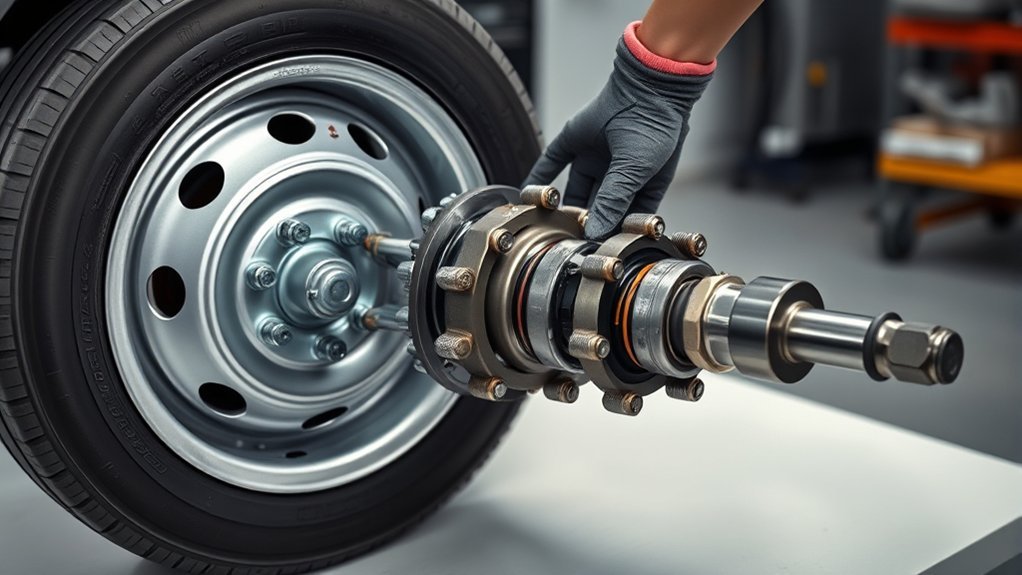
The short answer is the wheel hub assembly. More precisely, two different connections are happening at the same time. First, the wheel is clamped to the hub by wheel studs and lug nuts. Second, the hub rides on the axle spindle through the inner and outer wheel bearings.
The parts that matter most are the hub, spindle, inner bearing, outer bearing, bearing races, grease seal, spindle washer, spindle nut or castle nut, cotter pin or nut retainer, wheel studs, and lug nuts. When all of these parts are clean, greased, adjusted, and torqued correctly, the trailer wheel can rotate smoothly without wobbling or separating from the axle.
Warning: Do not tow if a wheel is wobbling, a hub is hot to the touch, lug nuts are missing, grease is leaking heavily from the hub, or you hear grinding from the wheel end. Stop, unload if needed, and inspect the hub before driving farther.
Trailer Wheel Hub Parts
The trailer wheel hub is the structural center of the wheel end. It holds the wheel studs, contains the bearings, and rotates around the axle spindle. On many trailers, the same casting may be an idler hub, a brake drum hub, or a hub-and-rotor assembly depending on the brake system.
| Part | What it does |
| Hub | Carries the wheel studs and rotates around the axle spindle. |
| Axle spindle | The machined end of the axle where the bearings and hub ride. |
| Inner and outer bearings | Support load and let the hub rotate with low friction. |
| Bearing races or cups | Hardened surfaces inside the hub that the bearing rollers ride against. |
| Grease seal | Helps keep bearing grease inside the hub and dirt or water out. |
| Spindle washer and spindle nut | Set the bearing adjustment and retain the hub on the spindle. |
| Cotter pin or nut retainer | Prevents the spindle nut from backing off after adjustment. |
| Wheel studs and lug nuts | Clamp the wheel firmly to the hub face. |
| Dust cap or bearing protector | Covers the outer bearing area and helps keep grease clean. |
[Products Worth Considering]

The Trivd Frol 1/2" air impact wrench delivers high performance torque up to 1500 ft-lbs with a twin hammer impact mechanism for strong, balanced blows. It features an ergonomic grip, compact lightweight design, and quick-stop control with 3 forward speeds up to 8000 RPM plus a reverse speed. Built for demanding automotive repair and tire shop work, the rear exhaust helps keep debris away from the surface.

The SEESII cordless impact wrench delivers high tightening and loosening power for fast wheel bolt and industrial bolt work. Its brushless motor and variable-speed 3 forward/2 reverse modes help you control precision installs and stubborn nut removal. A dual-battery system with rapid charging and an included storage case make it ready for home, car, and jobsite use.

The 22800 wheel stud installer makes replacing wheel studs quick and secure, saving time and effort during tire service. It uses a ratchet or impact wrench to pull new studs firmly into place, helping when existing studs are too long. Compatible with most automotive wheels and light-duty truck wheel studs, it’s designed for easy, tool-assisted installation.
How the Hub Attaches to the Axle
The hub does not bolt directly to the axle beam. It slides over the axle spindle, with the inner and outer bearings supporting the hub. The spindle nut or castle nut is then adjusted so the bearings are seated correctly without binding. A cotter pin, tang washer, or nut retainer keeps that nut from backing off.
That distinction matters: lug nuts hold the wheel to the hub, while the spindle nut and bearings hold the hub on the spindle. If either connection is loose, damaged, or misadjusted, the wheel end can overheat, wobble, wear tires unevenly, or fail.
[Products Worth Considering]

Replace or upgrade your zero-turn lawn mower tires with a universal fit flat-free tire and wheel assembly in a convenient 2-pack. Smooth tread front-caster style helps turning with reduced turf damage, while flat-free design eliminates the maintenance and downtime of air-filled flats. The included adapter kit supports 5/8-inch axles and hub lengths from 3.4 to 5 inches for compatibility across most ZTR mowers.

The Dr.Roc spare tire tool kit helps you release, lower, or raise your spare tire with reliable extension tools and a lug nut wrench. It is made from rustproof automotive-grade steel and includes an organized carry case for convenient storage. Designed for compatibility with select GM models from the late 1990s through 2019, it uses upgraded extension components to install and remove spare tires with less hassle.

Upgrade your wheels with MIKKUPPA M12x1.5 mag seat lug nuts built for secure, corrosion-resistant performance. These closed-end chrome lug nuts are a direct replacement for select Toyota models, including Camry, Corolla, RAV4, Sienna, Avalon, Highlander, Matrix, Venza, and Prius. Triple-chromium plating and cold-forged, heat-treated steel help deliver strength for daily driving and replacement needs.
Hub-to-Axle Fit
Proper hub-to-axle fit starts with the correct hub for the spindle. The inner and outer bearing sizes must match the spindle journals, the seal must match the spindle seal surface, and the hub must match the wheel bolt pattern and load rating. A hub that “almost fits” is not safe.
- Match the hub capacity to the axle and trailer rating.
- Match the inner bearing, outer bearing, and grease seal numbers.
- Match the wheel bolt pattern, such as 5 on 4.5 inches, 6 on 5.5 inches, or the pattern listed by the trailer manufacturer.
- Match the hub style: idler hub, brake drum hub, or hub-and-rotor assembly.
- Confirm the wheel seats flat against the hub face before tightening lug nuts.
Note: Never choose a replacement hub by wheel size alone. Use the axle tag, hub number, bearing numbers, seal number, bolt pattern, and load rating whenever possible.
Bearings And Bearing Caps
Trailer hubs normally use an inner bearing and an outer bearing. These bearings carry the load while allowing the hub to turn around the spindle. They need the right grease, clean bearing races, and correct adjustment. If bearings are dry, contaminated, pitted, blue from heat, loose, or rough when rotated, they should be serviced before towing.
The bearing cap, dust cap, or bearing protector covers the outer bearing area. It helps protect the grease from dirt and moisture. On boat trailers, bearing protectors are common because hot hubs can cool suddenly when submerged, which may draw water toward the seal area.
Studs, Nuts, And Security
Wheel studs are pressed or installed into the hub. The lug nuts thread onto those studs and clamp the wheel against the hub face. That clamping force is what keeps the wheel centered and secure under load.
- Start lug nuts by hand to avoid cross-threading.
- Tighten lug nuts in a crisscross or star pattern.
- Use a torque wrench, not guesswork.
- Use the trailer, axle, or wheel manufacturer’s torque specification.
- Recheck torque after wheel removal and after the first short towing distance.
Pro Tip: Keep a torque wrench in your trailer tool kit. A lug nut can feel tight with a short wrench but still be below the required clamping force.
Bearings Inside the Trailer Hub
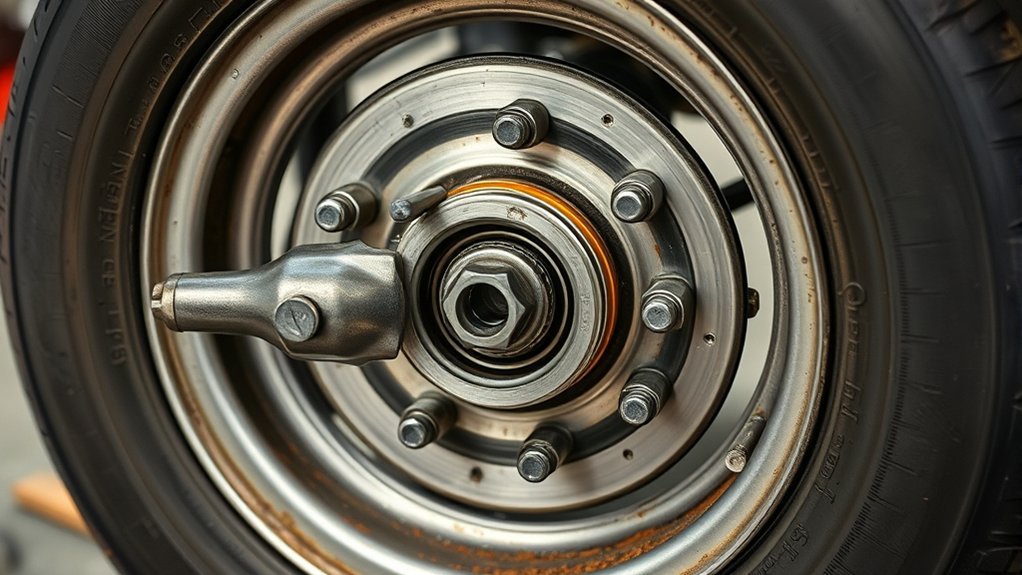
Inside the hub, the bearings let the wheel turn freely around the axle spindle. Most common trailer hubs use tapered roller bearings because they can handle both radial load and side load. The rollers ride against bearing cups, also called races, pressed into the hub.
Good bearings should be clean, smooth, properly greased, and free of pitting, rust, spalling, discoloration, or looseness. If a bearing cone is damaged, the matching cup should also be inspected and usually replaced as a set. Reusing a damaged race with a new bearing can shorten the life of the repair.
Use the grease type recommended by the axle or hub manufacturer. Many trailer axle manuals specify high-temperature wheel bearing grease, and some oil-bath hubs require gear oil instead of grease. Do not mix unknown greases unless the manufacturer confirms they are compatible.
A cool, quiet, smooth-spinning hub is normal. Heat, grinding, wobble, or grease leakage means the wheel end needs attention before the next tow.
Parts That Keep Trailer Wheels Secure
The secure wheel connection depends on two systems working together:
- Wheel-to-hub retention: wheel studs, lug nuts, the wheel mounting face, and correct lug nut torque.
- Hub-to-spindle retention: inner and outer bearings, spindle washer, spindle nut or castle nut, cotter pin or nut retainer, grease seal, and dust cap.
The axle beam carries trailer load into the suspension, but the wheel end carries that load through the spindle, bearings, hub, wheel, and tire. That is why a small part such as a cotter pin, seal, or lug nut can become a serious safety issue if it fails.
Trailer Hub Damage Signs
A damaged trailer hub often gives warning signs before a wheel-end failure. Check the hub before every trip and again during fuel stops on long hauls. Use the back of your hand near the hub to feel for abnormal heat without burning yourself, and compare both sides of the trailer. One hub that is much hotter than the others needs inspection.
| Sign | What it may suggest | What to do |
| Grinding or rumbling | Dry, worn, or damaged bearings | Stop and inspect bearings before towing farther. |
| Hot hub | Low grease, overtight bearing, dragging brake, or bearing failure | Let it cool, then inspect the hub, brakes, and bearings. |
| Side-to-side wheel play | Loose bearing adjustment, worn bearings, or damaged hub | Jack and support the trailer, then inspect adjustment and parts. |
| Grease on inner wheel or brake backing plate | Failed grease seal or overfilled hub | Replace the seal and inspect brake components for contamination. |
| Uneven tire wear | Bearing play, bent axle, misalignment, overload, or tire issue | Check bearings first, then axle alignment and tire loading. |
| Loose, missing, or damaged lug nuts | Loss of clamping force or stud damage | Do not tow until the wheel, studs, and hub face are inspected. |
How to Replace a Trailer Wheel Hub
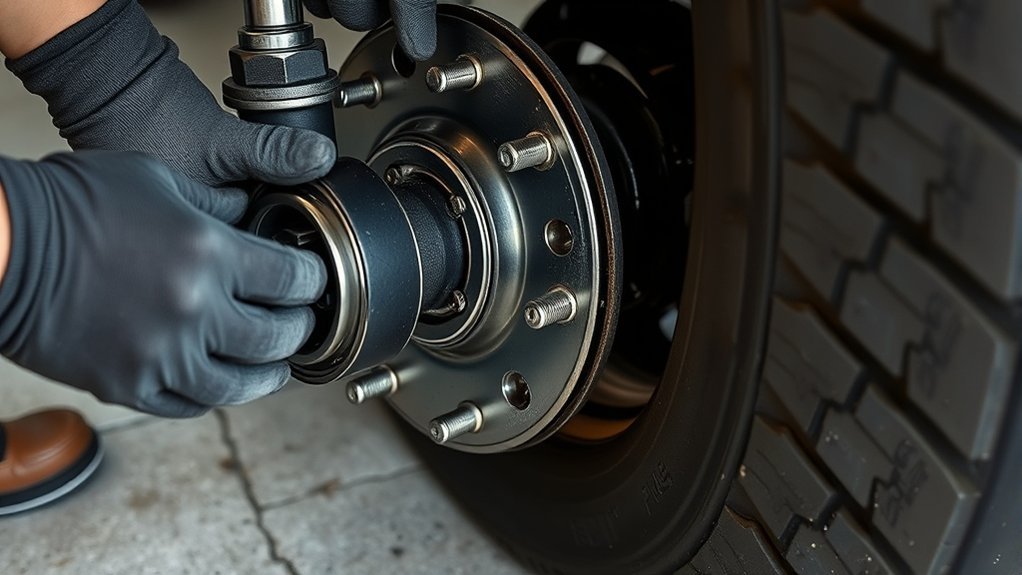
Replacing a trailer wheel hub is straightforward only when you have the correct parts and support the trailer safely. If you are unsure about bearing adjustment, brake contamination, torque specifications, or spindle damage, use a qualified trailer shop.
Warning: Never work under a trailer supported only by a jack. Chock the opposite wheels, lift on a safe jacking point, and support the trailer with jack stands rated for the load.
- Chock the trailer and loosen the lug nuts slightly. Do this before lifting the wheel off the ground.
- Lift and support the trailer. Use jack stands, then remove the wheel.
- Remove the dust cap or bearing protector. Work carefully so you do not damage the hub or cap.
- Remove the cotter pin or nut retainer. Discard a used cotter pin and install a new one during assembly.
- Remove the spindle nut and washer. Keep parts clean and organized.
- Pull the hub from the spindle. Catch the outer bearing so it does not fall onto the ground.
- Inspect the spindle. Look for scoring, blue heat marks, grooves, damaged threads, or a worn seal surface.
- Inspect or replace bearings and races. Replace damaged bearings and matching cups as a set.
- Install the correct seal. Drive the seal evenly and straight; do not hammer directly on the seal lip.
- Slide the hub onto the spindle. Install the outer bearing, washer, and spindle nut.
- Adjust the bearing. Follow the axle manufacturer’s procedure. A common tapered-bearing method is to seat the bearings while rotating the hub, loosen the nut, then finger-tighten and align the cotter pin or retainer so the hub rotates freely.
- Reinstall the cap and wheel. Tighten lug nuts in stages using the correct pattern.
- Torque the lug nuts to specification. Use the trailer, axle, or wheel manufacturer’s torque value.
- Recheck after a short tow. Stop after the first few miles to check hub temperature and lug nut torque.
[Products Worth Considering]
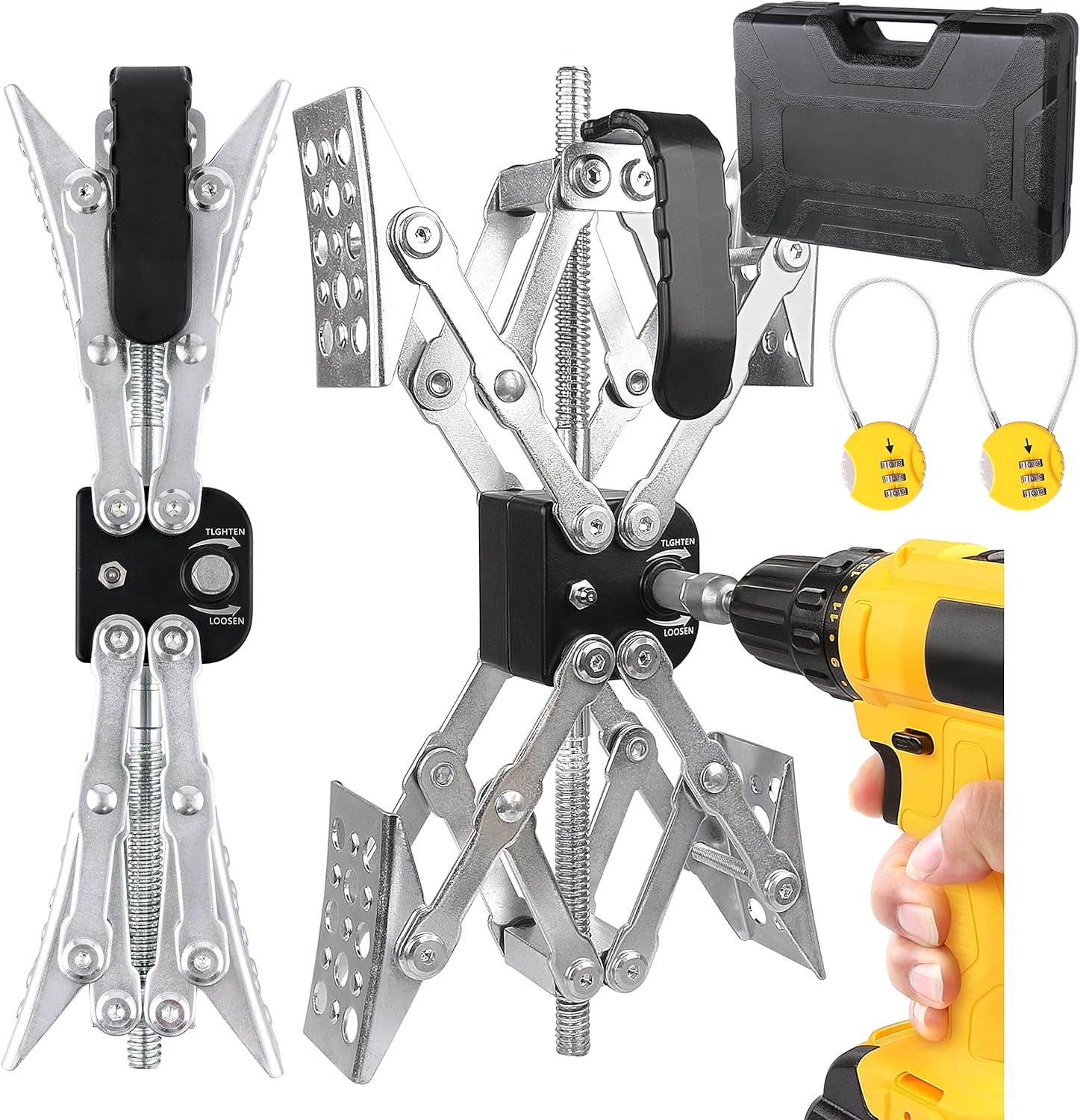
Lock the Maxchock X-style wheel stabilizers between tandem tires to reduce sway and keep your RV travel trailer secure while camping. The adjustable design fits a wide range of wheel gaps, and included hardware lets you install quickly with a power drill. Built from heavy-gauge steel with zinc plating, the chocks include locks and an organizer case for safer, more convenient use.

This car D-wheel lock nut key provides an anti-theft solution for D-shaped wheel lock bolts, helping keep your wheels secure. It features a flower-shaped internal pattern that resists micro-adjustment theft while allowing removal and mounting of compatible locking nuts. Made for reliable performance under high torque, it’s easy to use with standard socket wrench turning for quick tire maintenance and emergency repairs.

This professional wheel and rim cleaning brush set lifts brake dust, grime, and dirt with soft, scratch-free microfiber and synthetic wool fibers. The rim brush bends up to 360 degrees for easy access to hard-to-reach areas around spokes, lips, and faces. Ideal for thorough cleaning of car, truck, motorcycle, bicycle, RV, and more wheel and tire surfaces.
Lock Collars and Axle Spacers
Lock collars and axle spacers are used on some small utility carts, garden trailers, industrial equipment, and specialty axle setups. They are not the normal parts that retain the hub on most highway trailer axles. On a typical highway trailer hub, the retention system is the spindle nut or castle nut, washer, cotter pin or nut retainer, bearings, seal, and dust cap.
If your trailer uses collars or spacers, follow that axle manufacturer’s instructions exactly. A missing spacer can change bearing position, and an incorrectly placed collar can allow side movement or part contact. Do not add collars or spacers to a standard hub assembly unless the axle design calls for them.
Single, Tandem, and Triple Axles
Axle count affects how the trailer carries weight, turns, and responds to road shock. A single-axle trailer has one axle and two wheel ends. A tandem-axle trailer has two axles and four wheel ends. A triple-axle trailer has three axles and six wheel ends.
- Single axles are lighter, simpler, and easier to maneuver, but each wheel end carries more of the trailer load.
- Tandem axles spread the load over more tires and usually offer better stability for heavier trailers.
- Triple axles are used for heavier loads and long trailers but add more hubs, bearings, tires, and brakes to maintain.
More axles do not remove the need for hub maintenance. They simply add more wheel ends to inspect. Every hub should be checked for lug torque, bearing play, grease leakage, tire pressure, and abnormal heat.
Trailer Wheel Maintenance Tips
A reliable trailer wheel setup depends on routine inspection. Before every trip, check the tires, wheels, lug nuts, hubs, lights, brakes, and load. Public tire-safety guidance from NHTSA recommends checking tire pressure regularly, inspecting for wear or damage, and avoiding overload.
- Check tire pressure cold. Use the pressure listed by the trailer or tire manufacturer for your trailer tire and load.
- Inspect tire condition. Look for cracks, bulges, cuts, uneven wear, and exposed cords.
- Check lug nuts. Use a torque wrench and the correct torque specification.
- Feel the hubs during stops. A hub that is much hotter than the others needs inspection.
- Look for grease leaks. Grease on the inside of the wheel can point to a failed seal.
- Check wheel play. With the trailer safely supported, grip the tire and check for looseness.
- Service bearings on schedule. Many trailer maintenance guides use annual or 12,000-mile bearing service as a common interval, but your axle or hub manufacturer’s schedule comes first.
- Replace damaged hardware. Do not reuse bent studs, cracked wheels, stripped lug nuts, or damaged cotter pins.
Note: Boat trailers need extra attention because repeated water immersion can contaminate grease and cool a hot hub quickly. If your trailer has bearing protectors, follow the bearing-protector and hub manufacturer’s instructions for grease type and service interval.
Frequently Asked Questions
What connects a trailer tire to an axle?
The wheel hub connects the trailer wheel to the axle spindle. The tire is mounted on the wheel, the wheel is clamped to the hub with lug nuts, and the hub rotates on bearings around the axle spindle.
What holds the trailer hub on the axle?
The hub is held on the axle spindle by the inner and outer bearings, spindle washer, spindle nut or castle nut, and a cotter pin or nut retainer. The grease seal and dust cap protect the bearing area but do not replace the retaining hardware.
What holds the wheel to the axle?
The wheel is held to the hub by wheel studs and lug nuts. The hub is held to the axle spindle by bearings and the spindle nut assembly. Both connections must be correct for the trailer wheel to stay secure.
What is the thing that holds the axle called?
The axle itself is supported by the trailer suspension and frame, such as springs, hangers, equalizers, or torsion axle mounts. The wheel-holding part at the end of the axle is the hub, which rides on the axle spindle.
What do you call the part that holds the trailer tire?
The tire is mounted on the wheel or rim. The wheel is bolted to the hub. In casual speech, people often say the hub “holds the tire,” but the accurate chain is tire to wheel, wheel to hub, and hub to axle spindle.
How tight should trailer lug nuts be?
Trailer lug nut torque depends on wheel size, stud size, wheel type, and manufacturer. Use the trailer, axle, or wheel manufacturer’s torque chart and a torque wrench. Do not rely on an impact wrench alone.
Can a bad bearing make a trailer wheel fall off?
Yes. A severely worn, overheated, or dry bearing can damage the hub and spindle, create wheel wobble, or lead to wheel-end failure. Grinding noise, heat, smoke, grease leakage, and looseness are signs to stop and inspect.
Conclusion
The part that holds a trailer tire to the axle is not one single fastener. It is the complete wheel-end system: tire, wheel, studs, lug nuts, hub, bearings, spindle, washer, spindle nut or castle nut, cotter pin or nut retainer, seal, and dust cap. The wheel bolts to the hub, and the hub rides on the axle spindle.
Keep that system safe by using the correct parts, packing and inspecting bearings, replacing damaged seals and hardware, tightening lug nuts with a torque wrench, and checking hub heat and wheel play before trips. If something feels loose, hot, noisy, or damaged, stop towing and repair it before it becomes a roadside failure.
Sources
- Dexter Light Duty 600–8K Complete Service Manual — bearing adjustment, hub removal, wheel torque, and maintenance schedule.
- NHTSA-hosted Dexter Wheel Attachment and Torque Requirements bulletin — lug nut torque, staged tightening, and retorque guidance.
- NHTSA Tire Safety Checklist — tire pressure, tire inspection, overload, and pre-trip tire safety.
- Trailer Safety Week: Trailer Maintenance — hub, bearing, lug nut, and trailer maintenance guidance.
- Lippert Master Owner’s Manual: Axles and Suspension — manufacturer axle and suspension reference materials.
- Mercury Marine: How to Check and Add Grease to Trailer Wheel Bearings — bearing grease and boat trailer hub maintenance notes.