
Loose lug nuts on your Toyota Hilux are not a small maintenance issue. They can reduce wheel clamping force, damage studs, create vibration, and, in the worst case, let the wheel separate from the hub. The most common causes include incorrect torque, dirty mating surfaces, damaged studs, wrong lug nuts, aftermarket wheel fitment problems, heat cycles, and road vibration. You can prevent most issues by using the exact torque specification for your Hilux, tightening in a star pattern, keeping the hub and wheel seat clean, and rechecking the nuts after wheel service.
Quick Answer
Toyota Hilux lug nuts usually loosen because of under-torquing, over-torquing, dirty wheel seats, damaged studs, wrong lug nuts, or wheel vibration. Use a calibrated torque wrench, tighten in a crisscross pattern, follow the exact specification in your owner’s manual or wheel instructions, and recheck the torque after wheel service.
Key Takeaways
- Do not rely on a generic torque range. Use the exact Toyota Hilux wheel-nut torque listed in your owner’s manual, dealer service data, or aftermarket wheel instructions.
- Under-torquing can let the wheel move on the hub, while over-torquing can stretch studs, damage threads, and reduce future clamping reliability.
- Rust, dirt, paint, grease, or debris between the wheel and hub can create false torque readings and poor wheel seating.
- If you feel wheel vibration, hear rattling, see a gap at the hub, or find a missing lug nut, pull over safely and do not keep driving.
- Aftermarket wheels, spacers, and non-OEM lug nuts need extra care because the seat type, thread pitch, and center fit must match.
At a Glance
| Time Required | 10–20 minutes for a visual check; longer if you need to lift the vehicle or inspect damaged parts |
| Difficulty | Easy for basic checks; moderate if removing the wheel |
| Tools Needed | Owner’s manual, calibrated torque wrench, correct socket, flashlight, gloves, wheel chocks, jack and jack stands if removing a wheel |
| Cost | Usually free if you already own the tools; shop inspection costs vary if studs, nuts, wheels, or hubs are damaged |
Identifying Causes of Lug Nut Loosening on Your Toyota Hilux
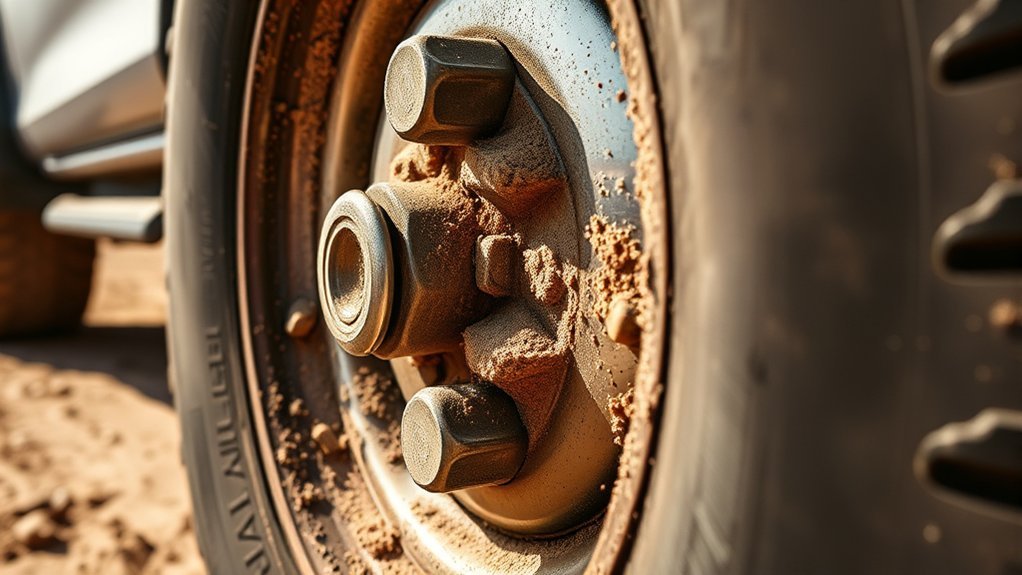
When you drive your Toyota Hilux, the wheel depends on even clamping force between the hub, wheel, studs, and lug nuts. If that clamping force drops, the wheel can shift slightly against the hub. That movement can create vibration, noise, damaged studs, worn wheel holes, and loose nuts.
The main causes are simple but serious: incorrect torque, poor installation sequence, dirty wheel seats, corrosion, damaged threads, low-quality fasteners, mismatched lug nuts, or aftermarket wheel hardware that does not match the Hilux. Heat from braking and repeated road vibration can make a weak installation worse over time.
Warning: If your Hilux shakes, clicks, rattles, pulls to one side, or shows a visible gap between the wheel and hub, slow down, pull over safely, and do not keep driving until the wheel is inspected.
How Over- and Under-Torquing Affects Wheel Nuts
Lug nuts need the right amount of torque. Too little torque fails to clamp the wheel firmly. Too much torque can stretch wheel studs, damage threads, distort the wheel seat, or make future removal difficult. Both problems can lead to loose wheel nuts after driving.
Do not use a generic torque number as your final answer. Toyota Hilux wheel-nut torque can vary by model year, market, wheel design, and whether the wheels are OEM or aftermarket. Check your Toyota owner’s manual source, local Toyota dealer service data, or the wheel manufacturer’s instructions before tightening.
Over-Torquing Effects
Over-torquing does not make the wheel safer. It can stretch the stud past its intended load, weaken the threads, and reduce the stud’s ability to hold proper clamping force in future service. It can also damage the lug nut seat or make the nut feel tight before the wheel is seated correctly.
Impact wrenches make this problem more likely when they are used for final tightening. You can use an impact wrench carefully to remove nuts or lightly run them down, but the final tightening should be done by hand with a calibrated torque wrench.
Under-Torquing Risks
Under-torquing is just as dangerous. If the nut is not tight enough, the wheel can move slightly against the hub. That movement can create fretting, vibration, oval-shaped wheel holes, damaged studs, and more loosening.
| What You Notice | Likely Issue | What To Do |
|---|---|---|
| Steering wheel vibration | Loose wheel, imbalance, hub issue, or tire problem | Stop driving and inspect before continuing |
| Rattling or clicking near one wheel | Loose lug nut or damaged wheel hardware | Check all nuts and have the wheel removed for inspection |
| One nut repeatedly loosens | Stretched stud, damaged threads, wrong nut, or bad wheel seat | Replace damaged hardware and inspect the wheel seat |
| Rust, dirt, or grease around the seat | False torque reading or poor seating | Clean the mating surface and retorque correctly |
Proper Torque Guidelines
Use a calibrated torque wrench and set it to the exact specification for your Hilux. If you use aftermarket wheels, follow the wheel manufacturer’s torque and lug-seat instructions when they differ from the factory wheel setup.
Start each nut by hand to avoid cross-threading. Tighten the nuts gradually in a crisscross or star pattern so the wheel seats evenly against the hub. After the wheel is fully seated, make the final pass with the torque wrench. Stop when the wrench clicks or indicates the set torque. Do not add extra force after the click.
Pro Tip: Keep a note in your glove box with your Hilux’s wheel-nut torque, socket size, and whether your wheels use OEM or aftermarket lug nuts. That helps avoid guesswork during roadside tire changes.
How Mechanical Issues Affect Lug Nut Retention
Mechanical problems can make lug nuts loosen even when you use the right torque wrench. A wheel must sit flat against the hub. If the hub face, wheel seat, stud, or lug nut is damaged, torque alone may not hold the assembly securely.
Surface Mating Quality
The wheel and hub mating surfaces should be clean, flat, and free from heavy rust, dirt, paint buildup, grease, or debris. Contamination can make the nut feel tight before the wheel is fully seated. After driving, the debris can crush or shift, and the clamping force drops.
Before reinstalling a wheel, inspect the hub face and the back of the wheel. Clean loose rust and dirt carefully. Do not grind away metal, and do not apply grease to the studs, nuts, or wheel seats unless your manual or wheel manufacturer specifically instructs you to do so.
Fastener Durability Concerns
Damaged studs and lug nuts should be replaced, not forced back into service. Watch for stretched studs, cracked studs, rounded nuts, galled threads, rusted threads, or nuts that do not spin on smoothly by hand. If a lug nut binds before it seats, stop and inspect the threads.
Also check the wheel itself. Elongated lug holes, cracked seats, bent wheels, and incorrect lug-seat shapes can prevent the nut from clamping properly. This is especially important after off-road driving, pothole impact, or wheel changes.
Environmental Factors That Cause Lug Nut Loosening
Heat, cold, braking load, and rough roads can all expose a weak installation. Heavy braking heats the wheel area. Cooling after a drive changes the metal temperature again. Repeated heat cycles can make a poorly seated wheel settle further after installation.
Road vibration can also make a marginally tight nut move. This does not mean properly torqued lug nuts should loosen during normal driving. It means any installation problem, damaged hardware, or poor wheel fit can show up faster on rough roads, gravel tracks, job sites, and off-road trails.
How Regular Maintenance Prevents Lug Nut Issues

Regular maintenance helps you find loose lug nuts before they become dangerous. You do not need to remove every wheel for a basic check, but you should inspect the lug area whenever you rotate tires, change wheels, repair brakes, return from rough roads, or feel new vibration.
Importance Of Regular Inspections
Look for missing nuts, uneven nut positions, rust trails, shiny movement marks around the lug holes, cracks near the wheel seat, or a visible gap between the wheel and hub. Rust streaks or dark dust around one lug can suggest movement.
Also compare the wheel to the others. If one wheel looks slightly out of place, sits unevenly, or makes noise when you turn, treat it as a safety issue.
Benefits Of Re-Torquing
Re-torquing after wheel service helps catch joint settling and installation errors. Many tire shops recommend a post-installation torque check after a short driving distance. Follow your tire shop’s guidance and your owner’s manual. If the vehicle was serviced after a puncture, brake repair, tire rotation, or wheel swap, a recheck is a smart safety step.
When rechecking torque, do not loosen every nut first unless the service procedure calls for it. Set the torque wrench to the correct value and check each nut in the proper pattern. If any nut turns noticeably before reaching torque, have the wheel and hardware inspected.
Monitoring Wear Indicators
Visual wheel nut indicators can help you spot movement quickly. These small caps or pointers sit on the lug nuts and make it easier to see if a nut has rotated from its original position. They are more common on commercial and heavy vehicles, but some pickup owners use them for towing, fleet use, or frequent off-road driving.
Indicators are only a visual aid. They do not replace proper torque, clean mating surfaces, correct lug nuts, or damaged-hardware inspection.
Signs Your Toyota Hilux Lug Nuts May Be Loose
Loose lug nuts can show up as steering vibration, wheel wobble, clicking, clunking, rattling, uneven braking feel, or a new pull to one side. You may also notice a lug nut sitting farther out than the others, rust dust around a wheel hole, or a wheel that does not sit flush with the hub.
If these signs appear after a tire rotation, flat-tire repair, brake job, or wheel swap, suspect the wheel installation first. Pull over safely and check the wheel before driving farther. If a nut is missing, a stud is damaged, or the wheel has moved, call roadside assistance or have the Hilux towed.
Note: A vibration can also come from tire imbalance, bent wheels, suspension wear, brake issues, or alignment problems. Still, lug nuts are quick to check and too important to ignore.
Best Practices for Proper Lug Nut Installation
Proper installation is the best way to prevent loose lug nuts on your Toyota Hilux. Use this process after a wheel has been removed:
- Park safely: Use level ground, apply the parking brake, and chock the wheels.
- Check the parts: Inspect the studs, lug nuts, wheel holes, and hub face for damage, rust, or contamination.
- Clean the seating surfaces: Remove loose dirt and rust from the hub face and back of the wheel.
- Start by hand: Thread each lug nut by hand before using any wrench. If it does not spin smoothly, stop and inspect the threads.
- Snug in stages: Tighten the nuts lightly in a crisscross pattern so the wheel seats evenly.
- Lower enough to prevent spinning: Put light tire contact on the ground if needed, but do not put the full vehicle load on a loosely seated wheel.
- Final torque: Use a calibrated torque wrench set to the exact specification for your Hilux or wheel hardware.
- Recheck after service: Follow your tire shop, owner’s manual, or wheel manufacturer guidance for a post-service torque check.
Never guess torque by body weight on a breaker bar. Never use an impact wrench as the final torque tool. Never lubricate studs or nuts unless the manufacturer specifically requires it.
Why Torque-Tight™ Indicators Are a Smart Safety Choice

Torque-Tight™-style indicators and other visual wheel nut indicators can make routine checks easier. They show whether a nut has rotated from its original position, which can alert you before the nut backs off further.
A wheel nut indicator is helpful because it turns a hidden problem into something you can see during a quick walkaround.
These indicators are most useful when you tow, drive off-road, operate a work truck, or manage several vehicles. Still, they are not a repair. If an indicator moves, inspect the wheel, torque, studs, and mating surfaces before driving normally.
[Products Worth Considering]

Upgrade your wheels with MIKKUPPA M12x1.5 mag seat lug nuts built for secure, corrosion-resistant performance. These closed-end chrome lug nuts are a direct replacement for select Toyota models, including Camry, Corolla, RAV4, Sienna, Avalon, Highlander, Matrix, Venza, and Prius. Triple-chromium plating and cold-forged, heat-treated steel help deliver strength for daily driving and replacement needs.

These M14x1.5 closed-end chrome lug nuts are a one-piece replacement designed for secure fitment on compatible GM, Ford, and select Chrysler/Dodge models. Featuring a 60-degree conical seat and anti-rust chrome plating, they help resist corrosion and maintain a bright look for everyday driving. Built for long-term durability, they include OEM-style part references and are backed by 12 months of support.

This 1/2-inch drive breaker bar delivers powerful leverage for loosening and tightening stubborn lug nuts and automotive fasteners. The 180-degree flex head helps you reach tight spaces at the angle you need, making tire and brake jobs easier. A spring-loaded ball detent design holds 1/2-inch sockets securely while the chrome-moly head provides durable strength for everyday use.
The Importance of Re-Torquing Your Lug Nuts
Re-torquing matters because a wheel can settle after installation. Paint, rust, dirt, uneven seating, or slight movement can reduce clamping force during early driving. A torque recheck helps confirm that the nuts still hold the wheel correctly.
Use the same pattern you used during installation. Set the wrench to the correct specification, check each nut smoothly, and stop when the wrench indicates the set torque. If a nut moves a lot, feels rough, or will not hold torque, do not simply tighten it again and forget it. Remove the wheel and inspect the stud, nut, wheel seat, and hub.
Proactive Solutions to Ensure Wheel Security
You can reduce the chance of loose lug nuts by turning wheel checks into a routine habit. Focus on correct torque, clean surfaces, matching hardware, and early symptom detection.
- Use the right torque source: Check your Hilux owner’s manual, Toyota dealer service data, or wheel manufacturer instructions.
- Use the correct lug nuts: Match thread pitch, seat type, shank style, and length to your wheels.
- Inspect studs and nuts: Replace stretched, cracked, rusty, rounded, or cross-threaded hardware.
- Check aftermarket wheels carefully: Confirm center bore, lug-seat design, spacer compatibility, and torque instructions.
- Keep surfaces clean: Dirt or rust between the hub and wheel can reduce clamping force after driving.
- Recheck after wheel service: Make a post-service torque check part of tire rotation, puncture repair, and seasonal wheel changes.
- Act on vibration fast: Pull over safely if the Hilux shakes, clicks, rattles, or feels unstable.
Aftermarket Wheels, Spacers, and Lug Nut Fitment
Aftermarket wheels can be safe when installed correctly, but they add more variables. The lug nut seat must match the wheel. A conical-seat nut, flat-seat nut, ball-seat nut, or shank-style nut cannot be swapped at random. The wrong seat may feel tight while failing to clamp the wheel properly.
Wheel spacers also need careful inspection. Use only high-quality hub-centric spacers made for your Hilux, with correct studs and torque instructions. If you use spacers, recheck torque more carefully and inspect for movement, cracks, or stud damage.
If you are unsure about wheel fitment, ask a qualified tire shop or Toyota specialist to confirm the hardware before driving. Persistent loosening often means something does not match or something is damaged.
[Products Worth Considering]

Upgrade your wheels with MIKKUPPA closed-end lug nuts designed for reliable fit and corrosion resistance. The one-piece, cold-forged and heat-treated steel construction helps resist rust and stripping, while the integrated finish delivers a durable black appearance. Built to OEM standards with a conical 60-degree seat, these nuts provide a secure solution for compatible Ford, Honda, Jeep, and Chevrolet models.

The Trivd Frol 1/2" air impact wrench delivers high performance torque up to 1500 ft-lbs with a twin hammer impact mechanism for strong, balanced blows. It features an ergonomic grip, compact lightweight design, and quick-stop control with 3 forward speeds up to 8000 RPM plus a reverse speed. Built for demanding automotive repair and tire shop work, the rear exhaust helps keep debris away from the surface.

The 22800 wheel stud installer makes replacing wheel studs quick and secure, saving time and effort during tire service. It uses a ratchet or impact wrench to pull new studs firmly into place, helping when existing studs are too long. Compatible with most automotive wheels and light-duty truck wheel studs, it’s designed for easy, tool-assisted installation.
What To Do If a Lug Nut Keeps Loosening
A lug nut that keeps loosening is a warning sign. Do not keep tightening the same nut without finding the cause. The problem may be a stretched stud, damaged threads, worn lug seat, cracked wheel, bent hub, incorrect nut, or contamination between the wheel and hub.
Remove the wheel and inspect every related part. Replace any questionable stud or lug nut. If the wheel hole is elongated or the seat is damaged, the wheel may need replacement. If the hub is bent or the brake rotor hat surface is damaged, the wheel may never seat evenly until the underlying part is repaired.
[Products Worth Considering]

The SEESII cordless impact wrench delivers high tightening and loosening power for fast wheel bolt and industrial bolt work. Its brushless motor and variable-speed 3 forward/2 reverse modes help you control precision installs and stubborn nut removal. A dual-battery system with rapid charging and an included storage case make it ready for home, car, and jobsite use.

This universal wheel alignment tool helps you accurately restore tire tilt angles after tire or suspension repairs using an adjustable camber gauge. It features a powerful magnetic base that firmly attaches to brake rotors for stationary, slip-free readings, improving consistency during measurement. Built from durable PC plastic, it resists wear and corrosion and is compact enough for car, truck, RV, and motorcycle alignment tasks.

These aluminum alloy tire valve stem caps with an O-ring seal help protect valve stems from corrosion while adding a clean, stylish look to your vehicle. The universal fit works across cars, trucks, motorcycles, bicycles, and more, making them an easy upgrade for everyday driving and off-road use. Installation is quick, and the included four-pack keeps all your tires dressed and protected.
Frequently Asked Questions
Can lug nuts loosen on their own on a Toyota Hilux?
Yes. Lug nuts can loosen if they were under-torqued, over-torqued, installed on dirty surfaces, matched with the wrong wheel hardware, or exposed to movement from a damaged wheel seat or stud. Proper torque and clean mating surfaces reduce the risk.
Can bad alignment cause lug nuts to come loose?
Bad alignment usually does not loosen lug nuts by itself. It can add vibration, tire wear, and stress that make an existing torque or hardware problem show up sooner. If lug nuts loosen repeatedly, inspect torque, studs, nuts, wheel seats, hub surfaces, and wheel fitment first.
What torque should I use for Toyota Hilux lug nuts?
Use the exact torque specification for your Hilux model year, market, and wheel type. Check the owner’s manual, Toyota dealer service data, or aftermarket wheel instructions. Do not rely on a generic online range for final tightening.
Should I grease Toyota Hilux wheel studs or lug nuts?
Do not grease the studs, nuts, or wheel seats unless Toyota or the wheel manufacturer specifically tells you to. Lubrication can change the clamping force created by a torque setting and may cause incorrect tightening.
Can I drive if one lug nut is missing?
You should not drive normally with a missing lug nut. Pull over safely, inspect the wheel, and arrange repair. A missing nut can increase stress on the remaining studs and may indicate that the wheel has already been moving on the hub.
Why do my lug nuts loosen after a tire rotation?
Common reasons include incorrect torque, failure to tighten in stages, dirty hub surfaces, paint or corrosion crushing after driving, cross-threaded nuts, or an impact wrench used without final torque verification. Recheck torque and inspect the wheel seat if any nut moved noticeably.
Conclusion
Loose lug nuts on your Toyota Hilux need quick attention. The safest fix is not simply “make them tighter.” You need the correct torque specification, clean wheel and hub surfaces, matching lug nuts, healthy studs, and a proper crisscross tightening pattern.
If the problem keeps coming back, stop driving the vehicle until the wheel, studs, hub, and lug nuts are inspected. One loose nut can become a damaged wheel assembly, and a damaged wheel assembly can become a serious road hazard.
Sources
- Toyota Manuals and Warranties — supports using the vehicle owner’s manual for model-specific information.
- NHTSA Recalls — supports checking official safety recalls when a wheel-retention issue may involve a known defect.
- Bolt Science Tightening Sequence — explains why tightening sequence matters for even load distribution.
- Wheel-Check — explains visual wheel nut indicators used for quick movement checks.