If your Toyota Hilux pulls to one side after an alignment, do not assume the shop “missed” the adjustment right away. A constant pull can come from tire pressure, tire wear, tire conicity, road crown, brake drag, worn steering parts, suspension damage, uneven cargo load, or alignment angles that still sit outside the correct range. Start with the simple checks first, then use a safe road test and the alignment printout to narrow the cause.
Quick Answer
A Toyota Hilux usually pulls after alignment because tire pressure, tire wear, tire lateral force, brake drag, worn suspension parts, or road crown is still affecting the vehicle. Check cold tire pressure, inspect tire wear, compare the alignment printout, test for brake heat, and have the front tires cross-checked if they are safe to swap.
Key Takeaways
- A pull after alignment is not always an alignment problem; tires, brakes, road crown, load, and worn parts can cause the same symptom.
- Check tire pressure when the tires are cold and use the Hilux door placard or owner’s manual, not the number molded on the tire sidewall.
- If the pull changes direction after suitable front tires are swapped side to side, tire conicity or tire lateral force is likely involved.
- A hot wheel, burning brake smell, smoke, grinding, or severe pull means you should stop driving and have the brake system inspected.
- Ask for the alignment printout so you can confirm camber, caster, toe, thrust angle, and steering-wheel centering were checked.
At a Glance
| Time Required | 15–30 minutes for basic checks; longer if a shop needs to inspect brakes, suspension, or alignment angles. |
| Difficulty | Easy for tire-pressure and visual checks; moderate to professional for brake, steering, suspension, and alignment diagnosis. |
| Tools Needed | Tire-pressure gauge, tread-depth gauge or coin, flashlight, alignment printout, safe test route, and a qualified technician if brakes or suspension need inspection. |
| Cost | Free for basic checks; shop costs vary if you need tire rotation, brake repair, suspension parts, wheel balancing, or a repeat alignment. |
Common Symptoms of Pulling in Your Hilux
A real pull means your Hilux moves left or right when you hold the steering wheel straight on a flat road. That is different from an off-center steering wheel, where the truck may travel straight but the wheel sits crooked. Toyota’s alignment guidance treats those as separate symptoms, so you should diagnose them separately.
Watch for these signs:
- Constant drift on a level road: The Hilux keeps moving to one side even when you lightly hold the wheel straight.
- Pull that changes with braking: The truck only pulls during braking, which points more toward brake imbalance than wheel alignment.
- Off-center steering wheel: The vehicle tracks straight, but the steering wheel does not sit level.
- Uneven tire wear: One shoulder, one tire, or one axle wears faster than the others.
- Loose or nervous steering: The truck wanders, reacts late, or needs frequent correction.
- Hot wheel or burning smell: One brake may be dragging or a caliper may be sticking.
Warning: Stop driving and get help if the Hilux pulls hard, the steering feels loose, a tire has a bulge or exposed cord, you smell burning brakes, you see smoke, or one wheel is much hotter than the others. Those signs can point to tire damage, brake drag, or steering and suspension faults.
Understanding Wheel Alignment Basics
Wheel alignment sets the wheel angles so the tires contact the road correctly. On a Hilux, the key angles are camber, caster, and toe. A qualified alignment shop should adjust these to Toyota specifications for your model year, suspension type, tire size, and vehicle condition.
The basic terms are simple:
| Angle Type | What It Affects | How It Can Cause Pulling |
|---|---|---|
| Camber | The inward or outward tilt of the tire when viewed from the front. | Large side-to-side camber differences can pull the vehicle toward one side. |
| Caster | Steering stability, return-to-center feel, and straight-line tracking. | Side-to-side caster differences can make the truck drift or feel unstable. |
| Toe | The direction the tires point when viewed from above. | Incorrect toe can cause tire scrub, rapid wear, and an off-center steering wheel. |
| Thrust angle | The direction the rear axle pushes the vehicle. | A rear-axle or frame issue can make the truck “dog track” or need steering correction. |
For a deeper alignment reference, Tire Rack explains camber, caster, toe, and cross-alignment settings. Toyota also notes that a pull can come from tire lateral force, road crown, damage, worn parts, or brake drag, not alignment alone, in its vehicle pull and alignment best-practices bulletin.
Pulling vs. an Off-Center Steering Wheel
Before you chase parts, confirm which problem you have. A Hilux that pulls needs steady correction to keep it straight. A Hilux with an off-center steering wheel may drive straight, but the wheel sits left or right while cruising.
- If the truck pulls but the steering wheel is centered: Check tire pressure, tire wear, brake drag, road crown, suspension parts, and cross-camber or cross-caster.
- If the truck drives straight but the steering wheel is crooked: The front toe or steering-wheel centering procedure may need correction.
- If both happen together: Ask the shop to inspect tires, steering, suspension, and alignment angles before adjusting toe again.
Note: Always test on a safe, level road. Many roads slope slightly for water drainage, and that road crown can make a vehicle drift even when nothing is wrong.
Common Reasons Your Hilux Pulls Left or Right
A Hilux can still pull after alignment when another problem is creating uneven road force. Check these causes in order, starting with the easiest and safest items.
- Uneven tire pressure: One low tire changes rolling resistance and road contact.
- Uneven tire wear: Different tread depth or shoulder wear can make one tire grip differently.
- Tire conicity or lateral force: A tire can create a pull even when it looks normal and the alignment numbers are within range.
- Incorrect camber, caster, or toe: The alignment may still be out of spec, or the steering wheel may not have been centered correctly.
- Worn steering or suspension parts: Ball joints, tie rods, control-arm bushings, wheel bearings, and shocks can change alignment under load.
- Brake drag: A sticking caliper, stuck slide pin, restricted brake hose, or uneven pad wear can pull the truck during driving or braking.
- Road crown or uneven load: A sloped road, heavy cargo on one side, or uneven canopy/toolbox load can create a drift.
- Modified suspension or aftermarket wheels: Lift kits, worn lift components, wheel offset changes, and larger tires can affect tracking.
A fresh alignment only fixes the angles the shop can adjust. It cannot fix tire force, brake drag, worn parts, road slope, or damage from off-road impacts.
How Tire Pressure Affects Handling
Tire pressure is the first thing to check because it is simple, cheap, and easy to overlook. Toyota recommends checking tire pressure at least once a month and before long trips or heavy loads. The correct pressure for your Hilux depends on the model, tire size, load rating, and market, so use the door placard or owner’s manual instead of guessing. Toyota also explains that low pressure can reduce stability, handling, braking, tread life, and fuel economy in its tire-pressure guidance.
Tire Pressure Imbalance
When one front tire has lower pressure than the other, that tire can create more rolling resistance. The Hilux may then drift toward that side. Even small side-to-side differences can feel worse at highway speed, with a loaded tray, or after a tire heats up.
Use this process:
- Park on level ground and let the tires cool.
- Check all four tires with a reliable gauge.
- Set the pressure to the cold inflation pressure listed for your Hilux and load condition.
- Check the spare if you rotate it into service.
- Inspect valve stems for leaks and replace missing valve caps.
The National Highway Traffic Safety Administration also recommends keeping a tire-pressure gauge in the vehicle and checking pressure manually because tire-pressure monitoring systems usually warn only after pressure is significantly low.
Impact on Steering Control
Correct tire pressure helps each tire keep a consistent contact patch. When one tire is underinflated, steering response can feel heavy or delayed on that side. The truck may also need more steering correction during braking, cornering, or lane changes.
Pro Tip: Check pressure before judging the alignment. If you adjust pressure after the road test, drive the same road again so you compare the truck under the same conditions.
How Tire Wear Patterns Contribute to Pulling Issues
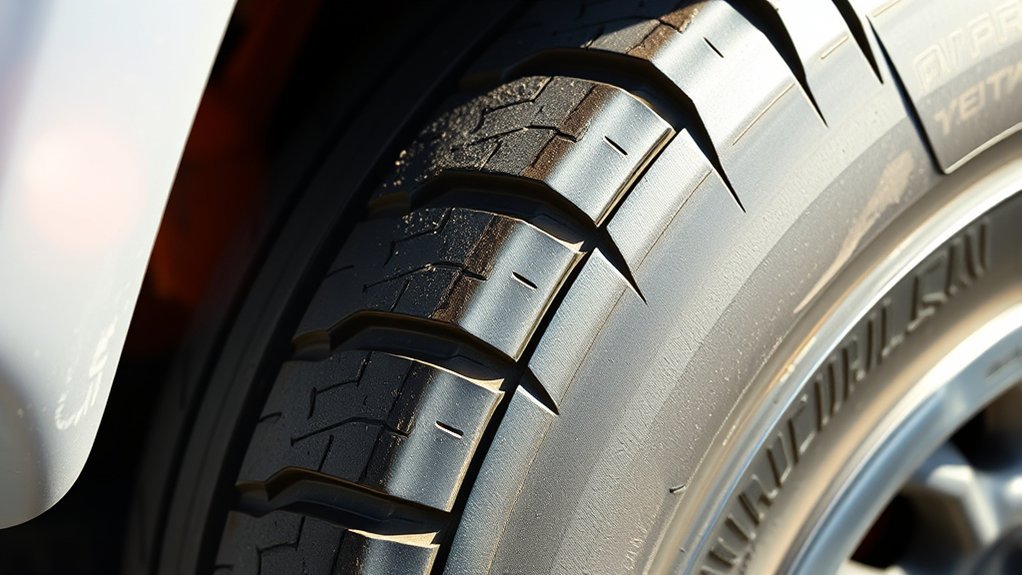
Uneven tire wear can make your Hilux pull even when the alignment machine shows acceptable numbers. A tire with more wear on one shoulder, a separated belt, cupping, feathering, or a different tread depth can grip differently from the tire on the opposite side.
Look for these patterns:
- Inner or outer shoulder wear: Often linked to camber, toe, worn bushings, or aggressive cornering.
- Feathered tread edges: Often linked to toe problems.
- Cupping or scalloping: Often linked to worn shocks, struts, imbalance, or loose suspension parts.
- One tire worn more than the others: Often linked to missed rotations, prior damage, or a different tire age.
- Bulges, cracks, or exposed cord: Unsafe tire damage that needs immediate attention.
Tire Conicity and Lateral Force
Some tires create a side force as they roll. Toyota’s alignment bulletin explains that radial tires can generate lateral force from ply steer or conicity, and that force can make the vehicle pull. This is why a Hilux may still pull after a correct alignment.
A common shop test is to swap the front tires side to side, then road-test the vehicle. If the pull changes direction, the tires are likely involved. If the pull does not change, the cause is more likely alignment, suspension, brakes, road crown, or vehicle damage.
Note: Do not swap directional, staggered, damaged, or size-mismatched tires side to side unless the tire maker and vehicle setup allow it. A tire shop can check the tread direction, load rating, and rotation rules first.
How Brake Issues Can Affect Your Steering
Brake problems can mimic alignment problems. If one front brake drags, the Hilux may pull toward that side while cruising. If one brake grabs harder during braking, the truck may dart left or right only when you press the pedal.
[Products Worth Considering]

Measure tire tread depth quickly and accurately with this LUMITECO dial gauge that reads in 1/32" increments up to 14/32". The color-coded green/yellow/red zones make it easy to judge tire wear and know when replacement is needed. A rugged, compact design with a protective pouch helps keep the gauge ready for use on cars, trucks, motorcycles, and more.

This universal wheel alignment tool helps you accurately restore tire tilt angles after tire or suspension repairs using an adjustable camber gauge. It features a powerful magnetic base that firmly attaches to brake rotors for stationary, slip-free readings, improving consistency during measurement. Built from durable PC plastic, it resists wear and corrosion and is compact enough for car, truck, RV, and motorcycle alignment tasks.

The Ziopetru adjustable magnetic wheel alignment tool helps you check and restore camber and caster positioning after removing and reinstalling undercarriage components. With a clear leveling/bubble measurement system and an easy zeroing adjustment knob, it supports precise horizontal angle checking. The strong magnetic base mounts to metal surfaces for convenient use at home on cars, motorcycles, trucks, vans, and SUVs.
Brake Drag Effects
Brake drag happens when a pad stays in contact with the rotor after you release the brake pedal. Common causes include a sticking caliper piston, dry or seized slide pins, a restricted brake hose, rust, contaminated pads, or hardware that does not move freely.
Signs of brake drag include:
- A pull that gets worse after several minutes of driving.
- One wheel that smells hot or looks dusty compared with the others.
- A burning or acrid brake smell.
- Lower fuel economy and sluggish acceleration.
- Smoke, vibration, or grinding from one wheel area.
AutoZone’s brake-caliper guidance notes that a seized caliper can make a car feel sluggish or pull to one side, and that a burning brake smell should be taken seriously. You can review the reference here: AutoZone brake caliper sticking guide.
Uneven Pad Wear
Uneven pad wear can make braking force different from side to side. Your Hilux may drive straight at steady speed but pull when braking. If one inner pad is much thinner than the outer pad, or one side of the axle is wearing faster, a caliper, slide pin, hose, or hardware problem may be present.
Routine visual checks help, but do not rely on a basic roadworthy or annual inspection alone. Ask the technician to compare pad thickness, rotor condition, slide-pin movement, caliper release, and brake-hose condition on both sides of the axle.
Sticking Caliper Issues
A sticking caliper can affect steering, tire wear, brake temperature, and stopping distance. It can also damage the rotor, wheel bearing, hub, and tire if you keep driving. If the pull is paired with heat, smell, or smoke, treat it as a brake problem until proven otherwise.
A shop can lift the vehicle, check wheel drag, inspect pad wear, measure rotor temperature after a road test, and confirm whether the caliper releases correctly. Do not touch the rotor or caliper after driving because brake parts can be hot enough to burn skin.
Suspension, Steering, and Hilux-Specific Causes
A Hilux often sees rough roads, towing, payload, off-road use, and suspension upgrades. Those conditions can make a pull more complicated than a basic alignment issue.
Check these areas:
- Ball joints and tie rods: Wear can let the wheel change direction under load.
- Control-arm bushings: Cracked or soft bushings can shift caster and camber while driving.
- Shocks and struts: Weak damping can cause cupped tire wear and unstable tracking.
- Wheel bearings: Play or roughness can affect wheel position and braking feel.
- Leaf springs and rear axle position: A shifted axle or worn rear bushing can create thrust-angle issues.
- Lift kits: Incorrect caster correction, worn lift components, or poor installation can cause wandering and pull.
- Aftermarket wheels: Aggressive offset can change scrub radius and make steering more sensitive to road slope.
- Uneven cargo load: A heavy toolbox, canopy, water tank, or load on one side can change ride height and alignment angles.
[Products Worth Considering]

Monitor tire tread wear with a smart, color-coded depth gauge that shows clear condition ranges at a glance. The bar is range marked for fast, easy readings, helping you maintain safer traction and performance. Each gauge is portable with a pocket clip, and the set includes 20 units for daily use and sharing.

Keep your tires properly inflated with this analog VONDIOR tire pressure gauge, designed for fast, easy readings without batteries. The swiveling, two-axis hose and large glow dial help you measure at any tire angle with instant visibility. Built with a protective rubber shield, it supports durable, low-maintenance use for cars and trucks.
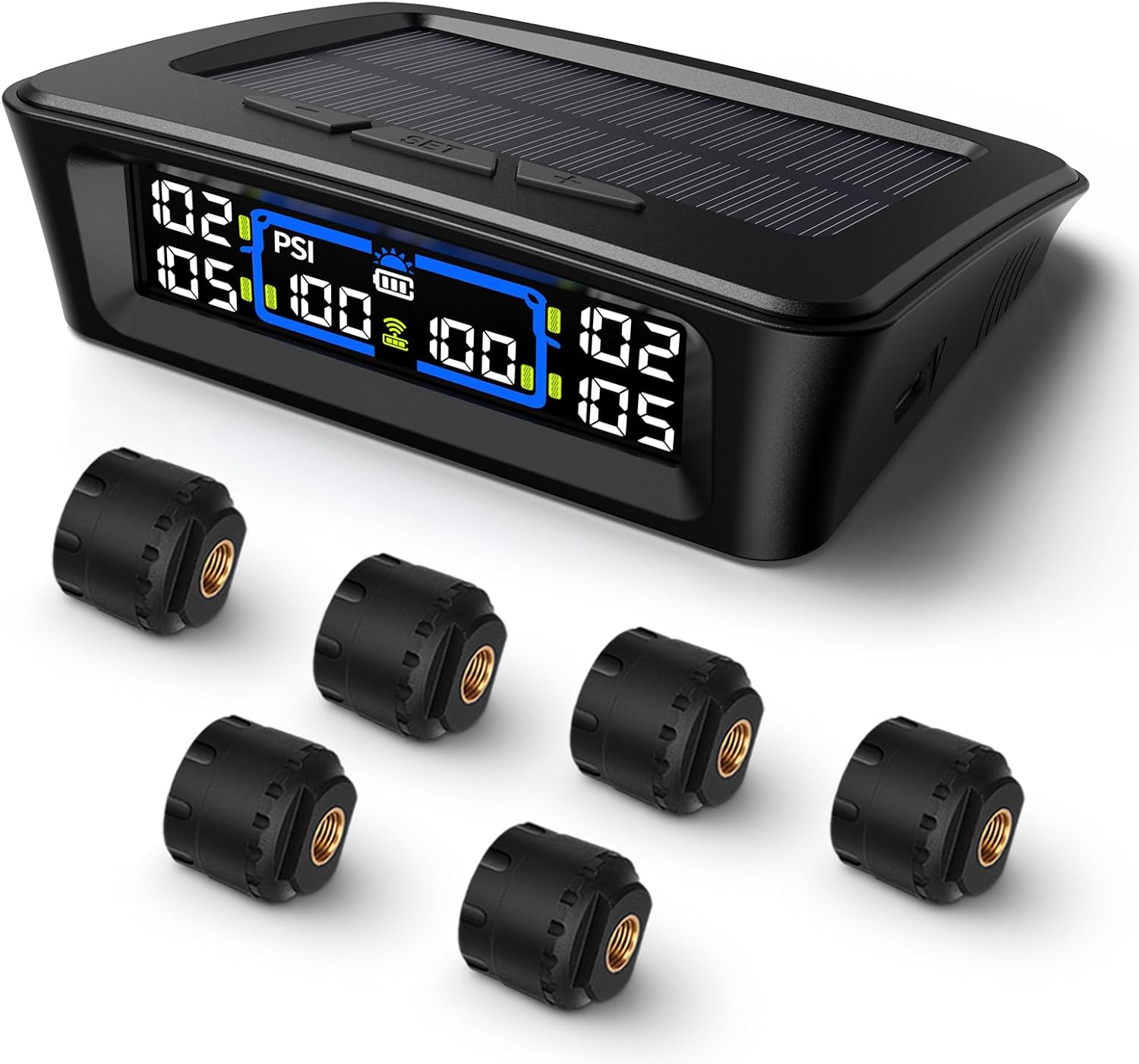
The Tymate TM12 RV TPMS delivers real-time tire pressure and temperature monitoring with a stable 433Hz display for safer long-distance driving. It supports simultaneous monitoring across vehicle and trailer zones, includes six alarm modes for pressure, temperature, leakage, battery, and signal loss, and features easy DIY installation with auto calibration. Power is supplied via USB-C charging or solar recharging, with a wide 0–144 PSI range and up to 50 ft signal coverage for RVs and towable trailers.
How to Road-Test a Hilux Safely
A controlled road test helps you separate a real pull from normal road slope. Choose a quiet, level road with good visibility. Do not test on a busy road, wet road, gravel shoulder, or steep camber.
- Set tire pressure first.
- Remove uneven cargo if possible.
- Drive at a steady moderate speed on a straight, level road.
- Hold the steering wheel lightly, but do not let go completely.
- Notice whether the truck pulls constantly or only under braking.
- Repeat in the opposite direction on the same road if safe.
- After the test, check for brake smell or one wheel that feels hotter than the others without touching brake parts directly.
If the pull changes depending on the lane or road direction, road crown may be the main cause. If it pulls the same way on different roads, inspect tires, brakes, steering, suspension, and alignment.
What to Check on the Alignment Printout
Ask the alignment shop for the before-and-after printout. The printout should show whether each angle was within specification before and after the adjustment.
Review these items:
- Front camber: Look for large left-to-right differences.
- Front caster: A side-to-side caster split can affect straight-line tracking.
- Front toe: Incorrect toe can cause tire scrub and a crooked steering wheel.
- Rear toe and thrust angle: A rear issue can make the truck need steering correction.
- Steering wheel centering: The wheel should be centered during final toe adjustment.
- Ride height: Sagging springs or uneven load can change alignment readings.
Modern alignment procedure depends on setup order and steering-wheel centering. MOTOR’s alignment guidance explains that toe and steering-wheel position can change during the adjustment process, which is why careful setup matters. See MOTOR’s alignment fundamentals reference for more detail.
Steps to Diagnose and Resolve Pulling Issues
Use this order so you do not pay for repeated alignments before checking easier causes.
- Check tire pressure cold: Match the door placard or owner’s manual for your tire size and load.
- Inspect tire condition: Look for uneven wear, cupping, bulges, cracks, exposed cord, and mismatched tread depth.
- Remove uneven load: Empty heavy cargo from one side of the tray or cabin before testing.
- Road-test safely: Confirm whether the truck pulls all the time, only during braking, or only on certain roads.
- Check for brake drag: Watch for hot-wheel smell, smoke, dust, or one wheel that runs hotter than the others.
- Inspect steering and suspension: Check tie rods, ball joints, bushings, shocks, wheel bearings, leaf springs, and lift-kit parts.
- Review the alignment printout: Confirm camber, caster, toe, thrust angle, and steering-wheel centering.
- Test for tire conicity: If safe and suitable, have a tire shop swap the front tires side to side and road-test again.
- Return to the alignment shop if needed: Ask for a recheck if tire, brake, road, and suspension causes have been ruled out.
If the Hilux still pulls after these checks, book a full inspection with a technician who can test-drive the vehicle, measure alignment, inspect the brakes, and check for bent or worn components. A repeated alignment without diagnosis may only hide the real cause and can create new tire-wear problems.
[Products Worth Considering]

The SAFELIFE dial tire tread depth gauge measures tread depth in 1/32 inch increments with clear, easy-to-read 2-inch dial face. Color zones using a traffic light system help you quickly judge whether tread is low, marginal, or ample for safer driving. Built with a durable zinc cast body and a metal detect probe for precise, comfortable use across cars, motorcycles, trucks, and buses.

The VEHLIVE SU-50448 II TPMS relearn tool provides a fast activation reset to restore accurate tire pressure monitoring after sensor replacement or tire rotation. It supports 315 MHz and 433 MHz GM series sensors and helps clear dashboard pressure warnings. With simple two-button operation and horn-confirmed relearning order, you can reprogram sensors conveniently at home.
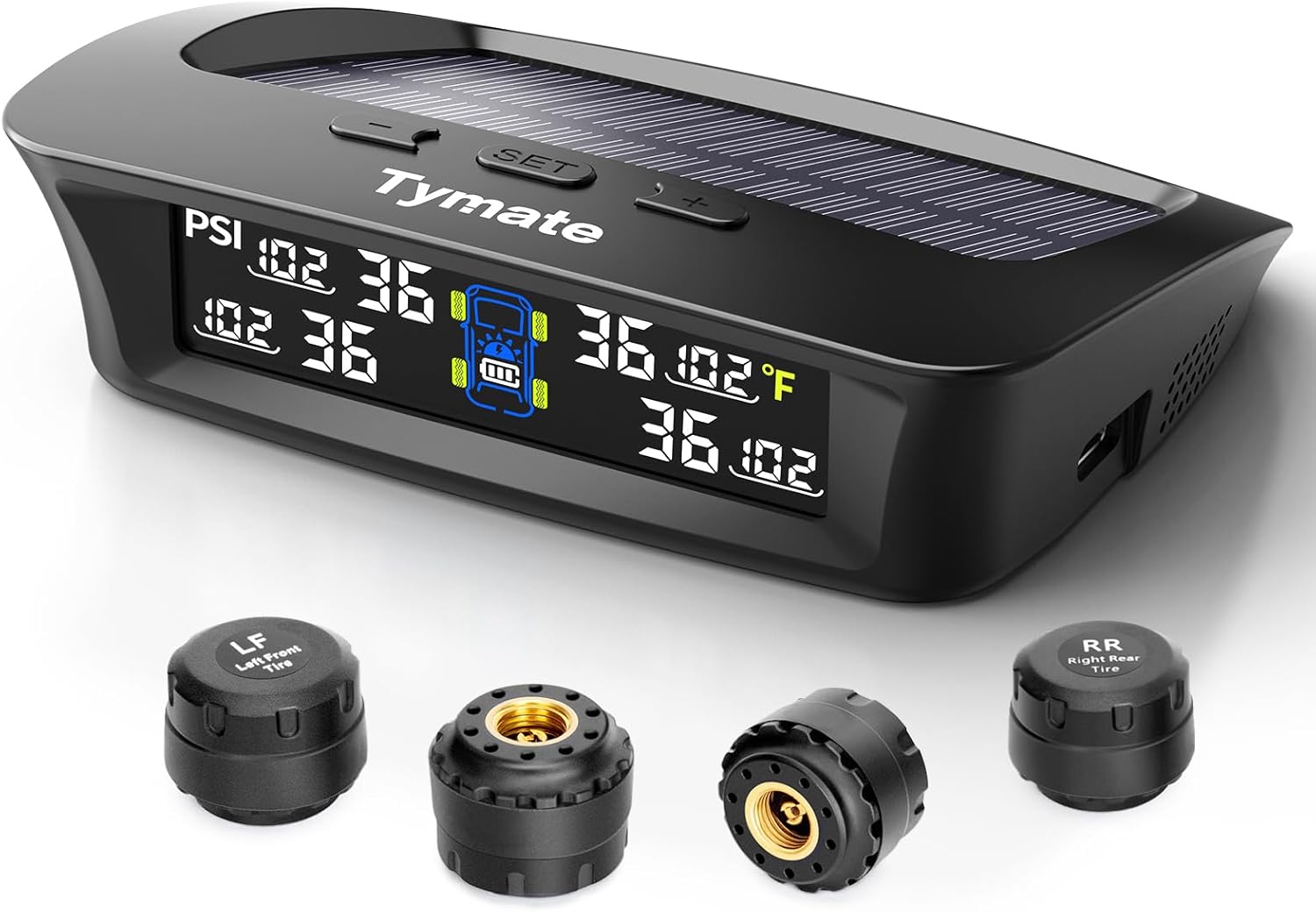
The Tymate TM3 RV TPMS delivers real-time tire pressure monitoring from 0 to 144 PSI with accurate readings and dependable wireless communication. It includes four external sensors with pre-pairing, six alarm modes for rapid leak, pressure extremes, temperature, and signal loss, plus an easy-reference setup for alert thresholds. Solar and USB-C charging help keep the display powered, while the color LCD and adaptive backlight improve visibility for safer driving and towing.
Frequently Asked Questions
How do you fix a Hilux that pulls to one side?
Start by checking cold tire pressure, tire wear, and uneven cargo load. Then road-test the truck safely, inspect for brake drag, review the alignment printout, and check steering and suspension parts. If suitable front tires can be swapped side to side, that test may reveal tire conicity.
Why does my Toyota Hilux still pull after a wheel alignment?
The alignment may not be the only cause. Tire pressure imbalance, uneven tread wear, tire lateral force, brake drag, worn bushings, ball joints, road crown, lift-kit geometry, or uneven load can all make the truck pull even after an alignment.
Can tire pressure make a Hilux pull left or right?
Yes. If one tire has lower pressure than the opposite tire, it can create different rolling resistance and road contact. Check pressure when the tires are cold and use the pressure listed on the Hilux door placard or owner’s manual.
Can bad brakes cause a Hilux to pull?
Yes. A sticking caliper, seized slide pin, restricted brake hose, or uneven pad wear can create brake drag or uneven braking force. If the pull comes with a burning smell, smoke, grinding, or one hot wheel, stop driving and have the brakes inspected.
Is an off-center steering wheel the same as pulling?
No. A pull means the vehicle moves left or right and needs steering correction. An off-center steering wheel means the vehicle may drive straight, but the wheel sits crooked. The causes and alignment corrections can be different.
Conclusion
If your Toyota Hilux pulls to one side after alignment, work through the problem in a clear order. Start with cold tire pressure, tire condition, and load. Then check whether the pull happens all the time, only under braking, or only on certain roads. After that, review the alignment printout and inspect brakes, steering, suspension, and tire lateral force.
A proper fix depends on the true cause. A repeat alignment may help if camber, caster, toe, or steering-wheel centering is wrong, but it will not solve a sticking brake caliper, damaged tire, worn bushing, road-crown drift, or shifted suspension component. Diagnose first, then repair the part or setting that actually makes the Hilux pull.
Sources
- Toyota Technical Service Bulletin T-SB-0063-20 — vehicle pull, off-center steering wheel, tire lateral force, brake drag, and alignment diagnosis.
- Toyota: How To Check Tire Pressure — cold tire pressure, owner’s manual and door placard guidance, and underinflation effects.
- NHTSA TireWise — tire-pressure checks, TPMS limitations, and tire safety basics.
- Tire Rack: Alignment Settings — camber, caster, toe, cross-camber, cross-caster, and road-crown context.
- AutoZone: Brake Caliper Sticking — seized caliper symptoms, pulling, and burning brake smell warnings.
- MOTOR: Alignment Fundamentals — alignment setup order, toe adjustment, and steering-wheel centering context.